

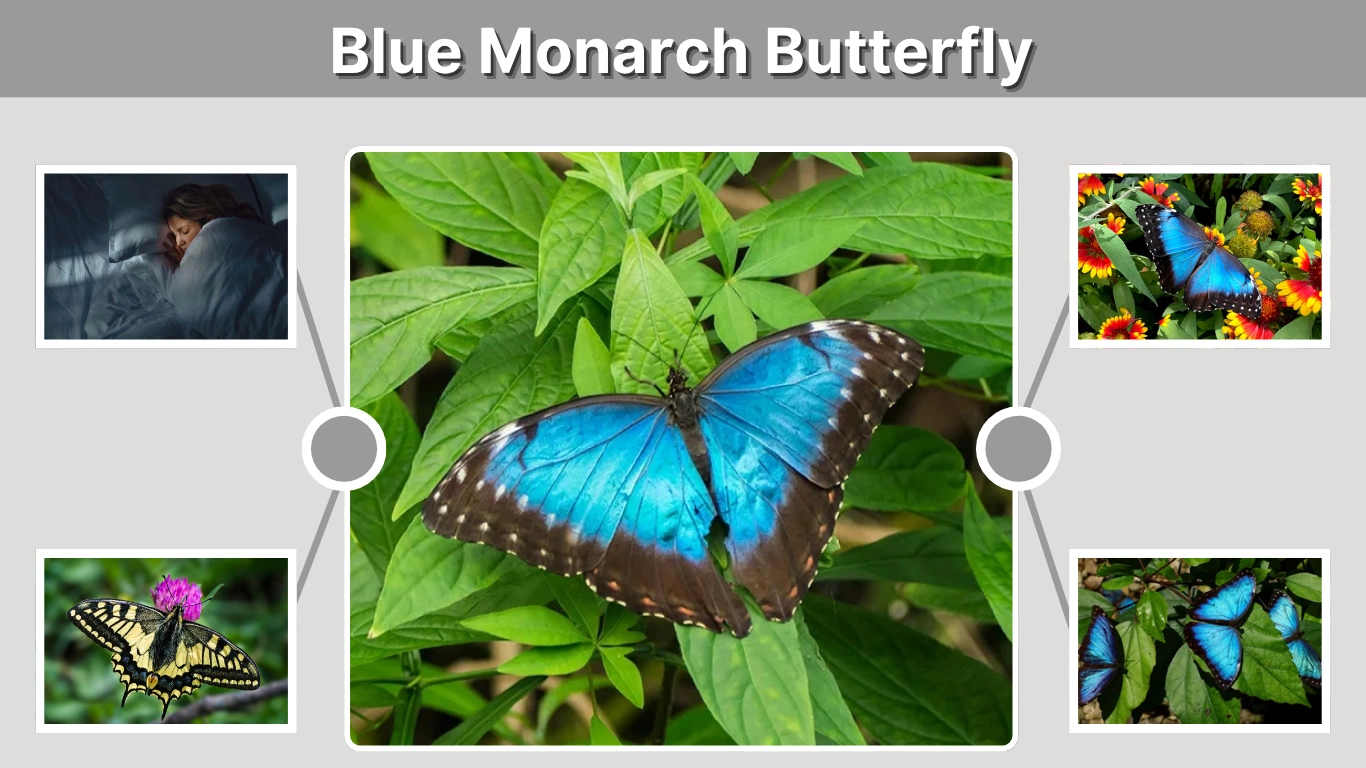
The blue monarch butterfly captivates both butterfly lovers and spiritual enthusiasts with its vivid hues and mysterious origins. Unlike the common orange monarch, this blue variation blends elegance and enigma, often symbolizing peace, transformation, and hope. Although debates continue over its authenticity, its visual beauty and symbolic depth have made it a favorite subject in tattoos, art, and nature photography.
Identification and Appearance

The blue monarch butterfly is often mistaken for the orange monarch due to its nearly identical shape and wing structure. However, its color palette sets it apart. Instead of bright orange, its wings display shimmering shades of blue, purple, and black, with white spots tracing the outer edges.
Key Features
- Wing patterns similar to traditional monarchs but in blue tones.
- Dark black veins and borders that contrast elegantly with the lighter hues.
- A slight iridescent shine, especially under sunlight or camera flash.
Many “blue monarchs” spotted around the world are either color variations or photographic illusions caused by lighting, camera angles, or genetic mutations. These variations are rare but fascinating examples of natural diversity.
Are Blue Monarch Butterflies Real?
While the name suggests a unique species, the blue monarch butterfly does not exist as a distinct biological species. Instead, the term refers to monarch butterflies that appear blue due to pigment variation, lighting, or crossbreeding with related species.
In some tropical regions, people mistake blue morpho butterflies for blue monarchs because they share similar wing shapes and flight behavior. Blue morphos (found in Central and South America) are known for their iridescent, metallic blue wings, which shine brilliantly when they flutter through sunlight.
Similar Species That Look Like Blue Monarchs

There are several butterfly species and variants often confused with the so-called blue monarch.
Blue Morpho Butterfly
Perhaps the most famous look-alike, the blue morpho (Morpho peleides) is admired for its electric-blue wings. Native to the rainforests of South and Central America, its color comes not from pigment but from microscopic scales that refract light, creating a stunning optical illusion.
Swallowtail Variants
Certain swallowtail butterflies also display blue and black wing patterns resembling monarchs. The pipevine swallowtail, for example, has dark wings with a radiant blue sheen, commonly seen in North America. These species often share habitats with monarchs, leading to frequent misidentification.
Color Variations and Patterns
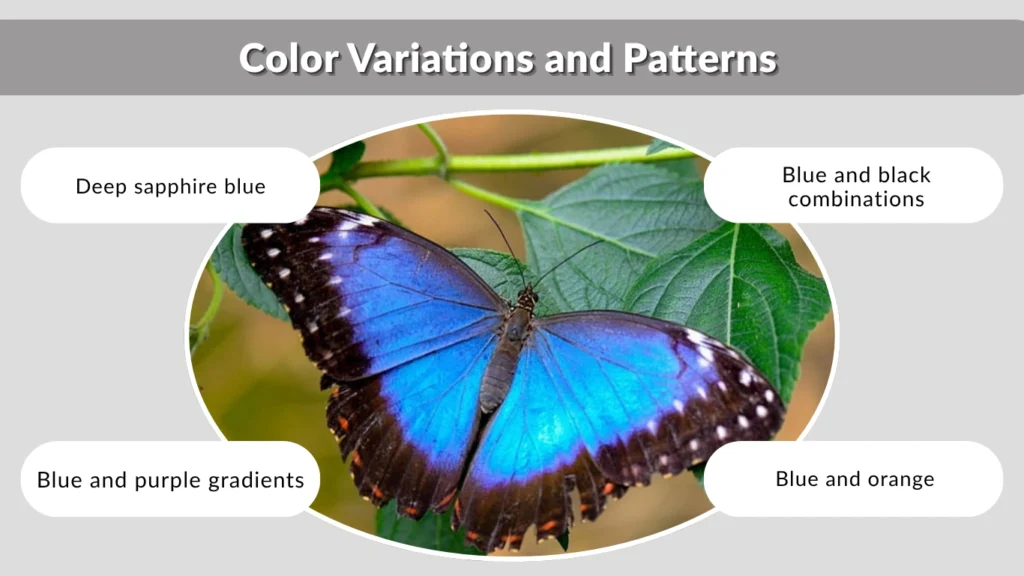
Blue monarch butterflies are admired for their diverse range of hues. The variations often depend on environmental conditions, genetics, and even perspective.
Common observed shades include:
- Deep sapphire blue – the most iconic shade.
- Blue and black combinations resembling inked patterns.
- Blue and purple gradients, giving a mystical look.
- Blue and orange hybrids seen in certain lighting.
- Blue and yellow tones, occasionally found in artistic depictions or genetic experiments.
Each variation enhances the butterfly’s allure, reflecting a blend of natural artistry and optical wonder.
Symbolism and Meaning
In spiritual symbolism, the blue monarch butterfly represents hope, peace, emotional balance, and transformation. The color blue evokes serenity, intuition, and depth of emotion, while the butterfly itself stands for rebirth and freedom.
Together, they symbolize a peaceful transformation—a reminder that even after hardship, beauty and calm can emerge. Some spiritual interpretations link the blue monarch to messages from departed loved ones, viewed as gentle signs of comfort or renewal.
This symbolic meaning has inspired many to incorporate the blue monarch into tattoos, paintings, and meditation art, associating it with personal growth, healing, and inner peace.
Blue Monarch Butterfly in Dreams

Dreams featuring a blue monarch butterfly often symbolize positive emotional changes or spiritual awakening. Seeing one fluttering around in a dream can suggest upcoming peace after emotional turmoil or the start of a new phase in life.
For some, dreaming of a blue butterfly indicates that their intuition is strengthening—a sign of clarity in personal decisions or relationships. The blue hue amplifies the emotional depth of the message, representing trust, faith, and mental calmness.
People who dream of catching or following a blue monarch may be seeking emotional closure, balance, or inspiration in their waking life.
Habitat and Geographic Presence

While no true species of blue monarch butterfly exists, butterflies with monarch-like features and blue hues are observed in various parts of the world. These sightings often involve blue morphos or tinted monarch variations.
They are commonly found in:
- Tropical rainforests of Central and South America
- Australia’s open woodlands, where rare bluish monarch variants appear
- The Caribbean islands, where climate and light conditions enhance the blue sheen
- North America, during monarch migration seasons, when lighting effects can make wings look bluish
The habitat of these butterflies includes warm, humid environments with abundant milkweed or nectar sources. Monarchs typically thrive in sunny areas near flowering fields, while morphos prefer shaded forest canopies. Both rely on temperature, light, and humidity to reveal their signature colors vividly.
Artistic and Decorative Inspirations
The blue monarch butterfly is not only admired in nature but also a favorite muse for artists, designers, and creators. Its stunning color combination inspires countless forms of art and decoration.
It frequently appears in:
- Paintings and wall art, where blue tones evoke tranquility.
- Jewelry and accessories, including earrings, necklaces, and glass pendants.
- Fashion and costume design, where blue monarch wings are used in dresses, masks, and headpieces.
- Digital artwork and wallpapers, symbolizing serenity and transformation.
In home decor, blue monarch imagery often appears in textiles, wallpapers, and sculptures, infusing interiors with elegance and calm energy. Artists also use its symbolism in tattoo flash sheets and body art exhibitions, showcasing how nature and emotion intertwine.
Interesting Facts About Blue Monarch Butterflies
- Optical Illusion Colors: The blue appearance isn’t due to pigment but to light refraction on microscopic scales, similar to the blue morpho butterfly.
- Cultural Influence: The blue monarch has become a symbol of peace and remembrance in art, poetry, and memorial tattoos.
- Predator Resistance: Monarchs contain toxins that deter predators, such as blue jays, which often vomit after eating them—creating the myth of “blue jays throwing up monarchs.”
- Symbolic Crossovers: The butterfly often represents both beauty and fragility, merging art, spirituality, and science in one small creature.
- Rare Appearances: Occasionally, monarchs with bluish tones have been recorded in Australia and North America due to rare pigment mutations.
FAQs
What does a blue monarch butterfly symbolize?
A blue monarch butterfly symbolizes emotional healing, peace, and personal transformation. The color blue adds calmness and wisdom to the monarch’s classic message of change and rebirth, making it a symbol of spiritual awakening and serenity.
Are blue monarch butterflies real?
No, blue monarch butterflies aren’t a separate species. Their appearance usually comes from lighting effects, genetic variations, or confusion with the blue morpho butterfly. However, they are often celebrated in art and tattoos for their beauty and meaning.
Can monarch butterflies be blue?
In rare cases, yes. Monarchs can appear blue due to structural coloration or pigment mutations. The scales on their wings can reflect light differently under certain conditions, creating a blue tint that appears strikingly realistic.
What is the meaning of a blue monarch butterfly tattoo?
A blue monarch butterfly tattoo represents freedom, transformation, and emotional rebirth. When combined with elements like blue roses or feathers, it can symbolize eternal love, healing, and the courage to embrace life’s changes.
Where do blue monarch butterflies live?
Butterflies resembling blue monarchs are often found in tropical and subtropical regions like Central America, Australia, and the Caribbean. They thrive in warm, humid habitats rich in flowers and sunlight, where their vivid colors become most visible.
