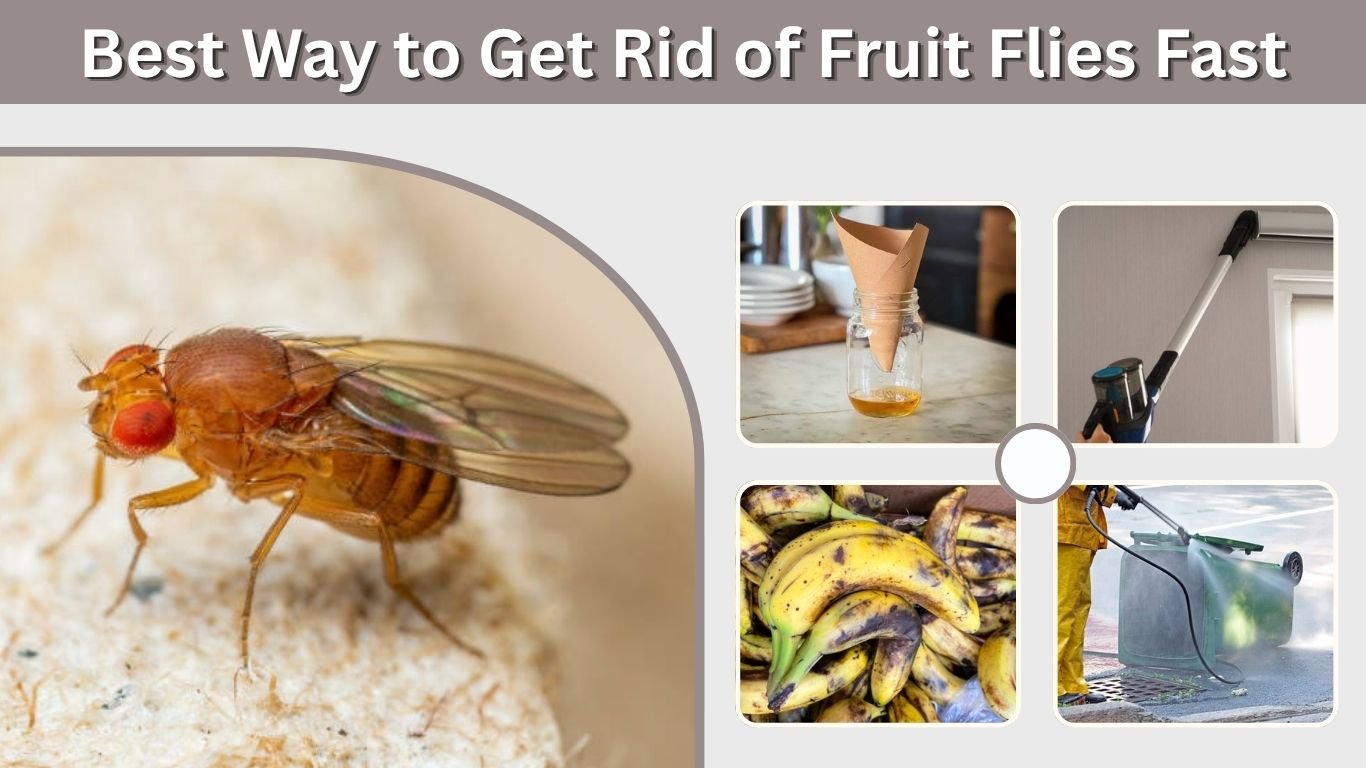
The best way to get rid of fruit flies is to remove their breeding source and use traps to catch the remaining adults. Traps alone may reduce visible flies, but they cannot stop an infestation if spoiled produce, drink residue, dirty recycling, or fermenting waste remains available. Begin by cleaning the affected area, refrigerating ripe produce, washing garbage containers, and setting apple cider vinegar traps. Continue these steps for several days to catch newly emerging adults.
What Is the Best Way to Get Rid of Fruit Flies?
The most effective method combines three actions: eliminate breeding material, trap adult flies, and prevent access to new food sources. Fruit flies commonly develop around fermenting fruit, vegetables, beer, wine, soft-drink residue, garbage, and poorly sealed compost containers.
Follow These Four Steps
- Throw away spoiled or overripe food.
- Wash bins, recycling containers, and sticky surfaces.
- Place vinegar traps near active areas.
- Keep the area clean and dry for at least one to two weeks.
Fruit flies can complete their development quickly under warm conditions. Continuing treatment after adult activity decreases helps prevent another generation from rebuilding the infestation.
Best Fruit Fly Control Methods Compared
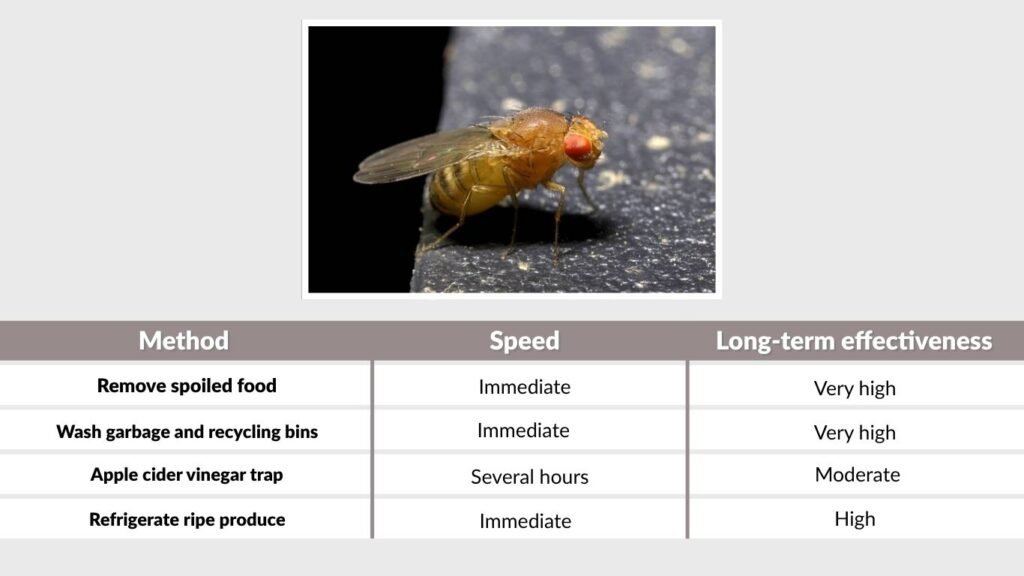
No single treatment solves every infestation. Source removal provides the best long-term control, while traps offer fast relief from flying adults.
| Method | Speed | Long-term effectiveness |
| Remove spoiled food | Immediate | Very high |
| Wash garbage and recycling bins | Immediate | Very high |
| Apple cider vinegar trap | Several hours | Moderate |
| Refrigerate ripe produce | Immediate | High |
| Scrub organic residue | One to several days | High |
| Vacuum adult flies | Immediate | Low |
| Indoor insect spray | Immediate | Low without cleaning |
How to Get Rid of Fruit Flies Fast
You can noticeably reduce fruit fly numbers within a day, although complete control may require several days. Begin where the flies are most active, usually the kitchen, pantry, dining area, or recycling station.
Remove Ripe and Rotten Produce
Check fruit bowls, countertops, pantry shelves, baskets, cabinets, and reusable grocery bags. Throw away spoiled produce and refrigerate anything ripe.
Do not overlook potatoes, onions, tomatoes, bananas, peaches, or melons stored in dark areas. A single forgotten piece of produce may support many fruit flies.
Wash the fruit bowl and the surface beneath it. Liquid from damaged fruit can collect under containers and continue attracting flies.
Clean Garbage, Compost, and Recycling
Empty all garbage and indoor compost containers. Wash their interiors, lids, rims, handles, and the floor beneath them with warm, soapy water.
Rinse bottles and cans before recycling them. Small amounts of soda, juice, beer, or wine left inside containers can become attractive breeding material.
Clean Hidden Spills
Move appliances and inspect areas beneath coffee machines, blenders, refrigerators, microwaves, and trash cans. Clean drink spills, food crumbs, syrup, and residue around bottle-storage areas.
Also wash damp mops, cloths, and sponges. Empty mop buckets and allow cleaning tools to dry completely.
Best Homemade Trap for Fruit Flies
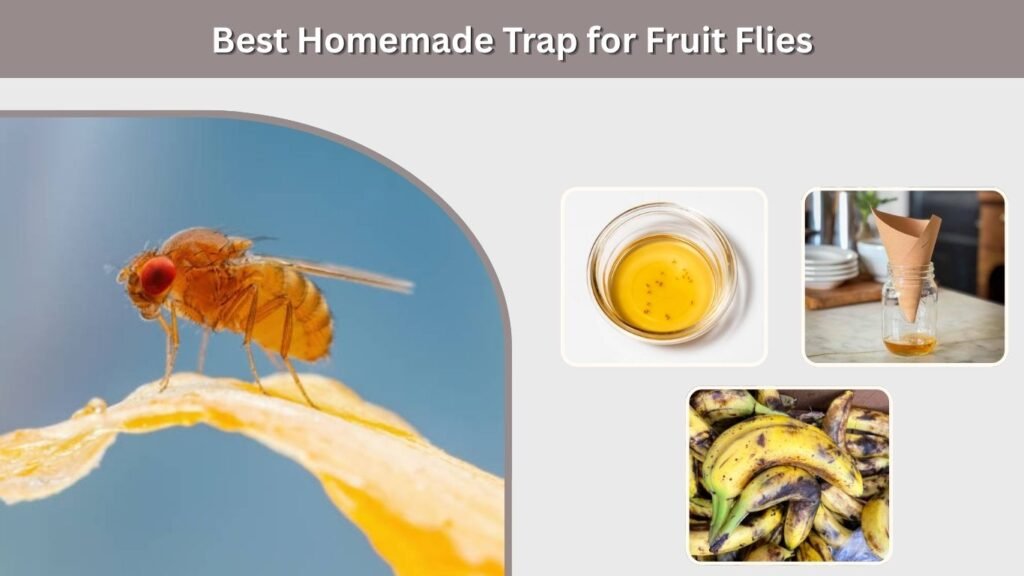
Apple cider vinegar and dish soap make a simple trap for reducing adult fruit flies. The fermented odor attracts the insects, while the soap helps prevent them from remaining on the liquid’s surface. Vinegar, red wine, beer, and mashed fruit can all work as baits.
Apple Cider Vinegar Trap
Add the following to a small bowl or jar:
- ¼ cup apple cider vinegar
- Two or three drops of liquid dish soap
Stir gently and place the container near the strongest activity. Leave it open or cover it with plastic wrap and make several small holes.
Replace the bait every few days or when it becomes filled with flies and debris.
Paper Funnel Trap
Place apple cider vinegar, wine, beer, or a small piece of overripe banana inside a jar. Roll paper into a cone with a narrow opening at the bottom and place it inside the jar.
The wide end should sit near the rim, while the pointed end remains above the bait. Fruit flies enter through the small opening but often struggle to escape.
Vinegar-Free Trap
Apple cider vinegar is not essential. Suitable alternatives include:
- Red or white wine
- Beer
- Fruit juice
- Overripe banana
- Sugar and yeast water
- Balsamic vinegar
Add a drop of dish soap to liquid bait or use a funnel when trapping with solid fruit.
Best Way to Get Rid of Fruit Flies in the Kitchen
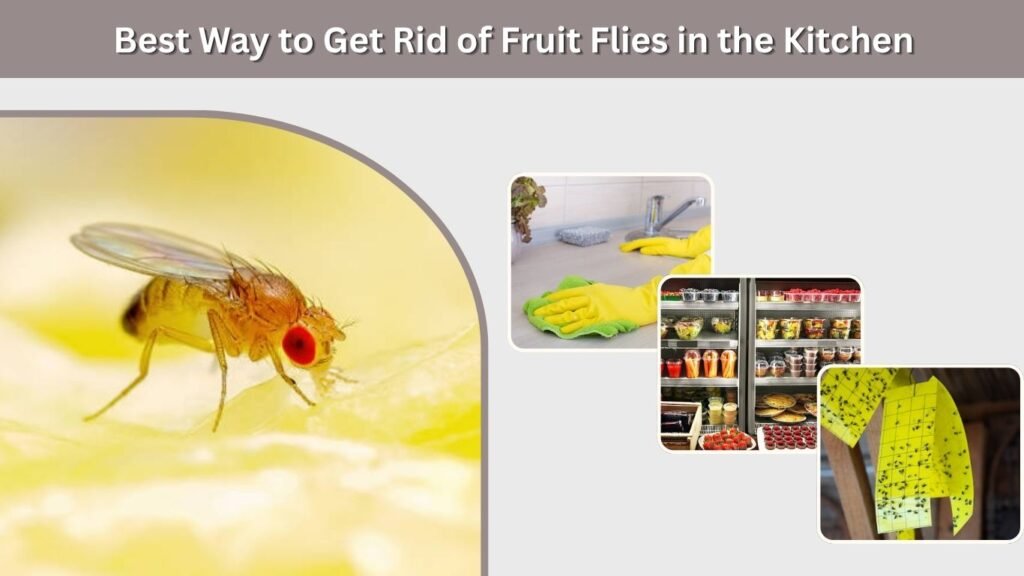
The kitchen usually provides everything fruit flies need: warmth, moisture, food, and protected breeding locations. Cleaning only the visible countertops may not be enough.
Clean Food-Preparation Areas
Wash counters, cutting boards, cabinet handles, appliance surfaces, and floors. Pay attention to coffee-machine trays, blender bases, juicers, bottle openers, and other places where sweet liquid may collect.
Wash dishes before bedtime and avoid leaving glasses containing juice, wine, soda, or beer overnight.
Store Food Properly
Keep ripe fruits and vegetables in the refrigerator while controlling the infestation. Store dry foods in sealed containers and cover cut produce immediately.
Inspect produce when bringing it home. Remove damaged pieces before placing them in a fruit bowl with healthy items.
Place Traps Near the Source
Set traps near fruit bowls, garbage bins, compost containers, or recycling areas rather than placing them randomly around the room.
Several small traps are often more helpful than one large trap. Comparing trap catches may also reveal which area contains the breeding source.
Best Way to Get Rid of Fruit Flies in Drains
Fruit flies may gather near sinks when organic material is present nearby, but fuzzy drain flies and humpbacked phorid flies are more strongly associated with plumbing problems.
Clean Accessible Organic Residue
Scrub the sink stopper, drain opening, garbage-disposal splash guard, and other accessible surfaces with a stiff brush and suitable cleaner. Physical scrubbing is important because pouring hot water or chemicals into a drain may not remove the film in which small flies develop.
Never mix bleach with vinegar, ammonia, drain cleaner, or other cleaning products. Combining cleaners can cause dangerous chemical reactions.
Check for a Plumbing Problem
Persistent flies around a drain may indicate trapped organic material, a slow leak, or damaged plumbing. Cover the drain loosely with clear tape overnight. Flies collected beneath the tape suggest that the drain should be inspected more closely.
Professional assistance may be necessary when flies continue emerging despite repeated cleaning.
Fruit Flies vs Gnats: Know the Difference
The best treatment depends on identifying the insect correctly.
| Feature | Fruit flies | Fungus gnats | Drain flies |
| Appearance | Tan or brown, rounded body | Dark and mosquito-like | Fuzzy with broad wings |
| Common location | Fruit, trash, and drinks | Houseplant soil | Drains and plumbing |
| Breeding material | Fermenting organic food | Damp potting soil | Organic film in drains |
| Best control | Sanitation and bait traps | Dry soil and sticky cards | Scrubbing and plumbing repair |
Tiny flies around houseplants are usually fungus gnats rather than fruit flies. Let the upper soil dry between watering, remove decaying leaves, empty plant saucers, and place yellow sticky cards near affected plants.
Best Natural Way to Get Rid of Fruit Flies
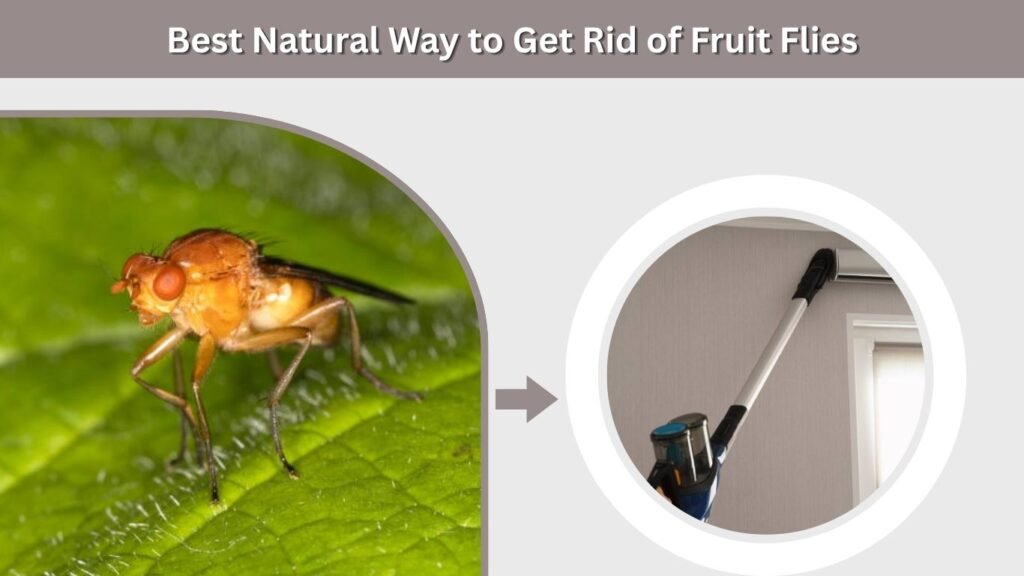
Most indoor infestations can be controlled without widespread pesticide use. Sanitation, exclusion, and trapping target the problem without spraying food-preparation areas.
Vacuum Visible Adults
Use a vacuum to remove groups of flies resting on walls, ceilings, windows, or cabinets. Empty the vacuum outdoors afterward.
Vacuuming gives immediate relief but does not affect eggs or larvae, so it must be combined with source removal.
Keep Surfaces Dry
Dry sinks, counters, dishcloths, and cleaning supplies. Repair leaks and remove standing liquid from trays and buckets.
Moisture alone does not normally attract fruit flies, but moisture combined with fermenting organic matter creates suitable breeding conditions.
How to Get Rid of a Severe Fruit Fly Infestation
A serious or recurring infestation usually means that a breeding source has been overlooked.
Search beyond the kitchen, including:
- Home bars and beverage stations
- Office trash cans
- Pet feeding areas
- Utility rooms
- Recycling storage
- Indoor compost containers
- Food stored beneath furniture
- Residue under cabinets and appliances
Continue trapping for several days after the last visible flies disappear. If activity remains high after one to two weeks of thorough cleaning, contact a pest-control or plumbing professional.
Indoor insecticides should not be the first treatment. Non-chemical controls reduce unnecessary pesticide exposure, and any pesticide used indoors must be applied according to its label with food and utensils protected.
How to Prevent Fruit Flies From Returning
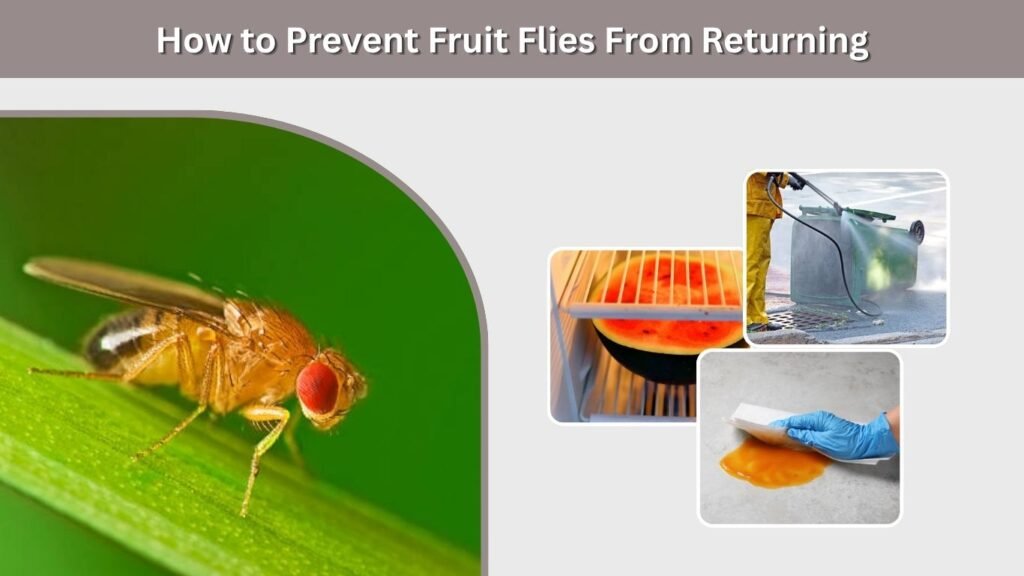
Fruit fly prevention depends on keeping fermenting material unavailable.
- Refrigerate ripe produce.
- Discard damaged fruit promptly.
- Empty garbage and compost regularly.
- Wash waste containers.
- Rinse bottles and cans.
- Clean spills immediately.
- Inspect stored potatoes and onions.
- Keep drains and disposals clean.
- Wash dishes before bedtime.
- Avoid leaving open drinks overnight.
FAQs
What is the absolute best way to get rid of fruit flies?
Remove every breeding source before setting traps. Discard rotten produce, wash garbage and recycling containers, clean sticky spills, refrigerate ripe food, and then use apple cider vinegar traps to catch adults. Cleaning provides lasting control, while traps mainly reduce the visible population.
What gets rid of fruit flies the fastest?
A combination of immediate cleaning, vacuuming, and vinegar traps gives the fastest results. Vacuum visible adults, remove spoiled food, wash bins, and place traps beside active areas. You may see improvement overnight, although complete elimination usually requires continued monitoring.
Can I get rid of fruit flies overnight?
You can catch many adult flies overnight, but eggs and larvae may remain in hidden breeding material. Continue cleaning and trapping for several days. An infestation will return when even a small amount of fermenting food or drink residue remains available.
What is the best way to get rid of fruit flies and gnats?
Identify which insect is present. Fruit flies require removal of fermenting food and the use of bait traps. Fungus gnats require drier houseplant soil and sticky cards. Drain flies require removal of organic buildup from drains and correction of plumbing issues.
Why do fruit flies keep returning after treatment?
Recurring fruit flies indicate that food residue, spoiled produce, recycling, compost, or another breeding source remains. Traps cannot eliminate eggs and larvae. Search hidden areas, continue sanitation, and keep traps active until no adults appear for several consecutive days.