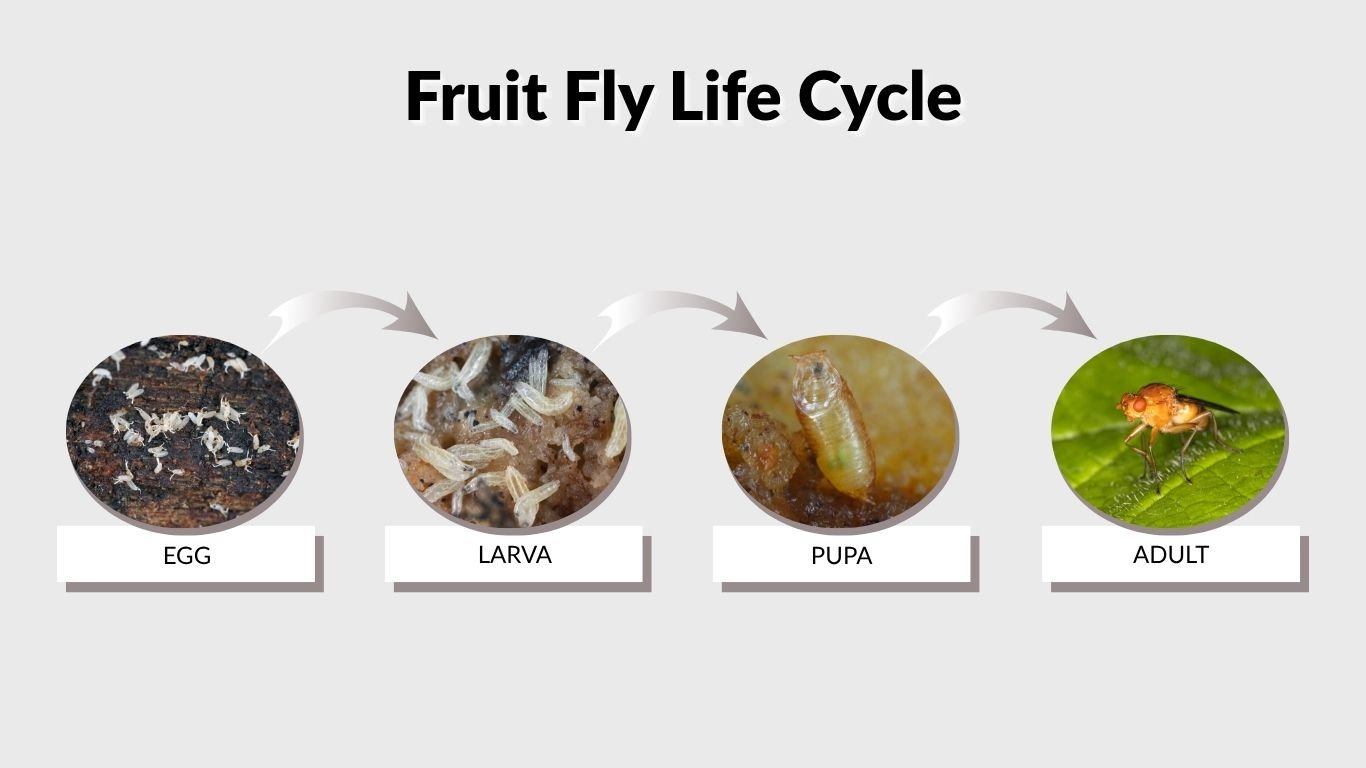
The fruit fly life cycle can move from egg to adult in only eight to ten days under warm conditions. This rapid development explains why a few flies around ripe fruit can become a noticeable infestation within a short time. Fruit flies undergo complete metamorphosis through four stages: egg, larva, pupa, and adult. Temperature, moisture, food availability, and species all influence how quickly each stage develops.
What Is the Life Cycle of a Fruit Fly?
The common household fruit fly, Drosophila melanogaster, develops through four distinct stages. Each stage has a different appearance and purpose.
- Egg
- Larva or maggot
- Pupa
- Adult fly
A complete fruit fly life cycle may take approximately eight to ten days at warm room temperatures. Cooler conditions can extend development to two weeks or longer.
| Life-cycle stage | Approximate duration | Main activity |
| Egg | About 24 hours | Embryo develops |
| Larva | 4–5 days | Feeds and grows |
| Pupa | 4–5 days | Changes into an adult |
| Adult | Several weeks | Feeds, mates, and lays eggs |
These times are approximate. Development speeds up in warm conditions and slows considerably when temperatures fall.
Stage 1: Fruit Fly Egg
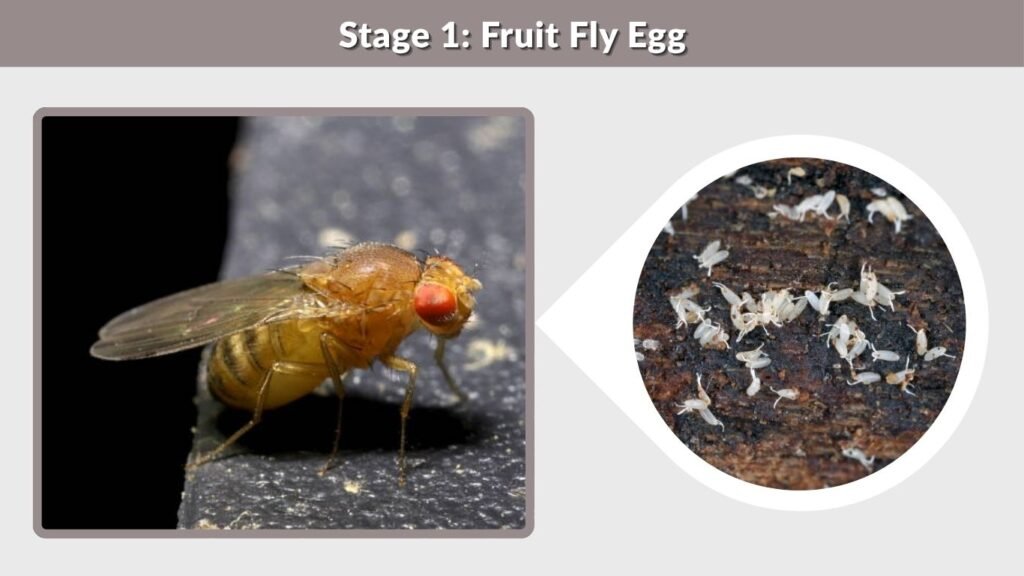
The life cycle begins when a female lays eggs on moist, fermenting organic material. Fruit flies prefer locations where their newly hatched larvae will have immediate access to food.
What Do Fruit Fly Eggs Look Like?
Fruit fly eggs are extremely small, white, and difficult to see without magnification. They are elongated rather than perfectly round and may have tiny breathing filaments extending from one end.
The eggs are often hidden just beneath the surface of soft or fermenting material. Because of their small size, throwing away visible adult flies does not necessarily remove the developing infestation.
Where Do Fruit Flies Lay Eggs?
Females commonly lay eggs in or around:
- Overripe or damaged fruit
- Fermenting vegetables
- Garbage and compost containers
- Beer, wine, soda, or juice residue
- Dirty recycling bottles and cans
- Food buildup beneath appliances
- Organic residue around drains
- Damp mops, cloths, or sponges
Fruit flies do not need a large amount of food. A thin layer of sweet liquid or a forgotten piece of produce may support many eggs and larvae.
How Long Is the Egg Stage?
At warm indoor temperatures, eggs may hatch in approximately 24 hours. Cooler conditions delay hatching.
A female can lay many eggs during her adult life, allowing the population to increase quickly when food and moisture remain available.
Stage 2: Fruit Fly Larva
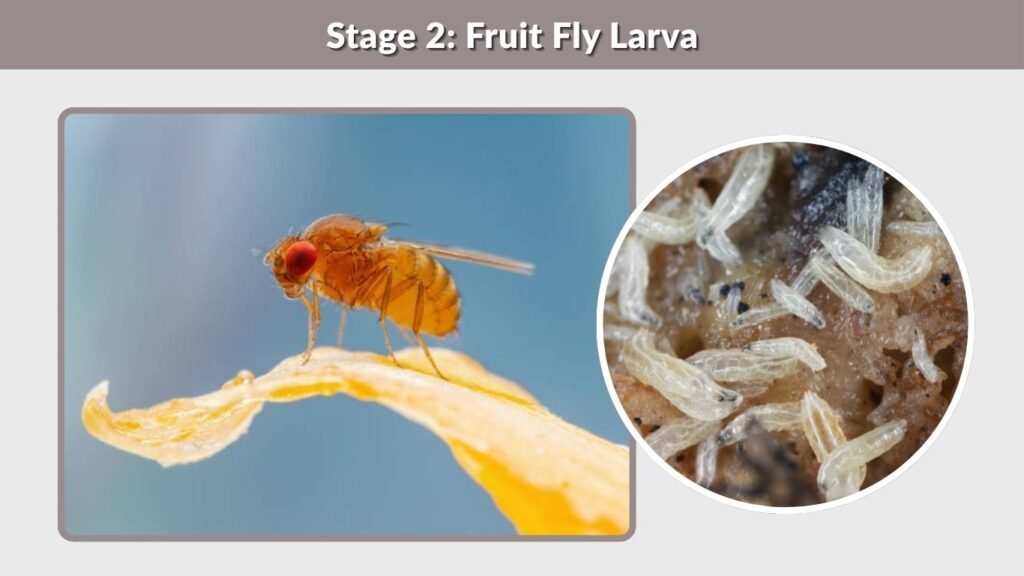
After hatching, the fruit fly enters the larval stage. The larva is a small, pale maggot that lives within or on the surface of moist organic material.
What Do Fruit Fly Larvae Look Like?
Fruit fly larvae are cream-colored or nearly transparent. They have soft, legless bodies and are only a few millimeters long when fully developed.
Because they remain inside fermenting food or residue, people often notice the adult flies before seeing any larvae.
What Do the Larvae Eat?
Larvae feed on yeast, bacteria, and microorganisms growing in fermenting material. They also consume softened plant tissue and organic liquids.
The smell of ripening fruit attracts adult flies, but the microorganisms growing on that material provide much of the larvae’s nutrition.
Fruit Fly Larval Instars
The larval stage includes three growth periods called instars. The larva molts between each one.
During these instars, it feeds continuously and increases rapidly in size. The entire larval stage usually lasts about four to five days under favorable conditions.
When fully developed, the larva leaves the wettest part of the food and searches for a drier surface where it can pupate.
Stage 3: Fruit Fly Pupa
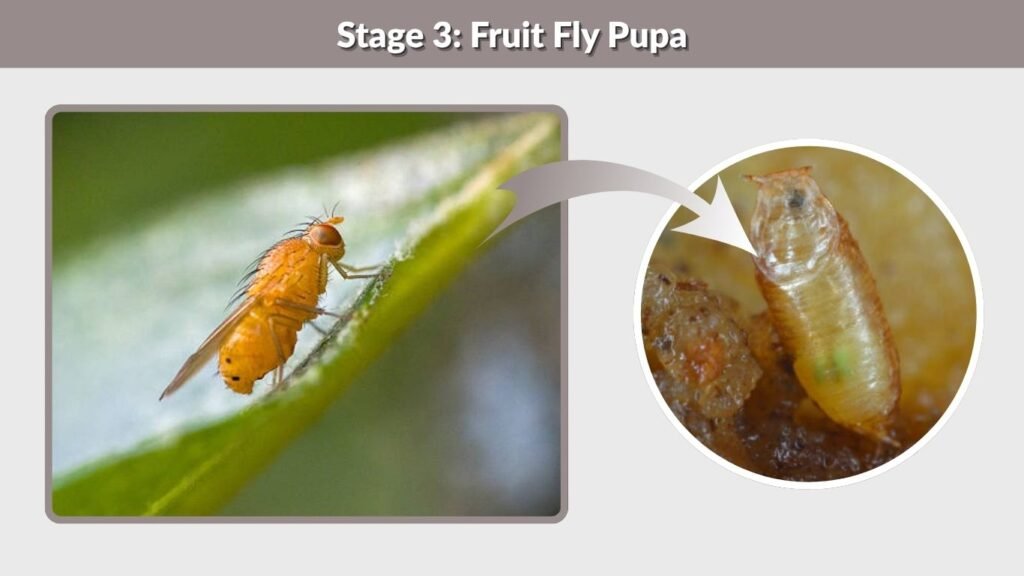
The fruit fly pupa is a resting stage during which the larval body changes into an adult fly. Although the pupa appears inactive, major development is occurring inside.
What Does a Fruit Fly Pupa Look Like?
A newly formed pupa is pale but gradually becomes tan or brown. It has an oval or capsule-like shape and may resemble a tiny seed.
Pupae are often found on dry surfaces close to the breeding source, such as:
- The side of a garbage bin
- The underside of a fruit bowl
- Cabinet corners
- Bottle surfaces
- Dry areas surrounding spilled liquid
This means removing spoiled fruit alone may not eliminate every developing fly. Pupae may remain nearby and produce adults several days later.
How Long Is the Pupal Stage?
The pupal stage commonly lasts around four to five days in warm conditions. During this time, wings, legs, eyes, antennae, and other adult structures develop.
Near the end of the stage, the adult fly breaks out of the pupal case.
Stage 4: Adult Fruit Fly
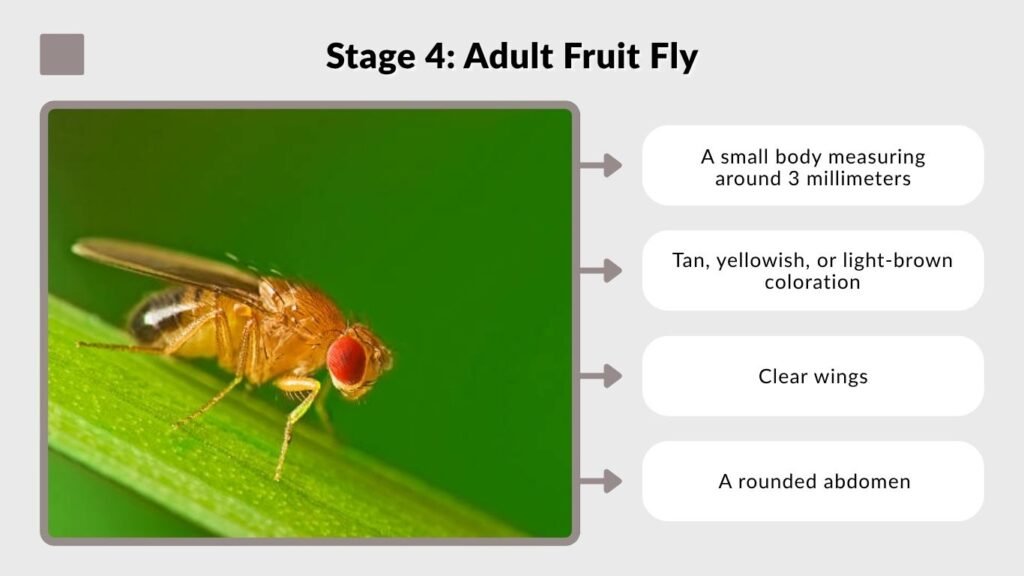
The newly emerged adult initially has a pale body and folded wings. Within several hours, its body darkens, the wings expand, and the fly becomes active.
Adult Fruit Fly Identification
A common fruit fly usually has:
- A small body measuring around 3 millimeters
- Tan, yellowish, or light-brown coloration
- Clear wings
- A rounded abdomen
- Red or dark eyes, depending on the species
Fruit flies are often confused with fungus gnats, drain flies, and phorid flies. Fungus gnats are slender and commonly associated with damp houseplant soil. Drain flies have fuzzy, moth-like wings, while phorid flies often have a humpbacked appearance.
When Do Adult Fruit Flies Reproduce?
Adults can become reproductively active soon after emerging. After mating, females begin searching for moist, fermenting material where they can lay eggs.
This short generation time allows several generations to develop within a home if food residue remains available.
How Long Do Adult Fruit Flies Live?
Adult fruit flies commonly live for several weeks. Their exact lifespan depends on temperature, humidity, food availability, and environmental conditions.
Warm temperatures accelerate development but may shorten adult survival. Cooler, suitable conditions slow development and may allow adults to live longer.
Fruit Fly Life Cycle Day by Day
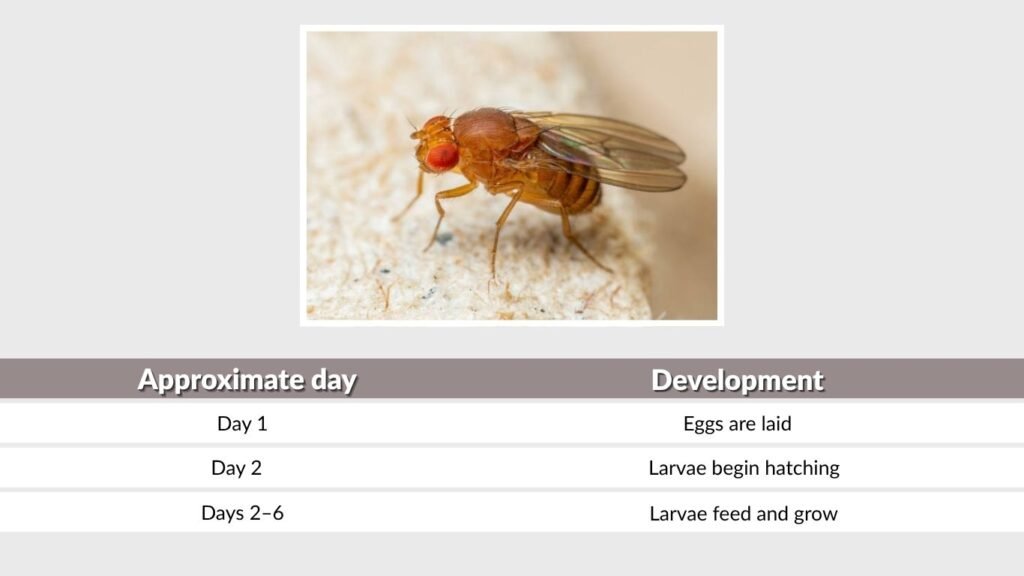
The following timeline describes development under warm, favorable conditions. Actual timing may vary.
Days 1–2: Egg Development
The female lays eggs on fermenting material. The embryos develop rapidly, and larvae may hatch within approximately one day.
Days 2–6: Larval Growth
The larvae feed heavily and pass through three instars. They remain within the moist breeding material while increasing in size.
Days 6–10: Pupal Development
Mature larvae move to a somewhat drier area and form pupae. Their bodies reorganize into adult flies.
Around Days 8–12: Adult Emergence
Adult flies emerge, expand their wings, and begin feeding. They soon mate and lay eggs, starting the cycle again.
| Approximate day | Development |
| Day 1 | Eggs are laid |
| Day 2 | Larvae begin hatching |
| Days 2–6 | Larvae feed and grow |
| Days 6–10 | Pupae develop |
| Days 8–12 | Adults begin emerging |
How Temperature Affects the Fruit Fly Life Cycle
Temperature is one of the most important factors controlling fruit fly development.
Warm Temperatures
Warm indoor conditions allow eggs, larvae, and pupae to develop quickly. At around 25°C or 77°F, common fruit flies may complete development in roughly eight to ten days.
Cooler Temperatures
At approximately 20°C or 68°F, the life cycle may require around two weeks. Growth slows further as temperatures fall.
Extreme Conditions
Very high heat, freezing temperatures, and dry conditions can reduce survival. However, indoor kitchens often provide stable warmth, moisture, and food throughout the year.
This is why fruit flies can appear indoors even during winter.
Life Cycle of Fruit Flies in a House
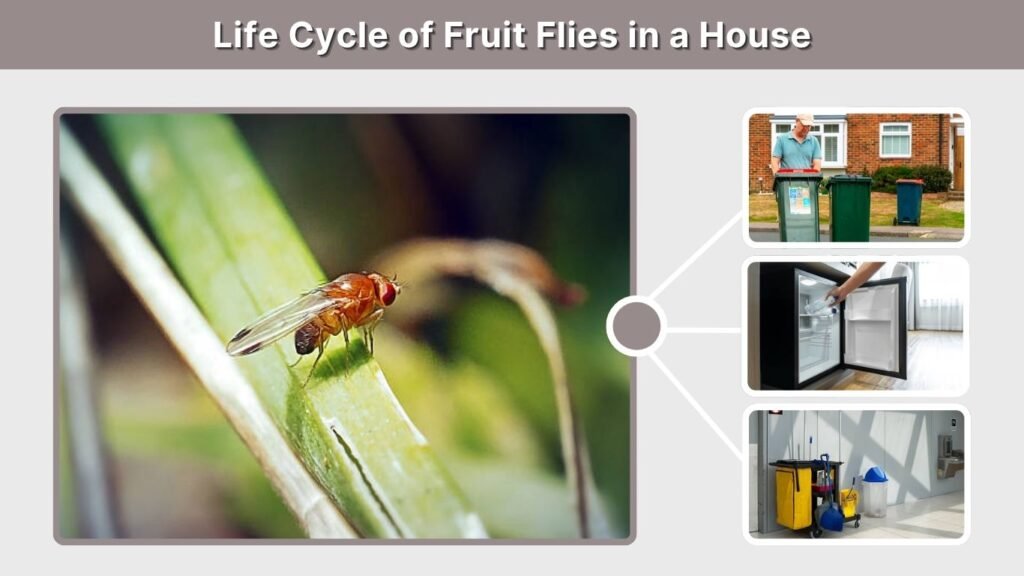
Indoor fruit flies commonly reproduce in kitchens, pantries, recycling areas, home bars, and compost containers. The adults are visible, but the eggs and larvae usually remain hidden inside food residue.
An infestation may continue after the original fruit is discarded because larvae or pupae remain in:
- Garbage-bin residue
- Recycling containers
- Drain openings
- Beverage bottles
- Cabinet cracks
- Areas beneath refrigerators
- Damp cleaning tools
To interrupt the life cycle, remove breeding materials and keep traps active long enough to catch newly emerging adults.
How to Break the Fruit Fly Life Cycle
Killing adult flies alone does not eliminate eggs, larvae, or pupae. Complete control requires targeting every stage.
Remove Breeding Sources
Discard rotten produce, refrigerate ripe fruit, empty compost, rinse recycling, and wash garbage containers. Clean beneath appliances and remove sticky beverage residue.
Scrub Problem Areas
Physically scrub sink openings, garbage-disposal guards, waste containers, and surfaces holding organic buildup. Pouring liquid over an area may not remove the material in which larvae are developing.
Never mix bleach, ammonia, vinegar, or different drain cleaners.
Trap Emerging Adults
Use apple cider vinegar with a few drops of dish soap to catch adults. Continue trapping for at least several days after cleaning because existing pupae may still emerge.
Keep Monitoring
If adult flies continue appearing after one to two weeks, search for another breeding source or confirm that the insects are truly fruit flies.
Are All Fruit Fly Life Cycles the Same?
The term “fruit fly” can describe different groups of insects. The common household fruit fly belongs to the genus Drosophila. Agricultural pests such as Mediterranean, oriental, olive, cherry, melon, and Queensland fruit flies belong to other groups.
These agricultural fruit flies often lay eggs inside developing fruit. Their larvae feed within the fruit before entering the soil or another protected location to pupate.
Their exact development time, host plants, seasonal behavior, and control methods differ from those of common indoor fruit flies.
FAQs
How long is a fruit fly life cycle?
The common household fruit fly can develop from egg to adult in approximately eight to ten days under warm conditions. At cooler temperatures, development may take two weeks or longer. Food quality, moisture, temperature, and species all affect the total duration.
What are the four stages of a fruit fly?
Fruit flies undergo four stages: egg, larva, pupa, and adult. The larval stage includes three instars during which the maggot feeds and grows. Inside the pupa, the larval body transforms into the winged adult form.
How quickly do fruit flies reproduce?
Fruit flies can begin reproducing soon after reaching adulthood. Their short development time allows several overlapping generations to appear in a home. As a result, a small number of adults can become a large infestation when fermenting food remains available.
Where do fruit flies pupate?
Mature larvae usually leave very wet food and pupate on a nearby drier surface. Pupae may occur on container walls, beneath fruit bowls, around garbage bins, inside cabinets, or close to spilled liquid and other breeding material.
Can fruit flies survive in a house during winter?
Yes. Heated homes provide suitable temperatures throughout winter. Fruit flies can continue developing when they have access to ripe produce, recycling residue, compost, drains, garbage, or other moist organic material, even when outdoor temperatures are too cold.