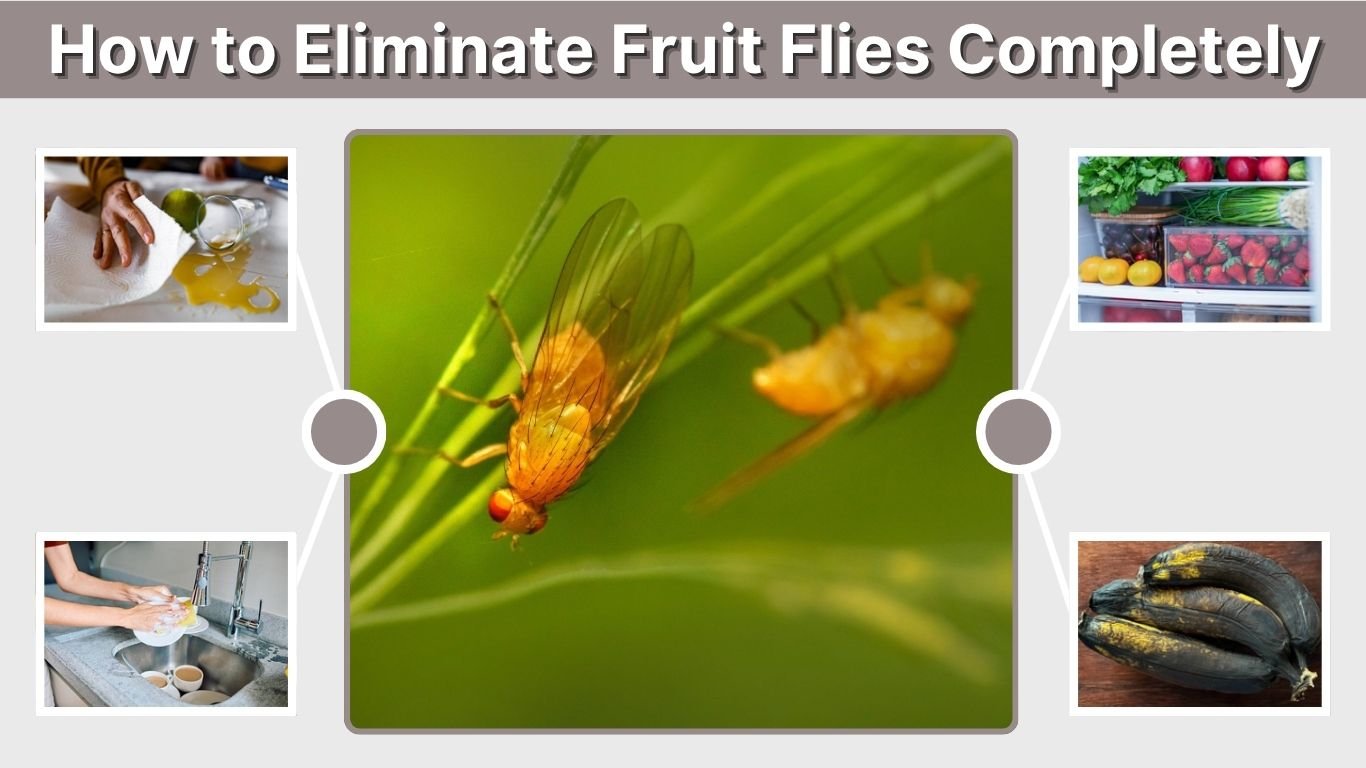
Fruit flies can multiply quickly around ripe produce, garbage, drains, compost, and spilled drinks. Killing the visible adults provides temporary relief, but complete elimination requires removing eggs, larvae, and breeding material. The fastest method combines thorough cleaning, homemade traps, proper food storage, and daily monitoring. Small infestations may improve within a few days, while larger problems can take one to two weeks to disappear completely.
How to Eliminate Fruit Flies Fast
Fruit flies reproduce in moist, fermenting organic material. Therefore, the first step is finding and removing everything that could support their development.
Remove Their Food and Breeding Sources
Inspect the kitchen, pantry, dining room, and nearby storage areas. Discard any spoiled or overripe produce, including forgotten potatoes, onions, tomatoes, and bananas.
Also check for:
- Sticky juice, soda, beer, or wine spills
- Food residue beneath appliances
- Dirty recycling containers
- Open garbage or compost bins
- Unwashed dishes and beverage containers
- Damp mops, sponges, and cleaning cloths
- Pet food left out for long periods
- Organic buildup around drains
Refrigerate ripe produce until the infestation is under control. Wash fruit bowls, counters, floors, and cabinet shelves with warm, soapy water.
Empty and Wash Trash Containers
Taking out the garbage is not enough if liquid and food residue remain inside the bin. Wash the container, lid, handles, rim, and bottom thoroughly.
Clean compost containers daily during an infestation. Rinse bottles and cans before placing them in recycling bins because even a small amount of fermented liquid can attract fruit flies.
Best Trap for Eliminating Adult Fruit Flies
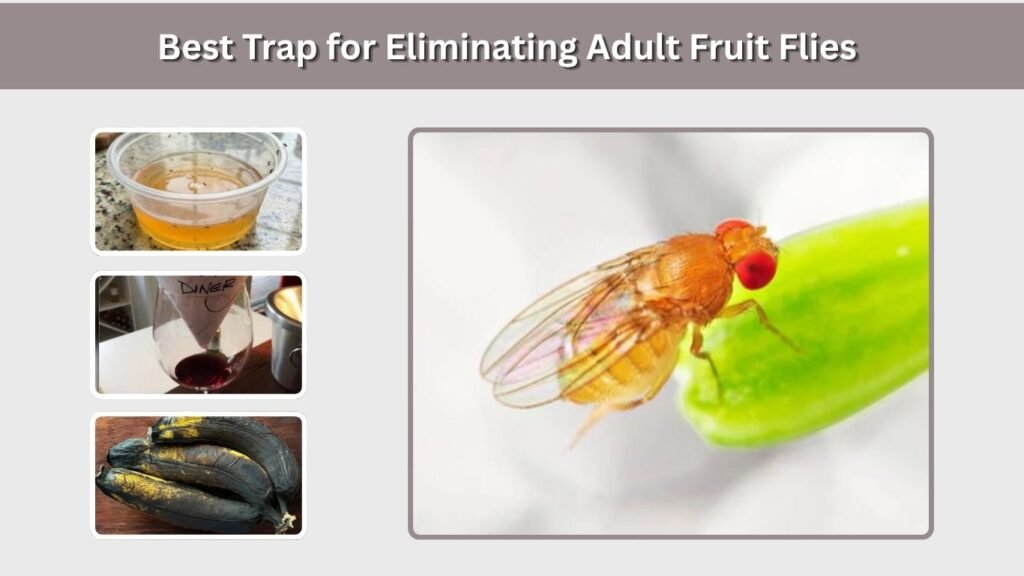
Traps reduce the number of breeding adults while sanitation removes their developing young. Place traps close to the area with the greatest activity.
Apple Cider Vinegar Trap
Combine the following ingredients in a small bowl or jar:
- ¼ cup apple cider vinegar
- Two or three drops of dish soap
The vinegar attracts fruit flies with its fermented scent. Dish soap breaks the liquid’s surface tension, causing the flies to sink.
Leave the container open or cover it with plastic wrap and make several tiny holes. Replace the mixture every one to three days.
Fruit Fly Trap Without Vinegar
When vinegar is unavailable, use a small amount of:
- Red wine
- Beer
- Fruit juice
- Overripe banana
- Sugar and yeast water
- Balsamic vinegar
Add dish soap to liquid bait. For solid fruit, place it inside a jar and insert a paper cone with a small opening at the bottom. Fruit flies enter the container but have difficulty escaping.
| Trap bait | Effectiveness | Best feature |
| Apple cider vinegar | High | Strong fermented aroma |
| Wine or beer | High | Attracts flies quickly |
| Overripe fruit | High | Natural food-based bait |
| Sugar and yeast | Moderate to high | Vinegar-free option |
| Fruit juice | Moderate | Easy household substitute |
| White vinegar and sugar | Moderate | Uses basic ingredients |
How to Eliminate Fruit Flies in the Kitchen
Kitchens provide fruit flies with food, moisture, and warmth. A complete cleaning routine is usually more effective than insect spray.
Clean Counters and Appliances
Wipe all food-preparation surfaces and inspect hidden spaces. Move countertop appliances and clean beneath coffee machines, blenders, toasters, microwaves, and refrigerators.
Pay special attention to coffee machine drip trays, bottle openers, beverage stations, and areas where fruit is prepared. Sweet residue may remain attractive even after it appears dry.
Store Produce Properly
Place ripe fruit and vegetables in the refrigerator or sealed containers. Remove damaged produce before it begins fermenting.
Wash reusable produce bags and baskets. Do not leave cut fruit, juice, or open beverages uncovered.
Keep Sinks and Cloths Dry
Fruit flies need moist organic material. Wash dishes promptly and wipe the sink dry before bedtime.
Rinse sponges and dishcloths after use, then allow them to dry in a ventilated area. Wash dirty mops and empty mop buckets instead of leaving standing water overnight.
How to Eliminate Fruit Flies in Drains
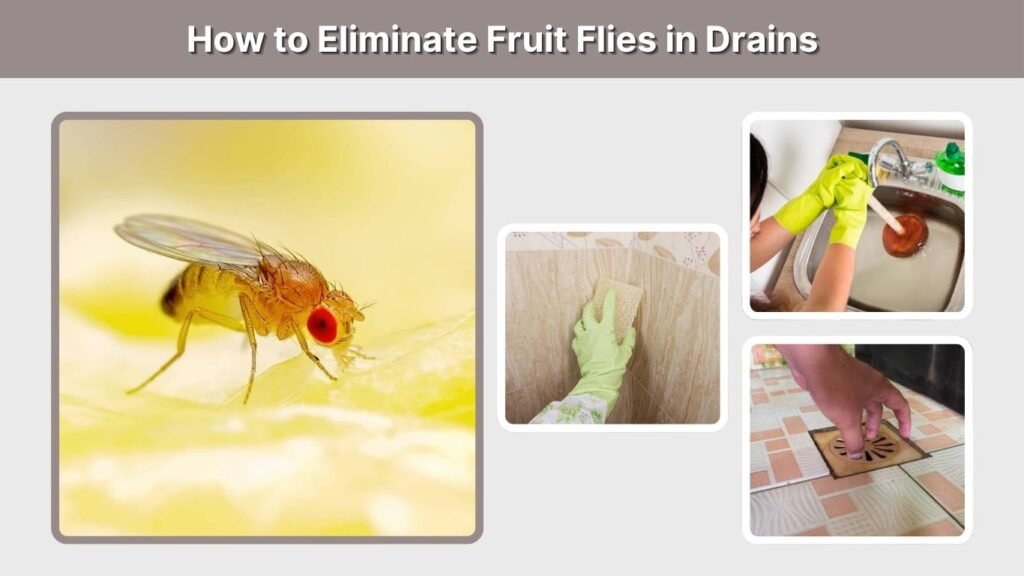
Fruit flies may gather around drains when food residue and organic slime accumulate inside them. However, drain flies and phorid flies can also emerge from plumbing, so proper identification is important.
Scrub Away Organic Buildup
Use a long, stiff drain brush to scrub the inside walls of the drain and other accessible surfaces. Clean the sink stopper, overflow opening, rubber disposal guard, and garbage disposal entrance.
After scrubbing, flush the area with hot water. Use a suitable drain-cleaning product when necessary and follow its label carefully.
Never mix bleach with vinegar, ammonia, drain cleaner, or other cleaning chemicals. Combining household cleaners can produce toxic gases or dangerous reactions.
Test Whether Flies Are Coming From a Drain
Cover the drain loosely with clear tape overnight, leaving part of the opening exposed for airflow. Flies found beneath or attached to the tape may indicate activity inside the drain.
Continue cleaning for several days because one treatment may not remove every layer of organic residue.
How to Eliminate Fruit Flies Naturally
Most home infestations can be controlled without widespread pesticide use. Natural elimination relies on sanitation, dry conditions, and food-based traps.
Use Several Small Traps
Place one trap near each suspected source rather than using a single trap in the center of the room. This approach captures more flies and helps reveal where they are breeding.
Check the traps daily. If one location catches many more flies, inspect that area carefully for hidden residue or spoiled food.
Create a Sugar and Yeast Trap
Mix one tablespoon of sugar with ½ cup of warm water. Add approximately ¼ teaspoon of dry yeast and one drop of dish soap.
The yeast ferments the sugar, creating odors that attract fruit flies. Pour the mixture into a jar and leave it near the infestation.
Vacuum Resting Adults
A vacuum cleaner can remove clusters of adult flies from walls, windows, cabinets, and ceilings. Empty the vacuum outdoors afterward.
Vacuuming offers immediate reduction but must be combined with cleaning and trapping to stop the next generation.
How to Eliminate Fruit Flies From Compost
Indoor compost bins can become major breeding sites because they contain moist fruit and vegetable scraps.
Manage Indoor Compost
Use a container with a tightly fitting lid. Empty it frequently and wash it with soap and water before adding fresh material.
During a serious infestation, store food scraps in a sealed container inside the refrigerator or freezer until they can be taken outside.
Manage Outdoor Compost
Cover fresh fruit scraps with dry brown material such as leaves, shredded cardboard, or untreated paper. Bury new food scraps beneath the existing pile instead of leaving them exposed.
Maintain a balanced mixture and avoid making the compost excessively wet. Turn the pile when appropriate to improve airflow and reduce exposed fermenting material.
How to Eliminate Fruit Flies From Plants
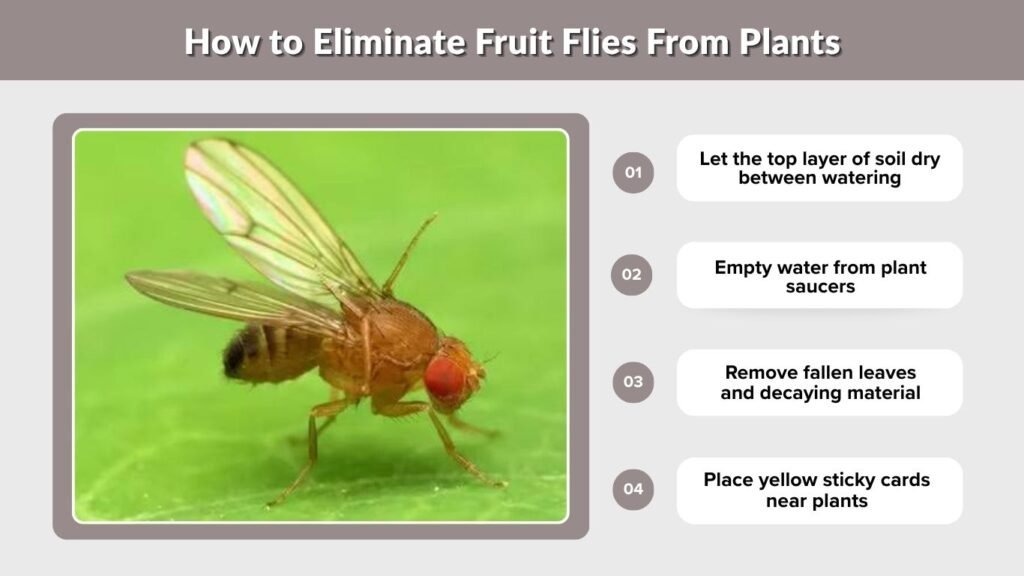
Fruit flies do not usually breed in ordinary potting soil. Tiny insects around houseplants are more likely to be fungus gnats.
Fungus gnats are dark, slender, and mosquito-like. Their larvae develop in moist soil containing decaying organic matter.
To control them:
- Let the top layer of soil dry between watering
- Empty water from plant saucers
- Remove fallen leaves and decaying material
- Place yellow sticky cards near plants
- Improve drainage and airflow
- Replace heavily contaminated soil when necessary
Vinegar traps may catch a few adults, but reducing soil moisture is more effective for fungus gnats.
How to Eliminate a Severe Fruit Fly Infestation
A large infestation usually indicates that an overlooked breeding source remains somewhere in the home.
Search Beyond the Kitchen
Inspect home bars, offices, bedrooms, utility rooms, pet areas, recycling storage, and bathrooms. Look for beverage cans, food wrappers, forgotten cups, damp towels, or hidden garbage.
Fruit flies can develop in very small amounts of fermenting material, including residue beneath a trash bag or inside a bottle cap.
Continue Treatment Through the Life Cycle
Do not remove traps immediately after adult activity decreases. Eggs and larvae may still be developing.
Continue cleaning and trapping for at least several days after the last fly is seen. Replace trap liquid regularly and monitor problem areas each morning and evening.
Consider Professional Help
Contact a pest-control professional when large numbers remain after one to two weeks of thorough sanitation and trapping.
Persistent flies may indicate:
- A plumbing leak
- Damaged drain lines
- Hidden food beneath cabinets
- Organic material inside inaccessible spaces
- Misidentified drain flies or phorid flies
- A breeding source connected to commercial equipment
How to Prevent Fruit Flies From Returning
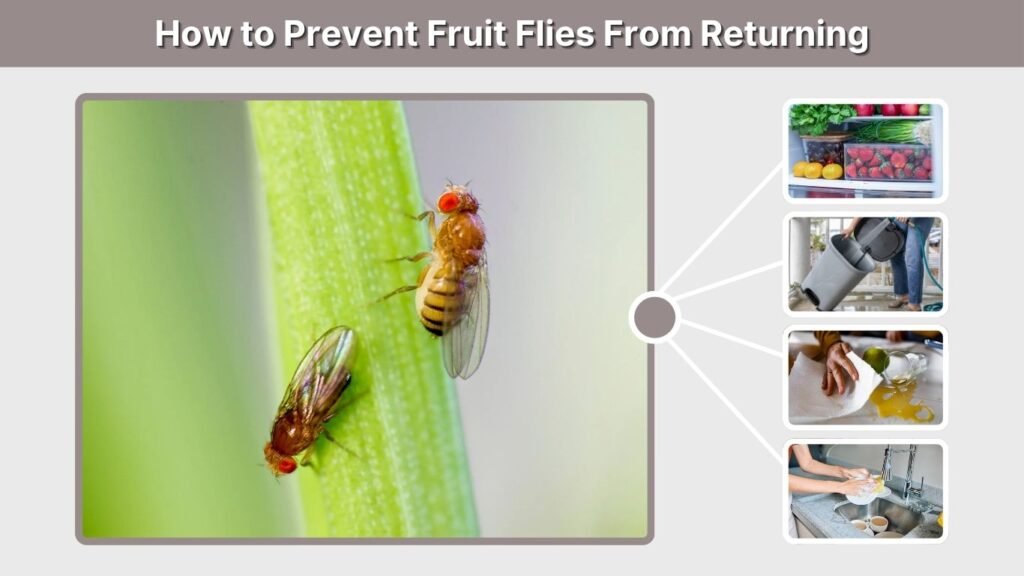
Prevention depends on removing attractive material before flies can reproduce.
Follow these practices:
- Refrigerate ripe produce
- Throw away damaged fruit promptly
- Empty garbage and compost regularly
- Wash trash and recycling bins
- Rinse bottles and cans
- Clean spills immediately
- Keep sinks and cleaning tools dry
- Wash dishes before bedtime
- Inspect stored potatoes and onions weekly
- Keep screens and doors in good condition
Avoid leaving sweet drinks, wine glasses, or open food containers out overnight.
FAQs
What is the fastest way to eliminate fruit flies?
Remove spoiled food, refrigerate produce, wash garbage containers, clean spills, scrub drains, and place vinegar-and-dish-soap traps near active areas. Traps quickly reduce adults, while sanitation eliminates eggs and larvae that would otherwise continue the infestation.
Can fruit flies be eliminated overnight?
You may catch many adults overnight, but complete elimination usually takes several days. Existing eggs and larvae can continue developing after the first cleaning. Keep traps active and repeat sanitation until no fruit flies appear for several consecutive days.
Why are fruit flies still present after cleaning?
A hidden breeding source may remain. Inspect drains, recycling containers, garbage bins, potatoes, onions, coffee trays, beverage bottles, damp cloths, and spaces beneath appliances. The insects may also be drain flies, phorid flies, or fungus gnats rather than fruit flies.
Does insect spray eliminate fruit flies?
Spray may kill exposed adults, but it does not remove eggs, larvae, or breeding residue. Sanitation and traps usually provide better long-term control. When using a pesticide, choose one labeled for indoor flying insects and follow all safety directions.
How long does it take to completely eliminate fruit flies?
A minor infestation may disappear within three to seven days. A severe problem can require one to two weeks of cleaning and trapping. Continued activity after that period often indicates an overlooked breeding site or incorrectly identified insect.