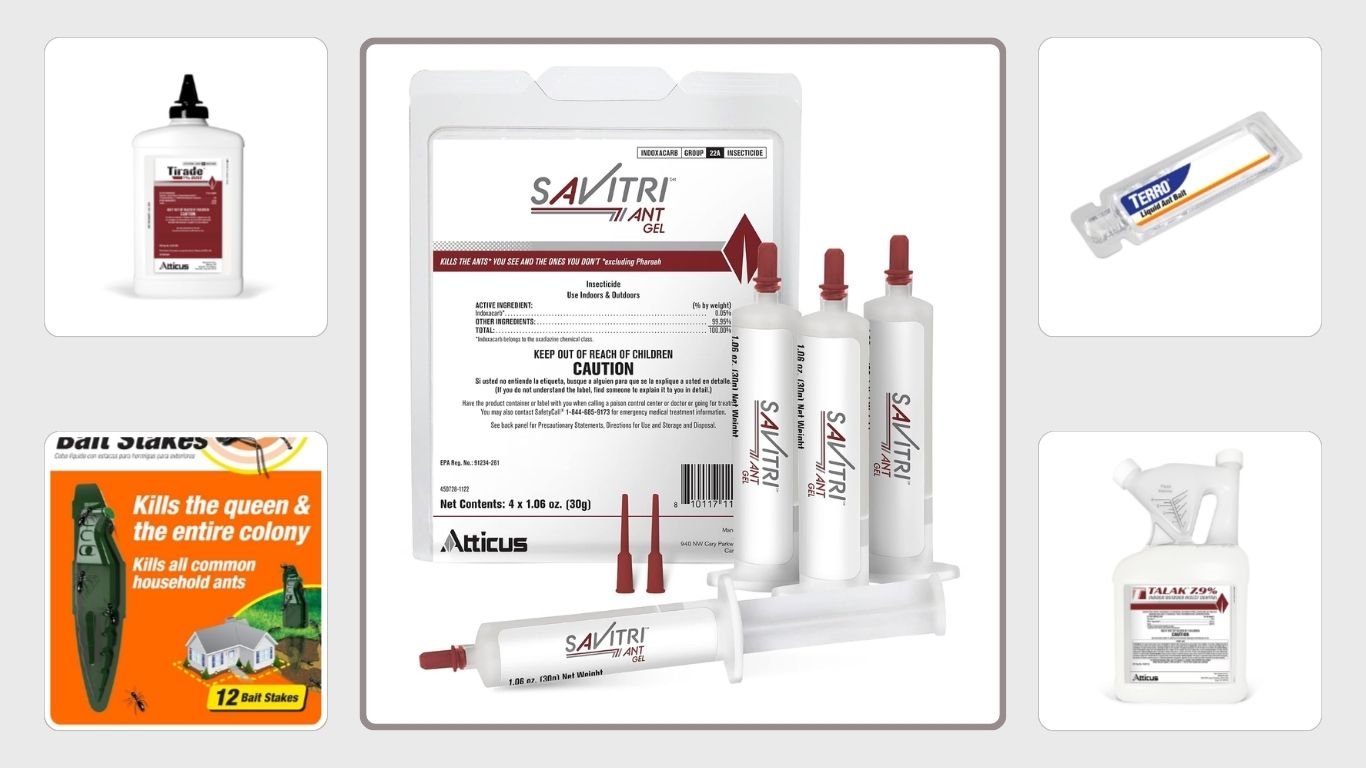
Ant infestations can quickly spread through kitchens, patios, foundations, gardens, and other areas around the home. The right ant killer can help target visible ants while also reaching nests and colonies that are harder to locate. Depending on the situation, sprays, liquid baits, gels, dusts, and granular formulas each offer different advantages. In this guide, we review 9 of the best ant killers based on effectiveness, application method, indoor or outdoor suitability, ease of use, and overall pest-control performance for common household ant problems.
1. Safer Home Spider & Insect Sticky Traps
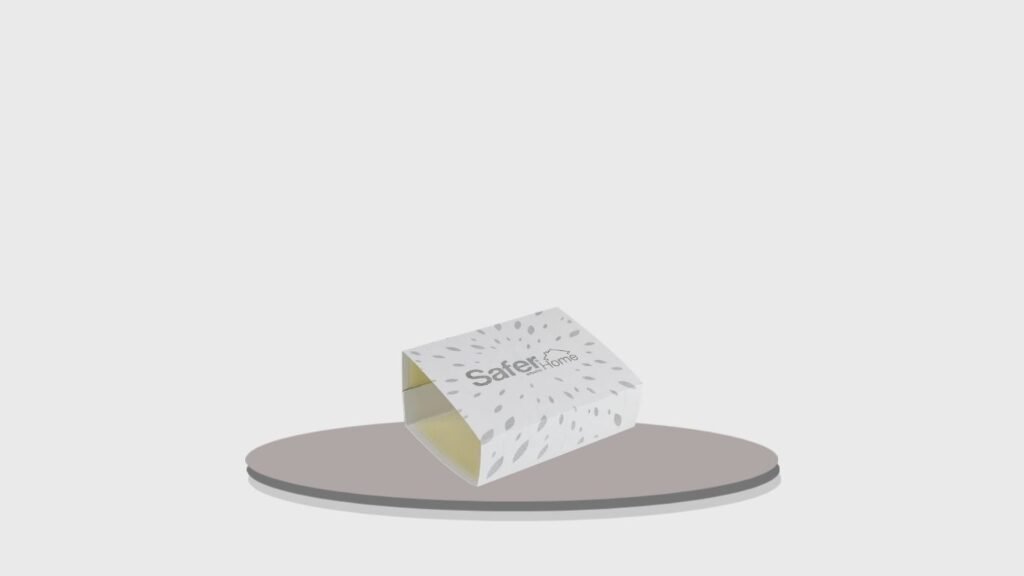
Safer Home Spider & Insect Traps provide a pesticide-free way to capture ants and other crawling insects indoors. Rather than using a chemical insecticide or bait, these traps rely on a strong adhesive surface that physically holds insects when they walk across it. They can be positioned flat for maximum catching area or folded into a covered trap, making them practical for kitchens, pantries, basements, and other indoor trouble spots.
Key Features
- Chemical-insecticide-free design
- Captures ants and other crawling insects
- Strong adhesive surface
- Can be used flat or folded
- Suitable for indoor use
- Works along baseboards and under appliances
- Multiple traps per package
- No chemical lure required
Why It Is Useful for Visible Ant Traffic
This product is most useful when ants are consistently traveling along predictable indoor routes. Placing the adhesive surface near baseboards, cabinets, appliances, corners, or entry points can intercept workers as they move through the house.
Unlike liquid or gel baits, however, this is primarily a physical capture system. It does not depend on ants carrying an active ingredient back to the nest. That distinction makes it particularly useful for monitoring where insects are coming from or reducing visible crawling pests without applying an insecticidal spray.
The option to fold the trap also helps keep captured insects out of sight while reducing accidental contact with the adhesive surface.
Performance and Placement
Safer states that the traps can capture ants, spiders, cockroaches, centipedes, crickets, and other crawling pests. Using them flat produces a larger exposed catching area, while the folded configuration is more discreet and can help shield the glue surface.
Strategic placement matters considerably. Because the trap does not attract insects with a chemical lure, it performs best when placed directly along established travel routes.
Users should also avoid positioning the exposed adhesive where children, pets, or loose household items can easily touch it.
Overall Verdict
Safer Home Spider & Insect Traps are best viewed as a simple indoor ant-control and monitoring tool rather than a complete colony-elimination treatment.
Their pesticide-free construction, flexible flat-or-folded design, and ability to capture several crawling pests make them particularly useful around kitchens, basements, storage areas, and appliances.
For households wanting to intercept visible ants without spraying insecticide indoors, this straightforward adhesive approach offers a practical first line of control.
2. Talak 7.9% Indoor & Outdoor Insect Control
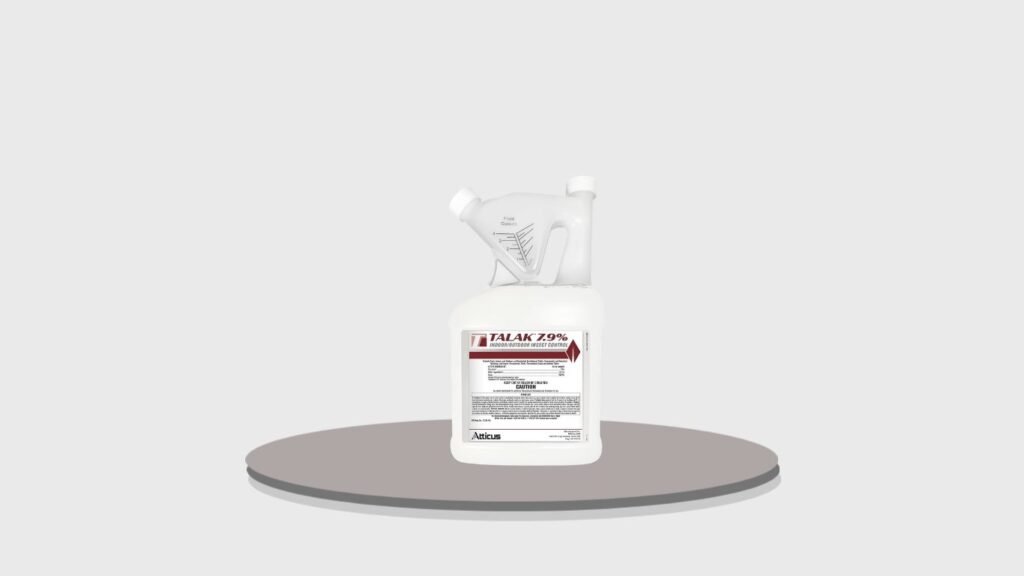
Talak 7.9% Indoor & Outdoor Insect Control is a concentrated professional-style insecticide formulated with 7.9% bifenthrin. EPA registration information lists ants among its target pests and includes a wide range of treatment sites, such as building foundations, basements, wall voids, and ant hills. Because it is a concentrate rather than a ready-to-use household bait, it is best suited to users prepared to follow pesticide-label directions carefully.
Key Features
- 7.9% bifenthrin active ingredient
- Concentrated insecticide formula
- Targets ants and many other insect pests
- Indoor and outdoor labeled applications
- Suitable for foundation treatments
- Can be used around ant activity areas when label permits
- Residual-style pest-control approach
- EPA-registered pesticide formulation
Why It Stands Out for Broad-Spectrum Pest Control
Talak differs significantly from simple ant bait stations. Its bifenthrin formulation is designed for a wide range of insects, making it useful when ants are only one part of a larger pest problem.
EPA registration information lists numerous target pests in addition to ants, giving the product broader utility around structures and outdoor areas.
This can be advantageous for homes dealing with recurring insects around foundations, entry points, garages, or other structural areas. Instead of placing individual bait stations throughout every location, a labeled residual treatment can address specific pest-active zones.
Application and Performance Considerations
Because Talak is a concentrate, correct dilution and application depend on the official product label. More product is not automatically more effective, and users should never exceed labeled rates or apply it to surfaces or locations that the label does not authorize.
Bifenthrin works through contact and residual exposure rather than the slow colony-transfer process associated with ant baits. That makes Talak particularly useful for perimeter-oriented control, but bait products may still play a different role when the objective is to have foraging ants carry material back into a hidden colony.
Protective precautions, re-entry directions, and environmental restrictions on the label should always be followed.
Overall Verdict
Talak 7.9% is the more technical pest-control option among the first five products.
Its concentrated bifenthrin formula and broad labeled pest range make it especially suitable for users dealing with recurring ants around structures alongside other insects.
It requires more preparation and label awareness than a ready-to-use bait, but its residual treatment approach provides a different type of control that can be valuable for exterior perimeters, foundations, and other labeled treatment areas.
3. TERRO T300 Liquid Ant Baits
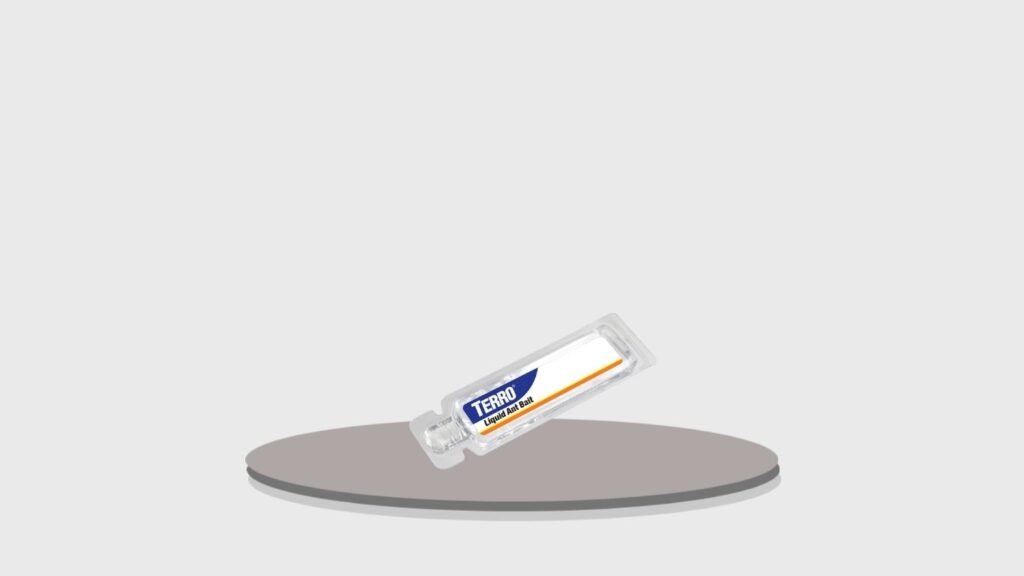
TERRO T300 Liquid Ant Baits use a sweet liquid formulation containing 5.4% sodium tetraborate decahydrate, or borax. Instead of killing foraging ants immediately, the bait is designed to give workers enough time to return to the nest and distribute it through the colony. Each station arrives pre-filled and ready to use, making this one of the simplest options for common sweet-feeding household ants.
Key Features
- 5.4% borax active ingredient
- Pre-filled liquid bait stations
- Slow-acting colony-control approach
- Designed for common household ants
- Ready to use
- Snap-off opening tab
- Suitable for placement along ant trails
- Can be used near baseboards and entry points
- Continuous enclosed bait supply
Why It Is Best for Colony-Focused Indoor Control
The main advantage of TERRO is that it works with normal ant foraging behavior. Worker ants are attracted to the sugary liquid, consume it, and can return to the nest before the borax takes effect.
This delayed action is important because the objective is not simply to kill the handful of ants visible on a countertop. The workers can distribute the bait among other colony members, potentially reaching ants that remain hidden inside walls, cracks, or nesting areas.
For common sweet-eating household species, that colony-transfer process provides a more strategic approach than repeatedly killing individual workers.
Performance and Ease of Use
The stations are already filled, so setup mainly involves opening the tab and positioning them along active trails or near suspected entry points. TERRO notes that users may initially see more ants around the bait because workers recruit additional colony members to the food source.
Complete control is not necessarily immediate; the manufacturer says it can take up to about two weeks.
The product is not intended for every ant species. TERRO specifically excludes species such as fire ants, carpenter ants, pharaoh ants, and harvester ants from its listed targets.
Overall Verdict
TERRO T300 is particularly well suited to common indoor ant invasions where workers are traveling along visible trails.
Its pre-filled design requires little preparation, while the slow-acting borax formula is specifically intended to reach beyond visible workers and affect the colony.
For users who prefer a contained bait station rather than mixing concentrates or spraying surfaces, TERRO provides a straightforward and technically sensible approach to many common household ant problems.
4. Catchmaster DEFIANT Premium Liquid Ant Control
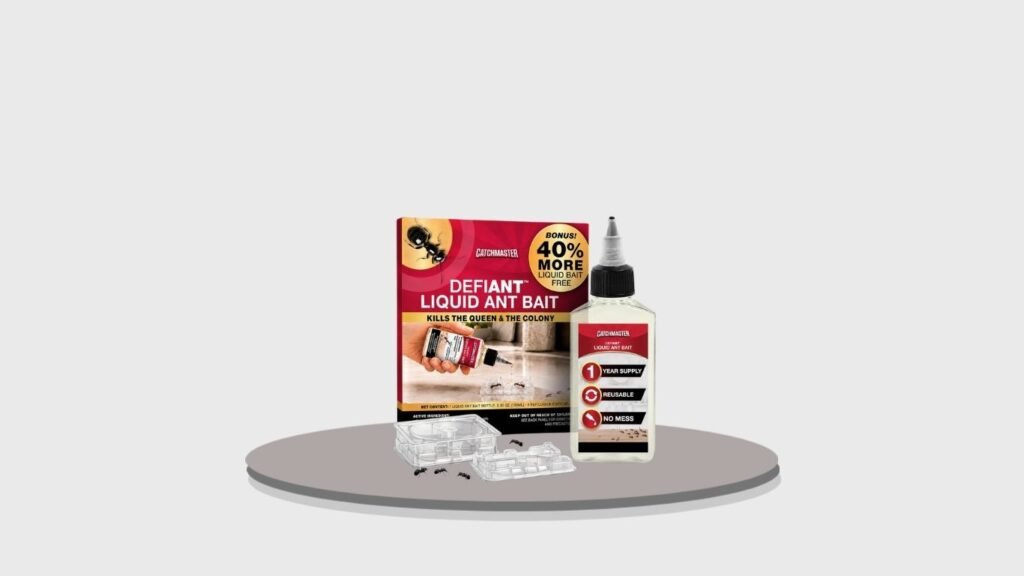
Catchmaster DEFIANT is a refillable liquid ant-bait system designed to combine colony control with reusable bait stations. The package includes a 3.38-ounce bottle of liquid bait and four reusable stations that can be positioned individually or combined into covered configurations. Its borax-based formula is intended to let worker ants carry bait back to other colony members, including the queen.
Key Features
- 5.4% borax liquid bait
- 3.38-ounce bait bottle
- Four reusable bait stations
- Indoor and outdoor placement options
- Designed to target the colony and queen
- Refillable transparent stations
- Stations can be stacked for additional protection
- Easy monitoring of bait levels
- Approximately one-year supply under typical use claims
Why It Is Best for Refillable Ant Control
DEFIANT’s biggest advantage over disposable bait stations is flexibility. Instead of discarding an entire station once the bait is depleted, users can add more liquid and continue using the same trap.
The transparent housing also allows users to see both ant activity and remaining bait levels. This makes it easier to recognize when a heavily active location needs another dose.
Catchmaster describes the supplied liquid quantity as roughly a one-year supply for an average home, although actual usage will naturally depend on the size and frequency of infestations.
Colony Control and Practical Performance
The bait relies on delayed action rather than immediate contact killing. Workers feed on the liquid and have time to return to the colony, where the bait can spread among other ants.
Catchmaster states that reductions in activity may become noticeable within days, while full colony control can take as long as about three weeks depending on infestation severity.
The manufacturer lists several common ants as targets, including Argentine, odorous house, pavement, ghost, crazy, and little black ants. The product is not presented as effective against every species, including fire, carpenter, and pharaoh ants.
Overall Verdict
Catchmaster DEFIANT is especially appealing for households that experience repeated ant activity and prefer a refillable system over single-use bait stations.
Its reusable traps, sizeable liquid supply, transparent design, and colony-oriented formula provide good long-term practicality.
For users who want to maintain bait stations in recurring ant hotspots and refill them as necessary, DEFIANT offers a more adaptable setup than conventional disposable ant traps.
5. Savitri Ant Gel Bait
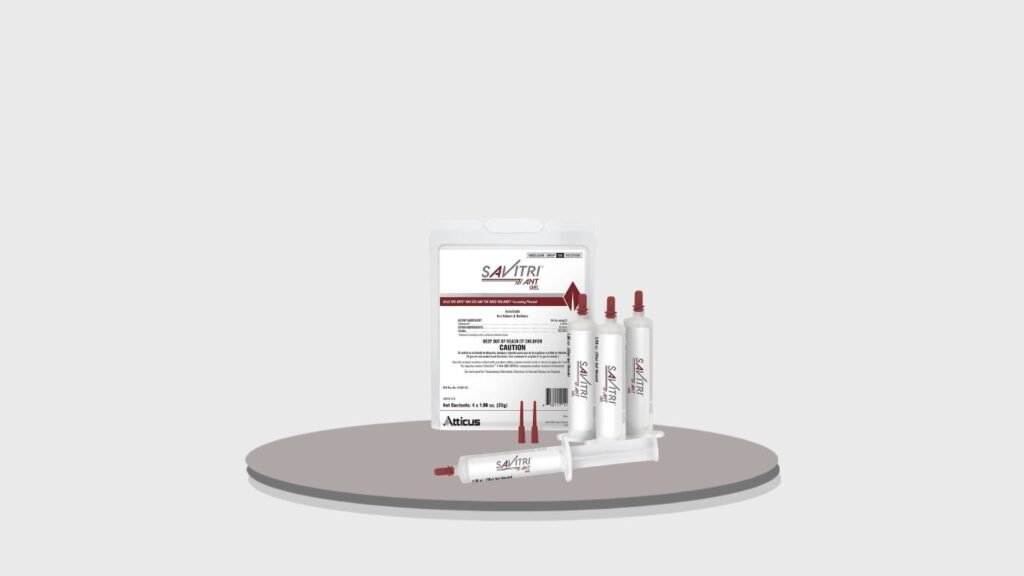
Savitri Ant Gel Bait by Atticus uses 0.05% indoxacarb, a Group 22A insecticide, in a gel formulation designed specifically for ant control. The gel format allows targeted placement in cracks, crevices, and other appropriate areas where ants travel or forage. Because only small amounts can be positioned in specific locations according to the label, gel bait can be particularly useful when ant activity is concentrated around narrow indoor pathways.
Key Features
- 0.05% indoxacarb active ingredient
- Gel bait formulation
- Group 22A insecticide
- Designed specifically for ant control
- Precision placement capability
- Useful around cracks and crevices when label permits
- Colony-oriented bait approach
- Professional-style formulation
- EPA-registered product
Why Gel Bait Works Well in Difficult Locations
Traditional bait stations are convenient, but their fixed shape can prevent them from fitting into certain ant travel areas. Gel bait offers much greater placement flexibility.
Small placements can be made in appropriate labeled locations near ant trails, cracks, crevices, or other areas where workers actively forage. This is particularly useful behind fixtures or in tight spaces where a larger plastic station may be awkward.
Because the gel is a bait rather than a broad surface spray, the goal is to encourage foraging ants to feed rather than immediately repel or kill them at the application point.
Active Ingredient and Control Performance
Savitri contains 0.05% indoxacarb. EPA documentation identifies the formulation specifically as an ant gel bait and classifies indoxacarb as an oxadiazine Group 22A insecticide.
The precision format is valuable for targeted pest-management programs because users can concentrate bait where ant activity is occurring while avoiding unnecessary application over broad surfaces.
As with every pesticide bait, label directions are critical. The product should be kept out of children’s reach, applied only in approved locations, and never placed where food or other prohibited surfaces may become contaminated.
Overall Verdict
Savitri Ant Gel Bait is one of the more specialized options in this roundup.
Its indoxacarb active ingredient and precision gel format make it particularly useful when ants are entering through narrow cracks, crevices, or other spaces that conventional bait stations cannot easily reach.
For users who prefer targeted bait placement and are comfortable following detailed pesticide-label directions, Savitri provides a technically focused approach to household ant management.
6. EcoVenger Ant & Crawling Insect Killer
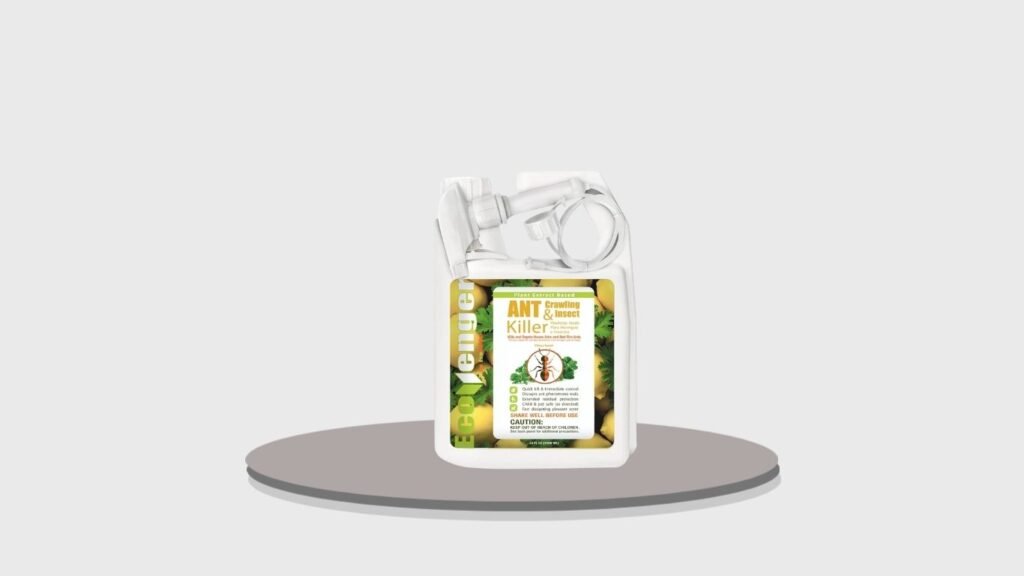
EcoVenger Ant & Crawling Insect Killer is a ready-to-use botanical spray designed for people who prefer direct contact control without relying on a conventional synthetic pesticide active ingredient. Its formula uses geraniol, citronella oil, cedarwood oil, and sodium lauryl sulfate. It can be applied indoors or outdoors according to the product directions and is intended to both kill active ants and disrupt the trails they use to return to treated areas.
Key Features
- Ready-to-use spray formula
- Botanical active ingredients
- Contains geraniol, citronella oil, and cedarwood oil
- Designed to kill and repel ants
- Suitable for indoor and outdoor labeled use
- Targets ant trails and entry points
- Also controls several other crawling insects
- No mixing or dilution required
- Designed for direct and residual-style treatment
Why It Is Best for Botanical Ant Control
EcoVenger stands out from traditional ant sprays because its insecticidal components are derived from aromatic plant compounds. This makes it attractive to households specifically looking for a plant-based pest-control approach.
The manufacturer states that the spray kills house ants rapidly on direct contact and can also interfere with pheromone trails, which are the chemical paths ants use to guide other workers toward food sources.
That combination is useful when ants repeatedly emerge from the same doors, windows, cracks, or other entry areas.
Unlike colony baits, however, contact sprays focus primarily on ants present in treated locations. A bait may still be useful when the hidden nest itself needs to be reached.
Performance and Everyday Application
Because EcoVenger arrives ready to use, there is no concentrate to measure or dilute. This makes it considerably simpler for routine household pest control.
The manufacturer recommends targeting active ants, entry points, and frequently traveled routes according to the product directions. Its plant-derived formulation also controls several other crawling pests, which adds versatility when ants appear alongside spiders, earwigs, crickets, or similar household invaders.
Even plant-based pest-control products should still be used according to their current label and kept away from unintended contact during application.
Overall Verdict
EcoVenger is a strong fit for users who want an easy-to-apply ant spray and specifically prefer a botanical formulation.
Its combination of contact killing, trail disruption, ready-to-use convenience, and indoor/outdoor versatility makes it practical for localized household ant activity.
For visible ants entering around windows, doors, plumbing penetrations, or similar areas, the ability to treat both the insects and their travel routes gives this product a useful role in an integrated ant-control strategy.
7. Tirade 1% Dust Insecticide
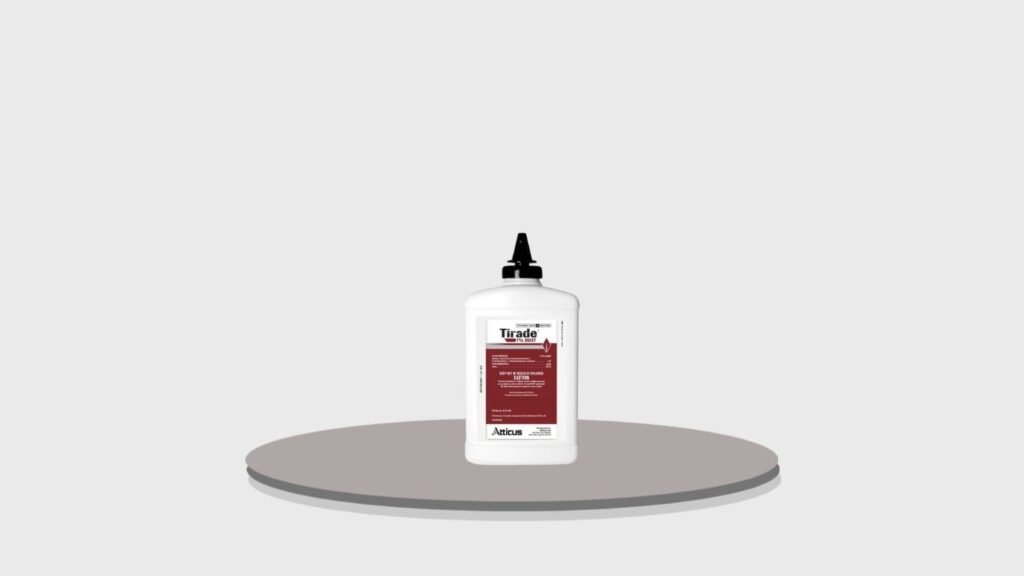
Tirade 1% Dust is a ready-to-use insecticidal dust containing 1% cyfluthrin, a Group 3A pyrethroid insecticide. Rather than functioning as food bait, the dust is designed for residual control in labeled cracks, crevices, voids, and other difficult locations where crawling insects may hide. The product label includes ants among a broad range of target pests, making it a more specialized option for persistent infestations.
Key Features
- 1% cyfluthrin active ingredient
- Ready-to-use dust formulation
- Group 3A pyrethroid insecticide
- Controls ants and numerous other pests
- Residual pest-control action
- Useful for difficult-to-reach labeled areas
- Low-odor formulation
- Non-staining when used as directed
- No mixing or dilution required
Why It Works Well in Cracks and Hidden Spaces
Ants frequently move through spaces that liquid sprays cannot conveniently reach, such as wall voids, narrow cracks, baseboard gaps, and structural crevices. A dust formulation can be useful in these locations because it remains dry and can provide residual control after application.
Tirade’s label includes several ant types, including carpenter ants and fire ants, along with many other crawling and structural pests.
This makes the product particularly useful when ant activity is associated with hidden structural spaces rather than open countertops or visible trails.
Residual Performance and Safety Considerations
Cyfluthrin acts differently from slow ant baits. Ants are exposed to the insecticide when they contact treated areas rather than carrying an attractive food source back to the colony.
Atticus describes Tirade as offering lasting residual control and being particularly effective in difficult-to-reach pest harborage areas.
Because this is an insecticidal dust, careful application is essential. The label warns against inhaling the dust, contaminating food or feed, and applying it directly to water. It should not be scattered by hand, and users should follow all placement, protective, and environmental instructions on the label.
Overall Verdict
Tirade 1% Dust is one of the more specialized ant-control products in this roundup.
Its biggest strength is the ability to provide residual insecticidal treatment in labeled cracks, crevices, voids, and other locations where liquid products may be less convenient.
For persistent ant activity hidden within structural spaces, the ready-to-use cyfluthrin formulation offers a technically different solution from liquid baits or surface sprays. It does, however, require more careful handling and strict attention to label directions.
8. BASF Advance 375A Granular Ant Bait
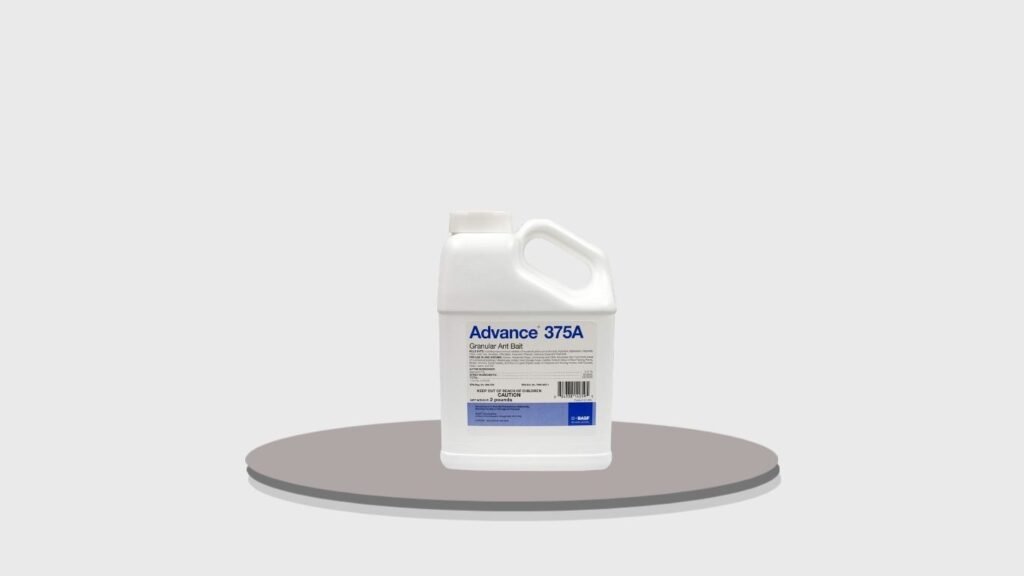
BASF Advance 375A is a professional-style granular ant bait containing 0.011% abamectin B1. Its bait matrix combines proteins and carbohydrates with multiple granule sizes, allowing different ant species to select and transport particles that suit their feeding behavior. The product is labeled for indoor and outdoor use and targets a broad range of pest ants, making it especially useful when the exact species or feeding preference is uncertain.
Key Features
- 0.011% abamectin B1
- Granular bait formulation
- Protein and carbohydrate food matrix
- Multiple granule sizes
- Designed for many common ant species
- Indoor and outdoor labeled applications
- Ready-to-use formula
- Colony-oriented bait strategy
- Suitable for perimeter and targeted placements according to label
Why It Stands Out for Multiple Ant Species
Ant species do not all prefer exactly the same food. Some may strongly favor sugars, while others respond better to proteins, fats, or other food sources at different stages of colony development.
Advance 375A addresses this problem by combining proteins and carbohydrates and using a mixture of different grit sizes. BASF specifically describes it as a universal ant bait intended to be picked up by numerous ant species.
Its label includes common household pests such as Argentine, carpenter, fire, little black, odorous house, pavement, pharaoh, and thief ants.
This broad target range can make it particularly useful when standard sweet liquid bait is not attracting the ants present.
Colony Control and Practical Performance
Granular bait is designed to work through ant foraging behavior. Workers discover attractive particles, carry them away, and introduce the active ingredient into areas where other colony members can encounter it.
Because this process depends on feeding and transfer, users should not expect the immediate visible knockdown associated with contact insecticides.
Placement and environmental conditions also matter. The product should be applied only according to its current label, and bait should be kept away from locations where it could contaminate food or become exposed contrary to label directions.
Overall Verdict
BASF Advance 375A is one of the most versatile bait choices in this roundup for users dealing with several possible ant species.
Its protein-and-carbohydrate matrix, mixed grit sizes, broad species labeling, and indoor/outdoor versatility give it a clear technical advantage over baits aimed primarily at sugar-feeding ants.
For infestations where liquid bait is being ignored or where colony-oriented control is preferred, its granular formulation offers a useful alternative.
9. TERRO Outdoor Liquid Ant Bait Stakes
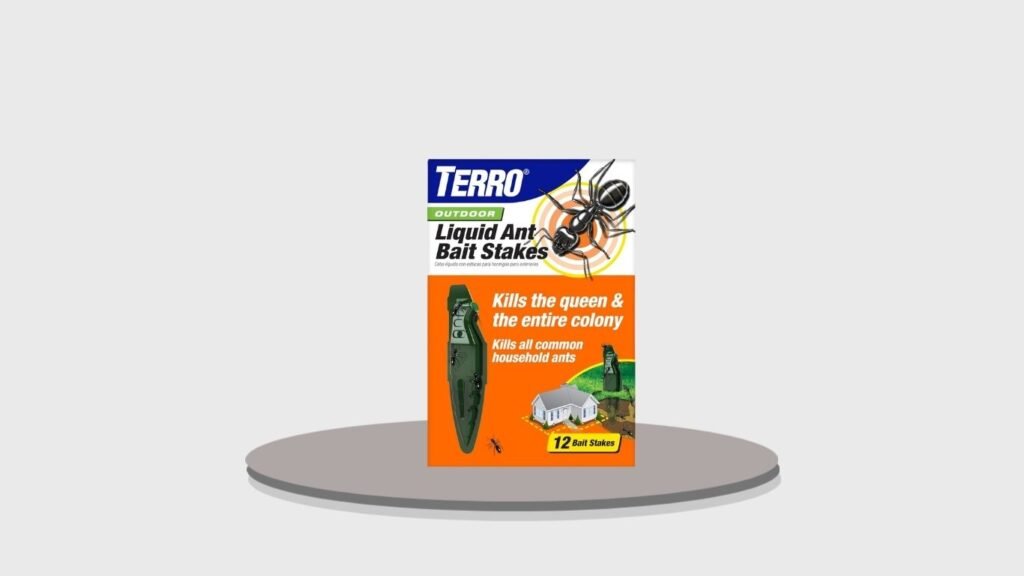
TERRO Outdoor Liquid Ant Bait Stakes are designed to stop common sweet-feeding ants outside before they establish heavier activity inside the home. Each stake contains a liquid bait made with 5.4% sodium tetraborate decahydrate, or borax. The green stake design can be positioned around outdoor ant trails, nests, and home perimeters while protecting the liquid bait inside a contained station.
Key Features
- 5.4% borax active ingredient
- Sweet liquid bait
- Outdoor stake-style housing
- Ready-to-use design
- Targets common household ants
- Designed for colony-oriented control
- See-through bait monitoring
- Suitable for perimeter placement
- Disposable bait stations
- Weather-protected enclosed design
Why It Is Best for Outdoor Perimeter Control
The main benefit of these TERRO stakes is their ability to place liquid bait directly in areas where ants are active outside.
Instead of waiting until workers reach a kitchen or pantry, the stations can be positioned near trails, nesting sites, or locations where ants are entering the structure. TERRO recommends placing them near outdoor ant activity and around the home’s perimeter.
The stake format also helps keep the station upright and relatively discreet in landscaping areas.
How the Liquid Bait Targets the Colony
TERRO uses delayed-action borax bait rather than an instant contact insecticide. Worker ants are attracted to the sweet liquid and have time to travel back toward the colony after feeding.
Other workers can follow pheromone trails to the bait, which explains why ant activity around the stations may initially appear to increase. The objective is for the bait to circulate through the colony rather than simply killing individual workers immediately.
TERRO lists many common sweet-eating species as targets but excludes fire ants, pharaoh ants, carpenter ants, and harvester ants from this product’s recommended target list.
Overall Verdict
TERRO Outdoor Liquid Ant Bait Stakes are especially practical for households that regularly see ants moving through lawns, landscaping, patios, or along exterior foundations.
Their pre-filled design avoids mixing chemicals, while the contained liquid bait uses worker ants to help carry treatment toward the colony.
For common sweet-feeding ants entering a home from outdoor nesting areas, perimeter baiting with these stakes provides a straightforward way to address the problem closer to its source.
FAQs
1. What type of ant killer works best?
The best type depends on where the ants are located and what species is present. Liquid, gel, and granular baits can be particularly useful when the goal is colony control because workers carry or share the bait. Contact sprays are useful for quickly reducing visible ants, while insecticidal dusts can reach labeled cracks, voids, and other hidden areas.
2. Is ant bait better than ant spray?
Neither is universally better. Ant spray provides faster control of ants that are directly contacted, but it may not reach a hidden colony. Bait works more slowly but can allow foraging ants to transport the active ingredient toward the nest. For many infestations, strategically using the appropriate product for each location can provide more complete control.
3. How long does it take ant bait to kill a colony?
Results vary by ant species, colony size, bait formulation, temperature, and how readily the ants feed. Some reductions in activity may occur within several days, while colony-oriented treatment can require one to several weeks. Seeing more ants around a bait shortly after placement can be normal because workers recruit other ants to the food source.
4. Can indoor ant killers be used around children and pets?
Only according to the specific product label. Ant killers differ substantially in ingredients and application methods. Even enclosed bait stations should be positioned where children and pets cannot tamper with them when the label requires it. Concentrates, dusts, sprays, and loose granules may have additional restrictions. Always follow the current label rather than assuming that all household ant products have the same precautions.
5. Why do ants keep returning after I kill the ones I see?
The ants visible inside a home are usually only foraging workers. The main colony, including queens and developing ants, may remain hidden inside walls, soil, landscaping, or another protected nesting location. Killing only visible workers can therefore provide temporary relief. Locating entry points, removing accessible food and water, sealing appropriate gaps, and using a colony-oriented bait when suitable can help address recurring activity more effectively.