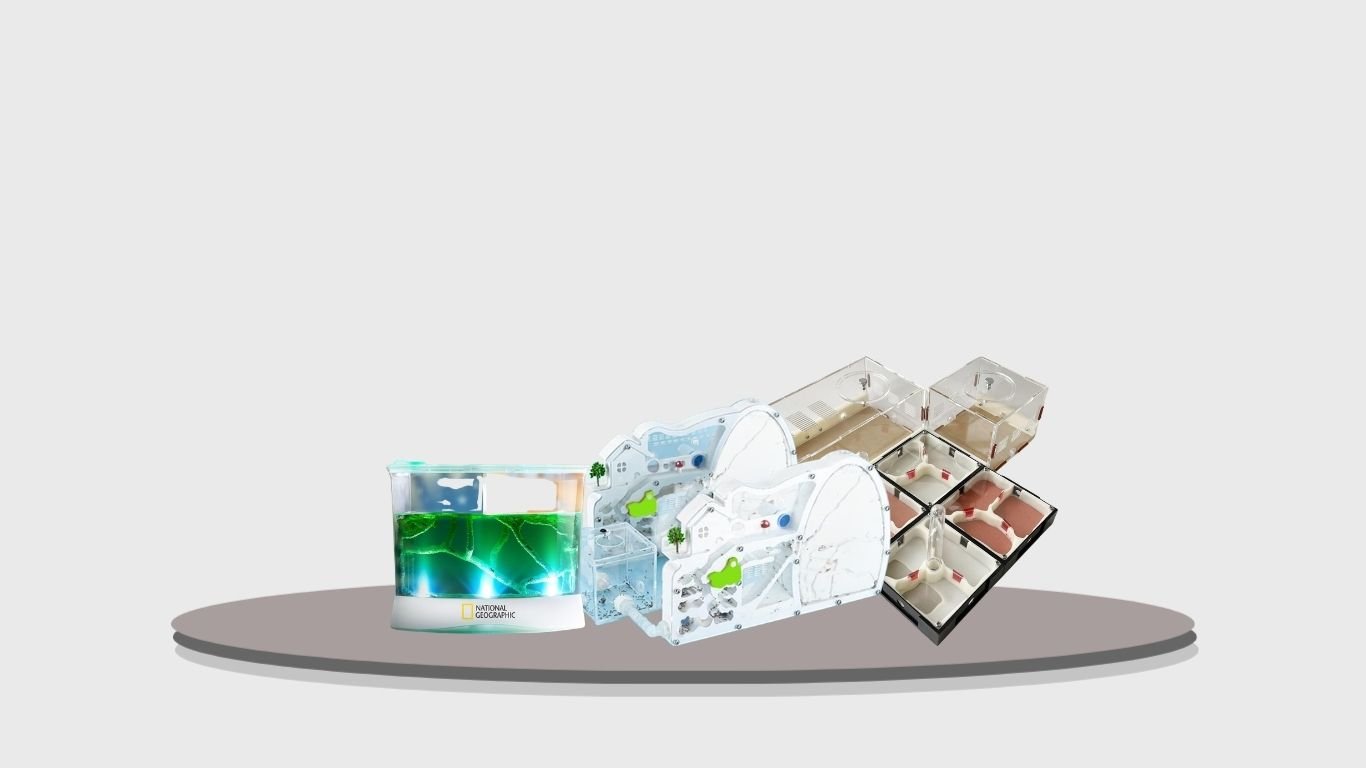
Ant farm kits offer a fascinating way to watch ants build tunnels, organize colonies, and display their natural behavior up close. They can be both educational and entertaining, making them useful for kids, classrooms, homeschool activities, and anyone interested in insect observation. The best ant farm kits should provide clear viewing panels, secure construction, adequate ventilation, and enough space for ants to move and tunnel naturally. In this guide, we review 9 of the best ant farm kits based on design, visibility, ease of setup, educational value, and overall usability.
1. Uncle Milton Giant Ant Farm

The Uncle Milton Giant Ant Farm brings the classic ant-observation experience into a larger format designed for clearer viewing and more visible tunneling activity. Its transparent habitat, clean tunneling sand, stable stand, and educational guide make it particularly suitable for children, classrooms, and first-time ant keepers. The manufacturer recommends it for ages six and older with adult assistance.
Key Features
- Extra-large transparent viewing area
- Clean tunneling sand included
- Break-resistant habitat construction
- Escape-resistant design
- Tip-proof stand
- Ant Watcher’s Guide included
- Designed for ages 6+
- Live ants ordered separately
- Suitable for home or classroom observation
Why It Stands Out for Beginner Ant Keepers
The strongest feature of this model is simplicity. Children do not need an elaborate formicarium setup to start observing real ant behavior. Once the sand is prepared and ants are introduced correctly, users can watch them move soil, excavate passageways, and gradually develop interconnected tunnels.
The large viewing area also gives it an advantage for families or classrooms where more than one person may be watching at the same time. Uncle Milton specifically promotes it as having a particularly large viewing area and as being appropriate for classroom use.
Observation Experience and Maintenance
The traditional sand habitat creates a more natural-looking digging experience than brightly colored gel systems. As tunnels develop against the transparent walls, children can observe how individual ants cooperate and move through different sections of their environment.
Maintenance is relatively straightforward but still requires supervision. According to the manufacturer’s manual, ants need small amounts of food and water, and overfeeding or overwatering should be avoided. The habitat also contains ventilation openings to provide airflow.
This hands-on care adds another educational dimension because users are not simply watching ants; they are learning how to maintain a living habitat responsibly.
Overall Verdict
The Uncle Milton Giant Ant Farm is a particularly strong match for families wanting a recognizable, traditional ant-farm experience without complicated assembly.
Its large viewing area, stable base, included sand, and straightforward care system provide a useful balance between entertainment and science learning. For children who are curious about insects and want to watch real tunnels develop over time, this classic-style habitat offers an engaging introduction to ant observation.
2. Ants Footsteps Ant Farm Nest Science Terrarium Kit
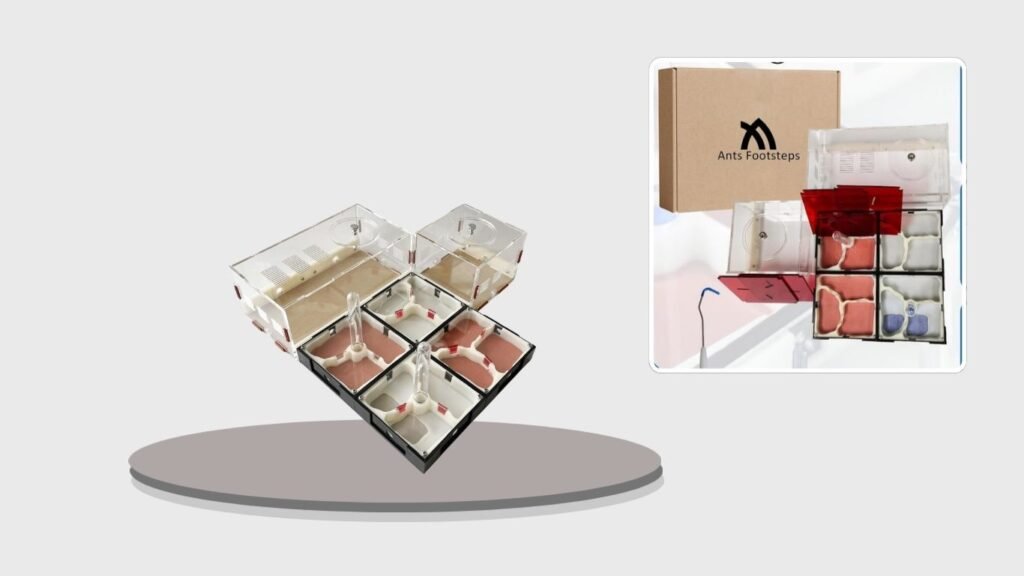
The Ants Footsteps Ant Farm Nest Science Terrarium Kit is a more detailed formicarium-style option designed for close observation of an active colony. Its transparent acrylic construction allows users to see ant movement clearly, while the habitat incorporates specialized areas intended for colony care and observation. Live ants are not included and must be obtained separately.
Key Features
- Transparent acrylic construction
- Designed for close colony observation
- Dedicated nesting environment
- Water-tower component
- Brood or nurturing area
- Expandable habitat concept
- Designed for live ants
- Ants purchased separately
- Suitable for science observation and learning
Why It Is Best for Detailed Ant Observation
Compared with a simple sand-filled children’s ant farm, the Ants Footsteps habitat has a more specialized formicarium appearance. This makes it appealing for users who want to observe more than basic tunneling.
The high-transparency acrylic construction helps users follow ants as they travel through the habitat and interact with different areas. The listing also describes the habitat as expandable, which may appeal to people interested in gradually developing a more extensive ant-observation setup.
For curious children, teens, or adults, that structure can create a stronger connection between recreational ant keeping and actual biological observation.
Design, Visibility, and Everyday Care
Visibility is one of this model’s biggest advantages. Acrylic walls make it easier to inspect ant activity without opening the enclosure unnecessarily, reducing disturbance to the insects while allowing users to follow movement inside.
The habitat also incorporates water-management and nesting features, making correct setup more important than with very basic toy-style farms. That additional complexity can be rewarding for users interested in learning colony-care techniques.
The manufacturer listing notes that ants are not included, so buyers will need to plan separately for a suitable colony and should select ants appropriate for the habitat.
Overall Verdict
The Ants Footsteps Terrarium Kit suits users who want a more technical ant-keeping experience rather than a simple novelty toy.
Its transparent acrylic body, specialized nesting areas, and colony-care features create more opportunities for detailed observation. For families or young science enthusiasts willing to spend a little more time learning correct ant care, this model offers a more immersive experience than a basic sand-only habitat.
3. Ant Terrarium Nurturing & Comprehensive Observation Set
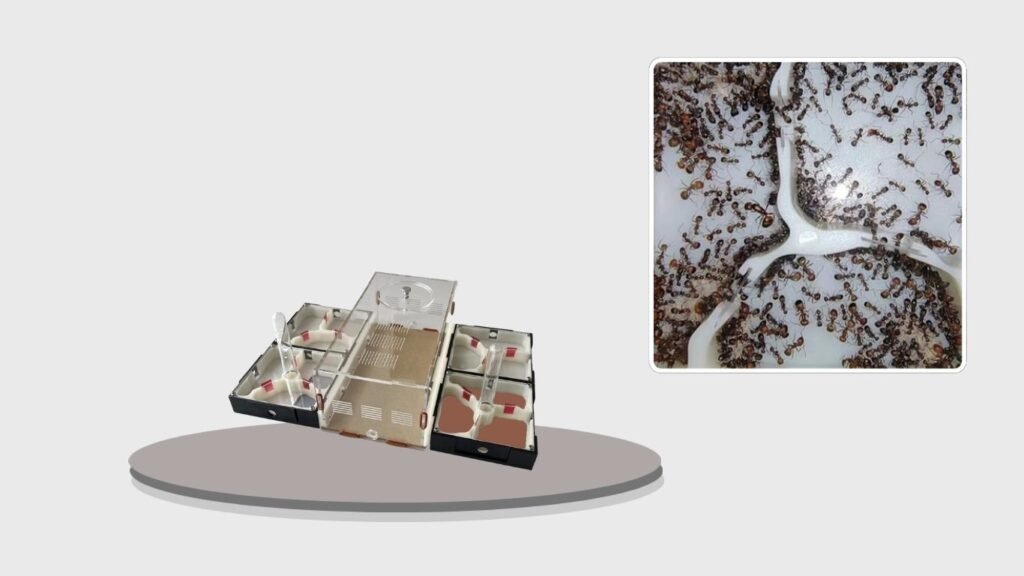
This Ant Terrarium Nurturing and Comprehensive Observation Set is designed around a more involved approach to ant keeping. Rather than functioning only as a small display container, its formicarium-style layout is intended to give ants room for nesting and movement while allowing users to observe colony behavior closely. That combination makes it particularly interesting for hobbyists, students, and children learning about social insects.
Key Features
- Transparent observation-focused design
- Formicarium-style ant habitat
- Designed for live ant colonies
- Dedicated observation areas
- Suitable for educational activities
- Compact tabletop configuration
- Designed to display colony behavior
- Useful for home science projects
- Intended for ongoing ant care
Why It Works Well for Hands-On Learning
Ants are especially interesting educational animals because much of their activity revolves around cooperation. Workers forage, communicate, care for the colony, and maintain nesting areas through coordinated behavior.
A transparent observation habitat allows children to see these activities at a scale that would normally remain hidden underground.
That makes a formicarium particularly valuable for science-based learning. Instead of simply reading about colonies in a book, users can observe changes in activity patterns and watch individual ants interact with one another over time.
Observation Quality and Colony Management
A comprehensive observation setup works best when users are prepared to learn basic colony-care principles. Correct moisture, feeding, ventilation, and species selection can influence how successfully ants settle into a habitat.
The transparent design also makes routine monitoring easier. Users can notice changes in activity, food consumption, or nesting behavior without repeatedly opening the enclosure.
Parents should still supervise younger children, particularly during setup and feeding. Ants are living animals, and some species can bite or sting, so responsible handling matters just as much as viewing quality.
Overall Verdict
This Ant Terrarium Observation Set is better suited to someone seeking a small ant-keeping project than to someone wanting only a temporary novelty display.
Its formicarium-oriented layout encourages closer attention to colony behavior and care, giving it good educational potential for families, classrooms, and young insect enthusiasts.
For users interested in seeing how ants organize themselves rather than merely watching a few tunnels appear, the more observation-focused format provides an engaging way to explore ant biology at home.
4. National Geographic Light-Up Ant Habitat Kit

The National Geographic Ant Habitat Kit combines insect observation with several child-friendly visual features. The transparent habitat uses nutrient-rich gel as its tunneling medium and includes built-in magnifiers, an additional magnifier, a tunnel starter tool, and an illuminated base. Ants are sold separately, making this a complete observation habitat rather than a live-ant package.
Key Features
- Nutrient-rich translucent gel habitat
- Light-up terrarium base
- Built-in magnifying glasses
- Additional handheld magnifier
- Tunnel starter tool included
- 360-degree viewing design
- USB-powered lighting
- Ants sold separately
- Recommended for ages 6+
- STEM-oriented educational design
Why It Is Excellent for Visual Learning
This kit stands out because it makes ant observation easier for children who might struggle to see fine details in a traditional sand habitat.
The translucent gel allows tunnels to remain highly visible, while built-in magnifiers help bring ants and excavation activity closer. The illuminated base adds another visual element, making tunnel structures easier to observe in lower-light environments.
Those features can make the kit especially appealing for children who learn best through hands-on experimentation and visual observation.
Setup, Viewing, and Educational Value
The habitat arrives with its nutrient-rich gel, reducing the amount of substrate preparation required before ants are introduced. A tunnel starter tool can be used to create initial openings, while the clear housing allows users to watch tunnels develop from multiple angles.
The kit is intended for ages six and older and is positioned as a STEM activity. It can encourage discussions about insect anatomy, tunneling behavior, environmental conditions, and cooperative colony behavior.
Live ants must be purchased separately, so that additional step should be planned before setting up the habitat.
Overall Verdict
The National Geographic Light-Up Ant Habitat is one of the more visually engaging options for children who want an interactive science display.
The combination of translucent gel, magnification, illumination, and straightforward setup makes ant activity easier to observe than in many traditional habitats.
For a child who enjoys science experiments and close-up insect observation, its strong visual design provides plenty of educational appeal while remaining approachable for first-time users.
5. Tigerific Ant Park Real Sand Ant Farm
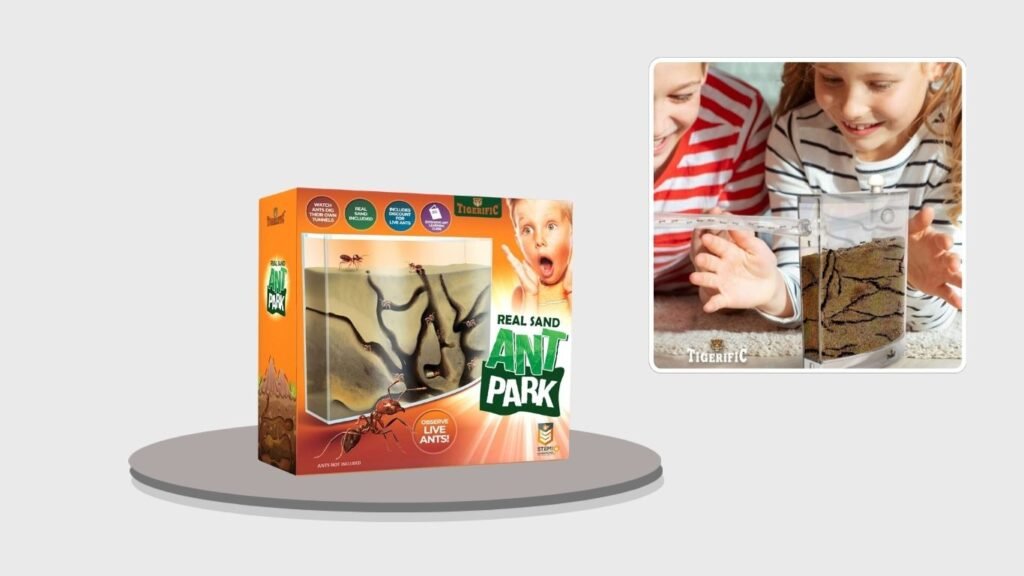
The Tigerific Ant Park combines a real-sand habitat with a fully transparent viewing design and educational extras. It allows children to watch ants dig tunnels, carry sand, move food, and explore their environment. The kit also includes an educational booklet and an AntWay connector tube, while live harvester ants can be ordered separately using a supplied discount option.
Key Features
- Real-sand ant habitat
- Transparent multi-angle viewing
- AntWay connector tube
- Educational learning booklet
- STEM.org authenticated
- Ant-care instructions included
- Live ants available separately
- Designed for tunnel observation
- Can connect with another habitat
- Includes access to educational ant content
Why It Is Great for STEM-Based Learning
Tigerific places considerable emphasis on education rather than treating the ant farm only as a toy. Its learning booklet introduces topics such as different ant roles, colony behavior, anatomy, and ant biology.
The company also states that the Ant Park is STEM.org authenticated, strengthening its appeal for homeschool activities, science projects, and classroom-style exploration.
The real-sand substrate is another advantage. Children get to watch ants physically move individual grains and gradually build visible tunnel networks, making the connection between natural digging behavior and habitat construction easy to understand.
Viewing Experience and Expandable Design
The transparent structure provides multiple viewing angles, helping users observe tunneling from different sides rather than only through a narrow front panel.
The included AntWay connector tube adds another interesting feature. It can provide an additional pathway for ants, and Tigerific says multiple habitats can be connected to expand the observation environment.
Live ants are not automatically included with the habitat. Instead, the kit provides an option for obtaining harvester ants separately where shipping regulations permit.
Overall Verdict
The Tigerific Ant Park offers an appealing combination of traditional sand digging and modern educational features.
Its transparent construction, connector system, learning booklet, and real-sand environment give children several ways to engage with the colony rather than simply watching through a small window.
For parents or educators who want an ant farm that emphasizes science learning while retaining the fun of watching real tunnels develop, the Tigerific setup provides a well-rounded approach to hands-on insect observation.
6. Dan&Darci Light-Up Ant Farm Terrarium Kit
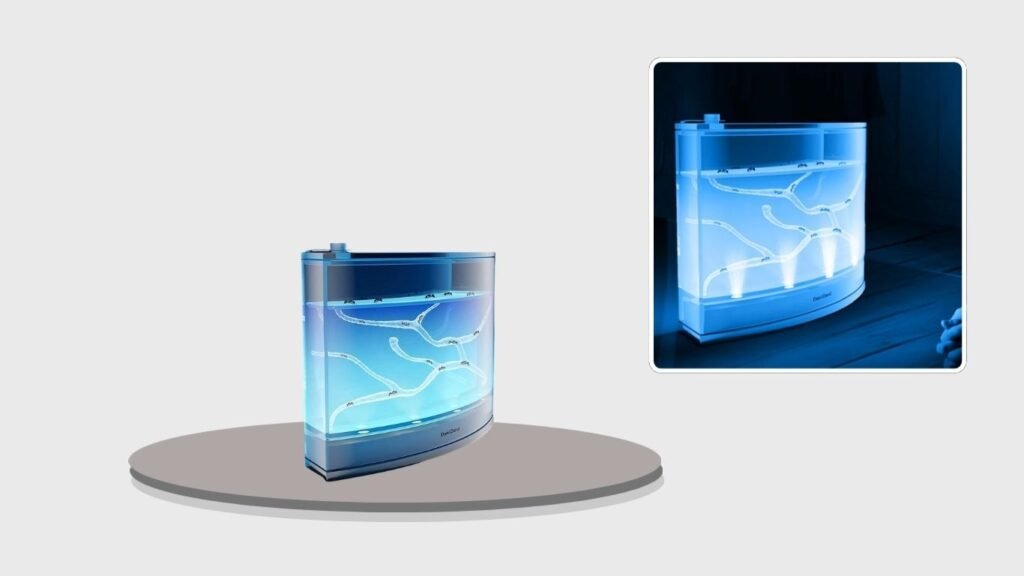
The Dan&Darci Light-Up Ant Farm Terrarium Kit turns ant observation into a colorful hands-on science activity. Instead of traditional sand, it uses nutrient-rich gel that provides a highly visible background for developing tunnels. An integrated LED lighting system makes the tunnel network even easier to observe, while the educational materials add extra learning value. It is particularly well suited to children who enjoy insects, nature, and interactive STEM projects.
Key Features
- Nutrient-rich gel habitat
- Built-in LED lighting
- Clear observation chamber
- USB-powered/rechargeable lighting system
- Designed for live-ant observation
- Recommended for ages 6 and older
- Educational science activity
- Learning material included
- Live ants sourced separately
Why It Is Best for Visual Learning
The biggest advantage of this habitat is visibility. Traditional sand farms sometimes make smaller tunnels difficult to see, particularly when ants dig toward the middle of the substrate. The translucent gel provides greater contrast, allowing children to follow developing tunnels more easily.
The integrated LED light adds another layer to the viewing experience. When illuminated, the habitat becomes an attractive desktop science display while helping highlight tunnels and moving ants.
This makes the Dan&Darci kit particularly appealing to children who respond better to visual, hands-on learning than textbook-based lessons.
Observation Experience and Setup
The habitat is designed for relatively straightforward setup. Once appropriate ants are obtained separately and introduced according to the instructions, users can watch them gradually explore and create pathways through the gel.
Its light-up system is powered through Micro-USB, so there is no need to continually replace disposable batteries. The educational component can also encourage children to connect what they observe with subjects such as ant anatomy, communication, colony organization, and tunneling behavior.
The light should be used for observation rather than being left on continuously, and younger children should have adult supervision when introducing or handling ants.
Overall Verdict
The Dan&Darci Light-Up Ant Farm is one of the more visually engaging kits in this roundup.
Its transparent gel, illuminated habitat, simple viewing design, and educational focus make it particularly suitable for children discovering ant behavior for the first time. Rather than resembling a complicated hobbyist formicarium, it feels like an accessible science experiment that can maintain a child’s attention as tunnels gradually develop.
For families looking for a colorful STEM activity with strong visual appeal, this model provides an interesting alternative to traditional sand-based farms.
7. ELNMLHT 2PCS Connecting Ant Farm Castle Kit
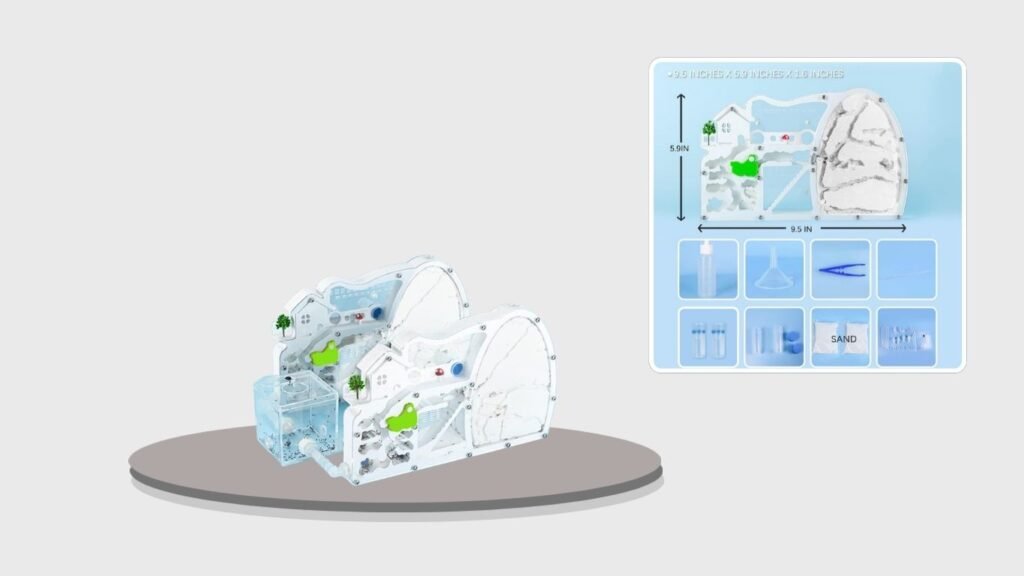
The ELNMLHT 2PCS Ant Farm Castle takes a more expandable approach to ant observation. Instead of providing only one enclosure, the kit includes two acrylic habitats that can be linked using connecting tubes and a separate forage box. Its real-sand design lets users watch natural digging behavior while the modular layout gives ants more areas to explore as the observation setup develops.
Key Features
- Two ant-farm castles included
- Transparent acrylic construction
- Double-sided viewing
- Connecting tubes included
- Separate forage box
- Real sand habitat
- Expandable colony layout
- Water-management accessories
- Multiple setup tools included
- Live ants not included
Why It Stands Out for Expandable Observation
Most beginner ant farms are self-contained, meaning users are limited to the space available inside one enclosure. This ELNMLHT kit provides more flexibility by allowing the two castles and forage area to be connected.
That modular design can make observation more interesting because users can watch how ants travel between different sections rather than remaining within one simple tunnel chamber.
The double-sided transparent acrylic also provides clear viewing from both sides, making the system useful for group observation or classroom activities.
Setup, Hydration, and Colony Care
The package includes two dedicated sand habitats, connecting tubes, a forage box, water towers, a dropper, funnel, and other basic setup accessories. This reduces the number of additional tools needed when preparing the enclosure.
The water-management system is another practical feature. Moisture can be added periodically to help prevent the sand from drying excessively, while dedicated openings provide controlled access for feeding and hydration.
Because ants are not included, users will need to obtain an appropriate species separately. Adult supervision is also sensible when children are introducing ants or opening feeding areas.
Overall Verdict
The ELNMLHT 2PCS Ant Farm Castle is an appealing step up from a basic one-chamber children’s habitat.
Its dual enclosures, connecting tubes, forage box, real sand, and double-sided viewing offer more opportunities to observe how ants move through a larger environment.
For children, classrooms, or beginners who want an ant habitat that can feel more like a miniature colony system than a single observation container, the expandable configuration provides considerable educational and entertainment value.
8. RIMSUNTA Terra Core S Ant Farm Formicarium
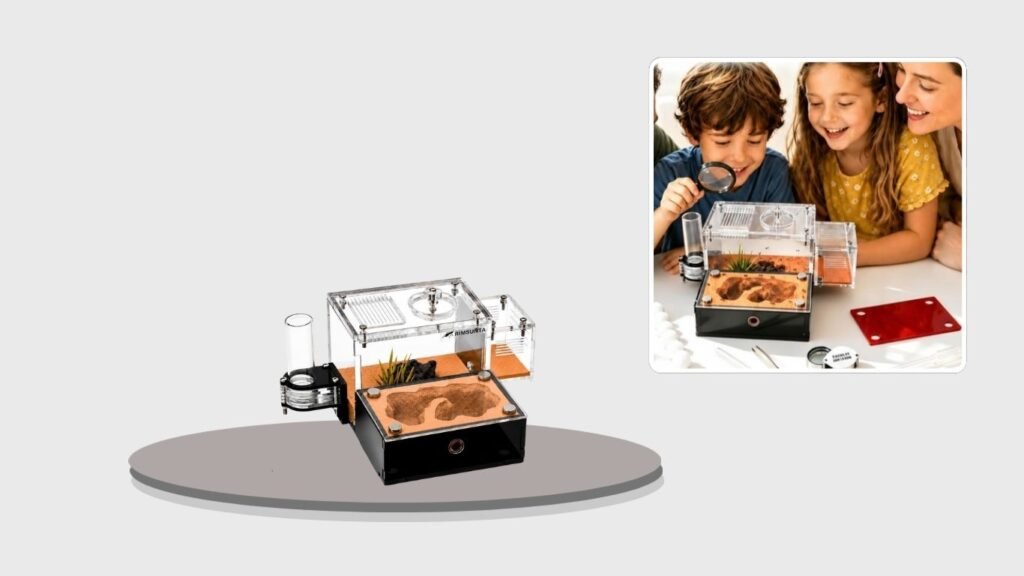
The RIMSUNTA Terra Core S is aimed more toward serious ant observation than a simple children’s science toy. It combines dedicated living and activity areas with a transparent acrylic body, red nest cover, water system, removable waste chamber, and expansion ports. The habitat is designed to support live ants and a queen, giving hobbyists an environment intended for longer-term colony observation and management.
Key Features
- Dedicated living and activity chambers
- Designed for ants and a queen
- Clear acrylic viewing body
- Transparent red nest cover
- Dual-humidity-oriented system
- Large water feeder
- Removable waste chamber
- Multiple expansion ports
- Decorative nest interior
- Designed for longer-term colony observation
Why It Is Best for Serious Ant Keeping
The Terra Core S differs significantly from novelty gel farms. Its structure separates the nesting space from the activity area, allowing users to observe a more organized colony environment.
The transparent red cover over the nesting section is particularly useful because it permits observation while reducing direct visible-light disturbance inside the nest. The design is intended to create a darker-feeling nesting area while still allowing the keeper to monitor activity.
This makes the setup more appropriate for someone who wants to observe an established colony rather than simply watch worker ants tunnel temporarily.
Hydration, Cleaning, and Expandability
Water management is one of the system’s stronger technical features. The large-capacity water tower is designed to maintain colony hydration without requiring users to inject excessive water directly into the nesting material. Product information indicates that a refill can support water needs for several weeks under appropriate conditions.
Cleaning is also simplified through a dedicated removable waste area. Instead of disturbing the entire colony, users can remove this section for maintenance.
Expansion ports on multiple sides allow additional modules to be connected if the colony grows, providing greater long-term flexibility than fixed-size ant farms.
Overall Verdict
The RIMSUNTA Terra Core S is best suited to users interested in ant keeping as a hobby rather than a short-term children’s experiment.
Its hydration system, separate activity and nesting zones, red observation cover, removable waste chamber, and expandable configuration all support more involved colony management.
For an enthusiast who wants to observe a queen and growing colony while retaining convenient access for maintenance, this model provides considerably more technical capability than a conventional sand or gel farm.
9. ELNMLHT Ant Farm Castle Observation Kit
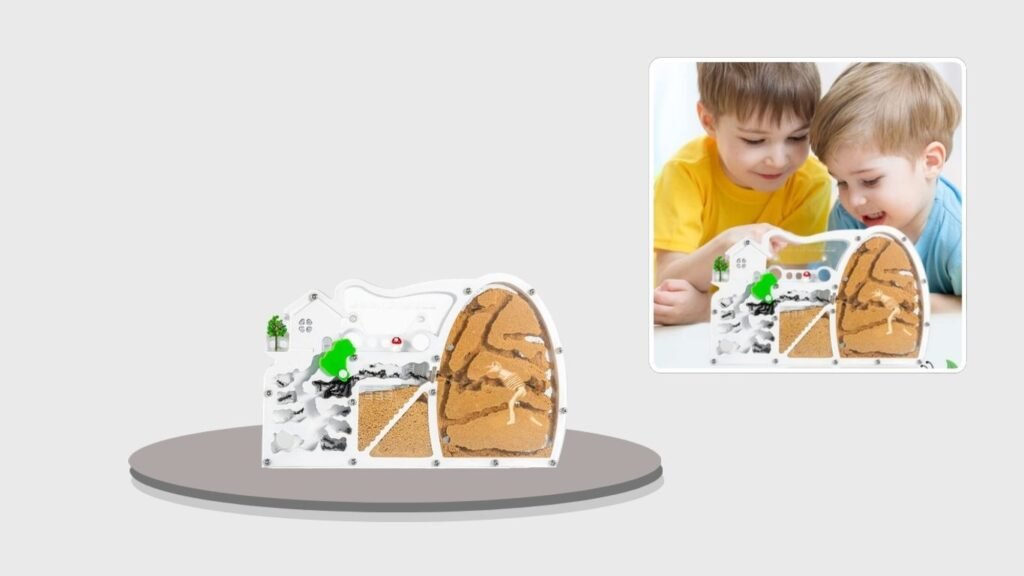
The ELNMLHT Ant Farm Castle offers a traditional sand-digging experience inside a more modern acrylic enclosure. Its double-sided transparent construction provides clear views of ants as they dig, eat, explore, and organize their environment. Separate areas are designed for activities such as loading ants, nesting, and depositing excavated material, giving users more structure than they would find in a basic flat ant farm.
Key Features
- Durable acrylic construction
- Double-sided transparent viewing
- Real-sand habitat
- Separate functional areas
- Ant-loading section
- Nesting and excavation areas
- Convenient feeding and watering openings
- Beginner-friendly setup
- Compact tabletop design
- Live ants obtained separately
Why It Is Great for Close Colony Observation
Visibility is one of this model’s strongest advantages. Because both sides are transparent, users can inspect tunnel development from multiple directions rather than depending on a single viewing window.
The interior zoning also creates a more organized observation experience. Ants can use different portions of the habitat for digging, nesting, or moving excavated material, allowing children and adults to compare different colony activities.
The acrylic construction keeps the enclosure relatively clean-looking while making it suitable for desks, shelves, classrooms, and home science areas.
Ease of Setup and Everyday Maintenance
The Ant Farm Castle is designed to be accessible to beginners. Dedicated openings make it easier to introduce ants and provide food or water without dismantling the enclosure.
The product measures roughly 9.5 × 5.9 × 1.6 inches in the listed configuration, providing a reasonably large observation face while remaining compact enough for a tabletop.
Moisture should be monitored carefully because sand that becomes excessively dry may not hold tunnels properly, while excessive water can create unsuitable conditions. Proper feeding and responsible handling are also necessary if the colony is intended to remain in the habitat for an extended period.
Overall Verdict
The ELNMLHT Ant Farm Castle combines the familiar appeal of sand tunneling with a more structured acrylic formicarium design.
Its double-sided transparency, specialized activity areas, and accessible feeding system make it particularly suitable for users who want to see more detail than a basic children’s ant farm provides.
For older children, students, or beginner ant enthusiasts who want a clear, attractive habitat without moving immediately into complicated professional formicariums, this model offers a useful middle ground between educational toy and hobbyist observation system.
FAQs
1. What is the best type of ant farm for beginners?
A simple sand or gel ant farm is usually easiest for beginners. Gel habitats emphasize visibility and require less substrate preparation, while sand farms let users observe more natural digging and soil-moving behavior. More advanced formicariums with separate nesting and foraging areas are better for users interested in maintaining a growing colony for longer periods.
2. Do ant farm kits normally come with live ants?
Many ant farms do not include live ants. Ants may need to be ordered separately from an appropriate supplier, and shipping availability can depend on location and local regulations. Always check the individual kit description before setup so the habitat and ants can be prepared at roughly the same time.
3. How long can ants live in an ant farm?
It depends heavily on the ant species and whether the habitat contains only workers or an established colony with a queen. Individual worker ants may live from weeks to months depending on species, while a properly maintained queen-led colony can potentially continue for years. Habitat conditions, food, moisture, temperature, and overall care strongly influence longevity.
4. Is a gel or sand ant farm better?
Neither is universally better. Gel farms provide excellent visibility and can be easier for short-term children’s observation projects. Sand farms allow ants to perform more natural excavation behavior and can make tunnel construction particularly interesting to watch. For longer-term colony keeping, purpose-built formicariums with dedicated nesting, hydration, and foraging areas are generally more appropriate.
5. What should I look for when choosing an ant farm kit?
Look for clear viewing panels, good ventilation, secure escape-resistant construction, an appropriate hydration system, easy feeding access, and enough space for the intended ants. For children, simple setup and educational materials can be valuable. For longer-term ant keeping, consider a habitat with separate nesting and foraging areas and the ability to expand as the colony grows.