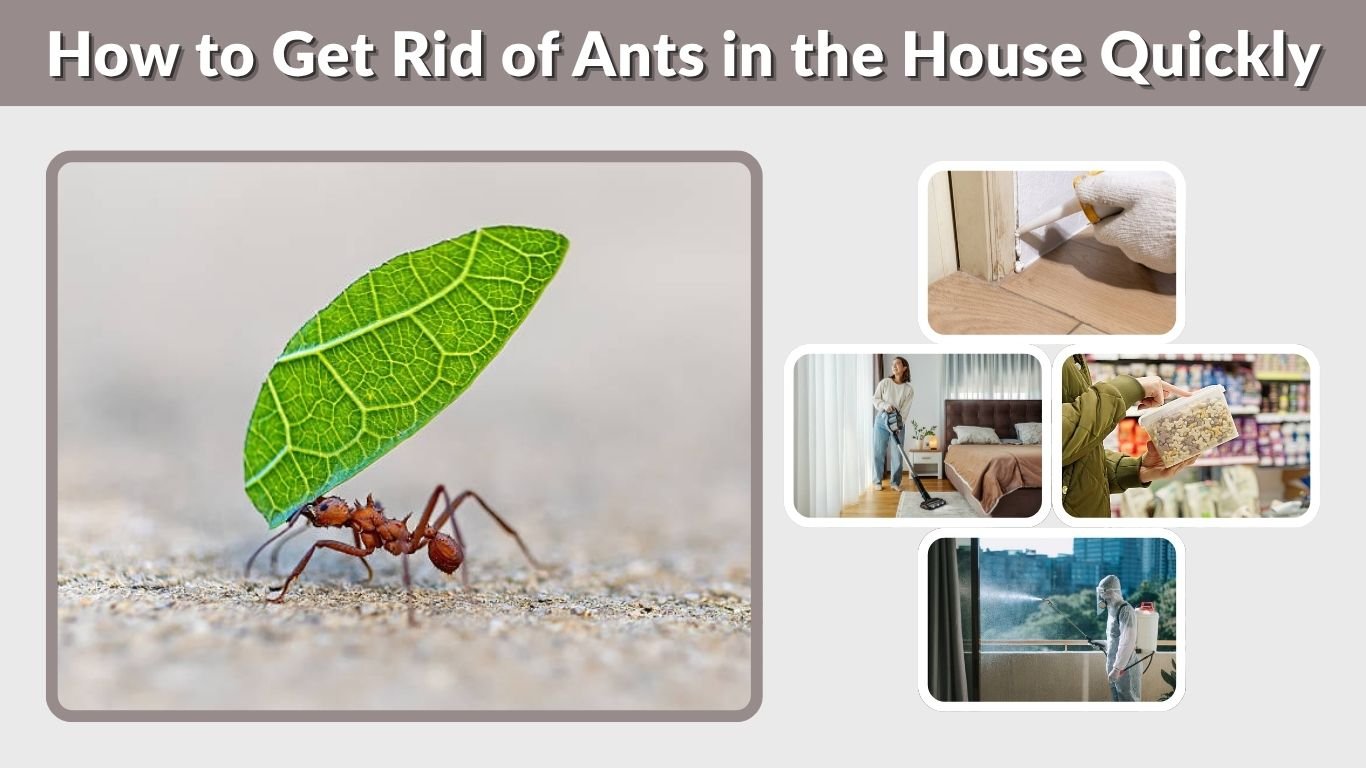
Ants can appear suddenly in kitchens, bathrooms, bedrooms, and other areas where they find food, water, or shelter. Getting rid of the ants you can see is easy, but eliminating the colony requires a more complete approach. The most effective strategy combines cleaning ant trails, removing food and moisture, using appropriate ant baits, and sealing entry points. Here is how to get rid of ants in the house quickly and help keep them from returning.
How to Get Rid of Ants in the House Quickly
When ants suddenly appear, start by removing their immediate food source and following the trail to learn where they are entering. Killing individual workers may temporarily reduce activity, but it usually does not eliminate the colony. Slow-acting ant baits can work better because foraging ants carry bait back to the nest and share it with other colony members.
Clean Up Ant Trails First
Ants leave chemical trails that help other workers find food. Cleaning these trails can interfere with that guidance system while you address the colony.
- Vacuum visible ants or wipe them away.
- Clean trails with soapy water.
- Remove crumbs, sugar, grease, and spilled drinks.
- Wash dishes instead of leaving them overnight.
- Empty food waste and garbage regularly.
- Store pet food when it is not being used.
UC IPM and the EPA specifically recommend sanitation and soapy-water cleanup as part of indoor ant management.
Use Ant Bait Instead of Only Killing Workers
For many household ants, bait is more useful than spraying visible workers. Worker ants feed on the bait and return to the nest, where it can be shared with other ants. Because bait must work slowly enough for ants to carry it back, results are not always immediate.
Place labeled bait stations or gel where ants are actively traveling, while keeping them inaccessible to children and pets. Never spray insecticide directly around bait because this may repel or kill workers before they carry it back to the colony.
If ants ignore one bait, a different bait formulation may work better because food preferences vary between ant species and can change over time.
Give the Bait Time to Work
Seeing more ants around a bait station at first does not necessarily mean the problem is worsening. Workers may recruit other ants to the food source.
UC IPM notes that noticeable reductions with some baits can begin within about 5–10 days, while complete control can take longer depending on the colony and species.
Avoid disturbing feeding ants unless they are somewhere unsafe.
How to Permanently Keep Ants Out of the House
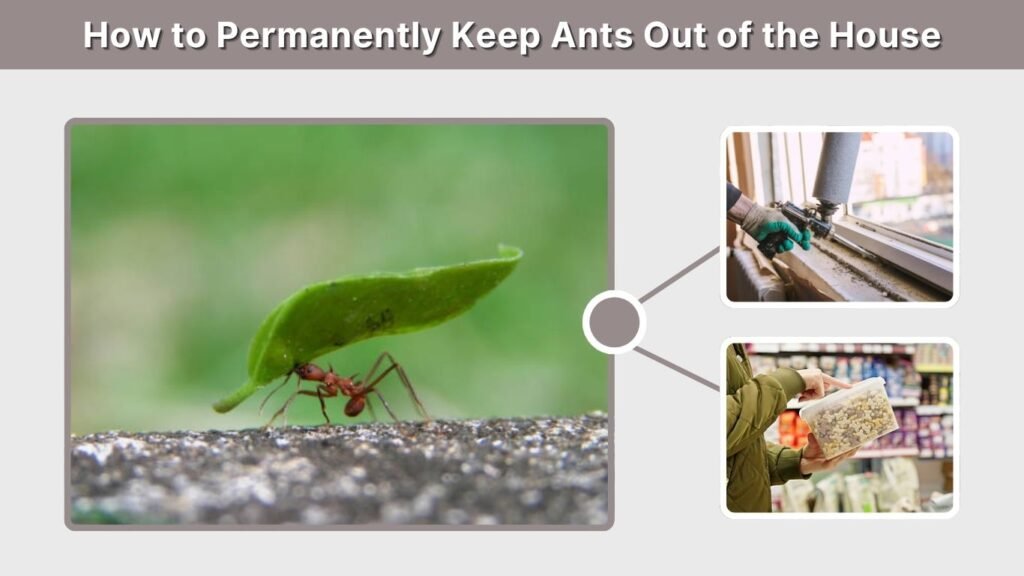
Long-term control requires more than removing the ants currently walking across the floor. Ant colonies are often outdoors, with workers entering homes through tiny openings while searching for food and water. Combining baiting with sanitation and exclusion is generally more effective than repeatedly spraying ants whenever they appear.
Seal Ant Entry Points
Follow trails toward walls, windows, plumbing, doors, or foundations and look for the point where ants enter.
- Caulk cracks around windows and doors.
- Seal gaps around pipes and utility lines.
- Repair damaged weather stripping.
- Fill small foundation or siding openings.
- Check gaps around sinks, cupboards, and baseboards.
Do this together with colony control rather than relying solely on sealing, since ants may simply locate another opening.
Remove Food and Water Sources
Making the house less attractive can dramatically reduce future invasions.
- Keep sugar, honey, cereal, and flour sealed.
- Wipe sticky containers before storing them.
- Clean grease from counters and appliances.
- Store pet food in sealed containers.
- Repair leaking faucets and plumbing.
- Remove standing water beneath houseplants.
- Keep garbage containers tightly closed.
Pests need access to food, water, and shelter, so removing these resources is a central part of integrated pest management.
Reduce Ant Activity Around the Foundation
Ants frequently originate outdoors. Trim vegetation that contacts the building, clean up fallen fruit, and avoid conditions that encourage ants immediately next to the foundation.
UC IPM recommends managing food sources outdoors and keeping vegetation or mulch back from structures where practical.
Getting Rid of Different Types of House Ants
Not every ant responds to exactly the same treatment. Tiny sugar-feeding ants, carpenter ants, pavement ants, and odorous house ants can have different nesting sites and food preferences. Identifying the ant can therefore improve bait selection and help determine whether a simple household treatment is enough or the nest needs professional attention.
Tiny, Black, Sugar, and Odorous House Ants
Small ants entering kitchens are often searching for sweets, grease, or water. Remove alternative food sources and place an appropriate labeled bait near active trails.
Odorous house ants commonly accept sweet baits, although their preferences may vary.
Avoid spraying the workers immediately if they are actively feeding on bait because you want them to return to the colony.
Carpenter Ants and Large Ants
Large ants deserve closer attention, particularly if they repeatedly appear indoors. Carpenter ants excavate galleries in wood and may establish nests in moisture-damaged parts of buildings. They do not eat the wood, but an established colony can be associated with structural damage.
Look for moisture problems around sinks, bathrooms, windows, roofs, and damaged wood. Finding many winged carpenter ants indoors can indicate an indoor nest.
Professional treatment may be appropriate when a hidden carpenter ant nest is suspected.
Flying Ants and Fire Ants
A few winged ants can simply be reproductive ants entering from outside, but repeated swarms indoors may indicate a nearby or indoor colony.
Fire ants require additional caution because they can sting. Avoid handling nests or large numbers of these ants directly, especially when children or pets are present.
Natural Ways to Reduce Ants in the House
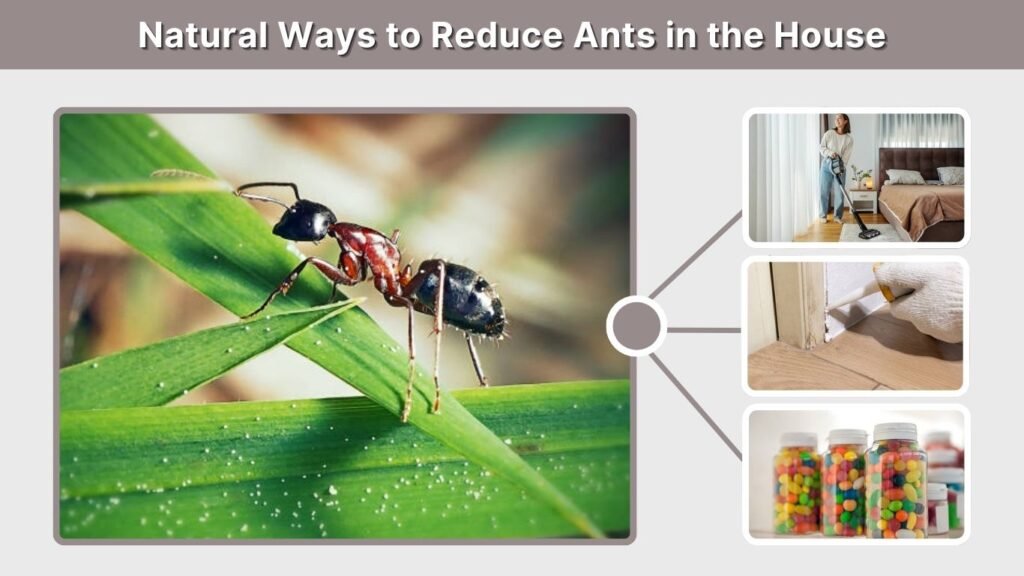
Natural approaches are most useful for cleaning trails, removing attractants, and excluding ants. They usually work better as part of prevention than as a substitute for colony-level control when an established infestation is present. Soapy water, sanitation, sealing cracks, and eliminating moisture are effective nonchemical components of an ant-control strategy.
Simple Nonchemical Steps
- Wipe trails with soap and water.
- Vacuum visible workers.
- Clean food residue immediately.
- Seal cracks and gaps.
- Keep counters and floors dry.
- Store sweet foods in sealed containers.
- Fix moisture and plumbing problems.
Vinegar may help clean surfaces and disrupt trails, but it should not be expected to eliminate a colony hidden inside a wall or outdoors. Likewise, killing visible ants alone rarely solves the source of an established infestation.
When to Call a Pest Control Professional
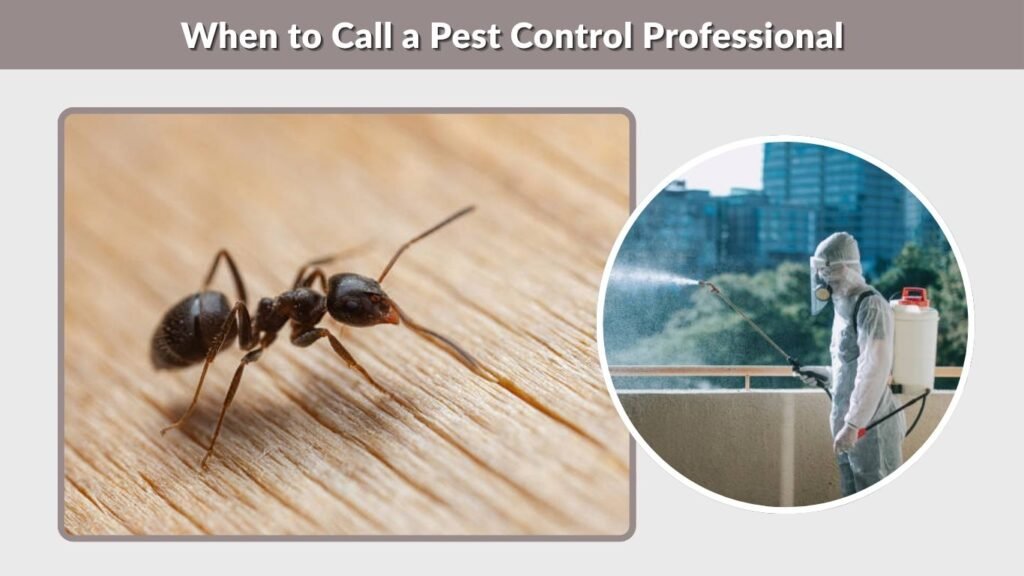
Most minor ant invasions can be managed with sanitation, exclusion, and carefully placed bait. However, recurring activity may mean the colony is inside the structure or difficult to reach. Carpenter ants, repeated winged-ant swarms, persistent fire ants, and infestations that continue despite correct bait use deserve closer investigation.
Signs Professional Help May Be Needed
Consider professional pest management when you notice:
- Large carpenter ants repeatedly appearing indoors
- Large numbers of winged ants emerging inside
- Ant activity continuing despite several weeks of baiting
- Ants apparently nesting inside walls or structural wood
- Moisture-damaged wood with suspected carpenter ant activity
- Stinging ants creating a safety concern
For carpenter ants specifically, locating and eliminating an indoor nest can be difficult and may require professional treatment.
FAQs
How do I get rid of ants in the house overnight?
Clean all visible trails and food residue, remove ants with a vacuum or soapy water, and place appropriate bait near active trails. You may reduce visible ants quickly, but destroying the colony usually takes longer because workers need time to carry bait back to the nest.
What is the fastest way to get rid of ants permanently?
There is no reliable instant method for permanent removal. The strongest approach combines baiting, sanitation, moisture control, sealing entry points, and reducing colonies around the exterior of the home.
Does vinegar get rid of ants permanently?
Vinegar can help clean surfaces and disturb scent trails, but it normally does not eliminate an established nest. Colony-level control may require bait or direct treatment of a known nest.
Why do tiny ants keep appearing in my kitchen?
Tiny ants commonly enter kitchens because they find sugar, grease, crumbs, pet food, or water. Even very small residues can support a trail. Cleaning attractants, finding entry points, and using appropriate bait can reduce recurring activity.
Is ant bait safe around children and pets?
Ant baits contain pesticides and should only be used according to their label. Place stations or bait where children, pets, and other non-target animals cannot reach them. EPA-registered ant bait labels specifically include these precautions.