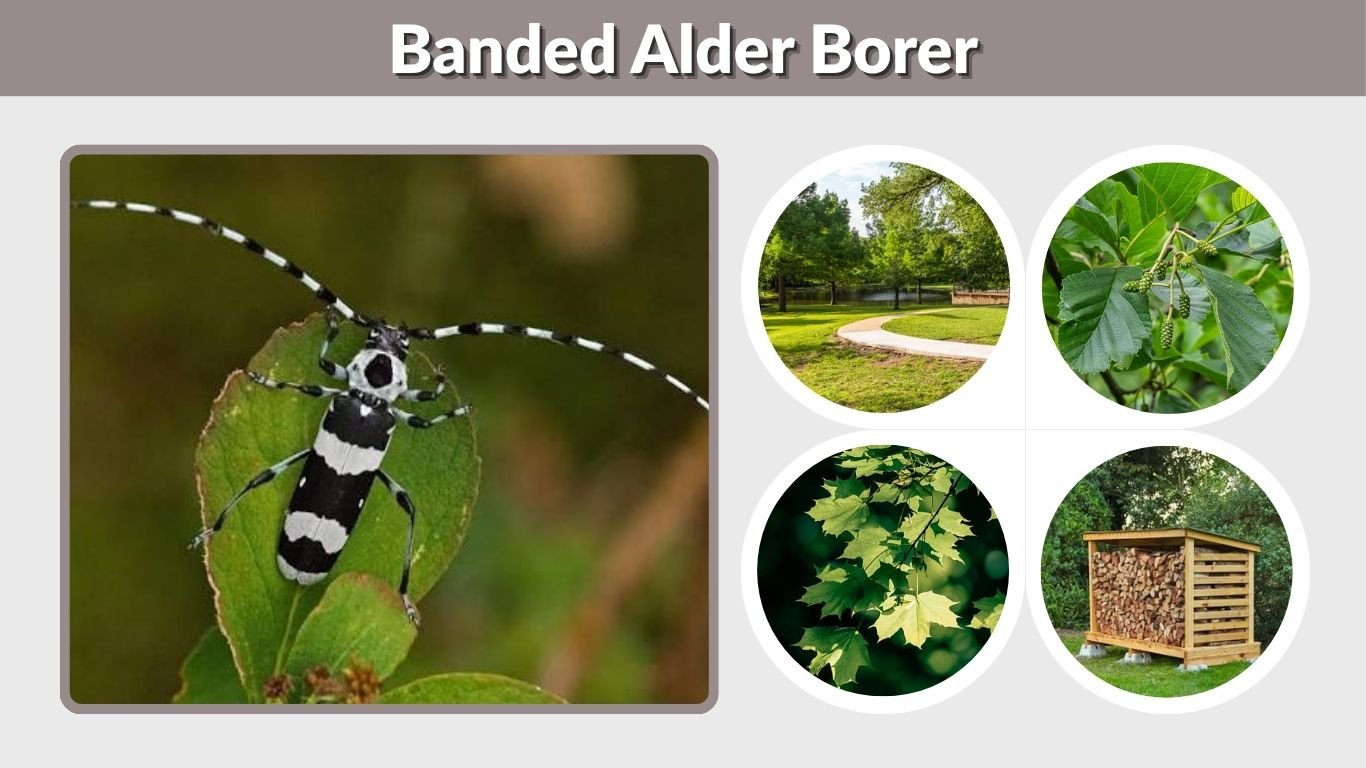
The banded alder borer is a striking black-and-white longhorn beetle found across western North America, especially in the Pacific Northwest. Its bold bands, pale thorax, and remarkably long antennae make it easy to recognize, although people sometimes confuse it with the invasive Asian longhorned beetle. Despite its intimidating appearance, this native insect is generally harmless to people, buildings, and healthy trees. This guide explains banded alder borer identification, size, bites, flying behavior, habitat, life cycle, and sightings in Oregon, Washington State, and British Columbia.
What Is a Banded Alder Borer Beetle?
The banded alder borer (Rosalia funebris) is a native North American beetle belonging to the longhorn beetle family Cerambycidae. It is also known as the California laurel borer because its larvae develop in dead or declining hardwood trees, including California bay laurel.
Unlike destructive wood-boring pests, this species primarily uses wood that is already dead or dying. Its larvae contribute to natural decomposition, making the beetle an important part of woodland ecosystems.
Scientific Classification
The banded alder borer belongs to the genus Rosalia, which includes several distinctive longhorn beetles worldwide. Its scientific name is Rosalia funebris, and it was first described in 1845.
The species is recognized by its contrasting black-and-white markings, elongated body, and exceptionally long antennae.
Banded Alder Borer Identification and Appearance
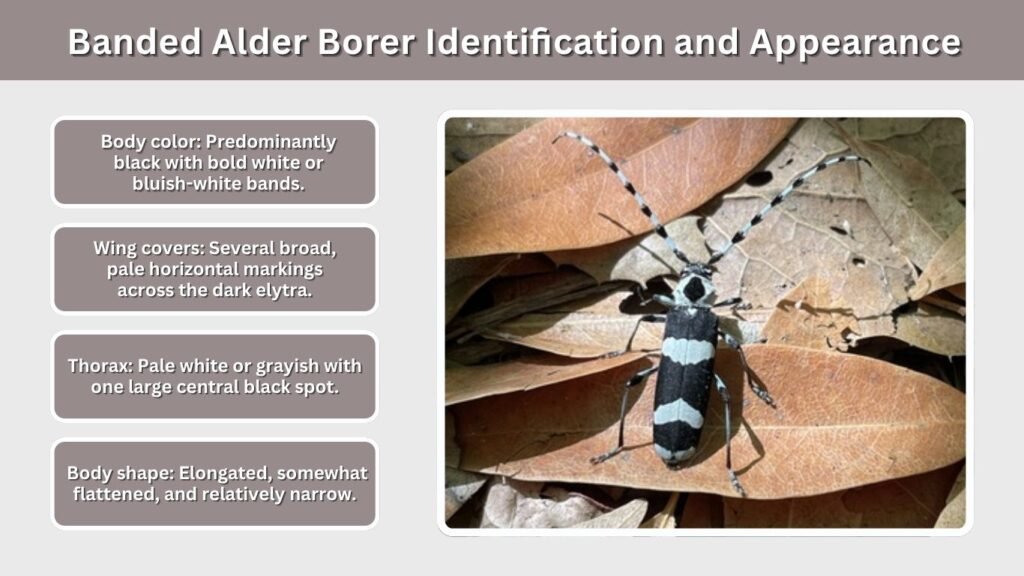
Identifying a banded alder borer is relatively straightforward because of its unusual coloration. The adult has broad pale bands across its dark wing covers, a light-colored thorax with a prominent black spot, and long, striped antennae. These characteristics distinguish it from many other beetles commonly encountered around forests and gardens.
Key Identification Features
- Body color: Predominantly black with bold white or bluish-white bands.
- Wing covers: Several broad, pale horizontal markings across the dark elytra.
- Thorax: Pale white or grayish with one large central black spot.
- Antennae: Exceptionally long, with alternating black and white segments.
- Body shape: Elongated, somewhat flattened, and relatively narrow.
- Legs: Six slender legs, often showing contrasting pale markings.
- Larvae: Cream-colored, segmented wood-boring grubs that develop inside dead wood.
Male vs. Female Banded Alder Borer
Male and female banded alder borers have similar body coloration, making them difficult to distinguish by markings alone.
Males often possess proportionally longer antennae, while females may have slightly shorter antennae and broader abdomens.
Both sexes display the characteristic black-and-white pattern that makes this species recognizable.
How Big Is a Banded Alder Borer?
Adult banded alder borers generally measure approximately 23–40 millimeters (0.9–1.6 inches) in body length, excluding their antennae. Many individuals fall near the middle of this range.
Their extremely long antennae can make them appear considerably larger than their actual body size.
Females may have relatively broader bodies, while males often appear longer because of their extended antennae.
Although they look impressive, these beetles are not especially large compared with some tropical longhorn species.
Where Are Banded Alder Borers Found?
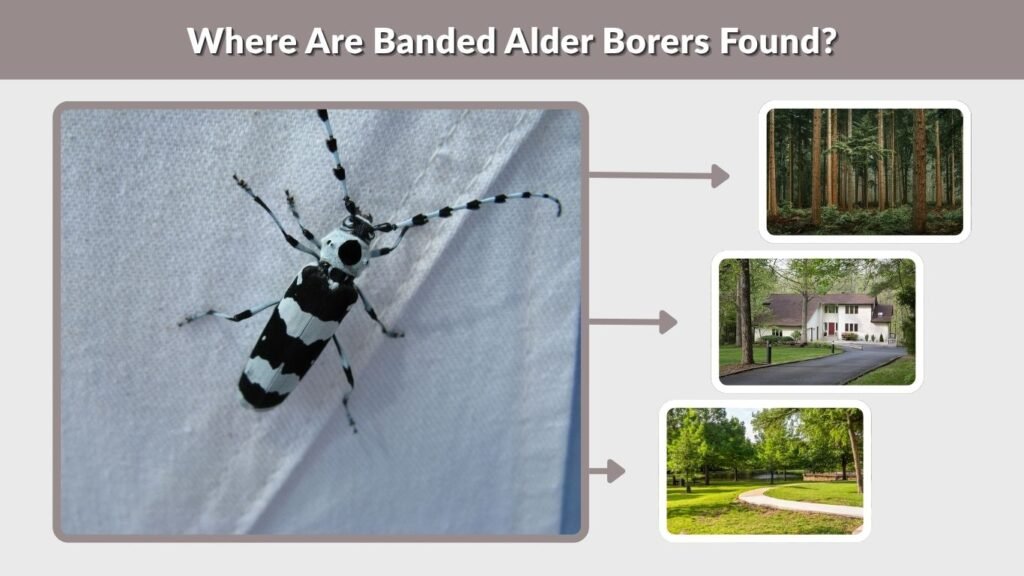
The banded alder borer occurs throughout western North America, with particularly recognizable populations in the Pacific Northwest. Its geographical range extends from parts of Alaska and British Columbia southward into California, with additional populations in western interior regions. The species is most often associated with wooded habitats containing suitable dead hardwood branches.
Banded Alder Borer in Washington State
Banded alder borers are native to Washington State, particularly in areas containing alder and other hardwood trees.
They may appear in forests, wooded neighborhoods, parks, and gardens during warmer months.
Sightings are often associated with dead branches or recently cut wood. Their presence does not automatically indicate that nearby healthy trees are infested.
Banded Alder Borer in Oregon
Oregon provides suitable habitat for banded alder borers, especially in mixed woodlands and areas containing decaying hardwoods.
Adults may be encountered from spring through late summer, with many observations occurring during warmer weather.
Oregon homeowners occasionally discover these beetles on walls, fences, or freshly painted surfaces.
Banded Alder Borer in British Columbia
The banded alder borer also occurs in British Columbia, particularly in suitable forested regions.
Alder trees and other broadleaf species provide breeding material for larvae.
Although the beetle is native to the region, individual sightings may seem unusual because adults are visible for only part of the year.
Banded Alder Borer Habitat and Host Trees
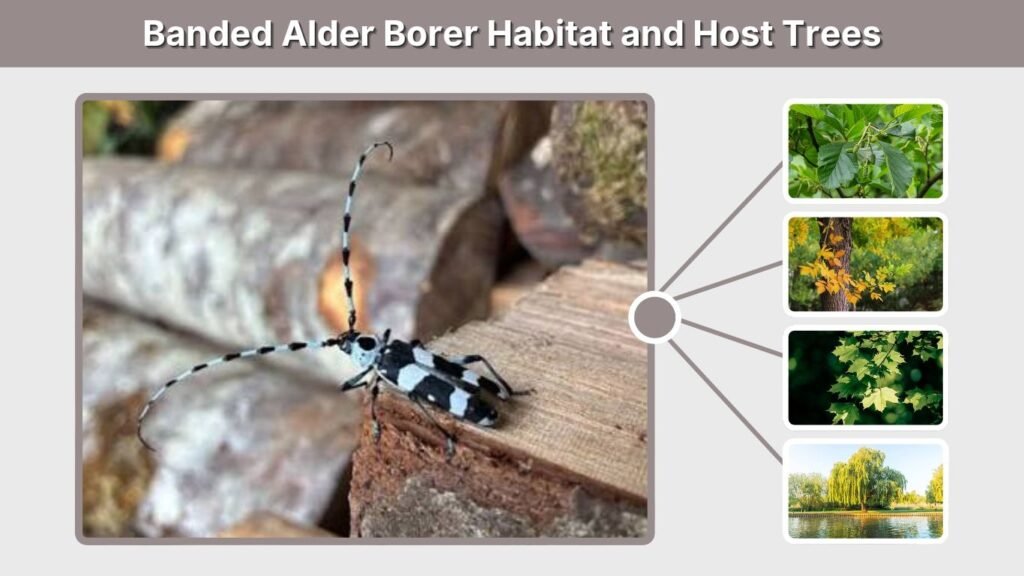
Banded alder borers primarily inhabit forests, woodlands, and landscapes containing dead or declining hardwood trees. Their larvae develop beneath bark and within woody tissues, while adults may be found resting on trunks, branches, and vegetation. They are especially associated with environments where fallen limbs and decomposing wood remain available.
Common Host Trees
- Alder: One of the species’ best-known host trees.
- Ash: Dead and declining ash wood can support developing larvae.
- Maple: Suitable dead maple branches may be used for reproduction.
- Oak: Older, dying, or dead oak branches can provide habitat.
- Willow: Dead willow wood is another documented host.
- California bay laurel: A host responsible for the alternative common name.
- Sycamore: Dead wood from these trees may also support larval development.
These beetles generally do not initiate damage in healthy trees. Instead, they take advantage of wood that is already deteriorating.
Banded Alder Borer Life Cycle
The banded alder borer develops through four stages: egg, larva, pupa, and adult. Much of its life occurs inside dead wood, where developing larvae remain protected from environmental conditions and predators. Adults emerge during warmer months to locate mates and suitable breeding sites.
Eggs and Larval Development
Female beetles lay eggs individually on small or medium-sized dead or dying branches.
The eggs usually hatch within approximately 7–14 days. Young larvae then tunnel beneath the bark, feeding on woody material for roughly six or seven months.
As they mature, larvae move deeper into the wood before pupation. Adults eventually emerge through exit holes, typically during spring or summer.
Adult Activity and Reproduction
Adult banded alder borers are primarily observed from spring through summer, although emergence timing varies by region.
After mating, females search for suitable hardwood branches where their offspring can develop.
Because the larvae occupy dead wood, their feeding generally causes little economically significant damage.
Can Banded Alder Borers Fly?
Yes, banded alder borers are capable of flying. Like other longhorn beetles, they possess functional hind wings protected beneath hardened wing covers called elytra.
When flying, the beetle opens its wing covers and extends its membranous wings.
Adults use flight to locate potential mates, suitable breeding wood, and other resources. They may occasionally land on buildings, fences, or outdoor furniture.
Interestingly, banded alder borers have sometimes been observed gathering around freshly painted surfaces. Researchers suspect odors from drying paint may attract them, although the exact reason is not fully established.
Do Banded Alder Borers Bite Humans?
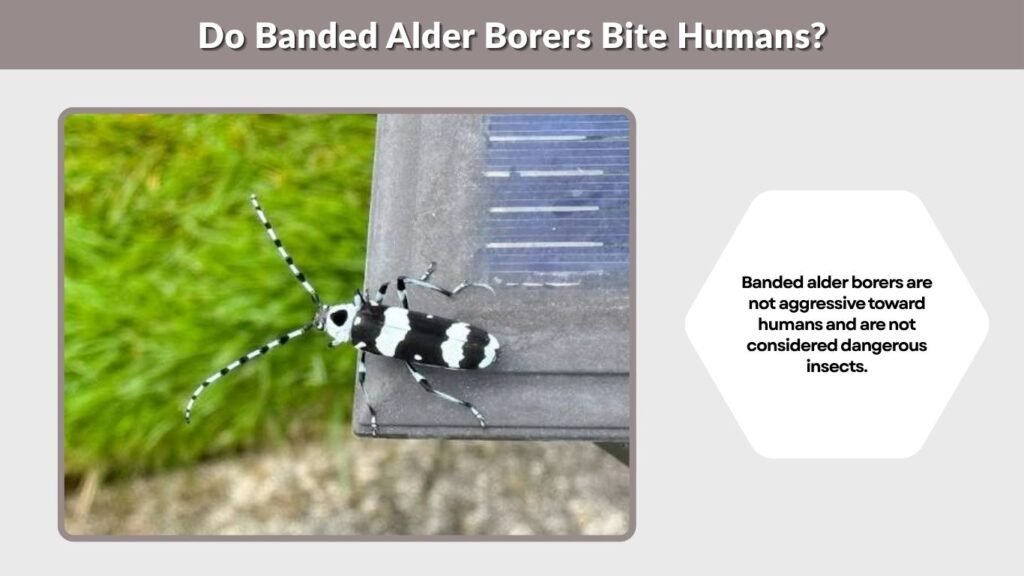
Banded alder borers are not aggressive toward humans and are not considered dangerous insects. They do not possess venomous stingers, and their primary activities involve reproduction and locating suitable wood.
Can a Banded Alder Borer Bite?
Like many beetles, banded alder borers have mandibles and may attempt to pinch when roughly handled or restrained.
However, bites are not a normal defensive response toward people, and these insects are not known for causing medically significant injuries.
They do not feed on human blood or deliberately seek contact with people.
The safest approach is to avoid unnecessary handling and allow the beetle to move away naturally.
Are Banded Alder Borers Rare?
Banded alder borers are not generally considered rare throughout their native range, but sightings can be uncommon in particular locations.
Because larvae develop inside wood and adults are active seasonally, people may live near suitable habitats without frequently seeing them.
Their distinctive appearance also makes occasional encounters particularly memorable.
Local abundance depends on available host trees, seasonal conditions, and suitable breeding habitat.
Finding a single banded alder borer does not necessarily indicate a large population or an infestation.
Banded Alder Borer vs. Asian Longhorned Beetle
The banded alder borer is sometimes confused with the invasive Asian longhorned beetle (Anoplophora glabripennis). Both species have long antennae and contrasting black-and-white coloration. However, they differ significantly in their markings, ecological behavior, and potential impact on trees.
Main Differences
The banded alder borer has broad pale bands across its wing covers and a pale thorax featuring one large black spot.
In contrast, the Asian longhorned beetle has numerous separate white spots on shiny black wing covers and a predominantly black thorax.
The Asian longhorned beetle can attack living hardwood trees and cause significant damage, while banded alder borers primarily develop in dead or declining wood.
Accurate identification is important because suspected invasive beetles should be reported to the appropriate agricultural authority.
What to Do If You Find a Banded Alder Borer
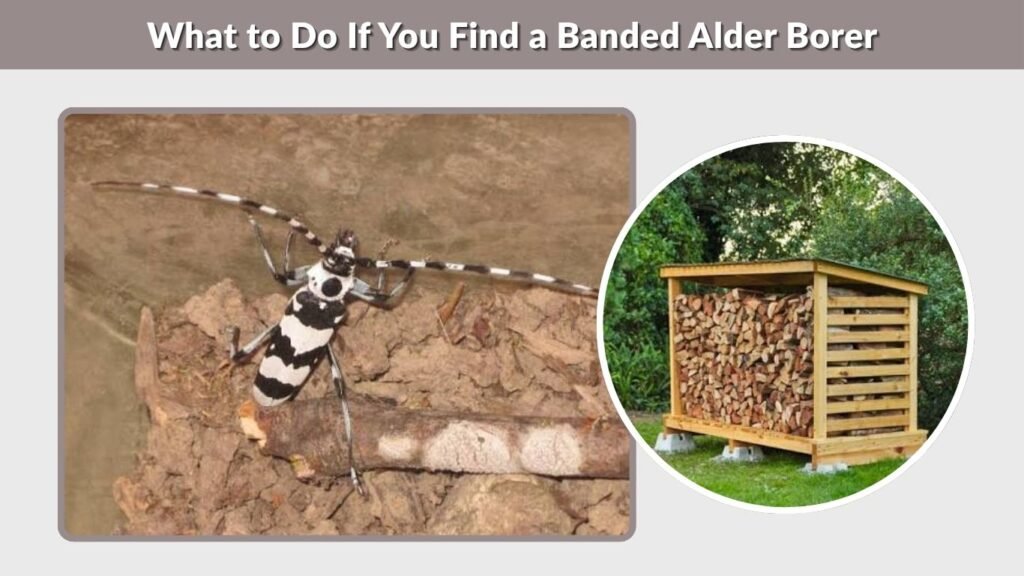
Discovering a banded alder borer in your yard usually does not require pest control. This native beetle primarily develops in dead wood and rarely causes problems for healthy trees or buildings. Its presence may simply indicate that suitable decaying hardwood is available nearby.
Safe Ways to Manage Banded Alder Borers
- Avoid insecticides: Chemical treatment is generally unnecessary for this harmless native species.
- Inspect dead branches: Identify decaying wood that may support developing larvae.
- Maintain healthy trees: Provide appropriate watering, pruning, and general tree care.
- Relocate indoor beetles: Gently guide an accidental visitor outside.
- Manage firewood: Store cut wood appropriately and avoid transporting firewood between regions.
- Preserve natural habitat: Where safe, retain some dead wood in woodland areas to support decomposer insects.
FAQs
1. Is the Banded Alder Borer Dangerous?
The banded alder borer is not considered dangerous to humans, pets, or healthy trees. Although it has functional mandibles, it rarely attempts to bite unless restrained. Its larvae primarily develop in dead wood, making this species a beneficial component of woodland ecosystems.
2. Can Banded Alder Borers Damage Your House?
Banded alder borers are not considered structural pests. Their larvae develop in dead or dying hardwood rather than routinely attacking household framing. An adult found indoors is usually an accidental visitor, and its presence alone does not indicate an active household infestation.
3. Why Are Banded Alder Borers Attracted to Paint?
Banded alder borers have occasionally been observed near freshly painted surfaces. Scientists suspect that volatile compounds released by drying paint may attract these beetles. However, the precise mechanism remains uncertain, and their presence does not mean they consume paint or damage painted surfaces.
4. When Are Banded Alder Borers Most Active?
Adult banded alder borers are most commonly observed during spring and summer. Activity can extend from approximately March or April through August, depending on location and weather conditions. They emerge from dead wood to mate and locate suitable egg-laying sites.
5. Should You Kill a Banded Alder Borer?
Killing a banded alder borer is generally unnecessary because it is a native, nonaggressive beetle that helps recycle dead wood. If one enters your home, gently move it outside. Maintaining healthy trees and managing dead branches are usually sufficient.