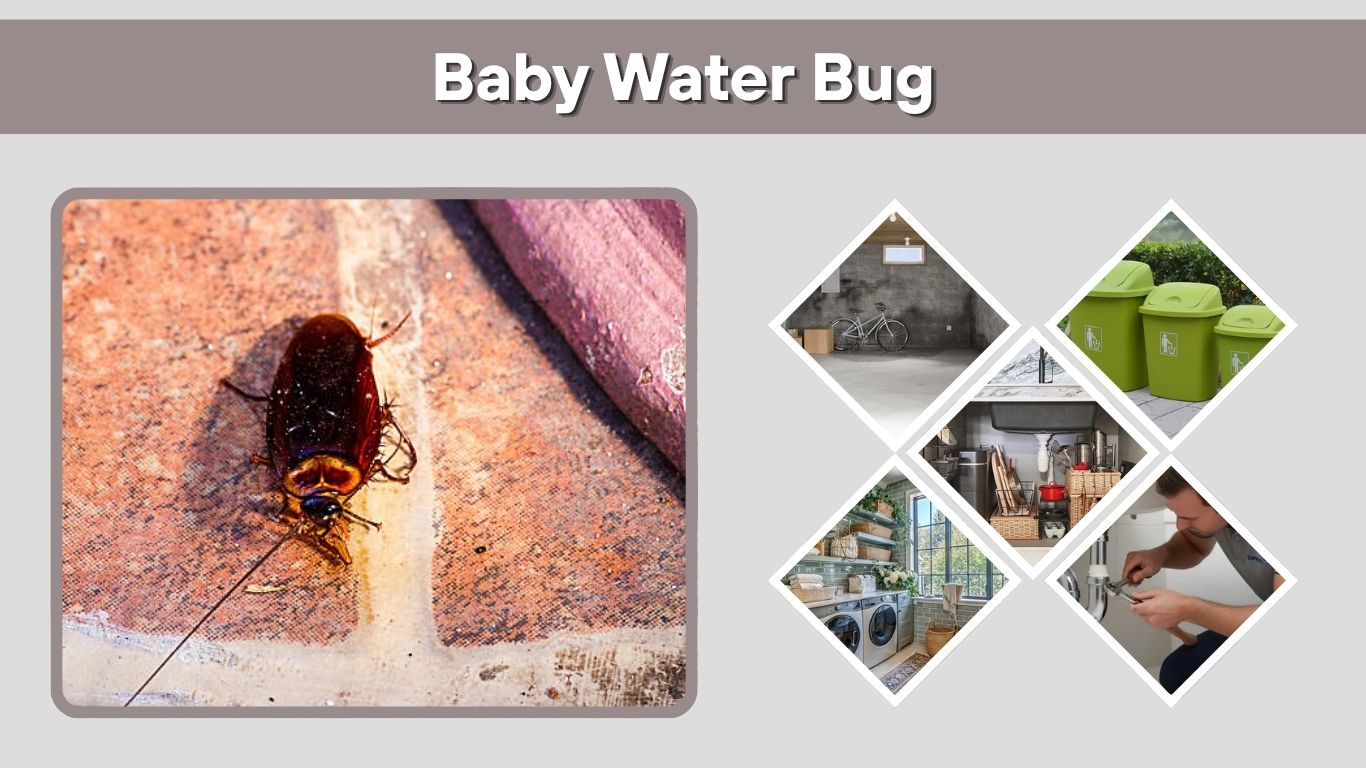
A baby water bug can be confusing because many people use the name “water bug” for different insects. Some are true aquatic bugs found near ponds, pools, and wet outdoor areas. Others are actually baby cockroaches found inside kitchens, bathrooms, and basements. Knowing the difference helps you understand whether you are seeing a harmless outdoor visitor or a possible roach problem in your home.
What Is a Baby Water Bug?
A baby water bug is the young stage of an insect commonly called a water bug. True water bugs are aquatic insects that live in or near water. They hatch from eggs and pass through immature stages before becoming adults.
However, in many homes, people call large roaches “water bugs.” So, a “baby water bug” inside the house is often a cockroach nymph, not a true aquatic water bug. This is why proper identification is important before treatment.
Common Meaning of Baby Water Bug
The term baby water bug may refer to:
- Young giant water bugs
- Young water boatmen
- Young backswimmers
- Aquatic insect nymphs
- Baby Oriental cockroaches
- Baby American cockroaches
- Small dark roaches near drains
- Tiny bugs found in bathrooms or basements
If the insect is found in a pond, pool, or outdoor water source, it may be a true water bug. If it is found inside your kitchen or bathroom, it is more likely a baby roach.
Why People Confuse Them
Baby water bugs and baby roaches can look similar because both may be small, oval, dark, and fast-moving. They may also appear near moisture. Bathrooms, drains, basements, and laundry rooms create confusion because these areas attract both damp-loving roaches and insects from outside.
The main clue is behavior. True water bugs are usually linked to water. Baby roaches hide in cracks, cabinets, appliances, and dark indoor spaces.
What Do Baby Water Bugs Look Like?
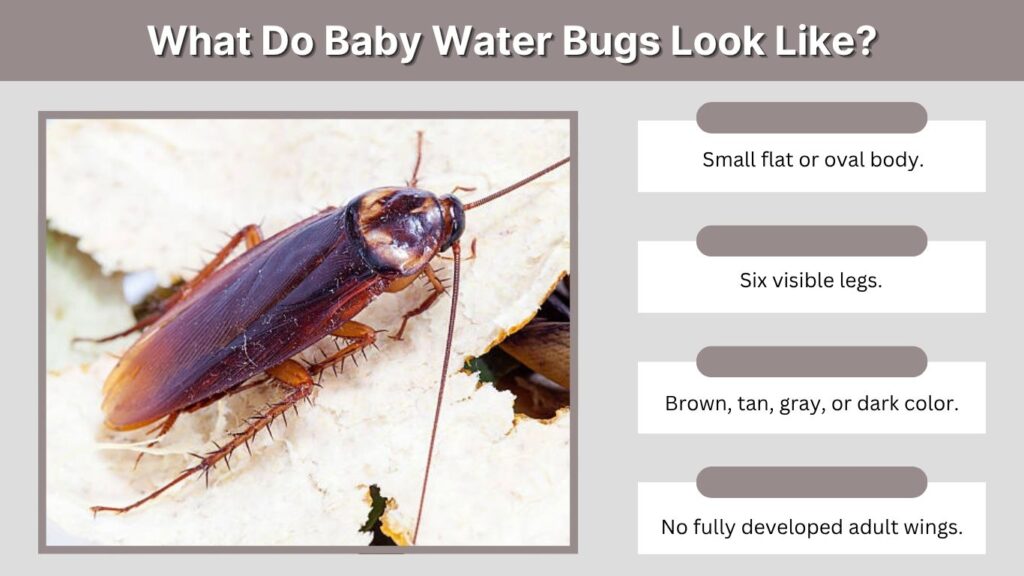
Baby water bugs usually look like smaller versions of adult water bugs. They may have flat bodies, six legs, and brown, tan, gray, or black coloring. Some are oval and smooth, while others look more shield-shaped.
Young true water bugs may not have fully developed wings. Their bodies may look soft or pale just after molting. As they grow, they become darker and stronger. Some baby water bugs swim well, while others crawl on aquatic plants, mud, or pool surfaces.
Baby Water Bug Identification
You can identify a baby water bug by checking these features:
- Small flat or oval body
- Six visible legs
- Brown, tan, gray, or dark color
- No fully developed adult wings
- Often found near water
- May swim or crawl in wet areas
- Body may look wider than a baby roach
- Front legs may look strong in some species
- Antennae may be short or not easy to see
- Movement may be slower on dry land
A true baby water bug is usually connected to an aquatic habitat. If you find many tiny insects indoors, especially at night, look carefully for signs of roaches.
What Color Are Baby Water Bugs?
Baby water bugs can be tan, light brown, dark brown, gray, or black. Newly molted young bugs may appear lighter for a short time. As their outer body hardens, the color often becomes darker.
Baby roaches can also be brown or black. Some young roaches have lighter bands or markings. Because color alone is not enough, you should also check the body shape, antennae, location, and hiding behavior.
Baby Water Bug vs Baby Roach
Baby water bugs and baby roaches are often mixed up. The difference matters because roaches can infest homes, while true water bugs usually do not multiply indoors.
A baby roach usually has long antennae, spiny legs, and a narrow oval body. It runs quickly and hides when exposed to light. A baby water bug often has a flatter body and may be found around outdoor water, pools, ponds, or wet soil.
Comparison Table
| Feature | Baby Water Bug | Baby Roach |
| Main habitat | Ponds, pools, wet outdoor areas | Kitchens, bathrooms, basements, cabinets |
| Body shape | Flat, oval, sometimes broad | Oval, narrow, roach-like |
| Antennae | Often shorter or less visible | Long and easy to see |
| Legs | May be built for swimming or grabbing | Spiny legs for running |
| Movement | Swims or crawls near water | Runs quickly and hides |
| Indoor risk | Usually accidental | May mean infestation |
| Food | Small aquatic insects and larvae | Food crumbs, grease, waste, organic matter |
Baby Water Bug Roach Confusion
If someone says “baby water bug roach,” they are usually talking about a young cockroach. In many areas, people call Oriental cockroaches and American cockroaches water bugs because they like damp places.
Baby roaches may appear near sinks, drains, dishwashers, refrigerators, bathrooms, and basements. They may be small, dark, and shiny. Seeing more than one baby roach can mean adults are breeding nearby.
Baby Water Bugs in the House
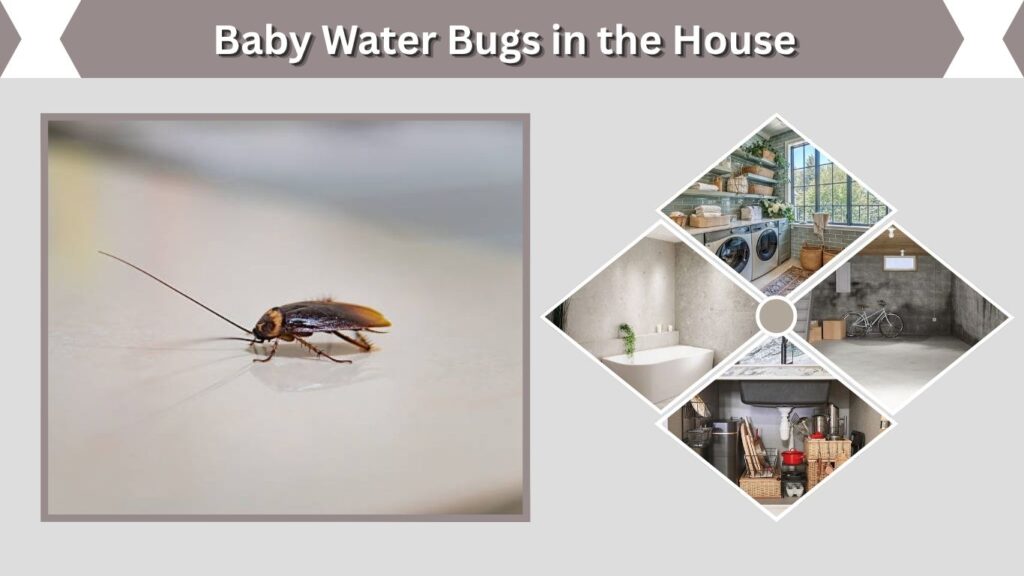
Baby water bugs in the house are usually a sign of moisture. Sometimes true water bugs enter accidentally after rain, flooding, or outdoor light attraction. But if you keep seeing small dark bugs indoors, they are often baby roaches.
The location is important. One bug near a door after rain may be accidental. Several bugs in a bathroom, kitchen, or basement may point to a hidden pest issue.
Common Indoor Hiding Spots
Baby water bugs or roach-like insects may be found in:
- Bathroom corners
- Floor drains
- Under sinks
- Basement walls
- Laundry rooms
- Kitchen cabinets
- Behind refrigerators
- Near dishwashers
- Crawl spaces
- Around leaking pipes
Moisture, darkness, food crumbs, and clutter make these areas more attractive. Wet cardboard, old boxes, and dirty drains can make the problem worse.
Why They Appear After Hard Rain
After hard rain, insects may move indoors because their outdoor hiding places become flooded. Roaches, beetles, and true water bugs may enter through foundation cracks, gaps under doors, drains, vents, or window frames.
If you see one insect after rain, it may be an outdoor visitor. If you see baby bugs repeatedly, inspect the home for leaks, damp areas, and hidden roach activity.
Baby Water Bugs in Bathroom
Bathrooms attract water-loving insects because they provide moisture, warmth, and hiding places. A baby water bug in the bathroom may come from a drain, wall gap, loose pipe opening, or nearby damp area.
If the bug has long antennae and runs fast, it is likely a baby roach. If it looks like a tiny aquatic insect and appears after a window or door was open, it may have entered from outside.
Bathroom Warning Signs
Look for signs such as:
- Small dark bugs at night
- Bugs near drains
- Droppings like black pepper
- Musty odor
- Shed skins
- Tiny egg cases
- Water leaks
- Damp cabinets
- Cracks around pipes
- Bugs hiding when lights turn on
These signs usually suggest roaches rather than true water bugs. Cleaning alone may not solve the issue if there is a hidden breeding area.
Baby Giant Water Bug
A baby giant water bug is the immature stage of a giant water bug. It has a flat body, strong legs, and a shape similar to the adult. It may look smaller, lighter, and wingless compared with a full-grown giant water bug.
Giant water bugs live in ponds, lakes, marshes, and slow-moving water. They are predators and feed on small aquatic animals. Baby giant water bugs are not common indoor pests, but they may appear near outdoor lights or water features.
Baby Giant Water Bug Features
Baby giant water bugs may have:
- Flat, broad body
- Brown or tan color
- Strong front legs
- Short or hidden antennae
- No full adult wings
- Aquatic habits
- Slow movement on land
- Predatory behavior in water
They should not be handled. Even young water bugs may bite if disturbed.
Do Water Bugs Have Babies?
Yes, water bugs have babies. Like other insects, they reproduce by laying eggs. The eggs hatch into immature young that grow through several stages. These young insects molt as they develop.
True water bugs do not usually build indoor nests like roaches. Cockroaches, however, produce egg cases and can create large indoor populations if food, water, and shelter are available.
How Many Babies Can a Water Bug Have?
The number depends on the species. True water bugs and roaches have different reproductive habits. Cockroaches are usually the bigger concern indoors because they can produce many young from egg cases and spread through hidden areas.
If you find several baby “water bugs” inside, assume there may be more hidden nearby. Check for egg cases, droppings, and adult insects.
Baby Water Bug vs Bed Bug
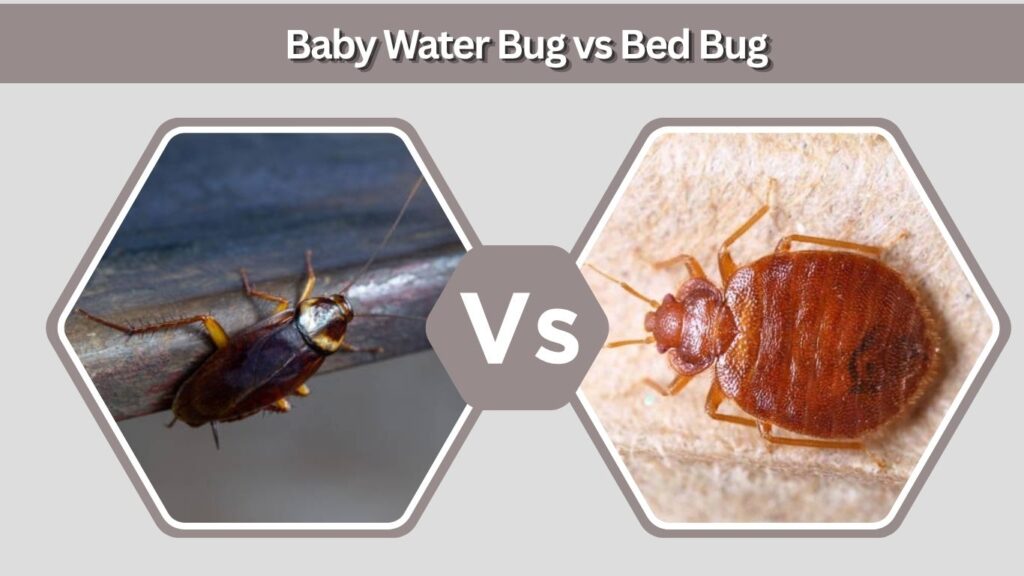
Baby water bugs and bed bugs are different insects. Bed bugs are small, flat, oval, and reddish-brown. They feed on blood and hide in mattresses, bed frames, furniture seams, and cracks near sleeping areas.
Baby water bugs or baby roaches are usually found near moisture, drains, kitchens, bathrooms, basements, or outdoor water. They do not live in beds as their main habitat.
Easy Difference
A bed bug is usually found near sleeping areas and may leave bites in lines or clusters. A baby water bug or baby roach is more likely found near water, drains, food, or damp hiding places.
If the bug is in your bed, check mattress seams and furniture. If it is in the bathroom or kitchen, check for moisture and roach signs.
Are Baby Water Bugs Dangerous?
Most baby water bugs are not dangerous if left alone. True water bugs can bite if handled, but they do not usually attack people. Their bite can be painful, especially in larger species.
Baby roaches are not venomous, but they can be a health concern indoors. Roaches may contaminate surfaces, trigger allergies, and spread bacteria from dirty areas to food spaces.
When to Be Concerned
You should be concerned if:
- You see many baby bugs indoors
- Bugs appear every night
- You find droppings
- You see egg cases
- Bugs are near food storage
- There is a musty smell
- Children or pets have allergy symptoms
- You find adults and babies together
These signs suggest a possible infestation, especially if the insects are roaches.
How to Get Rid of Baby Water Bugs
To get rid of baby water bugs, first identify whether they are true water bugs or baby roaches. True water bugs usually need moisture and outdoor water sources. Roaches need food, water, and hiding places indoors.
Start by reducing moisture. Fix leaks, dry damp areas, clean drains, remove standing water, and seal entry points. Then clean food crumbs, grease, trash, and clutter.
Control Steps
Follow these steps:
- Fix leaky pipes and faucets
- Dry bathroom and kitchen floors
- Clean under appliances
- Seal food in containers
- Empty trash daily
- Remove wet cardboard
- Seal cracks around pipes
- Install door sweeps
- Clean floor drains
- Reduce outdoor lights near doors
- Remove standing water outside
- Use roach baits if roaches are confirmed
If the insects are cockroach nymphs, simple sprays may not solve the problem. Baits, sanitation, sealing, and professional treatment may be needed.
How to Prevent Baby Water Bugs
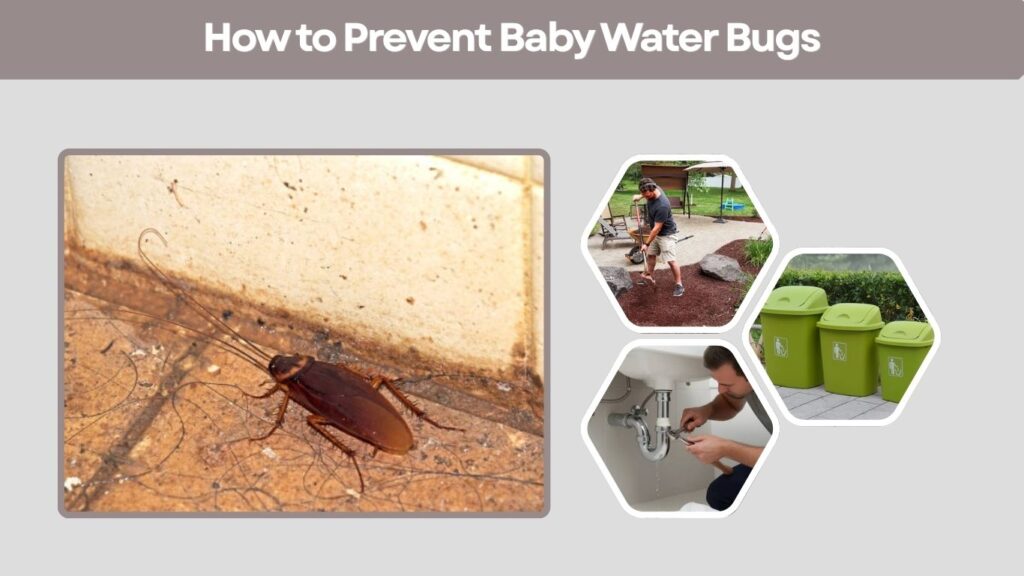
Prevention starts with moisture control. Baby water bugs and roach-like pests are attracted to damp spaces. Keep your home dry, clean, and sealed.
Outdoor areas also matter. Water-filled buckets, plant saucers, clogged gutters, and unused containers can attract many water-related insects.
Prevention Checklist
Use this checklist:
- Repair leaks quickly
- Keep drains clean
- Remove standing water
- Store pet food properly
- Keep trash covered
- Reduce clutter
- Seal wall gaps
- Use window screens
- Keep mulch away from the foundation
- Clear leaves from gutters
- Check basements often
- Clean behind appliances
Good prevention makes your home less attractive to both true water bugs and roaches.
FAQs
What does a baby water bug look like?
A baby water bug usually has a small, flat or oval body with six legs. It may be tan, brown, gray, or black. True baby water bugs are often found near water, while small dark bugs inside kitchens or bathrooms are often baby roaches.
Is a baby water bug the same as a baby roach?
No, a true baby water bug is not the same as a baby roach. However, many people call roaches water bugs. If the insect is indoors, runs fast, has long antennae, and hides near food or drains, it is probably a baby roach.
Why do I have baby water bugs in my house?
You may have baby water bugs because of moisture, leaks, drains, or entry gaps. After hard rain, outdoor insects may enter by accident. If you see many small bugs indoors, especially in kitchens or bathrooms, they may be baby cockroaches breeding nearby.
Do baby water bugs bite?
True water bugs can bite if handled or disturbed, but baby water bugs are not usually aggressive. The bite may cause pain, redness, or swelling. Baby roaches do not usually bite people, but they can contaminate surfaces and trigger allergies.
How do I get rid of baby water bugs in the bathroom?
Fix leaks, dry wet areas, clean drains, and seal gaps around pipes. Remove clutter and keep the bathroom clean at night. If the bugs have long antennae and appear often, treat them as baby roaches and use baits or contact pest control.