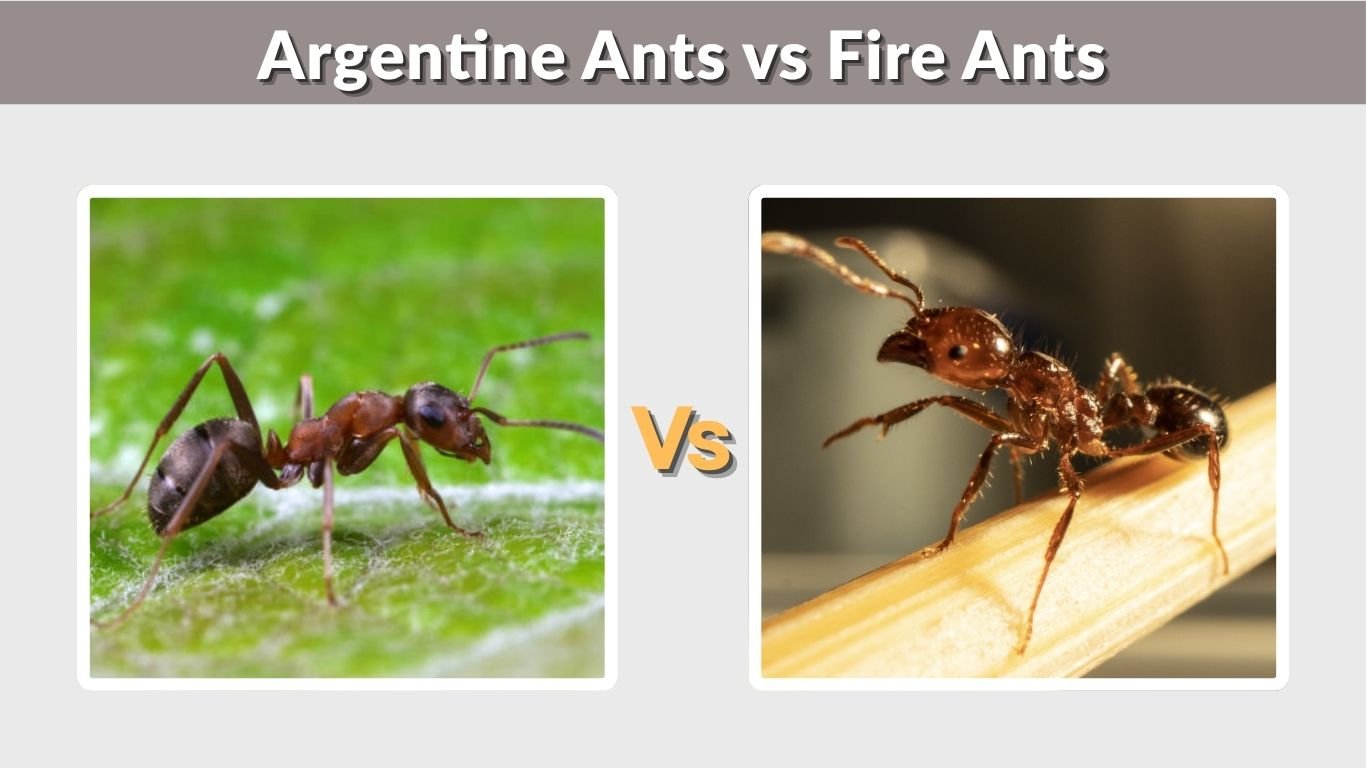
Argentine ants and fire ants are invasive pests that can establish enormous colonies, displace native insects, and become difficult to control. However, they are not the same ants. Argentine ants are small, uniform in size, and mainly cause indoor nuisance problems, while fire ants vary in size, build noticeable soil mounds, and aggressively sting when disturbed. Correct identification is essential because the safest and most effective treatment differs between them.
Argentine Ants vs Fire Ants: Quick Comparison
The term “fire ant” can describe several species, but comparisons usually involve the red imported fire ant, Solenopsis invicta. The Argentine ant’s scientific name is Linepithema humile. Both originated in South America, but they belong to different genera and have distinct appearances and behaviors.
| Feature | Argentine ant | Red imported fire ant |
| Scientific name | Linepithema humile | Solenopsis invicta |
| Worker size | About 1/8 inch | About 1/16–1/5 inch |
| Worker sizes | Nearly uniform | Noticeably variable |
| Typical color | Dull, light to medium brown | Reddish brown with darker abdomen |
| Waist nodes | One | Two |
| Sting | Absent | Present and painful |
| Nest | Shallow, hidden nests | Visible soil mounds |
| Indoor activity | Common | Less commonly an indoor trail pest |
| Main concern | Large infestations and contamination | Aggressive attacks and venomous stings |
How to Identify Argentine Ants
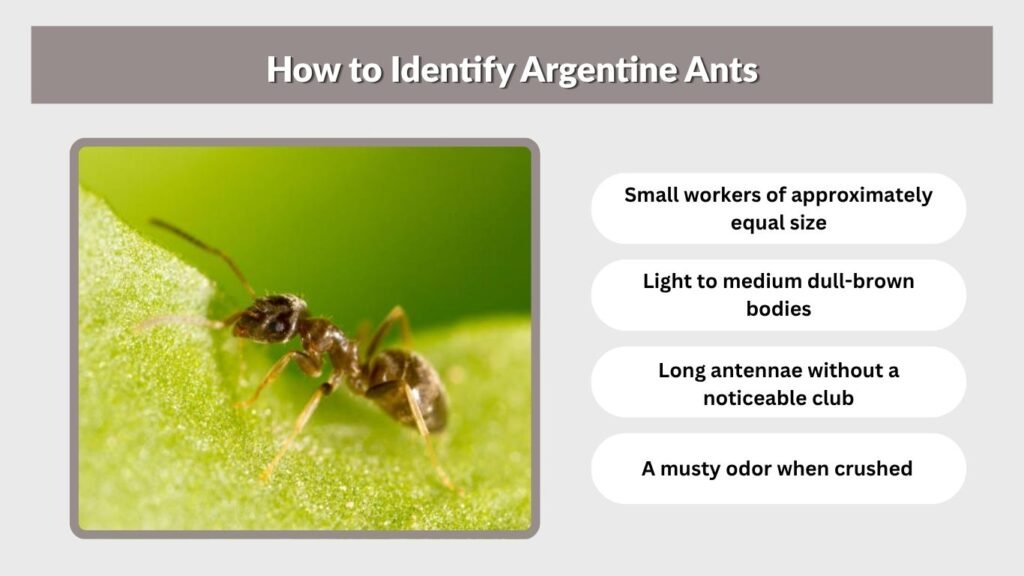
Argentine ant workers are small, slender, uniformly dull brown, and approximately 1/8 inch long. Workers within a trail are nearly identical in size. They have a single raised node at the waist and produce a musty odor when crushed.
Argentine Ant Appearance
Look for the following characteristics:
- Small workers of approximately equal size
- Light to medium dull-brown bodies
- One waist node between the thorax and abdomen
- Long antennae without a noticeable club
- Long, fast-moving trails containing many workers
- A musty odor when crushed
Argentine ants commonly travel along foundations, sidewalks, tree branches, baseboards, plumbing lines, and carpet edges. Their colonies may contain millions of workers, several queens, and numerous connected subcolonies.
Argentine Ant Nests
Argentine ants usually create shallow nests in soil or occupy protected spaces beneath mulch, boards, stones, concrete slabs, plant debris, and tree bark. They may enter walls during drought, heavy rain, or temperature changes.
Because nearby nests cooperate instead of fighting, workers can spread across several yards or an entire neighborhood. This cooperative colony structure is one reason infestations frequently return after only the visible ants are sprayed.
How to Identify Fire Ants
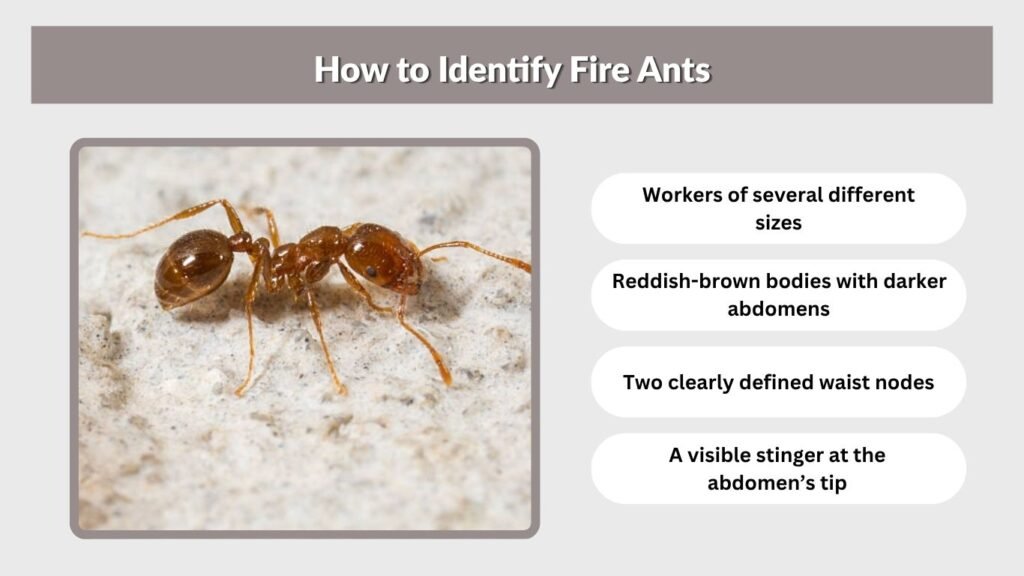
Red imported fire ant workers range from approximately 1/16 to 1/5 inch long. A single colony contains workers of noticeably different sizes. Their bodies are generally reddish brown, with the abdomen often appearing darker. They have two waist nodes and a stinger at the end of the abdomen.
Fire Ant Appearance
Important fire ant characteristics include:
- Workers of several different sizes
- Reddish-brown bodies with darker abdomens
- Two clearly defined waist nodes
- Ten-segmented antennae with two-segmented clubs
- A visible stinger at the abdomen’s tip
- Aggressive swarming when their nest is disturbed
Color alone is not enough for identification because native ants and other Solenopsis species may resemble imported fire ants. An extension office or pest professional can confirm the species when identification is uncertain.
Fire Ant Mounds
Fire ants usually nest outdoors in soil and may create rounded mounds in lawns, pastures, parks, gardens, and roadside areas. Established mounds may lack an obvious central opening because workers use underground tunnels to enter and leave.
Disturbing a mound can trigger a rapid defensive response. Numerous workers climb onto the intruder, grip the skin with their jaws, and repeatedly inject venom with their stingers.
Argentine Ants vs Fire Ants Behavior and Colony Differences
Although both species can form large populations, they behave differently around people and property.
| Behavior | Argentine ants | Fire ants |
| Foraging | Long, organized trails | Dispersed around mound territory |
| Reaction to disturbance | Usually flee or scatter | Rush out and attack |
| Preferred food | Sugar, honeydew, fruit, oils | Insects, meat, grease, seeds, sweets |
| Colony queens | Frequently multiple | One or multiple, depending on colony form |
| Indoor invasion | Frequently enters kitchens and bathrooms | Usually nests outdoors |
| Plant relationship | Protects honeydew-producing pests | May damage plants and attack wildlife |
| Human contact | Primarily a nuisance | Significant stinging risk |
Argentine ants frequently tend aphids, scales, and mealybugs for honeydew. This behavior can increase plant-pest problems because ants defend those insects from natural predators. Fire ants are more predatory and may attack insects, small animals, livestock, pets, and people near their nests.
Which Ant Is More Dangerous?
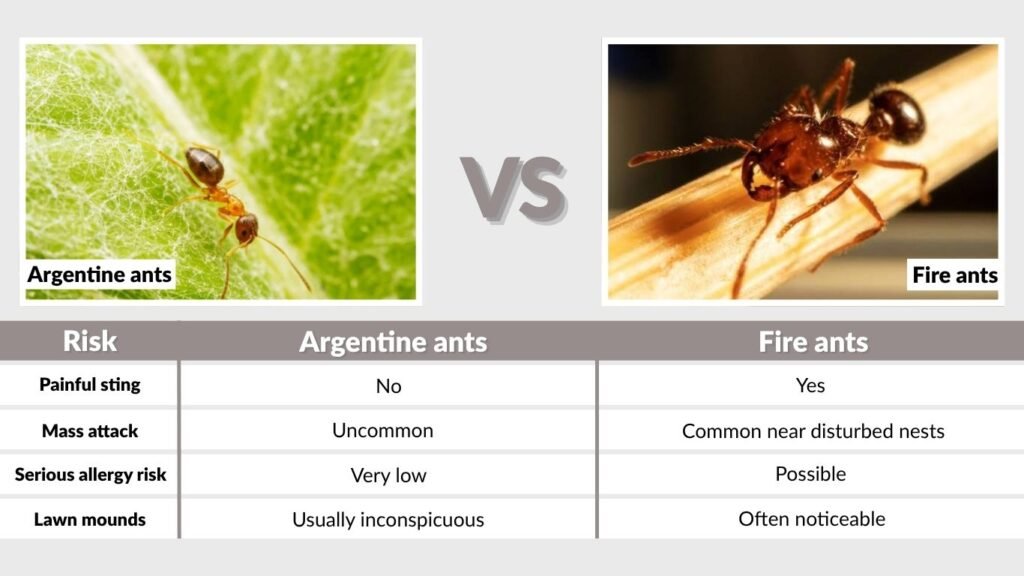
Fire ants are significantly more dangerous to people and pets. They attack collectively and can sting repeatedly, causing immediate burning pain. The affected skin commonly develops itchy bumps or white pustules. Some people experience severe allergic reactions requiring urgent medical treatment.
Argentine ants lack a functional stinger and are primarily nuisance pests. They may enter food-storage and preparation areas, but they do not normally attack people. Their greatest effects involve large indoor infestations, agricultural disruption, and displacement of native ant species.
| Risk | Argentine ants | Fire ants |
| Painful sting | No | Yes |
| Mass attack | Uncommon | Common near disturbed nests |
| Serious allergy risk | Very low | Possible |
| Indoor food contamination | Common concern | Less common |
| Lawn mounds | Usually inconspicuous | Often noticeable |
| Threat to pets | Low | Moderate to serious |
| Environmental impact | High | High |
Anyone who develops breathing difficulty, facial or throat swelling, dizziness, widespread hives, or weakness after fire ant stings should seek emergency medical attention.
Are Argentine Ants and Fire Ants From the Same Place?
Both originated in South America, but their native ranges and identities differ. Argentine ants are associated with the Paraná River drainage basin encompassing parts of Argentina, Paraguay, Uruguay, and Brazil. Red imported fire ants are native to South America, with extension sources identifying Brazil as an important part of their native range.
Therefore, the expression “Argentine fire ant” can be misleading. An Argentine ant is not a fire ant. However, fire ants occur naturally in portions of South America, including areas where they encounter Argentine ants and other competing species.
Argentine Ant vs Fire Ant War
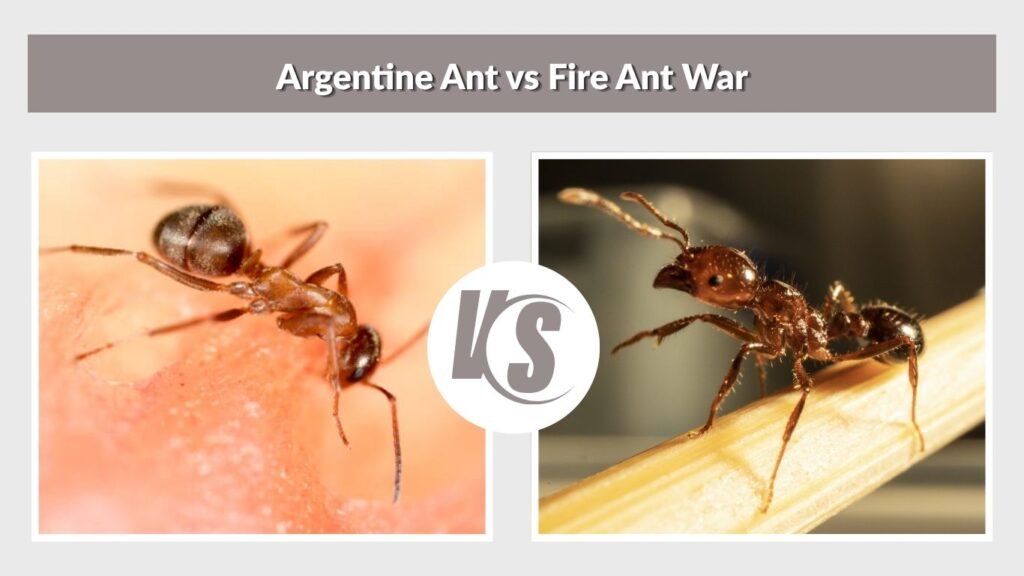
Argentine ants and fire ants compete for food, territory, and nesting opportunities wherever their ranges overlap. Both species recruit large numbers of workers and can displace other ants, but neither species wins under every environmental condition.
An experimental study in their South American native range found that red imported fire ants were highly dominant during direct competition and won most interactions with Argentine ants. However, extension observations indicate that enormous Argentine ant populations can displace fire ants in irrigated, shaded landscapes with abundant trees and shrubs.
The outcome may depend on:
- Temperature and soil moisture
- Shade and vegetation density
- Colony size and worker numbers
- Food availability
- Nesting conditions
- Which species is already established
Homeowners should not encourage one invasive species to control another. Both can damage local ecosystems and require species-specific management.
Control Differences
Argentine ant control usually relies on slow-acting liquid or gel bait placed near active trails. Workers transport the bait among connected nests and queens. Sanitation, moisture reduction, honeydew-pest management, and sealing entry gaps support long-term control.
Fire ant management frequently targets outdoor mounds and the surrounding foraging population. Depending on the property, treatment may involve broadcast fire-ant bait, individual mound treatment, or a coordinated combination of both. Products must be labeled for fire ants and for the intended treatment area.
Will Fire Ant Killer Work on Argentine Ants?
Not necessarily. A product’s bait ingredients, active ingredient, application method, and label may be designed specifically for fire ants. Argentine ants often prefer sweet liquid bait, whereas many fire-ant products use oil-based granules.
Use only products whose labels include the target ant and application location. Applying the wrong bait may produce poor results even when its active ingredient can kill ants.
FAQs
Are Argentine ants the same as fire ants?
No. Argentine ants are small, uniformly brown ants belonging to Linepithema humile. Fire ants belong to the genus Solenopsis. Argentine ants usually form long indoor trails and do not sting, whereas fire ants commonly build soil mounds and aggressively deliver painful, venomous stings.
Do Argentine ants kill fire ants?
Argentine ants can overwhelm or displace fire ants under favorable environmental conditions, particularly in moist, shaded landscapes where their populations become extremely large. However, fire ants may dominate direct encounters. The outcome depends on habitat, colony strength, food availability, temperature, and moisture.
Which is worse, Argentine ants or fire ants?
Fire ants create the greater immediate health risk because they attack in groups and sting repeatedly. Argentine ants are less dangerous to people but may be more persistent inside homes. Both are invasive and can disrupt native insect communities when they establish large populations.
How can I tell them apart quickly?
Examine worker size and behavior. Argentine ant workers are small, nearly identical in size, and travel in long trails. Fire ant workers vary considerably in size and often emerge from soil mounds. Fire ants aggressively swarm and sting when disturbed; Argentine ants generally scatter without stinging.
Can the same treatment control both ants?
Some active ingredients may affect both species, but bait preferences and application methods differ. Argentine ants frequently respond to sweet liquid bait placed near trails, while fire-ant programs often use broadcast granular bait or mound treatments. Always select a product labeled for the identified species and location.