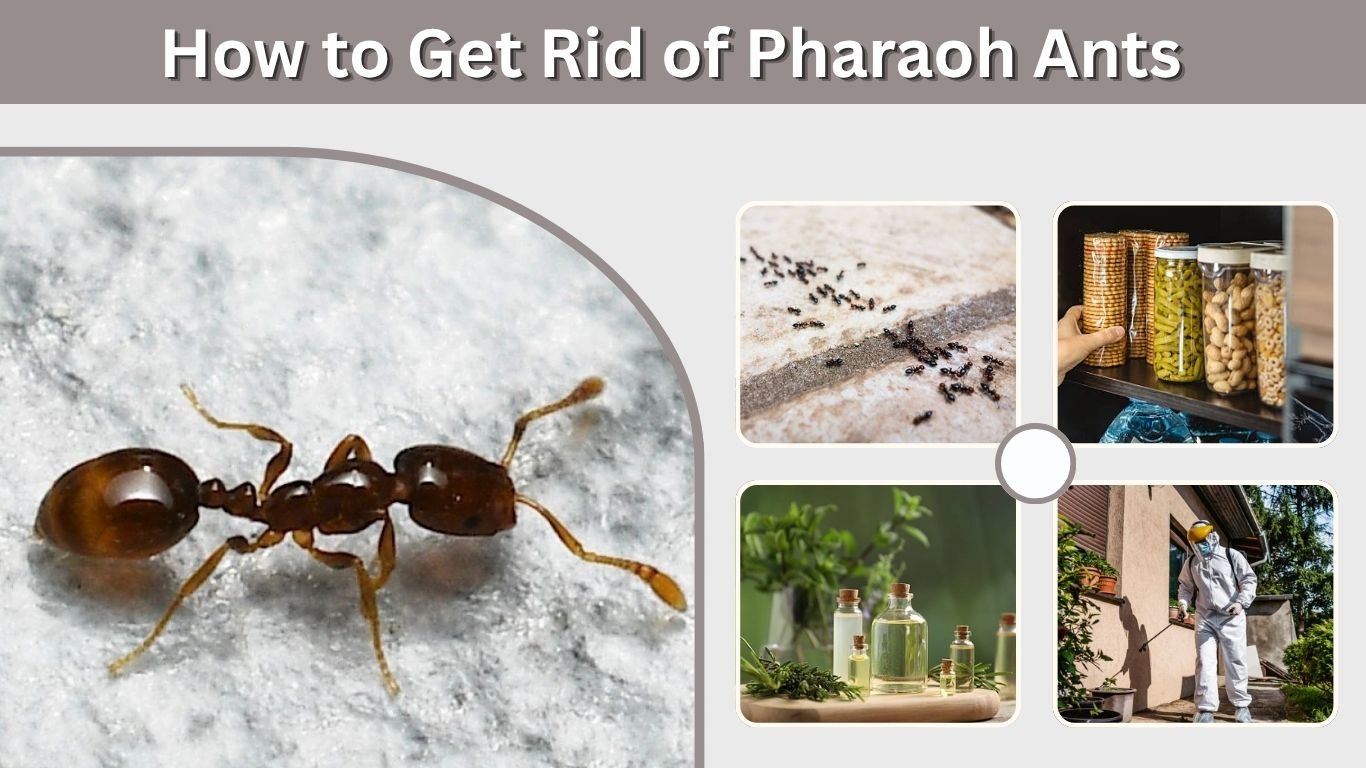
Pharaoh ants are among the most difficult household ants to eliminate. These tiny yellow ants establish multiple nests and queens inside walls, cabinets, appliances, and other warm spaces. Spraying the ants you see can make the infestation worse by causing the colony to divide into several new nests. The most effective approach is to identify the ants correctly, remove competing food and water, and use slow-acting bait throughout the affected building. Large infestations, especially in apartments, often require coordinated professional treatment.
How to Identify Pharaoh Ants
Pharaoh ants, scientifically known as Monomorium pharaonis, are extremely small. Workers are about 1/16 inch long and usually pale yellow, golden, or light reddish-brown. Their abdomens are often slightly darker than the rest of their bodies.
| Feature | Description |
| Scientific name | Monomorium pharaonis |
| Worker size | About 1/16 inch |
| Color | Yellow to light reddish-brown |
| Waist | Two small nodes |
| Common foods | Grease, protein, sweets, and dead insects |
| Nesting areas | Walls, cabinets, appliances, and warm voids |
| Best control | Slow-acting ant bait |
| Main mistake | Using repellent sprays |
Pharaoh ants are easily confused with thief ants, and microscopic examination may be required for reliable identification. Correct identification is particularly important because treatments that work for other household ants may cause pharaoh ant colonies to spread.
Signs of an Infestation
Common signs include trails of tiny yellow ants around kitchen counters, sinks, bathroom fixtures, food cabinets, pet bowls, and warm appliances. Because the ants can pass through extremely small openings, their trails may seem to appear from electrical outlets, baseboards, cracks, or plumbing gaps.
Pharaoh ants prefer warm, dark, protected spaces near food and moisture. Nests may be hidden behind countertops, inside wall voids, beneath flooring, or near heating equipment, making them difficult to locate directly.
Why Pharaoh Ants Are Hard to Eliminate
A pharaoh ant colony can contain multiple queens and numerous connected nesting sites. New colonies form through a process called budding. Groups of workers move larvae, pupae, and one or more queens to another location and establish a separate nest.
Stress caused by insecticide sprays, disturbance, or environmental changes may encourage budding. Instead of removing one colony, an inappropriate treatment can create several smaller colonies throughout the building. This is why extension specialists recommend professional assistance for established pharaoh ant infestations.
How to Get Rid of Pharaoh Ants
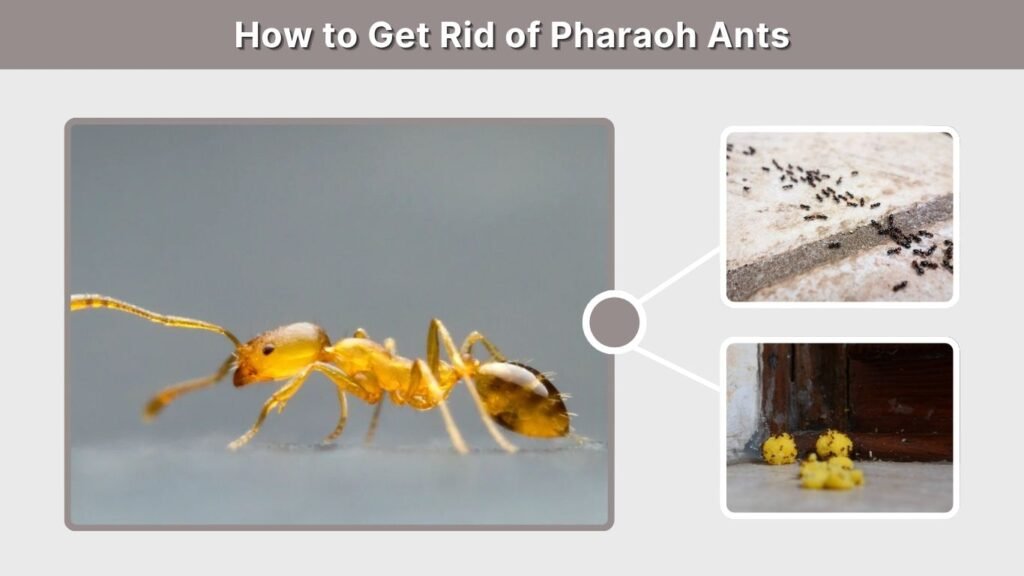
Successful control requires baiting the colony rather than killing only the workers searching for food.
1. Confirm the Ant Species
Examine the ants carefully before applying any treatment. Pharaoh ants are very small and light-colored, but visual identification can be difficult.
Capture several ants in a sealed container or on clear tape and ask a pest-control professional or local extension service to identify them. Avoid spraying them while waiting for confirmation.
2. Follow the Ant Trails
Observe where ants travel during periods of high activity. Look around:
- Kitchen cabinets and countertops
- Sinks and plumbing lines
- Baseboards and wall openings
- Refrigerators and dishwashers
- Bathrooms and laundry rooms
- Electrical and heating equipment
Do not immediately wipe away every active trail. These routes can reveal the best locations for bait.
3. Use a Bait Labeled for Pharaoh Ants
Place small quantities of slow-acting bait near trails and suspected nesting areas. The workers feed on it and carry it back to the hidden colony, where it can be shared with other workers and queens.
Check the product label carefully. Some general ant baits specifically exclude pharaoh ants, so do not assume that every product is suitable. Use only a bait labeled for the target species and approved for the intended indoor location.
Pharaoh ants consume many foods, including grease, fats, sweets, dead insects, toothpaste, and soap. Their preferences may change, so a colony may accept protein-based bait at one time and sweet bait at another.
4. Place Several Small Bait Stations
One bait station is rarely enough for a widespread infestation. Place multiple stations near active trails rather than expecting ants from different rooms to find one central source.
Useful locations include cabinet corners, beneath sinks, beside appliances, and along baseboards. Baits should remain inaccessible to children and pets. Tamper-resistant stations provide additional protection in occupied homes.
5. Do Not Spray or Repel the Ants
Avoid aerosol sprays, residual insecticides, foggers, strong-smelling repellents, and harsh cleaners near active trails or bait placements. These treatments can kill workers before they return to the nest or cause the colony to divide and relocate.
Ant numbers may temporarily increase around the bait. This usually means workers have found it and are recruiting nestmates. Allow them to continue feeding.
6. Monitor and Replace the Bait
Inspect stations regularly. Replace bait that has dried out, become contaminated, or been completely consumed. Avoid moving a station that ants are actively visiting.
Control may take several weeks because the active ingredient must circulate through multiple nests. Continue treatment until ant activity has stopped throughout the building, not merely in one room.
How to Get Rid of Pharaoh Ants in the Kitchen
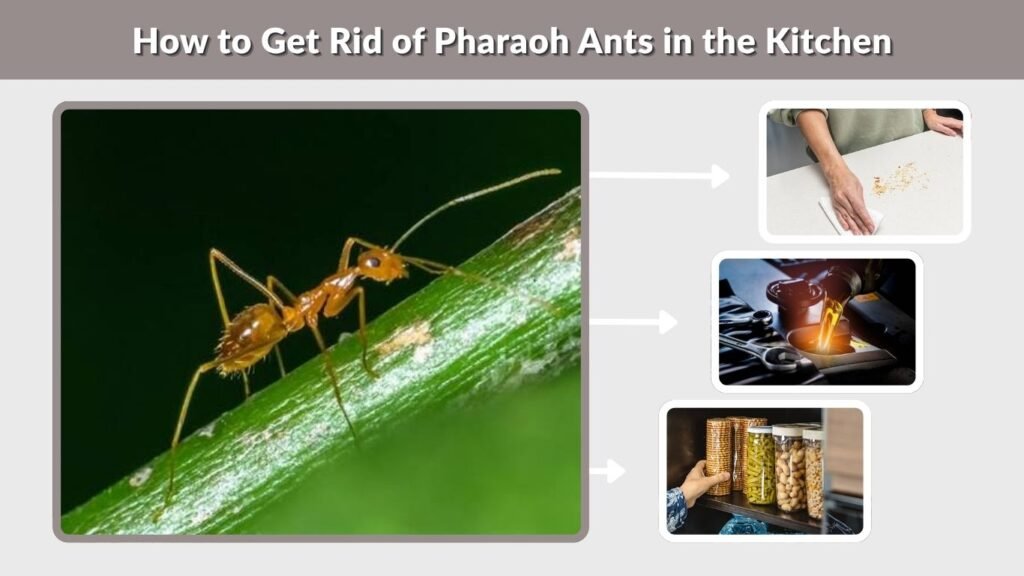
Clean crumbs, grease, spills, and food residue so the ants have fewer alternatives to the bait. Store cereal, sugar, snacks, pet food, and other products in sealed containers. Empty trash frequently and rinse recycling containers.
Place enclosed bait stations near trails, cabinet edges, or appliance gaps, following all label restrictions. Never place loose bait directly on countertops, dishes, food packaging, or other food-contact surfaces.
Cover or remove food before applying any pesticide, and keep children and pets away for the period specified on the product label.
Removing Pharaoh Ants From Bathrooms
Bathrooms attract these ants because sinks, leaking pipes, wet sponges, and condensation provide moisture. Repair leaks, dry counters, improve ventilation, and inspect gaps around plumbing.
Place suitable enclosed bait near the ants’ route but away from standing water. Do not pour insecticide or homemade mixtures into drains. Ants appearing near a drain may actually be entering through gaps surrounding the plumbing.
Pharaoh Ant Control in Apartments
Apartment infestations are especially difficult because colonies can move through shared walls, pipes, utility lines, and adjoining units. Treating only one apartment may push ants into neighboring units or allow untreated colonies to reinvade.
Inform the landlord or property manager and request coordinated inspection and treatment. The best program usually covers every affected unit, common area, utility space, and adjoining room. Random spraying by individual residents can interfere with the building-wide baiting plan.
Can You Get Rid of Pharaoh Ants Naturally?
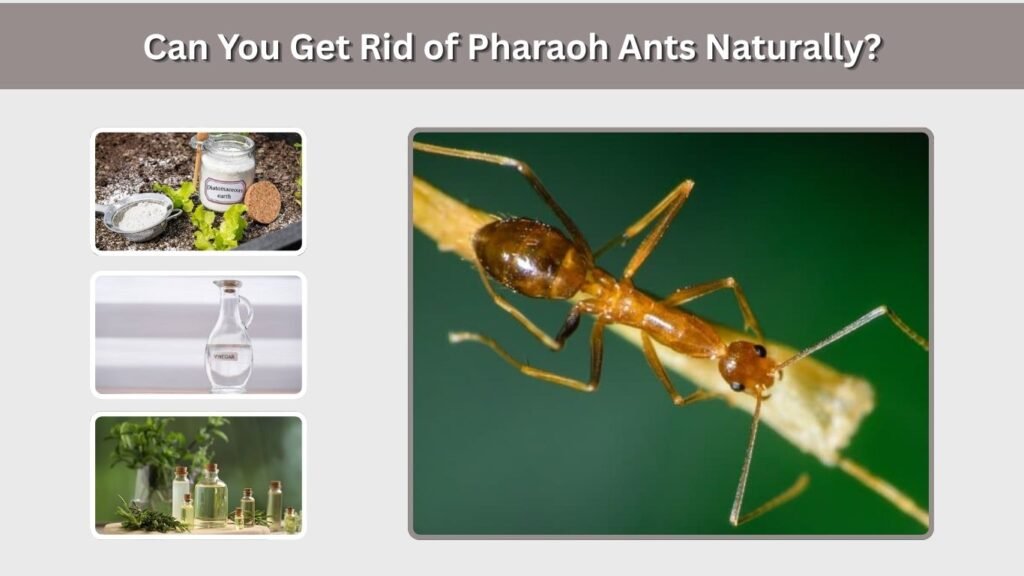
Cleaning and moisture control help reduce food sources, but natural repellents rarely eliminate hidden colonies.
Soap and Water
Soapy water can remove ants and erase trail chemicals from a surface. Use it after baiting has reduced activity or in areas where ants must be removed immediately. It does not reach queens hidden inside walls.
Vinegar and Essential Oils
Vinegar, peppermint oil, and similar strong-smelling products may temporarily disrupt a trail. However, they can also repel ants from bait and encourage them to create alternative routes. They should not be used near an active baiting program.
Diatomaceous Earth
Diatomaceous earth can kill individual ants that cross a dry application, but it does not spread effectively through complex colonies. Dust placed carelessly may also cause ants to avoid treated areas. Avoid inhaling it, and use it only where permitted by the label.
Does Borax Get Rid of Pharaoh Ants?
Borax or boric acid can act slowly enough to be used in some commercial ant baits. However, homemade mixtures are difficult to prepare at the correct concentration. A mixture that is too strong may kill or repel workers before they distribute it, while one that is too weak may not control the colony.
Choose a ready-to-use, registered bait specifically labeled for pharaoh ants. Store it in its original packaging and follow every placement and safety instruction.
How to Prevent Pharaoh Ants From Returning
Once the colony has been eliminated, seal gaps around pipes, baseboards, doors, windows, and utility lines. Keep food sealed, clean grease from appliances, repair water leaks, and avoid leaving pet food out overnight.
In apartments or other shared buildings, report new activity immediately. Early detection makes it easier to address a small colony before it spreads through several rooms or units.
When to Call Professional Pest Control
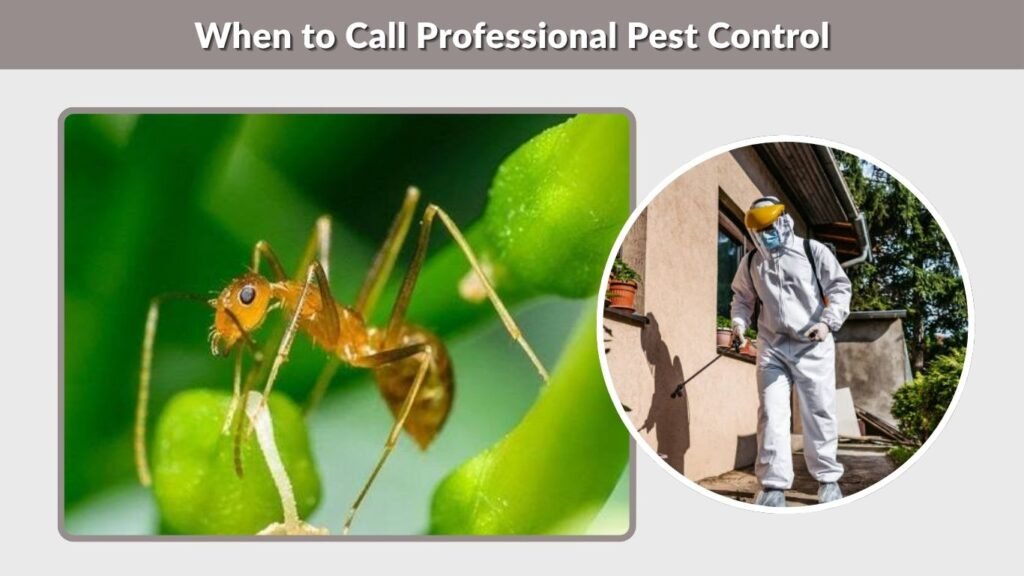
Professional help is recommended when ants are present in several rooms, continue after weeks of baiting, or occur throughout an apartment building. Treatment is also advisable in hospitals, care facilities, restaurants, and other sensitive properties.
Choose a licensed company experienced with pharaoh ants. The technician should identify the species, use a coordinated baiting program, avoid treatments that promote budding, and schedule follow-up inspections.
FAQs
What is the fastest way to get rid of pharaoh ants?
There is no reliable instant solution. Slow-acting bait is generally the safest effective method because workers must distribute it through the colony. Fast-killing sprays may worsen the problem by encouraging budding and spreading nests into new areas.
How long does it take to eliminate pharaoh ants?
A small infestation may improve within a few weeks, while a large multi-nest infestation can take longer. Continue monitoring and maintaining bait until activity has stopped in every affected area.
Why do pharaoh ants keep returning?
They may return when hidden nests survive, neighboring units remain untreated, food and water are available, or sprays have caused colonies to divide. A building-wide baiting and prevention plan may be necessary.
Are pharaoh ants dangerous?
They do not normally cause painful bites or structural damage. However, they can contaminate food and are particularly undesirable in hospitals, kitchens, and other hygiene-sensitive environments.
Can I eliminate pharaoh ants myself?
A small, correctly identified infestation may respond to careful baiting. Professional treatment is preferable when ants occupy multiple rooms, walls, apartments, or sensitive facilities because incorrect pesticide use can spread the infestation.