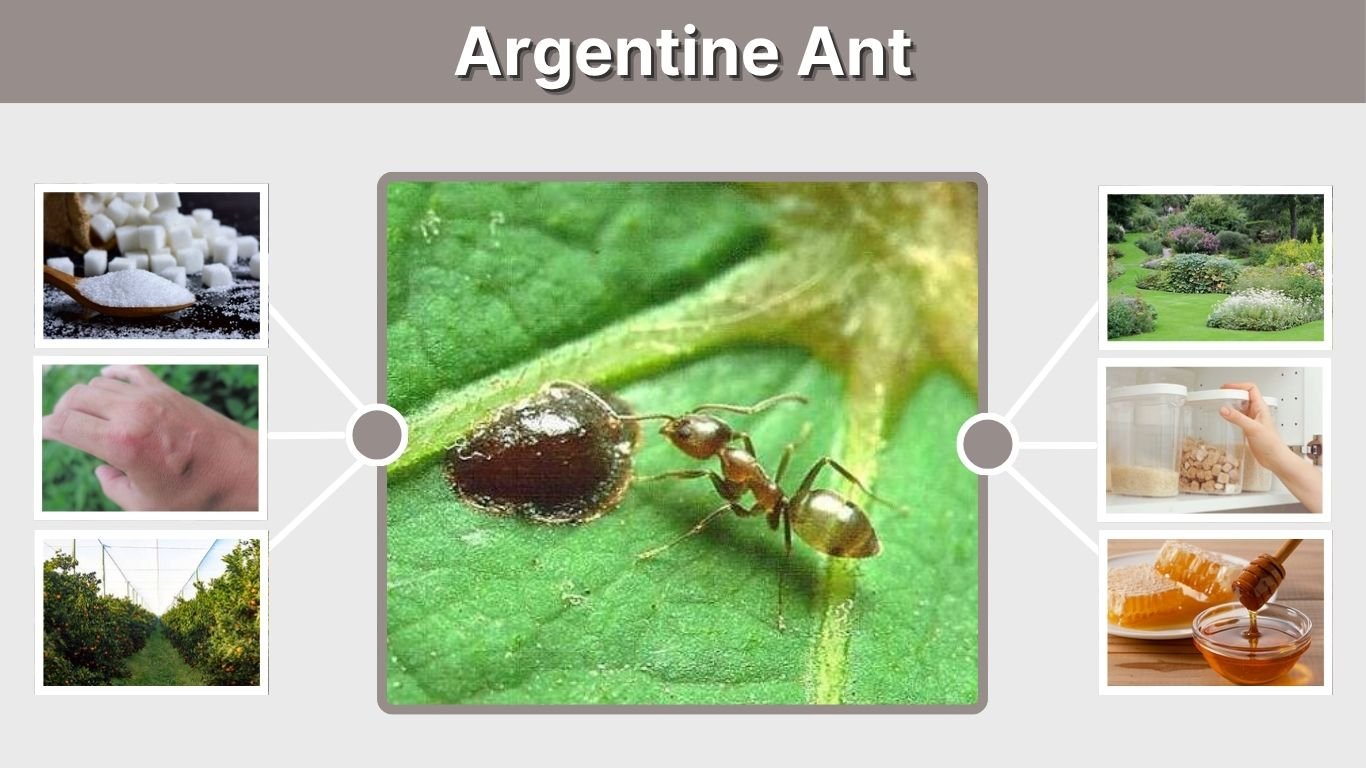
The Argentine ant is a tiny but highly successful invasive ant known for forming enormous colonies around homes, gardens, farms, and urban areas. Although these ants are not considered dangerous to people, they can become persistent household pests, contaminate food, protect plant-damaging insects, and displace native ant species. Their long trails and preference for sweet foods often make them easy to notice. Understanding their appearance, habitat, diet, behavior, and nesting habits can help you identify an infestation and select an effective control method.
Argentine Ant Overview
The Argentine ant’s scientific name is Linepithema humile. It belongs to the ant family Formicidae and is native to parts of South America, particularly areas associated with the Paraná River drainage. The species has now spread to many warm and temperate regions worldwide through international trade and the movement of plants, soil, cargo, and other materials.
| Feature | Description |
| Common name | Argentine ant |
| Scientific name | Linepithema humile |
| Worker size | About 2.2–3 millimeters |
| Color | Light to dark brown |
| Diet | Honeydew, sweets, insects, fats, and proteins |
| Nest location | Soil, mulch, wood, walls, and beneath objects |
| Bite risk | Mild and uncommon |
| Main concern | Large invasive colonies and household infestations |
What Does an Argentine Ant Look Like?
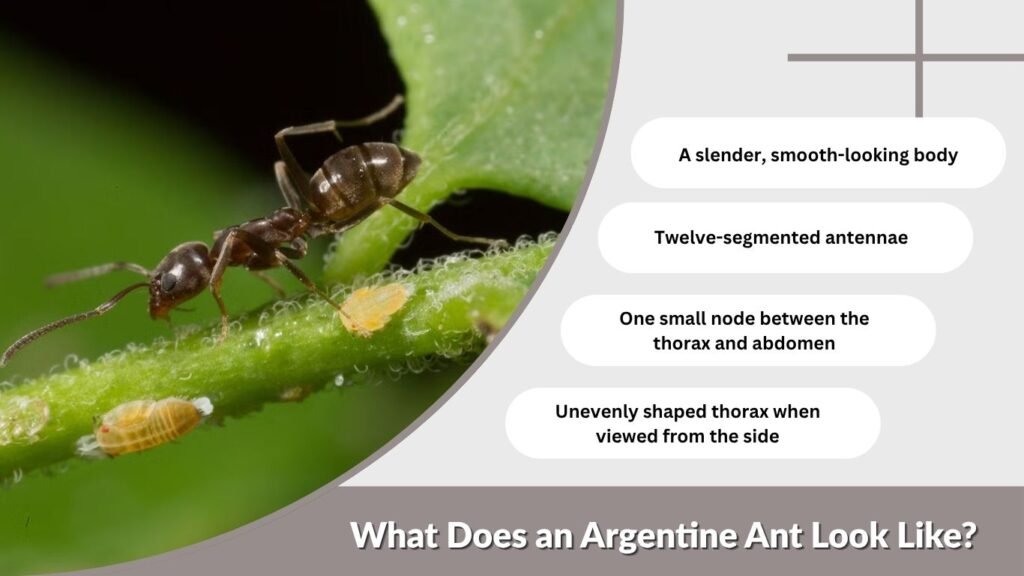
Argentine ants are very small, slender ants that may be difficult to distinguish from other household species without close examination. However, their uniform worker size, brown coloring, long trails, and strong attraction to sweet foods provide useful identification clues.
Size
Argentine ant workers are approximately 1/8 inch long, or around 2.2–3 millimeters. Workers within a colony are generally similar in size, which is described as a monomorphic worker population. Queens are noticeably larger and have broader bodies than workers.
Because they are so small, Argentine ants can enter buildings through tiny gaps around windows, doors, pipes, foundations, utility lines, and wall joints.
Color
The body color may range from light brown to medium or dark brown. Their legs and antennae are usually similar in color to the rest of the body, although lighting can make them appear darker or almost black from a distance.
Body Shape
Important physical features include:
- A slender, smooth-looking body
- Twelve-segmented antennae
- One small node between the thorax and abdomen
- Unevenly shaped thorax when viewed from the side
- No visible stinger
- Relatively hairless body surface
- Workers that are almost identical in size
When crushed, Argentine ants may produce a faint musty or greasy odor. However, odor alone should not be used for identification because several ant species release noticeable smells.
Argentine Ant Habitat
Argentine ants prefer places with dependable moisture, moderate temperatures, shelter, and nearby food. They can live in natural habitats, agricultural areas, gardens, urban landscapes, and buildings.
Native Habitat
The species originated in lowland regions of South America, particularly around major waterways within the Paraná River drainage system. These environments provided moist soil, vegetation, abundant insects, and relatively mild conditions.
Outdoor Nesting Sites
Argentine ants commonly establish shallow nests in protected outdoor locations, including:
- Beneath rocks and paving stones
- Under logs, boards, and landscape materials
- Inside mulch and leaf litter
- Around tree roots
- Beneath flowerpots
- Along sidewalks and foundations
- Inside damp soil
- Under loose bark
- Near irrigation systems
- Around leaking outdoor faucets
Their nests are often temporary. Colonies may relocate when the soil becomes too dry, flooded, disturbed, cold, or excessively hot.
Indoor Nesting Sites
Argentine ants usually enter homes in search of food, water, or protection from uncomfortable weather. They may establish satellite nests in wall voids, insulation, cabinets, potted plants, roof spaces, bathroom walls, or areas near plumbing.
Large indoor invasions frequently occur during periods of heavy rain, drought, extreme heat, or cold weather. These conditions drive ants away from outdoor nests and into more stable indoor environments.
Where Are Argentine Ants Found?
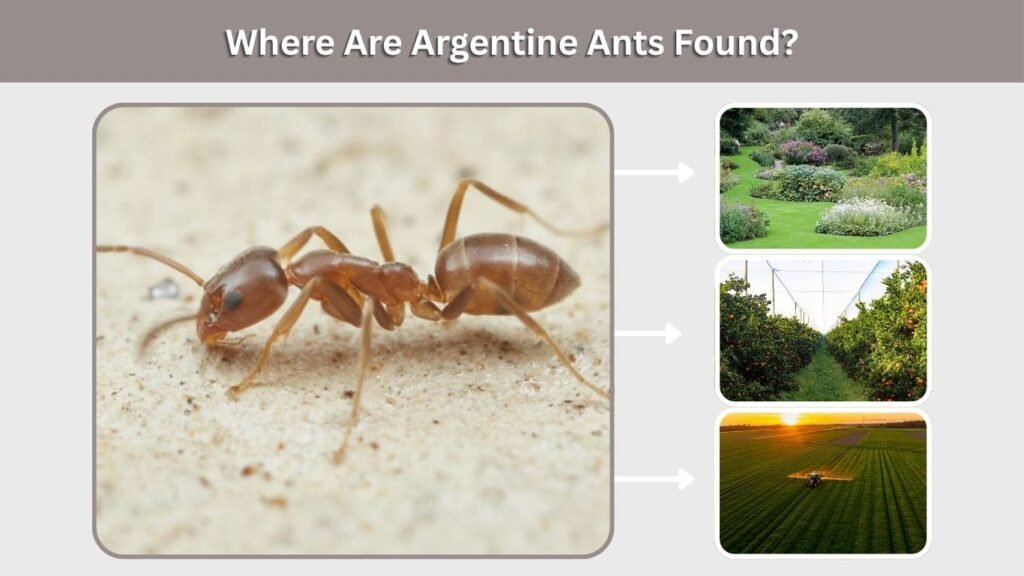
Argentine ants have been introduced to numerous regions outside their native range. They are especially successful in places with Mediterranean, subtropical, and mild coastal climates.
They are commonly associated with:
- Residential neighborhoods
- Parks and gardens
- Citrus orchards
- Vineyards
- Plant nurseries
- Farms
- Commercial properties
- Irrigated landscapes
- Areas near rivers and coastlines
Their spread is strongly connected to human transportation. Colonies can be moved in nursery plants, soil, landscaping materials, shipping containers, firewood, vehicles, and household goods.
What Do Argentine Ants Eat?
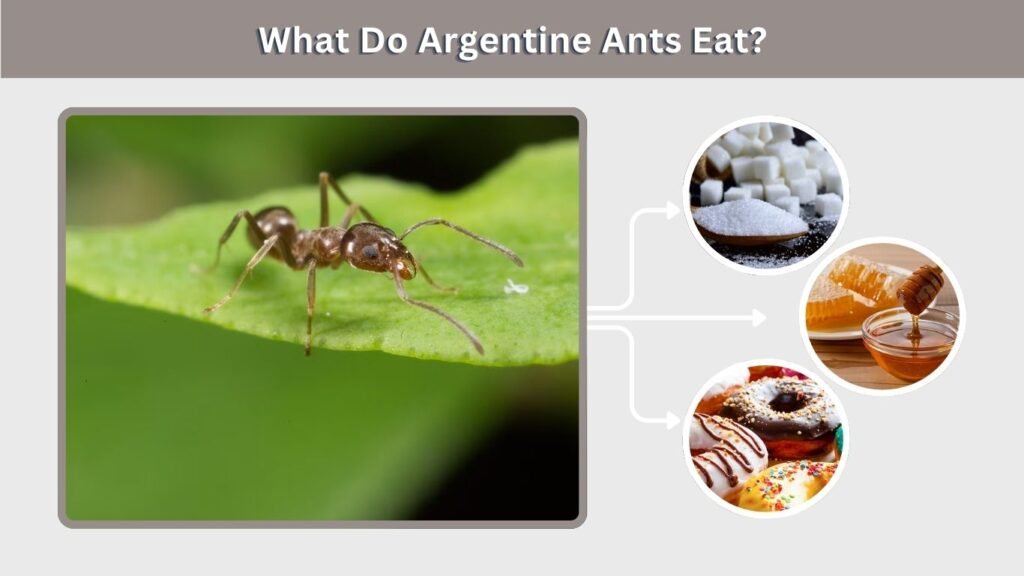
Argentine ants are omnivorous and opportunistic. They can consume many plant- and animal-based foods, but sugary liquids are especially important to them.
Honeydew
Honeydew is one of their primary food sources. It is a sweet liquid produced by sap-feeding insects such as aphids, scale insects, mealybugs, and whiteflies. Argentine ants collect this liquid and aggressively protect the insects producing it.
This relationship can increase garden and agricultural problems because protected aphids and scale insects may multiply more rapidly.
Household Foods
Inside homes, Argentine ants may feed on:
- Sugar
- Syrup
- Honey
- Fruit juice
- Soft drinks
- Cake and candy
- Pet food
- Meat grease
- Dairy products
- Food crumbs
- Dead insects
Their preferences can change according to the nutritional needs of the colony. Workers may seek sugar for immediate energy while collecting protein to support developing larvae and egg-producing queens.
Small Insects and Animal Matter
Argentine ants hunt or scavenge small insects, insect eggs, larvae, and other dead arthropods. They may attack weakened insects or overwhelm small prey through their large numbers.
Argentine Ant Colony and Behavior
One reason Argentine ants are difficult to manage is their unusual social structure. Colonies commonly contain many queens and numerous interconnected nests.
Multiple Queens
Unlike ant species with only one queen per colony, Argentine ant colonies may contain many reproductive queens. This allows them to produce workers rapidly and recover when part of the colony is disturbed.
Colony Budding
New nests are often formed through a process called budding. One or more queens leave an established nest accompanied by a group of workers. They walk to a nearby location and establish another nest without relying on a long-distance mating flight.
This behavior is one reason spraying visible ants does not always eliminate an infestation. Surviving queens and workers may simply move and create new nesting sites.
Long Ant Trails
Workers establish distinct trails between nests, food, and water. They communicate through chemical pheromones deposited on surfaces. Once a reliable food source is discovered, hundreds or thousands of ants may begin following the same route.
Supercolonies
In introduced regions, neighboring Argentine ant nests frequently cooperate rather than fight. Numerous nests can function as one enormous colony covering a large area. This cooperative behavior helps them dominate food sources and displace native ants.
Do Argentine Ants Bite?
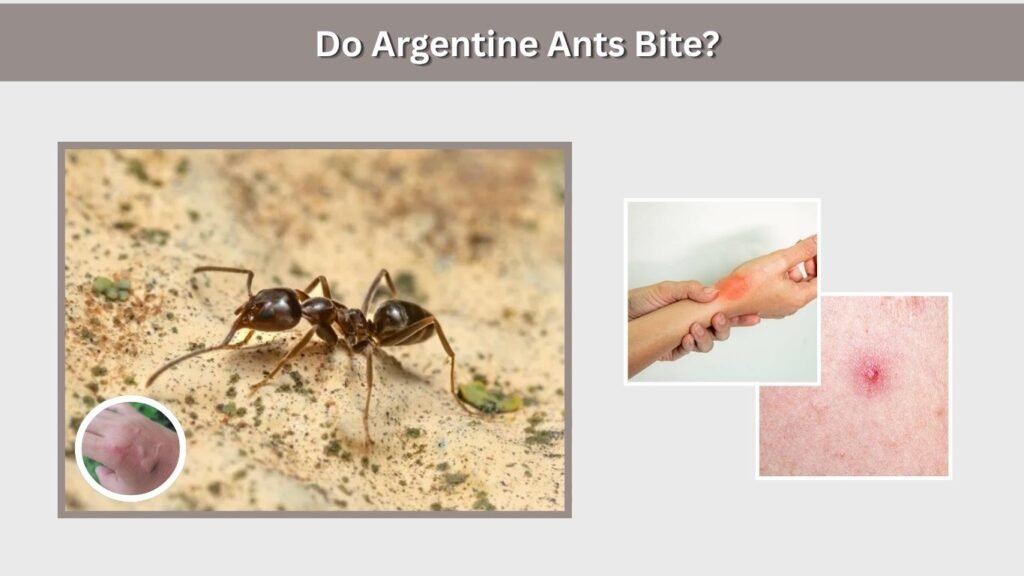
Argentine ants can bite, but bites are uncommon and generally considered harmless. They do not have a functional stinger and are not known for attacking people.
A worker may use its jaws when trapped against the skin or when its nest is disturbed. Most people feel little or no pain.
Possible Bite Symptoms
A sensitive person might notice:
- A tiny pinching sensation
- Mild redness
- Minor itching
- Brief skin irritation
- A small raised bump
These effects normally disappear without treatment. Argentine ants do not inject a medically significant venom through a stinger.
Wash the area with soap and water and avoid scratching. Seek medical advice when irritation becomes severe, continues to spread, shows signs of infection, or is accompanied by breathing difficulty or significant swelling. Such reactions would be unusual and may have another cause.
Are Argentine Ants Dangerous?
Argentine ants are not normally dangerous to humans or pets. Their main risks involve sanitation, agriculture, biodiversity, and persistent infestation.
Food Contamination
Workers can travel through garbage, drains, soil, pet areas, and other dirty environments before reaching kitchen counters or stored food. Food heavily invaded by ants should be discarded.
Damage to Gardens
Argentine ants do not usually eat healthy plants directly. However, they protect aphids, scales, and mealybugs from predators. These sap-feeding pests can weaken plants, deform new growth, reduce fruit quality, and encourage the growth of sooty mold.
Impact on Native Wildlife
Dense Argentine ant populations can displace native ants by taking over food and nesting sites. Their presence may also affect other insects and animals that depend on native ants for food, seed dispersal, or ecological interactions.
Signs of an Argentine Ant Infestation
Common signs include:
- Long trails of small brown ants
- Large numbers appearing around sinks
- Ants gathering near sweet food or pet bowls
- Activity around leaking pipes and faucets
- Trails along walls, counters, or foundations
- Ants beneath flowerpots and paving stones
- Increased aphid or scale insect populations
- Ants entering after rain or hot weather
- Several nesting sites around the property
Seeing only a few workers may still indicate a much larger colony nearby.
How to Get Rid of Argentine Ants
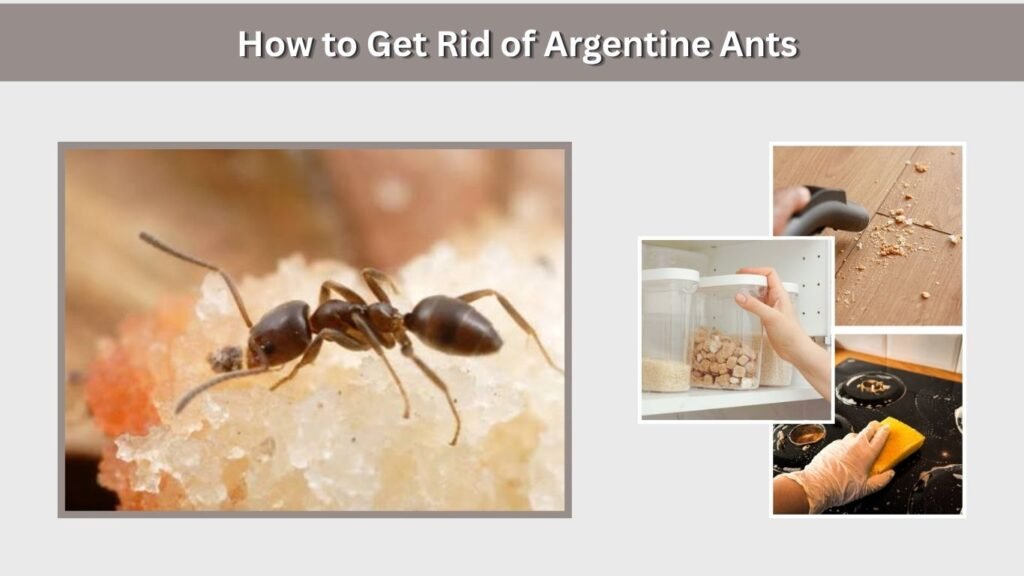
Successful control should target the colony rather than only the workers visible inside the home.
Use Slow-Acting Ant Baits
Sweet liquid or gel baits are often suitable because Argentine ants are strongly attracted to sugar. Workers consume the bait and carry it back to nests, where it is shared with larvae, queens, and other workers.
Place bait near active trails but away from children and pets. Follow the product label and avoid spraying insecticide around bait stations, as sprays may prevent ants from feeding.
Remove Food Sources
- Store sugar and snacks in sealed containers.
- Clean crumbs and spills immediately.
- Rinse bottles and cans before disposal.
- Keep pet food covered when not in use.
- Empty garbage regularly.
- Clean grease from kitchen surfaces.
Reduce Moisture
Repair leaking pipes, faucets, irrigation lines, and air-conditioning drains. Improve ventilation in damp areas and avoid overwatering soil near the foundation.
Seal Entry Points
Close gaps around doors, windows, plumbing, cables, vents, and foundation cracks. Trim branches that touch the building because ants may use them as bridges.
Manage Honeydew-Producing Insects
Inspect garden plants for aphids, scales, mealybugs, and whiteflies. Reducing these insects removes an important outdoor food supply. Argentine ants are especially associated with honeydew-producing plant pests.
Avoid Relying Only on Contact Sprays
Contact sprays may kill exposed workers but often fail to reach the many queens and hidden nests. Repellent sprays can also disrupt trails and cause colonies to relocate. Baiting, sanitation, moisture control, and exclusion generally provide more complete management.
Argentine Ant vs Odorous House Ant
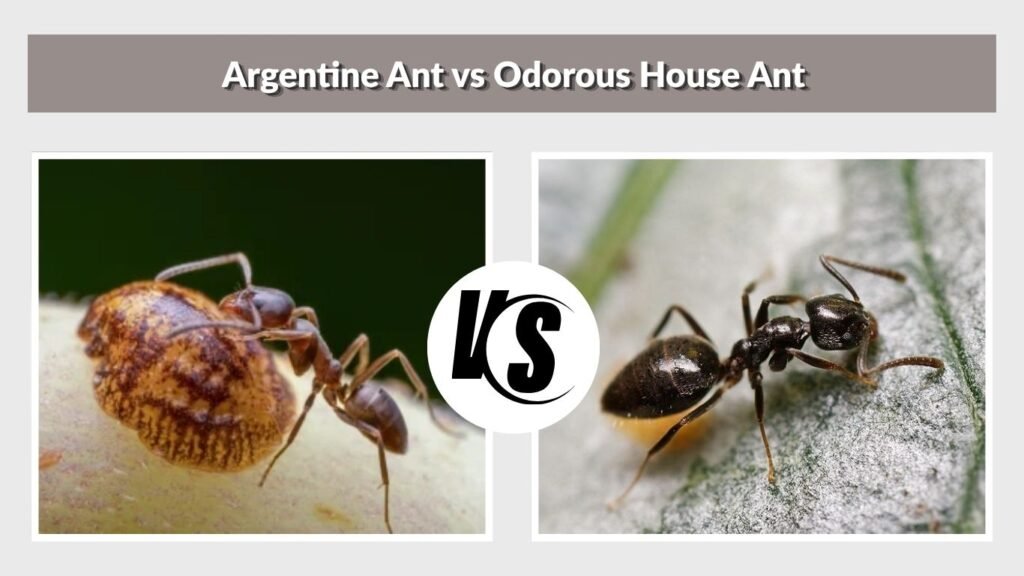
| Feature | Argentine Ant | Odorous House Ant |
| Worker size | About 2.2–3 mm | About 2.4–3.3 mm |
| Color | Light to dark brown | Brown to black |
| Body node | One visible node | Node often hidden |
| Odor | Mild musty smell | Strong rotten-coconut odor |
| Colony structure | Multiple queens and linked nests | Multiple queens possible |
| Typical trails | Very long and heavily populated | Strong but often shorter trails |
| Sting | No | No |
| Bite | Mild and uncommon | Mild and uncommon |
FAQs
Are Argentine ants harmful to humans?
Argentine ants are not considered medically dangerous. They lack a functional stinger, and their weak bites rarely cause more than temporary irritation. Their primary problems are food contamination, large household infestations, protection of plant pests, and displacement of native ant species.
Why are Argentine ants in my house?
They usually enter homes looking for water, sugar, protein, or shelter. Outdoor colonies may move inside during rain, drought, extreme heat, or cold weather. Leaking pipes, exposed food, pet bowls, damp walls, and foundation cracks can make a home especially attractive.
How can I identify an Argentine ant?
Look for very small, uniformly sized brown workers moving in long, organized trails. Workers are about 1/8 inch long and have slender bodies with one node between the thorax and abdomen. Professional identification may be necessary because several household ants look similar.
What is the best bait for Argentine ants?
Slow-acting sugar-based liquid or gel bait is often effective because workers readily collect sweet foods. The bait must remain available long enough for workers to carry it into their interconnected nests. Always use and place ant-control products according to their label instructions.
Do Argentine ants damage wood?
Argentine ants do not excavate sound wood like carpenter ants and do not consume wood like termites. However, they may nest inside existing cracks, decayed wood, wall voids, or damp structural spaces. Their presence can sometimes reveal an underlying moisture problem.