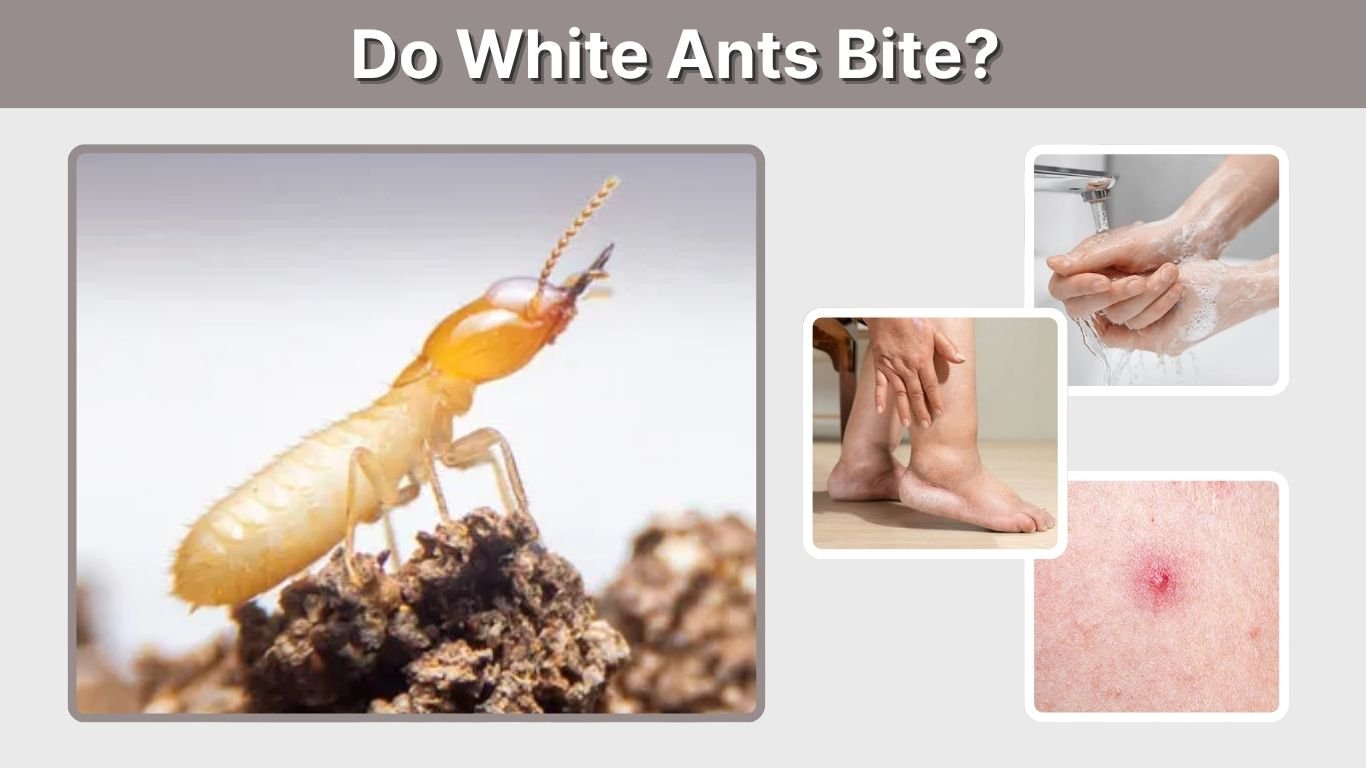
White ants may look alarming when discovered inside furniture, walls, or damaged wood. However, these insects are actually termites—not true ants—and they are primarily interested in cellulose rather than people. Most termites do not bite or sting humans, although defensive soldiers may attempt to pinch when handled. Searches about white-headed ant bites usually refer to fire-ant stings, which produce a very different skin reaction. This guide explains whether white ants bite, how termites differ from biting ants, why some ant stings develop white bumps, and when a skin reaction needs medical attention.
Do White Ants Bite?
White ants, commonly known as termites, do not normally bite people. Worker termites feed on wood and other cellulose materials, while reproductive termites focus on mating and establishing colonies. They do not seek blood, skin, or human food.
Termites are considered a structural pest rather than a human-health threat. Their main danger comes from the damage colonies can cause to wooden buildings, furniture, flooring, paper, and other cellulose-containing materials.
Can Soldier Termites Bite?
Soldier termites have enlarged heads and strong jaws used to defend their colonies against ants and competing termites. Some soldiers may attempt to bite when they are picked up, pressed against the skin, or disturbed inside an opened nest.
However, a soldier termite’s bite is generally too weak to cause meaningful injury. University of Georgia Extension notes that Formosan termite soldiers may try to bite when challenged, but their bites are not painful or dangerous.
Do Worker Termites Bite Humans?
Worker termites possess mouthparts capable of chewing wood, but they are not aggressive toward people. They remain inside wood, soil, shelter tubes, and underground tunnels, avoiding open air and light.
Workers are more likely to retreat when their galleries are disturbed than to attack. Finding pale workers on your skin does not mean they are feeding on you. Remove them gently and wash the area with soap and water.
Do Flying White Ants Bite?
Flying termites, called swarmers or alates, do not bite or sting people. They leave mature colonies to mate and establish new nests. Indoor swarmers are attracted to windows and lights, but they usually die from dehydration if they cannot escape.
Although the insects themselves are harmless, a swarm emerging indoors can indicate an established termite colony somewhere inside or beneath the building.
White Ants vs Biting Ants
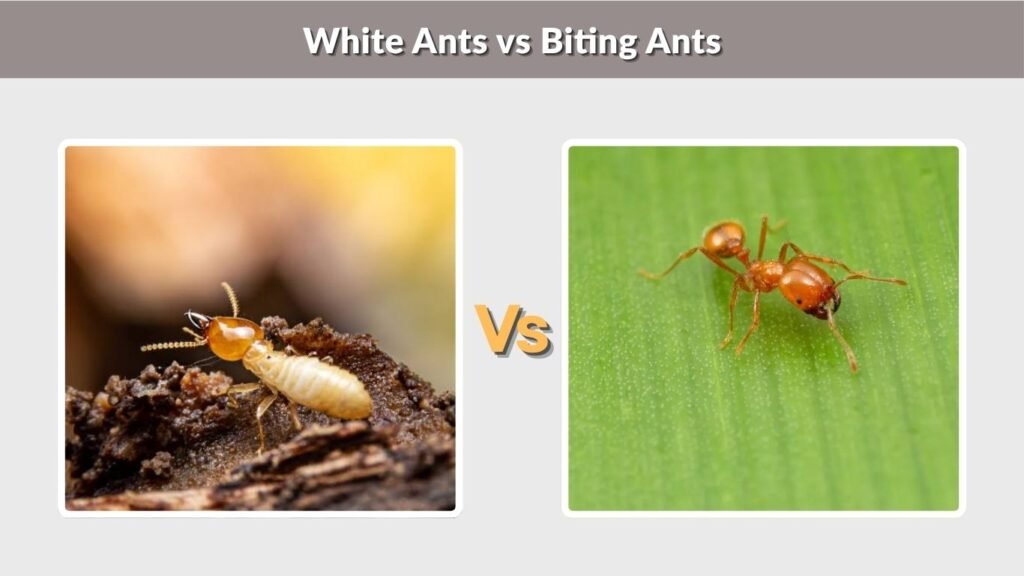
The term “white ant” creates confusion because termites are not ants. A skin bump blamed on a white ant was more likely caused by a true ant, another insect, or an unrelated skin condition.
| Feature | White ants or termites | Fire ants |
| Main threat | Property damage | Painful stings |
| Body shape | Broad waist | Narrow waist |
| Antennae | Straight | Elbowed |
| Human interaction | Avoid people | Defend nests aggressively |
| Skin reaction | Usually none | Burning, redness, white pustule |
| Venom | None | Injected through stinger |
True ants generally have narrow waists and elbowed antennae. Termite workers have pale bodies, broad waists, and straight, bead-like antennae.
Why Do Ant Bites Develop a White Head?
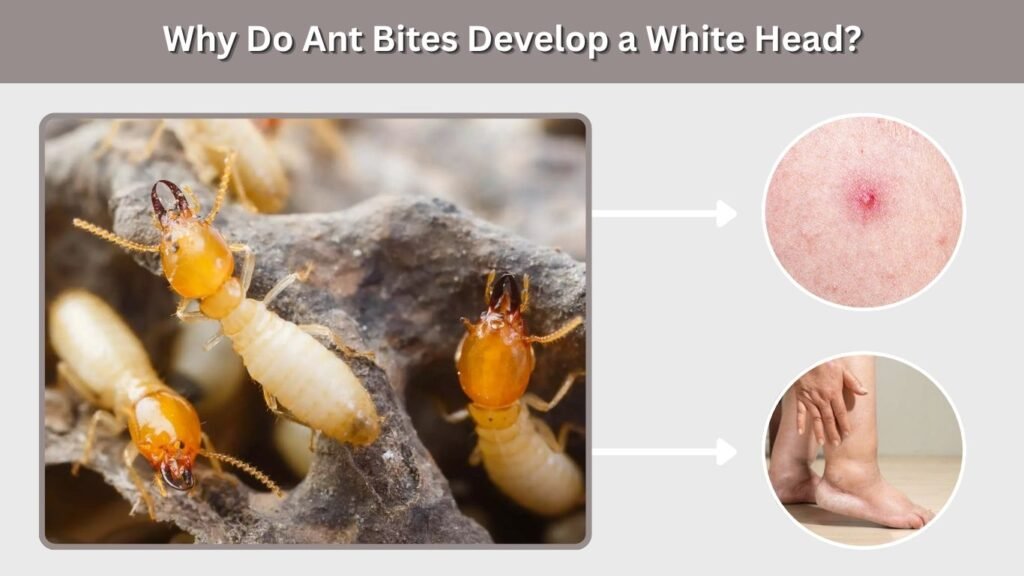
A white-headed bump after an ant encounter is most strongly associated with a fire-ant sting. Fire ants first bite the skin to hold themselves in place and then sting, injecting venom. The venom causes an immediate burning sensation followed by redness and swelling.
Within one or two days, the sting site may develop a small white, fluid-filled pustule. This characteristic bump is a reaction to the venom and does not automatically mean the area is infected.
Typical Fire-Ant Sting Symptoms
Common reactions include:
- Immediate burning or stinging pain
- A red, raised bump
- Itching around the affected area
- Localized swelling
- A white or yellowish pustule
- Several bumps grouped together
- A small scab as the area heals
The pustules may remain for several days. Scratching or breaking them can damage the skin and increase the risk of a secondary infection.
Why Do Fire-Ant Bumps Turn White?
The white center forms as the skin reacts to fire-ant venom. Inflammatory cells and fluid collect beneath the outer layer of skin, creating a blister-like pustule.
It may resemble a pimple, but squeezing or popping it is not recommended. Keeping the area clean and intact allows it to heal while reducing the possibility of bacteria entering through broken skin.
Do All Ant Bites Have White Tips?
No. Different ants cause different reactions, and many ant bites produce only temporary redness, itching, or mild swelling. Fire ants are especially known for developing white pustules.
A white bump can also be caused by other insects, irritated hair follicles, contact reactions, or skin infections. Skin appearance alone cannot always identify the insect responsible.
What to Do After an Ant Bite or Sting
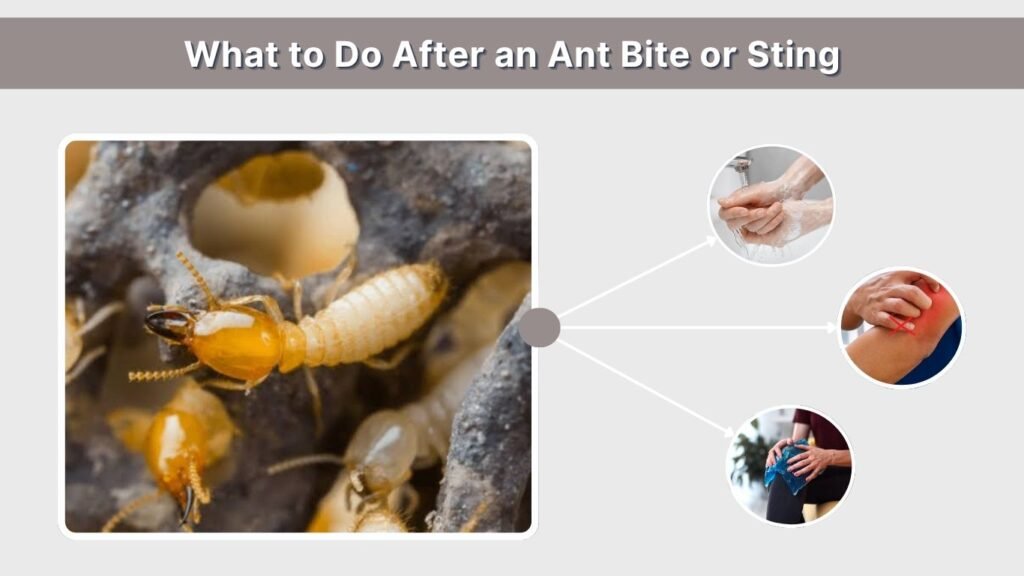
Most mild ant reactions can be managed with basic first aid. The goal is to control itching and swelling while protecting the skin from infection.
Basic First-Aid Steps
- Move away from the nest or infested area.
- Brush any remaining ants off your skin.
- Wash the area gently with soap and water.
- Apply a wrapped cold pack for short periods.
- Avoid scratching, squeezing, or opening pustules.
- Follow the directions of an appropriate anti-itch treatment when needed.
- Monitor the reaction for worsening symptoms.
People with known severe insect allergies should follow the emergency plan provided by their healthcare professional.
When to Contact a Doctor
Seek medical advice when the sting is near the eye or inside the mouth, swelling becomes unusually large, pain or redness continues to worsen, or the area develops signs of infection.
Possible infection signs include increasing warmth, spreading redness, worsening tenderness, drainage, or fever. A medical professional should evaluate symptoms that are severe, persistent, or difficult to identify.
Signs of a Medical Emergency
Get emergency medical help immediately when an ant sting is followed by:
- Difficulty breathing
- Wheezing or persistent coughing
- Swelling of the tongue or throat
- Trouble swallowing
- Dizziness or fainting
- Widespread hives
- Repeated vomiting
- Rapidly worsening symptoms
These symptoms may indicate anaphylaxis, a potentially life-threatening allergic reaction.
What to Do When You Find White Ants at Home
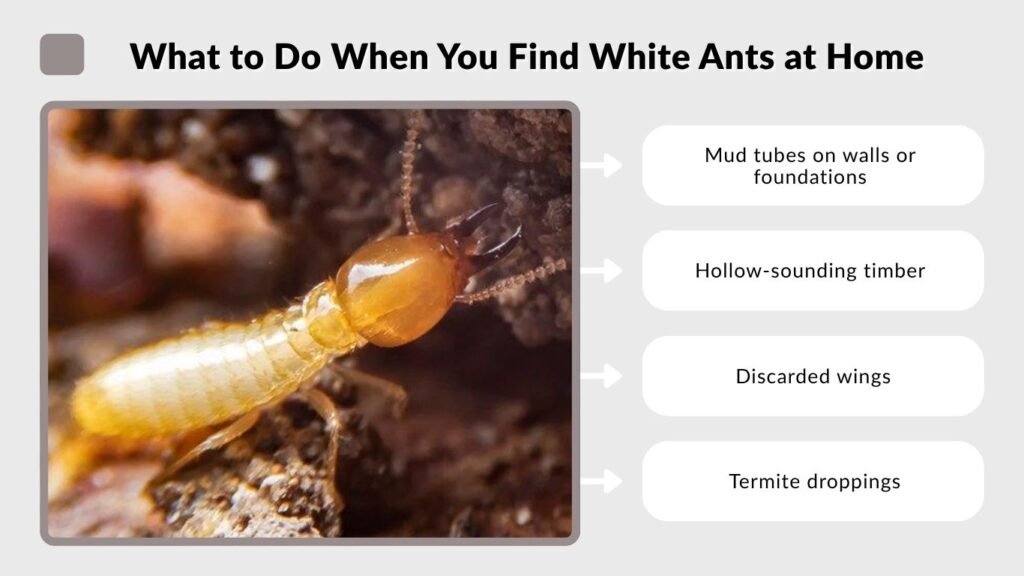
Although termites are unlikely to harm your skin, they should not be ignored. Pale termites inside walls, furniture, flooring, or structural wood may indicate an active infestation.
Avoid relying on household ant spray because it may kill only exposed insects while leaving the hidden colony intact. Photograph the termites, save a few specimens for identification, and arrange a professional inspection.
Watch for additional signs such as:
- Mud tubes on walls or foundations
- Hollow-sounding timber
- Discarded wings
- Termite droppings
- Blistered or weakened wood
- Indoor termite swarms
Proper control may involve soil-applied treatments, bait stations, direct wood treatment, or another method selected for the termite species and building design.
FAQs
Can white ants hurt humans?
White ants rarely hurt humans. They do not feed on blood or skin and are not known to spread disease through biting. Defensive soldier termites may pinch when handled, but such bites are generally minor and uncommon.
Are termite bites poisonous?
Termites are not venomous and do not sting. A rare defensive pinch from a soldier termite does not inject venom. A painful bump, burning sensation, or white pustule is more likely to have come from a fire ant or another insect.
Why does my ant bite have a white head?
A white head commonly develops after a fire-ant sting because the venom triggers a small fluid-filled pustule. Do not pop it. Keep the site clean and monitor it for spreading redness, increasing pain, warmth, or drainage.
Do white-footed ants bite?
White-footed ants are true ants with dark bodies and pale feet, not termites. They are mainly household nuisance pests and are not generally considered aggressive toward people. Correct identification is important because their treatment differs from termite control.
Should I worry when I find white ants in my house?
You should be concerned about possible property damage rather than bites. White ants inside wood or walls can signal a termite colony. Arrange an inspection to identify the species, locate the infestation, and determine whether structural treatment is necessary.