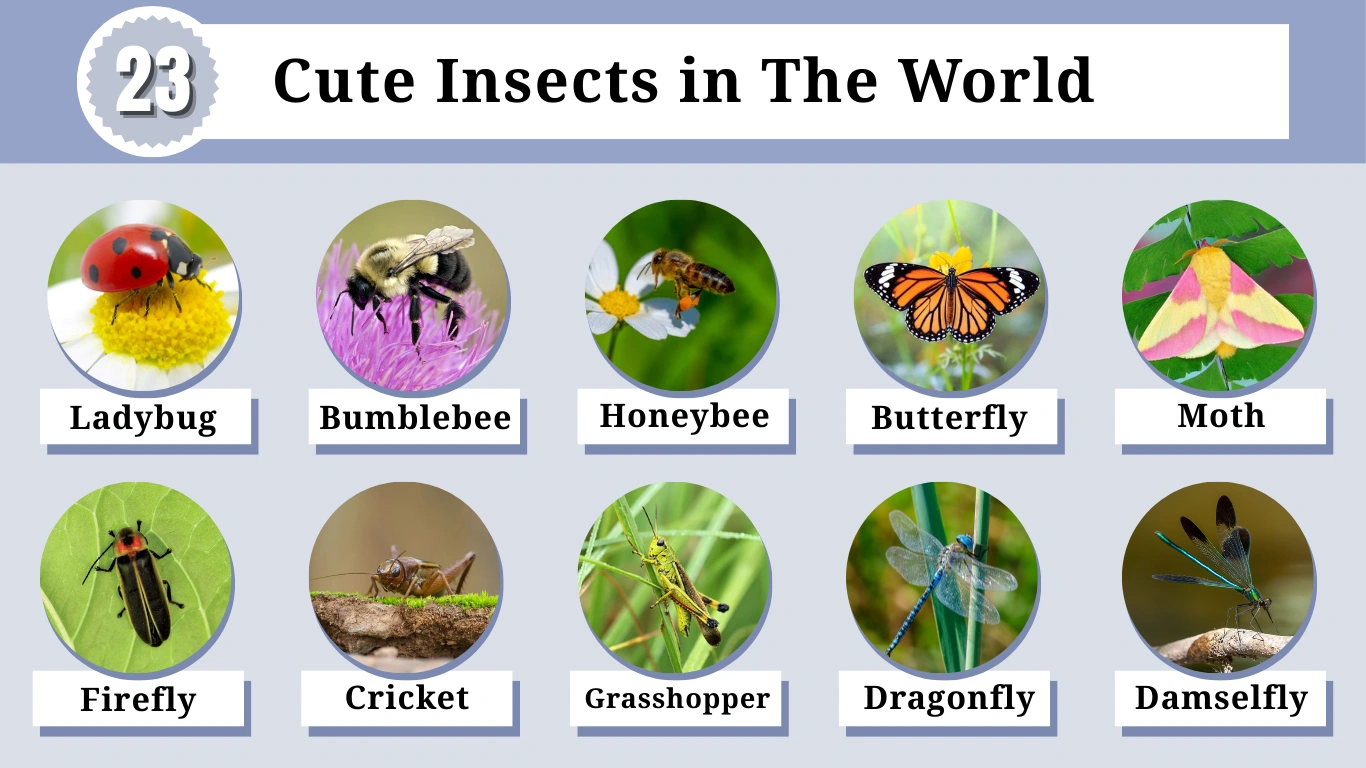
Insects are often overlooked, but many of them are truly delightful when you notice their unique features, colors, and behaviors. From ladybugs and butterflies to stick insects and jewel bugs, these tiny creatures bring charm and wonder to gardens, forests, and even our homes. This collection of cute insects highlights their beauty, fascinating lifestyles, and cultural symbolism, showing why they deserve admiration beyond their small size.
1. Ladybug – The Classic Cute Insect

Ladybugs are one of the most beloved and recognizable cute insects worldwide. With their tiny round bodies, bright red wings, and black polka dots, they are often seen as symbols of good luck and happiness. Their gentle appearance makes them popular in children’s books, cartoons, crafts, and tattoos.
Identification
- Round, dome-shaped body
- Bright red or orange wings with black spots
- Small black head with antennae
- Six tiny legs, usually black
- Size ranges from 0.8 to 18 mm
Habitat and Lifestyle
Ladybugs thrive in gardens, meadows, and farms, where they feed on aphids and small pests. This makes them both adorable and beneficial to plants. Their presence is often a sign of a healthy ecosystem, balancing beauty with usefulness.
Symbolism and Popularity
These cute insects symbolize luck, love, and joy in many cultures. Their cheerful look inspires clipart, cartoons, costumes, and even jewelry. Because of their friendly image, ladybugs are also among the most common insects featured in children’s crafts and educational worksheets.
2. Bumblebee – A Gentle and Cute Insect

Bumblebees are fluffy, friendly, and widely admired as another cute insect. Their chubby bodies and soft buzzing make them look harmless and charming. Often associated with flowers and honey, they play a vital role in pollination, making them both adorable and ecologically important.
Identification
- Fuzzy, round body with black and yellow stripes
- Short wings compared to body size
- Large compound eyes
- Six legs covered in fine hair
- Typically larger than honeybees
Habitat and Lifestyle
Bumblebees live in small colonies, often nesting underground or in abandoned animal burrows. They collect nectar and pollen, buzzing from flower to flower with their unique ability to “buzz pollinate,” which shakes pollen loose for better fertilization.
Symbolism and Popularity
Known for their gentle nature, bumblebees symbolize community, productivity, and joy. Their cute and cuddly look inspires cartoons, clipart, costumes, and even tattoos. These insects are often drawn in playful, rounded styles that make them a favorite in art and crafts.
3. Honeybee – A Sweet and Cute Insect

Honeybees are admired as one of the most hardworking yet cute insects. Their golden-brown stripes, small wings, and constant buzzing give them an endearing charm. Beyond their looks, they are essential pollinators and producers of honey, making them both adorable and valuable.
Identification
- Slender body with golden-brown and black stripes
- Transparent wings
- Fuzzy thorax
- Large compound eyes
- Average size 12–15 mm
Habitat and Lifestyle
Honeybees live in organized colonies within hives, often in hollow trees or man-made beehives. They work collectively to gather nectar, produce honey, and protect their queen. Their teamwork is a perfect example of harmony in nature.
Symbolism and Popularity
Honeybees symbolize diligence, sweetness, and unity. They frequently appear in children’s stories, cartoons, and decorative clipart. Their connection to honey and flowers makes them one of the most beloved cute insects in crafts, art, and cultural symbolism.
4. Butterfly – A Colorful and Cute Insect

Butterflies are admired for their delicate wings and vibrant colors, making them one of the most enchanting cute insects. They are symbols of beauty and transformation, fluttering gracefully through gardens and meadows. Their gentle movements and dazzling patterns make them favorites in art, tattoos, and children’s crafts.
Identification
- Two pairs of large, colorful wings covered in tiny scales
- Slender body with three main parts: head, thorax, abdomen
- Long, curled proboscis for sipping nectar
- Antennae with clubbed tips
- Size varies greatly, from a few centimeters to nearly 30 cm in wingspan
Habitat and Lifestyle
Butterflies thrive in warm, sunny environments, often found around flowers, meadows, and gardens. They feed primarily on nectar, pollinating plants as they move between blooms. Their lifecycle—egg, caterpillar, chrysalis, and adult—fascinates both scientists and children alike.
Symbolism and Popularity
Butterflies symbolize change, hope, and renewal. Because of their dazzling appearance, they are among the most popular cute insects used in clipart, coloring pages, decorations, and costumes. Their bright wings and gentle nature make them timeless icons of natural beauty.
5. Moth – A Nighttime Cute Insect

Moths are often overshadowed by butterflies, but many species are incredibly charming and unique, making them true cute insects in their own right. With their fuzzy bodies, feathery antennae, and soft wing patterns, moths bring a gentle beauty to the night.
Identification
- Two pairs of wings, often with muted but intricate patterns
- Fuzzy thorax and body, giving them a cuddly look
- Antennae: males often have feather-like antennae, while females have thinner ones
- Range in size from tiny moths (a few millimeters) to large species like the Atlas moth
- Wings usually fold flat against the body when resting
Habitat and Lifestyle
Moths are mostly nocturnal and are attracted to light sources at night. They thrive in gardens, forests, and fields, feeding on nectar and helping with pollination, especially for night-blooming flowers. Their caterpillars are also an important food source for birds and other wildlife.
Symbolism and Popularity
Moths symbolize mystery, transformation, and resilience. Many species, like the Luna moth, are admired for their ethereal beauty and are often used in tattoos, illustrations, and clipart. Their soft, fuzzy appearance makes them one of the more underrated but still very cute insects in art and culture.
6. Firefly – A Glowing Cute Insect

Fireflies, also called lightning bugs, are magical little creatures known for their glowing abdomens. Their bioluminescence lights up summer nights, making them one of the most enchanting and truly cute insects admired by both children and adults.
Identification
- Small, soft-bodied beetles with brown or black coloring
- Distinct glowing abdomen (bioluminescent organ)
- Long, narrow wing covers
- Antennae are usually straight and slender
- Sizes range between 5–25 mm
Habitat and Lifestyle
Fireflies thrive in warm, humid environments such as meadows, fields, and near water sources. They are most active at dusk and night, where males flash light patterns to attract mates. Larvae are known as “glowworms,” and many species feed on snails and other small insects.
Symbolism and Popularity
Fireflies symbolize hope, magic, and wonder. Their glowing effect inspires countless fairy-tale illustrations, tattoos, and children’s crafts. Because they light up the dark, these cute insects are often associated with joy, innocence, and summertime nostalgia.
7. Cricket – A Chirping Cute Insect

Crickets are small, lively creatures best known for their cheerful chirping at night. Their gentle sounds, round bodies, and playful hopping make them another cute insect often linked with good luck and happiness in many cultures.
Identification
- Slender body, usually brown, black, or green
- Long antennae, often longer than the body
- Large hind legs for jumping
- Wing covers that produce the signature chirping sound
- Size ranges from 15–25 mm
Habitat and Lifestyle
Crickets are commonly found in grassy fields, gardens, and forests. They are nocturnal, hiding during the day and becoming active at night. Male crickets create chirping songs by rubbing their wings together, both to attract females and to mark territory.
Symbolism and Popularity
Crickets symbolize joy, prosperity, and good fortune in many traditions. Their chirping is considered soothing and is often associated with peaceful nights. In art and crafts, these cute insects are drawn with smiling faces and expressive antennae, making them popular for cartoons, clipart, and children’s educational activities.
8. Grasshopper – A Jumping Cute Insect

Grasshoppers are cheerful and energetic little creatures known for their long legs and impressive jumps. Their bright green bodies, curious faces, and playful hopping make them another easily recognized cute insect admired in both nature and art.
Identification
- Slender body, usually green or brown
- Large hind legs adapted for powerful jumps
- Short antennae compared to crickets and katydids
- Two pairs of wings, with the front pair narrow and the hind pair broad
- Size varies from 1–7 cm depending on the species
Habitat and Lifestyle
Grasshoppers thrive in fields, meadows, and grassy gardens. They are herbivores, feeding mostly on leaves, stems, and grasses. Known for their quick jumps, they are active during the day and use their strong hind legs both for defense and for exploring their surroundings.
Symbolism and Popularity
Grasshoppers symbolize freedom, energy, and good luck in many cultures. Their cheerful look makes them favorites in children’s coloring pages, cartoons, and clipart. As cute insects, they are often drawn with big smiles and lively poses, adding charm to crafts and educational worksheets.
9. Dragonfly – A Shimmering Cute Insect

Dragonflies are elegant and colorful, often admired for their jewel-like wings and graceful flight. Their dazzling appearance and playful hovering make them a fascinating cute insect loved in art, culture, and nature exploration.
Identification
- Long, slender body, often metallic blue, green, or red
- Two pairs of large, transparent wings with intricate veins
- Large compound eyes that cover most of the head
- Short antennae
- Size ranges from 2–12 cm depending on the species
Habitat and Lifestyle
Dragonflies thrive near ponds, lakes, rivers, and wetlands. They are skilled hunters, catching mosquitoes and other small insects midair with amazing precision. Dragonflies spend much of their early life underwater as nymphs before emerging as adults.
Symbolism and Popularity
Dragonflies symbolize transformation, strength, and lightness of being. Their shimmering wings and quick movements inspire countless illustrations, crafts, and tattoos. As one of the most graceful cute insects, they are often drawn in bright colors with sparkling details, making them popular in clipart and decorative designs.
10. Damselfly – A Delicate Cute Insect

Damselflies are close relatives of dragonflies, but they are smaller, slimmer, and have an even more delicate appearance. Their dainty bodies, bright colors, and graceful movements make them a charming cute insect admired in both art and nature.
Identification
- Slender body, often metallic blue, green, or red
- Two pairs of narrow, transparent wings held closed over the body when resting
- Large compound eyes, set wider apart than dragonflies
- Long, thin abdomen
- Generally smaller and more fragile-looking than dragonflies
Habitat and Lifestyle
Damselflies live near ponds, streams, rivers, and wetlands. They are agile fliers, although slower than dragonflies, and feed on small flying insects. Like dragonflies, their early life stage is aquatic, with nymphs living underwater before transforming into adults.
Symbolism and Popularity
Damselflies symbolize elegance, purity, and adaptability. Their gentle appearance and shimmering colors inspire many decorative designs, including jewelry, tattoos, and clipart. As a cute insect, they are often drawn with exaggerated wings and sparkling details, making them favorites in crafts and illustrations.
11. Stick Insect – A Leafy Cute Insect

Stick insects are masters of camouflage, resembling twigs or branches so closely that they often go unnoticed. Despite their unusual look, their gentle movements and quirky body shapes make them a fascinating cute insect to observe.
Identification
- Long, slender body shaped like a stick or twig
- Brown, green, or gray coloring for camouflage
- Six spindly legs that resemble branches
- Small head with long antennae
- Can range from a few centimeters to over 30 cm in length, depending on the species
Habitat and Lifestyle
Stick insects live in forests, gardens, and areas rich in foliage. They are nocturnal, feeding mainly on leaves and staying motionless during the day to avoid predators. Some species can also sway gently, imitating the movement of twigs in the wind.
Symbolism and Popularity
Stick insects symbolize patience, disguise, and harmony with nature. Their strange yet charming look makes them popular in educational activities and pet keeping. As cute insects, they are often featured in drawings, crafts, and cartoons with exaggerated twig-like features for a playful effect.
12. Leaf Insect – A Green Cute Insect

Leaf insects are remarkable mimics of nature, shaped and colored to look exactly like leaves. Their leafy camouflage, combined with their slow, gentle movements, makes them one of the most fascinating and truly cute insects.
Identification
- Flat, leaf-shaped body with leaf-like veins and edges
- Green or brown coloring for camouflage
- Wide legs that resemble leaf parts
- Small head with long antennae
- Size usually ranges from 5–10 cm depending on the species
Habitat and Lifestyle
Leaf insects live in tropical forests and areas with dense vegetation. They are herbivores, feeding mostly on leaves, and use their incredible camouflage to avoid predators. When disturbed, they sometimes sway gently as if imitating a leaf moving in the wind.
Symbolism and Popularity
Leaf insects symbolize harmony, balance, and the beauty of disguise in nature. Their unusual yet adorable look makes them popular in educational displays, cartoons, and insect pet keeping. As cute insects, they are often drawn with exaggerated leafy shapes, making them favorites in children’s art and crafts.
13. Ant – A Tiny Cute Insect

Ants are small yet fascinating creatures, well-known for their teamwork and strong community life. Despite their size, their organized colonies and busy nature give them an adorable charm, making them a familiar cute insect in both stories and crafts.
Identification
- Small body divided into head, thorax, and abdomen
- Six legs and bent (elbowed) antennae
- Usually black, red, or brown in color
- Size varies widely, from 1 mm to over 30 mm depending on species
- Some species have small wings during mating season
Habitat and Lifestyle
Ants live in colonies that can be found almost everywhere—gardens, forests, fields, and even homes. They build underground nests or mounds and work together to gather food, protect the colony, and care for their young. Their cooperative behavior is one of the most remarkable in the insect world.
Symbolism and Popularity
Ants symbolize diligence, teamwork, and perseverance. Their busy, social lifestyle makes them fun characters in cartoons, coloring pages, and children’s stories. As cute insects, ants are often illustrated with smiling faces, carrying leaves or food, showing off their hardworking yet lovable nature.
14. Beetle – A Shiny Cute Insect

Beetles are one of the most diverse insect groups, coming in countless shapes, colors, and sizes. Many species, especially the bright and jewel-like ones, are admired as cute insects for their glossy shells and tiny, round bodies.
Identification
- Hard outer wings (elytra) that protect the delicate inner wings
- Wide variety of colors, from metallic greens and blues to bright reds and oranges
- Six legs and short antennae
- Size ranges from a few millimeters to several centimeters
- Distinct dome-shaped or elongated bodies depending on species
Habitat and Lifestyle
Beetles live in nearly every environment—gardens, forests, fields, and even near water. They feed on plants, fungi, and smaller insects, playing important roles in pollination, soil health, and decomposition. Some, like lady beetles, are beneficial garden helpers.
Symbolism and Popularity
Beetles symbolize strength, transformation, and resilience. Their shiny, often colorful bodies make them favorites in jewelry designs, decorative art, and children’s crafts. As cute insects, beetles are often drawn with big eyes and rounded shells, making them charming additions to cartoons, clipart, and coloring pages.
15. Cicada – A Singing Cute Insect

Cicadas are famous for their loud summer songs, created by males to attract mates. While often noticed for their buzzing calls, their big eyes, round bodies, and unique wings also make them a surprisingly cute insect to admire.
Identification
- Stocky body with a large head and bulging eyes
- Transparent wings with distinct veins
- Short antennae
- Brown, green, or black coloring, sometimes with bright markings
- Size usually ranges from 2–5 cm, though some giant cicadas can be larger
Habitat and Lifestyle
Cicadas live in trees, shrubs, and gardens, spending most of their lives underground as nymphs. After emerging, they climb onto plants, shed their exoskeletons, and live briefly as adults. Their songs fill summer air, especially in warm climates, and are a key part of natural soundscapes.
Symbolism and Popularity
Cicadas symbolize rebirth, immortality, and the cycles of nature. Their big eyes and chunky shapes inspire fun cartoon designs, clipart, and children’s coloring pages. As cute insects, cicadas are often illustrated with smiling faces and musical notes, highlighting their cheerful and musical nature.
16. Katydid – A Musical Cute Insect

Katydids are leafy green insects known for their gentle songs at night and their incredible camouflage that makes them look like leaves. With their big eyes, long antennae, and playful hopping, they are often seen as a quirky and cute insect.
Identification
- Green, leaf-like body with wing veins resembling leaf patterns
- Very long, threadlike antennae (often longer than their body)
- Large hind legs for jumping
- Wings that can produce chirping or “katy-did” sounds
- Sizes usually range between 2–6 cm
Habitat and Lifestyle
Katydids live in trees, shrubs, and grassy fields, blending into leaves during the day. They are mostly nocturnal, feeding on plant matter, flowers, and sometimes small insects. Their chirping adds music to summer nights, much like crickets.
Symbolism and Popularity
Katydids symbolize intuition, calmness, and gentle communication. Their leaf-like bodies inspire children’s crafts, clipart, and decorative art. As cute insects, they are often drawn with friendly faces and leafy wings, making them favorites in nature-themed illustrations and cartoons.
17. Praying Mantis – A Curious Cute Insect

Praying mantises are well-known for their unique posture, with front legs held together as if in prayer. Their triangular heads, large eyes, and quirky movements make them both fascinating hunters and a surprisingly cute insect in the insect world.
Identification
- Slender body, usually green or brown for camouflage
- Distinct triangular head that can swivel nearly 180 degrees
- Large compound eyes and long antennae
- Raptorial (grasping) front legs held upright, resembling a prayer pose
- Size varies from 2–12 cm depending on species
Habitat and Lifestyle
Praying mantises are found in gardens, grasslands, and forests. They are skilled predators, feeding on flies, crickets, and other small insects. Their stillness and sudden strikes make them highly effective hunters while also appearing calm and graceful.
Symbolism and Popularity
Praying mantises symbolize patience, focus, and mindfulness. Their unusual yet charming pose inspires art, crafts, and even toys. As cute insects, they are often drawn with big eyes and gentle smiles, highlighting their curious and peaceful side rather than their predatory nature.
18. Jewel Bug – A Shimmering Cute Insect

Jewel bugs, also called shield-backed bugs, are small insects that look like living gems. Their metallic colors and glossy patterns make them one of the most dazzling and truly cute insects admired worldwide.
Identification
- Small, rounded body with a hard, shiny exoskeleton
- Iridescent colors, often metallic green, blue, gold, or purple
- Shield-shaped body with intricate markings
- Six legs and short antennae
- Usually measure between 1–2 cm in length
Habitat and Lifestyle
Jewel bugs are found in tropical and subtropical regions, living on plants, shrubs, and trees. They feed mainly on plant sap, piercing stems and leaves with their slender mouthparts. Their vibrant shells act as both camouflage and a warning signal to predators.
Symbolism and Popularity
Jewel bugs symbolize beauty, uniqueness, and elegance. Their gem-like shells inspire jewelry designs, decorative art, and digital clipart. As cute insects, they are often portrayed in children’s illustrations with sparkling bodies, highlighting their jewel-like charm and bright personalities.
19. Flower Beetle – A Bright Cute Insect

Flower beetles are small, colorful beetles often seen resting on flowers and feeding on pollen or nectar. With their glossy shells and cheerful behavior, they are admired as a vibrant cute insect that adds charm to gardens and fields.
Identification
- Compact body with a shiny, often metallic shell
- Bright colors like green, gold, orange, or patterned markings
- Six short legs and small antennae
- Elytra (wing covers) smooth and sometimes decorated with spots or stripes
- Usually range between 1–3 cm in length
Habitat and Lifestyle
Flower beetles are commonly found on blooming plants in gardens, meadows, and forests. They feed on pollen, nectar, and soft petals, playing a role in pollination. Many species are active during the day, making them easy to spot among flowers.
Symbolism and Popularity
Flower beetles symbolize joy, beauty, and the liveliness of nature. Their bright appearance makes them popular in crafts, clipart, and jewelry designs. As cute insects, they are often drawn with shiny shells and smiling faces, emphasizing their cheerful and decorative nature.
20. Leafcutter Bee – A Helpful Cute Insect

Leafcutter bees are small, hardworking pollinators known for cutting neat circles out of leaves to build their nests. Their fuzzy bodies, gentle nature, and useful habits make them a truly cute insect admired by gardeners and nature lovers.
Identification
- Small to medium-sized, usually black or dark brown with light hair
- Fuzzy thorax for carrying pollen
- Narrow, elongated body compared to honeybees
- Strong mandibles for cutting leaf pieces
- Size usually between 6–18 mm
Habitat and Lifestyle
Leafcutter bees live in solitary nests, often in hollow stems, wood cavities, or soil tunnels. They line their nests with leaf pieces, giving them their name. Unlike honeybees, they do not form colonies but are still excellent pollinators, especially for garden plants and flowers.
Symbolism and Popularity
Leafcutter bees symbolize resourcefulness, productivity, and harmony with nature. Their gentle and non-aggressive behavior makes them beloved among gardeners. As cute insects, they are often featured in illustrations and clipart with little green leaf circles, highlighting their unique and charming nesting habits.
21. Water Strider – A Skating Cute Insect

Water striders are light, delicate insects famous for their ability to walk on water. Their slender legs, graceful gliding, and playful movements across ponds make them a unique and fascinating cute insect.
Identification
- Long, thin body, usually dark brown or black
- Six extremely long, slender legs spread wide like paddles
- Water-repellent hairs on legs allow them to stay on the water’s surface
- Small head with long antennae
- Size ranges from 2–12 mm depending on the species
Habitat and Lifestyle
Water striders live on the surface of ponds, lakes, and slow-moving streams. They feed on small insects that fall into the water, using their sensitive legs to detect vibrations. They are excellent hunters and can glide quickly across the surface without sinking.
Symbolism and Popularity
Water striders symbolize balance, adaptability, and lightness. Their ability to skate on water without breaking the surface tension inspires wonder in both science and art. As cute insects, they are often drawn with smiling faces and exaggerated long legs, making them playful figures in children’s books, cartoons, and educational crafts.
22. Lacewing – A Fragile Cute Insect

Lacewings are delicate little insects recognized by their transparent, lace-like wings. Their soft appearance, bright eyes, and gentle flight make them a wonderfully cute insect admired in gardens and nature art.
Identification
- Slender, light green or brown body
- Two pairs of transparent wings with fine, net-like veins
- Golden or coppery eyes that shine brightly
- Long, threadlike antennae
- Typically 1–3 cm in length
Habitat and Lifestyle
Lacewings are commonly found in gardens, fields, and wooded areas. As adults, they feed on nectar and pollen, while their larvae are known as “aphid lions” because they voraciously eat aphids and other pests. This makes them not only beautiful but also highly beneficial for plants.
Symbolism and Popularity
Lacewings symbolize purity, gentleness, and protection. Their fragile wings and glowing eyes inspire decorative patterns in crafts, illustrations, and jewelry. As cute insects, lacewings are often drawn with sparkling wings and sweet expressions, highlighting their graceful and magical charm.
23. Dung Beetle – A Playful Cute Insect

Dung beetles may sound unglamorous, but their round bodies, strong determination, and quirky habits have made them quite endearing. Their small size and hardworking nature give them an unexpected charm, turning them into a surprisingly cute insect in both culture and art.
Identification
- Rounded, compact body with a shiny outer shell
- Colors range from black and brown to metallic green or bronze
- Strong legs adapted for rolling and digging
- Short antennae with clubbed tips
- Usually 0.5–3 cm in length, though some tropical species are larger
Habitat and Lifestyle
Dung beetles live in forests, grasslands, farms, and deserts, wherever animals are present. They roll balls of dung, which they bury underground as food or for laying eggs. This unique behavior helps recycle nutrients and improve soil health.
Symbolism and Popularity
Dung beetles symbolize renewal, transformation, and persistence. In ancient Egypt, the scarab beetle was a sacred symbol of life and rebirth. As cute insects, dung beetles are often illustrated with big, smiling faces pushing oversized dung balls, making them both humorous and lovable characters in cartoons and crafts.