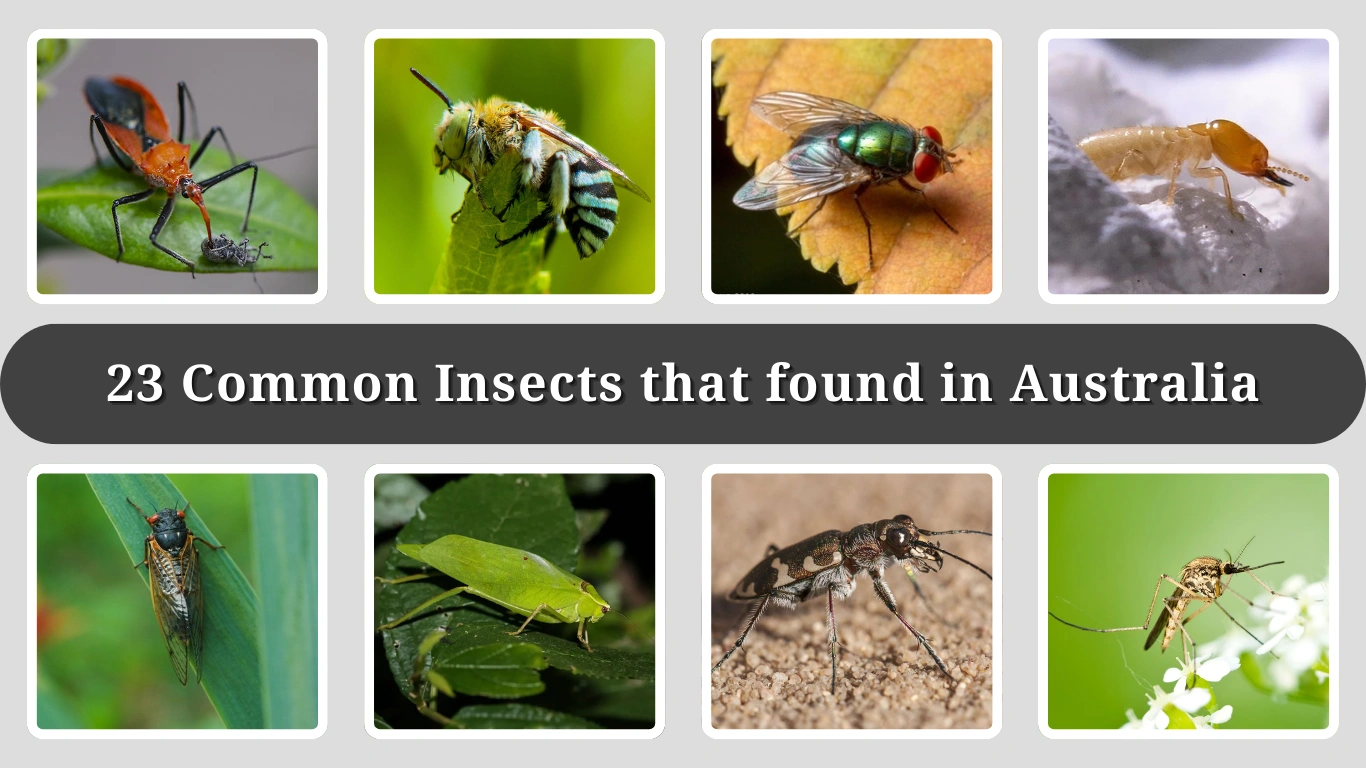
Australia is home to some of the most unique, dangerous, and unusual insects in the world. From venomous ants and spiders to giant moths and stick insects, the continent is filled with species that are both feared and admired. While some are truly dangerous to humans, others simply look intimidating due to their size or appearance. Here’s a detailed guide to identifying and understanding Australia’s most remarkable insects.
1. Sydney Funnel-Web Spider

The Sydney Funnel-Web Spider is one of the most infamous and dangerous insects in Australia (though technically an arachnid). Found mainly around Sydney and New South Wales, it is feared for its aggressive behavior and highly toxic venom. This species is often mentioned when discussing deadly insects in Australia due to its strong impact on humans.
Identification
- Shiny dark brown or black body
- Large, powerful fangs that strike downward
- Size ranges from 1.5 cm to 5 cm
- Found in moist, cool habitats like gardens, logs, and leaf litter
Habitat and Behavior
The Sydney Funnel-Web Spider thrives in forested and urban areas across eastern Australia. It often hides in burrows lined with silk tripwires, waiting for prey. During summer and rainy seasons, males may wander into homes, making encounters more likely.
Danger to Humans
Known as one of the most dangerous insects in Australia, its venom can be life-threatening if untreated. However, since the development of antivenom in 1981, fatalities have drastically decreased. Prompt medical attention ensures survival in nearly all cases.
Interesting Facts
Despite its deadly reputation, the Sydney Funnel-Web Spider plays an important ecological role by controlling insect populations. It remains a scary insect in Australia, often highlighted in guides and identification resources.
2. Redback Spider

The Redback Spider is another of the most dangerous insects in Australia, commonly found in urban areas and around homes. Recognizable by the female’s striking red stripe, it has a notorious reputation for painful bites. This spider is often grouped among deadly and scary insects in Australia.
Identification
- Female: black body with a red or orange stripe on the back
- Male: smaller, lighter in color, less distinctive markings
- Round abdomen with slender legs
- Usually 1 cm long for females, much smaller for males
Habitat and Behavior
Redback Spiders prefer warm, sheltered environments such as sheds, mailboxes, garden tools, and cluttered corners of houses. They spin messy, irregular webs and usually stay hidden during the day.
Danger to Humans
Among the most dangerous insects in Australia, the Redback Spider’s venom causes severe pain, sweating, nausea, and in rare cases, serious illness. Since the introduction of antivenom in 1956, no deaths have been recorded, though medical treatment is still crucial.
3. Bull Ant (Myrmecia)

The Bull Ant, also known as the bulldog ant, is one of the most aggressive and dangerous insects in Australia. These ants are well-known for their large size, powerful stings, and aggressive behavior, making them a serious threat to humans who come too close to their nests.
Identification
- Large size: 8 mm to 40 mm depending on species
- Long, slender body with strong mandibles
- Colors range from black to reddish-brown with darker heads or abdomens
- Prominent eyes, giving excellent vision
Habitat and Behavior
Bull Ants are found throughout Australia, especially in forests, woodlands, and sometimes urban areas. They build nests in soil, under logs, and around trees. Highly territorial, they defend their colonies aggressively.
Danger to Humans
Bull Ants are among the most dangerous insects in Australia due to their venomous sting and aggressive nature. Their sting causes intense pain, swelling, and allergic reactions in some people. The Jack Jumper Ant, a type of bull ant, is particularly notorious for causing severe allergic reactions that can lead to anaphylaxis without prompt medical care.
4. Jack Jumper Ant

The Jack Jumper Ant is a highly venomous member of the bull ant group and is considered one of the most dangerous insects in Australia. It is feared not only for its aggressive nature but also for its ability to cause severe allergic reactions that can be fatal without treatment.
Identification
- Medium size: 10 mm to 15 mm long
- Black or dark brown body with orange-brown jaws and legs
- Long, powerful mandibles
- Excellent eyesight, allowing them to track movement effectively
Habitat and Behavior
Jack Jumper Ants are most common in Tasmania, Victoria, and southeastern Australia. They typically build nests in sandy soil, open woodlands, and grasslands. True to their name, they move quickly and can jump several centimeters when threatened.
Danger to Humans
The Jack Jumper Ant is among the deadliest insects in Australia because its sting can trigger strong allergic reactions and anaphylaxis in sensitive individuals. In fact, this species has been responsible for multiple deaths in Australia before the widespread availability of antivenom. Even for those not allergic, the sting is extremely painful and can cause prolonged swelling.
5. Green Tree Ant

The Green Tree Ant is a well-known species in northern Australia. Although not as deadly as other dangerous insects in Australia, it is feared for its painful bite and aggressive swarming behavior. These ants are also famous for building large nests out of leaves woven together with silk produced by their larvae.
Identification
- Bright green body with a reddish-brown head
- Workers measure around 5 mm to 10 mm in length
- Large eyes and long legs
- Nests made from clusters of leaves bound with silk
Habitat and Behavior
Green Tree Ants are common in tropical northern Australia, particularly in Queensland, Northern Territory, and northern Western Australia. They live in trees and shrubs, forming colonies that may contain hundreds of thousands of individuals. Known for their teamwork, they link leaves together to form shelters.
Danger to Humans
While not venomous enough to be classed among the deadliest insects in Australia, Green Tree Ants are still dangerous due to their swarming attacks. When disturbed, they bite aggressively and spray formic acid into wounds, causing stinging pain and irritation. For some people, multiple bites can lead to allergic reactions or secondary infections.
6. Fire Ant

The Fire Ant is an invasive species and one of the most concerning insects in Australia due to its aggressive nature, painful sting, and potential to disrupt ecosystems. Native to South America, it was accidentally introduced and has become a major pest in parts of Queensland.
Identification
- Small size: 2 mm to 6 mm in length
- Coppery-brown head and darker abdomen
- Workers vary in size within the same colony
- Build dome-shaped nests with no obvious entrance holes
Habitat and Behavior
Fire Ants prefer open areas such as lawns, parks, farmland, and sports fields. They build large colonies with multiple queens and can quickly spread if unchecked. These ants are highly aggressive and attack in swarms when their nest is disturbed.
Danger to Humans
Classed among the most dangerous insects in Australia, Fire Ants inflict painful stings that cause burning sensations, pustules, and itching that can last for days. For sensitive individuals, stings can trigger severe allergic reactions and even anaphylaxis. Beyond human health, Fire Ants also threaten agriculture, biodiversity, and native insect populations, making them one of the worst insect pests in Australia.
7. Giant Burrowing Cockroach (Macropanesthia rhinoceros)

The Giant Burrowing Cockroach, also known as the rhinoceros cockroach, is one of the biggest insects in Australia and the heaviest cockroach species in the world. Unlike many other cockroaches, it is not considered a pest and actually plays a beneficial role in the ecosystem.
Identification
- Length: up to 8 cm long
- Weight: up to 30–35 grams
- Wingless, with a broad, shiny brown body
- Strong front legs adapted for digging
- Long antennae and sturdy exoskeleton
Habitat and Behavior
This insect is native to Queensland and lives in burrows up to one meter deep. It feeds mostly on dry eucalyptus leaves, helping recycle nutrients back into the soil. Unlike pest cockroaches, the Giant Burrowing Cockroach is clean, slow-moving, and non-invasive.
Danger to Humans
Although intimidating due to its size, the Giant Burrowing Cockroach is not among the dangerous or deadly insects in Australia. It does not bite, sting, or carry diseases. In fact, it is sometimes kept as a pet due to its docile nature and unusual appearance.
8. Australian Rhinoceros Beetle

The Australian Rhinoceros Beetle is one of the largest and strongest insects in Australia. Recognizable by the horn-like projection on the males, it belongs to the scarab beetle family. While not dangerous to humans, its impressive size and appearance make it a fascinating insect often mentioned among the biggest in the country.
Identification
- Length: 5 cm to 6 cm
- Shiny dark brown to black body
- Males have a distinctive horn on the head
- Strong legs with spines used for digging
- Thick, hard exoskeleton
Habitat and Behavior
Australian Rhinoceros Beetles are found in tropical and subtropical regions, particularly in Queensland. Adults are active mainly at night and are attracted to lights. The larvae, often called “curl grubs,” live underground and feed on decaying plant matter, playing an important role in recycling organic material.
Danger to Humans
Despite their intimidating size and armor-like appearance, the Australian Rhinoceros Beetle is harmless. It does not sting or bite and is not counted among the dangerous insects in Australia. Its primary role is ecological, helping decompose organic matter and aerate the soil.
9. Hercules Moth

The Hercules Moth is the largest moth species in Australia and one of the biggest insects in the world. Known for its massive wingspan and striking appearance, this species is a classic example when discussing giant or scary insects in Australia.
Identification
- Wingspan: up to 27 cm, making it the largest moth by wing area
- Brown wings with transparent “windows” and eye-like markings
- Tails on the hindwings that are long and curved
- Females are larger than males, with broader wings
Habitat and Behavior
Hercules Moths are found in northern Queensland’s tropical rainforests. They are nocturnal and live only a few days as adults, as they lack functional mouthparts and cannot eat. Their sole purpose in the adult stage is reproduction.
Danger to Humans
Despite its intimidating size, the Hercules Moth is not dangerous. It does not bite or sting and is harmless to humans. Its large appearance, however, earns it a place among the scary insects in Australia, often startling those who encounter it at night.
10. Goliath Stick Insect

The Goliath Stick Insect is one of the largest insects in Australia, well known for its enormous size and camouflage abilities. It belongs to the phasmid family and is often confused with twigs or branches, which helps it avoid predators.
Identification
- Length: up to 25 cm
- Long, slender, twig-like body
- Usually green, brown, or mottled in color for camouflage
- Females are significantly larger than males
- Strong legs equipped for climbing vegetation
Habitat and Behavior
Goliath Stick Insects are found in forests, woodlands, and shrublands across northern and eastern Australia. They are nocturnal feeders, primarily eating eucalyptus leaves and other native foliage. During the day, they remain motionless, blending perfectly into their surroundings.
Danger to Humans
Although large and intimidating, the Goliath Stick Insect is not dangerous to humans. It does not sting or bite. Its main defense is camouflage, making it a unique example among the weird and huge insects in Australia.
11. Titan Stick Insect

The Titan Stick Insect is one of the largest insects in Australia and belongs to the phasmid family. Known for its incredible length and twig-like appearance, it is a master of camouflage and often mistaken for branches or stems in its natural environment.
Identification
- Length: up to 30 cm, making it one of the longest insects in the world
- Very slender body, resembling twigs or branches
- Usually green or brown in color, aiding in camouflage
- Females are much larger and heavier than males
- Wings are either very small or absent, depending on the sex
Habitat and Behavior
Titan Stick Insects are mostly found in Queensland and northern New South Wales. They live in eucalyptus forests and woodlands, where they feed on leaves. These insects remain motionless during the day to blend into their surroundings and become active at night.
Danger to Humans
Although its size is intimidating, the Titan Stick Insect is harmless to humans. It does not bite or sting, making it a fascinating but safe member of the huge and weird insects in Australia category.
12. Spiny Leaf Insect

The Spiny Leaf Insect is one of the most unusual and weird insects in Australia, belonging to the stick insect family (phasmids). Its body is covered with spines for camouflage and defense, making it look like thorny leaves or branches. This insect is popular in insect identification guides due to its distinctive appearance.
Identification
- Size: females up to 20 cm, males much smaller
- Body covered in thorn-like spines for protection
- Colors vary from brown to green, blending with leaves
- Females have large abdomens and small wings (cannot fly)
- Males are slimmer and capable of flight
Habitat and Behavior
Spiny Leaf Insects are found in northern and eastern Australia, especially in Queensland and New South Wales. They live in eucalyptus and acacia trees, feeding primarily on leaves. During the day, they stay motionless, resembling thorny branches, while at night they become more active.
Danger to Humans
Although they may look intimidating, the Spiny Leaf Insect is not dangerous. It does not bite or sting, and its spines are primarily for camouflage and defense against predators. It is often kept as a pet and admired for being one of the strangest insects in Australia.
13. Australian Swallowtail Butterfly

The Australian Swallowtail Butterfly is one of the most beautiful insects in Australia and is often recognized for its striking wing patterns. While not dangerous, it plays an important role in the ecosystem and is a favorite subject in insect identification guides.
Identification
- Wingspan: 7 cm to 14 cm depending on species
- Distinctive “swallowtail” tails on hindwings
- Black wings with colored patterns (blue, yellow, or white markings)
- Caterpillars are green or brown, sometimes resembling bird droppings for camouflage
Habitat and Behavior
Swallowtail Butterflies are found across Australia in forests, woodlands, gardens, and parks. They are active during the day, feeding on nectar from a wide range of flowering plants. Caterpillars feed on citrus plants, which sometimes makes them pests in orchards.
Danger to Humans
The Australian Swallowtail Butterfly is harmless to humans. Unlike many dangerous insects in Australia, it poses no threat and is admired for its beauty. Its presence in gardens often indicates a healthy environment, though larvae can cause minor damage to citrus crops.
14. Horsefly

The Horsefly is one of the more common but unpleasant insects in Australia, known for its painful bite. These flies are particularly active in warm, humid conditions and are considered both a nuisance and a health concern due to their blood-feeding habits.
Identification
- Size: 1 cm to 2.5 cm long
- Stout body with large, brightly colored eyes
- Brown, grey, or black in color with clear or patterned wings
- Females have strong, blade-like mouthparts for cutting skin
Habitat and Behavior
Horseflies are found across much of Australia, especially in rural and coastal regions. They thrive near water sources, wetlands, farms, and bushlands. Females feed on the blood of mammals, including livestock and humans, while males feed on nectar and plant juices.
Danger to Humans
Horseflies are considered among the scary insects in Australia because of their painful bites. Although they are not ranked with the deadliest insects, their bites can cause allergic reactions, swelling, and risk of secondary infection. In some cases, they may also transmit diseases to livestock, posing an agricultural problem.
15. Mosquito

The Mosquito is one of the most widespread and problematic insects in Australia. While tiny compared to many giant insects in Australia, mosquitoes are considered among the most dangerous insects in Australia because of the diseases they spread.
Identification
- Small, slender body usually 3 mm to 6 mm long
- Long legs and thin wings with visible veins
- Long proboscis (mouthpart) for piercing skin and feeding on blood
- Different species vary in color, from light brown to dark grey
Habitat and Behavior
Mosquitoes breed in still or stagnant water such as ponds, swamps, containers, and even small pools of rainwater in urban areas. They are most active at dawn and dusk, and females feed on blood to develop their eggs. Males primarily feed on nectar.
Danger to Humans
Mosquitoes are ranked among the deadliest insects in Australia because they transmit serious diseases such as Ross River virus, Barmah Forest virus, Dengue fever (in northern Queensland), and Japanese Encephalitis. Even when not carrying disease, their bites cause itching, swelling, and allergic reactions, making them both a health risk and a nuisance.
16. March Fly

The March Fly, also known as the tabanid fly, is a blood-feeding insect found across Australia. These insects are notorious for their persistent biting habits and are often considered among the most annoying and dangerous insects in Australia because of the pain they inflict and their ability to transmit disease to animals.
Identification
- Size: 1 cm to 2.5 cm in length
- Stocky body with large compound eyes, sometimes brightly colored
- Black, brown, or grey body with clear or patterned wings
- Females have strong, piercing mouthparts for biting
Habitat and Behavior
March Flies are found in many parts of Australia, especially near water, wetlands, and coastal areas. They are most active during warm months and are aggressive biters. Females require blood meals for reproduction, while males feed on nectar and plant juices.
Danger to Humans
March Flies are not among the deadliest insects in Australia, but their bites are extremely painful and can lead to swelling, allergic reactions, and secondary infections. In livestock, they can cause significant stress and even transmit blood-borne parasites, making them both a human nuisance and an agricultural pest.
17. Australian Tiger Beetle

The Australian Tiger Beetle is one of the fastest insects in Australia and is often admired for its speed, hunting skills, and striking appearance. While not deadly to humans, it is a fierce predator in the insect world and plays an important ecological role.
Identification
- Size: 1 cm to 2.5 cm long
- Metallic green, blue, or bronze body with pale markings
- Large bulging eyes for excellent vision
- Long legs adapted for speed
- Prominent sickle-shaped mandibles for seizing prey
Habitat and Behavior
Australian Tiger Beetles are found in open sandy areas, grasslands, and along riverbanks across much of Australia. They are diurnal hunters that use their speed and vision to chase down small insects. Larvae also live in burrows, ambushing passing prey.
Danger to Humans
Although intimidating with their large jaws, the Australian Tiger Beetle is not among the dangerous insects in Australia. Its bite may cause a sharp pinch if handled, but it poses no real threat. Instead, it is considered a strange and fascinating insect in Australia, especially for its record-breaking running speed.
18. Katydid (Giant Katydid)

The Katydid, especially the giant species, is one of the strangest and largest insects in Australia. Known for their leaf-like appearance and loud calls, katydids are masters of camouflage and sound, often startling people with their size and noise.
Identification
- Size: up to 12 cm long in giant species
- Green or brown body, mimicking leaves for camouflage
- Long, thin antennae often longer than the body
- Strong hind legs for jumping
- Some species have spiny legs used for defense
Habitat and Behavior
Katydids are found in forests, woodlands, and gardens across much of Australia, particularly in the warmer and more humid regions. They are nocturnal, feeding on leaves, flowers, and sometimes smaller insects. Males produce loud, repetitive calls to attract females, which can be heard during summer nights.
Danger to Humans
Although they look intimidating due to their size, the Katydid is not among the dangerous insects in Australia. They do not sting or carry venom, though their strong jaws can give a mild nip if handled carelessly. Their eerie sounds and large appearance make them one of the scary and weird insects in Australia.
19. Cicada

The Cicada is one of the loudest insects in Australia and is well known for its ear-splitting calls during the summer months. Their buzzing and clicking sounds can reach remarkable volumes, making them iconic in Australian wildlife and often listed among the scary insects in Australia due to their size and noise.
Identification
- Size: 2 cm to 6 cm long, with some giant species over 8 cm
- Stout body with large transparent wings
- Prominent bulging eyes on the sides of the head
- Distinct sound-producing organs (tymbals) on the abdomen
- Colors vary from green and brown to black with striking patterns
Habitat and Behavior
Cicadas are found across Australia in forests, woodlands, and urban areas. They spend most of their lives underground as nymphs, feeding on sap from plant roots, before emerging in huge numbers during the summer. Males produce loud calls to attract females, often creating a chorus that dominates the soundscape.
Danger to Humans
Cicadas are not harmful and do not bite or sting. Despite their intimidating size and overwhelming sound, they are not among the dangerous insects in Australia. However, their sudden loud calls and swarming emergence make them some of the weirdest and scariest insects in Australia to encounter.
20. Termite (Coptotermes species)

The Termite, especially the Coptotermes species, is one of the most destructive insects in Australia. While not deadly to humans, termites are among the worst insect pests in Australia due to the billions of dollars in structural damage they cause each year.
Identification
- Small, soft-bodied insects, usually 3 mm to 10 mm long
- Pale cream or light brown in color
- Straight antennae, unlike ants which have bent antennae
- Live in colonies with a caste system: workers, soldiers, and reproductives
- Soldiers often have enlarged heads and strong mandibles
Habitat and Behavior
Termites are found throughout Australia but thrive particularly in warm, humid regions. They build large underground colonies and create mud tubes to travel and protect themselves from light and predators. Their primary food source is cellulose, found in wood, leaf litter, and paper.
Danger to Humans
While termites are not listed among the dangerous insects in Australia in terms of venom or bites, they are highly destructive. Their relentless feeding habits make them the leading cause of structural damage to homes and buildings, often going undetected until severe harm is done. This makes them one of the scariest insects in Australia for homeowners.
21. Blowfly

The Blowfly is a common insect in Australia, notorious for its role in sheep blowfly strike (myiasis), which causes significant agricultural losses. While not deadly to humans, it is one of the worst insect pests in Australia due to its economic and animal welfare impact.
Identification
- Size: 6 mm to 14 mm long
- Metallic coloring, usually blue, green, or bronze
- Large red compound eyes
- Transparent wings with distinct venation
- Larvae (maggots) are creamy white and legless
Habitat and Behavior
Blowflies are widespread across Australia, particularly in rural and farming regions. They are strongly attracted to decaying organic matter, wounds, and soiled wool. Females lay eggs in such areas, and the emerging maggots feed on tissue, causing severe damage to livestock.
Danger to Humans
Blowflies are not classified among the dangerous insects in Australia for direct human health, but they are a serious pest species. In sheep farming, blowfly strike leads to suffering, weight loss, and even death if untreated. Their association with decay and disease makes them one of the scariest insects in Australia from an agricultural perspective.
22. Australian Native Bee

The Australian Native Bee is a diverse group of bees found across the continent, with over 1,500 species recorded. While not typically dangerous, some species are stingless, and others can give a mild sting. They are crucial pollinators and a unique part of the insect life in Australia.
Identification
- Size: varies from 2 mm to 24 mm depending on species
- Colors range from metallic blue and green to black and brown
- Some species are solitary, while others form small colonies
- Stingless bees are usually very small and dark in color
- Distinct buzzing sound when active around flowers
Habitat and Behavior
Australian Native Bees are found in forests, woodlands, gardens, and farmlands. Many species nest in hollow trees, ground burrows, or even man-made bee hotels. They feed on nectar and pollen, making them vital for pollinating both native plants and crops. Stingless bees produce small amounts of honey, prized for its unique taste.
Danger to Humans
Most native bees are harmless and not considered among the dangerous insects in Australia. Stingless species pose no threat at all, while stinging varieties can deliver only mild pain compared to honeybees or wasps. Their ecological importance makes them one of the most valued insects in Australia rather than a threat.
23. Assassin Bug

The Assassin Bug is one of the most unusual and potentially dangerous insects in Australia. Belonging to the Reduviidae family, these insects are skilled predators that use their sharp mouthparts to inject venom into their prey. While they play an important role in controlling pests, they can also deliver a painful bite to humans.
Identification
- Size: 1.5 cm to 4 cm depending on species
- Elongated body with long legs and narrow head
- Strong, curved proboscis (beak) used for piercing
- Colors vary from brown and black to striking patterns of orange and red
- Some species resemble other insects as camouflage
Habitat and Behavior
Assassin Bugs are found across much of Australia in forests, grasslands, gardens, and even urban areas. They are ambush predators that feed on other insects, immobilizing them with venom before sucking out their body fluids. Some species can also fly and are active hunters at night.
Danger to Humans
The Assassin Bug is considered among the dangerous insects in Australia because its bite can be extremely painful, often described as more intense than a bee sting. Although not usually life-threatening, bites may cause swelling, allergic reactions, and in rare cases secondary infections. This makes them one of the scary insects in Australia, despite their beneficial role in pest control.