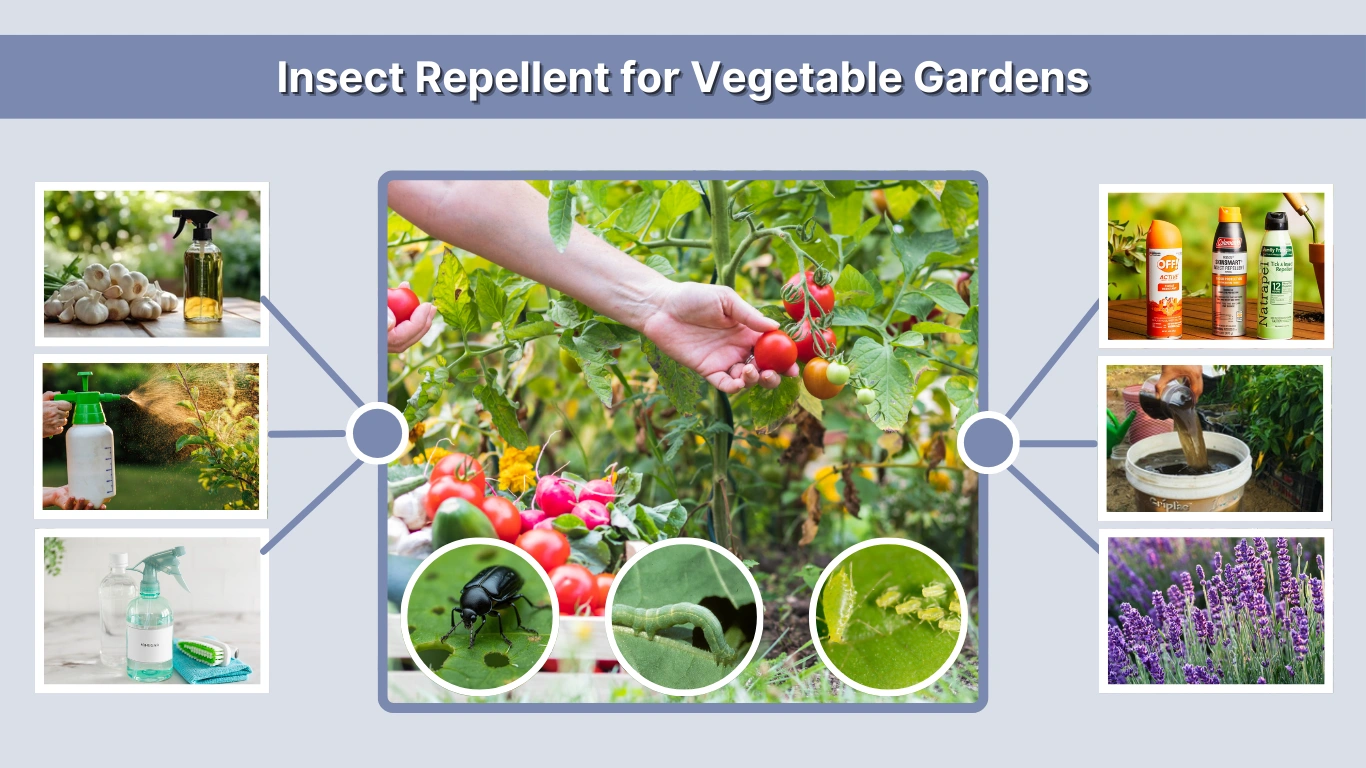
A healthy vegetable garden can quickly become vulnerable when insects start feeding on tender leaves, stems, or roots. While some insects are beneficial pollinators or pest predators, many others damage crops, reducing yield and overall plant health. From natural repellents and homemade sprays to store-bought insect killers, there are numerous strategies to protect vegetables. This guide explores common pests, natural remedies, commercial sprays, and the importance of beneficial insects in maintaining a thriving garden.
Common Vegetable Garden Insects

Understanding which insects attack your plants is the first step in controlling them. Common vegetable garden insects include:
- Aphids – Tiny sap-sucking pests that cluster on stems and leaves, often causing curling or stunted growth.
- Whiteflies – Small winged insects that weaken plants by feeding on sap, leaving behind sticky honeydew.
- Cabbage worms & loopers – Green caterpillars that chew large holes in leafy greens such as cabbage, kale, and broccoli.
- Cutworms – Night-feeding larvae that cut down seedlings at soil level.
- Flea beetles – Small, jumping beetles that chew holes in leaves, particularly damaging to young plants.
Identifying pests early makes control easier and reduces long-term damage. Many gardeners keep a field guide or take photos to compare insects for quick identification.
Natural & Organic Insect Repellents

Many gardeners prefer safe, eco-friendly options that avoid chemical residues. Natural repellents can effectively deter pests without harming soil, pollinators, or edible crops.
- Neem oil – Extracted from neem tree seeds, it disrupts insect feeding and reproduction.
- Garlic spray – Strong odor repels a variety of pests while being harmless to humans and plants.
- Peppermint oil – Natural deterrent against ants, aphids, and spider mites.
- Diatomaceous earth – Fine powder that dehydrates crawling insects when dusted on leaves or soil.
These natural choices are particularly useful in organic gardens where sustainability and food safety are priorities.
Homemade & DIY Insect Sprays

If you prefer to make your own solutions, homemade sprays can be cost-effective and customizable. Common recipes include:
- Soap spray – Mix mild dish soap with water to suffocate soft-bodied insects like aphids and whiteflies.
- Chili-garlic spray – Blend garlic, chili peppers, and water, then strain and spray to repel chewing insects.
- Vinegar spray – Diluted vinegar can deter pests, though it must be applied carefully to avoid harming leaves.
DIY sprays are quick fixes but should be tested on a small section of the plant first to ensure they don’t burn foliage.
Store-Bought Insect Sprays & Killers

For gardeners dealing with severe infestations, commercial sprays are more powerful. These options are widely available:
- Vegetable & garden insect sprays – Ready-to-use formulas that target multiple pests.
- Safe insect repellents – Labeled for vegetables to ensure safety for edible plants.
- Best insect killers – Designed to quickly eliminate large populations of harmful insects.
Always check labels for safety, especially regarding harvest intervals (the waiting period before eating sprayed vegetables). Choosing products specifically approved for edible plants is essential.
Branded Vegetable Garden Insect Sprays

Well-known brands provide reliable pest control with detailed instructions. Popular products include:
- BioAdvanced Vegetable and Garden Insect Spray – Effective against a wide range of insects, available in ready-to-use and concentrate forms.
- Bayer Advanced Insect Spray and Dust – Long-lasting protection for vegetables, though application should follow label instructions carefully.
- Dr. Earth Final Stop – An organic formula with natural oils, safe for organic gardening.
- Ortho Insect Killer Flower & Vegetable Dust – Convenient dusting method for fast-acting protection.
- Maggie’s Farm Vegetable Garden Insect Control – Plant-based spray combining insecticidal soap with botanical oils.
Each brand offers different formulations, so gardeners can choose between sprays, concentrates, or dusts depending on their needs.
Spray Instructions & Product Labels

Even effective products can be misused if directions are ignored. Labels provide critical details:
- Mixing ratios – Concentrates must be diluted correctly to avoid plant burn or ineffective application.
- Frequency of application – Some sprays allow reapplication every 7–10 days, while others provide season-long protection.
- Harvest intervals – Many insecticides specify a waiting period before consuming vegetables.
- Target pests – Some sprays are broad-spectrum, while others are designed for specific insects.
Reading and following instructions ensures safe use, maximizes effectiveness, and prevents harming beneficial insects.
Beneficial Insects for Gardens

Not all insects are enemies—some play a crucial role in pest control. Encouraging these “garden allies” reduces the need for sprays.
- Ladybugs – voracious consumers of aphids and mites.
- Lacewings – larvae feed on thrips, whiteflies, and caterpillars.
- Parasitic wasps – lay eggs inside caterpillars and other pests, naturally reducing populations.
- Bees and butterflies – essential pollinators that boost vegetable yields.
Planting flowers such as dill, fennel, or marigolds helps attract and sustain these beneficial insects. Gardeners should avoid broad-spectrum insecticides that may unintentionally harm them.
8. Insect Repellent & Deterrent Plants

Planting companion species that naturally repel insects is a simple and eco-friendly method. These plants emit scents or compounds that pests dislike, helping reduce infestations.
- Marigolds – Effective against nematodes, aphids, and whiteflies.
- Basil – Repels mosquitoes, thrips, and tomato hornworms.
- Mint – Strong aroma keeps ants and aphids at bay.
- Lavender – Repels moths and beetles while attracting pollinators.
Strategic planting of these insect-repelling plants between vegetable rows acts as a natural shield.
Protective Garden Barriers
Sometimes the best defense is a physical barrier that stops insects before they reach crops. Common protective options include:
- Insect mesh – Fine netting that prevents caterpillars, beetles, and flies from landing on plants.
- Insect screens – Used for raised beds or greenhouse setups.
- Row covers – Lightweight fabric that blocks pests while allowing sunlight and moisture through.
These barriers are reusable and cost-effective, making them popular in both home gardens and organic farming.
Traps & Other Insect Control Methods
Traps provide a non-toxic method for managing insect populations. Gardeners often combine traps with sprays or repellents for best results.
- Yellow sticky traps – Attract flying pests like whiteflies and aphids.
- Beer traps – Effective for slugs and snails, which are major garden pests.
- Pheromone traps – Lure moths and beetles using scent-based attractants.
Paired with consistent monitoring, traps help track pest activity and reduce infestations without chemicals.
Preventive & Protective Practices
The healthiest gardens are those where prevention comes first. A few proactive steps include:
- Crop rotation – Prevents insect buildup in the soil by changing plant families each season.
- Healthy soil – Strong plants resist pests better; compost and organic matter help.
- Regular inspection – Catching pests early avoids widespread damage.
- Proper spacing – Reduces humidity that attracts fungal growth and pest outbreaks.
Preventive care minimizes the need for heavy spraying, making gardens more sustainable long term.
Home Remedies & Natural Alternatives
For gardeners avoiding chemicals altogether, household items can double as pest solutions. Popular remedies include:
- Epsom salt solution – Sprinkled to deter slugs and beetles.
- Baking soda spray – Works against fungal infections while deterring soft-bodied insects.
- Onion spray – Similar to garlic, it keeps away aphids and mites.
These simple alternatives are inexpensive and safe, though they may require frequent reapplication compared to commercial sprays.
Step-by-Step Insect Removal Guides
When pests have already invaded, direct removal methods can save crops:
- Handpicking – Effective against caterpillars, beetles, and large pests.
- Water spray – Knocks aphids and mites off leaves.
- Targeted sprays – Apply insecticidal soap or neem oil only where pests are present.
- Pruning – Remove heavily infested leaves to prevent spreading.
A step-by-step approach ensures pests are removed quickly without harming the rest of the plant.
FAQs
1. What is the best natural insect repellent for vegetable gardens?
Neem oil and garlic spray are among the most effective natural repellents. They deter multiple pests without harming pollinators or leaving harmful residues on vegetables.
2. Which plants keep insects away from vegetable gardens?
Marigolds, basil, lavender, and mint are strong deterrent plants. They release scents that repel pests while enhancing the garden’s biodiversity.
3. Are chemical sprays safe for edible plants?
Yes, but only when labeled for vegetable use. Always follow harvest intervals on the label to ensure crops are safe to eat.
4. How do I prevent insects from attacking my garden in the first place?
Focus on preventive practices such as crop rotation, soil enrichment, regular inspections, and adding companion plants that deter pests naturally.
5. What insects should I encourage in my vegetable garden?
Ladybugs, lacewings, parasitic wasps, bees, and butterflies are highly beneficial. They control harmful pests and improve pollination for higher yields.