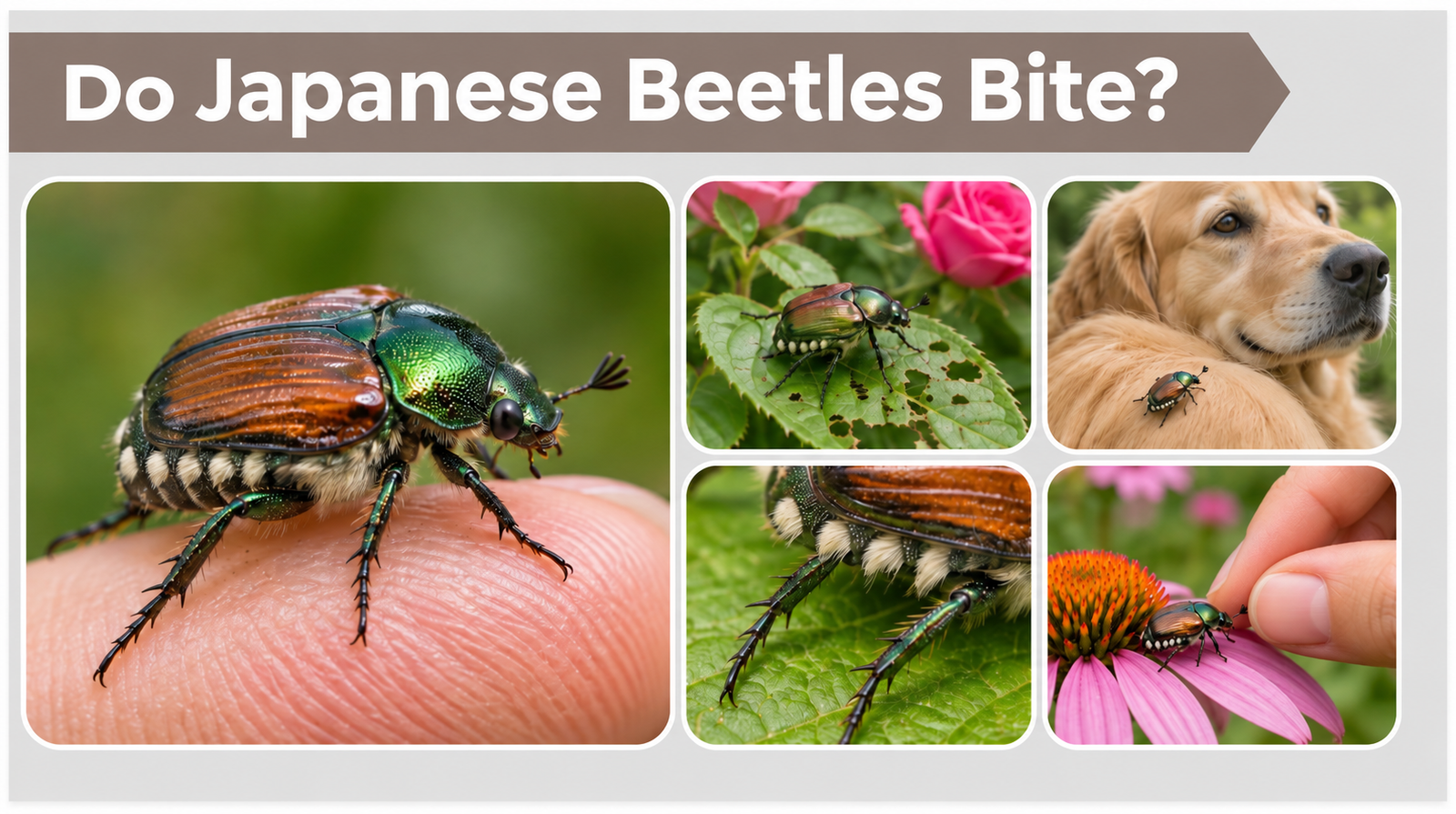
Japanese beetles are common garden pests recognized by their metallic green bodies and copper-colored wing covers. They frequently gather on roses, fruit trees, vegetables, and other plants, sometimes appearing in large numbers. Their strong chewing mouthparts and spiny legs can make them look intimidating, leading many people to wonder whether they bite or sting. The good news is that Japanese beetles do not bite humans or pets. However, confusing them with Japanese lady beetles can create misunderstandings about their behavior and potential risks.
Do Japanese Beetles Bite Humans?
No, Japanese beetles do not bite humans. Although adult beetles have strong chewing mouthparts, they primarily use them to consume leaves, flowers, and other plant material. Their mouthparts are not designed to pierce human skin, and they are not considered dangerous to people.
The Washington State Department of Agriculture confirms that adult Japanese beetles are safe to touch because they do not bite or sting. However, their physical appearance can make people uncomfortable when the insects land on their skin.
Why Do Japanese Beetles Seem to Bite?
Japanese beetles have small, sturdy spines on their legs that help them grip plant surfaces. When one crawls across someone’s arm, hand, or neck, these spines may create a slightly prickly sensation.
Some people mistake this feeling for a bite, especially when the beetle suddenly moves or grips the skin. However, this sensation is different from an actual bite that breaks the skin.
Can Japanese Beetles Break Human Skin?
Japanese beetles are not known to break human skin through biting. Their mandibles are adapted for chewing plant tissue rather than piercing skin.
Even when someone accidentally touches or picks up an adult beetle, there is generally no reason to worry about a bite or sting. You can gently remove the insect without using special protective equipment.
What Do Japanese Beetle Bites Look Like?
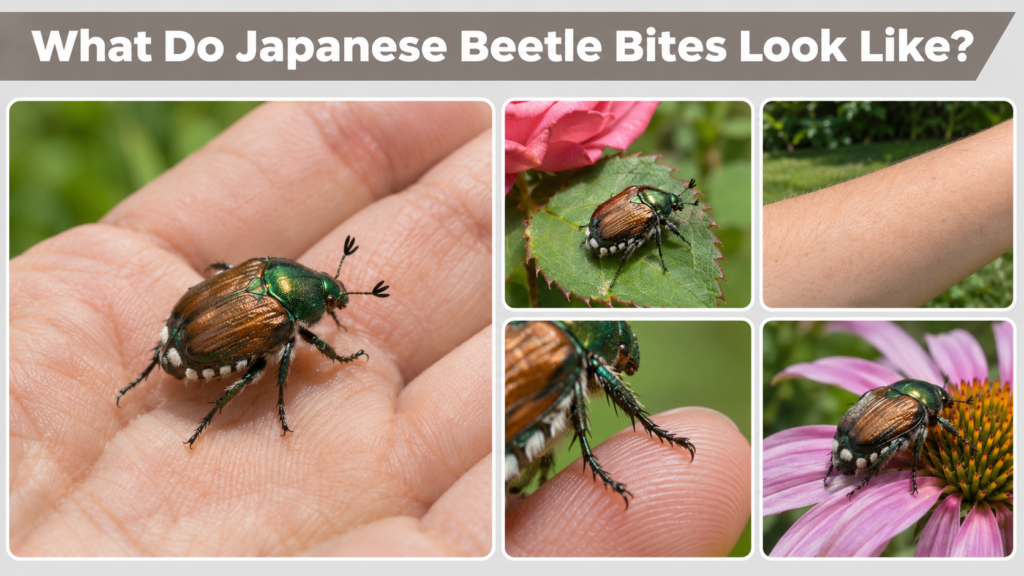
Japanese beetles do not normally bite people, so there is no characteristic Japanese beetle bite mark. If you notice a small red bump, itchy spot, or swollen area after encountering one, another insect or an unrelated skin irritation may be responsible.
It is important not to automatically blame Japanese beetles for every skin reaction that occurs outdoors.
Common Signs People May Mistake for a Beetle Bite
Several minor skin problems can be confused with an insect bite, including:
- Small red bumps: These may develop after exposure to mosquitoes, fleas, or other biting insects.
- Localized itching: Skin irritation can occur from plants, dust, or insect contact.
- Mild swelling: A small swollen area may result from an allergic reaction or irritation.
- Temporary redness: Rubbing or scratching the skin can cause redness without an actual insect bite.
If you experience significant swelling, spreading redness, severe pain, or difficulty breathing, seek appropriate medical attention. These symptoms should not be dismissed as an ordinary beetle encounter.
Do Japanese Beetles Bite or Sting?
Japanese beetles neither bite nor sting humans. They belong to the scarab beetle family, and their adult feeding behavior is focused on plant material rather than animals or people.
Unlike bees and wasps, Japanese beetles do not possess a stinger for injecting venom. They also lack the specialized mouthparts needed to pierce human skin.
Do Japanese Beetles Have Teeth?
Yes, Japanese beetles have mandibles, which are small chewing structures sometimes described as insect teeth. These structures help them cut and consume plant tissue.
Adult beetles use their mandibles to feed between leaf veins, creating a skeletonized appearance. Their feeding activity can damage gardens, but their mouthparts are not adapted to attack humans.
Can Japanese Beetles Hurt You When You Pick Them Up?
Generally, no. Adult Japanese beetles are safe to handle because they do not sting or bite. However, their legs can feel prickly because of their small spines.
If you find one on a plant, you can gently remove it. Washing your hands afterward is a sensible hygiene practice, especially when handling insects collected from gardens.
Do Japanese Beetles Bite Dogs?
No, Japanese beetles do not bite dogs. Their chewing mouthparts are adapted for feeding on plants, not attacking animals. They also do not sting or inject venom.
Dogs may encounter these beetles while playing in gardens, walking through grass, or investigating plants. Although the beetles are not considered a biting threat, pet owners should avoid encouraging animals to eat large numbers of insects.
It is also important to distinguish Japanese beetles from Japanese lady beetles, which have different behaviors and potential health concerns.
Are Japanese Beetles Poisonous to Dogs?
Japanese beetles are not known as venomous insects, and their normal contact with a dog’s skin is not considered dangerous. They do not inject poison through bites or stings.
However, if a dog eats an unfamiliar insect and develops vomiting, excessive drooling, or unusual behavior, contact a veterinarian for advice. Avoid assuming that every beetle has the same safety profile.
What Should You Do if a Japanese Beetle Lands on Your Dog?
If a Japanese beetle lands on your dog, gently brush it away. There is no need to apply insecticides, chemical treatments, or special products to the dog’s skin.
Monitor your pet if it has swallowed an unidentified insect. If symptoms develop, seek veterinary guidance rather than attempting home treatment.
Japanese Beetle vs. Japanese Lady Beetle: What’s the Difference?
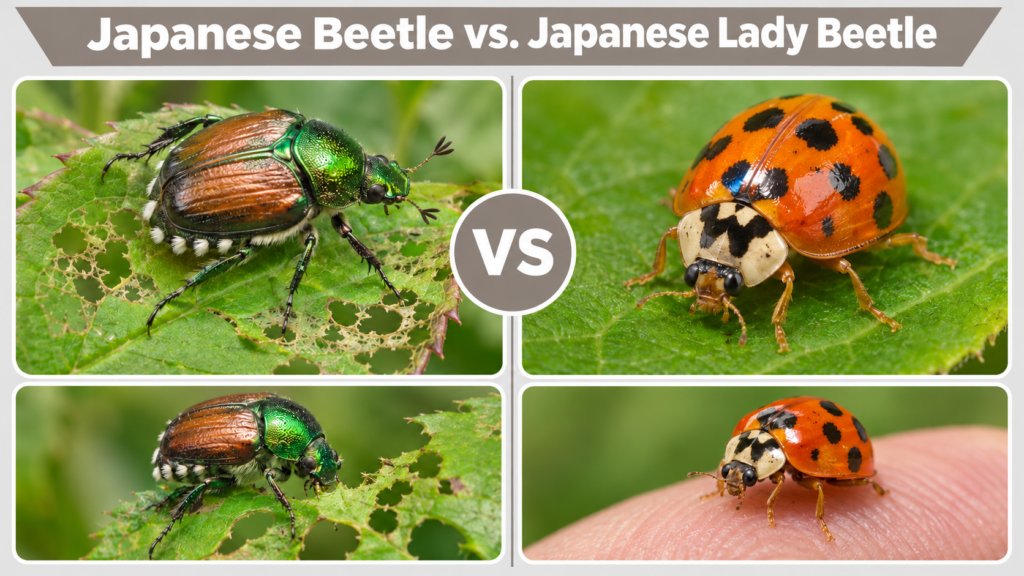
One major reason people search for Japanese beetle bites is confusion between Japanese beetles and Japanese lady beetles. Despite their similar common names, these are different beetles with different feeding habits and potential risks.
The Japanese beetle (Popillia japonica) is a plant-feeding scarab beetle, while the Japanese lady beetle (Harmonia axyridis) is also known as the multicolored Asian lady beetle.
| Characteristic | Japanese Beetle | Japanese Lady Beetle |
| Scientific name | Popillia japonica | Harmonia axyridis |
| Appearance | Metallic green and copper | Yellow, orange, red, or black |
| Main diet | Leaves and flowers | Aphids and soft-bodied insects |
| Can humans bite? | No | Yes, occasionally |
| Can sting? | No | No |
| Venomous? | No | No |
Japanese lady beetles can occasionally deliver a mild pinch or bite that may break the skin. Their bites are generally minor, but they can cause temporary discomfort. A useful identification feature is the black M-shaped marking behind the head.
Therefore, if someone reports being bitten by a Japanese beetle, they may actually have encountered a Japanese lady beetle.
What Should You Do if a Japanese Beetle Lands on You?
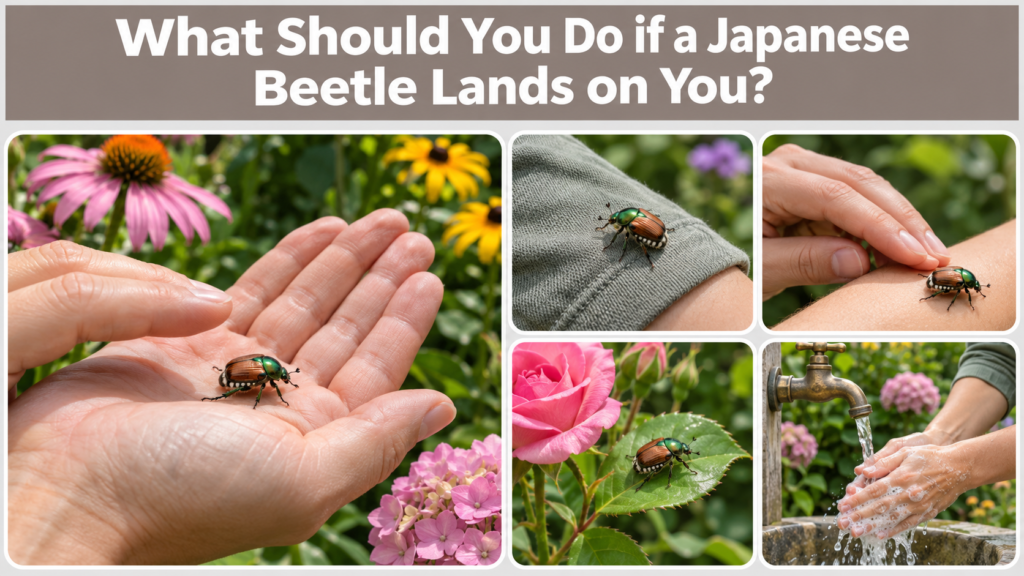
Although Japanese beetles are harmless to people, their sudden movements can be surprising. You can safely remove them without hurting yourself or the insect.
Follow these simple steps:
- Stay calm: Japanese beetles do not attack people, so there is no reason to panic.
- Brush it away: Gently move the insect off your skin using your hand or a soft object.
- Avoid crushing it: If possible, remove the beetle without squeezing it.
- Wash your hands: Use soap and water after handling insects or working in the garden.
- Check for irritation: If you notice an unusual skin reaction, consider whether another insect or irritant may be responsible.
If you are unsure which beetle you encountered, take a clear photograph for identification. This can help distinguish Japanese beetles from Asian lady beetles and other similar-looking insects.
FAQs
1. Do Japanese beetles bite humans?
No, Japanese beetles do not bite humans. Their chewing mouthparts are designed for eating plant material, not piercing skin. Their spiny legs may create a prickly sensation when they crawl across your body, but this is not an actual bite.
2. Do Japanese beetles bite or sting?
Japanese beetles neither bite nor sting. They do not have a stinger, and their mouthparts are not adapted to break human skin. They are primarily garden pests that feed on leaves, flowers, and fruits.
3. Do Japanese beetles bite dogs?
No, Japanese beetles do not bite dogs. They are not considered a biting threat to household pets. However, dogs should not be encouraged to eat unfamiliar insects, and owners should contact a veterinarian if unusual symptoms develop after ingestion.
4. What do Japanese beetle bites look like?
Japanese beetles do not normally bite people, so they do not produce a recognizable bite mark. Red bumps, itching, or swelling noticed after an encounter may have another cause, such as a mosquito bite or skin irritation.
5. Do Japanese lady beetles bite?
Yes, Japanese lady beetles, also called multicolored Asian lady beetles, can occasionally bite humans. Their bites usually feel like a mild pinch and are not venomous. They are different from Japanese beetles, which do not bite or sting.