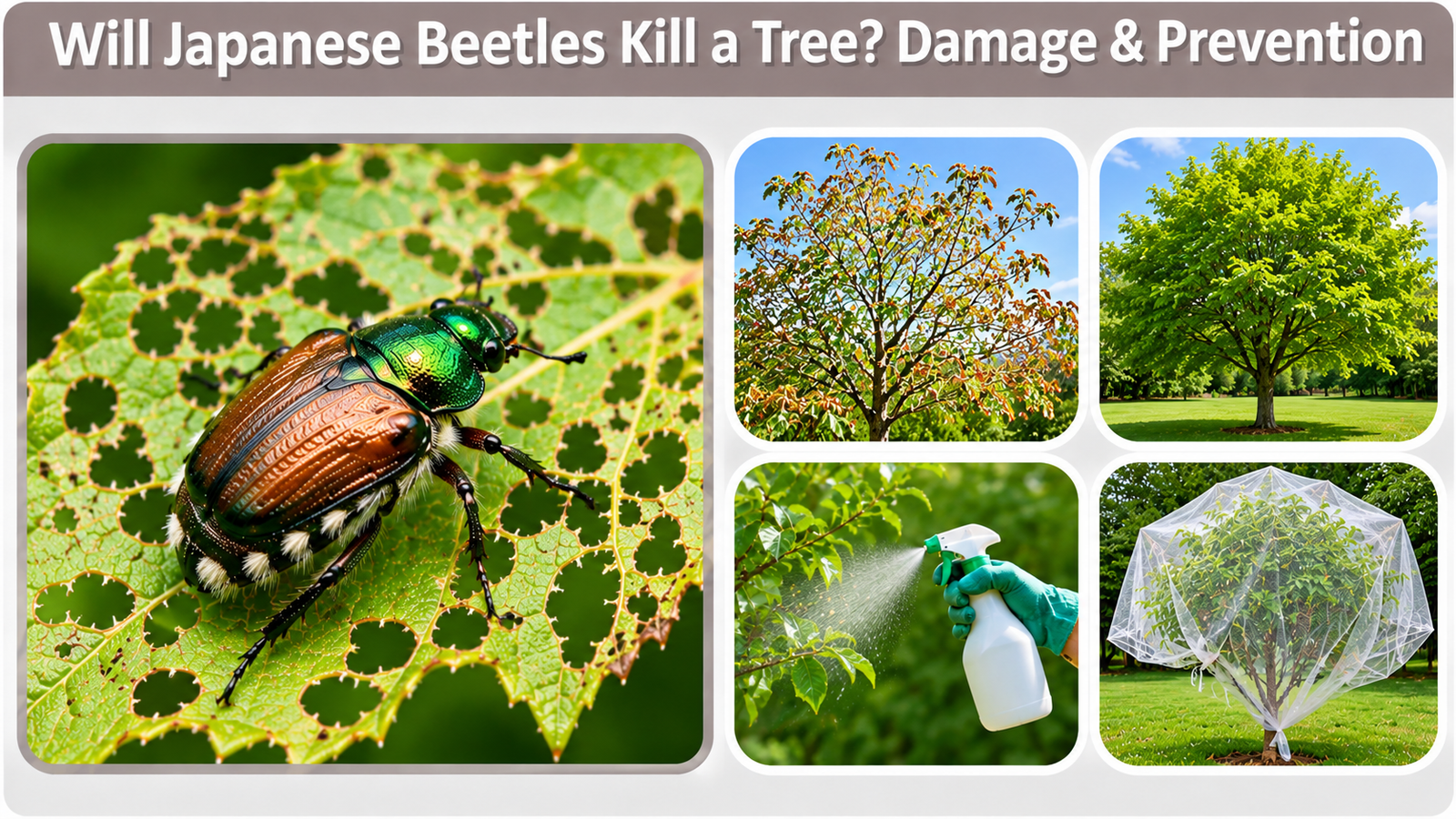
Japanese beetles can cause serious damage to trees by feeding on their leaves, sometimes leaving entire branches almost completely bare. Their metallic green bodies and copper-colored wings make them easy to recognize, but their feeding habits can worry homeowners and gardeners. Will Japanese beetles kill a tree? Usually, healthy mature trees survive seasonal infestations, although young or stressed trees face greater risks. Understanding which trees Japanese beetles attack, how much damage they cause, and how to control them can help protect your landscape.
Can Japanese Beetles Kill a Tree?
Japanese beetles can contribute to tree death, but a single infestation rarely kills a healthy, established tree. These insects primarily feed on foliage rather than directly attacking trunks or major branches. Mature trees can usually tolerate considerable leaf loss and recover during the following growing season.
However, repeated severe defoliation can weaken trees over time, especially when combined with drought, disease, poor soil conditions, or other environmental stresses.
When Japanese Beetle Damage Becomes Dangerous
Japanese beetle infestations become more concerning when trees experience extensive leaf loss year after year. Without sufficient healthy foliage, trees cannot produce the energy needed for normal growth and recovery.
Young trees are particularly vulnerable because their root systems and stored energy reserves are less developed. Recently transplanted trees may also struggle to recover from heavy feeding.
Can a Tree Recover From Japanese Beetle Damage?
Yes. Most healthy, established trees recover from Japanese beetle feeding. Even when their leaves become heavily skeletonized, they often produce healthy foliage the following spring.
Recovery depends on the tree’s age, overall health, and the severity of the infestation. Adequate watering and proper maintenance can help weakened trees recover.
What Trees Do Japanese Beetles Attack?
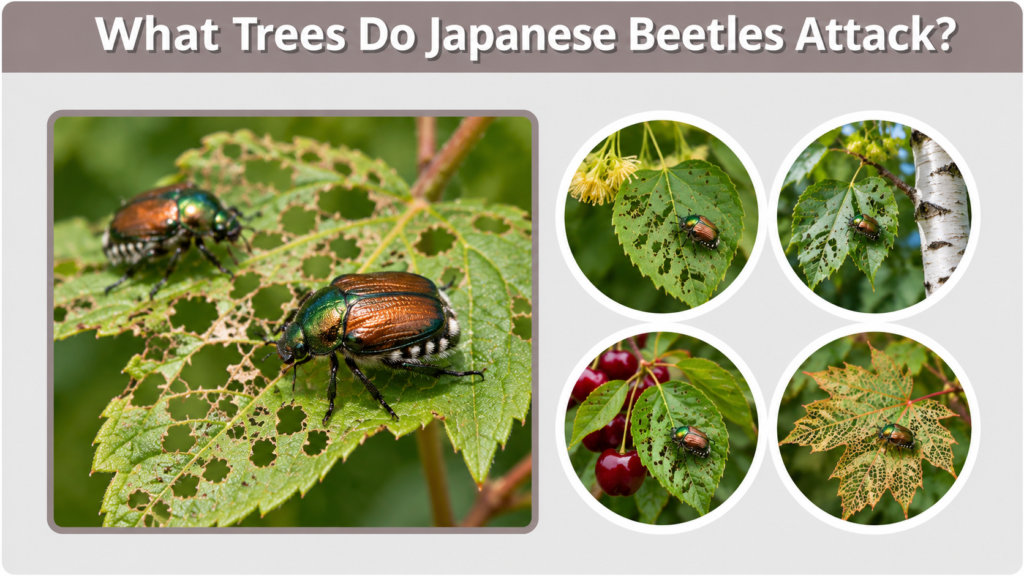
Japanese beetles (Popillia japonica) feed on hundreds of plant species, including many ornamental and fruit trees. However, certain trees are considerably more attractive to adult beetles than others.
Identifying susceptible tree species helps homeowners monitor vulnerable plants and take preventive measures before populations become severe.
1. Linden Trees
Linden trees are among the most preferred hosts of Japanese beetles. Adults frequently gather in large numbers and feed on leaves, creating extensive skeletonization.
Although mature lindens usually survive, repeated infestations can affect their appearance and growth.
2. Birch Trees
Japanese beetles commonly attack birch trees, particularly during summer. Feeding often begins in the upper canopy, where beetles consume tender foliage.
Severe infestations may leave leaves brown and brittle. Young or drought-stressed birches may experience greater damage.
3. Cherry Trees
Both ornamental and fruit-producing cherry trees attract Japanese beetles. Adults feed on foliage and may occasionally damage fruit surfaces.
Healthy cherry trees generally recover from moderate feeding, but young trees require closer monitoring.
4. Apple and Crabapple Trees
Japanese beetles frequently feed on apple and crabapple trees, creating holes and skeletonized leaves.
Heavy infestations can reduce photosynthesis and place additional stress on developing trees. Crabapple susceptibility varies among cultivars.
5. Maple and Elm Trees
Certain maple species, particularly Norway and Japanese maples, are susceptible to Japanese beetle feeding. Elm trees can also experience significant foliage damage.
However, not every maple species is equally attractive. Red and silver maples are generally less preferred.
Japanese Beetle Tree Damage: Signs and Symptoms
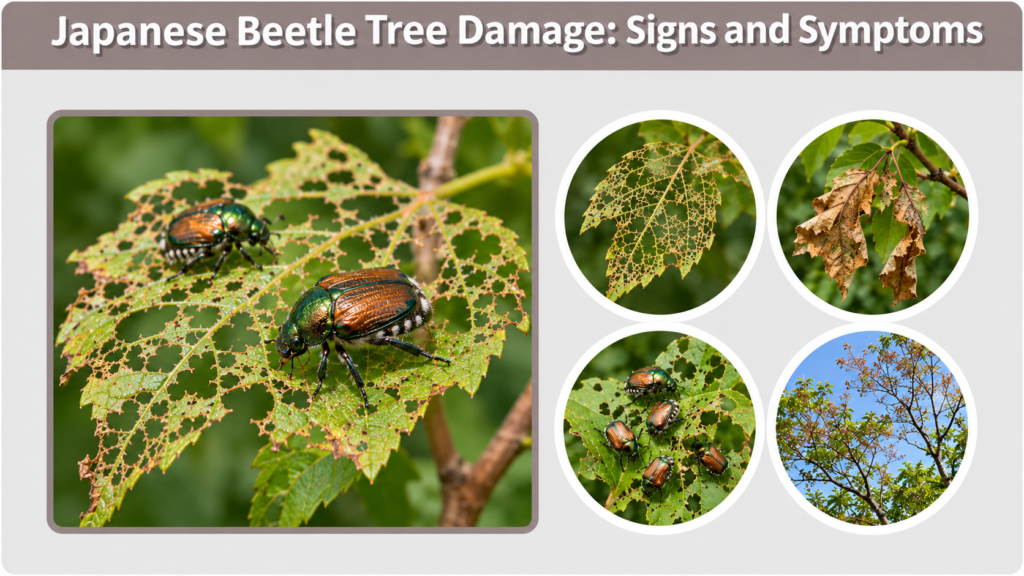
Japanese beetle damage is usually easy to recognize because adults consume the soft tissue between leaf veins. This feeding pattern produces a distinctive lace-like appearance called skeletonization.
Large populations can damage substantial portions of a tree’s canopy during summer. Recognizing early symptoms helps determine whether intervention is necessary.
Common Signs of Japanese Beetle Damage
Watch for these symptoms:
- Skeletonized leaves: Leaf tissue disappears between the veins.
- Brown foliage: Damaged leaves dry out and become brown.
- Irregular holes: Small holes gradually expand as beetles continue feeding.
- Premature leaf drop: Severely damaged leaves may fall early.
- Visible beetles: Groups of metallic green beetles gather on foliage.
- Canopy thinning: Heavy feeding reduces the amount of healthy foliage.
How Much Damage Can Trees Tolerate?
Healthy mature trees can often tolerate substantial seasonal defoliation without permanent injury. The amount varies according to tree species, growing conditions, and previous stress.
Young, newly planted, or unhealthy trees are less resilient. Repeated severe defoliation can reduce growth and increase vulnerability to additional problems.
How to Get Rid of Japanese Beetles on Trees
Controlling Japanese beetles on trees requires selecting methods appropriate for tree size, beetle population, and infestation severity. Small trees are easier to protect, while treating large mature trees may require professional assistance.
In many situations, tolerating moderate feeding is preferable to unnecessary pesticide applications.
1. Remove Beetles by Hand
Handpicking is effective for small trees and accessible branches. Inspect foliage during early morning when beetles are less active.
Shake or gently knock beetles into a bucket containing soapy water. Repeat regularly during peak beetle activity.
2. Use Protective Tree Netting
Fine insect netting can protect small ornamental and fruit trees from adult Japanese beetles.
Install netting before substantial feeding begins and secure it carefully. Remove or adjust coverings when pollinator access is necessary.
3. Apply Neem-Based Products
Neem-based insecticides may help discourage Japanese beetles from feeding on treated foliage.
However, protection is usually temporary, and repeated applications may be necessary. These products are generally less effective during severe infestations.
4. Maintain Healthy Tree Conditions
Water trees during prolonged dry periods, especially young and recently planted specimens.
Maintain appropriate mulch around the root zone without piling it against the trunk. Avoid unnecessary pruning of damaged branches because foliage injury does not necessarily mean branches are dead.
Japanese Beetle Spray and Treatment for Trees
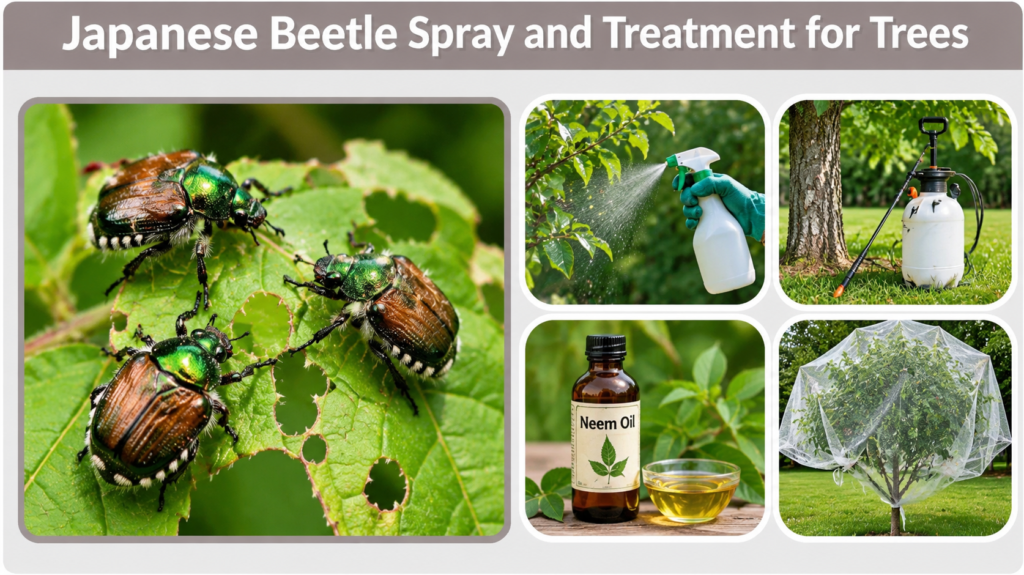
Insecticides can help protect vulnerable trees when Japanese beetle populations cause significant damage. However, treatment is not always necessary for healthy mature trees.
The most appropriate product depends on the tree species, infestation severity, and whether the tree produces edible fruit. Proper application timing and pollinator safety are particularly important.
Japanese Beetle Spray for Ornamental Trees
Certain registered insecticides containing pyrethroids, including bifenthrin or permethrin, may control adult Japanese beetles.
Some products containing chlorantraniliprole can also provide protection with comparatively lower risks to certain beneficial insects.
Insecticide treatments should follow product-label directions. Large trees may require professional application because thorough canopy coverage can be difficult.
Japanese Beetle Spray for Fruit Trees
Fruit trees require additional precautions because pesticide residues may affect edible crops.
Select only insecticides specifically labeled for the fruit species and Japanese beetle control. Follow preharvest intervals and application restrictions.
Avoid spraying flowers or trees visited by pollinators. Systemic insecticides should not be used on fruit trees unless explicitly approved for that crop and application.
Japanese Beetle Resistant Trees
Choosing trees that Japanese beetles rarely feed on can reduce future pest problems. Although no tree is guaranteed to remain completely untouched, some species are much less attractive to adult beetles.
These trees are particularly useful for landscaping in areas where Japanese beetle infestations occur frequently.
Trees Less Attractive to Japanese Beetles
- Red maple (Acer rubrum): Generally less preferred than Norway or Japanese maples.
- Redbud (Cercis canadensis): Usually experiences limited feeding.
- Sweetgum (Liquidambar styraciflua): Relatively resistant to significant beetle damage.
- Tuliptree (Liriodendron tulipifera): Typically less attractive to adult beetles.
- Shagbark hickory (Carya ovata): Usually experiences minimal feeding.
- White oak (Quercus alba): Generally less susceptible than favored hosts.
- Japanese tree lilac (Syringa reticulata): Often recommended as a less preferred ornamental tree.
Pines, spruces, and many other conifers are also generally avoided by Japanese beetles.
How to Prevent Japanese Beetles on Trees
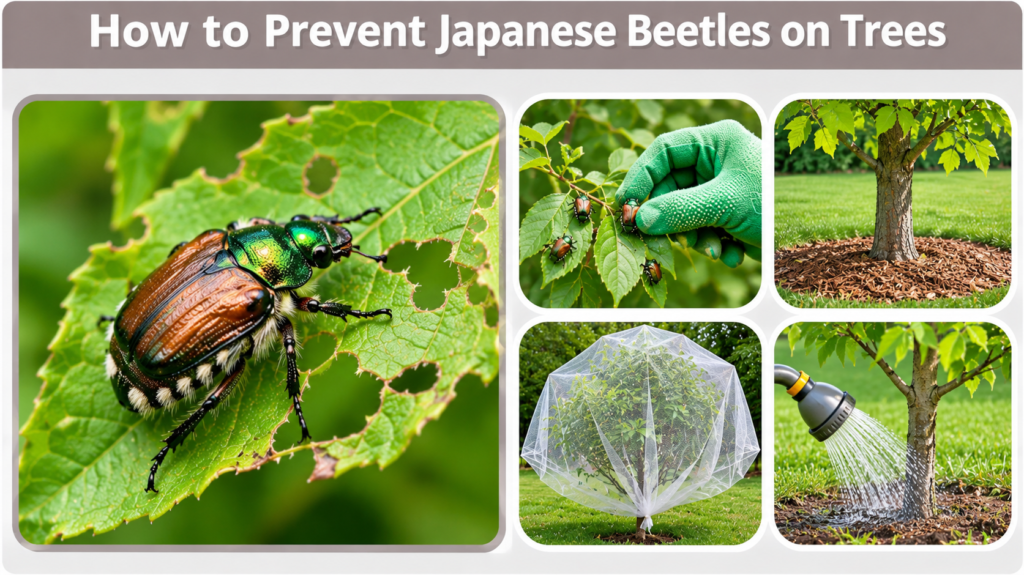
Preventing Japanese beetle damage involves monitoring susceptible trees, reducing unnecessary stress, and taking action when beetles first appear.
Adult Japanese beetles can fly into gardens from surrounding areas, so controlling insects in one yard cannot guarantee complete protection.
Monitor Trees During Summer
Inspect susceptible trees regularly during the beetle activity period, which commonly begins in early summer in many U.S. regions.
Look for feeding damage near the upper canopy and remove accessible beetles before populations increase.
Avoid Japanese Beetle Traps Near Trees
Japanese beetle traps use attractants that can draw insects from surrounding areas.
Although traps capture some beetles, they may attract more individuals than they collect. Placing them near vulnerable trees can increase feeding damage rather than prevent it.
Protect Young Trees
Pay special attention to recently planted trees because they are less tolerant of severe defoliation.
Provide adequate moisture, maintain healthy soil conditions, and consider protective netting when appropriate. Consult a certified arborist if a young tree experiences extensive damage.
FAQs
1. Can Japanese beetles kill a cherry tree?
Japanese beetles can severely damage cherry tree foliage, but they rarely kill healthy, mature cherry trees through a single season of feeding. Young or stressed trees face greater risks. Repeated defoliation can weaken trees and reduce their ability to recover.
2. Do Japanese beetles eat pine trees?
Japanese beetles generally avoid pine trees and other conifers. They strongly prefer the foliage of certain deciduous trees, including linden, birch, cherry, and crabapple. Although occasional feeding may occur on less preferred plants, significant damage to healthy pine trees is uncommon.
3. Will Japanese beetles kill an apple tree?
Japanese beetles rarely kill mature, healthy apple trees. However, heavy infestations can damage foliage and reduce the tree’s ability to produce energy. Young apple trees are more vulnerable, so regular monitoring and appropriate pest management are important.
4. What is the best way to keep Japanese beetles off fruit trees?
Handpicking beetles, using protective netting when pollination is not required, and monitoring trees regularly can reduce damage. If insecticides are necessary, select products specifically labeled for the fruit species and follow all instructions concerning pollinators and harvest intervals.
5. How long does Japanese beetle damage last?
Adult Japanese beetle feeding generally occurs during summer and may continue for several weeks. Damaged leaves usually remain unattractive throughout the season, but healthy trees commonly produce new foliage the following spring. Recovery depends on tree health and infestation severity.