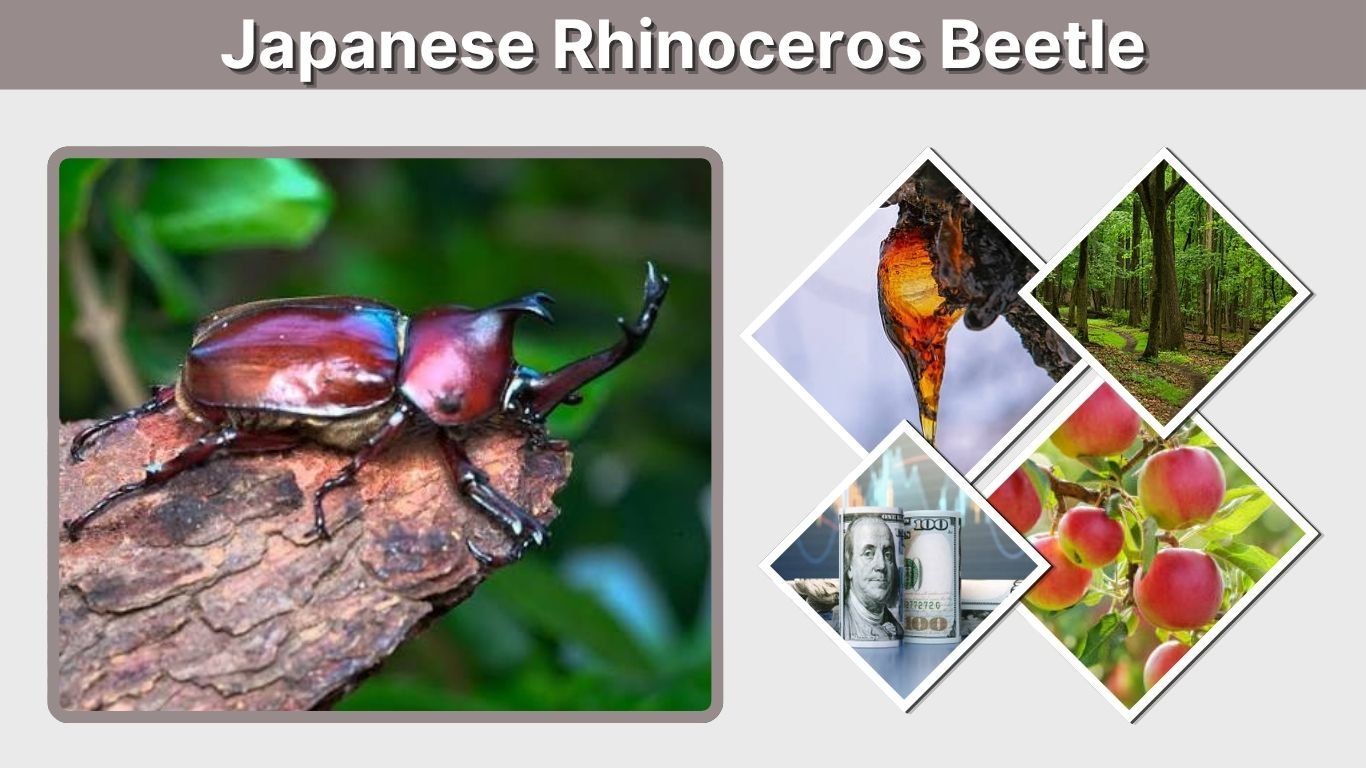
The Japanese rhinoceros beetle is one of Asia’s most fascinating insects, recognized for its impressive horns, strong body, and unusual fighting behavior. Also called the kabutomushi, this beetle plays an important role in Japanese culture and is popular among insect enthusiasts. Despite its intimidating appearance, it is generally harmless to humans. Understanding its habitat, diet, life cycle, and lifespan reveals how this remarkable insect survives in nature. This guide explores Japanese rhinoceros beetle facts, physical characteristics, breeding behavior, and essential care requirements for anyone interested in this unique species.
What Is a Japanese Rhinoceros Beetle?
The Japanese rhinoceros beetle (Trypoxylus dichotomus) is a large scarab beetle belonging to the family Scarabaeidae. It is sometimes listed under the older scientific combination Allomyrina dichotoma.
In Japan, the beetle is called kabutomushi, meaning helmet insect, because its prominent horn resembles the decorative helmets traditionally worn by samurai warriors.
Japanese Rhinoceros Beetle Identification
Japanese rhinoceros beetles have distinctive physical characteristics that make them relatively easy to recognize.
- Scientific Name: Trypoxylus dichotomus
- Common Name: Japanese rhinoceros beetle or kabutomushi
- Family: Scarabaeidae
- Body Size: Approximately 27–75 mm, depending on sex and individual development
- Body Color: Dark brown, reddish-brown, or nearly black
- Male Horn: Large, curved, and forked at the tip
- Female Appearance: Smaller hornless head and rounded body
- Wings: Hardened wing covers protecting functional flight wings
Their powerful legs have hooked claws that help them grip bark, climb trees, and move through loose soil.
Japanese Rhinoceros Beetle Habitat and Distribution
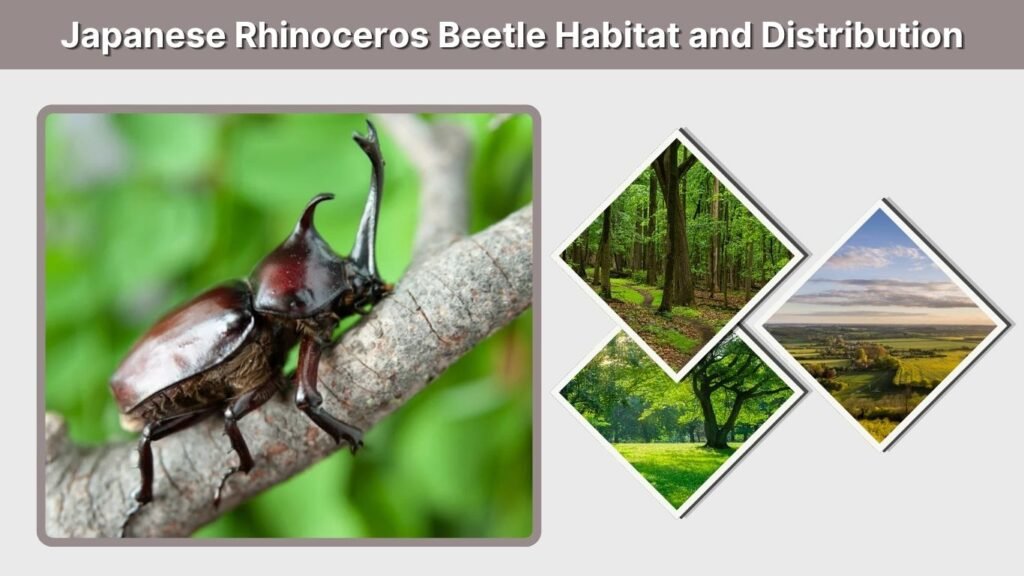
Japanese rhinoceros beetles naturally inhabit wooded environments across East Asia. They are especially associated with broadleaf forests where decaying vegetation and feeding sites are abundant.
Where Do Japanese Rhinoceros Beetles Live?
These beetles occur in Japan, China, Korea, Taiwan, and other parts of Asia. In Japan, they are frequently associated with oak-rich forests, wooded parks, and rural landscapes.
Adult beetles spend much of their active time on tree trunks, feeding on sap. Meanwhile, larvae develop underground in decomposing leaves, humus, and other organic materials.
Are Japanese Rhinoceros Beetles Nocturnal?
Japanese rhinoceros beetles are primarily nocturnal. Adults become active during the evening and nighttime, especially during warm summer months.
During daylight, they often hide beneath leaf litter, inside loose substrate, or in protected areas around trees. Their nighttime activities include feeding, flying, searching for mates, and competing with other beetles.
What Do Japanese Rhinoceros Beetles Eat?

The Japanese rhinoceros beetle diet changes significantly between the larval and adult stages. Adults mainly consume sugary liquids, while developing larvae depend on decomposing organic matter.
Adult Japanese Rhinoceros Beetle Diet
Adult beetles primarily feed on tree sap and occasionally consume juices from ripe fruit.
Common foods include:
- Tree sap, particularly from broadleaf trees
- Ripe bananas and other soft fruits
- Apples and suitable fruit pieces
- Commercial beetle jelly
- Naturally occurring sugary plant juices
In captivity, beetle jelly is a convenient food because it provides energy and is easy to replace.
What Do Japanese Rhinoceros Beetle Larvae Eat?
Japanese rhinoceros beetle larvae feed on decomposing leaves, humus, and softened organic material.
Unlike adults, larvae need substantial amounts of nutrient-rich substrate for growth. They spend much of their development underground, gradually increasing in size.
Proper nutrition during the larval stage strongly influences the size and development of the adult beetle.
Japanese Rhinoceros Beetle Life Cycle
The Japanese rhinoceros beetle undergoes complete metamorphosis, developing through four stages: egg, larva, pupa, and adult.
Its life cycle generally follows an annual seasonal pattern, although developmental timing varies with temperature and environmental conditions.
Four Stages of Development
- Egg: Females deposit small, rounded eggs in moist, decomposing organic material. The eggs hatch into larvae after a period of development.
- Larva: White, C-shaped grubs feed on decomposing vegetation. This is the longest developmental stage, lasting several months and extending through winter.
- Pupa: Mature larvae construct underground chambers and transform into pupae. Their bodies reorganize as adult features develop.
- Adult: Fully developed beetles emerge during warmer months, feed, search for mates, and reproduce.
Japanese Rhinoceros Beetle Lifespan
The complete Japanese rhinoceros beetle lifespan is generally around one year.
Most of that time is spent as a developing larva. Adults typically survive approximately two to three months, although longevity varies depending on environmental conditions.
In nature, adult beetles usually emerge during summer and do not survive the following winter.
Male vs. Female Japanese Rhinoceros Beetles

Male and female Japanese rhinoceros beetles look noticeably different. This distinction is known as sexual dimorphism.
Male Japanese Rhinoceros Beetle
Male beetles possess large, branching horns extending from their heads. They also have a smaller horn-like projection on the thorax.
Males use these structures during competitions over feeding locations and mating opportunities.
Larger individuals generally have more impressive horns, although size depends partly on conditions during larval development.
Female Japanese Rhinoceros Beetle
Female Japanese rhinoceros beetles lack the prominent head horns found in males.
Their bodies are usually more rounded, and they spend considerable time digging through organic substrate to find suitable egg-laying locations.
After mating, females deposit eggs in decomposing material where their larvae can develop.
Why Do Japanese Rhinoceros Beetles Fight?
Japanese rhinoceros beetle fighting is a natural behavior primarily observed between males.
When competing for feeding sites or females, males use their horns to push, lift, and sometimes throw opponents from branches.
These encounters can appear aggressive, but they are usually contests for access to resources rather than attempts to kill rivals.
Their horns function as specialized tools for wrestling, making them an important example of how competition influences animal evolution.
How to Care for a Japanese Rhinoceros Beetle

Japanese rhinoceros beetle care requires appropriate housing, food, temperature, and moisture. They are commonly kept as pets in Japan and among specialized insect hobbyists.
Basic Japanese Rhinoceros Beetle Care Requirements
- Enclosure: Provide a secure, ventilated container with sufficient room to move.
- Substrate: Use several centimeters of suitable, slightly moist bedding for adults.
- Temperature: Maintain moderate conditions, approximately 18–26°C (64–79°F).
- Humidity: Keep the substrate moist without allowing standing water.
- Food: Offer beetle jelly or suitable ripe fruit.
- Climbing Materials: Include bark and branches for gripping and resting.
- Cleaning: Remove spoiled food regularly to prevent mold.
- Housing: Keep competing adult males separately to reduce fighting.
Can Japanese Rhinoceros Beetles Be Kept as Pets?
Japanese rhinoceros beetles can make interesting observation pets because of their distinctive appearance and behaviors.
However, they require consistent care, and their short adult lifespan should be considered before acquiring one.
Larvae need specialized fermented substrate and considerably deeper containers than adults. Careful handling is also important because pulling a beetle from a surface can damage its delicate legs.
Are Japanese Rhinoceros Beetles Dangerous?
Despite their intimidating horns and powerful appearance, Japanese rhinoceros beetles are not considered dangerous to humans.
They are not venomous and do not possess a stinger. Their adult mouthparts are adapted for feeding on soft, sugary material rather than attacking people.
Their hooked claws can occasionally produce an uncomfortable gripping sensation when handled.
It is best to handle these insects gently and avoid forcing them off skin, clothing, or branches.
Blue Japanese Rhinoceros Beetle: Is It Real?
Some online images show a blue Japanese rhinoceros beetle, creating confusion about its natural coloration.
Typical Japanese rhinoceros beetles are reddish-brown, dark brown, or nearly black. Their glossy shells may reflect bluish highlights under certain lighting conditions.
A bright blue beetle in an image may be color-edited, artificially illuminated, or a different species. Blue is not the usual natural coloration of Trypoxylus dichotomus.
Japanese Rhinoceros Beetle Price and Availability

Japanese rhinoceros beetle prices vary according to developmental stage, size, sex, availability, and local regulations.
Larvae may cost less than mature adults, while large males and breeding pairs can be more expensive.
However, buying or importing Japanese rhinoceros beetles in the United States may require regulatory approval. The USDA advises prospective owners to contact its Plant Protection and Quarantine program before purchasing terrestrial invertebrates.
Never release captive beetles into the environment, particularly outside their native range.
FAQs
1. How long do Japanese rhinoceros beetles live?
Japanese rhinoceros beetles generally have a complete life cycle lasting approximately one year. Most of their lives are spent developing as larvae. The adult stage usually lasts around two to three months, depending on temperature, nutrition, and environmental conditions.
2. Can Japanese rhinoceros beetles fly?
Yes, Japanese rhinoceros beetles can fly. Their hardened outer wings protect the delicate flight wings underneath. Adults commonly fly during warm evenings while searching for food, suitable habitats, or mates. Their flight can produce a noticeable buzzing sound.
3. Do Japanese rhinoceros beetles bite humans?
Japanese rhinoceros beetles are generally harmless to humans. Their adult mouthparts are not designed for biting people, and they cannot sting. However, their hooked claws can grip skin tightly, so gentle handling is recommended to prevent discomfort or accidental injury.
4. What is the purpose of a Japanese rhinoceros beetle’s horn?
Male Japanese rhinoceros beetles use their horns primarily for fighting other males. These contests often determine access to feeding locations and potential mates. Their specialized horn structure allows them to lift, push, and dislodge competing beetles from tree branches.
5. Where can you find Japanese rhinoceros beetles?
Japanese rhinoceros beetles are found in Japan and several other Asian countries. They usually inhabit wooded environments with broadleaf trees and decomposing vegetation. Adults often gather around tree sap at night, while larvae develop underground in organic-rich material.