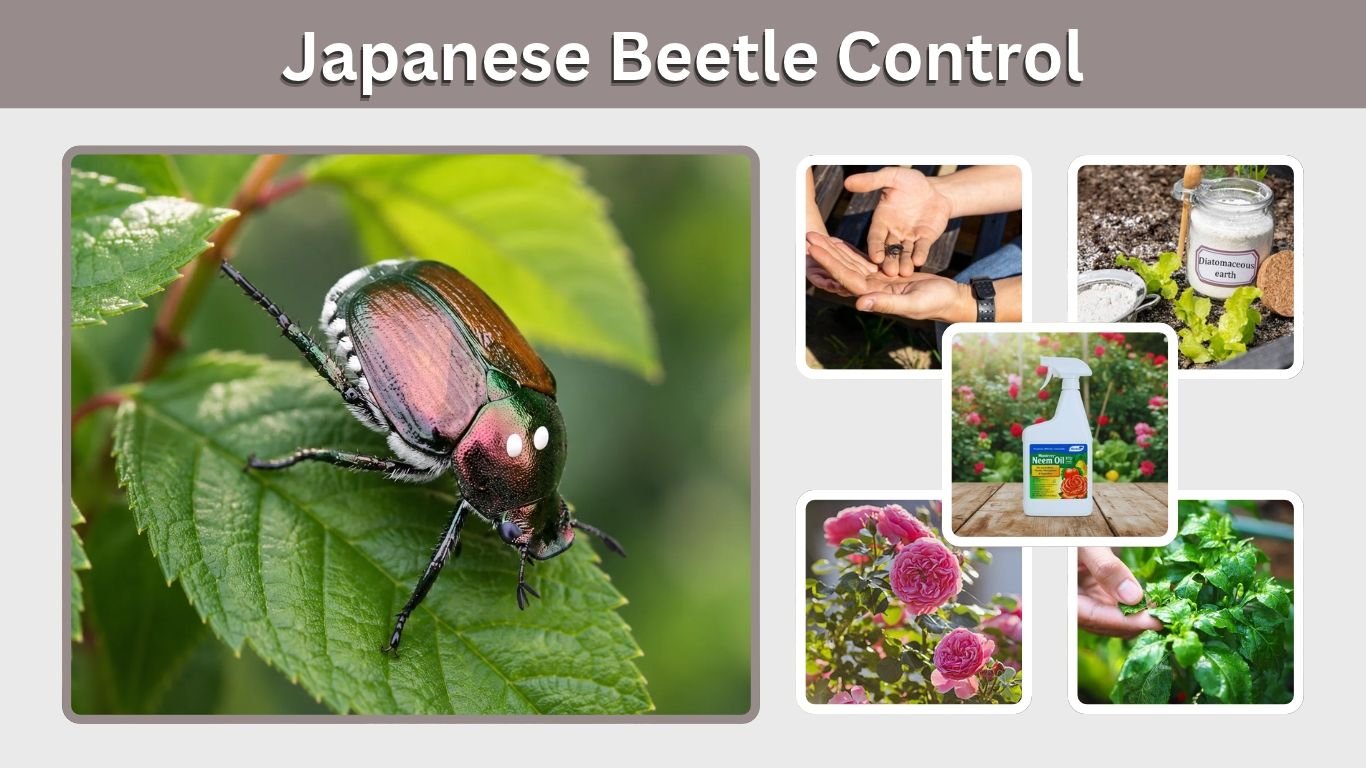
Japanese beetle control is essential for protecting roses, fruit trees, vegetables, and lawns from destructive feeding damage. These metallic green insects consume leaves, flowers, and fruits, while their white grubs damage grass roots beneath the soil. Heavy infestations can leave plants with skeletonized leaves and weakened growth. Fortunately, several natural, organic, and chemical treatments can help manage Japanese beetles effectively. This guide explains how to control adult beetles, eliminate lawn grubs, use neem oil and beneficial nematodes, and prevent future garden infestations.
What Are Japanese Beetles?
Japanese beetles (Popillia japonica) are invasive insects originally from Japan. They belong to the scarab beetle family and feed on more than 300 plant species. Adult beetles damage leaves and flowers, while their larvae live underground and feed on plant roots. Understanding their appearance and feeding habits helps gardeners recognize infestations early.
Japanese Beetle Identification
- Scientific Name: Popillia japonica
- Family: Scarabaeidae
- Body Length: Approximately 8–12 mm
- Color: Metallic green with copper-brown wing covers
- Distinctive Markings: White hair tufts along the sides of the abdomen
- Adult Food: Leaves, flowers, and fruits
- Larval Food: Grass and other plant roots
- Active Season: Primarily summer
- Life Cycle: Usually one generation annually
Signs of Japanese Beetle Damage
Japanese beetles chew leaf tissue between the veins, creating a lace-like or skeletonized appearance. They also damage flowers and occasionally feed directly on fruits.
Adult beetles frequently gather in groups, particularly on roses, grapes, and other attractive plants. Their feeding damage can attract additional beetles, increasing infestation severity.
In lawns, white grubs may cause yellowing grass, brown patches, and weakened roots.
9 Effective Japanese Beetle Control Methods
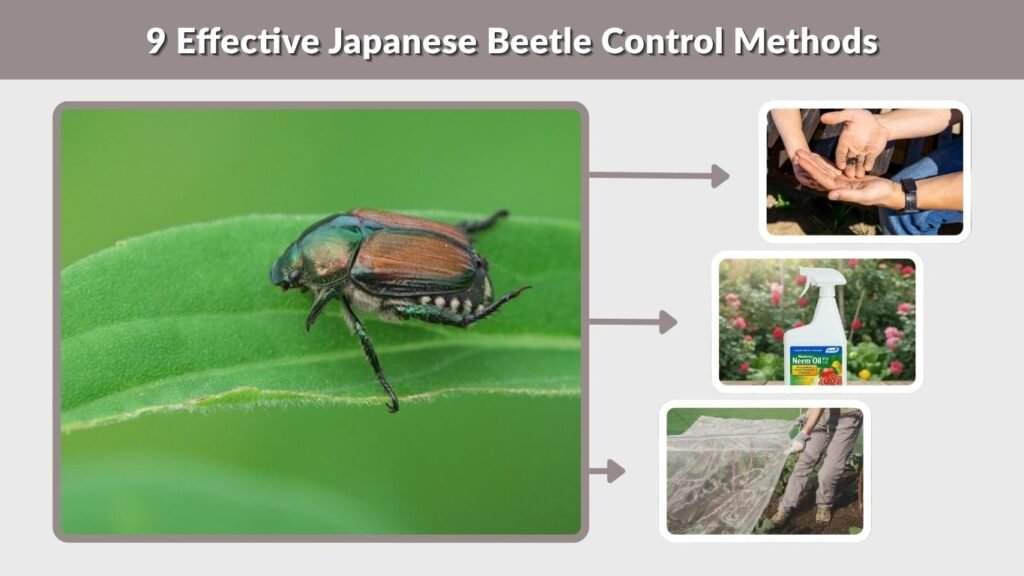
Successful Japanese beetle control requires combining physical removal, biological treatments, and appropriate plant protection. The best method depends on whether adult beetles are damaging garden plants or larvae are feeding underground. Starting treatment when the first beetles appear is generally more effective than waiting until populations become large.
Best Ways to Control Japanese Beetles
- Handpick Adult Beetles: Remove beetles from plants early in the morning and drop them into a container of soapy water.
- Apply Neem-Based Products: Use appropriately labeled neem or azadirachtin products to discourage feeding and reduce damage.
- Protect Plants With Netting: Cover vulnerable plants with fine insect netting when pollination is not required.
- Use Beneficial Nematodes: Apply suitable insect-parasitic nematodes to moist soil when young grubs are present.
- Consider Microbial Treatments: Products containing Bacillus thuringiensis galleriae may help reduce adult feeding.
- Remove Beetles Regularly: Inspect valuable plants daily during peak beetle activity.
- Manage Damaging Lawn Grubs: Treat affected lawns when inspection confirms a significant grub problem.
- Use Labeled Insecticides When Necessary: Choose products approved for the plant and pest, following all safety instructions.
- Maintain Healthy Plants: Proper watering, mulching, and plant care improve tolerance to moderate feeding damage.
Natural and Organic Japanese Beetle Control

Natural Japanese beetle control methods are particularly useful in home gardens where protecting pollinators and other beneficial insects is important. Hand removal and physical barriers often provide adequate protection for a limited number of plants. Botanical and microbial products can offer additional suppression, although results vary with infestation severity.
Neem Oil for Japanese Beetle Control
Neem-based insecticides can discourage adult Japanese beetles from feeding on treated foliage.
Azadirachtin, a compound derived from neem, acts mainly as a feeding deterrent. Its effectiveness is usually temporary, making repeated applications necessary according to product directions.
Neem-based treatments are generally less reliable when beetle populations are extremely high. Avoid spraying products directly onto visiting pollinators.
Diatomaceous Earth and Home Remedies
Diatomaceous earth is sometimes recommended for Japanese beetles, but it is not a dependable treatment for adults feeding on outdoor plants.
Rain and moisture reduce its effectiveness, while dust can also affect beneficial insects.
Homemade soap sprays are similarly unreliable against adult beetles and may damage sensitive leaves. Dropping beetles into soapy water is a more practical nonchemical method.
Japanese Beetle Grub Control in Lawns
Japanese beetle grubs are white, C-shaped larvae that develop beneath the soil surface. They feed on grass roots and can cause significant turf damage when populations become high. However, treating lawn grubs should primarily protect the lawn rather than serve as a method for preventing adult beetles from entering nearby gardens.
When to Treat Japanese Beetle Grubs
Grub treatments are most effective when larvae are young and actively feeding near the soil surface.
In many northern U.S. regions, preventive treatments are applied during June or July. Curative treatments are generally most effective from late summer into early autumn, depending on local conditions.
Before applying any treatment, lift a small section of damaged turf and check for living grubs. Brown grass alone does not confirm an infestation.
Beneficial Nematodes for Grub Control
Beneficial nematodes are microscopic organisms that infect certain soil-dwelling insects.
Heterorhabditis bacteriophora is one species used against Japanese beetle grubs. It can be applied when young larvae are present in moist soil.
Nematodes require suitable temperatures and moisture to survive. Results can be inconsistent, so follow product directions and keep the treated soil adequately moist.
Does Milky Spore Control Japanese Beetles?
Milky spore is a bacterial disease caused by Paenibacillus popilliae, which infects Japanese beetle grubs.
Although commercial milky spore products are sold for lawn treatment, modern university trials have not consistently demonstrated meaningful control after application.
Milky spore does not kill adult beetles feeding on plants and should not be relied upon as a quick solution.
Chemical Control of Japanese Beetles
Chemical control may be necessary when beetle populations are large and valuable plants face serious damage. However, different insecticides target different developmental stages. Products intended for adults may not work against underground grubs, and some treatments pose significant risks to bees and other beneficial insects.
Insecticides for Adult Japanese Beetles
Certain products containing pyrethroids, carbaryl, or chlorantraniliprole can reduce adult Japanese beetle feeding.
Their effectiveness and environmental risks vary considerably. Some broad-spectrum insecticides remain active for days or weeks and are hazardous to pollinators.
Always choose a product labeled for Japanese beetles and the specific plant being treated. Avoid applying bee-toxic insecticides to flowering plants.
Insecticides for Japanese Beetle Grubs
Preventive lawn treatments containing chlorantraniliprole can provide effective protection when applied at the appropriate time.
Other active ingredients may be available for preventive or curative control, depending on local regulations.
Treatment timing, correct application rates, and adequate soil moisture are essential. Routine lawn insecticide applications are unnecessary when grub damage is absent.
Controlling Japanese Beetles on Roses and Fruit Trees

Japanese beetles frequently attack ornamental flowers and fruit-producing plants. Roses, grapevines, raspberries, and several fruit trees are particularly attractive. Protecting these plants requires a targeted approach that minimizes damage while avoiding unnecessary pesticide exposure.
Japanese Beetle Control on Roses
Roses are among the plants most frequently attacked by adult Japanese beetles.
The beetles consume flower petals and skeletonize leaves, sometimes leaving badly damaged blossoms.
Handpicking regularly is an effective starting point. Removing beetles before large groups accumulate can reduce additional feeding.
Neem-based products may provide temporary protection, but flowering roses should be managed carefully to avoid harming pollinators.
Japanese Beetle Control on Grapes and Fruit Trees
Japanese beetles commonly feed on grape foliage, creating holes and skeletonized leaves. Severe feeding can reduce the leaf area available for photosynthesis.
Established grapevines can often tolerate some damage, but young plants require closer protection.
For apple trees, raspberries, and other edible crops, use only treatments specifically labeled for the crop. Follow required preharvest intervals and avoid applications during pollinator activity.
Do Japanese Beetle Traps Work?
Japanese beetle traps use floral attractants and sex pheromones to lure adult beetles. Although they can capture large numbers, they are often ineffective for protecting individual gardens. Understanding their limitations helps homeowners avoid unintentionally increasing beetle activity around vulnerable plants.
Should You Use Japanese Beetle Traps?
Research indicates that Japanese beetle traps can attract more beetles than they capture.
As a result, placing a trap near roses, vegetables, or fruit trees may increase local feeding damage.
Traps are more useful for monitoring populations or in specialized management programs. For most home gardens, regular hand removal and appropriate plant protection are better choices.
How to Prevent Japanese Beetle Infestations
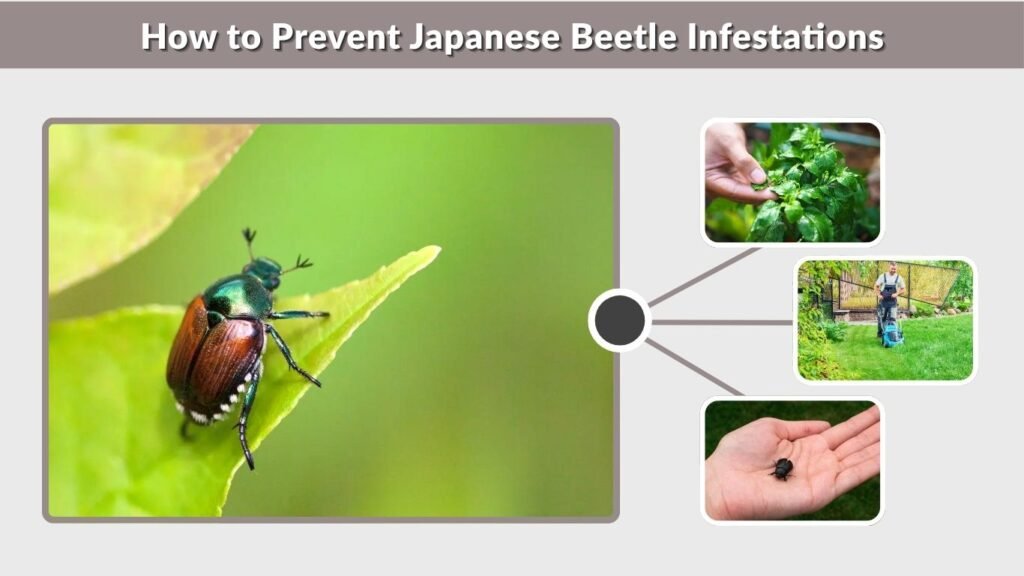
Preventing Japanese beetle damage involves early monitoring, maintaining healthy plants, and avoiding unnecessary treatments. Because adults can fly considerable distances, completely eliminating them from an individual yard is usually unrealistic. However, consistent garden management can substantially reduce damage.
Japanese Beetle Prevention Tips
- Inspect Plants Early: Check susceptible plants when adults begin emerging in summer.
- Remove Beetles Daily: Prevent large groups from accumulating on valuable plants.
- Use Physical Barriers: Protect selected plants with suitable insect netting.
- Maintain Healthy Lawns: Proper mowing and watering help grass tolerate minor root damage.
- Avoid Attractant Traps: Keep pheromone traps away from garden plants.
- Monitor Grub Activity: Check damaged turf before deciding on treatment.
- Protect Pollinators: Choose lower-risk control methods whenever possible.
FAQs
1. What is the best way to control Japanese beetles?
Handpicking adult beetles into soapy water is one of the most effective nonchemical methods for small gardens. Neem-based treatments and protective netting can provide additional protection. Severe infestations may require appropriately labeled insecticides.
2. Does neem oil kill Japanese beetles?
Neem-based products can reduce Japanese beetle feeding, particularly when applied before populations become large. Their effects are generally temporary, and repeated applications may be necessary. They are not guaranteed to eliminate an established infestation.
3. What is the best Japanese beetle grub control?
Effective grub control depends on correct identification and treatment timing. Chlorantraniliprole is a commonly recommended preventive option for lawns with a history of damage. Beneficial nematodes may also help, although their effectiveness varies with environmental conditions.
4. Can Japanese beetles be controlled naturally?
Yes, Japanese beetles can be managed naturally through regular hand removal, insect netting, and certain biological treatments. These methods are most practical when populations are relatively low. Completely preventing beetles from entering a garden is generally impossible.
5. Does milky spore permanently eliminate Japanese beetles?
No, milky spores do not provide guaranteed or permanent Japanese beetle control. It targets the grub stage, and research has found inconsistent results from commercial applications. Adult beetles can also migrate into treated gardens from surrounding areas.