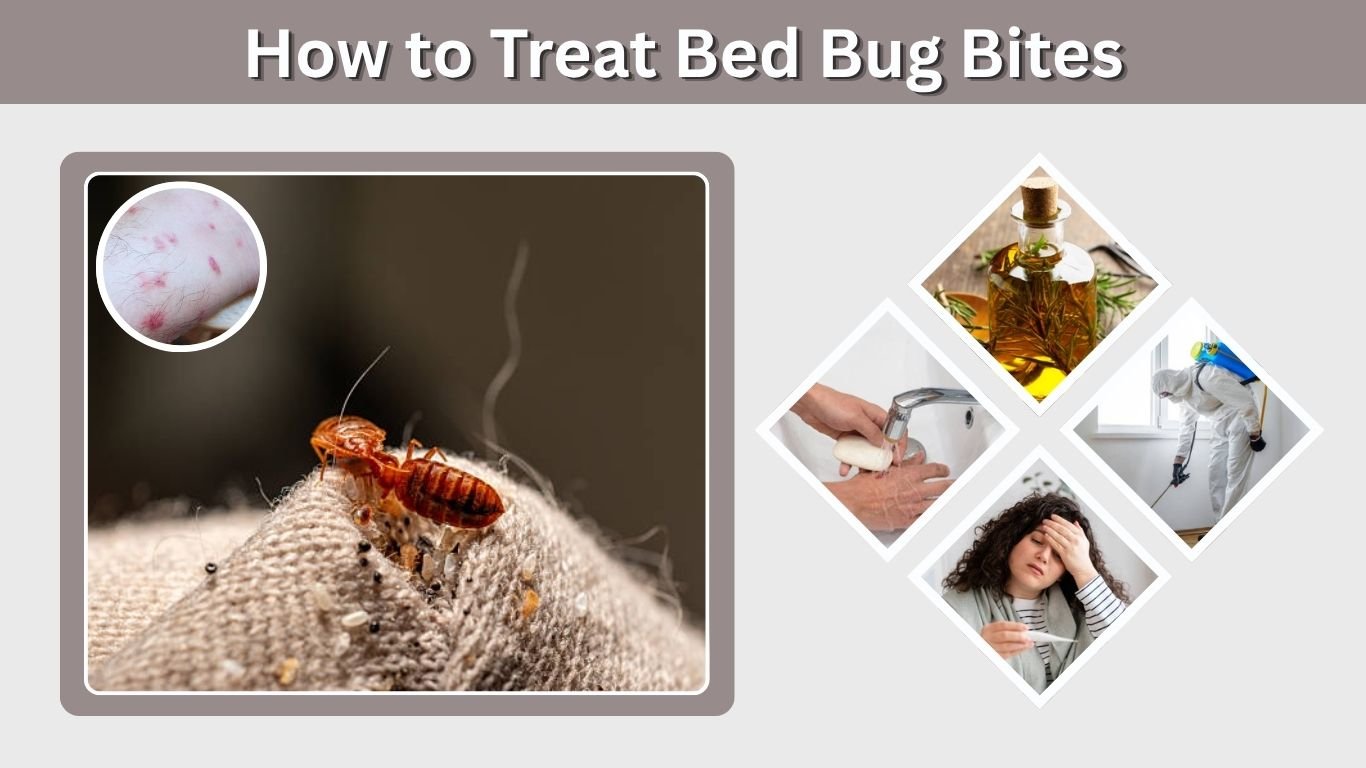
Bed bug bites can cause intense itching, redness, swelling, and uncomfortable skin irritation. Although these bites are usually harmless, scratching can make symptoms worse and increase the risk of infection. Fortunately, most cases can be managed with simple home treatments and over-the-counter medications. If you’re wondering how to treat bed bug bites, the first steps involve cleaning the affected skin, reducing inflammation, and controlling itching. This guide explains effective treatments, natural relief methods, healing time, and when professional medical attention may be necessary.
How to Treat Bed Bug Bites at Home
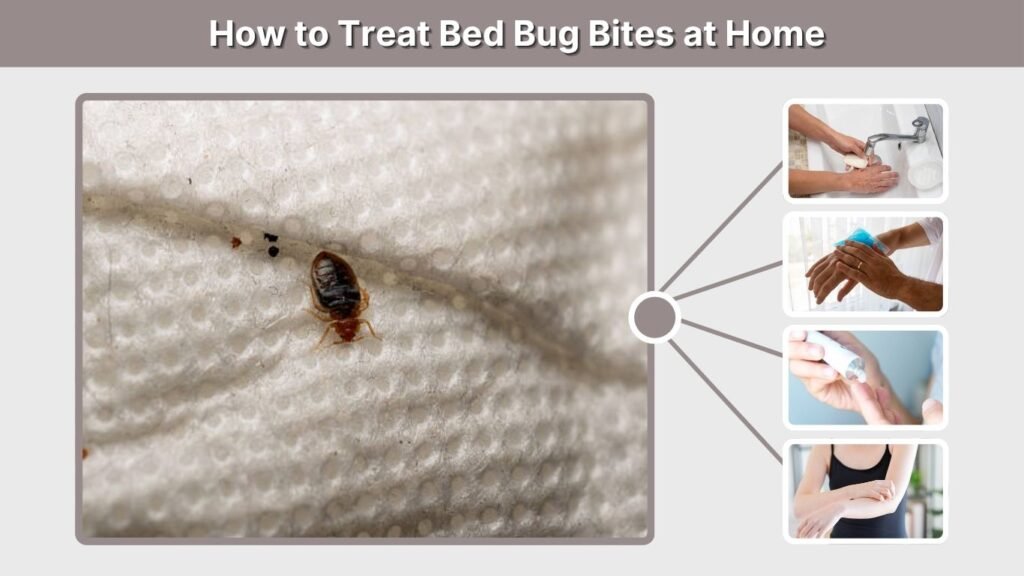
Most bed bug bites heal naturally without specialized medical treatment. However, proper skin care can reduce discomfort and help prevent complications. The most effective approach combines gentle cleaning, cooling the affected areas, and using suitable anti-itch treatments when necessary.
1. Wash the Bites With Soap and Water
Start by washing the affected areas gently with mild soap and lukewarm water. This removes dirt, sweat, and potential irritants from the skin.
Use your hands rather than scrubbing the bites with a rough cloth. After washing, pat your skin dry with a clean towel.
Keeping the area clean helps reduce the risk of bacterial infection, especially when itching has already caused minor scratches. Repeat gentle cleansing during your normal bathing routine without over-washing or irritating the skin.
2. Apply a Cold Compress
A cold compress is one of the simplest ways to relieve itching and swelling from bed bug bites.
Place a clean, damp, cool cloth over the affected skin for approximately 10–20 minutes. Repeat when necessary to manage discomfort.
If using an ice pack, wrap it in a soft towel instead of applying ice directly to your skin. Direct exposure to extreme cold can damage sensitive skin.
Cooling the area provides temporary relief and may make it easier to avoid scratching.
3. Use Hydrocortisone Cream
Hydrocortisone cream can help reduce inflammation and itching associated with bed bug bites.
A mild over-the-counter product, such as 1% hydrocortisone, may be suitable for uncomplicated bites. Apply it according to the product instructions.
Avoid applying steroid cream to broken or infected skin unless a healthcare professional recommends it. Ask a pharmacist or doctor before using it on young children, during pregnancy, or on sensitive areas such as the face.
Persistent symptoms may require assessment rather than repeated self-treatment.
4. Take an Antihistamine for Itching
Some people experience intense itching that interferes with sleep or daily activities. Oral antihistamines may provide relief from allergic skin reactions.
Common options include cetirizine and loratadine, although suitability depends on individual circumstances.
Follow the medicine’s instructions and consult a pharmacist about possible interactions, pregnancy, or existing medical conditions.
Some antihistamines cause drowsiness, making them unsuitable before driving or operating machinery.
Antihistamines help manage symptoms but do not remove bed bugs or prevent additional bites.
5. Avoid Scratching the Affected Skin
Scratching may temporarily relieve itching, but repeated scratching damages the skin’s protective barrier.
Open scratches can allow bacteria to enter and cause secondary infections.
Keep your fingernails short and clean. Wearing loose, breathable clothing may also help prevent friction against irritated areas.
If a bite has been scratched open, clean it gently and protect it with an appropriate dressing when needed.
How to Treat Bed Bug Bites Naturally
Several simple, non-medicated methods can soothe irritated skin. However, natural remedies do not eliminate bed bug saliva reactions or necessarily accelerate healing. Choose gentle approaches that are unlikely to aggravate inflammation.
Cool Water and Colloidal Oatmeal
A cool shower or clean, damp compress can temporarily reduce itching.
Colloidal oatmeal bath products may also soothe irritated skin, although direct evidence for treating bed bug bites specifically is limited.
Use lukewarm rather than hot water, follow product instructions, and stop if irritation occurs. Hot baths can make itching feel worse for some people.
Gentle Moisturizers
A plain, fragrance-free moisturizer may help relieve dryness around irritated skin.
Some people use aloe vera gel for its cooling sensation, but there is limited evidence that it improves bed bug bite healing. If trying it, choose a simple product and discontinue use if redness or irritation increases.
Avoid applying unknown herbal mixtures or concentrated essential oils to bites.
What Should You Avoid Putting on Bed Bug Bites?
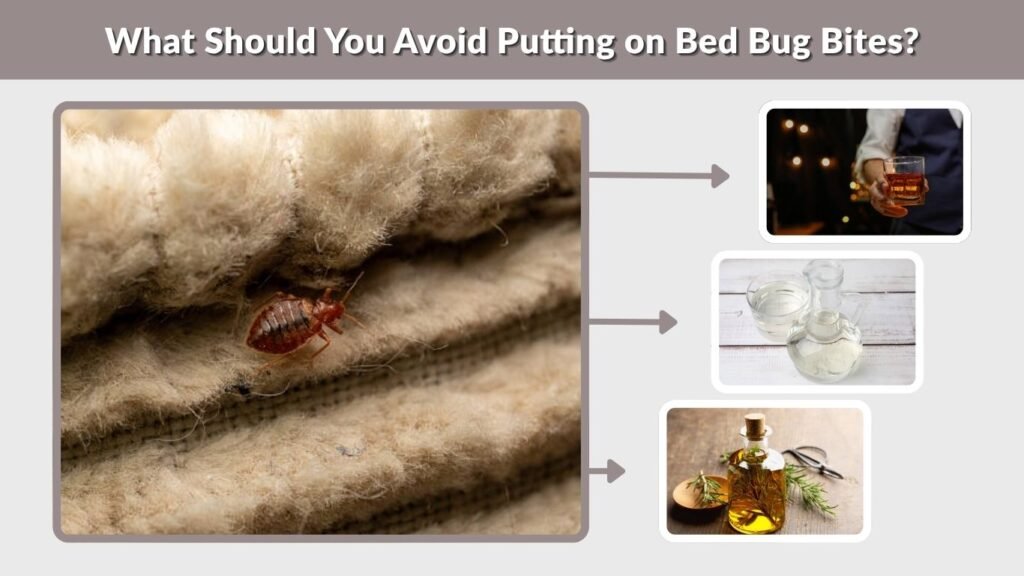
Some popular home remedies may irritate your skin rather than improve symptoms. Avoid harsh or unproven treatments, especially on scratched or broken skin.
- Rubbing alcohol: Can dry and irritate skin and should not be used as a bite treatment.
- Undiluted vinegar: May cause stinging and additional irritation.
- Essential oils: Concentrated oils can cause allergic reactions or contact dermatitis.
- Toothpaste: Ingredients may irritate inflamed skin.
- Bleach or household disinfectants: Can cause chemical burns and must never be applied to bites.
Skin-safe treatment is different from insect control. Never use household insecticides directly on your body.
How Long Do Bed Bug Bites Take to Heal?
Most uncomplicated bed bug bites improve and disappear within approximately one to two weeks. However, healing time depends on individual sensitivity, bite severity, and whether the skin has been scratched.
| Symptoms | Typical course |
| Mild itching | Often improves within several days |
| Red or swollen bumps | Usually fade within 1–2 weeks |
| Strong allergic skin reaction | May last longer and require treatment |
| Infected bites | Require medical assessment and may take longer to heal |
Some people develop marks several days after the bite, while others have no visible reaction.
Continued exposure can produce new bites even while older ones are healing.
When Should You See a Doctor for Bed Bug Bites?
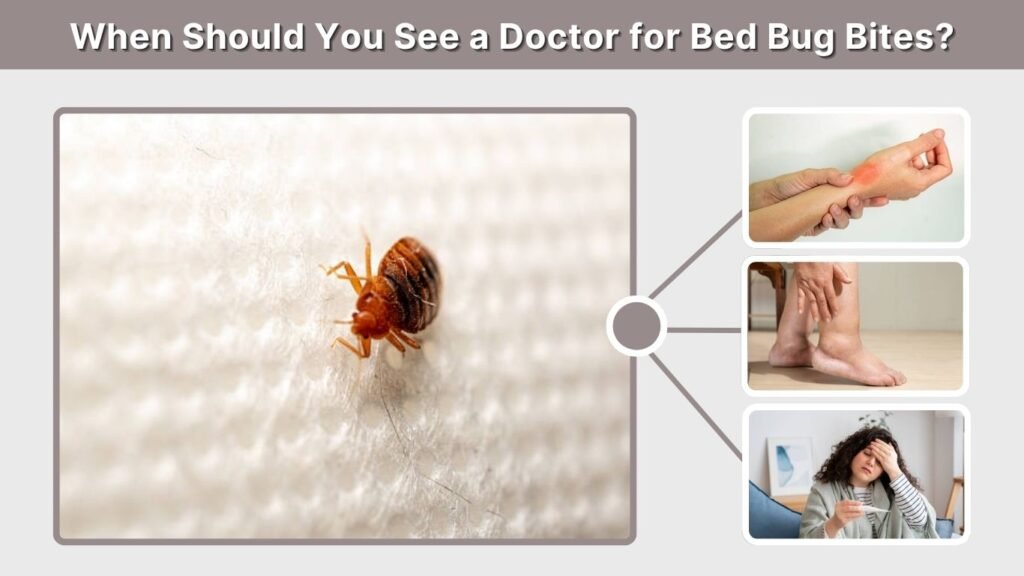
Most bites can be managed at home, but certain symptoms require medical attention.
Consult a healthcare professional if you experience:
- Increasing pain, warmth, redness, or swelling.
- Pus, drainage, or worsening tenderness.
- Fever or other signs of infection.
- Large blisters or extensive skin reactions.
- Severe itching that prevents sleeping.
- Bite-like symptoms that do not improve or have an uncertain cause.
Signs of infection may require prescription medication.
Seek emergency medical care immediately if you experience breathing difficulty, throat or tongue swelling, faintness, or another sign of a severe allergic reaction.
How to Prevent More Bed Bug Bites
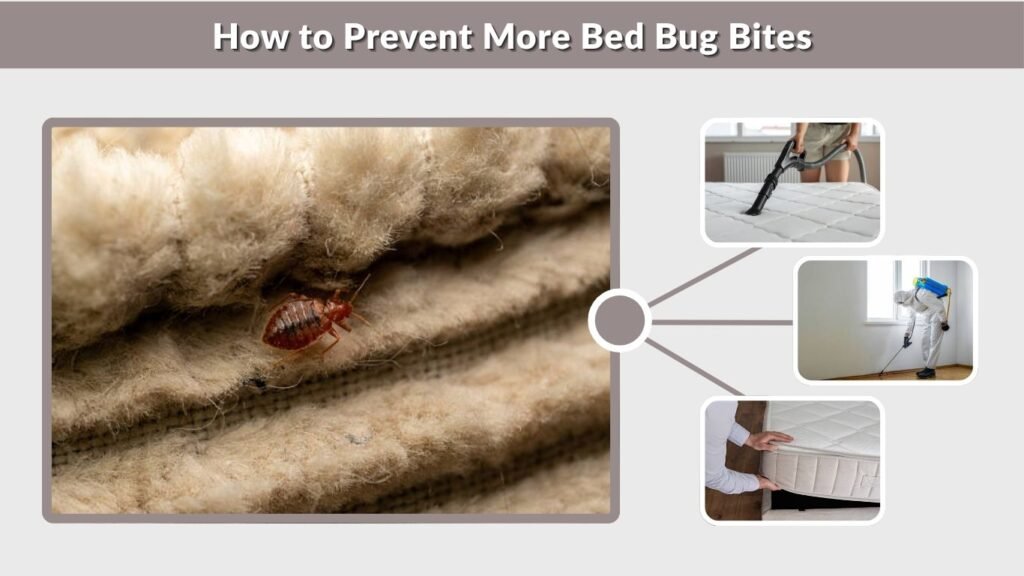
Treating your skin will not stop future bites if bed bugs remain in your home. Effective prevention requires identifying and controlling the infestation.
Inspect Your Sleeping Area
Examine mattress seams, bed frames, headboards, and nearby furniture. Look for small reddish-brown insects, shed skins, dark fecal spots, and tiny pale eggs.
Remember that bite appearance alone cannot confirm a bed bug infestation. Fleas, mosquitoes, and several skin conditions can cause similar marks.
Clean Bedding and Reduce Infestations
Place dryer-safe bedding and clothing in a dryer on high heat for at least 30 minutes, following fabric care instructions.
Vacuum mattress seams and surrounding areas carefully, then dispose of vacuum contents securely.
Bed bug-proof mattress encasements and bed-leg interceptors can help with monitoring and control.
For established infestations, professional pest management is often necessary. Avoid relying exclusively on insect foggers or attempting dangerous DIY room-heating methods.
FAQs
1. What is the fastest way to treat bed bug bites?
Wash the affected skin with soap and water, then apply a cold compress. Hydrocortisone cream or an appropriate antihistamine may provide additional itching relief. These treatments help symptoms but do not instantly heal bites.
2. Can bed bug bites go away without treatment?
Yes. Most uncomplicated bites heal naturally within one to two weeks. Keeping the skin clean and avoiding scratching can help prevent secondary infection.
3. Is hydrocortisone cream good for bed bug bites?
Yes. Mild hydrocortisone cream can relieve itching and inflammation in many cases. Follow the product instructions and seek professional advice for severe symptoms or sensitive skin areas.
4. Can you treat bed bug bites naturally?
Yes. Cool compresses, gentle cleansing, and avoiding scratching can provide relief without medication. Natural methods may soothe the skin, but they cannot eliminate an existing bed bug infestation.
5. Why do my bed bug bites keep itching?
Itching results from your immune system’s reaction to substances in bed bug saliva. The severity and duration vary between individuals. Persistent or worsening itching may require medical evaluation.