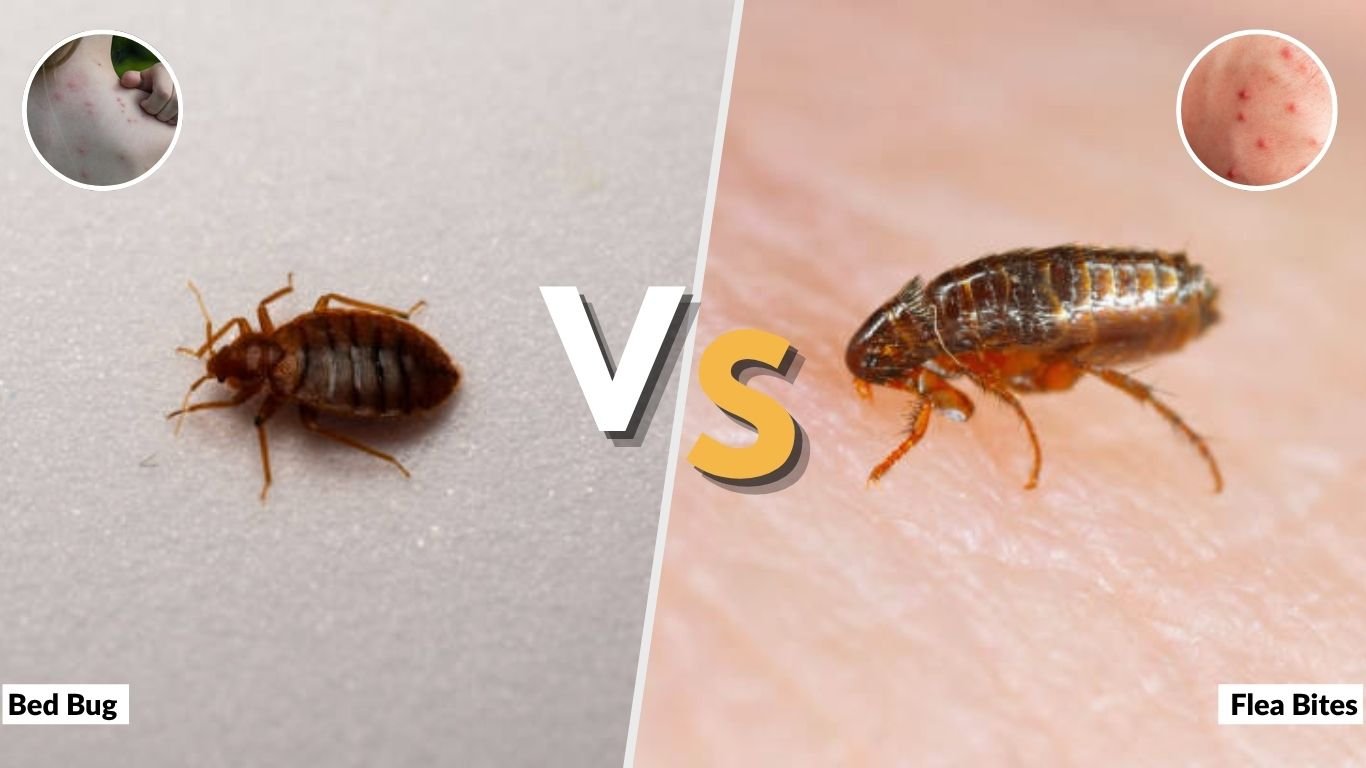
Bed bug and flea bites can look surprisingly similar, making it difficult to identify which insect is causing itchy bumps on your skin. Both pests feed on blood and can leave red, swollen marks, but their biting habits, preferred body areas, and infestation signs are different. Understanding bed bug vs flea bites can help you recognize the possible cause and choose the right treatment. This guide explains their appearance, bite patterns, symptoms, and practical ways to distinguish them.
Bed Bug vs Flea Bites: Quick Comparison
Bed bug bites and flea bites often cause itching, redness, and small raised bumps. However, their locations and feeding behaviors provide useful clues. Bed bugs commonly feed on exposed skin while people sleep, whereas fleas frequently bite the feet and lower legs. Neither appearance nor bite pattern alone can confirm which insect caused the reaction.
| Feature | Bed Bug Bites | Flea Bites |
| Appearance | Red, pink, or darker swollen welts | Small, red or discolored bumps |
| Bite pattern | Lines, clusters, or scattered marks | Clusters, lines, or scattered marks |
| Common location | Arms, neck, shoulders, face | Ankles, feet, lower legs |
| Biting time | Mostly at night | Day or night |
| Itching | May develop hours or days later | Often becomes itchy relatively quickly |
| Main hiding places | Mattresses, bed frames, furniture | Carpets, pet bedding, upholstery |
| Disease concerns | Not known to transmit disease to humans | Some fleas can transmit diseases |
What Do Bed Bug Bites Look Like?
Bed bug bites usually appear as itchy, raised marks that resemble mosquito bites or other insect reactions. Their appearance varies depending on individual sensitivity, skin tone, and the number of bites received. Some people develop obvious welts, while others show little or no visible reaction.
Common Signs of Bed Bug Bites
Bed bug bites may produce several recognizable symptoms, although none is exclusive to bed bugs.
- Red or discolored welts: Raised spots may appear pink, red, purple, or darker than surrounding skin.
- Linear patterns: Several bites sometimes form straight or zigzag lines.
- Grouped bites: Multiple marks may develop close together.
- Intense itching: Some individuals experience significant irritation.
- Delayed reactions: Bite marks may not appear until several days after exposure.
Bed bugs inject saliva containing substances that help them feed without being immediately detected. The skin reaction is mainly caused by the body’s response to that saliva.
What Do Flea Bites Look Like on Humans?
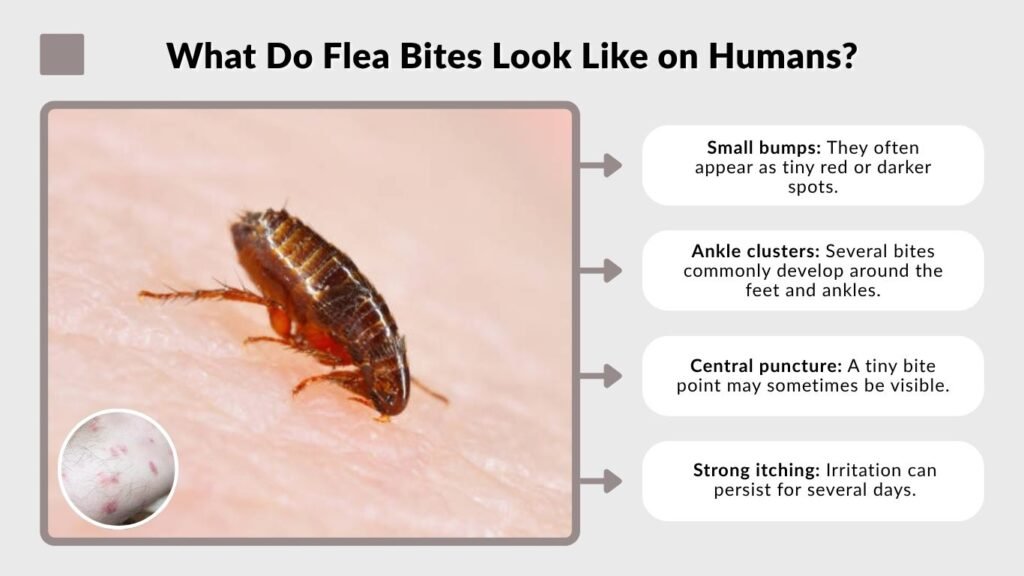
Flea bites typically appear as small, intensely itchy bumps. They are commonly associated with cats, dogs, and environments where animals rest. Unlike bed bugs, fleas jump onto hosts to feed and can bite people who walk through infested areas.
Common Signs of Flea Bites
Flea bites have several features that may help distinguish them from other insect bites.
- Small bumps: They often appear as tiny red or darker spots.
- Ankle clusters: Several bites commonly develop around the feet and ankles.
- Central puncture: A tiny bite point may sometimes be visible.
- Strong itching: Irritation can persist for several days.
- Grouped marks: Multiple bites may occur close together or in a line.
Scratching can damage the skin and increase the risk of bacterial infection.
Bed Bug vs Flea Bites Pictures: Visual Differences
When comparing pictures of flea bites vs bed bug bites, pay attention to the size, distribution, and surrounding skin rather than color alone. Both types of bites may appear different across skin tones and can resemble allergic rashes.
Bed Bug Bite Pictures
Photographs commonly show several raised welts across the arms, neck, shoulders, or torso. Some marks form lines or zigzag arrangements, although random patterns are also possible.
Bed bug reactions may be barely visible in some people and highly swollen in others. Therefore, photographs should be considered supporting evidence rather than a definitive identification method.
Flea Bite Pictures
Flea bite photographs often show smaller bumps concentrated around the ankles, feet, or calves. Multiple bites may create an irregular cluster, particularly after walking through infested carpets or grassy areas.
However, fleas can bite other body regions, and bed bugs can bite legs. Location and size are helpful clues, not absolute rules.
Where and When Do Bed Bugs and Fleas Bite?
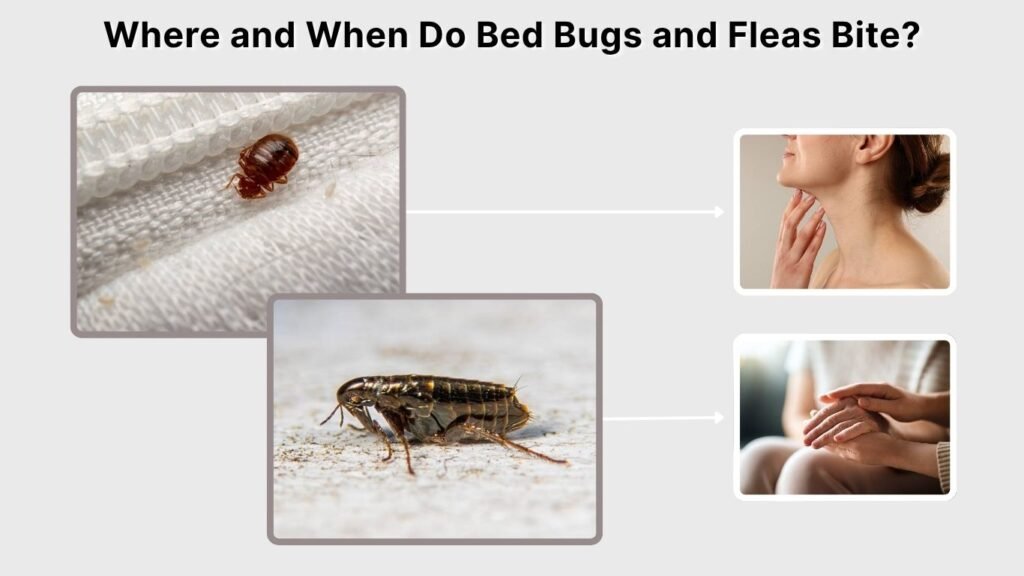
Bite location and exposure history can reveal important differences between these pests. However, identifying where bites occur is more useful when combined with evidence from your home.
Common Bite Locations
Bed bugs frequently bite exposed skin during sleep, including the face, neck, hands, shoulders, and arms. Bites can also appear elsewhere if those areas are accessible.
Fleas usually target the ankles, feet, and lower legs because they commonly jump from floors, carpets, or nearby surfaces. Bites above the knees are possible, especially when sitting or lying in infested areas.
When Do the Bites Appear?
Bed bugs usually feed at night, but they can bite during daylight when conditions allow. Their marks may become visible hours or even days after feeding.
Fleas can bite throughout the day or night. Itching often develops relatively soon after a bite, although individual reactions vary.
Important: Finding bites after waking up does not necessarily mean bed bugs are responsible.
How to Tell Whether You Have Bed Bugs or Fleas
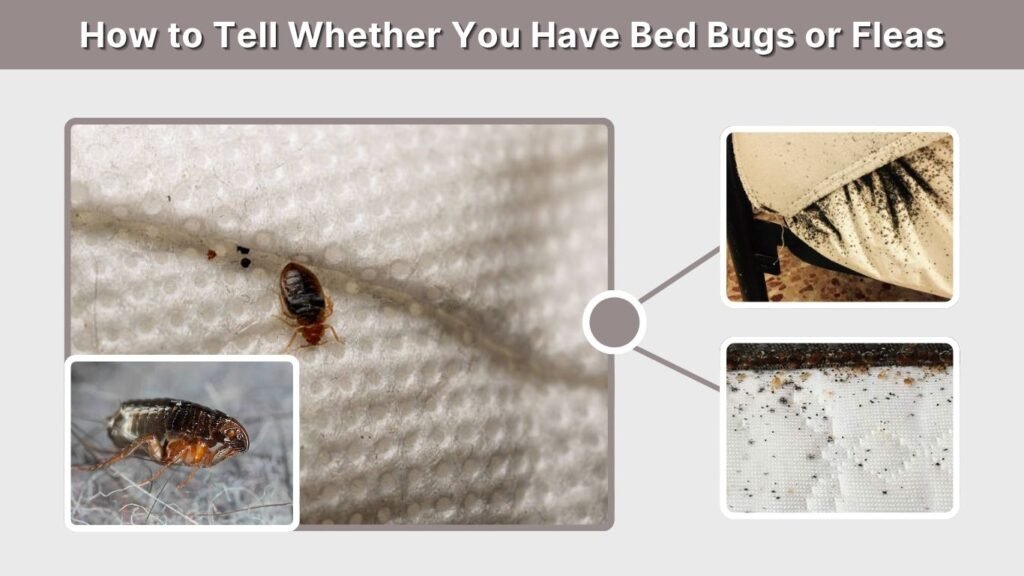
Skin marks alone cannot reliably identify the biting insect. The best approach is to inspect your sleeping area, pets, carpets, and furniture for physical evidence.
Signs of a Bed Bug Infestation
Check mattress seams, bed frames, headboards, and nearby furniture for:
- Small, flat, reddish-brown insects.
- Dark fecal spots around hiding areas.
- Shed insect skins.
- Pale eggs in cracks or seams.
- Rust-colored stains on bedding.
Finding live insects or characteristic infestation evidence is much stronger confirmation than relying on bite patterns.
Signs of a Flea Infestation
Fleas may be present when pets scratch excessively or tiny jumping insects appear on carpets and furniture.
Use a flea comb to inspect your pet’s fur. Small black particles known as flea dirt may also appear. When moistened on a white paper towel, flea dirt can produce reddish-brown staining because it contains digested blood.
A veterinarian can help identify fleas and recommend suitable treatment.
How to Treat Bed Bug and Flea Bites
Treatment for both types of bites focuses on relieving itching, protecting the skin, and preventing infection. Most uncomplicated bites improve without specialized medical treatment.
Home Treatment for Itchy Bites
Wash the affected areas gently with soap and water. Apply a cool compress for approximately 10 minutes to reduce discomfort.
An over-the-counter anti-itch product, such as 1% hydrocortisone cream, may help when used according to the label. Oral antihistamines can also relieve itching for some people.
Avoid scratching or breaking the skin. Consult a pharmacist or healthcare professional before using medications on young children or sensitive areas.
When Should You See a Doctor?
Seek medical advice if bites become increasingly painful, warm, swollen, or produce pus. Fever, spreading redness, or worsening symptoms also require assessment.
Difficulty breathing or swelling of the tongue or throat may indicate a severe allergic reaction and requires emergency medical attention.
How to Get Rid of Bed Bugs and Fleas
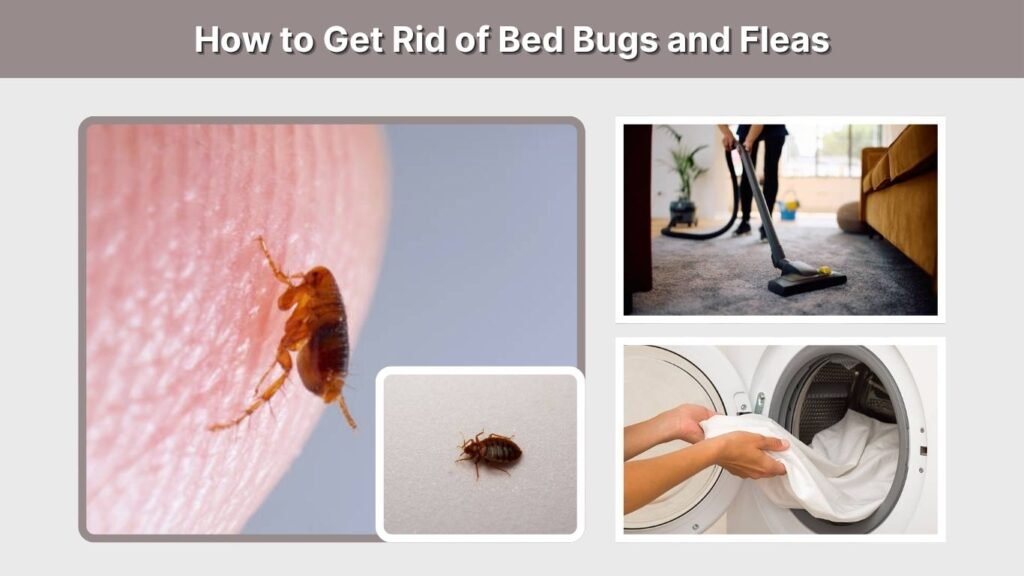
Eliminating the insects is necessary to stop repeated bites. Because bed bugs and fleas occupy different environments, their control methods are not identical.
Getting Rid of Bed Bugs
Inspect sleeping areas carefully and reduce clutter around beds. Dry suitable bedding and clothing on high heat for at least 30 minutes. Mattress encasements and bed-leg interceptors can support monitoring and control.
Persistent infestations often require professional pest management. Avoid relying on insect foggers alone, and never apply pesticides directly to your skin or bedding unless specifically permitted by the product label.
Getting Rid of Fleas
Treat all affected pets with veterinarian-recommended flea-control products. Vacuum carpets, upholstered furniture, and pet resting areas frequently.
Wash pet bedding and other washable fabrics regularly. Continue treatment and cleaning because flea eggs, larvae, and pupae may remain after adult fleas disappear.
Addressing both pets and the home environment is essential for successful flea control.
FAQs
1. How can I tell if bites are from bed bugs or fleas?
Check the bite locations and surrounding environment. Bed bug bites often affect exposed skin after sleeping, while flea bites commonly occur around ankles and lower legs. Finding the insects provides stronger evidence.
2. Are flea bites smaller than bed bug bites?
Flea bites often appear smaller, while bed bug bites may form larger welts. However, the size depends on individual skin reactions, so it cannot reliably identify the insect.
3. Can flea bites look exactly like bed bug bites?
Yes. Both can cause itchy bumps, swelling, and clustered marks. In some cases, they are visually indistinguishable without additional evidence.
4. Which is worse, bed bug bites or flea bites?
Both can cause discomfort and secondary skin infections. Bed bugs are not known to transmit diseases to humans, while certain fleas can spread infections. The actual risk depends on the circumstances.
5. Can bed bugs and fleas bite you in the same house?
Yes. Both infestations can exist simultaneously, particularly in homes with pets. Inspect bedding, furniture, carpets, and animals to determine whether one or both pests are present.