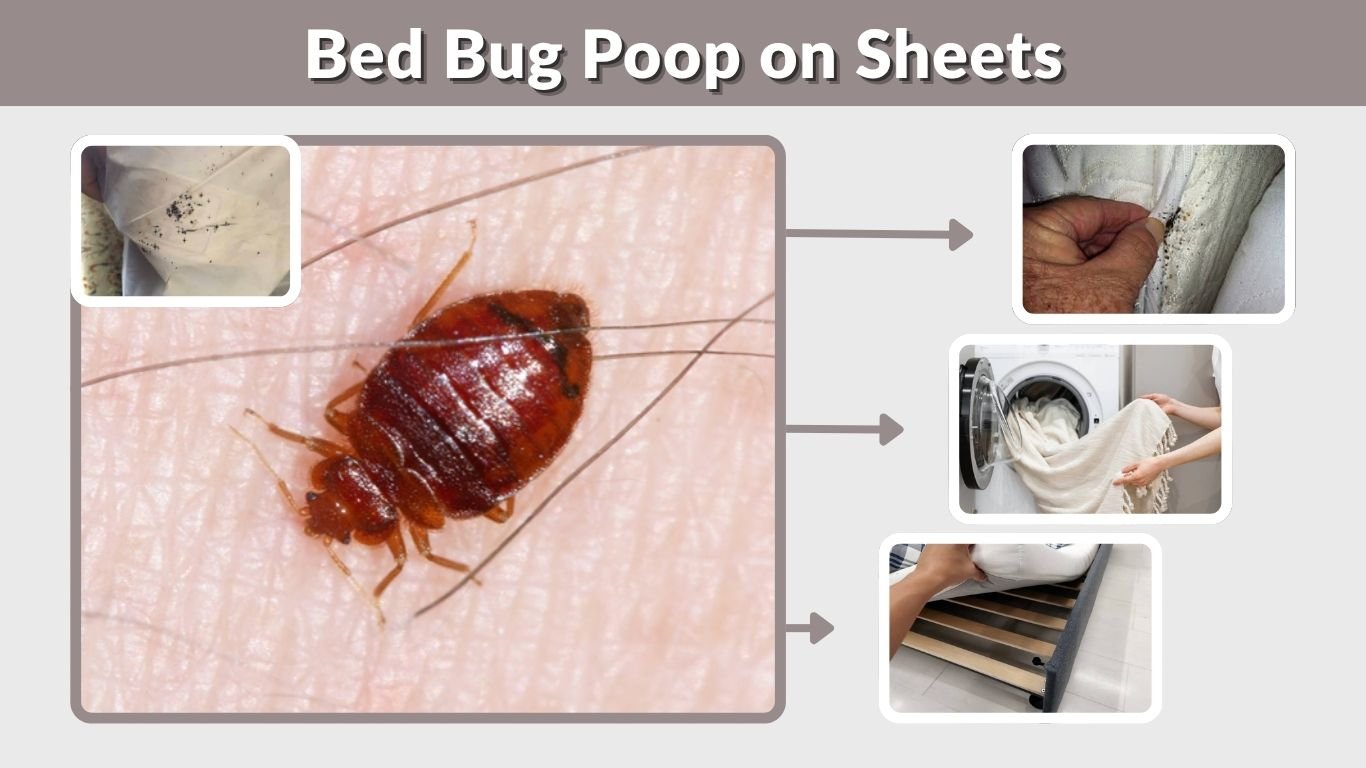
Have you noticed tiny black or reddish-brown spots on your bedsheets and wondered what caused them? These mysterious marks could be bed bug poop, one of the earliest visible signs of a possible infestation. Bed bug droppings often resemble small ink stains that soak into fabric, making them difficult to distinguish from dirt or other household marks. Understanding what bed bug poop on sheets looks like, where it appears, and how to remove the stains can help you recognize a potential problem and take appropriate action.
What Does Bed Bug Poop Look Like on Sheets?
Bed bug poop on sheets typically appears as tiny black, dark brown, or rusty-colored spots. Because bed bugs feed on blood, their waste contains digested blood that produces these distinctive marks. The droppings usually soak into absorbent fabrics, creating small ink-like stains rather than solid particles that can easily be brushed away.
Identification Features of Bed Bug Poop
Several characteristics can help you recognize possible bed bug droppings on bedding.
- Color: Black, dark brown, or reddish-brown.
- Shape: Tiny circular dots or irregular smears.
- Size: Usually pinpoint-sized, although stains can spread through fabric.
- Texture: Absorbed stains rather than hard pellets.
- Pattern: Individual marks or clusters of small dots.
- Location: Sheet folds, pillowcases, and areas near mattress edges.
Bed Bug Poop on White vs. Colored Sheets
On white sheets, bed bug droppings are often easier to notice because their dark color contrasts with the light fabric. They may resemble black ink dots or small rusty stains.
On dark or patterned sheets, these marks can be harder to identify. Using bright lighting and examining fabric folds carefully may reveal spots that would otherwise go unnoticed.
Early Bed Bug Poop Stains on Sheets
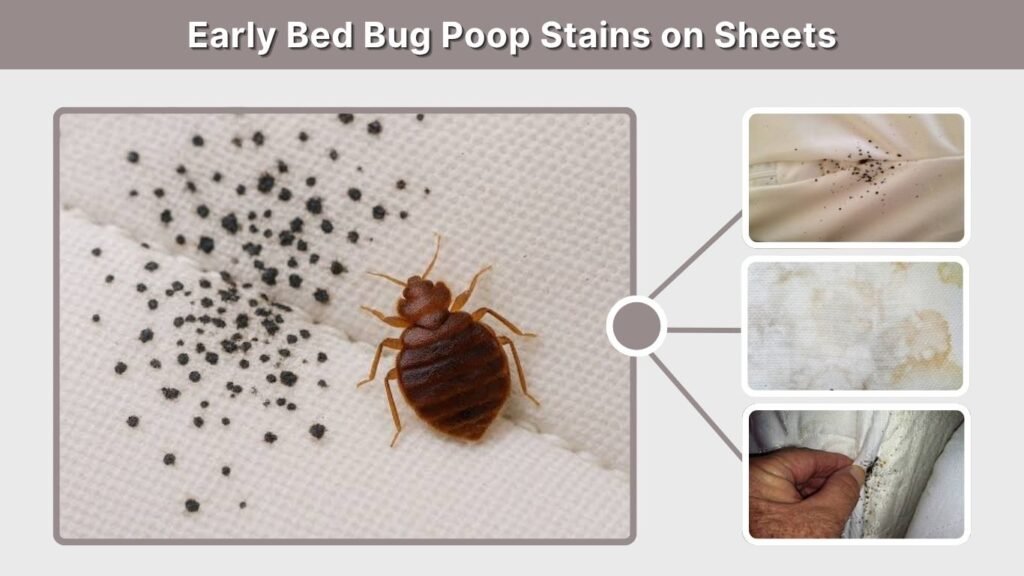
Early bed bug poop stains on sheets can be difficult to recognize because they may consist of only a few tiny marks. During a developing infestation, droppings might appear individually instead of forming noticeable clusters. However, stain quantity alone cannot determine infestation severity. Checking for additional physical evidence is essential before concluding that bed bugs are present.
Common Early Warning Signs
Several clues may suggest that suspicious stains are associated with bed bug activity.
- Scattered dark spots: A few black or brown dots appear on bedding.
- Rusty marks: Small reddish-brown stains develop in the fabric.
- Repeated staining: New spots appear after bedding has been cleaned.
- Nearby mattress stains: Similar marks occur along mattress seams.
- Other insect evidence: Shed skins, eggs, or live bed bugs are discovered.
Where Do Early Stains Usually Appear?
Bed bug droppings can appear anywhere on sheets, but marks near fabric folds and mattress edges deserve particular attention.
Bed bugs commonly hide in mattress seams, bed-frame joints, and headboard cracks during the day. Consequently, fecal spots may accumulate near these hiding places.
Pillowcases and fitted-sheet corners can also develop suspicious marks, although their location alone cannot confirm bed bugs.
Does Bed Bug Poop Smear on Sheets?
Yes, bed bug poop can smear, particularly when fresh or when moisture is applied to dried deposits. Because the waste contains digested blood, it may produce a rusty-brown mark when dampened.
However, several other substances, including flea dirt, can behave similarly. A smear test is therefore not a reliable method of confirming bed bugs.
Bed Bug Poop vs. Other Stains on Sheets
Not every black or brown mark on bedding comes from bed bugs. Blood stains, ordinary dirt, flea droppings, and mold can create similar discoloration. Understanding their differences may help narrow down possible causes. Nevertheless, the appearance of a stain should always be evaluated alongside other signs, particularly live insects, eggs, and shed skins.
Bed Bug Poop vs. Blood Stains
Bed bug poop generally appears as small, dark ink-like dots. Blood stains caused by crushed, recently fed bed bugs may be larger, brighter red, or more irregular.
Older blood stains can darken over time, making them harder to distinguish from fecal marks.
Both types of stains may occur on the same bedding, but neither proves an infestation without additional evidence.
Bed Bug Poop vs. Other Household Marks
| Stain type | Typical appearance | Main difference |
| Bed bug poop | Tiny dark dots or smears | Often absorbs into fabric |
| Flea dirt | Small black or brown grains | Often loose and granular |
| Blood stains | Red or rusty-brown spots | May form larger irregular marks |
| Mold | Dark patches or clusters | Often associated with moisture |
| Ordinary dirt | Gray, brown, or black marks | May brush away more easily |
Can Bed Bug Poop Look Like Mold?
Yes. Small clusters of bed bug droppings can resemble dark mold spots, especially on damp or stained bedding.
However, mold commonly develops in areas with persistent moisture, whereas bed bug fecal marks are often concentrated near insect hiding places.
Visual appearance alone may not reliably distinguish the two.
How to Remove Bed Bug Poop From Sheets
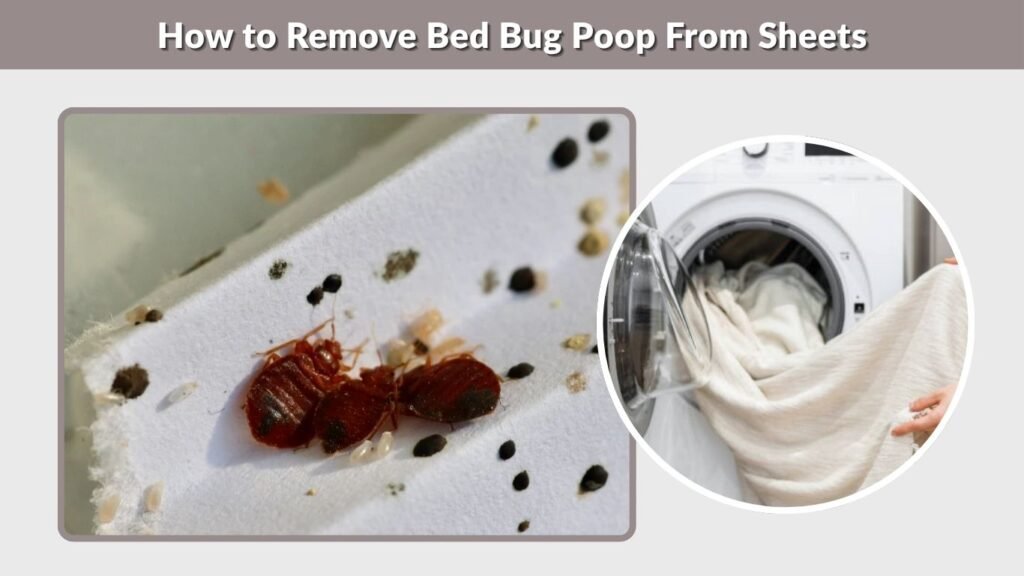
Removing bed bug poop stains requires careful washing and appropriate fabric treatment. Although some stains disappear with ordinary laundry products, older marks can remain embedded in the fibers. More importantly, cleaning stained bedding does not necessarily eliminate bed bugs hiding elsewhere. Proper laundering should be combined with inspection and pest-control measures whenever an infestation is confirmed.
Steps to Clean Bed Bug Poop Stains
Follow these steps to clean affected bedding safely.
- Contain the sheets: Place potentially infested bedding in a sealed bag before carrying it to the laundry area.
- Check the care label: Identify safe washing and drying temperatures.
- Pretreat the stains: Apply a suitable laundry detergent or fabric stain remover.
- Wash the sheets: Use detergent and the warmest water permitted by the care instructions.
- Dry thoroughly: For heat-tolerant materials, use a high-heat dryer cycle for at least 30 minutes to kill bed bugs and eggs.
- Inspect the fabric: Check whether stains remain and repeat appropriate stain treatment if necessary.
Does Bed Bug Poop Wash Out of Sheets?
Many bed bug fecal stains can be removed with detergent and pretreatment, particularly when they have not become deeply embedded in the fabric.
Older marks may require additional cleaning, and some discoloration can become permanent.
A remaining stain does not prove that live bed bugs are present, just as removing every stain does not guarantee the infestation has ended.
What to Do After Finding Bed Bug Poop on Sheets
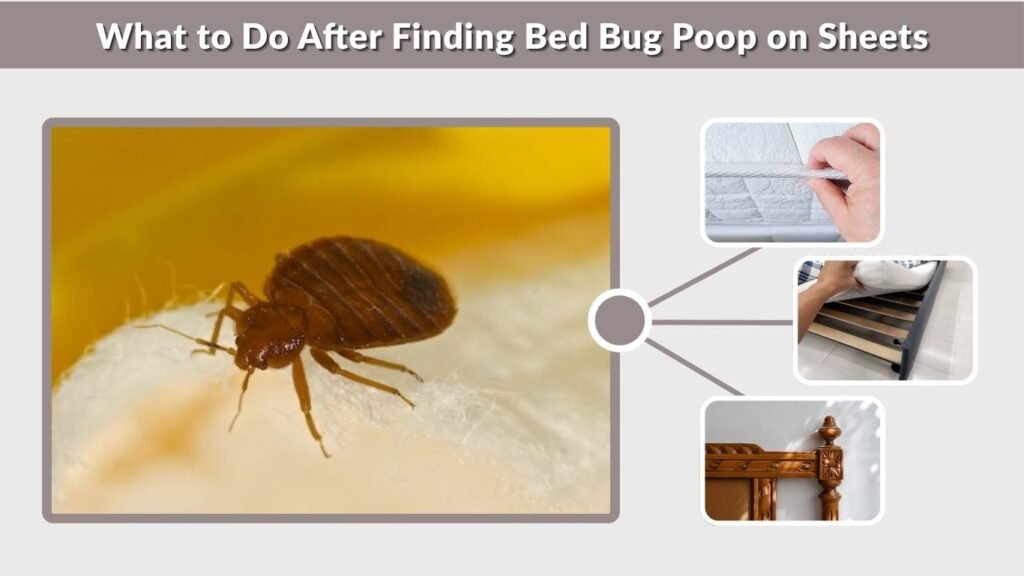
Finding suspicious stains should prompt a careful inspection rather than immediate panic or disposal of bedding. Bed bugs can hide in extremely narrow spaces, making them difficult to locate. If the marks are associated with an active infestation, identifying the insects and their hiding places is more important than repeatedly washing the affected sheets.
How to Inspect Your Bed for Bed Bugs
A systematic inspection can help determine whether suspicious stains are associated with bed bug activity.
- Mattress seams: Examine stitching, edges, and fabric folds.
- Bed frame: Inspect joints, screw holes, and narrow cracks.
- Headboard: Check concealed spaces behind and beneath it.
- Box spring: Look around seams, corners, and the underside.
- Nearby furniture: Examine drawers, joints, and crevices.
Look for live insects, pale eggs, shed skins, and additional dark fecal spots.
How to Prevent New Bed Bug Stains
If bed bugs are confirmed, consider using protective mattress encasements and interceptor traps under suitable bed legs.
Keep bedding away from the floor, reduce clutter, and avoid transferring potentially infested items between rooms.
An experienced pest-control professional can help establish an effective treatment plan when bed bug activity continues.
FAQs
1. Do Bed Bugs Poop on Sheets?
Yes. Bed bugs can leave tiny dark fecal stains on sheets, pillowcases, mattresses, and other surfaces near their hiding places.
2. Can One Bed Bug Leave Poop Stains on Sheets?
Yes. A single bed bug can produce fecal spots after feeding, although visible stains cannot reliably indicate the number of insects present.
3. Are Black Spots on Sheets Always Bed Bug Poop?
No. Dark spots may come from dirt, mold, ink, flea dirt, or other substances. Additional evidence is needed for identification.
4. Can Bed Bug Poop Stain Sheets Permanently?
Yes. Some older fecal stains can become deeply embedded in fabric and may remain visible after repeated cleaning.
5. Does Finding Bed Bug Poop Mean an Active Infestation?
Not necessarily. Old fecal marks can remain after bed bugs have been eliminated. Fresh activity or live insects provides stronger evidence.