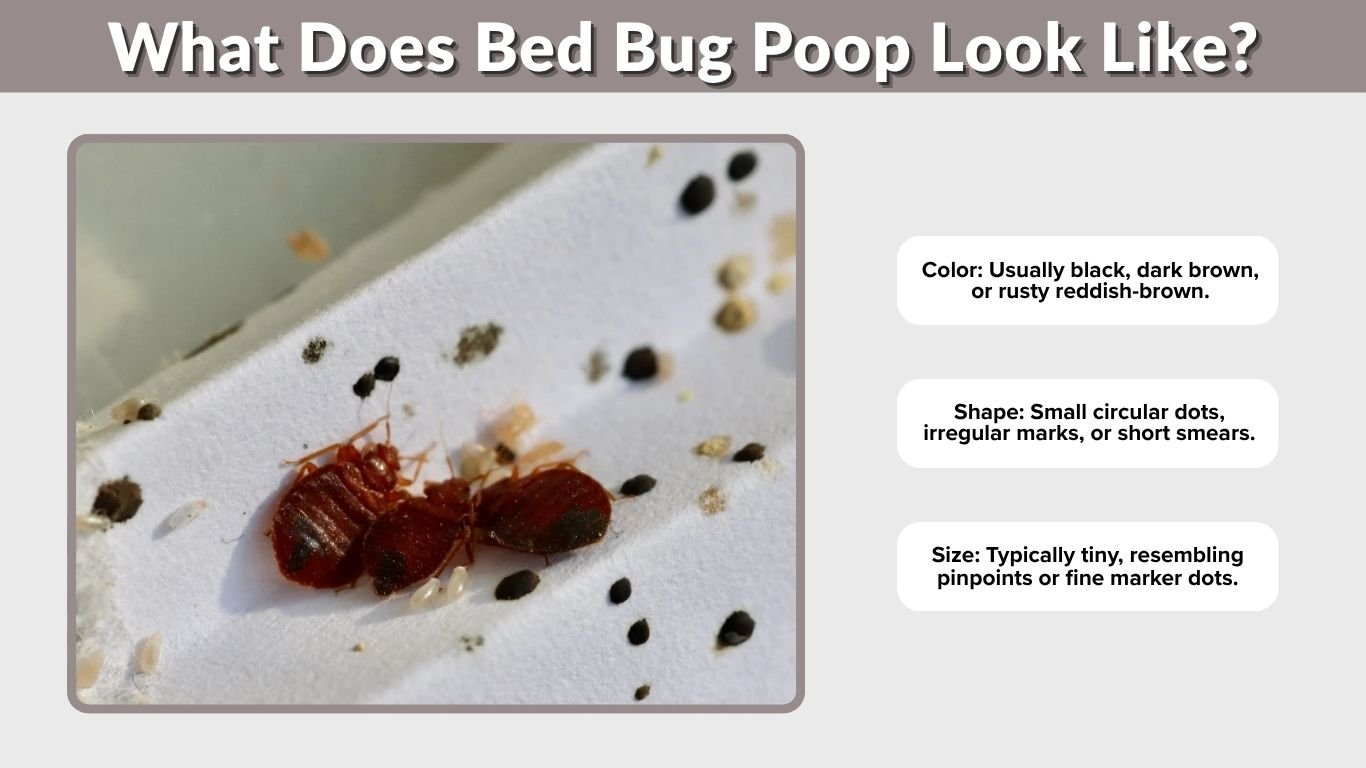
Have you discovered tiny black spots on your bedsheets, mattress, or wooden bed frame? You might be looking at bed bug poop, an important warning sign of a possible infestation. These droppings often resemble small ink dots or dark stains, making them easy to confuse with dirt, mold, or other insect waste. Understanding what bed bug poop looks like, how it feels, and where it appears can help you recognize suspicious marks and determine whether bed bugs are present.
What Does Bed Bug Poop Look Like?
Bed bug poop typically looks like tiny black, dark brown, or reddish-brown dots. These marks develop because bed bugs feed on blood and eliminate waste containing digested blood. Their droppings often resemble ink marks from a fine-point pen, especially on light-colored bedding. However, their appearance changes depending on the surface, moisture, and whether the waste has dried.
Identification Features of Bed Bug Poop
Several physical characteristics can help you recognize possible bed bug droppings.
- Color: Usually black, dark brown, or rusty reddish-brown.
- Shape: Small circular dots, irregular marks, or short smears.
- Size: Typically tiny, resembling pinpoints or fine marker dots.
- Texture: Absorbed stains on fabric or dried deposits on hard surfaces.
- Pattern: Individual spots or groups of dark marks near hiding areas.
- Location: Commonly around mattress seams, bed frames, and furniture joints.
Although these characteristics are useful, they cannot confirm an infestation without additional evidence.
How Big Is Bed Bug Poop?
Bed bug droppings are usually small enough to resemble tiny ink dots. Individual marks are often around a millimeter or less, although stains can spread wider when liquid waste penetrates absorbent materials.
On fabric, the edges may appear slightly blurred. On smooth surfaces, the deposits may remain more clearly defined.
Several droppings close together can create a larger, irregular dark patch.
What Does Bed Bug Poop Feel Like?
Bed bug poop generally does not feel like hard grains or solid pellets.
Fresh droppings are moist or semiliquid, while dried material can become firmly attached to a surface. On bedding, the waste usually penetrates fabric fibers, making it difficult to pick up with your fingers.
On metal, plastic, or polished wood, dried deposits may form slightly raised spots that can sometimes be wiped away.
Fresh vs. Dried Bed Bug Poop
Fresh bed bug droppings may appear moist, dark brown, or reddish-black. They can spread when touched because the material has not completely dried.
Older droppings often look darker and more settled into the surrounding material. Some may resemble faded ink marks.
However, the color and appearance of a stain cannot reliably establish how recently it was deposited.
What Does Bed Bug Poop Look Like on Different Surfaces?
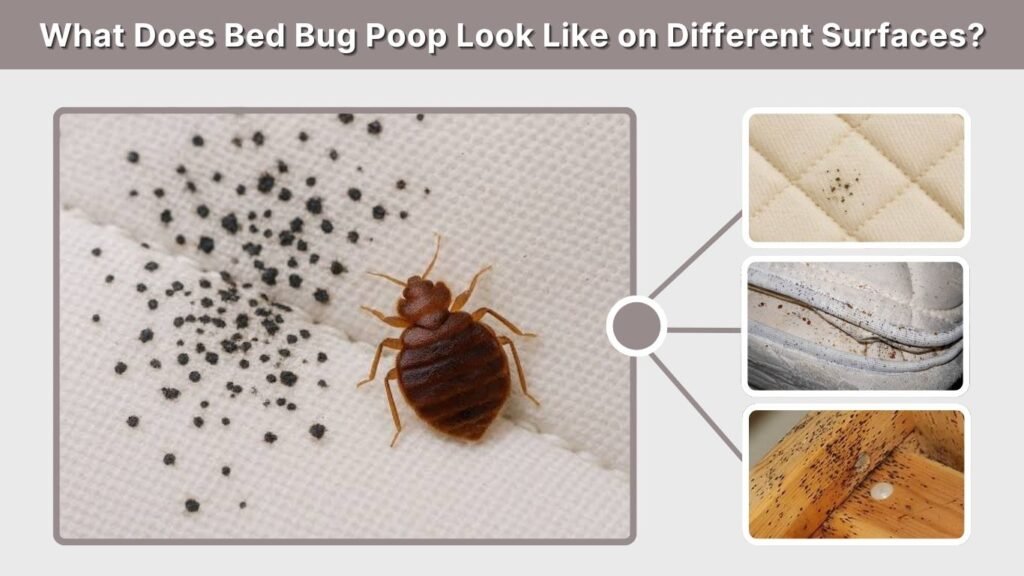
The appearance of bed bug poop depends heavily on where it lands. Absorbent materials, including cotton sheets and unfinished wood, may develop dark stains as waste penetrates the surface. Smooth materials often retain small deposits instead. Understanding these differences makes it easier to inspect bedding, furniture, walls, and other areas where bed bugs may hide.
What Does Bed Bug Poop Look Like on Sheets?
Bed bug poop on sheets usually appears as tiny black or reddish-brown dots resembling ink stains.
On white or light-colored sheets, the marks are often easy to notice. They may appear individually or form small clusters, especially near folds and areas where bed bugs have been active.
Unlike loose dirt, these marks may be absorbed into the fibers and remain visible after gentle brushing.
However, other stains can look similar, so dark dots alone do not prove that bed bugs are present.
What Does Bed Bug Poop Look Like on a Mattress?
On mattresses, bed bug droppings frequently appear as groups of dark spots along seams, stitching, piping, and fabric folds.
The marks may resemble tiny black ink dots pressed into the mattress covering. In areas with repeated bed bug activity, numerous spots can combine into darker patches.
Mattress edges and corners deserve particular attention because bed bugs often hide in narrow spaces during the day.
Check for pale eggs, shed skins, and live insects around suspicious marks.
What Does Bed Bug Poop Look Like on Wood?
Bed bug poop on wood commonly appears as black or dark brown dots near cracks, joints, and corners.
On unfinished wood, moisture from droppings may penetrate the surface and leave persistent discoloration.
On painted or polished wood, the deposits may remain as small, dark marks with relatively defined edges.
Inspect wooden headboards, bed frames, drawers, and furniture joints, especially those close to sleeping areas.
What Does Bed Bug Poop Look Like on Clothes and Walls?
On clothing, bed bug droppings may resemble small dark stains that have penetrated the fabric. Their appearance depends on the material’s color and absorbency.
On walls, they can look like scattered black dots or short brownish smears.
Such marks may appear near baseboards, wallpaper edges, and cracks around furniture. Nevertheless, wall stains can have many unrelated causes, so inspect carefully before identifying them as bed bug waste.
Bed Bug Poop vs. Other Insect Droppings and Stains
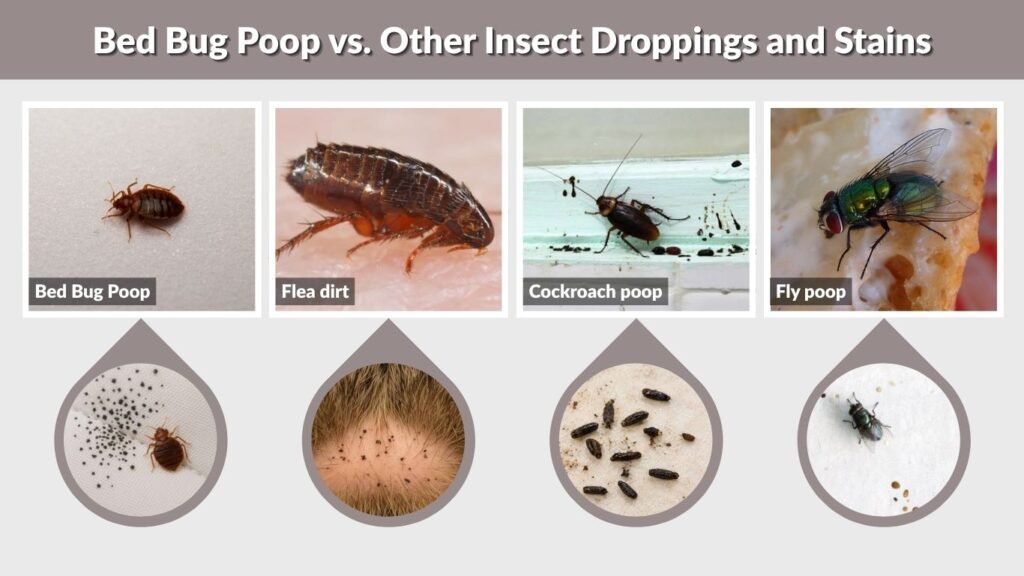
Many household substances resemble bed bug poop, particularly when viewed without magnification. Flea dirt, cockroach droppings, fly spots, mold, and ordinary debris can create similar dark marks. Comparing their physical characteristics and usual locations helps narrow down possible causes, although identifying the insect remains the most dependable way to determine the source.
Appearance Comparison Table
| Substance | What it looks like | Distinguishing feature |
| Bed bug poop | Dark ink-like dots and smears | Often stains fabric near bed bug hiding places |
| Flea dirt | Tiny black or brown grains | Loose granules may release reddish color when wet |
| Cockroach poop | Dark specks, grains, or smears | Appearance varies depending on cockroach size |
| Fly poop | Small dark spots | Often found on windows, walls, and exposed surfaces |
| Mouse poop | Solid, elongated dark pellets | Much larger and more structured than typical bed bug stains |
| Mold | Dark patches or scattered spots | Commonly associated with moisture and damp surfaces |
Does Bed Bug Poop Look Like Mold?
Yes, small clusters of bed bug droppings can resemble black mold spots.
However, mold often develops irregular patches on damp materials, while bed bug droppings are commonly concentrated around insect hiding locations.
Neither appearance nor a simple moisture test can always distinguish the two. Examine the surrounding conditions and look for additional evidence.
Does Bed Bug Poop Look Like Lint or Charcoal?
Bed bug poop generally does not resemble loose lint because it tends to adhere to or stain surfaces rather than forming soft fibers.
Charcoal dust can produce similarly dark marks, but it often consists of particles that transfer or scatter easily.
Bed bug fecal stains are frequently more localized and may soak into absorbent materials.
How to Tell if Black Spots Are Bed Bug Poop
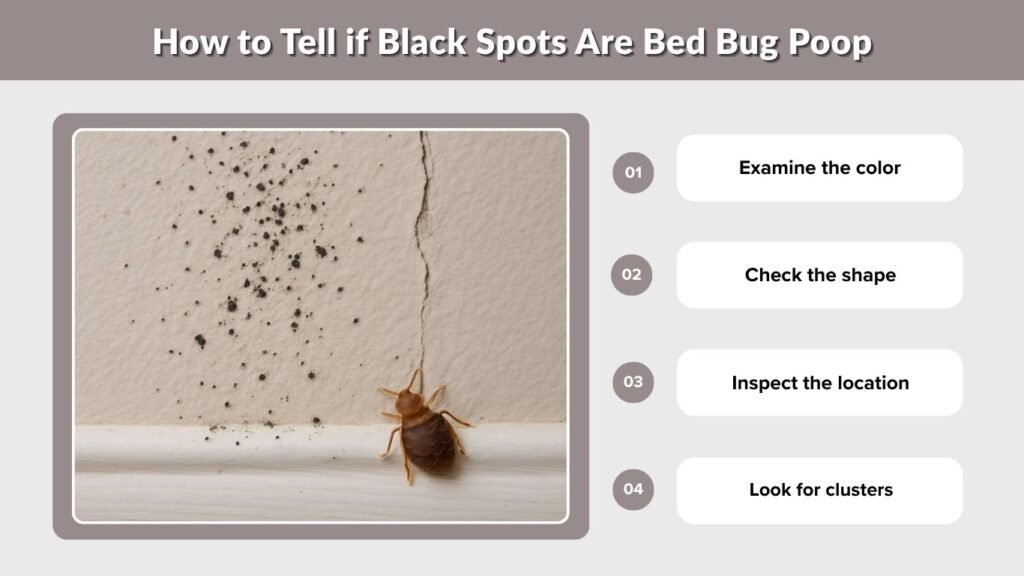
Finding suspicious black spots does not automatically mean your bedroom has bed bugs. Accurate identification requires examining the marks and searching nearby hiding areas for physical evidence. Because bed bug waste can resemble several other substances, multiple signs are more convincing than a single stain. A careful inspection is especially important when the spots are newly discovered.
Steps to Identify Bed Bug Droppings
- Examine the color: Look for black, dark brown, or rusty-brown marks.
- Check the shape: Identify tiny ink-like dots or irregular smears.
- Inspect the location: Focus on mattress seams, headboards, and furniture cracks.
- Look for clusters: Multiple nearby spots may indicate repeated insect activity.
- Search for additional signs: Check for live bed bugs, pale eggs, or shed skins.
- Document your findings: Photograph suspicious marks and monitor whether new ones appear.
Does Bed Bug Poop Smear When Wet?
Bed bug poop may produce a reddish-brown or rusty smear when dampened because it contains digested blood.
However, some other substances, especially flea dirt, can react similarly.
A smear test should therefore be treated as a supporting observation rather than a reliable confirmation method.
Does Old Bed Bug Poop Look Different?
Old bed bug poop may appear dry, dark, and firmly embedded in fabric or wood. Over time, stains can fade, spread from cleaning, or become less distinct. Fresh deposits may look darker or slightly moist, but these differences are inconsistent. You cannot determine whether droppings are two days or two months old simply by examining their color or size.
Can Old Bed Bug Poop Remain After an Infestation?
Yes. Bed bug fecal stains can remain on mattresses, wood, and other materials long after the insects are gone.
Finding old marks without live insects does not necessarily indicate an active infestation.
If you discover suspicious stains, monitor for fresh deposits and inspect nearby hiding places before drawing conclusions.
FAQs
1. What Color Is Bed Bug Poop?
Bed bug poop is generally black, dark brown, or reddish-brown. The color results from digested blood and may vary depending on moisture and the material being stained.
2. Does Bed Bug Poop Look Like Black Pepper?
Sometimes, especially on hard surfaces. However, bed bug waste frequently leaves adhered deposits or absorbed stains rather than the loose, grainy particles associated with black pepper.
3. Does Bed Bug Poop Have a Smell?
Individual droppings usually do not produce a noticeable odor. Heavy bed bug infestations may develop a distinctive musty or sweet smell, but odor alone is unreliable for identification.
4. Can You See Bed Bug Poop With the Naked Eye?
Yes. Bed bug droppings are typically visible as small dark dots, especially against white sheets, pale mattresses, and light-colored furniture.
5. Can Bed Bug Poop Look Like Blood Stains?
Yes. Fecal spots may appear rusty or reddish-brown because they contain digested blood. However, larger red stains can also result from bed bugs being crushed after feeding.