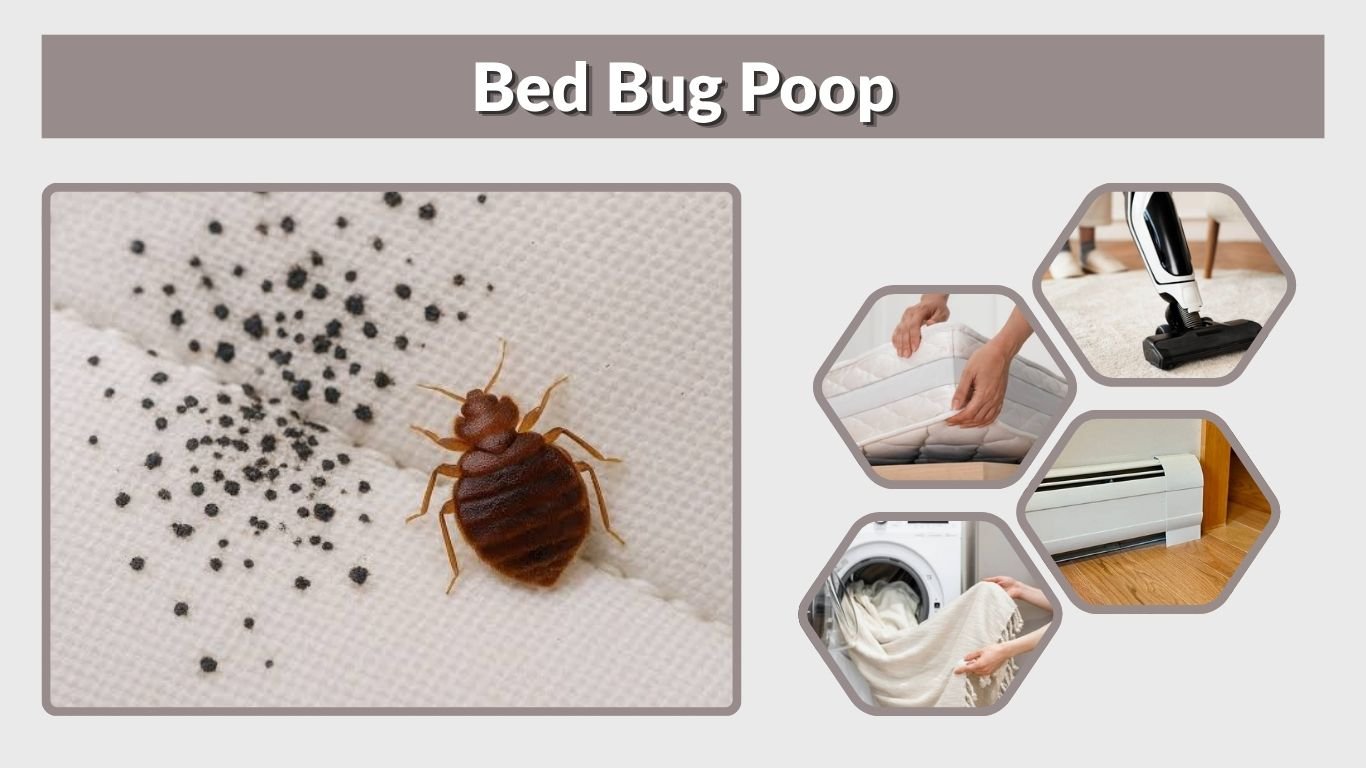
Have you noticed tiny black dots on your bedsheets, mattress, or bedroom walls? These mysterious marks might be bed bug poop, one of the most recognizable signs of a possible infestation. Bed bug droppings often resemble small ink stains and can appear in places where these insects hide or feed. However, not every dark spot indicates bed bugs. Understanding their color, texture, location, and appearance can help you identify suspicious stains and determine whether further inspection is necessary.
What Does Bed Bug Poop Look Like?
Bed bug poop usually appears as tiny black, dark brown, or reddish-brown spots. Because bed bugs feed on blood, their droppings contain digested blood that creates distinctive dark marks. These stains often resemble dots made by a fine-tip marker, particularly on light-colored fabrics. Their appearance can vary depending on the surface, the amount deposited, and whether the material absorbs moisture.
Color and Appearance
Fresh bed bug poop may look dark reddish-brown or almost black. As it dries, the marks generally become darker and more noticeable.
Common identification features include:
- Color: Black, dark brown, or rusty reddish-brown.
- Shape: Small, round dots or irregular smears.
- Size: Usually tiny, often resembling pinpoints or fine marker dots.
- Pattern: Scattered marks or clusters near hiding places.
- Texture: Stains absorbed into fabric or dried deposits on hard surfaces.
Is Bed Bug Poop Hard or Soft?
Bed bug droppings begin as liquid or semiliquid waste rather than hard pellets. On absorbent materials, they soak into the fibers and create lasting stains.
On nonabsorbent surfaces, the material may dry into a thin deposit. Unlike some other insect droppings, bed bug poop does not typically form firm, easily collected pellets.
Does Bed Bug Poop Smear?
Yes, bed bug poop can smear, particularly when fresh or when moisture is applied to dried deposits. A damp cloth may produce a rusty or brownish stain because the waste contains digested blood.
However, smearing alone cannot confirm bed bugs because several other substances behave similarly.
Where Can You Find Bed Bug Poop?
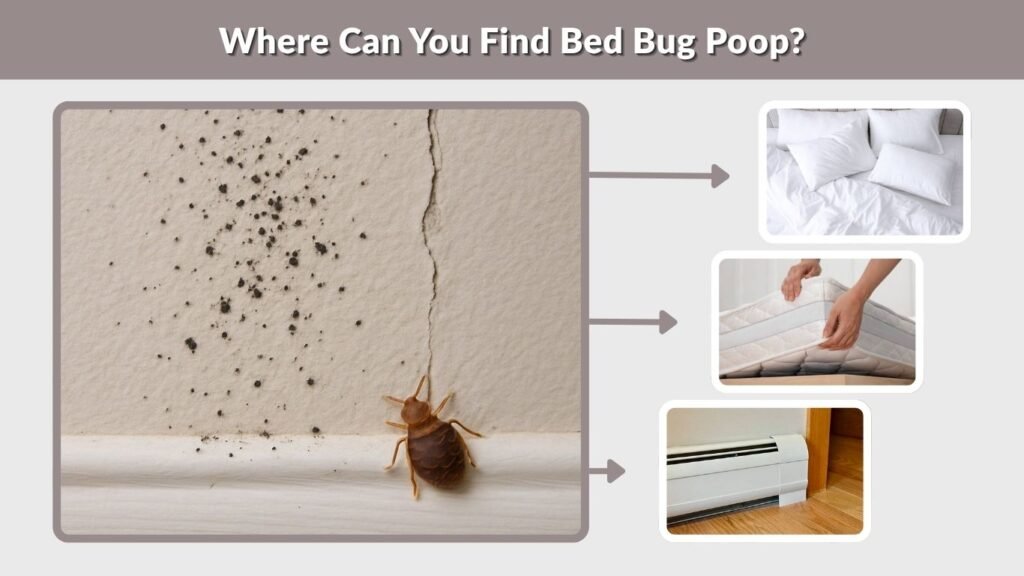
Bed bugs commonly leave droppings near feeding areas and daytime hiding places. Although beds are the most familiar location, fecal marks can also appear on furniture, walls, wooden structures, and other nearby surfaces. Knowing where to inspect helps distinguish suspicious stains from ordinary household dirt and identify areas that may require closer examination.
Bed Bug Poop on Sheets and Pillows
Bed bug poop on sheets generally appears as tiny dark dots, sometimes surrounded by faint reddish-brown discoloration.
On white bedding, the marks can resemble ink spots that have soaked into the fabric. They may occur individually or in small clusters.
Early bed bug stains on sheets can be difficult to recognize because they resemble other minor stains. Check pillowcases, sheet folds, and areas near mattress edges for additional evidence.
Bed Bug Poop on Mattresses and Beds
Mattress seams, piping, tags, and folds are common places to discover bed bug poop.
Dark spots may accumulate near stitching or inside narrow crevices where bed bugs hide during the day. As activity increases, multiple marks may become concentrated in these areas.
Inspect the box spring, headboard, and bed-frame joints as well. Finding droppings alongside shed skins, eggs, or live insects provides stronger evidence of an infestation.
Bed Bug Poop on Walls, Wood, and Baseboards
Bed bug poop on walls may appear as small black dots or short dark streaks, especially around cracks, loose wallpaper, and locations near beds.
On wood, droppings can collect around joints, screw holes, and unfinished surfaces. Absorbent wood may develop darker stains, while polished surfaces sometimes retain more visible deposits.
Baseboards and furniture edges are also important inspection areas.
Bed Bug Poop on Other Surfaces
Bed bug droppings can occasionally appear on metal bed frames, plastic furniture, books, carpeting, and clothing.
However, isolated dark spots on these materials do not establish an infestation. Their location and association with other bed bug evidence matter more than the presence of stains alone.
How to Identify Bed Bug Poop Correctly
Identifying bed bug poop involves examining its appearance, location, and surrounding evidence rather than relying on a single test. Other insects, mold, dirt, and ordinary stains can produce similar marks. A careful inspection can help determine whether the suspicious spots are consistent with bed bug activity or have another likely explanation.
How to Perform a Bed Bug Poop Smear Test
A simple damp-tissue test can provide useful clues.
- Locate a suspicious dark spot on a suitable surface.
- Photograph it before disturbing the area.
- Lightly touch the mark with a damp white tissue.
- Check whether the deposit transfers as a rusty-brown or reddish stain.
- Inspect the surrounding area for live bed bugs, eggs, or shed skins.
A rusty smear can suggest digested blood, but the test is not definitive. Flea dirt and certain other substances may produce similar results.
Bed Bug Poop vs. Other Household Stains
| Type | Typical appearance | Key difference |
| Bed bug poop | Tiny dark, ink-like spots | Often stains fabric near hiding places |
| Flea poop | Black or reddish-brown granules | Often resembles pepper and may turn reddish when wet |
| Cockroach poop | Dark specks, grains, or smears | Appearance varies by species and size |
| Fly poop | Small dark dots | Common on windows, walls, and elevated surfaces |
| Mold | Dark patches or clustered spots | May spread irregularly across damp materials |
These comparisons are helpful for screening, but they cannot replace identifying the insect itself.
How to Clean Bed Bug Poop and Stains
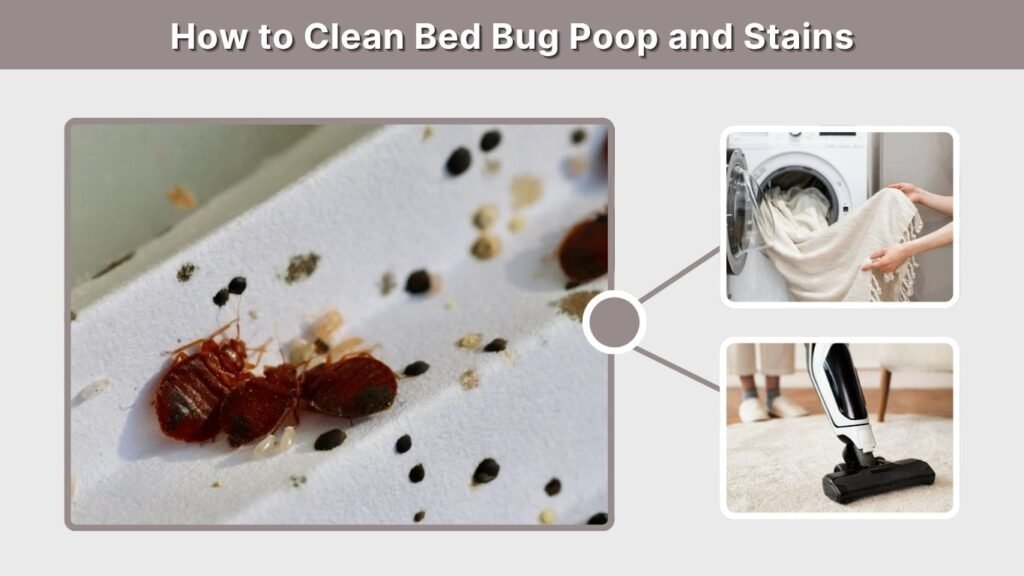
Removing bed bug poop can improve the appearance of bedding and furniture, but cleaning stains does not eliminate an infestation. Bed bugs and their eggs may remain hidden even after every visible mark disappears. Cleaning should therefore be combined with careful inspection, appropriate heat treatment, and further pest-control measures whenever an infestation is confirmed.
Removing Bed Bug Poop From Sheets
For washable bedding, begin by checking the fabric-care instructions. Pretreat visible stains with a suitable laundry detergent or stain remover.
Wash the material as directed, using a temperature safe for the fabric. When bed bugs are suspected, drying suitable items on high heat for 30 minutes can kill bed bugs and their eggs.
Avoid assuming that stain removal or washing alone has eliminated the insects.
Cleaning Mattresses, Walls, and Furniture
Use a vacuum with a crevice attachment to inspect and clean mattress seams, bed frames, and furniture joints.
Dispose of vacuum contents in a sealed bag outside the home. Gently clean washable hard surfaces with an appropriate cleaner, testing delicate finishes first.
Avoid soaking mattresses or using harsh chemicals. Excess moisture can damage materials, while some cleaning products may discolor fabric without removing embedded stains.
Preventing Additional Bed Bug Stains
After cleaning, continue examining bedding and furniture for new marks.
Consider using bed bug-proof mattress encasements and interceptor traps beneath bed legs. Reduce clutter, inspect nearby furniture, and avoid moving potentially infested belongings between rooms.
If live bed bugs or repeated fresh stains are discovered, seek an experienced pest-control professional. Treating the infestation is more important than repeatedly cleaning its visible evidence.
FAQs
1. Can You Find Bed Bug Poop but No Bed Bugs?
Yes. Bed bugs hide in narrow cracks, mattress seams, and furniture joints, making them difficult to locate. However, old stains can remain after an infestation has ended, and similar marks can have other causes.
2. Does Bed Bug Poop Turn Red When Wet?
Sometimes. Moistening bed bug fecal material may produce a rusty-red or brownish smear because it contains digested blood. This reaction is a clue, not a conclusive identification test.
3. Does Bed Bug Poop Wash Out of Sheets?
Some bed bug stains can be removed with detergent and appropriate stain treatment. Older marks may be more difficult to eliminate because the material has penetrated the fabric fibers.
4. Can Bed Bug Poop Be Detected With UV Light?
A UV flashlight is not a reliable standalone method for identifying bed bug poop. Suspicious marks may fluoresce differently depending on the material, while other substances can also react to ultraviolet light.
5. Does Bed Bug Poop Mean an Active Infestation?
Not necessarily. Fecal stains can remain long after bed bugs are gone. Fresh marks, live insects, eggs, and shed skins are more useful when evaluating whether an infestation remains active.