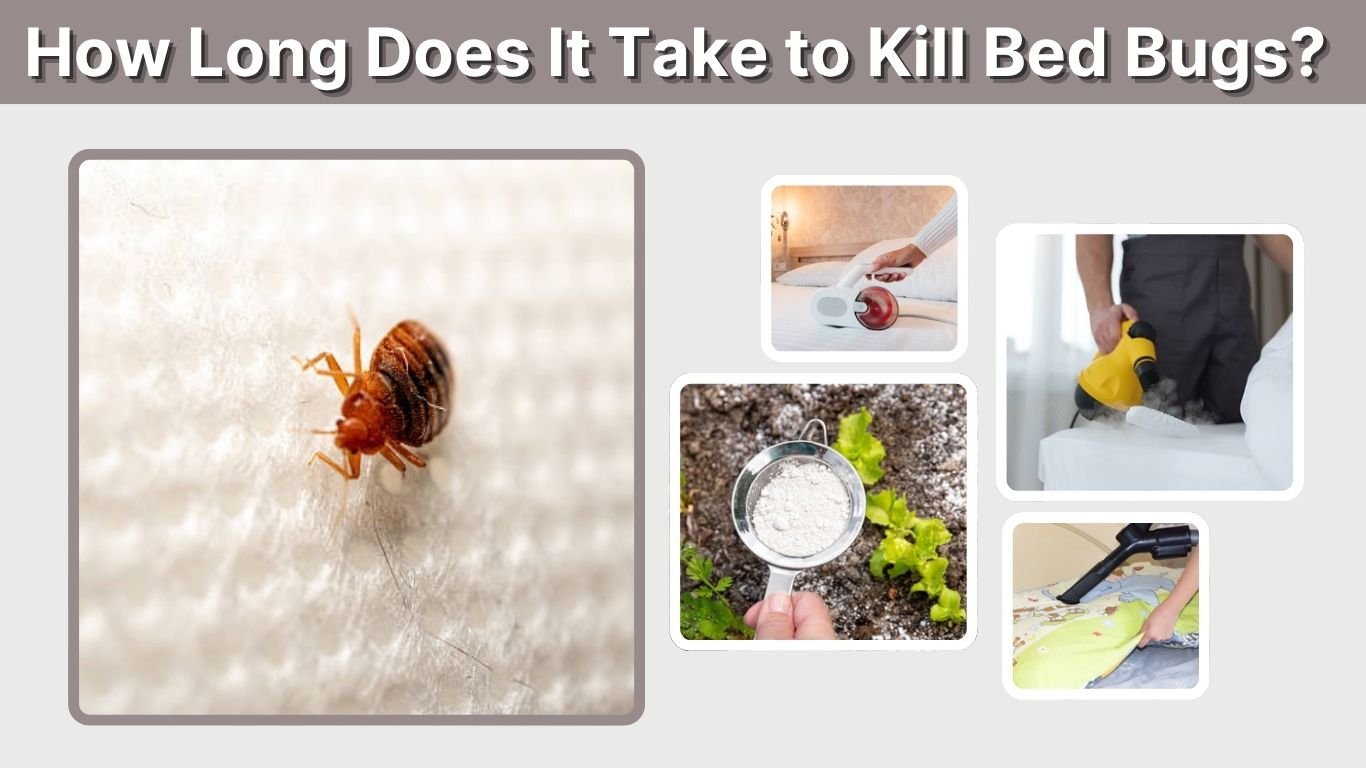
Bed bugs are stubborn household pests that can survive for months without feeding and hide deep inside mattresses, furniture, and wall cracks. If you’re dealing with an infestation, you might wonder how long it takes to kill bed bugs using heat, dryers, freezing, or insecticides. Some methods can kill them within minutes, while others require several days or weeks. Understanding the correct temperatures, treatment times, and limitations of nine proven bed bug control methods can help you eliminate these pests more effectively.
How Long Does It Take to Kill Bed Bugs?
The time needed to kill bed bugs depends on the treatment, exposure temperature, and whether the insects are adults, nymphs, or eggs. Direct heat is one of the fastest methods, while insecticidal dusts and other treatments work more gradually. Killing exposed bed bugs is also different from eliminating an infestation hidden throughout a home.
| Treatment Method | Approximate Time |
| Clothes dryer | 30 minutes on high heat |
| Professional heat treatment | At least 90 minutes at 120°F |
| Steam treatment | Seconds of adequate direct heat exposure |
| Freezing | At least 4 days at 0°F |
| Diatomaceous earth | Days to weeks or longer |
| Silica gel dust | 1–3 days after exposure in laboratory tests |
| Bed bug insecticides | Varies; follow label directions |
| Vacuuming | Immediate physical removal |
| Mattress encasements | Keep sealed for at least 1 year |
These times apply under appropriate treatment conditions. Completely eliminating an infestation can take several weeks or months.
9 Proven Methods to Kill Bed Bugs and How Long They Take
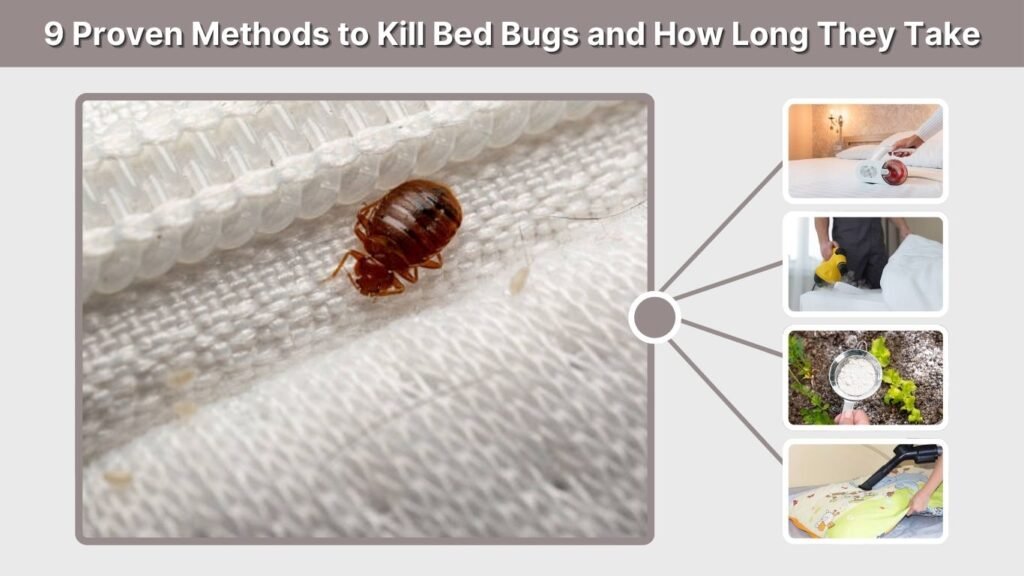
Different bed bug treatments work in different ways. Some use extreme temperatures to destroy insects and eggs, while others cause dehydration, deliver insecticides, or physically remove pests. Choosing the right method depends on where bed bugs are hiding, the materials being treated, and the severity of the infestation. Here are nine effective approaches and their expected treatment times.
1. How Long in a Dryer to Kill Bed Bugs?
Treatment time: 30 minutes on high heat
A clothes dryer is one of the quickest ways to kill bed bugs hiding in clothing, sheets, blankets, and other dryer-safe fabrics. According to the Environmental Protection Agency (EPA), 30 minutes of high heat kills bed bugs and their eggs.
For reliable results:
- Place infested clothing directly into the dryer using sealed bags for transport.
- Select the highest temperature the fabric safely tolerates.
- Run the dryer on high heat for at least 30 minutes.
- Avoid overloading the dryer, which can prevent even heating.
- Transfer treated items into fresh, sealed bags.
Washing alone may not kill every bed bug. The drying process is especially important because sustained heat can destroy all life stages.
2. How Long Does Heat Treatment Take to Kill Bed Bugs?
Treatment time: 90 minutes at 120°F once target areas reach that temperature
Professional heat treatment uses specialized equipment to raise temperatures in infested rooms, furniture, and other belongings.
EPA guidance recommends heating affected areas to at least 120°F (49°C) for 90 minutes to ensure bed bug eggs are killed. Higher temperatures can shorten the required exposure time.
However, the treatment process takes longer because furniture, mattresses, and hidden spaces must reach the target temperature.
Professional heating can treat multiple hiding places simultaneously, making it useful for extensive infestations. Ordinary household heaters, thermostats, and fireplaces cannot safely replace professional equipment because they may create fire hazards.
3. How Long Does Steam Take to Kill Bed Bugs?
Treatment time: Seconds of direct exposure at adequate temperature
Steam can kill bed bugs and eggs rapidly when sufficiently hot steam reaches them. It is particularly useful for mattress seams, upholstered furniture, carpets, and accessible cracks.
Cornell University recommends steam equipment capable of heating treated surfaces to approximately 160–180°F (71–82°C). Move the steamer slowly so heat can penetrate the material.
Steam treatment requires careful application because bed bugs hidden beneath thick fabrics may survive insufficient heating.
Avoid directing steam into electrical outlets or sensitive electronics. Although steam kills exposed bed bugs quickly, repeated inspections and treatments may be necessary because it leaves no residual protection.
4. How Long in a Freezer to Kill Bed Bugs?
Treatment time: At least 4 days at 0°F (-18°C) or colder
Freezing is another option for certain smaller objects that cannot tolerate high temperatures.
According to EPA guidance, maintaining temperatures around 0°F (-18°C) or colder for at least four days can kill bed bugs when items are properly exposed.
Effective freezing requires several precautions:
- Check the freezer temperature with a thermometer.
- Keep small items sealed in suitable bags.
- Ensure the center of each item reaches the necessary temperature.
- Allow extra time for thick or densely packed objects.
Freezing clothes, books, or other suitable belongings may help, but placing furniture outdoors during winter is unreliable because temperatures fluctuate.
5. How Long Does Diatomaceous Earth Take to Kill Bed Bugs?
Treatment time: Days to weeks, sometimes longer
Diatomaceous earth (DE) is a fine mineral-based dust that damages the protective outer coating of bed bugs, causing them to lose moisture and eventually die.
Unlike heat, diatomaceous earth does not kill bed bugs instantly. Its effectiveness depends on whether insects contact the dust, how much they encounter, and the surrounding conditions.
Some laboratory experiments have produced mortality within days, but real-world control may require weeks or even months.
Only use EPA-registered diatomaceous earth pesticides labeled for bed bugs. Apply strictly according to the product label, typically in permitted cracks and crevices. Do not use food-grade or pool-grade DE as a substitute, and avoid breathing the dust.
6. How Long Does Silica Gel Dust Take to Kill Bed Bugs?
Treatment time: Approximately 24–72 hours after adequate exposure in laboratory tests
Silica gel dust is another desiccant insecticide. Like diatomaceous earth, it removes moisture from the insects’ protective coating.
Research examining silica gel-based CimeXa found high bed bug mortality within 24–72 hours under controlled laboratory exposure conditions. Actual household treatment times can be considerably longer because insects must encounter the treated surfaces.
Silica gel dust can be particularly useful in inaccessible hiding areas when its label permits application.
It should never be scattered across bedding, clothing, or exposed surfaces unless the specific label expressly allows that use.
Dust treatments work best as part of a broader pest-management strategy rather than as the only solution.
7. How Long Does Bed Bug Insecticide Take to Work?
Treatment time: Product-dependent; complete control can take weeks
Chemical bed bug treatments vary considerably in their speed and effectiveness.
Products such as CrossFire, Temprid, Bedlam, and other registered insecticides have different active ingredients, application requirements, and residual effects.
Some insecticides kill directly exposed bugs relatively quickly, while others require additional contact or repeated treatment.
Many products also fail to kill all eggs. Newly hatched bed bugs may therefore remain after the initial application.
Always follow the product’s exact label for application, reentry, and retreatment instructions. If bed bugs remain, reassess the infestation rather than automatically applying more pesticide.
8. How Long Does Vacuuming Take to Remove Bed Bugs?
Treatment time: Immediate removal of accessible insects
Vacuuming provides immediate physical removal of visible bed bugs from mattress seams, bed frames, carpets, and furniture.
Use a vacuum with a crevice attachment to reach narrow hiding places. Move carefully around furniture joints, baseboards, and upholstery.
However, vacuuming does not reliably kill every collected insect and may fail to remove eggs firmly attached to surfaces.
Immediately empty the vacuum contents into a sealed plastic bag and dispose of it in an outdoor trash container.
Vacuuming helps reduce bed bug populations, but it cannot eliminate insects hidden deep within walls, mattresses, or inaccessible furniture.
9. How Long Do Mattress Encasements Take to Kill Bed Bugs?
Treatment time: Keep securely sealed for at least 12 months Bed bug-proof mattress encasements prevent trapped insects from escaping and feeding.
Because bed bugs can survive for months without a blood meal, starvation is considerably slower than heat treatment.
The EPA recommends keeping suitable protective encasements on mattresses and box springs for a full year. Choose a durable, fully zippered encasement specifically designed for bed bug protection.
Although encasements can eventually trap and kill insects inside, they do not eliminate bed bugs hiding in surrounding furniture, walls, or bed frames.
Combine them with appropriate treatment and regular monitoring.
How Long Do Household Remedies Take to Kill Bed Bugs?
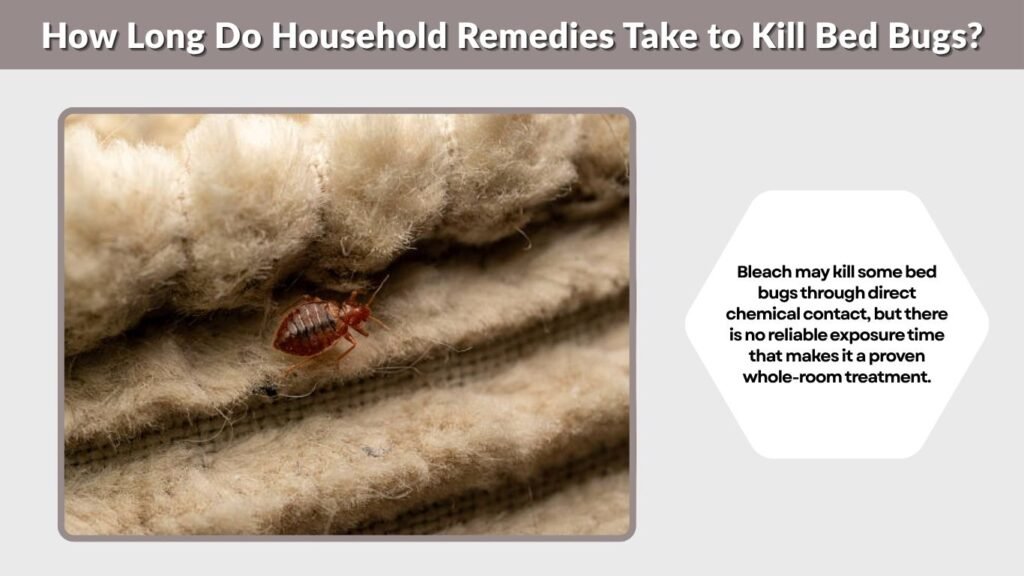
Household remedies frequently appear in online bed bug treatment advice. However, many lack reliable evidence for eliminating infestations, and some create unnecessary health risks. Products that kill an exposed insect are not necessarily effective against eggs or insects hiding in inaccessible spaces. Consider these limitations before attempting household treatments.
Does Bleach Kill Bed Bugs Quickly?
Bleach may kill some bed bugs through direct chemical contact, but there is no reliable exposure time that makes it a proven whole-room treatment. It can damage fabrics, irritate the skin and respiratory system, and create dangerous fumes when mixed with other cleaning chemicals. Bleach is not recommended as a bed bug control method.
How Long Does Baking Soda Take to Kill Bed Bugs?
There is no reliable scientific evidence establishing a treatment time for baking soda to eliminate bed bugs. Claims that it consistently dehydrates or destroys them are unsupported. Sprinkling baking soda around mattresses or floors should not replace established pest-control methods.
Does Rubbing Alcohol Kill Bed Bugs?
Rubbing alcohol may kill directly contacted insects, but it evaporates rapidly and cannot reliably reach hidden populations or eggs. More importantly, rubbing alcohol is highly flammable. The EPA warns against using it as a bed bug treatment because of documented fire risks.
What About Vinegar, Borax, and Ozone?
Vinegar and household borax have no established, reliable treatment time for eliminating bed bug infestations. Ozone generators are also not recommended as a household solution because ozone exposure can damage the lungs, and effectiveness against hidden bed bugs is unreliable.
FAQs
1. How long should I dry clothes to kill bed bugs?
Dry bed bug-infested clothing on high heat for at least 30 minutes, provided the fabric can safely tolerate the temperature. Avoid overloading the dryer so hot air can circulate effectively. After treatment, transfer clothing into clean, sealed bags to prevent bed bugs from reinfesting the items.
2. How long does it take to kill bed bugs at 120 degrees?
EPA guidance recommends at least 90 minutes of exposure at 120°F (49°C) for heat treatment, including bed bug eggs. The temperature must reach the insects’ actual hiding places, not merely the surrounding air. Large furniture and densely packed belongings may require additional heating time.
3. How long does it take to freeze bed bugs to death?
Bed bugs can be killed through freezing when items are held at approximately 0°F (-18°C) or colder for at least four days after reaching the required temperature. Household freezers sometimes fluctuate, so checking the temperature and allowing additional time for thick objects is important.
4. Can bed bugs die in a hot car?
Bed bugs can die in a hot car if temperatures become sufficiently high for long enough. However, parked-car temperatures vary with the weather, sunlight, and location inside the vehicle. Mattresses, luggage, and packed objects may remain cooler internally. Therefore, a hot car is not a dependable treatment method.
5. How long does it take to completely get rid of bed bugs?
Completely eliminating bed bugs can take several weeks to months, depending on infestation severity and treatment effectiveness. Heat can kill exposed insects rapidly, but hidden bugs or surviving eggs may require additional control measures. Continue inspecting treated areas at least weekly and seek professional assistance for persistent infestations.