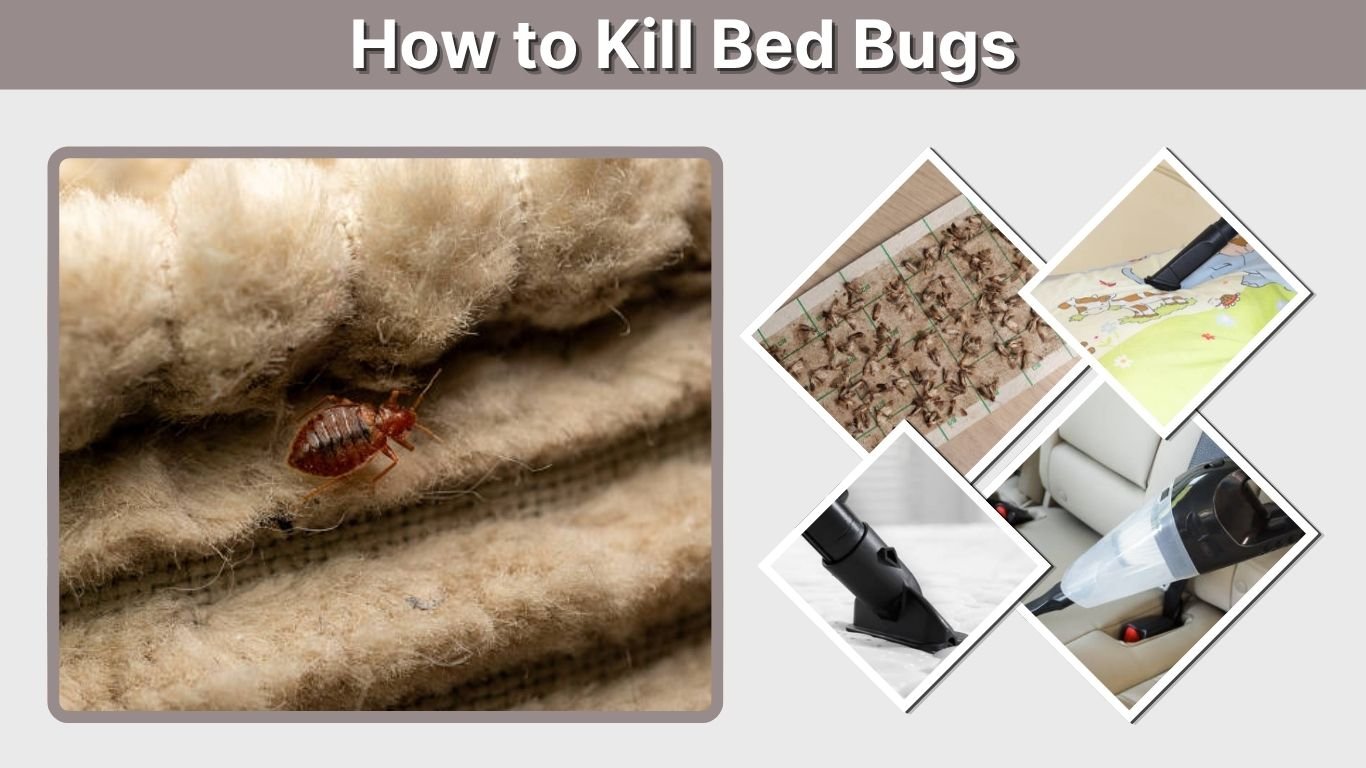
Bed bugs are tiny, blood-feeding insects that hide in mattresses, furniture, bedding, and narrow cracks around the home. Once an infestation develops, eliminating these pests can become challenging. Fortunately, several proven methods can help kill bed bugs and prevent them from returning. Heat treatment, steam cleaning, vacuuming, and properly selected pesticides are among the most effective options. This guide explains how to kill bed bugs at home, treat infested clothing and furniture, and eliminate hidden insects safely.
9 Effective Methods to Kill Bed Bugs at Home
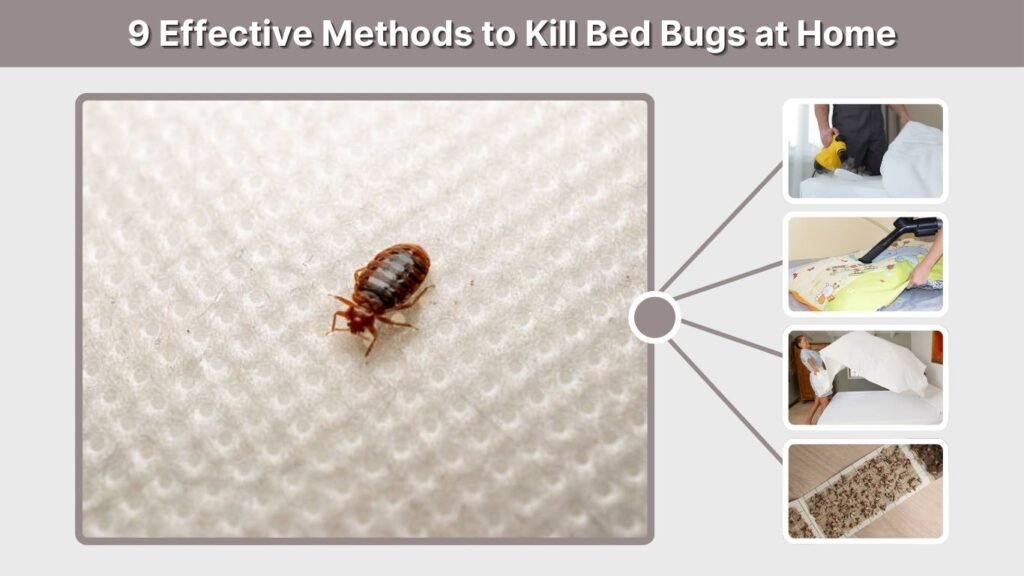
Killing bed bugs requires more than spraying visible insects. These pests hide in mattress seams, bed frames, furniture joints, and other difficult-to-reach locations. Their eggs can also survive treatments that kill adult insects. Combining several control methods usually produces better results than relying on a single treatment. Here are nine effective approaches to consider.
1. Identify and Isolate Infested Areas
Before treatment, inspect the areas where bed bugs commonly hide. Look for live insects, tiny pale eggs, shed skins, dark fecal spots, and reddish stains on bedding.
Pay particular attention to:
- Mattress seams and box springs
- Bed frames and headboards
- Furniture joints and cracks
- Upholstered chairs and couches
- Baseboards near sleeping areas
Place infested clothing and washable fabrics in sealed bags before moving them. This prevents bed bugs from spreading into other rooms during treatment.
2. Kill Bed Bugs on Clothes Using a Dryer
A clothes dryer is one of the easiest ways to kill bed bugs hiding in washable fabrics. High temperatures can eliminate adults, young bed bugs, and eggs when the items receive adequate heat.
Place suitable clothing, bedding, and other fabrics in the dryer on high heat for at least 30 minutes. Avoid overloading the machine so heat can circulate effectively.
Washing clothes alone may not kill every bed bug. After treatment, store clean items in fresh, sealed bags until the infested area has been controlled.
3. Use Steam to Kill Bed Bugs
Steam treatment is particularly helpful for mattresses, upholstered furniture, carpets, and bed frames. A suitable steam cleaner can deliver lethal heat to insects hiding near treated surfaces.
For effective treatment, the surface immediately after steaming should generally reach approximately 160–180°F (71–82°C).
Move the steam attachment slowly across seams and crevices. Avoid narrow, high-pressure nozzles that could scatter insects.
Allow treated materials to dry completely. Keep steam away from electrical outlets, and test delicate fabrics before treatment.
4. Vacuum Bed Bugs From Hidden Areas
Vacuuming removes visible bed bugs, shed skins, and some eggs from accessible surfaces. Although it rarely eliminates an infestation independently, it helps reduce the population.
Use a vacuum attachment along mattress seams, furniture edges, carpet borders, and cracks around the bed.
Immediately after vacuuming, seal the collected contents in a plastic bag and dispose of them outdoors. Clean the vacuum carefully to prevent surviving insects from escaping.
Repeat vacuuming as part of a broader treatment plan.
5. Install Bed Bug Mattress Encasements
Bed bug-proof mattress and box spring encasements create barriers around common hiding places.
A properly installed encasement traps insects already inside and prevents additional bed bugs from entering those enclosed areas.
Choose an encasement specifically designed for bed bugs, with a secure zipper and durable fabric.
Keep it installed according to the manufacturer’s instructions, often for at least a year. An encasement does not kill bed bugs hiding elsewhere, so additional treatment remains necessary.
6. Use Bed Bug Interceptor Traps
Interceptor traps are small devices placed beneath bed or furniture legs. They capture bed bugs attempting to climb onto or leave furniture.
These traps are especially useful for monitoring infestation activity after treatment.
Move the bed slightly away from the wall and prevent bedding from touching the floor.
Inspect interceptors regularly. Although they do not eliminate every insect, they help reveal whether bed bugs remain active and whether treatment is working.
7. Freeze Small Infested Items
Freezing can kill bed bugs when sufficiently low temperatures are maintained for long enough.
For suitable items, use a freezer capable of maintaining 0°F (-18°C) or colder. Keep items sealed and allow at least four days of exposure after their contents reach the target temperature.
Use a thermometer to verify freezer conditions.
Freezing may work for certain small belongings, but household freezers can vary considerably. Leaving items outside during cold weather is not a dependable alternative.
8. Apply Registered Bed Bug Pesticides
Pesticides may help eliminate bed bugs hiding in cracks and difficult-to-access locations.
Choose a pesticide registered for bed bug control and approved for the intended treatment area. Always follow its label directions.
Some products contain desiccants, such as pesticide-grade diatomaceous earth, which gradually dehydrate insects.
However, desiccants may take weeks or longer to control an infestation. Never spread food-grade or pool-grade diatomaceous earth around sleeping areas, and avoid inhaling pesticide dust.
9. Consider Professional Heat Treatment
Professional heat treatment can be effective when bed bugs have spread throughout multiple rooms.
Specialized equipment raises temperatures throughout infested spaces while technicians monitor conditions in hiding areas.
As a general treatment target, exposing infested materials to at least 120°F (49°C) for 90 minutes can help ensure bed bug eggs are killed.
Do not attempt whole-room heating with space heaters, ovens, or fireplaces. These approaches are unreliable and can create serious fire hazards.
How to Kill Bed Bugs on Mattresses, Couches, and in Cars
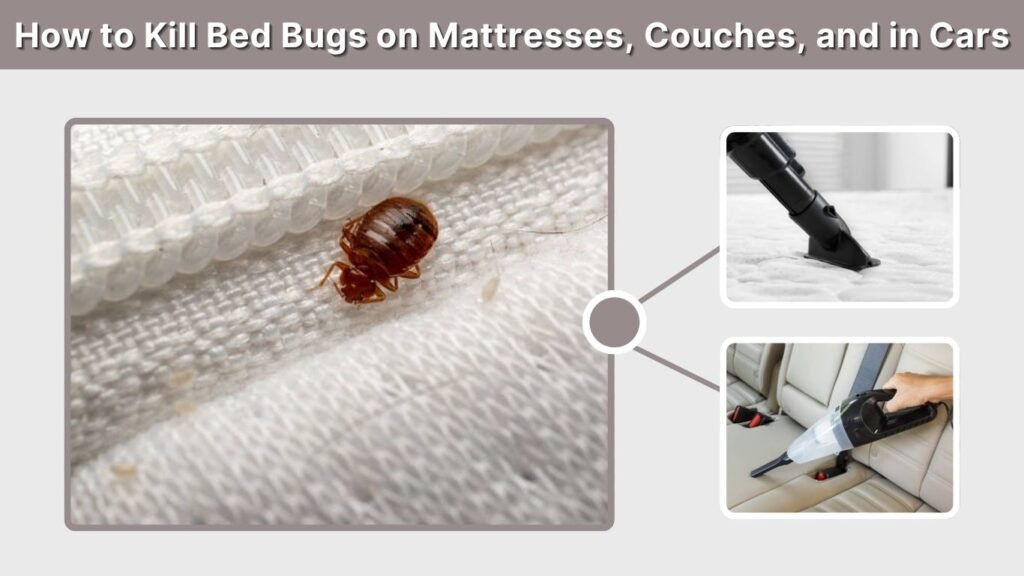
Mattresses, couches, and vehicles contain narrow hiding spaces where bed bugs can survive unnoticed. Treating these areas requires careful inspection and appropriate equipment. Steam cleaning, vacuuming, and targeted professional treatments can reduce infestations without unnecessarily discarding furniture. The correct approach depends on the item’s material, accessibility, and severity of the infestation.
How to Kill Bed Bugs on a Mattress
Start by inspecting mattress seams, labels, and edges. Vacuum accessible insects and use a suitable steamer on compatible surfaces.
After the mattress dries, install a bed bug-proof encasement.
Inspect and treat the bed frame and surrounding areas as well. Avoid applying pesticides directly to sleeping surfaces unless the product label specifically permits that use.
How to Kill Bed Bugs on a Couch
Inspect cushion seams, folds, underneath the furniture, and joints in the frame.
Vacuum accessible areas thoroughly and use steam on suitable upholstery.
Check removable cushions and nearby furniture for additional activity. Heavily infested couches may require professional treatment because insects can hide deep inside the structure.
How to Kill Bed Bugs in a Car
Check seat seams, floor mats, and upholstery folds. Vacuum thoroughly and inspect luggage or other belongings that may have introduced the insects.
A suitable steamer may help treat compatible interior materials.
Do not rely on parking the vehicle in sunlight. Interior temperatures may not remain lethal throughout every hiding location.
Which Home Remedies Do Not Kill Bed Bugs Reliably?
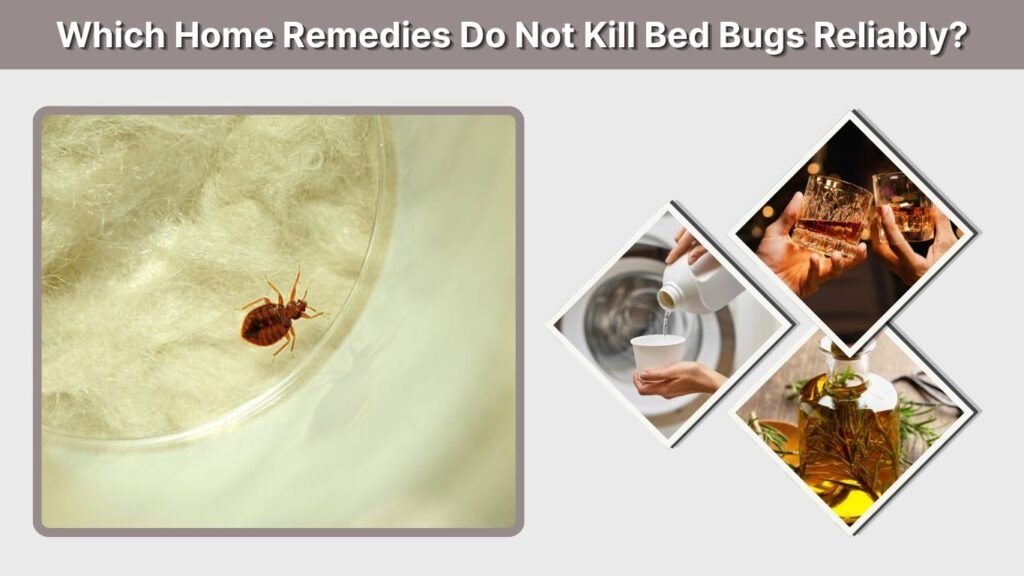
Many homemade treatments promise quick bed bug elimination, but evidence supporting their effectiveness is limited. Some methods only affect insects contacted directly, leaving eggs and hidden populations untouched. Others create unnecessary health or fire risks. Understanding these limitations can prevent unsuccessful treatments and help homeowners focus on methods with stronger evidence.
Vinegar, Baking Soda, and Essential Oils
Vinegar may affect insects contacted directly, but it is not a reliable infestation treatment. Baking soda has not been demonstrated to eliminate established bed bug populations.
Lavender oil and other essential oils are also unreliable substitutes for proven treatment methods.
Bleach, Alcohol, and Bug Bombs
Avoid spraying rubbing alcohol or bleach to control bed bugs. These substances introduce hazards and do not reliably eliminate hidden infestations.
Rubbing alcohol is particularly dangerous because it is highly flammable.
Bug bombs are also poor standalone solutions because their chemicals frequently fail to reach bed bugs concealed in cracks and furniture.
FAQs
1. How Can You Kill Bed Bugs Fast?
The fastest practical approach is to combine high-heat drying for clothing, thorough vacuuming, targeted steam cleaning, and appropriate treatment of hiding places. Professional pest control may provide stronger results for larger infestations. However, killing visible bed bugs quickly does not guarantee that hidden insects and eggs have been eliminated.
2. How Long Does It Take to Kill Bed Bugs?
Individual bed bugs can die quickly when exposed to sufficient heat or direct steam treatment. Eliminating an entire infestation may take several weeks or months, depending on its severity. Hidden eggs, untreated areas, and surviving insects can require repeated treatment and regular monitoring before complete elimination is confirmed.
3. How Hot Does It Need to Be to Kill Bed Bugs?
Heat treatment effectiveness depends on both temperature and exposure time. A commonly recommended target is at least 120°F (49°C) maintained for 90 minutes throughout the treated material to address eggs. Professional treatments must ensure that hidden insects also receive sufficient heat. Simply warming a room does not achieve the same result.
4. How Long Should Clothes Stay in the Dryer to Kill Bed Bugs?
Clothing and bedding should generally remain in a dryer on high heat for at least 30 minutes. The items must be suitable for this setting, and the load should allow sufficient heat circulation. If items are wet, ensure the full high-heat treatment time is achieved rather than counting only the drying process.
5. Can You Kill Bed Bugs Naturally Without Chemicals?
Yes, nonchemical methods such as properly applied heat, steam, freezing, vacuuming, and bed bug-proof encasements can help control bed bugs. However, no single method reliably reaches every hiding place. Severe infestations may require professional assistance and an integrated treatment strategy that combines physical control with appropriately selected pesticides.