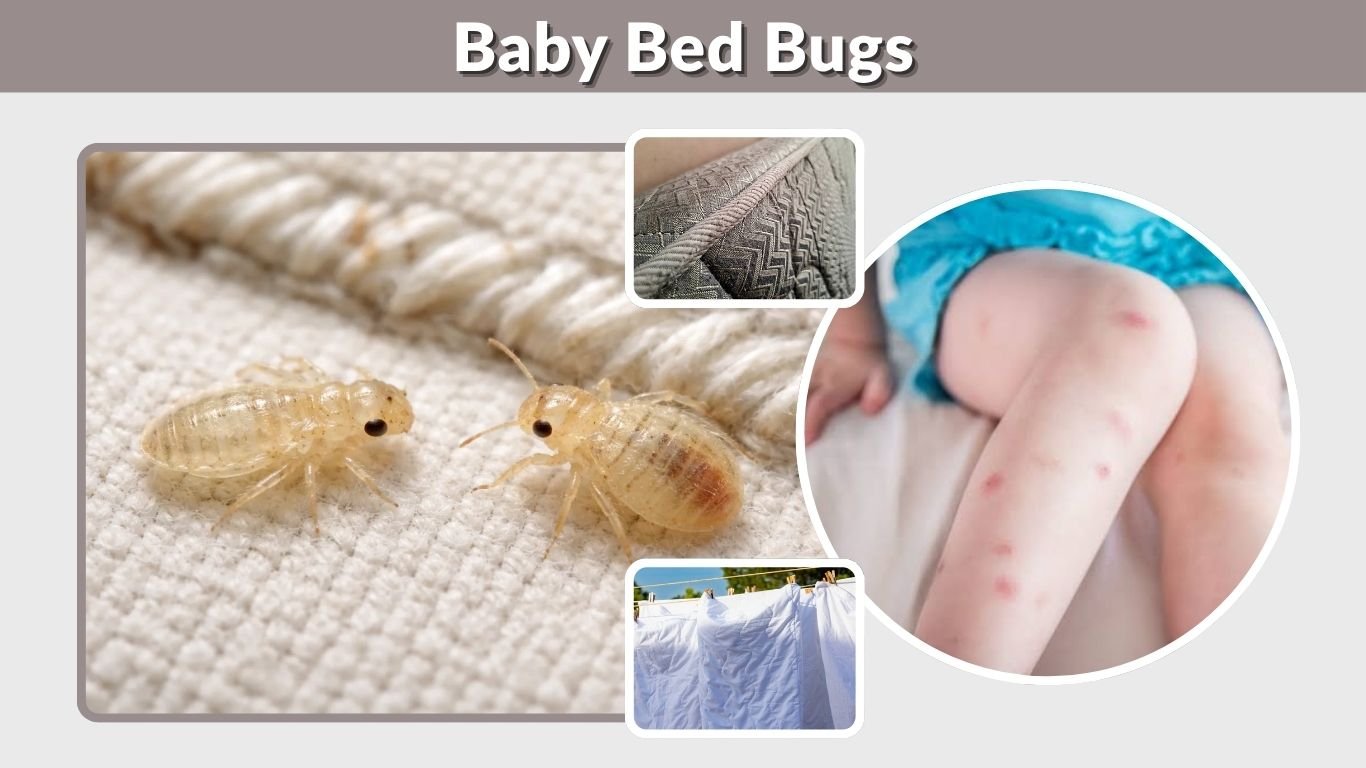
Baby bed bugs, properly called nymphs, are tiny, pale versions of adult bed bugs that begin feeding on blood soon after hatching. Newly hatched nymphs can be difficult to notice because they are only about 1.5 mm long and may appear translucent or whitish-yellow before feeding. After a blood meal, their abdomen becomes noticeably redder and easier to see. Learning what baby bed bugs look like, where they hide, how they develop, and how they bite can help you detect an infestation much earlier.
What Do Baby Bed Bugs Look Like?
Baby bed bugs resemble miniature adult bed bugs rather than worms or larvae. They have six legs, antennae, a flattened oval body, and no functional wings. Their small size and pale coloration make the youngest nymphs difficult to notice against light-colored mattresses, bedding, and furniture. Their appearance changes noticeably after they take a blood meal.
Baby Bed Bug Identification
Common identification features include:
- Approximately 1.5 mm long when newly hatched
- Six visible legs
- Two antennae
- Flat, oval body when unfed
- Whitish-yellow or nearly translucent coloration
- Darker yellow-brown coloration in later stages
- Bright or dark red abdomen after feeding
- No functional wings
- Similar overall shape to an adult bed bug
The EPA lists first-stage nymphs at about 1.5 mm, with later stages increasing progressively to around 4.5 mm before adulthood.
What Color Are Baby Bed Bugs?
An unfed baby bed bug can look almost clear, pale yellow, or whitish. This is why people sometimes describe baby bed bugs as white.
After feeding, blood becomes visible through the relatively translucent body, making a young bed bug appear bright red or reddish-brown.
They do not naturally start life as solid black bugs. Older nymphs gradually become darker and resemble adult bed bugs more closely.
How Small Are Baby Bed Bugs?
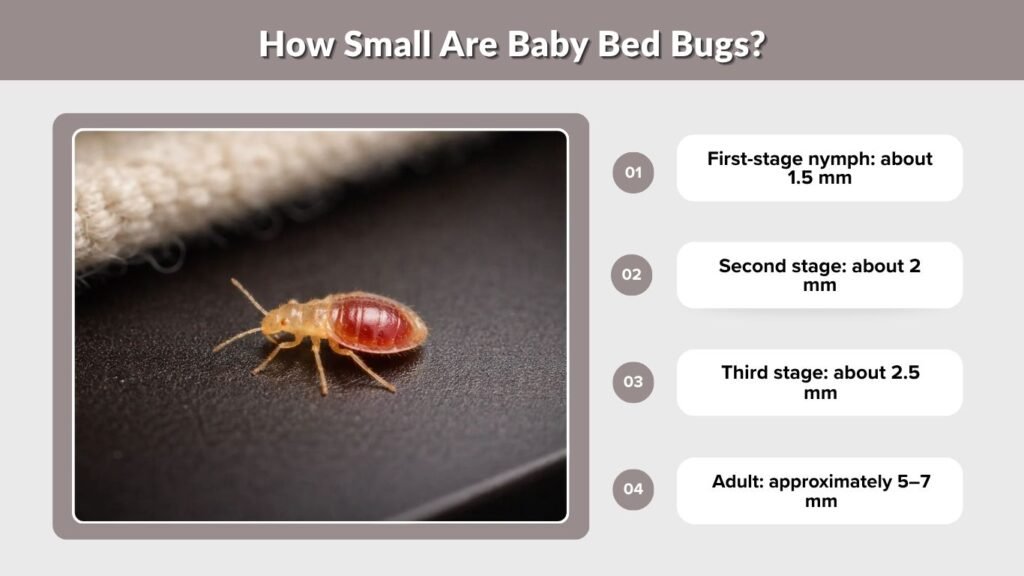
The smallest baby bed bugs are visible to the naked eye, but seeing them can be difficult without close inspection. Their pale bodies provide little contrast against light fabrics, and they frequently remain hidden in narrow crevices. A magnifying glass can make first-stage nymphs considerably easier to identify.
Baby Bed Bug Size by Stage
Bed bugs pass through five nymphal stages before adulthood:
- First-stage nymph: about 1.5 mm
- Second stage: about 2 mm
- Third stage: about 2.5 mm
- Fourth stage: about 3 mm
- Fifth stage: about 4.5 mm
- Adult: approximately 5–7 mm
Each nymphal stage requires a blood meal before the insect can molt successfully into its next stage.
Can You See Baby Bed Bugs?
Yes. Baby bed bugs are visible to the human eye, although newly hatched individuals can be difficult to detect.
They are not microscopic. University of Minnesota Extension describes freshly hatched bed bugs as approximately 1/16 inch, or around 1.6 mm, long. Their translucent appearance can make them seem almost invisible when they have not recently fed.
Just-Born Baby Bed Bugs and Their Life Cycle
A just-born baby bed bug emerges from a tiny pearl-white egg and begins life as a first-instar nymph. Bed bugs do not have a caterpillar-like larval stage. Instead, young bugs resemble smaller adults and gradually increase in size through five molts before reaching sexual maturity.
What Happens After Bed Bug Eggs Hatch?
Bed bug eggs generally hatch within roughly 4–12 days under suitable conditions. A newly emerged nymph then needs a blood meal before it can molt.
The sequence continues through five nymphal stages. Each stage requires feeding before the next molt can occur. Temperature and access to blood influence how quickly development proceeds.
Can Baby Bed Bugs Lay Eggs?
No. Nymphs are immature and cannot reproduce or lay eggs.
Only sexually mature adult female bed bugs produce eggs. This distinction matters because finding tiny nymphs indicates that eggs have already hatched nearby, which can be evidence of an active breeding infestation.
Do Baby Bed Bugs Bite?
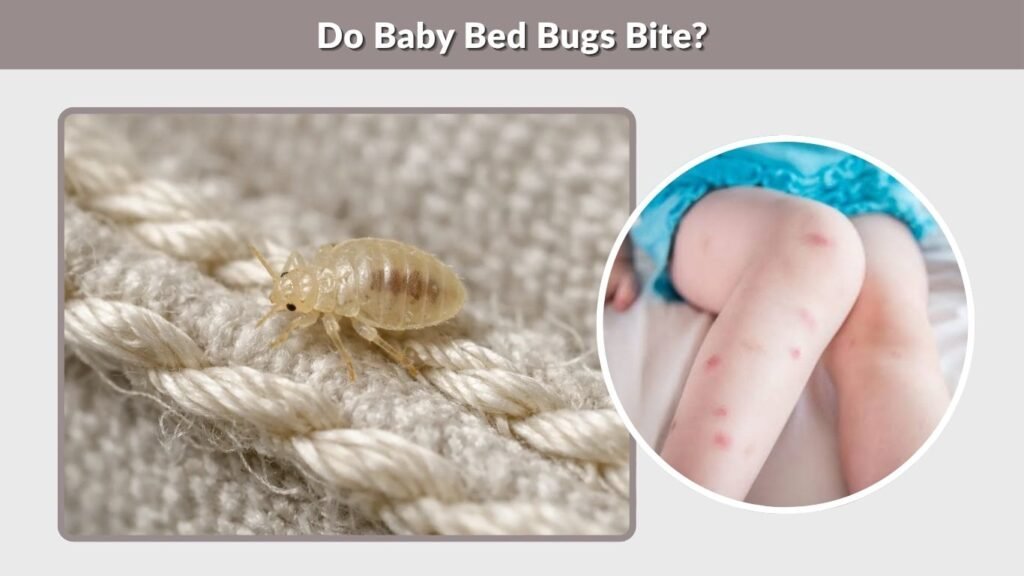
Yes. Baby bed bugs bite and feed on blood, just as adults do. In fact, every nymphal stage requires at least one blood meal before molting. Young bed bugs usually feed while people or other suitable hosts are resting and then return to protected hiding places after becoming engorged.
What Do Baby Bed Bug Bites Look Like?
A person’s skin reaction cannot reliably reveal whether the bite came from a baby or adult bed bug.
Bed bug bites may cause itchy red bumps, but reactions vary considerably. Some people develop noticeable marks, while others develop little or no visible reaction. CDC notes that bite marks alone are not sufficient for reliable bed bug identification.
Finding actual insects, shed skins, eggs, or other physical evidence is more useful.
Are Baby Bed Bug Bites Smaller?
Not necessarily.
The appearance and size of a skin reaction depend strongly on the person’s immune response rather than simply the age of the insect that is fed. Therefore, a smaller red bump should not automatically be classified as a baby bed bug bite.
Where Do Baby Bed Bugs Hide?
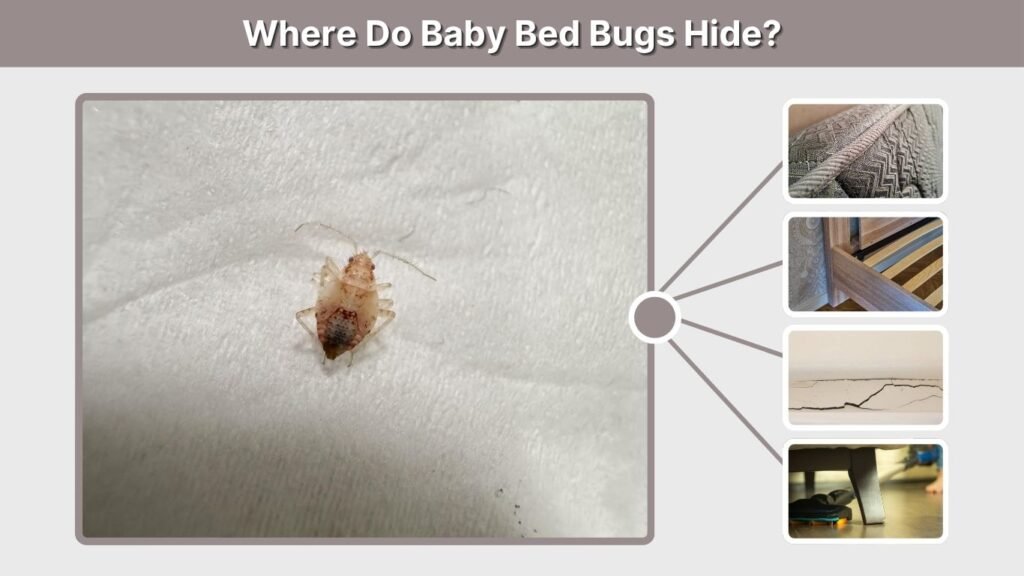
Young bed bugs generally hide in the same places as adults. They prefer narrow, protected spaces near sleeping or resting hosts. Because nymphs are extremely small and flat, they can enter cracks that may be difficult to inspect without a flashlight or magnification.
Places to Check for Baby Bed Bugs
Inspect:
- Mattress seams and piping
- Box springs
- Bed-frame joints
- Headboards
- Cracks beside baseboards
- Upholstered furniture seams
- Nightstands and nearby furniture
- Gaps behind loose wallpaper
- Screw holes and furniture joints
- Bed bug interceptors under furniture legs
CDC notes that infestations typically concentrate near places where people sleep, including mattresses, box springs, frames, headboards, furniture, and nearby cracks.
Do Baby Bed Bugs Jump or Fly?
No.
Baby bed bugs cannot fly and do not jump. Like adults, they crawl using six legs. Bed bugs do not have functional wings.
Their movement can still appear fairly quick for such a small insect, especially when a hiding place is disturbed.
Baby Bed Bugs vs Other Small Bugs
Many tiny household insects are mistaken for baby bed bugs. Correct identification is important before beginning treatment because pest-control strategies differ substantially between species. Even professionals may use magnification to distinguish very small nymphs from insects that have similar sizes or body shapes.
Common Bed Bug Lookalikes
Possible lookalikes include:
- Baby cockroaches
- Small ticks
- Bat bugs
- Carpet beetles
- Booklice
- Fleas
- Small beetles
Baby cockroaches generally have a more elongated shape and longer antennae, while ticks have eight legs after the larval stage instead of the six found on bed bugs.
Bat bugs can look extremely similar to bed bugs and may require close examination for reliable identification.
How to Get Rid of Baby Bed Bugs
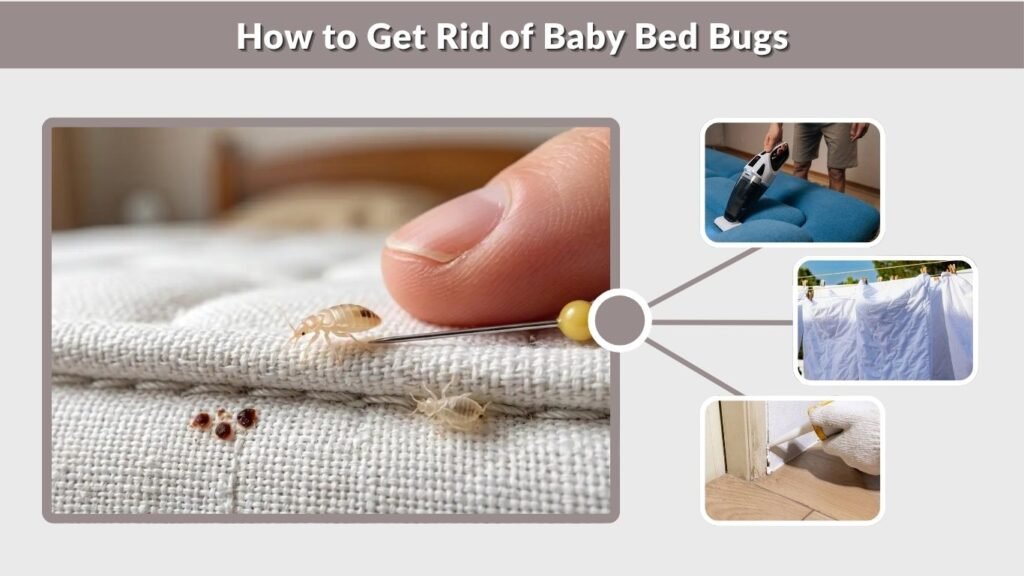
Treating only visible baby bed bugs will not eliminate an infestation. Adults, eggs, and nymphs of different ages may be hiding throughout the room. Successful control therefore requires a comprehensive approach that targets every life stage and continues after the first treatment.
Steps for Controlling an Infestation
Useful measures include:
- Confirm that the insects are actually bed bugs.
- Vacuum mattresses, frames, furniture, and cracks.
- Seal vacuum contents before disposal.
- Heat-dry suitable clothing and bedding.
- Use bed bug-proof mattress and box-spring encasements.
- Place interceptors beneath bed and sofa legs.
- Reduce clutter around sleeping areas.
- Seal cracks and hiding locations where appropriate.
- Use only pesticides specifically labeled for bed bugs.
- Continue monitoring after treatment.
- Consider an experienced pest-management professional for established infestations.
EPA notes that treatment can fail when some hiding locations or life stages are missed, particularly because some pesticides do not kill eggs.
Does Baby Powder Kill Bed Bugs?
Ordinary baby powder should not be relied upon to kill or eliminate bed bugs. Sprinkling it around an infested room is not a complete bed bug treatment and does not address insects and eggs hidden throughout furniture, walls, and other protected spaces.
Why Is Talcum Powder Used in Some Bed Bug Traps?
Talcum powder has a different purpose in some homemade interceptor traps.
EPA instructions describe placing a small amount of talcum powder inside an interceptor because the slippery surface helps prevent trapped bed bugs from climbing back out. That does not mean spreading baby powder around a room will suffocate or eradicate an infestation.
FAQs
Because newly hatched bed bugs are small and translucent, homeowners often confuse them with other insects or assume they are impossible to see. Understanding their actual size, appearance, feeding behavior, and development can make an early infestation much easier to recognize.
1. What Do Baby Bed Bugs Look Like?
Baby bed bugs look like tiny, pale versions of adults. Newly hatched nymphs are roughly 1.5 mm long and may appear translucent or whitish-yellow. After feeding, their abdomen can become visibly red.
2. Are Baby Bed Bugs Visible to the Naked Eye?
Yes. Even first-stage nymphs are technically visible, although their tiny size and nearly transparent coloration can make them very difficult to spot without magnification.
3. Do Baby Bed Bugs Bite Humans?
Yes. Nymphs require blood meals to grow and molt through their five immature stages.
4. Are Baby Bed Bugs White or Red?
Unfed nymphs can appear whitish-yellow or translucent. After feeding, the blood visible inside their abdomen can make them look red or reddish.
5. Does Baby Powder Kill Baby Bed Bugs?
Baby powder should not be considered an effective infestation treatment. Talc is sometimes used inside interceptor traps to create a slippery surface, but comprehensive bed bug control requires inspection, monitoring, physical measures, and appropriate treatment of all life stages.