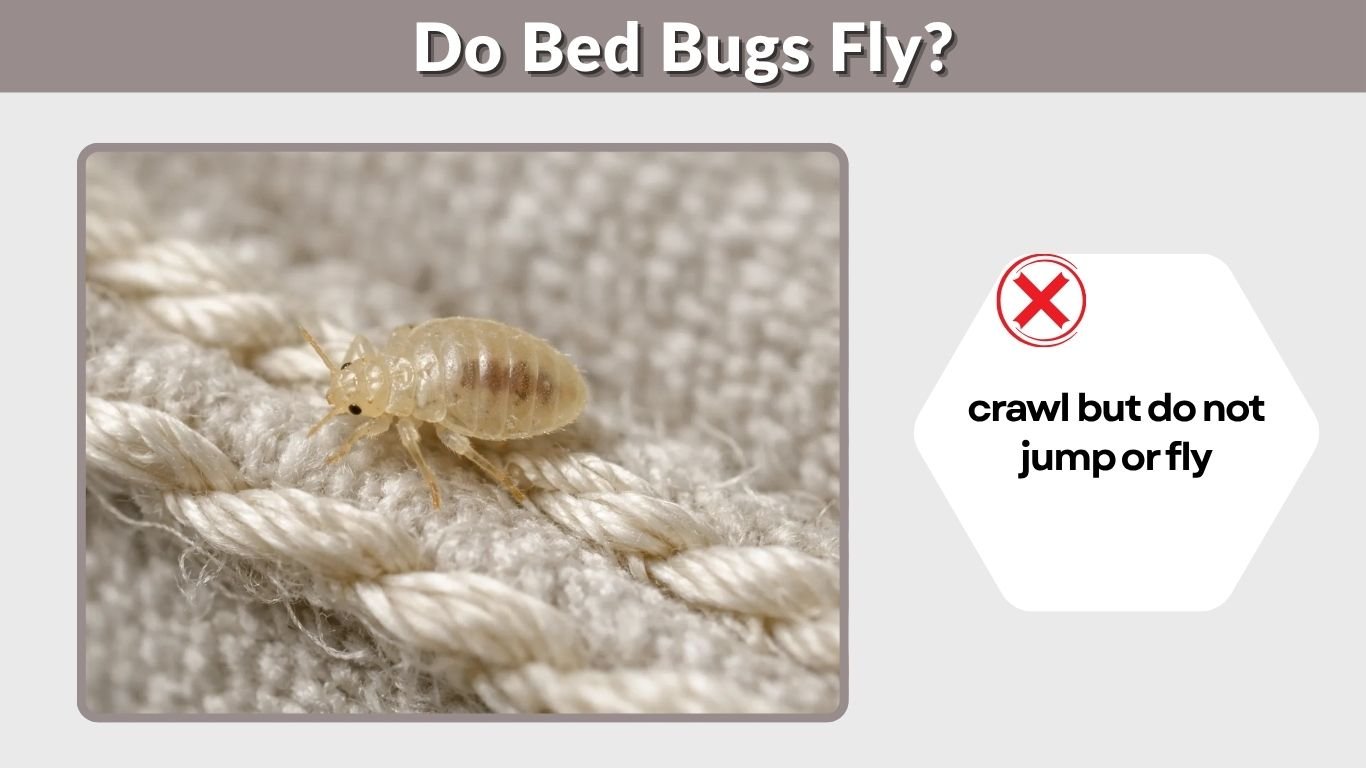
Do bed bugs fly? No. Bed bugs cannot fly because they do not have functional wings. They also cannot jump like fleas. Instead, bed bugs move by crawling across mattresses, furniture, walls, floors, and other surfaces. Their ability to spread comes mainly from walking short distances and hitchhiking in luggage, clothing, furniture, and personal belongings. Understanding how bed bugs actually move can make them easier to identify and help prevent an infestation from spreading throughout your home.
Do Bed Bugs Fly?
Bed bugs (Cimex lectularius) are wingless parasitic insects that feed primarily on human blood. Although adult bed bugs have small structures associated with their evolutionary history, they do not possess functional wings and cannot take flight. If you see a tiny insect flying around your bed, window, or bedroom light, it is almost certainly another type of insect.
Do Bed Bugs Have Wings?
Adult bed bugs do not have functional wings capable of flight.
Their bodies are:
- Flat and oval when unfed
- Reddish-brown as adults
- About the size of an apple seed
- Equipped with six legs
- Equipped with two antennae
- Wingless for practical purposes
- More swollen and reddish after feeding
The absence of usable wings is an important identification feature.
Can Female Bed Bugs Fly?
No. Female bed bugs cannot fly, and neither can males.
Both sexes have the same general crawling method of movement. Females do not develop working wings after mating or while producing eggs.
This means that a bed bug infestation does not spread because adults suddenly fly into another room. Their movement occurs by crawling or being accidentally transported.
Do Baby Bed Bugs Fly?
No. Baby bed bugs, called nymphs, cannot fly either.
Young bed bugs are much smaller and paler than adults, particularly before feeding, but their movement is similar. They crawl across surfaces while looking for hiding places and blood meals.
Newly hatched bed bugs may be difficult to notice because of their tiny, translucent appearance.
Do Bed Bugs Fly or Jump?
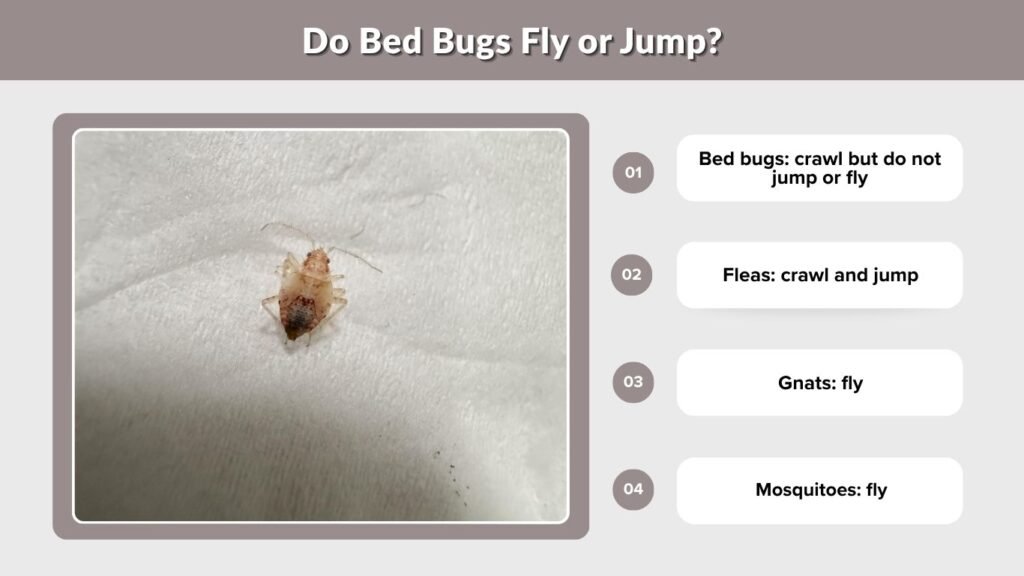
Bed bugs neither fly nor jump. This separates them from several other household pests. Fleas, for example, are famous for jumping considerable distances relative to their size. Bed bugs must physically crawl from one location to another unless they are transported in an object such as luggage, clothing, bedding, furniture, or a backpack.
Bed Bugs vs Fleas
Some useful movement differences include:
- Bed bugs: crawl but do not jump or fly
- Fleas: crawl and jump
- Gnats: fly
- Mosquitoes: fly
- Ticks: crawl but do not fly or jump
- Cockroaches: crawl rapidly; some species can fly
- Carpet beetles: adults can fly
If a suspected “bed bug” repeatedly jumps away when approached, it is probably not a bed bug.
Do Bed Bugs Hop?
No. Bed bugs do not hop.
They have legs designed for crawling rather than powerful jumping hind legs. A disturbed bed bug may move quickly across a surface, which can sometimes give the impression that it disappeared suddenly, but it has not jumped.
This distinction can help when comparing bed bugs with fleas, which can rapidly spring away.
Do Bed Bugs Crawl?
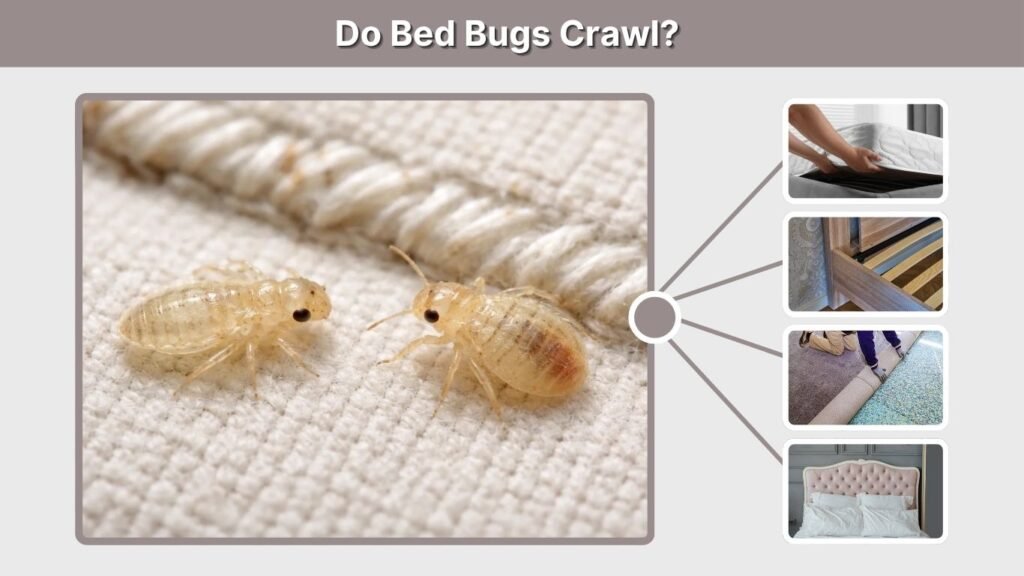
Crawling is the bed bug’s primary form of independent movement. Their flattened bodies allow them to move through extremely narrow spaces, including mattress seams, furniture joints, cracks, baseboards, and gaps around bed frames. They tend to hide during periods when hosts are active and emerge when an opportunity for feeding becomes available.
How Fast Do Bed Bugs Move?
Bed bugs can crawl quickly enough to move between nearby hiding places and sleeping areas.
They commonly travel across:
- Mattresses
- Bed frames
- Floors
- Carpets
- Walls
- Headboards
- Upholstered furniture
- Baseboards
- Nearby objects
They do not need to move extremely fast because their strategy relies largely on hiding close to places where people regularly sleep or rest.
Can Bed Bugs Crawl Up Walls?
Yes. Bed bugs can crawl vertically across many surfaces.
They may travel along walls when moving between hiding places, furniture, or adjoining rooms. Bed bugs can also hide behind loose wallpaper, pictures, electrical covers, molding, and other protected locations.
Finding one on a wall does not mean it flew there.
How Do Bed Bugs Spread If They Cannot Fly?
Bed bugs are excellent hitchhikers. Long-distance infestations usually spread because the insects or their eggs are accidentally transported with human belongings. Hotels, apartments, dormitories, used furniture, public transportation, and other places with frequent movement of people can provide opportunities for accidental transportation.
Common Ways Bed Bugs Spread
Bed bugs may be carried in:
- Suitcases
- Backpacks
- Clothing
- Used mattresses
- Upholstered furniture
- Bedding
- Boxes
- Personal belongings
- Furniture moved between apartments
- Items stored near an infestation
They usually remain hidden in seams, folds, cracks, and other protected spaces while being transported.
Can Bed Bugs Spread Between Rooms?
Yes.
Once established, bed bugs can crawl into adjacent areas, especially when populations become large or when treatments disturb their hiding places.
In apartment buildings and other multi-unit properties, they may move through structural gaps, wall voids, utility openings, or shared spaces.
Moving infested belongings into another room can also spread the infestation much faster.
Do Bed Bugs Fly Around the House?
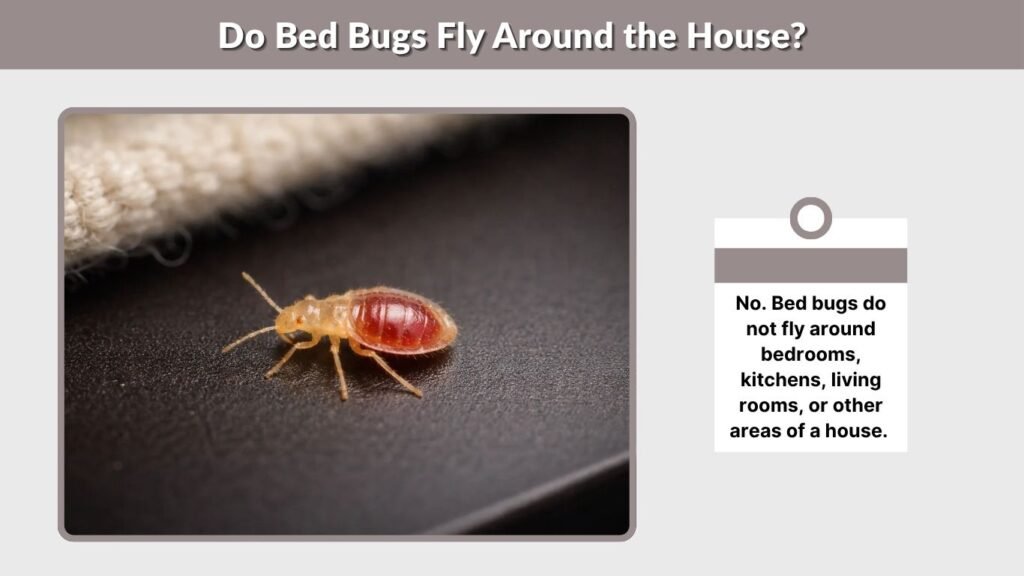
No. Bed bugs do not fly around bedrooms, kitchens, living rooms, or other areas of a house. Seeing small flying insects near a bed often leads to confusion because several unrelated pests may occur indoors. Proper identification is important before beginning any treatment.
Bugs Commonly Mistaken for Flying Bed Bugs
Possible lookalikes include:
- Carpet beetles
- Small flies
- Fungus gnats
- Drain flies
- Small moths
- Flying ants
- Tiny beetles
Adult carpet beetles are especially worth considering because they are small household insects capable of flight. Their larvae may also occur around fabrics and furniture.
Do Bed Bugs Fly Like Gnats?
No.
Gnats have functional wings and may hover around lights, windows, plants, or moisture sources. Bed bugs remain on surfaces and crawl.
If tiny insects repeatedly fly around your bedroom, identifying the insect before using bed bug treatments can save considerable time and expense.
Can Bed Bugs Fly to Humans?
Bed bugs cannot fly toward people. They locate hosts and approach them by crawling. Heat, carbon dioxide, and other host-related cues help bed bugs locate feeding opportunities when they emerge from hiding.
How Bed Bugs Reach You at Night
A bed bug may:
- Leave a mattress seam or furniture crack
- Crawl across the mattress
- Travel along a bed frame
- Move from nearby furniture
- Crawl from another hiding place
- Feed on exposed skin
- Return to a protected location afterward
Bed bugs do not normally remain attached to human bodies after feeding.
They also do not burrow into human skin.
Why Do Bed Bugs Seem to Disappear So Quickly?
Their flattened bodies make bed bugs excellent at hiding. Even though they cannot fly or jump, they can disappear into mattress seams, screw holes, furniture joints, cracks, and other narrow openings before you locate them.
Common Bed Bug Hiding Places
Inspect areas such as:
- Mattress piping and seams
- Box springs
- Headboard joints
- Bed-frame cracks
- Screw holes
- Nightstands
- Upholstered furniture
- Baseboards
- Furniture joints
- Cracks near sleeping areas
Look for more than live insects. Dark fecal spots, shed skins, pale eggs, and blood spots may also indicate activity.
How to Stop Bed Bugs From Spreading
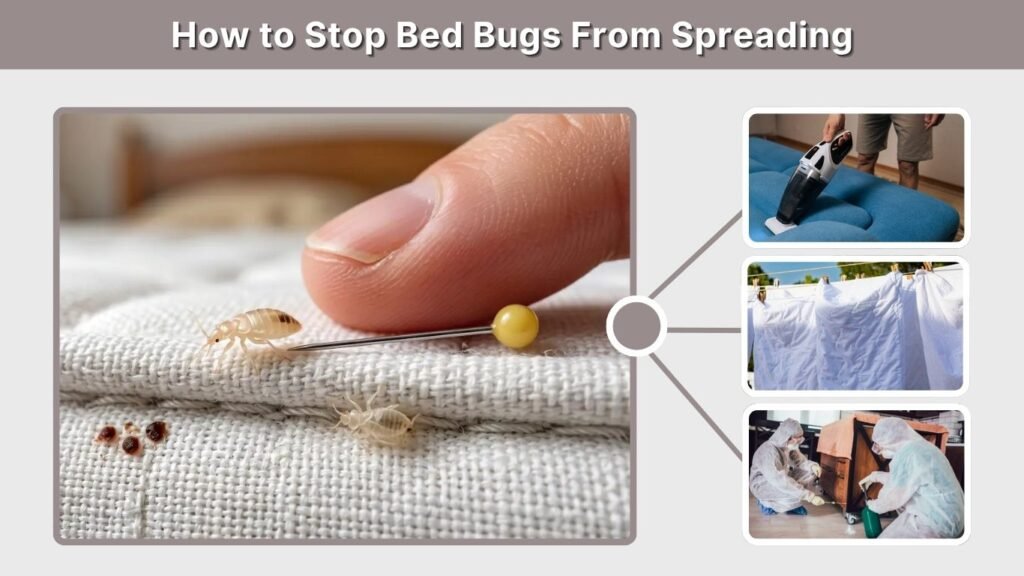
Because bed bugs move mostly by crawling and hitchhiking, controlling their movement is an important part of treatment. Avoid carrying untreated bedding, furniture, or clothing from an infested room into clean areas. Doing so can create additional infestation sites.
Steps to Reduce Bed Bug Spread
Useful measures include:
- Inspect mattresses and furniture carefully.
- Vacuum visible bed bugs and hiding areas.
- Heat-dry suitable bedding and clothing.
- Store treated belongings in sealed containers.
- Use bed bug-proof mattress encasements.
- Place interceptors beneath bed legs.
- Reduce clutter around sleeping areas.
- Keep beds slightly separated from walls.
- Avoid moving infested furniture between rooms.
- Consider professional treatment for established infestations.
Treatment should target adults, nymphs, and eggs rather than only visible insects.
Do Bed Bugs Have Any Way to Become Airborne?
Under normal conditions, bed bugs do not independently become airborne. They cannot launch themselves by jumping or produce powered flight. However, an insect could theoretically fall from an object or be accidentally moved by clothing, furniture, or another external force.
Why Identifying Movement Matters
Movement is one of the simplest ways to eliminate incorrect identifications.
An insect that actively flies across a room cannot be a bed bug. An insect that repeatedly jumps is also unlikely to be one.
A real bed bug will crawl, hide, and attempt to move into cracks or protected spaces when disturbed.
FAQs
Knowing how bed bugs move can help distinguish them from fleas, gnats, mosquitoes, carpet beetles, and other household insects. The most important point is that bed bugs rely on crawling and accidental transportation rather than wings or jumping.
1. Do Bed Bugs Fly?
No. Bed bugs do not have functional wings and cannot fly. Both adult and baby bed bugs move by crawling.
2. Do Bed Bugs Fly or Jump?
Neither. Bed bugs cannot fly or jump. If an insect jumps, consider fleas or another small pest instead.
3. Do Bed Bugs Have Wings?
Bed bugs do not have developed functional wings that allow them to fly. Adults have reduced wing-pad structures, but these cannot produce flight.
4. Do Bed Bugs Crawl Fast?
Bed bugs can crawl quickly enough to move between nearby hiding places and sleeping areas. Their small, flat bodies also allow them to disappear into very narrow cracks.
5. How Do Bed Bugs Travel From House to House?
Bed bugs primarily spread by hitchhiking. They can hide in luggage, backpacks, clothing, bedding, furniture, and other belongings that are transported from an infested location to another home.