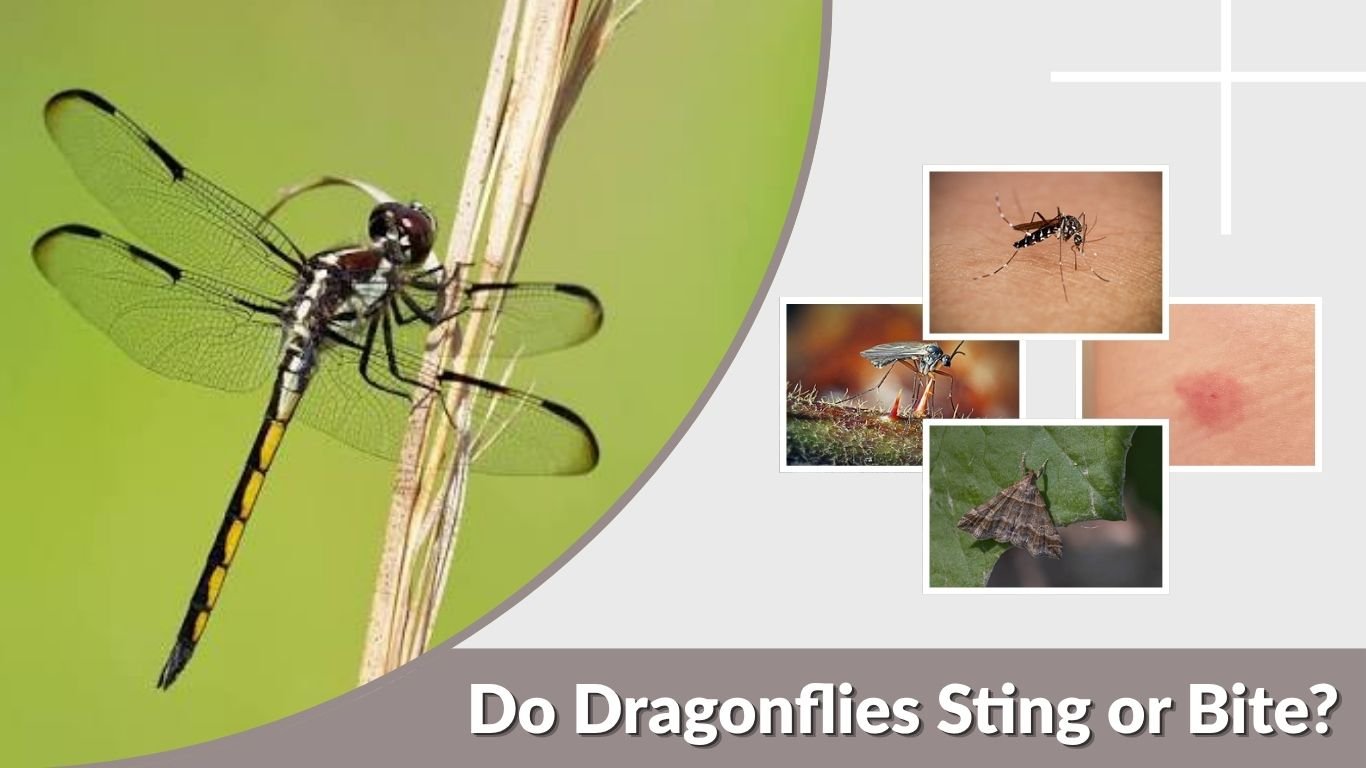
Dragonflies may look intimidating because of their large eyes, powerful jaws, long abdomen, and fast flight, but they do not sting people. Dragonflies have no stinger and cannot inject venom through their tails. They can bite with their mouthparts if they are caught, squeezed, or handled roughly, but bites are uncommon and usually minor. Most dragonflies simply fly away when approached. These beneficial insects spend their lives hunting mosquitoes, flies, midges, and other insects and are generally harmless to humans, pets, and gardens.
Do Dragonflies Sting?
No. Dragonflies cannot sting humans because they do not have a stinger.
The pointed end of a dragonfly’s abdomen may look similar to the stinger of a wasp or bee, which is probably why many people assume dragonflies can sting.
Do Dragonflies Have a Stinger?
Dragonflies do not have the specialized venom-injecting stinger found in bees, wasps, and certain ants.
Their abdomen contains reproductive structures, digestive organs, and other body systems, but it does not contain a defensive stinger.
Some female dragonflies have structures called ovipositors that help them place eggs into plants or other material. These structures are used for reproduction, not for stinging people.
Do Dragonflies Bite?
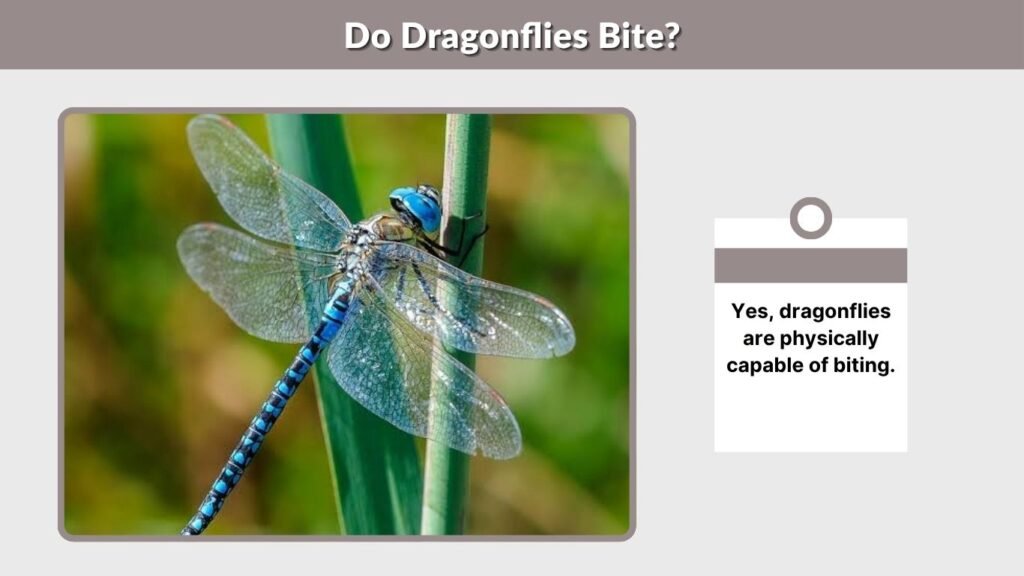
Yes, dragonflies are physically capable of biting.
They are predators equipped with strong chewing mouthparts designed to capture and consume other insects. However, they do not normally use these jaws against humans.
When Might a Dragonfly Bite?
A dragonfly may attempt to bite if it is:
- Held tightly in the hand
- Trapped against the skin
- Grabbed by its body
- Handled roughly
- Unable to escape
A dragonfly flying around you is not looking for an opportunity to bite.
Its normal response to a person is to fly away.
What Does a Dragonfly Bite Feel Like?
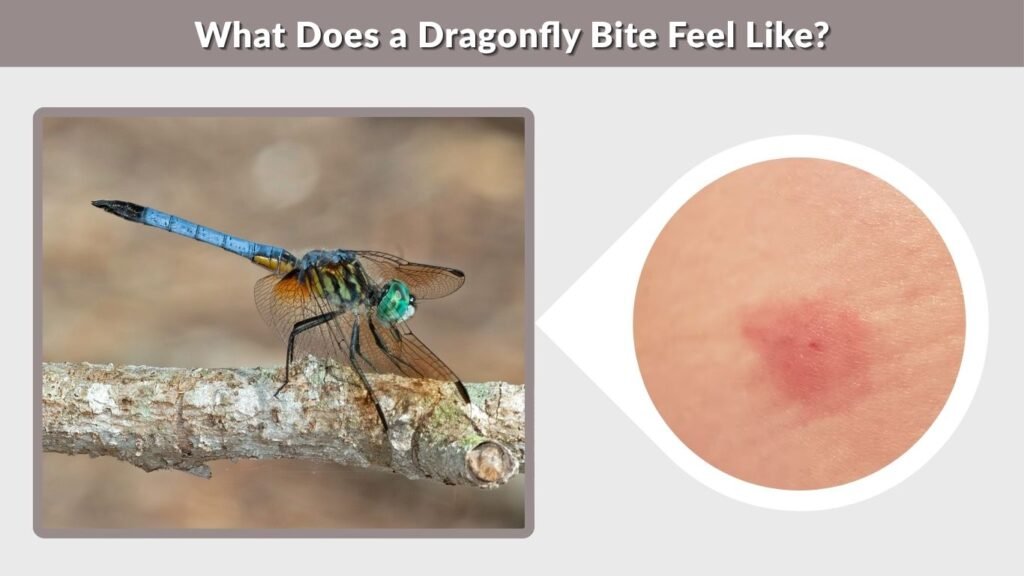
Most dragonfly bites are minor because human skin is much tougher than the insects they normally eat.
A larger dragonfly may create a brief pinching sensation.
Possible Effects
A bite could cause:
- Mild pinching
- Temporary redness
- Slight irritation
- Minor tenderness
- A small superficial mark
Dragonfly bites are not known for injecting medically significant venom because dragonflies do not use venomous fangs like spiders.
Serious reactions from ordinary dragonfly bites are extremely unlikely.
Do Dragonflies Bite or Sting Humans?
Dragonflies can potentially bite, but they cannot sting.
This is the simplest way to remember the difference.
Their jaws are located at the front of the head and are used primarily for feeding. The long abdomen at the rear of the body is not a stinger.
A dragonfly landing on your arm, clothing, or hand is therefore not preparing to sting you.
Why Do People Think Dragonflies Sting?
Several features contribute to the myth.
Long Pointed Abdomen
A dragonfly’s abdomen is long and narrow, and the tip may look sharp when viewed from a distance.
This creates the impression that the insect carries a large stinger.
Large Body Size
Some dragonflies have bodies several inches long and wide wingspans. Large species can look particularly intimidating when they fly close to people.
Fast Flight
Dragonflies can change direction quickly and sometimes repeatedly pass close to a person while hunting insects.
Their flight may look aggressive even when the dragonfly is simply chasing prey.
Old Folklore
Dragonflies have historically received names such as “devil’s darning needle,” based on old myths that they could sew people’s mouths or ears shut.
There is no biological basis for these stories.
Do Dragonflies Sting With Their Tails?
No.
A dragonfly does not use its abdomen as a weapon against humans.
What Is at the End of a Dragonfly’s Abdomen?
The structures at the abdominal tip vary between males and females.
Males have reproductive appendages that help hold females during mating.
Females may have structures used during egg laying.
These can sometimes appear pointed but are not venomous stingers.
Do Big Dragonflies Sting?
Large dragonflies cannot sting either.
Size does not change their anatomy.
A Giant Darner, Emperor Dragonfly, Green Darner, or another large species has the same basic limitation: no stinger is present.
Large species may have stronger jaws than tiny dragonflies and could produce a more noticeable pinch if deliberately handled, but they still pose little threat.
Do Emperor Dragonflies Sting?
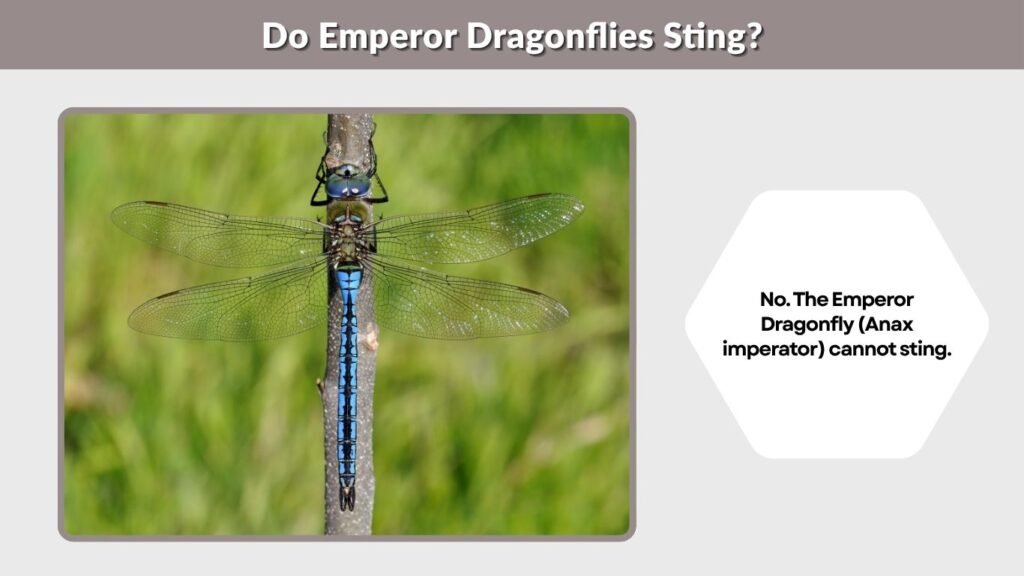
No. The Emperor Dragonfly (Anax imperator) cannot sting.
This large European dragonfly is an impressive aerial predator that catches flies, mosquitoes, butterflies, and even smaller dragonflies.
Despite its size and powerful jaws, it does not attack people and normally keeps its distance.
An Emperor might attempt to bite defensively if grabbed, but it cannot sting through its tail.
Do Red Dragonflies Sting?
No.
Red dragonflies, including species such as Scarlet Darters and various red skimmers, lack stingers just like other dragonflies.
Their bright red coloration does not indicate that they are venomous or dangerous.
Red coloration is commonly associated with maturity, sex, or species identification rather than defense against humans.
Do Blue Dragonflies Sting?
Blue dragonflies cannot sting.
Blue Dashers, Blue Emperors, Great Blue Skimmers, and similar species use their jaws only to capture prey.
Their blue coloration may come from pigments or a waxy surface coating called pruinosity.
It has nothing to do with venom.
Do Black Dragonflies Sting?
No. Dark or black dragonflies are also unable to sting.
Species such as mature Slaty Skimmers can look nearly black, but they have the same general anatomy as other dragonflies.
Dark coloration should never be interpreted as evidence that the insect is dangerous.
Are Dragonflies Venomous?

Dragonflies are not considered venomous to humans.
They capture prey using their legs and powerful chewing mouthparts rather than injecting venom.
How Do Dragonflies Kill Their Prey?
An adult dragonfly catches insects while flying.
Its six legs form a basket that helps trap prey. The dragonfly then uses its mandibles to chew the insect, sometimes while continuing to fly.
Typical prey includes:
- Mosquitoes
- Midges
- Gnats
- Flies
- Moths
- Flying ants
- Small beetles
- Other dragonflies
This predatory behavior is extremely effective against insects but poses little threat to people.
Will Dragonflies Attack People?
No. Dragonflies do not deliberately attack humans.
They may fly unusually close because insects are flying around you or because you are standing near a feeding or breeding territory.
Why Does a Dragonfly Keep Flying Around Me?
Possible reasons include:
- Mosquitoes or flies are nearby
- You are standing near its territory
- The dragonfly is investigating movement
- You are near a pond or breeding area
- Your position provides insects it can hunt
It is interested primarily in prey and territory, not in attacking you.
Can Dragonflies Hurt Dogs or Cats?
Dragonflies are generally harmless to dogs and cats.
They cannot sting pets, and they do not seek to bite them.
A curious cat or dog may chase or attempt to eat a dragonfly. In most cases, this causes no serious problem, although pets should generally be discouraged from eating unknown insects.
Are Dragonflies Safe Around Children?
Yes. Dragonflies are generally safe around children.
Children should still be taught not to grab them because handling can injure the dragonfly and may provoke a defensive bite.
Watching dragonflies around ponds and gardens is a much better way to observe their behavior.
Are Dragonflies Beneficial?
Dragonflies are highly beneficial predators.
Both adults and aquatic nymphs feed on other animals.
Benefits of Dragonflies
Adults consume many flying insects, including mosquitoes and midges.
Aquatic dragonfly nymphs eat mosquito larvae, aquatic insect larvae, small crustaceans, tadpoles, and sometimes very small fish.
Their presence around a pond or wetland can indicate an active freshwater ecosystem.
Dragonflies vs Damselflies: Do Either Sting?
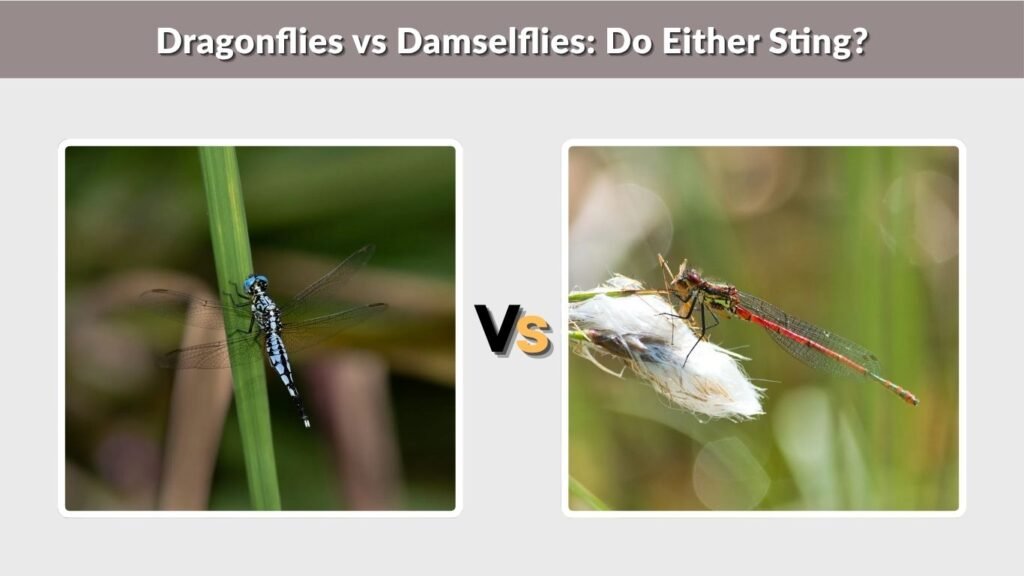
Neither dragonflies nor damselflies have stingers.
Damselflies are generally smaller and more slender than dragonflies, but they are closely related and share similar predatory lifestyles.
Both can theoretically use their jaws defensively if handled, but neither normally bites humans.
What Should You Do if a Dragonfly Lands on You?
Usually, nothing.
Remain still and allow it to leave on its own.
A dragonfly may rest briefly on your clothing, hand, hat, or arm before flying away. There is no need to swat or kill it.
If you must move it, encourage it onto a nearby surface rather than gripping its body or wings.
FAQs
1. Do dragonflies sting humans?
No. Dragonflies do not have stingers and cannot sting humans.
2. Do dragonflies bite?
They can bite defensively if grabbed or handled roughly, but bites are uncommon and usually minor.
3. Why does a dragonfly’s tail look like a stinger?
The long abdomen ends in reproductive structures that can appear pointed. These structures are not venomous stingers.
4. Can a dragonfly bite hurt you?
A large dragonfly may produce a noticeable pinch, but bites are generally superficial and not medically dangerous.
5. Are any dragonflies dangerous to humans?
No dragonfly species is considered dangerous to humans under normal circumstances. Red, blue, black, large, and small dragonflies all lack stingers and generally avoid people.