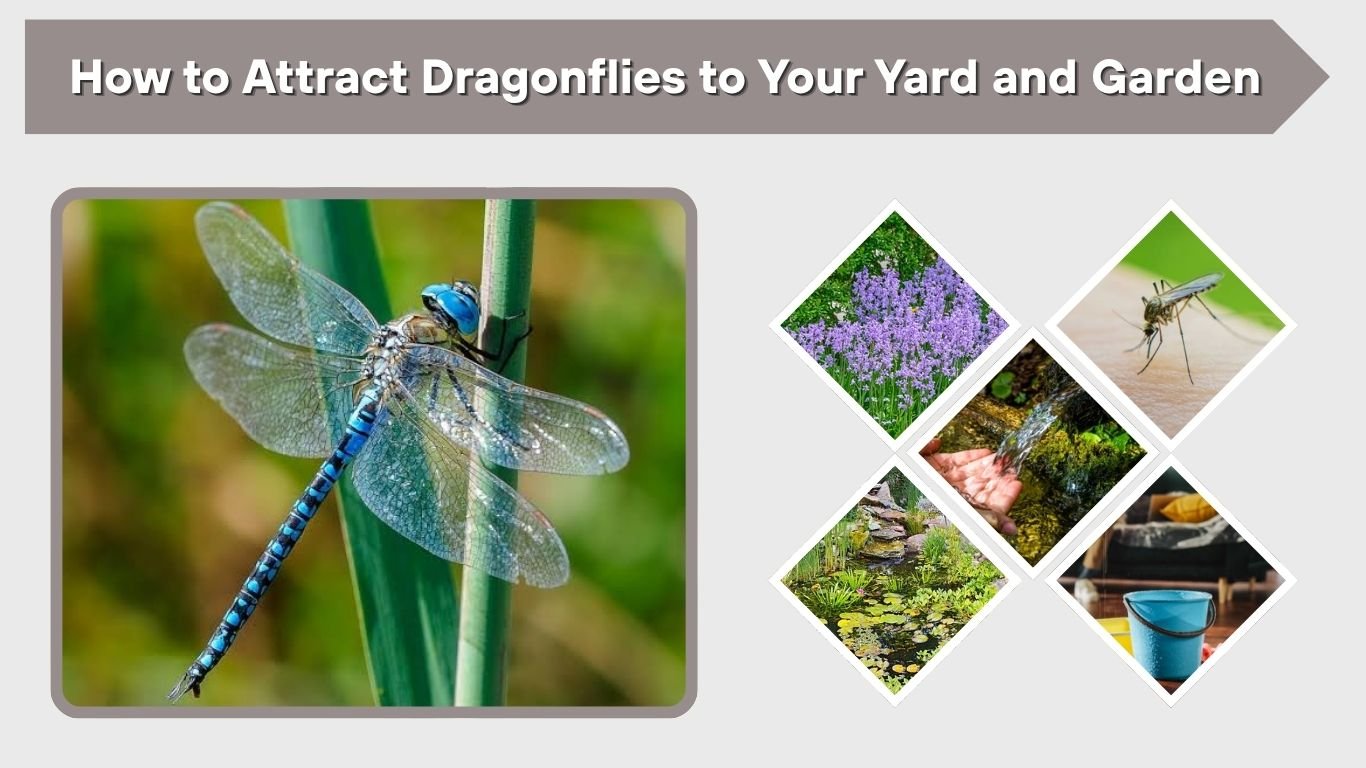
Dragonflies are beneficial aerial predators that can make a garden more interesting while feeding on mosquitoes, midges, flies, and other small insects. The most effective way to attract dragonflies is to provide the habitat they need throughout their life cycle: freshwater for aquatic nymphs, native vegetation for shelter and emergence, sunny perches for adults, and a pesticide-free supply of insect prey. Even without a full-sized pond, you can make your property more attractive to visiting dragonflies by providing vegetation, perches, sunlight, and nearby water features.
1. Add a Dragonfly-Friendly Pond
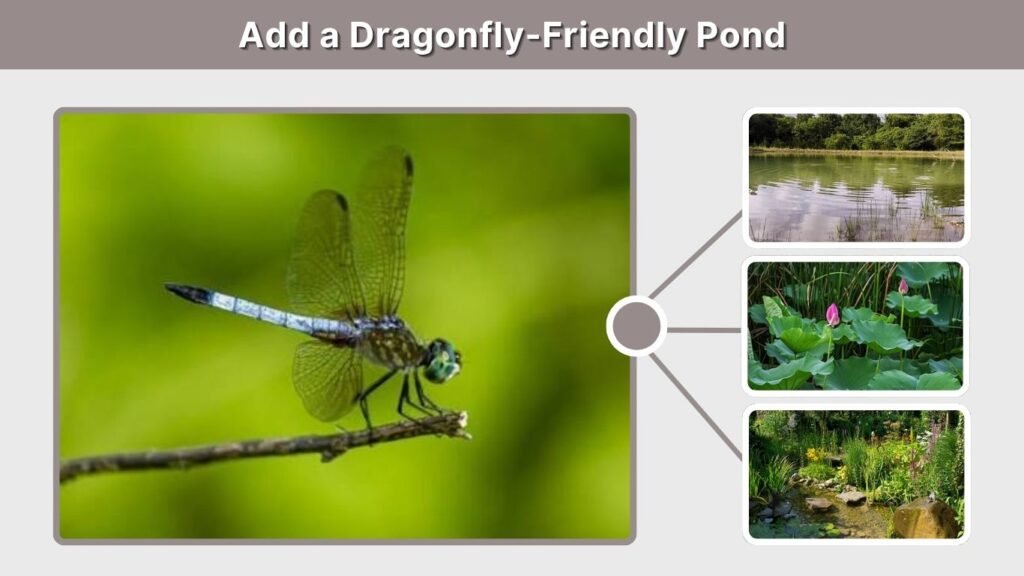
A pond is the single most effective feature for attracting dragonflies because dragonfly nymphs are aquatic. Adults return to freshwater to mate and lay eggs, while young dragonflies may spend months or years developing underwater. A well-designed backyard pond can support both adults and nymphs.
Choose a Sunny Location
Dragonflies depend on warmth from the sun to become active. Position the pond where it receives several hours of direct sunlight each day.
A sunny location also provides adults with suitable places for basking, hunting, and defending territories.
Include Different Water Depths
Avoid making the entire pond one uniform depth. Shallow margins support emergent vegetation and provide warm nursery habitat, while deeper sections offer more stable conditions.
Larger ponds with varied depths and diverse vegetation generally support a wider range of dragonfly and damselfly species.
2. Grow Aquatic Plants
Plants are one of the most important parts of a dragonfly pond. They provide shelter for nymphs, egg-laying sites for adults, protection from predators, and structures that mature nymphs can climb when they are ready to emerge from the water.
Use Different Types of Plants
Include a mixture of:
- Submerged aquatic plants
- Floating-leaved plants
- Emergent plants
- Rushes and sedges
- Native marginal plants
Penn State recommends a diversity of submerged, emergent, and floating native plants because they provide shade, oxygen, shelter, emergence sites, perches, and habitat for dragonfly prey.
3. Plant Native Vegetation Around the Pond
The area surrounding the water matters almost as much as the pond itself. Adult dragonflies use tall stems and vegetation as hunting and resting perches.
Good Plants Around Water
Depending on your region, suitable native choices may include:
- Pickerel weed
- Soft rush
- Sedges
- Joe-Pye weed
- Cardinal flower
- Bee balm
- Black-eyed Susan
- Buttonbush
Native plants also attract other insects, providing adult dragonflies with natural prey. Always choose species native to your local area rather than introducing potentially invasive aquatic plants.
4. Provide Dragonfly Perches
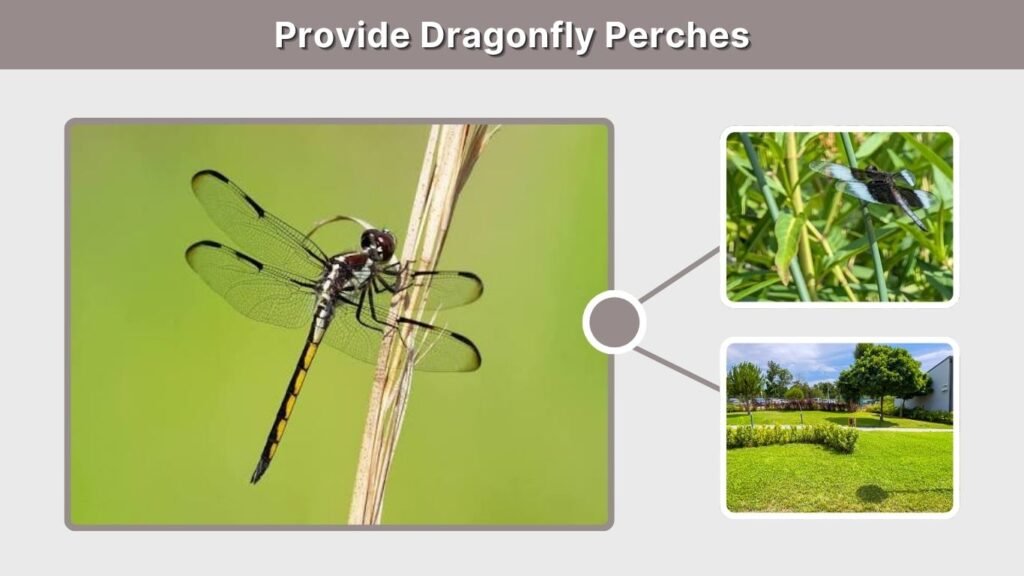
Dragonflies frequently sit on exposed objects while watching for prey or competitors.
Easy Perching Sites
Place tall stems, bamboo-like garden stakes, natural branches, or sticks around the pond. Some should extend vertically above the water.
Flat stones around the pond are also useful because dragonflies can use them for basking in the sun.
Penn State specifically recommends sticks as perching posts and flat stones as basking locations.
5. Keep Part of the Garden Sunny and Open
A garden completely shaded by large trees may be less attractive to many common dragonflies.
They need open flight space to hunt and sunlight to warm their bodies.
Create a Balanced Habitat
Keep the immediate pond area relatively open while providing shrubs farther away as shelter from strong winds.
Avoid placing the pond directly beneath large deciduous trees. Falling leaves can accumulate in the water, increasing nutrients and reducing water quality.
6. Avoid Fish in a Dedicated Dragonfly Pond
Goldfish and koi may look attractive, but they can eat dragonfly eggs and nymphs.
If your main goal is to establish breeding dragonflies, a fish-free wildlife pond is generally better.
Why Fish Matter
Dragonfly nymphs spend much of their lives hidden among aquatic vegetation. Fish can significantly increase predation pressure on these juveniles.
Penn State specifically advises against introducing ornamental fish or other major predators into ponds intended primarily for dragonflies and damselflies.
7. Avoid Broad-Spectrum Insecticides
Dragonflies need insects to survive. Spraying a yard heavily for mosquitoes and other insects can eliminate both dragonfly prey and the dragonflies themselves.
Create a Natural Food Supply
Adult dragonflies eat:
- Mosquitoes
- Midges
- Gnats
- Flies
- Small moths
- Small beetles
- Other flying insects
Dragonflies can consume large numbers of flying insects when prey is abundant, making them useful natural predators.
Avoid routinely applying broad-spectrum insecticides around ponds, flowering plants, and dragonfly resting sites.
8. How to Attract Dragonflies Without a Pond
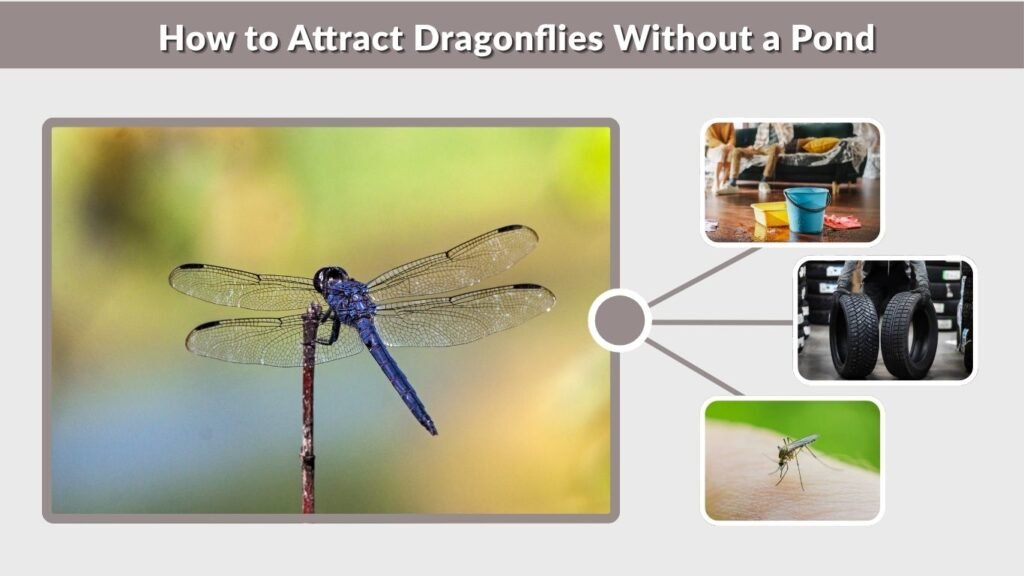
You can still attract visiting adult dragonflies without constructing a permanent pond, especially if natural freshwater already exists nearby.
However, without suitable water, your property is unlikely to support their complete breeding cycle.
Create an Adult-Friendly Garden
Provide tall native plants, sunny open spaces, upright sticks, rocks, flowering vegetation, and abundant insect prey.
A small container water garden may also offer some attraction, but it should be sufficiently large and ecologically stable if you hope dragonflies will breed there.
Dragonflies are strong fliers, so adults from nearby ponds, wetlands, streams, and lakes may visit a suitable garden to hunt.
9. How to Attract Dragonflies Without Attracting Mosquitoes
Adding water naturally raises concerns about mosquitoes. The solution is to create a functioning pond rather than leaving multiple small containers of stagnant water around the yard.
Reduce Mosquito Breeding Sites
Remove unnecessary standing water from:
- Buckets
- Tires
- Plant saucers
- Clogged gutters
- Tarps
- Toys
- Wheelbarrows
Mosquitoes can develop rapidly in small stagnant containers, so regularly emptying these sources is an important part of mosquito control.
Maintain a Healthy Pond
A mature wildlife pond contains predators such as dragonfly nymphs and other aquatic organisms that consume mosquito larvae.
Avoid allowing dense mats of algae or excessive vegetation to create isolated stagnant pockets. Where necessary, gentle water circulation can reduce mosquito-friendly stagnant areas.
10. Attract Dragonflies for Mosquito Control
Both adult dragonflies and their aquatic nymphs can eat mosquitoes.
Adults capture flying mosquitoes, while nymphs may prey on mosquito larvae underwater.
Will Dragonflies Eliminate Mosquitoes?
No. Dragonflies can contribute to natural mosquito control, but they should not be expected to eliminate mosquitoes from a property.
The best approach combines dragonfly-friendly habitat with removing unnecessary standing water where mosquitoes reproduce.
This provides predators without deliberately maintaining mosquito breeding containers.
11. How to Attract More Dragonflies Naturally
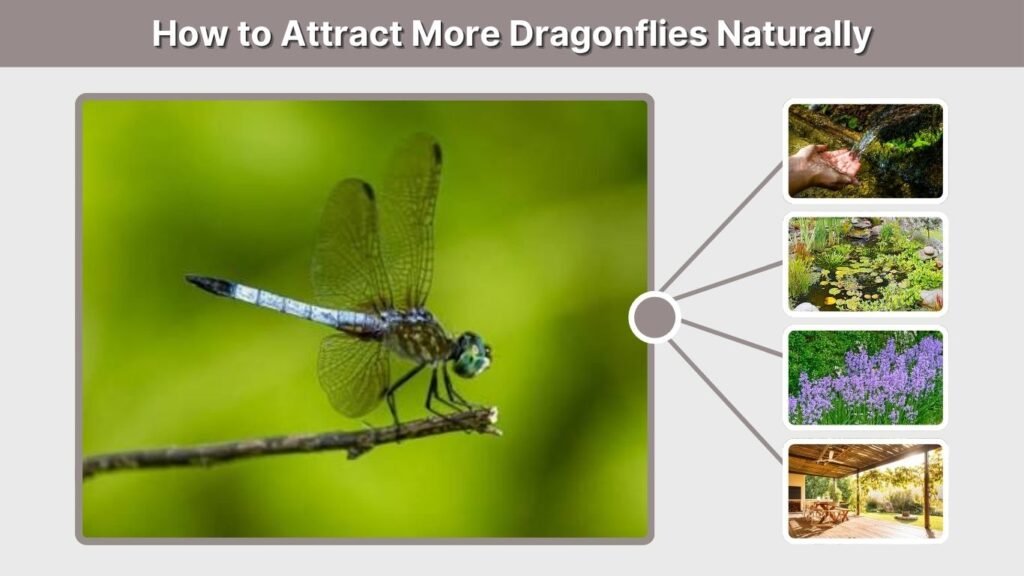
Once the basic habitat is established, diversity is the key to attracting more species.
Improve Your Property
Try to provide:
- Clean freshwater
- Native aquatic plants
- Native flowering plants
- Several water depths
- Sunny basking areas
- Open hunting space
- Tall perches
- Sheltered areas away from strong wind
- Minimal pesticide use
- Good water quality
Dragonfly diversity is closely associated with healthy freshwater habitat, vegetation, and good water quality.
12. How Long Until Dragonflies Arrive?
There is no guaranteed timetable.
If dragonflies already breed in nearby freshwater, adults may investigate a new pond surprisingly quickly. Establishing a reproducing population takes longer because females must lay eggs and the aquatic nymphs must successfully develop.
Some highly mobile species, including Green Darners, Common Whitetails, Blue Dashers, and Wandering Gliders, are especially capable of discovering small new ponds.
Common Mistakes to Avoid
A dragonfly garden does not need to be complicated, but several practices can reduce its effectiveness.
Avoid filling a wildlife pond with large ornamental fish, placing it in permanent deep shade, removing all aquatic vegetation, using broad-spectrum pesticides around the water, or allowing polluted runoff to enter the pond.
Also avoid assuming that a tiny bowl of stagnant water is an ideal dragonfly habitat. It may produce mosquitoes without providing the space and ecological diversity dragonfly nymphs need.
FAQs
1. What attracts dragonflies the most?
Freshwater habitat is the strongest attraction. A sunny pond with native aquatic plants, emergent vegetation, perches, and abundant insect prey provides the most complete habitat.
2. Can you attract dragonflies without water?
You can attract visiting adults by providing insects, sunny spaces, tall plants, and perches, particularly when natural freshwater is nearby. However, dragonflies need water to reproduce and develop.
3. What plants attract dragonflies?
Native rushes, sedges, pickerel weed, and other emergent aquatic plants are particularly useful because they provide egg-laying, hiding, and emergence sites. Native flowers around the pond also support insect prey.
4. Will attracting dragonflies increase mosquitoes?
A poorly maintained container of stagnant water can produce mosquitoes, but a healthy pond supports aquatic predators and a more complex ecosystem. Remove unnecessary stagnant water elsewhere around the property.
5. Do dragonflies really eat mosquitoes?
Yes. Adult dragonflies can catch adult mosquitoes, and aquatic dragonfly nymphs can consume mosquito larvae. However, dragonflies are generalist predators and eat many other insects as well.