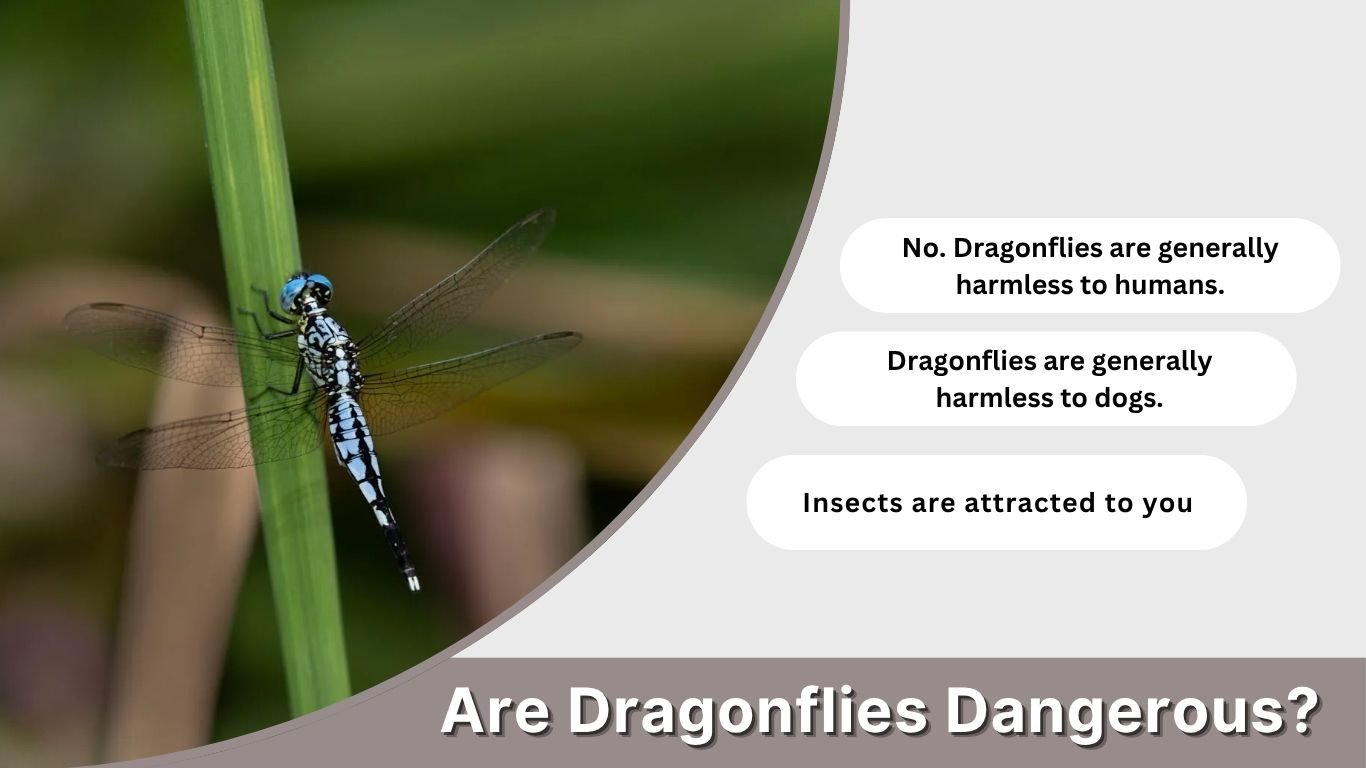
Dragonflies may look intimidating because of their large eyes, powerful jaws, fast flight, and long bodies, but they are not dangerous to humans. They have no stinger, do not inject venom, and normally avoid contact with people. A dragonfly can use its mouthparts defensively if it is grabbed or squeezed, but bites are uncommon and usually minor. Dragonflies are actually beneficial predators that eat mosquitoes, flies, midges, and other insects. Their aquatic nymphs are stronger predators and may capture small aquatic animals, but they are not a threat to people.
Are Dragonflies Dangerous to Humans?
No. Dragonflies are generally harmless to humans.
They do not attack people for food or defense, and they cannot sting. Their jaws are designed for capturing insects rather than injuring large animals.
Why Dragonflies Look Dangerous
Dragonflies can seem threatening because they have:
- Large compound eyes
- Strong chewing mouthparts
- Fast, unpredictable flight
- A long pointed abdomen
- Six spiny legs
- Relatively large bodies in some species
None of these features makes them dangerous to humans.
The pointed end of the abdomen is particularly misleading because it can resemble a stinger. Dragonflies, however, have no venomous stinger.
Can Dragonflies Bite?
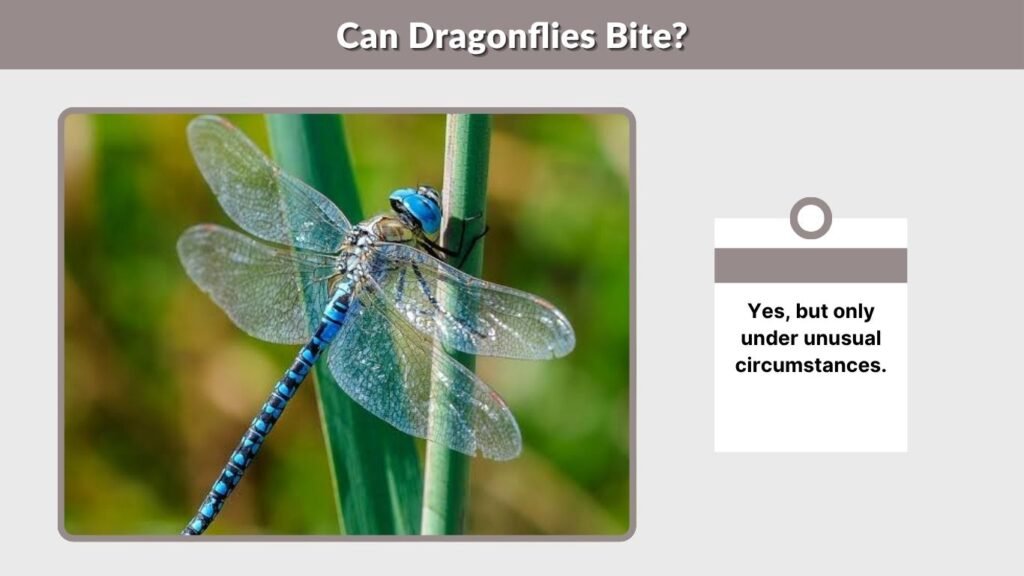
Yes, but only under unusual circumstances.
A dragonfly has strong mandibles that allow it to chew mosquitoes, flies, moths, and other insects. If a large dragonfly is caught and held tightly, it may try to defend itself by biting.
Are Dragonfly Bites Dangerous?
Dragonfly bites are not considered dangerous.
A bite from a large individual may feel like a mild pinch and could cause temporary redness or irritation. It does not involve venom injection.
A dragonfly flying around you will not normally land and bite without being handled.
Can Dragonflies Sting?
No.
Dragonflies have no stinger and cannot sting people, dogs, cats, or other animals.
What Is the Pointed Tail?
What looks like a tail is actually the abdomen. Structures at its end are involved mainly in reproduction.
Male dragonflies have appendages that help hold females during mating. Females of some species have structures used to place eggs in plants or other substrates.
These are not defensive stingers.
Are Big or Giant Dragonflies Dangerous?
Large dragonflies may appear more frightening, but they are no more likely to attack people.
Species such as darners and Emperor Dragonflies can be impressive in size and may have stronger jaws than small skimmers.
Can a Large Dragonfly Hurt You?
A large dragonfly could give a noticeable pinch if deliberately grabbed, but it is unlikely to break the skin seriously.
Their size mainly helps them capture larger insect prey and fly powerfully.
Are Red Dragonflies Dangerous?
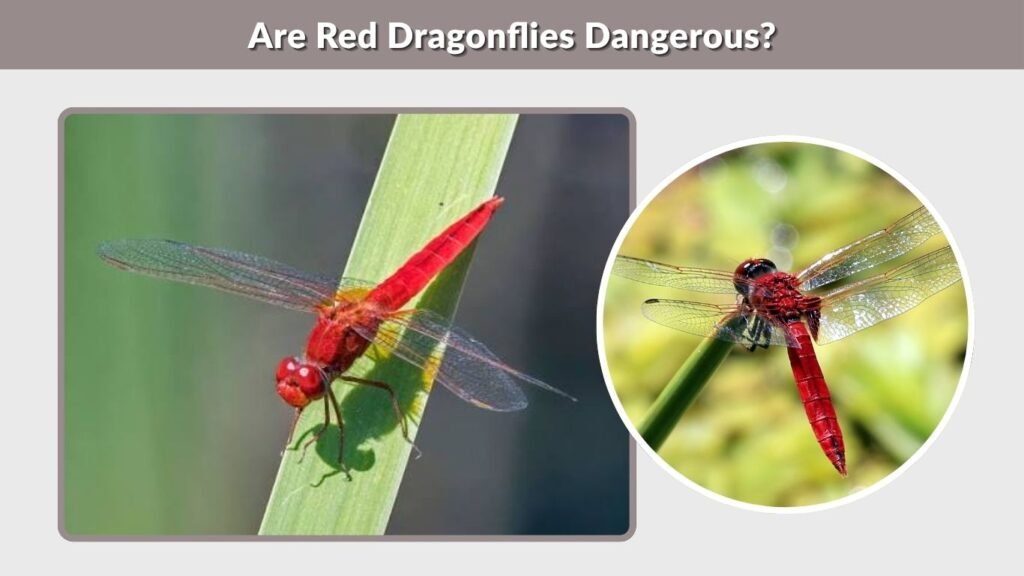
No.
Bright red dragonflies such as scarlet skimmers and mature male darters are harmless to people.
Their red coloration is associated with species, age, or sex rather than toxicity.
They do not have venomous stingers and do not use their coloration as a warning of danger to humans.
Are Blue Dragonflies Dangerous?
Blue dragonflies are also harmless.
Species such as Blue Dashers, Great Blue Skimmers, and other blue-colored dragonflies are insect predators that generally avoid humans.
The blue color may result from pigments or a waxy coating called pruinosity.
It does not indicate venom or poison.
Are Black Dragonflies Dangerous?
No.
Dark species such as mature Slaty Skimmers may look almost black, but their behavior and anatomy are similar to those of other dragonflies.
Black coloration does not mean that a dragonfly is poisonous, venomous, or aggressive.
Are Emperor Dragonflies Dangerous?
The Emperor Dragonfly is one of Europe’s largest dragonflies, but it is not dangerous.
It is a powerful aerial hunter capable of capturing mosquitoes, flies, butterflies, and smaller dragonflies.
Despite its size, an Emperor Dragonfly normally flies away when approached by people.
It cannot sting and would only attempt to bite defensively if trapped or roughly handled.
Are Common Whitetail Dragonflies Dangerous?
Common Whitetails are harmless to people.
Adult males are easy to recognize by their pale whitish abdomen and dark bands on their wings.
They spend much of their time perching around ponds and chasing insects or competing dragonflies.
They have no stinger and do not deliberately attack humans.
Are Dragonflies Dangerous to Dogs?
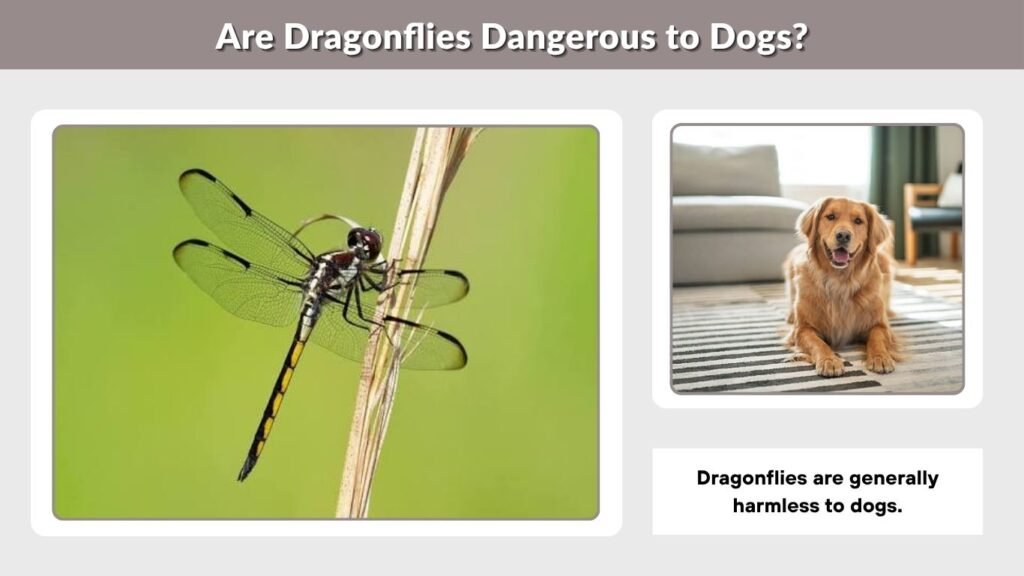
Dragonflies are generally harmless to dogs.
They cannot sting a dog and have no reason to attack one.
A dog may chase a dragonfly for fun, but the insect will usually fly away.
What If a Dog Eats a Dragonfly?
Eating an occasional dragonfly is unlikely to cause poisoning because dragonflies are not venomous or poisonous.
However, pets should be discouraged from routinely eating wild insects because insects can potentially carry parasites, contaminants, or pesticide residues.
Contact a veterinarian if your dog develops unusual symptoms after eating any unknown animal.
Are Dragonflies Dangerous to Cats?
Dragonflies are not normally dangerous to cats either.
Cats may stalk or catch them because fast-flying insects trigger hunting behavior.
A dragonfly cannot sting a cat. A large individual might defensively use its jaws if caught, but serious injury is unlikely.
Are Dragonflies Dangerous to Hummingbirds?
Adult dragonflies are generally not major predators of hummingbirds.
Dragonflies mainly hunt insects, including mosquitoes, flies, midges, moths, and smaller dragonflies.
Can Large Dragonflies Attack Hummingbirds?
Occasional aggressive interactions around territories may occur, but hummingbirds are far too large to be normal dragonfly prey.
A dragonfly hovering near a hummingbird feeder is much more likely to be hunting insects attracted to the area than hunting the bird itself.
Are Dragonfly Nymphs Dangerous?
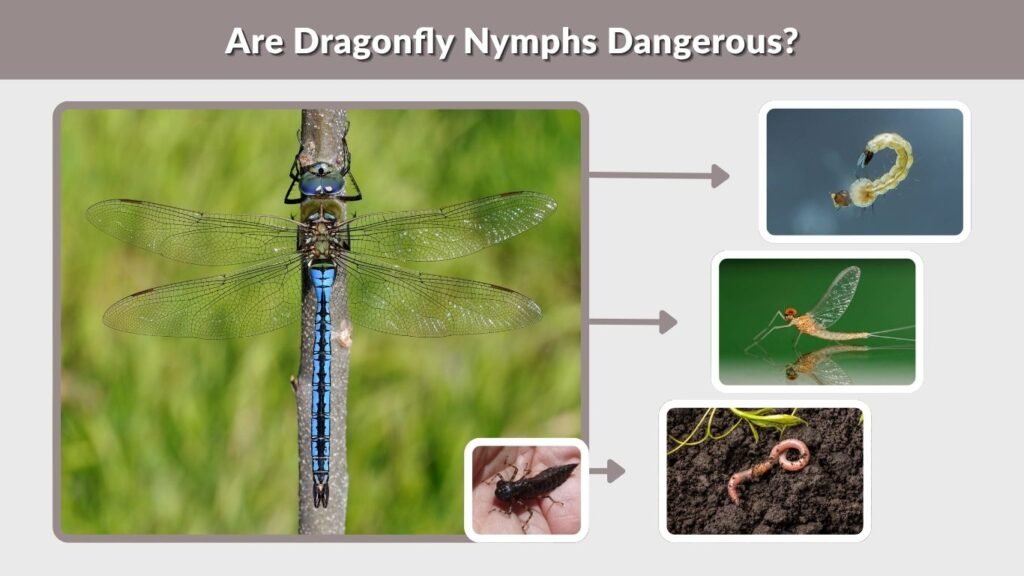
Dragonfly nymphs are fierce aquatic predators, but they are not dangerous to people.
They live underwater before becoming winged adults and possess a specialized extendable lower mouthpart used to seize prey.
What Do Dragonfly Nymphs Eat?
Depending on their size, nymphs can eat:
- Mosquito larvae
- Aquatic insects
- Small crustaceans
- Worms
- Tadpoles
- Other dragonfly nymphs
- Very small fish
Large nymphs are among the most effective invertebrate predators in freshwater habitats.
Are Dragonfly Nymphs Dangerous to Koi?
Large koi are not threatened by dragonfly nymphs, but very small fish or newly hatched fry can potentially become prey.
Dragonfly Nymphs and Pond Fish
A large dragonfly nymph may capture:
- Fish fry
- Tiny juvenile fish
- Tadpoles
- Small aquatic insects
Adult koi and other large pond fish are much too big for dragonfly nymphs to attack successfully.
In fact, larger fish may eat dragonfly nymphs instead.
Are Dragonflies Dangerous to Other Insects?
Yes—from an insect’s perspective, dragonflies are extremely dangerous predators.
Adults are highly skilled aerial hunters.
Common Dragonfly Prey
They regularly capture:
- Mosquitoes
- Midges
- Gnats
- Houseflies
- Horseflies
- Small moths
- Flying ants
- Small beetles
- Damselflies
- Other dragonflies
Their legs are covered with spines and form a basket that helps trap insects during flight.
Dragonflies may then eat the prey while flying or land on a perch to finish feeding.
Why Do Dragonflies Fly Close to People?
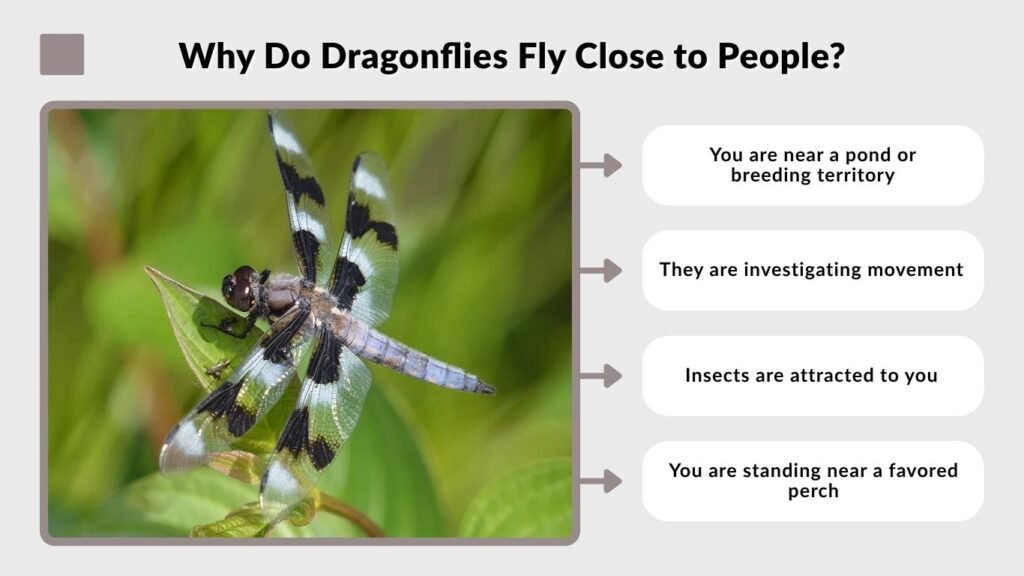
A dragonfly flying toward or around you is usually not being aggressive.
It may be hunting mosquitoes, flies, or gnats that are moving around your body.
Other Reasons
Dragonflies may also approach because:
- You are near a pond or breeding territory
- They are investigating movement
- Insects are attracted to you
- You are standing near a favored perch
- Two dragonflies are chasing each other nearby
Their rapid changes in direction can look threatening even when the insect has no interest in attacking you.
Should You Be Afraid of Dragonflies?
No.
Dragonflies have lived alongside humans for thousands of years without representing a meaningful danger.
They are actually useful animals because they naturally reduce populations of flying insects.
Killing dragonflies simply because they look intimidating removes beneficial predators from gardens and wetlands.
Can You Safely Handle a Dragonfly?
Handling is best avoided.
Not because dragonflies are dangerous, but because they are delicate. Their wings can be damaged relatively easily, and rough handling can injure their bodies.
A trapped dragonfly should be allowed to leave naturally whenever possible.
If one enters a house, opening windows or doors and reducing indoor lighting can help guide it outside.
FAQs
1. Are dragonflies dangerous to humans?
No. Dragonflies cannot sting and do not normally bite unless they are grabbed or handled roughly.
2. Are dragonfly bites dangerous?
No. A defensive bite from a large dragonfly may cause a mild pinch or temporary irritation but is not venomous.
3. Are big dragonflies dangerous?
No. Even very large dragonflies such as Emperor Dragonflies and darners lack stingers and generally avoid humans.
4. Are dragonflies dangerous to dogs or cats?
Usually not. Dragonflies cannot sting pets and rarely cause problems even when chased or caught.
5. Are dragonfly nymphs dangerous to fish?
They can prey on very small fish and fry, but they are not dangerous to adult koi or other large pond fish.