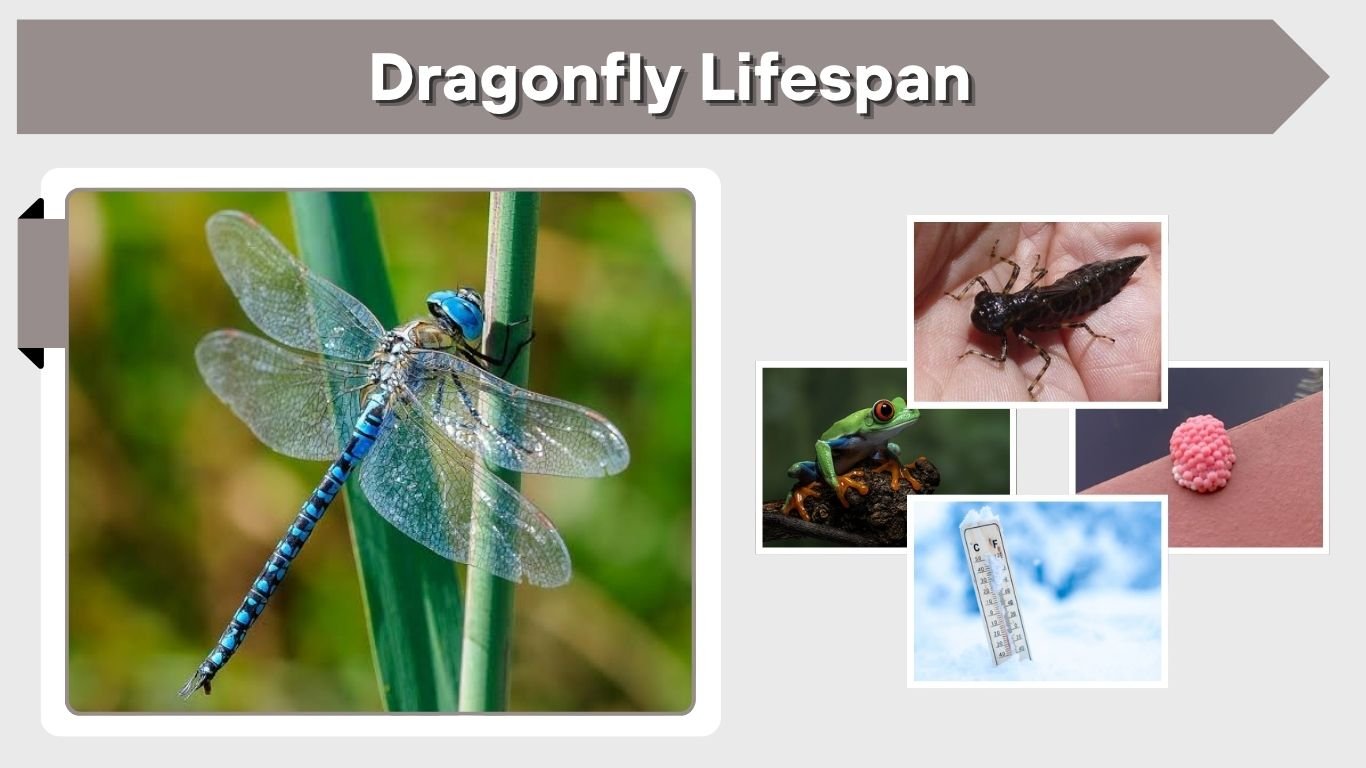
A dragonfly’s lifespan is much longer than the commonly repeated “24 hours” myth. Depending on the species, the complete life cycle can last from about six months to several years, with most of that time spent underwater as a nymph. The familiar flying adult is actually the shortest part of a dragonfly’s life, often lasting only a few weeks, although some adults survive for several months. Temperature, habitat, species, food availability, predators, and weather all affect longevity. This guide explains the dragonfly lifespan from egg to adult.
What Is the Average Lifespan of a Dragonfly?
There is no single lifespan that applies to every dragonfly. Some species complete their entire development within one year, while larger species may spend several years underwater before becoming adults. The British Dragonfly Society reports that the shortest complete natural life cycles are around six months, while some large dragonflies can take six or seven years.
Typical Dragonfly Lifespan
- Complete life cycle: about 6 months to several years
- Egg stage: days to months depending on species
- Nymph stage: several months to multiple years
- Adult stage: commonly a few weeks
- Some adults: 6–8 weeks or longer
- Exceptional species or conditions: adult stage may extend for several months
Most of a dragonfly’s lifetime occurs before it develops wings.
Do Dragonflies Really Live for Only 24 Hours?
No. Dragonflies do not have a 24-hour lifespan.
This myth probably comes from confusion between dragonflies and mayflies. Adult mayflies can be extremely short-lived, but even mayflies spend months or longer developing underwater before becoming adults.
Why the One-Day Myth Is Wrong
A dragonfly needs much longer than one day to grow, hunt, mature, reproduce, and complete its life cycle.
The British Dragonfly Society specifically states that dragonflies do not live for only one day. Even their adult flying stage normally lasts considerably longer.
Dragonfly Life Cycle and Lifespan
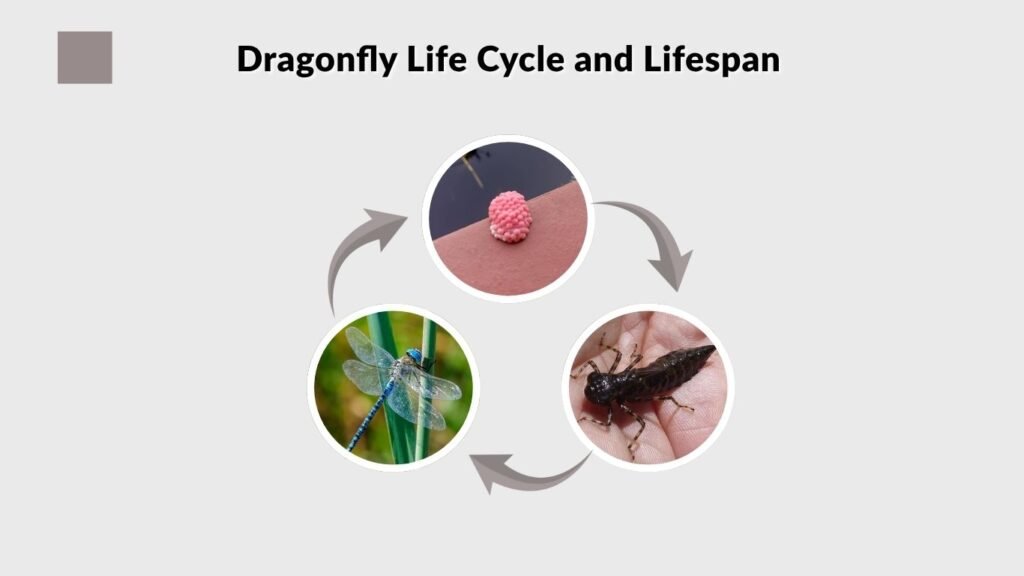
Dragonflies undergo incomplete metamorphosis, meaning they do not have a pupal stage like butterflies. Their life cycle has three main stages: egg, aquatic nymph, and winged adult.
Egg Stage
The life cycle begins when a female deposits eggs in or near freshwater.
Depending on the species, eggs may be placed directly into water, inserted into aquatic vegetation, buried in mud, or attached to plant material.
Some eggs hatch relatively quickly, while others enter a resting stage and survive unfavorable seasons before hatching.
Nymph Stage
The nymph, also called a larva or naiad, is the longest stage of a dragonfly’s life.
Dragonfly nymphs are completely aquatic predators. They live in ponds, lakes, wetlands, streams, marshes, and other freshwater environments.
As they grow, they repeatedly shed their exoskeleton. Depending on the species and environmental conditions, this stage can continue for months or several years.
Adult Stage
Once fully developed, the nymph climbs out of the water onto vegetation, rocks, or another exposed surface.
Its exoskeleton splits and the adult slowly emerges. The new dragonfly expands its wings and abdomen before its body hardens.
Afterward, the adult begins hunting, reaches sexual maturity, finds a mate, and reproduces.
Dragonfly Nymph Lifespan
The underwater stage accounts for the majority of the dragonfly’s total lifespan.
How Long Do Dragonflies Live in Water?
Many dragonflies remain aquatic for one to several years, although development can be considerably faster in some species.
Water temperature, food supply, latitude, species, competition, and seasonal conditions all influence how quickly nymphs grow.
Large species in cooler climates may take several years to mature, while species living in warm temporary waters may develop much more rapidly.
What Do Dragonfly Nymphs Do Underwater?
Nymphs are active predators that may eat:
- Mosquito larvae
- Aquatic insect larvae
- Small crustaceans
- Worms
- Tadpoles
- Other dragonfly nymphs
- Small fish in larger species
Their extendable lower jaw shoots forward rapidly to capture prey.
Adult Dragonfly Lifespan
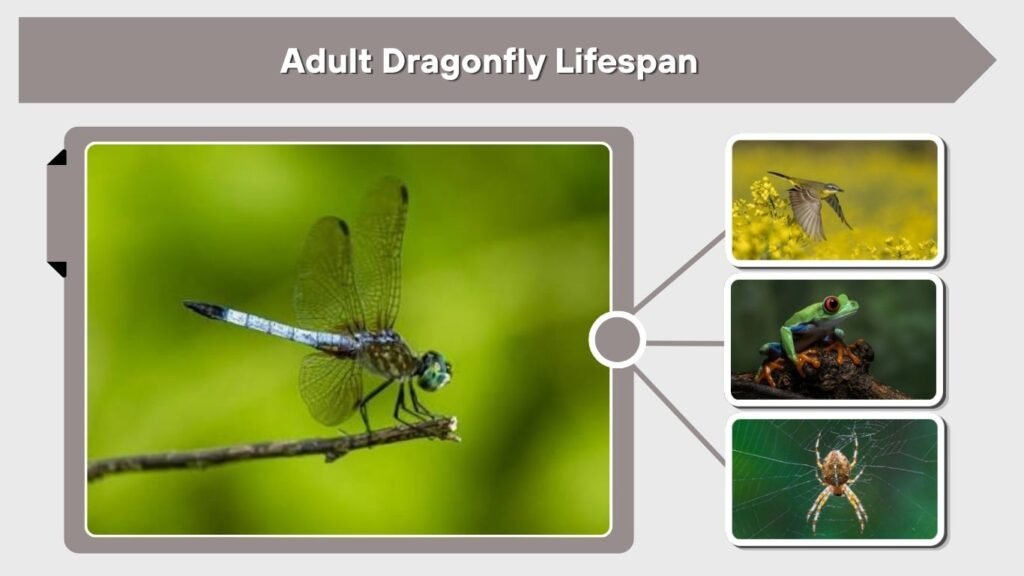
The beautiful winged dragonfly represents only the final portion of the animal’s life.
The British Dragonfly Society describes adult life expectancy as typically short—often around one or two weeks—with some surviving six to eight weeks. Larger dragonflies can sometimes live considerably longer under favorable conditions.
Why Do Adult Dragonflies Have Shorter Lives?
Adult dragonflies face many hazards, including predation, bad weather, starvation, territorial fighting, and injuries.
Birds, frogs, spiders, fish, and other dragonflies can prey on them. Extended periods of cold, rain, or strong wind can also prevent adults from hunting effectively.
Their adult lives are therefore focused heavily on feeding and reproduction.
How Long Do Different Dragonflies Live?
Lifespan differs considerably among the thousands of dragonfly species worldwide. Climate can also cause members of the same species to develop at different speeds.
Emperor Dragonfly Lifespan
The Emperor Dragonfly (Anax imperator) spends much of its life underwater as a nymph. Development normally requires substantially longer than its relatively brief adult flying period.
Adults are mainly visible through the warmer months, when they hunt, defend territories, mate, and lay eggs.
Common Green Darner Lifespan
The Common Green Darner (Anax junius) has an especially interesting life cycle because some populations migrate.
The U.S. National Park Service notes that adults may live from a few weeks to about a month depending on climate and whether they belong to migratory populations. Their aquatic nymphs account for much more of the developmental period.
Some Green Darners migrate hundreds of miles, reproduce, and die, while subsequent generations continue the annual migration cycle. Smithsonian research has shown that multiple generations participate in this migratory system.
Common Whitetail Lifespan
The Common Whitetail (Plathemis lydia) follows the typical skimmer pattern: a comparatively long aquatic juvenile stage followed by a shorter adult period.
Adults are mainly active during the warm season and spend their time feeding, defending breeding areas, mating, and laying eggs.
Blue Dasher Lifespan
Blue Dashers (Pachydiplax longipennis) also spend most of their total lives as aquatic nymphs.
Their conspicuous adult stage lasts through part of the warm season, but an individual adult lives for only a fraction of the time represented by the species’ overall seasonal flight period.
Does a Dragonfly Live Longer in Captivity?
Dragonflies are not well suited to ordinary captivity.
Adults require substantial flying space and continuously hunt moving insects in the air. Maintaining their natural feeding, territorial, mating, and flight behavior in a small enclosure is difficult.
Captivity Does Not Guarantee a Longer Life
Keeping an adult indoors does not automatically extend its lifespan. Lack of appropriate prey, flight space, sunlight, temperature regulation, and natural behavior can instead shorten its life.
Dragonflies are best observed in their natural habitats.
What Determines a Dragonfly’s Lifespan?
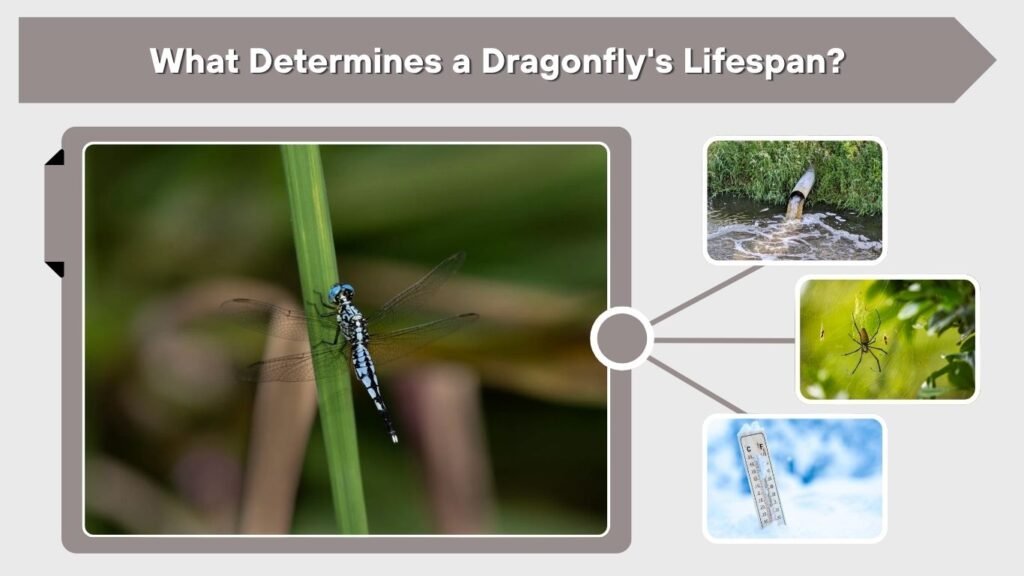
Several environmental and biological factors influence how long an individual survives.
Temperature and Climate
Temperature strongly affects nymph growth. Warm water can accelerate metabolism and development, while colder conditions may extend the aquatic stage.
Food Availability
Nymphs need abundant aquatic prey, while adults depend on flying insects. Poor food availability can slow juvenile growth or shorten adult survival.
Predators
Fish, birds, frogs, spiders, reptiles, and other insects prey on dragonflies at different life stages.
Water Quality
Because dragonfly nymphs depend on freshwater habitats, pollution, drought, habitat destruction, and changes in aquatic vegetation can affect survival.
Weather
Adult dragonflies rely on suitable flying conditions to hunt. Prolonged rain, cold temperatures, and strong winds can reduce their ability to feed.
Why Is Most of a Dragonfly’s Life Spent Underwater?
The aquatic nymph stage is devoted primarily to growth.
A dragonfly must increase dramatically in size and molt repeatedly before developing into a reproductive winged adult. Remaining underwater also gives nymphs access to abundant prey and provides a completely different ecological niche from adults.
This division reduces direct competition between juveniles and adults: nymphs hunt aquatic animals, while adults mainly capture flying insects.
FAQs
1. What is the average lifespan of a dragonfly?
A complete dragonfly life cycle generally lasts from several months to several years. The majority of this time is spent underwater as a nymph.
2. Does a dragonfly live for only 24 hours?
No. The 24-hour dragonfly lifespan is a myth. Adult dragonflies usually live for weeks rather than one day, and their entire life cycle can last years.
3. How long does an adult dragonfly live?
Many adults survive for roughly a few weeks. Some can live six to eight weeks or longer, while certain larger species may survive for several months under favorable conditions.
4. How long does a dragonfly nymph live?
Depending on species and climate, the aquatic nymph stage may last from several months to multiple years. Some large dragonflies can take several years to complete their entire development.
5. What stage of a dragonfly’s life is the longest?
The aquatic nymph stage is normally the longest. Dragonflies spend most of their lives underwater before emerging for their relatively brief adult flying stage.