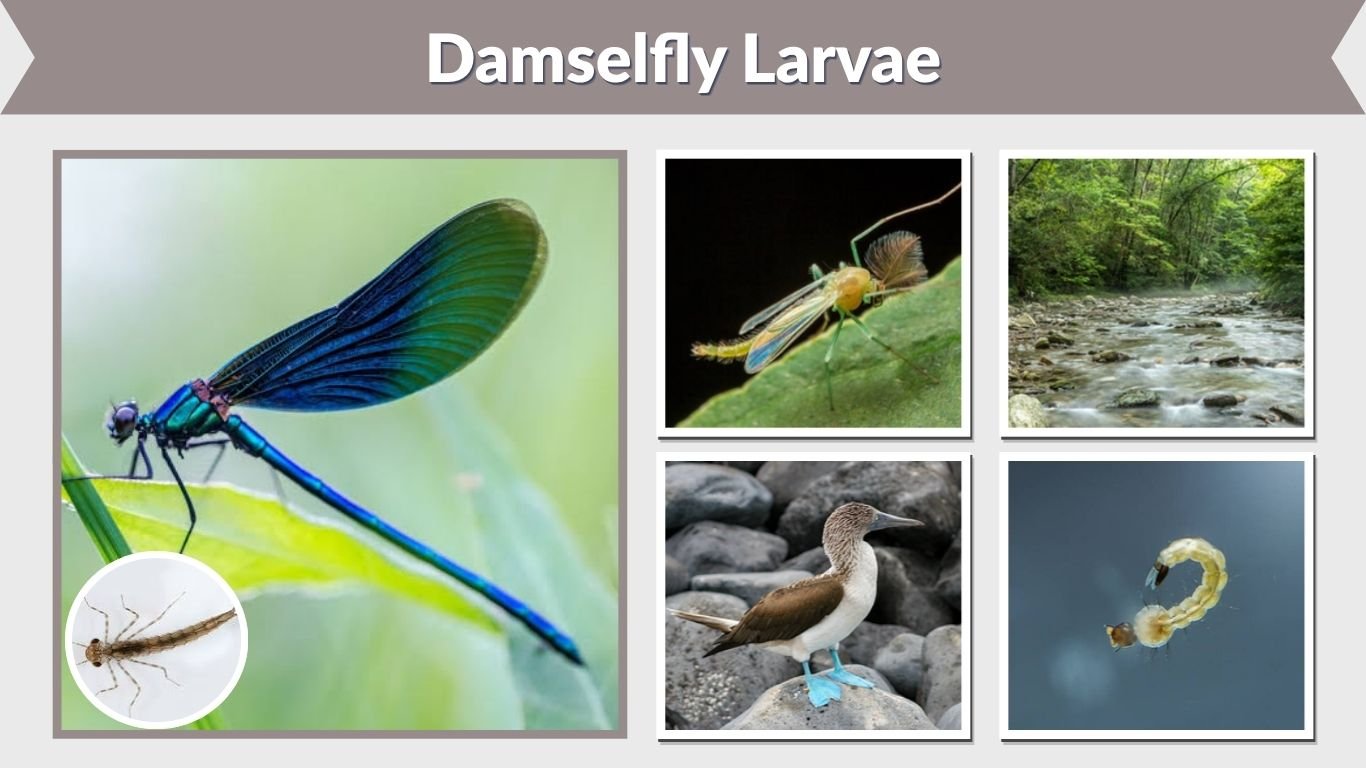
Damselfly larvae are slender aquatic predators that spend most of their lives hidden beneath the surface of ponds, lakes, streams, and wetlands. Also called damselfly nymphs or naiads, they are easily recognized by the three leaf-like gills projecting from the end of the abdomen. These young insects hunt mosquito larvae and other small aquatic animals before eventually leaving the water and transforming into winged adults. This guide covers damselfly larvae identification, size, gills, diet, habitat, life cycle, aquarium problems, predators, and differences from dragonfly and mayfly larvae.
What Are Damselfly Larvae?
Damselflies belong to the suborder Zygoptera within the insect order Odonata. Their immature aquatic stage is commonly called a larva, nymph, or naiad. Damselflies undergo incomplete metamorphosis, so there is no pupal stage. Instead, an egg hatches into an aquatic nymph that molts repeatedly before emerging directly as a winged adult.
Damselfly Larvae Identification
- Long, slender, segmented body
- Six jointed legs
- Large eyes on either side of the head
- Developing wing pads on older nymphs
- Three leaf-like structures at the tip of the abdomen
- Extendable hinged lower jaw for catching prey
- Usually greenish, brown, tan, or mottled
- Often found clinging to submerged vegetation
The three structures at the tail are called caudal lamellae. They are among the easiest features for separating most damselfly larvae from dragonfly larvae.
What Is the Scientific Name for Damselfly Larvae?
There is no single scientific species name for a damselfly larva because hundreds of damselfly species have aquatic nymphs. Collectively, damselflies belong to Zygoptera.
Identification to family, genus, or species may require examining the head, antennae, wing cases, abdominal structures, and particularly the shape and markings of the caudal lamellae.
Damselfly Larvae Size and Appearance
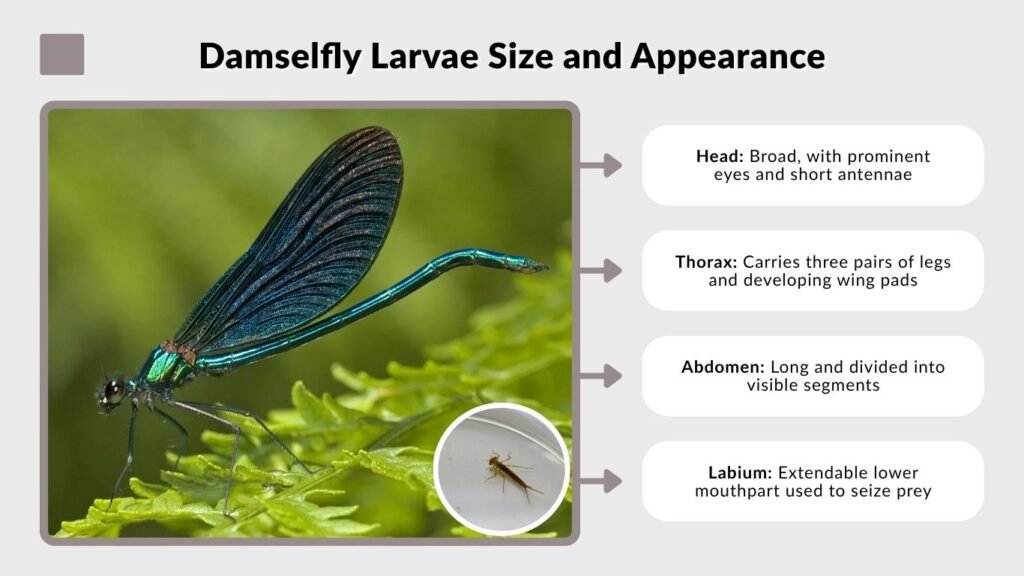
Size varies considerably between species and developmental stages. Newly hatched nymphs can be extremely small, while mature larvae of larger damselflies may reach several centimeters when their tail gills are included.
Their narrow bodies allow them to move through dense aquatic plants and debris while remaining difficult for predators and prey to detect.
Main Body Features
- Head: Broad, with prominent eyes and short antennae
- Thorax: Carries three pairs of legs and developing wing pads
- Abdomen: Long and divided into visible segments
- Labium: Extendable lower mouthpart used to seize prey
- Caudal lamellae: Three flattened or leaf-like structures at the rear
The specialized labium can shoot forward rapidly, allowing the nymph to grab animals without moving its whole body toward them.
Damselfly Larvae Gills
The three tail-like structures are not ordinary tails. In most damselflies, they function as external gills and are called caudal lamellae. Their shapes and patterns can also provide important clues when identifying species.
How Damselfly Larvae Breathe
- Three lamellae occur at the end of the abdomen.
- They provide a large surface for gas exchange.
- Dissolved oxygen passes from the water into the insect.
- Lamellae may be broad, narrow, pointed, rounded, or patterned.
- Their movement can also assist with swimming.
Damselfly nymphs often escape by wriggling their abdomen and lamellae from side to side. Dragonfly larvae use a very different respiratory system involving internal rectal gills.
Where Do Damselfly Larvae Live?
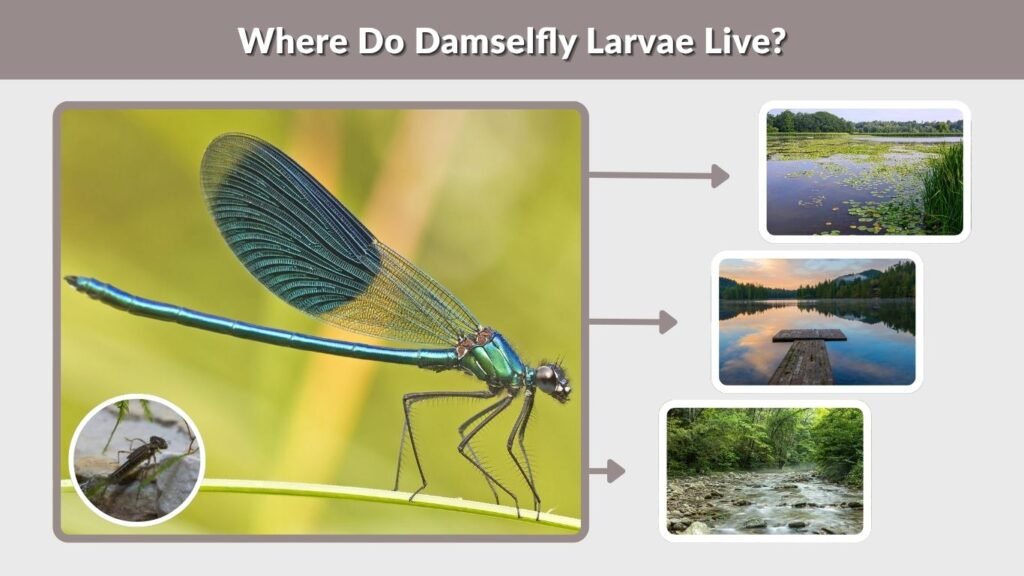
Damselfly larvae are completely aquatic until their final molt. Different species favor different conditions, ranging from still garden ponds to flowing streams. Most remain near vegetation, roots, sediment, or submerged debris where they can hide and ambush prey.
Common Habitats
- Garden ponds
- Lakes
- Marshes
- Wetlands
- Canals
- Slow rivers
- Streams
- Drainage ditches
- Shallow pools
- Submerged vegetation
- Roots of floating plants
Some species tolerate relatively disturbed water, while others require specialized habitats. Therefore, the presence of a damselfly larva alone should not be used as a universal measure of water quality.
Damselfly Larvae in the UK
Britain has numerous damselfly species, and their larvae occur in a wide variety of freshwater habitats. Identification can be challenging because many species look similar underwater, although specialized identification keys use features such as head markings and the shape of the caudal lamellae.
What Do Damselfly Larvae Eat?
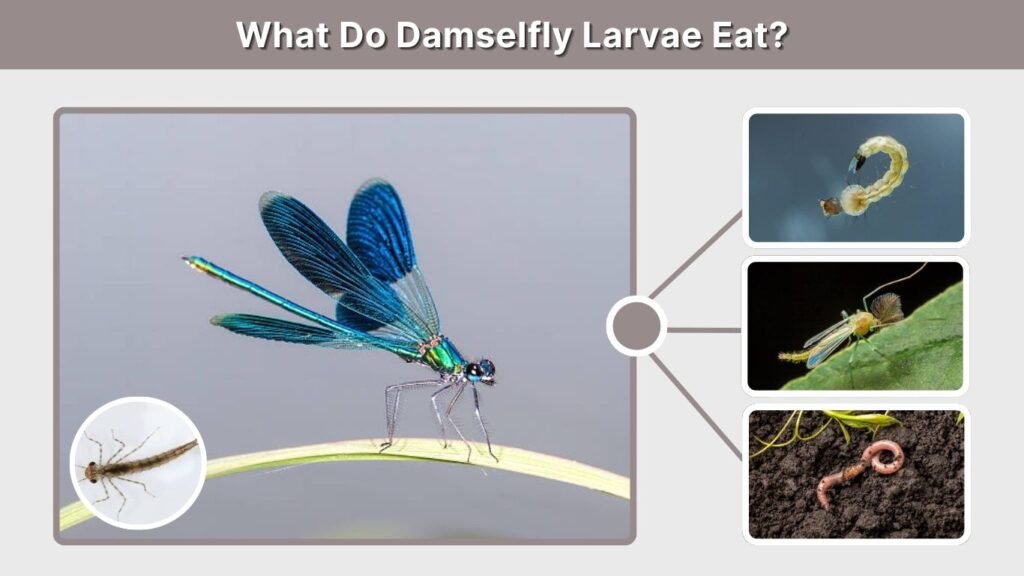
Damselfly nymphs are consumers and predators, not producers. They obtain energy by capturing other animals and can play an important role in freshwater food webs.
They rarely depend on dead material as their primary food because their hunting apparatus is adapted for grabbing moving prey.
Damselfly Larvae Diet
- Mosquito larvae
- Midge larvae
- Small aquatic insects
- Tiny crustaceans
- Worms
- Small aquatic invertebrates
- Occasionally other small nymphs
Larger Odonata larvae can capture tadpoles and very small fish, although prey size depends strongly on the species and size of the predator.
Do Damselfly Larvae Eat Mosquito Larvae?
Yes. Mosquito larvae are appropriately sized prey for many damselfly nymphs. However, damselflies are generalist predators rather than mosquito specialists and will attack various small aquatic animals when opportunities arise.
Damselfly Larvae Life Cycle
A damselfly has three main life stages: egg, aquatic larva, and adult. Most of its lifespan may be spent underwater, meaning the colorful flying damselfly we recognize represents only the final portion of its life.
Egg to Nymph
Female damselflies generally possess an ovipositor that allows them to insert elongated eggs into living plant tissue or other suitable material near water.
Eggs may hatch within a few weeks, although timing varies according to species and environmental conditions. A tiny prolarva emerges first and rapidly molts into the familiar aquatic nymph.
Growth and Molting
Damselfly nymphs molt repeatedly as they increase in size. Odonata larvae may undergo roughly 5–14 additional molts before reaching full size, and development can range from only a few months in some species to multiple years in others.
Temperature and food availability strongly influence development time.
Final Emergence
Once mature, the nymph moves into shallow water and eventually climbs onto a stem, rock, or other support above the surface.
Its skin splits and the adult pulls itself free. The wings expand and harden before the damselfly makes its first flight. The empty larval skin left behind is called an exuvia.
Damselfly vs Dragonfly Larvae
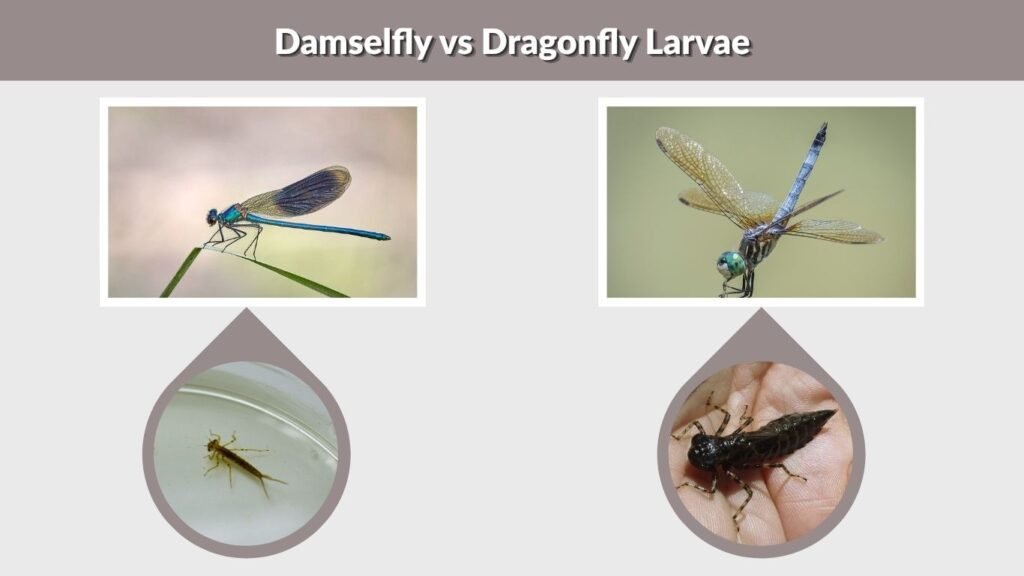
Both are aquatic predatory members of Odonata, but their body shapes and respiratory structures make them relatively easy to distinguish.
| Feature | Damselfly Larva | Dragonfly Larva |
| Body | Long and slender | Usually broad and robust |
| External tail gills | Three lamellae | Absent |
| Gills | External caudal gills | Internal rectal gills |
| Swimming | Side-to-side movement | Many use rectal jet propulsion |
| Appearance | Delicate | Stockier |
| Suborder | Zygoptera | Anisoptera |
The three external gills are generally the quickest identification clue.
Damselfly Larvae vs Mayfly Larvae
Mayfly nymphs are another group frequently confused with damselfly larvae because many have three structures projecting from the abdomen.
Key Differences
- Damselflies have three broad or leaf-like lamellae.
- Mayflies commonly have three thin, thread-like tails.
- Many mayfly nymphs have visible gills along the sides of the abdomen.
- Damselfly larvae have a predatory extendable labium.
- Many mayflies primarily graze algae or feed on plant material and detritus.
A simple pond identification guide describes damselflies as having three flattened tails, compared with the three thin tails of mayfly larvae.
Damselfly Larvae in an Aquarium
Finding a damselfly nymph in a fish or shrimp tank can be surprising. Eggs or young larvae may arrive on aquatic plants, especially plants that were grown outdoors or collected from natural water.
Because the larvae are predators, they may threaten very small tank animals.
Are They Harmful in Fish Tanks?
Damselfly nymphs may prey on:
- Baby shrimp
- Tiny ornamental shrimp
- Fish fry
- Small aquatic insects
- Other very small tank inhabitants
They can hide effectively among plants and remain unnoticed for considerable periods. Aquarium reports commonly link their introduction to aquatic plants or wild-collected live foods.
How to Get Rid of Damselfly Larvae in an Aquarium
The safest approach in an occupied aquarium is usually manual removal. Use a fine net or siphon when a larva is spotted and inspect plants carefully for additional individuals.
Continue checking because more larvae may hatch later. Quarantining and inspecting new plants before introducing them can reduce future risk. Avoid randomly adding insecticides to a fish or shrimp aquarium, as products capable of killing aquatic insects may also harm desirable invertebrates or fish.
What Eats Damselfly Larvae?
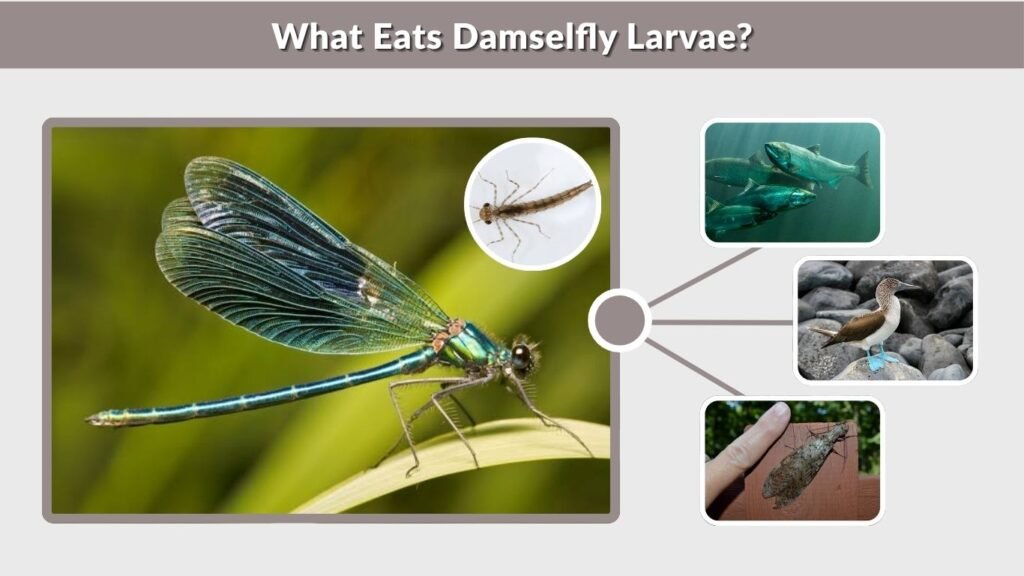
Being predators does not prevent damselfly larvae from becoming prey themselves. They occupy an intermediate position in freshwater food webs.
Common Predators
- Fish
- Larger dragonfly larvae
- Water birds
- Amphibians
- Larger aquatic insects
- Other predatory invertebrates
Camouflage, vegetation, and their quick side-to-side swimming help nymphs avoid these predators.
FAQs
1. Are damselfly larvae dangerous?
No, they are not dangerous to people. They are predators of very small aquatic animals and generally avoid humans.
2. Why do damselfly larvae have three tails?
The three structures are caudal lamellae that primarily function as external gills. They also contribute to swimming and are important for identification.
3. How long do damselflies stay as larvae?
It varies by species and climate. Some develop within several months, while others remain aquatic for one or more years. Cooler conditions generally slow development.
4. Can damselfly larvae live in an aquarium?
Yes. They can accidentally enter aquariums on plants or other material and survive there. Because they are predators, they should usually be removed from tanks containing shrimp or fish fry.
5. How can you tell a damselfly larva from a dragonfly larva?
Look at the end of the abdomen. Damselfly larvae are slender and normally have three obvious leaf-like gills, whereas dragonfly larvae are generally stockier and lack these external tail gills.