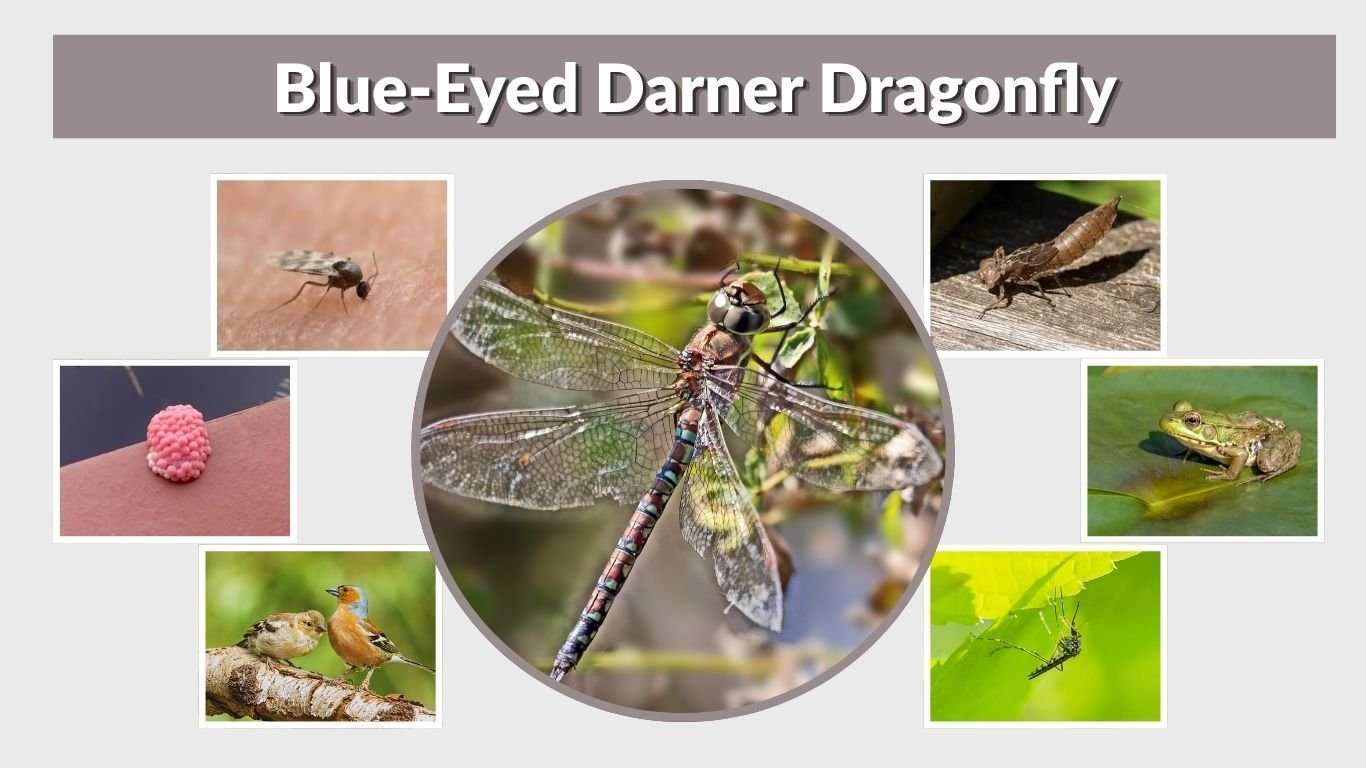
The blue-eyed darner is a large, fast-flying dragonfly best known for its brilliant blue eyes and colorful body markings. Scientifically called Rhionaeschna multicolor, this western North American species is frequently seen around ponds, marshes, lakes, and slow-moving waterways. Males usually show vivid blue markings, while females may appear greenish, yellowish, or occasionally blue like males. Blue-eyed darners are skilled aerial predators that hunt mosquitoes, flies, and other insects while patrolling open spaces around freshwater habitats.
What Is a Blue-Eyed Darner?
The blue-eyed darner belongs to the darner family Aeshnidae, a group containing some of the largest and strongest-flying dragonflies. It spends much of its adult life in the air, hunting, patrolling territories, and searching for mates. Its combination of bright eyes, long abdomen, clear wings, and blue or green body markings makes it relatively distinctive.
Blue-Eyed Darner Quick Facts
- Scientific name: Rhionaeschna multicolor
- Family: Aeshnidae
- Order: Odonata
- Type: Dragonfly
- Length: About 2.5–3 inches
- Main male color: Blue and brown
- Female color: Green, yellow-green, or sometimes blue
- Eyes: Bright blue in mature males
- Diet: Small flying insects
- Habitat: Ponds, marshes, lakes, and slow waters
- Young stage: Aquatic nymph
- Range: Primarily western North America
Scientific Name and Taxonomy
The accepted scientific name is Rhionaeschna multicolor. Older sources may place this dragonfly in the genus Aeshna, so the name Aeshna multicolor may occasionally appear in older publications.
Its classification places it among the darners, which are known for their long bodies, powerful wings, large eyes, and almost constant aerial activity.
Blue-Eyed Darner Identification
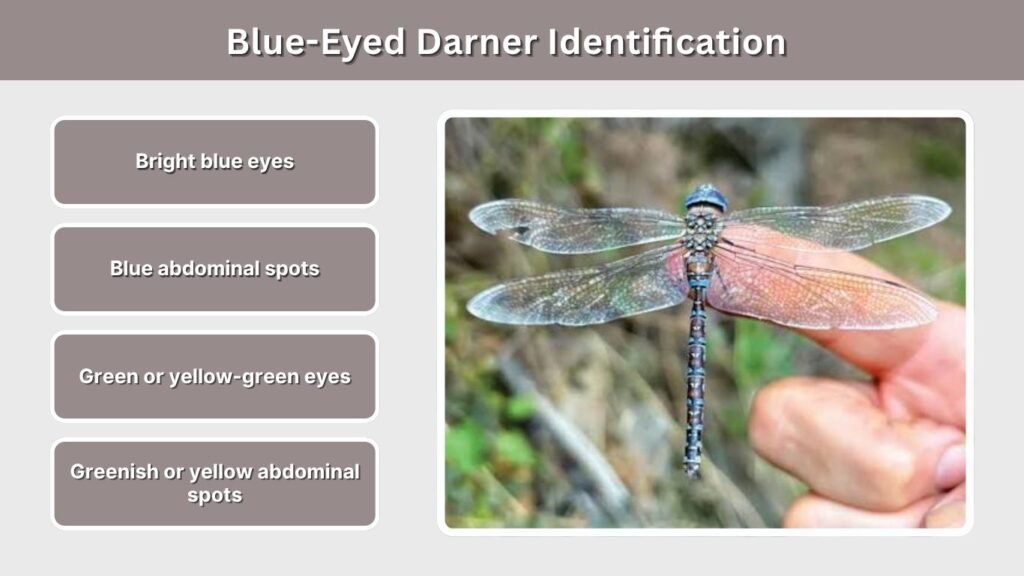
The bright eyes are an important clue, but body markings are equally useful. Mature males generally have vivid blue spots across a brownish body, while females display more variable coloration. The abdomen is long and slender, and the thorax usually has two noticeable pale or colored stripes. These features help separate it from similar darner species.
Male Blue-Eyed Darner
A mature male commonly has:
- Bright blue eyes
- Blue abdominal spots
- Brown or dark background coloration
- Two blue stripes on the thorax
- Long, narrow abdomen
- Clear wings
- Strong, streamlined body
- Dark legs
The intense blue markings are usually most noticeable in mature males and may look almost electric under bright sunlight.
Female Blue-Eyed Darner
Females are more variable than males and can look surprisingly different.
Typical females have:
- Green or yellow-green eyes
- Greenish or yellow abdominal spots
- Brown background coloration
- Greenish thoracic stripes
- Long abdomen
- Clear wings
Some females are andromorphs, meaning their coloration resembles that of males. These females may have blue markings instead of the more typical green or yellow pattern.
Male vs. Female Blue-Eyed Darner
| Feature | Male | Female |
| Eyes | Bright blue | Greenish, yellowish, or sometimes blue |
| Abdomen spots | Usually vivid blue | Often green or yellow-green |
| Thoracic stripes | Blue | Green, yellow-green, or blue |
| Overall appearance | Strong blue contrast | More variable |
| Andromorph form | Not applicable | May resemble male |
Blue-Eyed Darner Habitat and Range
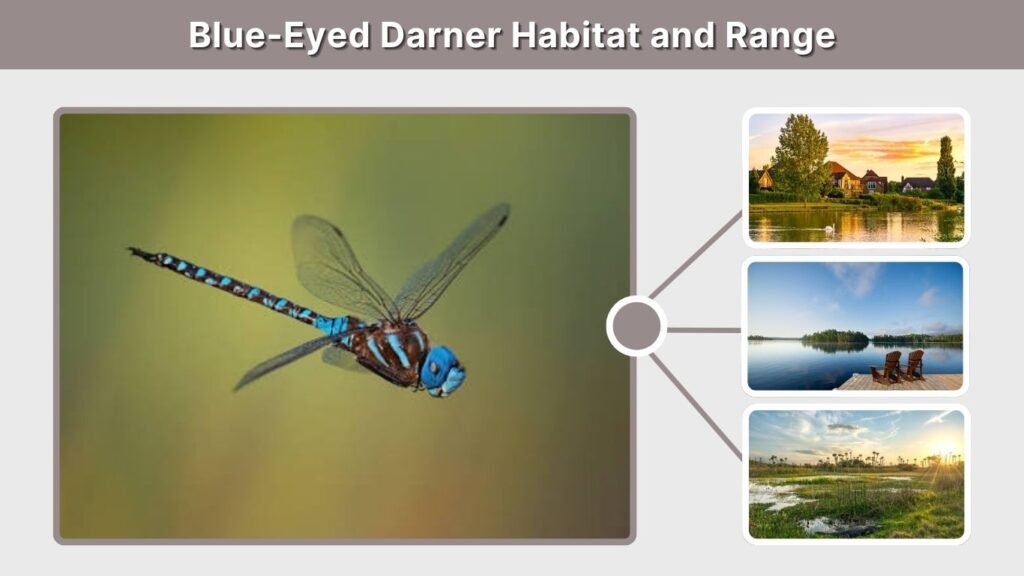
Blue-eyed darners are strongly associated with freshwater, although adults may travel well away from breeding sites while feeding. They usually prefer open, sunny waters with abundant vegetation. Their powerful flight allows them to patrol large areas, and they may appear in gardens or fields located some distance from ponds.
Where Do Blue-Eyed Darners Live?
Typical habitats include:
- Ponds
- Marshes
- Lakes
- Slow-moving streams
- Wetlands
- Irrigation ponds
- Reservoir edges
- Vegetated ditches
- Temporary pools
- Open freshwater areas
Adults frequently fly several feet above the ground or water rather than remaining continuously perched.
Blue-Eyed Darner Range
The species occurs mainly across western North America. Its range includes parts of:
- California
- Colorado
- Nevada
- Arizona
- New Mexico
- Utah
- Oregon
- Washington
- Idaho
- Western Canada
- Northern Mexico
California is one of the regions where blue-eyed darners are especially familiar.
What Do Blue-Eyed Darners Eat?
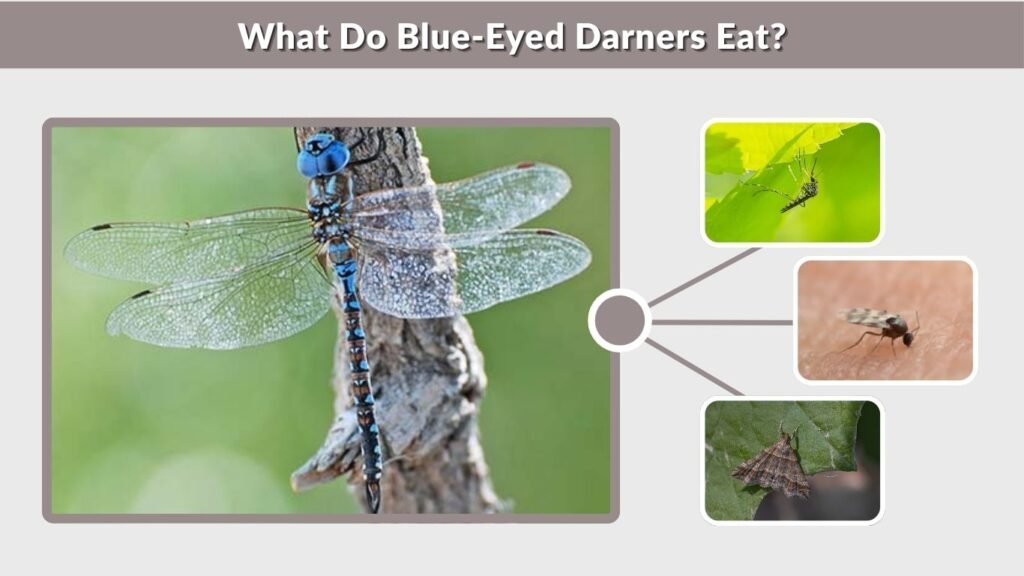
Blue-eyed darners are predators during both the adult and aquatic stages. Adults hunt entirely on the wing, using their enormous compound eyes to detect small insects. Their strong wings allow rapid acceleration, hovering, turning, and pursuit, making them highly effective aerial hunters.
Adult Diet
Blue-eyed darners may eat:
- Mosquitoes
- Midges
- Gnats
- Flies
- Small moths
- Flying ants
- Small beetles
- Other small dragonflies
Their legs form a basket beneath the body, helping them grab insects while flying.
How Do They Hunt?
Unlike many skimmer dragonflies that frequently return to a favorite perch, darners often remain airborne for long periods.
A blue-eyed darner may patrol back and forth over a pond, meadow, or shoreline. When it detects prey, it changes direction quickly and intercepts the insect in midair.
It may eat smaller prey while continuing to fly.
Blue-Eyed Darner Life Cycle
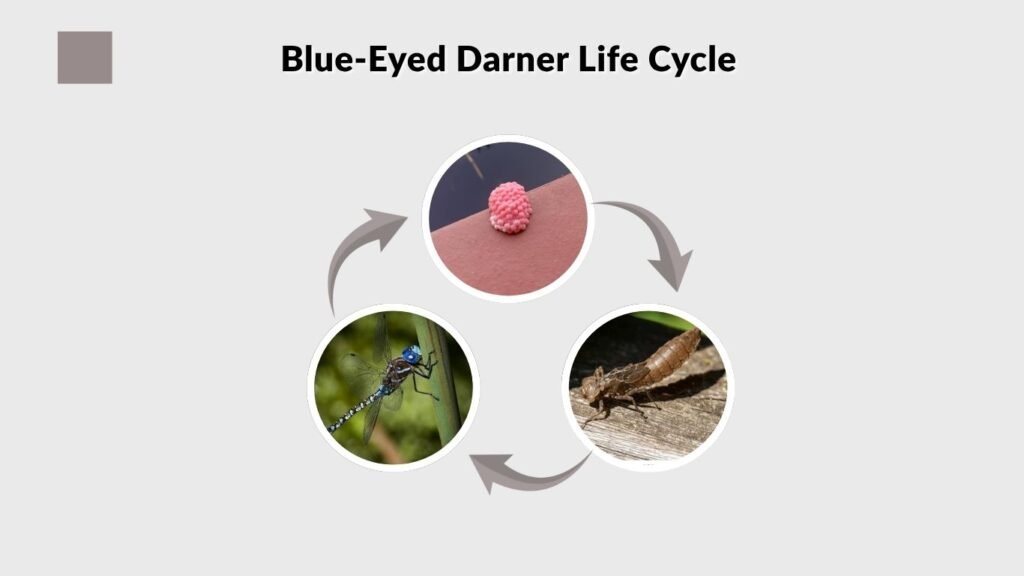
Blue-eyed darners undergo incomplete metamorphosis. Their life cycle consists of egg, aquatic nymph, and adult stages. There is no pupal stage. Much of their development occurs underwater, where the nymph looks completely different from the long-bodied adult dragonfly flying above the pond.
Eggs and Reproduction
Mating begins when a male captures a receptive female. Like other dragonflies, the pair may form the characteristic mating-wheel position.
After mating, the female deposits eggs into aquatic plants, mud, or other suitable material near water.
Egg-laying sites are important because the developing nymphs must have access to freshwater after hatching.
Blue-Eyed Darner Nymph
The nymph is an aquatic predator.
It may eat:
- Mosquito larvae
- Aquatic insect larvae
- Small crustaceans
- Tadpoles
- Tiny aquatic animals
Dragonfly nymphs possess a specialized extendable lower mouthpart that rapidly shoots forward to capture prey.
They molt repeatedly as they grow.
Emergence Into an Adult
When fully developed, the nymph crawls out of the water onto reeds, rocks, stems, or other surfaces.
The outer skin splits, and the adult gradually emerges. Its wings are initially soft but expand and harden before the dragonfly makes its first strong flight.
The empty nymph skin may remain attached to the emergence site.
Blue-Eyed Darner Adaptations and Behavior
Blue-eyed darners are highly adapted for aerial hunting. Their enormous eyes provide a wide field of vision, while two powerful pairs of wings allow exceptional control. They can fly forward, change direction rapidly, hover, and accelerate after prey. Their long abdomen also helps with balance and maneuverability during flight.
Important Adaptations
- Large compound eyes for detecting prey
- Four independently controlled wings
- Strong legs for grabbing airborne insects
- Long abdomen for stability
- Powerful flight muscles
- Excellent maneuverability
- Aquatic nymph adapted for ambush hunting
Their coloration may also help individuals recognize members of their own species during breeding interactions.
Daily Behavior
Blue-eyed darners are mostly active during daylight. Warm, sunny conditions often produce the greatest activity.
Males commonly patrol territories around suitable water and may chase rival males. Females tend to spend more time away from breeding waters and return when ready to mate or lay eggs.
At night or during poor weather, adults rest among vegetation.
Blue-Eyed Darner vs. Paddle-Tailed Darner
Blue-eyed darners can sometimes be confused with other western darners, particularly the paddle-tailed darner. Looking at the thoracic stripes, abdominal markings, eye color, and terminal appendages can help distinguish them.
Key Differences
Blue-eyed darner: Usually shows bright blue eyes in males, relatively broad blue thoracic stripes, and strongly contrasting blue abdominal spots.
Paddle-tailed darner: Can also have blue markings, but its thoracic stripe pattern and terminal appendages differ.
Geographic location and a clear side or dorsal photograph are often needed for accurate identification because several western darner species appear similar while flying.
Blue-Eyed Darner Predators and Ecological Role
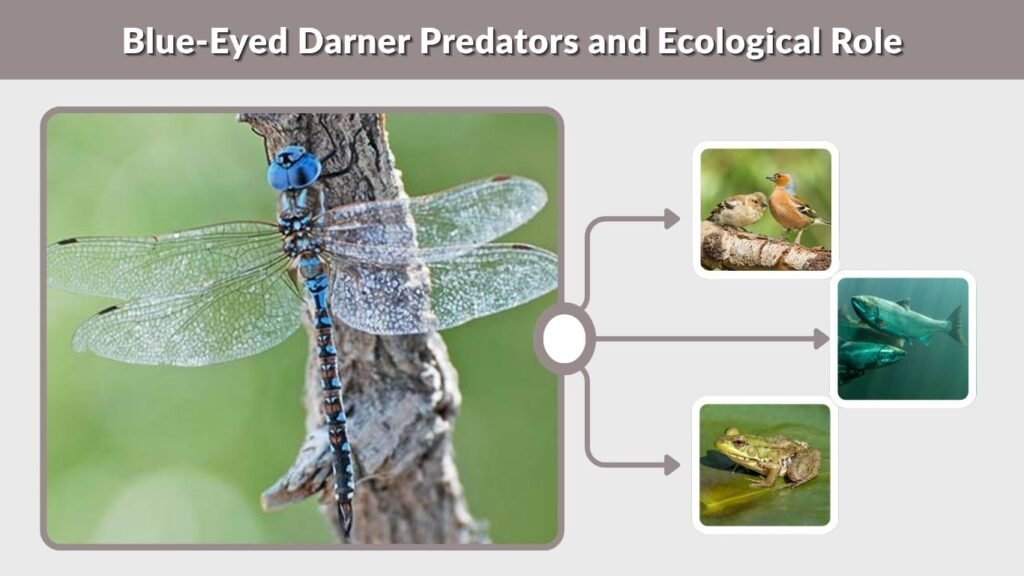
Even though blue-eyed darners are highly capable predators, they are also part of a larger food web. Adults may be captured by birds or larger dragonflies, while aquatic nymphs face fish, frogs, and predatory aquatic insects.
Common Predators
- Birds
- Fish
- Frogs
- Spiders
- Larger dragonflies
- Aquatic insects
- Small reptiles
Blue-eyed darners help regulate populations of flying insects and aquatic organisms. Their nymphs consume mosquito larvae and other small aquatic animals, while adults capture many insects above water and vegetation.
FAQs
What is the scientific name of the blue-eyed darner?
The scientific name is Rhionaeschna multicolor. It belongs to the dragonfly family Aeshnidae.
How big is a blue-eyed darner?
Adults are generally around 2.5–3 inches long, making them noticeably larger than many common skimmer dragonflies.
What does a female blue-eyed darner look like?
Typical females have green or yellow-green markings and greenish eyes. Some females are andromorphs and develop blue coloration similar to males.
What do blue-eyed darners eat?
Adults mainly eat mosquitoes, flies, gnats, midges, moths, and other flying insects. Their aquatic nymphs consume mosquito larvae and other small aquatic animals.
Where are blue-eyed darners found?
They occur mainly in western North America and are commonly associated with ponds, marshes, lakes, reservoirs, and other freshwater environments in states such as California, Colorado, Nevada, Arizona, and Utah.