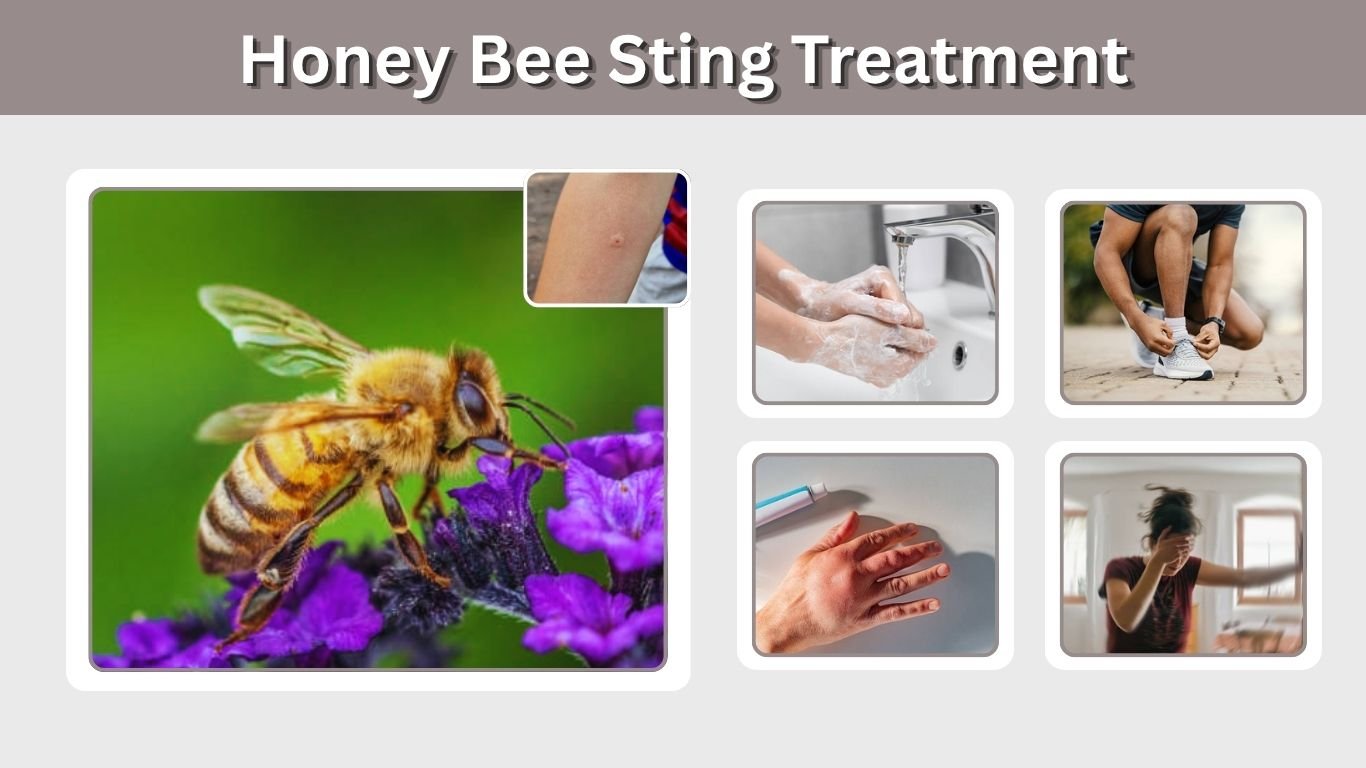
A honey bee sting usually causes immediate burning pain, redness, swelling, and itching around the sting site. Most mild reactions can be treated at home, but honey bees leave a barbed stinger behind, so removing it promptly is an important first step. Some people develop larger local swelling, while a severe allergic reaction called anaphylaxis requires emergency medical treatment. This guide explains effective honey bee sting treatment, home care for pain and swelling, what to avoid, and when you should seek medical attention.
What Happens When a Honey Bee Stings You?
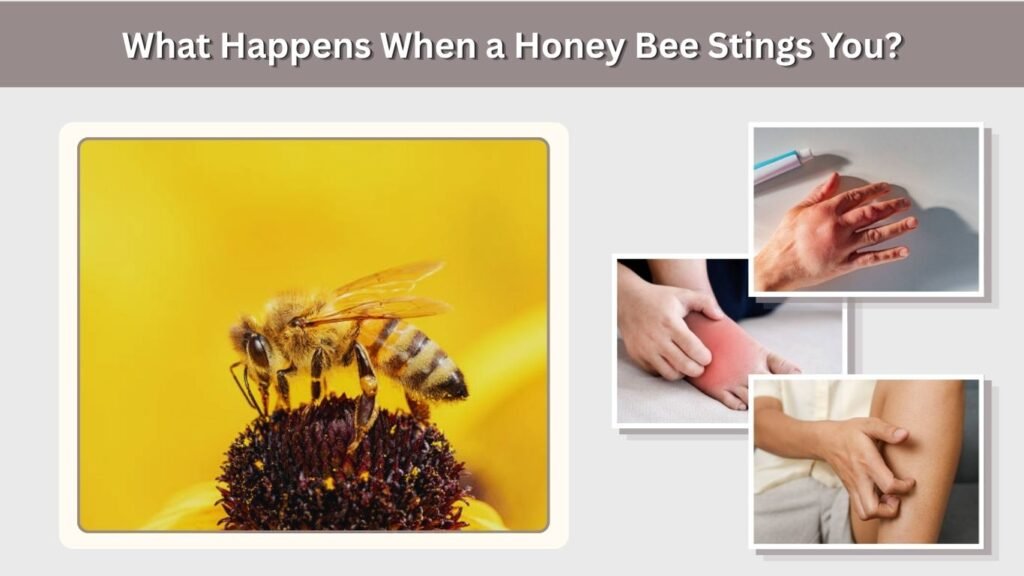
A honey bee uses a barbed stinger to inject venom into the skin. Unlike many wasps, a honey bee commonly leaves its stinger and attached venom apparatus behind after stinging.
The venom triggers inflammation around the sting site.
Common symptoms include:
- Immediate sharp or burning pain
- A small raised welt
- Redness
- Swelling
- Tenderness
- Itching
For most people, pain and swelling remain localized and improve within several hours or a few days. A stronger local reaction can cause swelling that becomes worse over the next day or two and may persist for several days.
Honey Bee Sting Treatment: What to Do Immediately
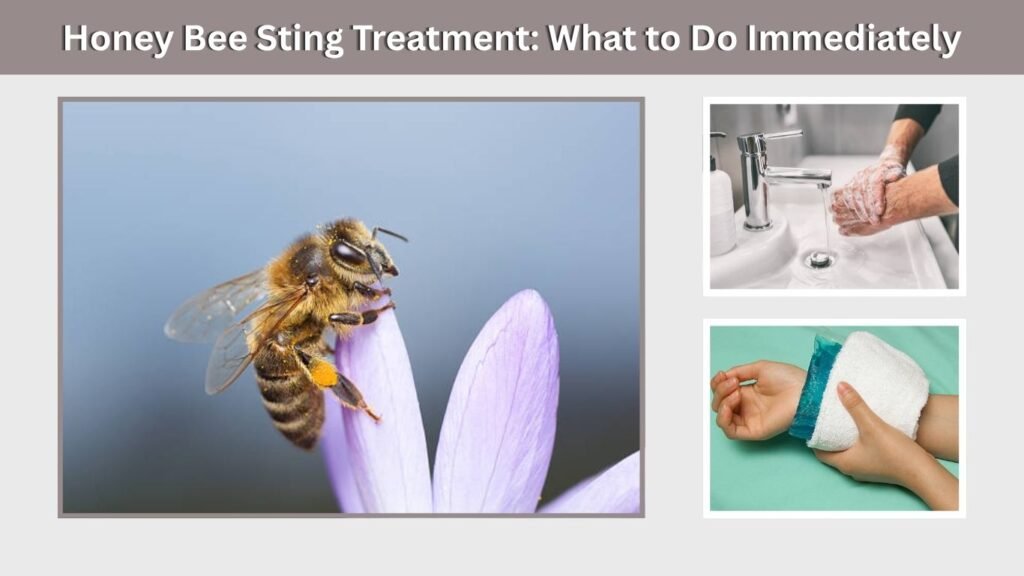
Treating the sting quickly can reduce discomfort and prevent additional irritation.
1. Move Away From the Bees
First, move calmly to a safe location.
If you were stung near a hive or swarm, additional bees may be nearby. Avoid swatting at them if possible and move indoors or into a closed vehicle if multiple bees are attacking.
2. Remove the Stinger
Check the sting site for a small dark stinger.
If one remains in the skin, remove it as soon as possible. NHS guidance recommends scraping or brushing it sideways using a fingernail or the edge of a card.
After removing it, avoid repeatedly squeezing or digging into the wound.
3. Wash the Area
Wash the sting thoroughly using soap and water.
Cleaning the area removes surface dirt and reduces the chance of irritation or infection.
4. Apply a Cold Compress
Apply a cold pack or ice wrapped in cloth to the affected area.
Cold can help reduce:
- Pain
- Swelling
- Redness
- Local inflammation
Do not place ice directly against bare skin for prolonged periods.
Honey Bee Sting Swelling Treatment
Some swelling around a bee sting is normal.
For a mild local reaction, applying a cold compress and resting the affected area may be enough.
If the sting is on an arm or leg, elevating the limb can also help reduce swelling.
An over-the-counter antihistamine may reduce troublesome itching or swelling for some people, while hydrocortisone cream or calamine lotion may provide additional relief. Over-the-counter pain medicines such as acetaminophen or ibuprofen can also help when appropriate for the individual.
Always follow medication labels and consider medical conditions, allergies, pregnancy, age, and other medicines before using an over-the-counter product.
Honey Bee Sting Treatment at Home
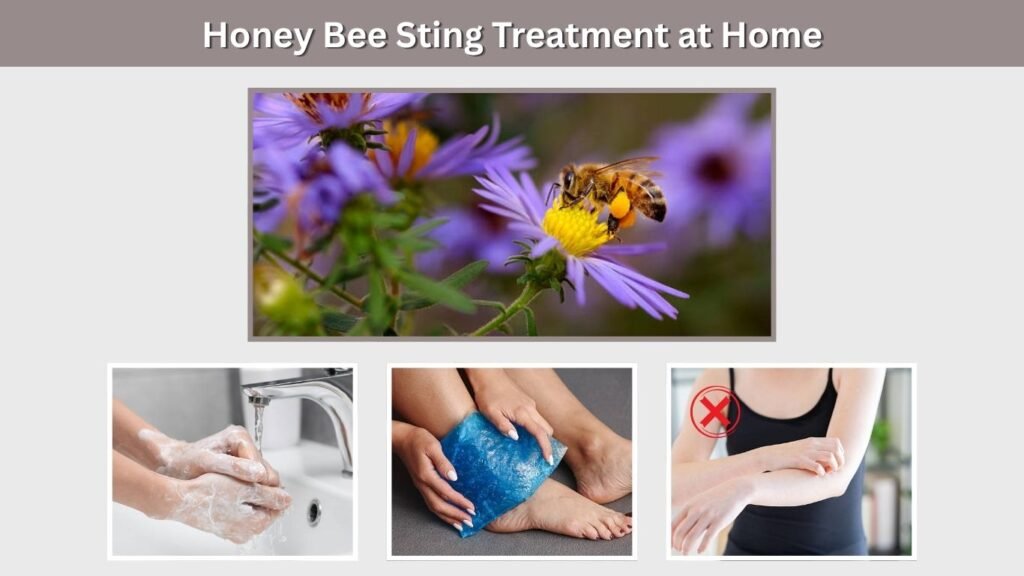
Most uncomplicated honey bee stings can be managed using simple home care.
A practical routine includes:
- Remove the stinger promptly.
- Wash with soap and water.
- Apply a cold compress.
- Elevate the affected limb if swollen.
- Avoid scratching.
- Use an appropriate pain reliever if needed.
- Consider an antihistamine or anti-itch cream for troublesome itching.
Monitor the area over the following hours.
The sting may remain red, itchy, or tender even after the initial pain disappears.
Home Remedies for a Honey Bee Sting
Many traditional remedies are suggested for bee stings, including baking soda, vinegar, toothpaste, honey, essential oils, and various plant extracts.
However, you do not need complicated home remedies for most bee stings.
The better-supported first-aid measures are:
- Prompt stinger removal
- Soap and water
- Cold compresses
- Elevation
- Appropriate over-the-counter symptom relief
Applying untested substances can sometimes irritate already inflamed skin.
In particular, avoid putting harsh chemicals or concentrated essential oils directly into the sting wound.
How Long Does Honey Bee Sting Swelling Last?
A mild reaction often improves within several hours to a couple of days.
Some people experience a large local reaction. In these cases, swelling can increase for one or two days and may take several days to completely resolve. Mayo Clinic notes that stronger local reactions can sometimes last up to about seven days.
For example, a sting on the hand might cause swelling that extends across much of the hand.
Large local swelling is not automatically anaphylaxis.
However, rapidly developing symptoms elsewhere in the body—particularly breathing problems, throat swelling, dizziness, or widespread hives—require emergency treatment.
Signs of a Severe Allergic Reaction
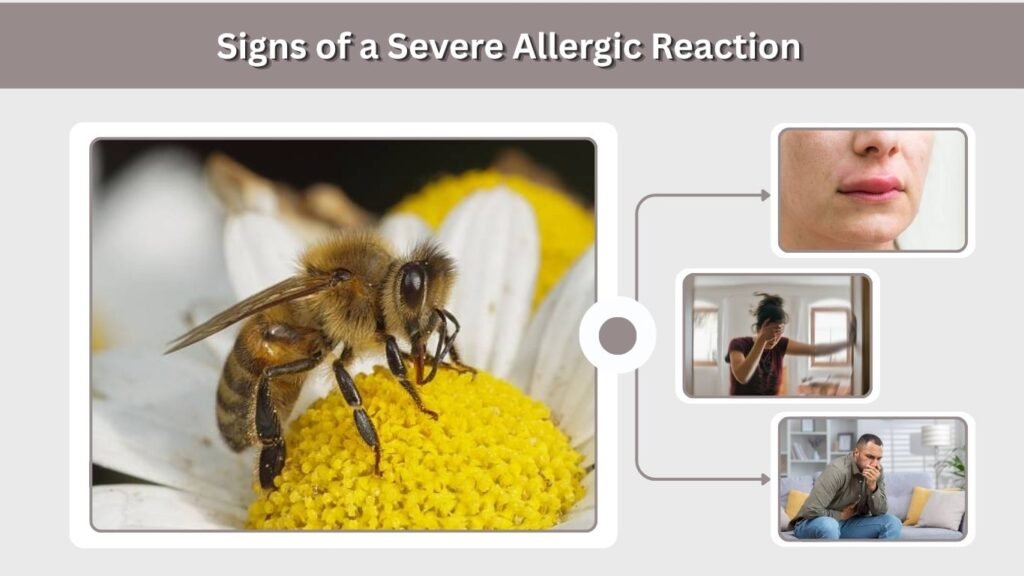
The most dangerous complication of a honey bee sting is anaphylaxis.
Warning signs can include:
- Trouble breathing
- Wheezing
- Swelling of the tongue or throat
- Difficulty swallowing
- Widespread hives
- Swelling of the face or lips
- Dizziness or fainting
- Weak, rapid pulse
- Nausea, vomiting, or diarrhea
- Sudden collapse
Anaphylaxis can begin within minutes after a sting and is potentially life-threatening.
What to Do for Anaphylaxis After a Bee Sting
If symptoms suggest anaphylaxis, seek emergency medical care immediately.
If the person has been prescribed an epinephrine auto-injector, use it immediately according to their medical instructions and then obtain emergency care. Epinephrine is the primary emergency treatment for anaphylaxis; antihistamines should not be relied upon as a substitute.
Emergency evaluation is still necessary even if the person begins feeling better after epinephrine.
When Should You See a Doctor for a Honey Bee Sting?
Seek immediate emergency help for symptoms of anaphylaxis.
Medical evaluation is also advisable when:
- You received many stings
- Swelling becomes unusually severe
- Symptoms continue worsening
- The sting involves the mouth or throat
- You have previously experienced a serious sting allergy
- The sting area develops possible infection
- Symptoms do not begin improving as expected
Multiple bee stings can cause more significant illness because the body receives a larger total amount of venom.
Signs a Bee Sting May Be Infected
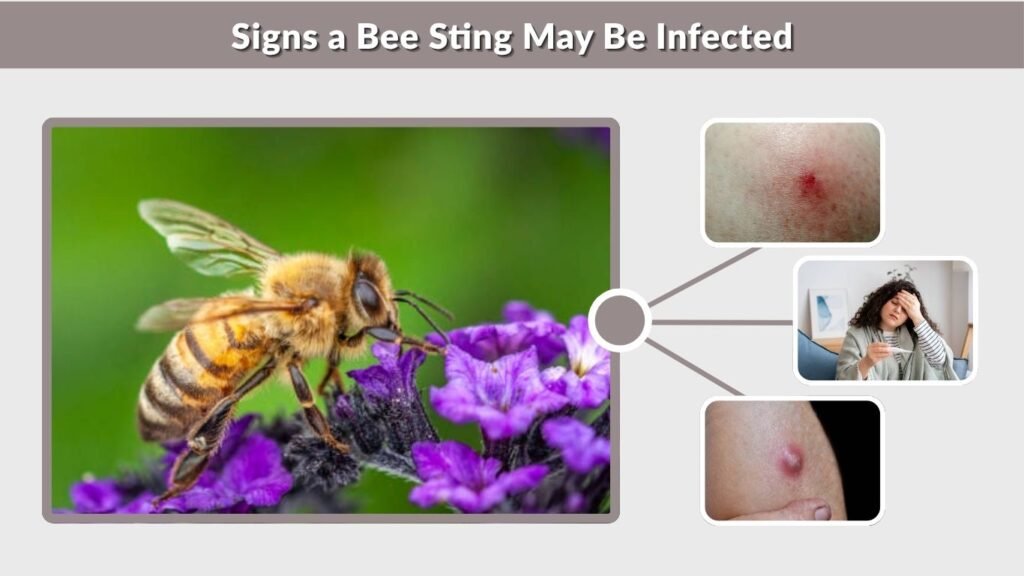
A bee sting can remain red and swollen because of the body’s reaction to venom, so redness does not necessarily mean infection.
However, seek medical advice if you develop:
- Increasing warmth
- Worsening pain after initial improvement
- Spreading redness
- Pus or drainage
- Fever
- Increasing tenderness
Avoid scratching the sting because broken skin can increase the chance of infection.
Can You Use Honey to Treat a Honey Bee Sting?
Despite the similar name, honey is not necessary for treating a honey bee sting.
Although honey has been studied for certain medical wound-care applications, applying ordinary household honey to a fresh bee sting is not a standard first-aid treatment.
Use proven measures such as washing the skin, applying a cold compress, and managing itching or pain appropriately.
Does a Honey Bee Sting Need Antihistamine?
Not every sting requires an antihistamine.
If itching or swelling is bothersome, an oral antihistamine may help some people. A pharmacist or healthcare professional can advise which product is suitable for your age, medical history, and medications.
An antihistamine does not replace epinephrine when someone is experiencing anaphylaxis.
Can Honey Bee Stings Treat Arthritis?
Bee venom has been investigated in various forms of complementary medicine, including claims related to arthritis.
However, deliberately getting stung is not an appropriate home treatment for arthritis. Bee stings can cause severe allergic reactions, including potentially fatal anaphylaxis.
Anyone interested in treatments for arthritis should discuss evidence-based options with a qualified healthcare professional rather than intentionally exposing themselves to bee venom.
How to Prevent Honey Bee Stings
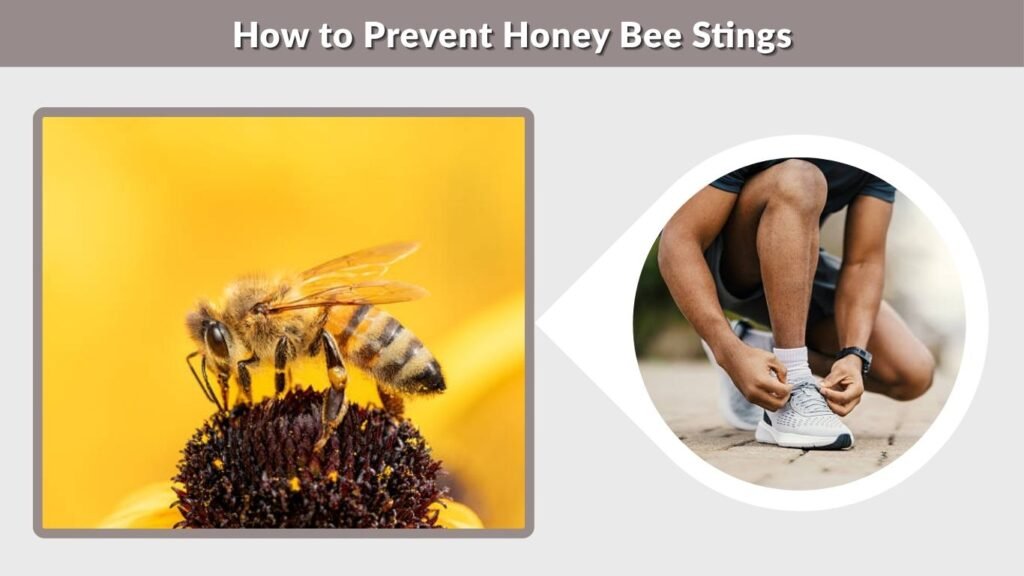
Reducing future stings is particularly important if you have previously experienced an allergic reaction.
Helpful precautions include:
- Wear shoes outdoors.
- Avoid disturbing bee colonies.
- Keep sweet drinks covered outdoors.
- Move calmly when bees approach.
- Avoid swatting at bees.
- Have professional help remove colonies when necessary.
People who have experienced a severe allergic reaction to an insect sting should discuss allergy evaluation, emergency epinephrine, and possibly venom immunotherapy with a healthcare professional. Venom immunotherapy can substantially reduce the risk of future severe allergic reactions.
FAQs
What is the best treatment for a honey bee sting?
Remove the stinger promptly, wash the area with soap and water, and apply a cold compress. Appropriate pain medicine, antihistamines, or anti-itch creams may help control symptoms.
Should you remove a honey bee stinger immediately?
Yes. If a stinger remains in the skin, remove it as quickly as possible. Scraping it sideways with a fingernail or card is commonly recommended.
How do you reduce swelling after a honey bee sting?
Use a cold compress and elevate the affected arm or leg when possible. An appropriate antihistamine may help if itching or swelling is troublesome.
How long does a honey bee sting hurt?
Mild pain often improves within hours, although redness, tenderness, and swelling can last longer. Large local reactions may persist for several days.
When is a honey bee sting an emergency?
A sting becomes an emergency if there is trouble breathing, swelling of the tongue or throat, widespread hives, severe dizziness, fainting, or other signs of anaphylaxis. Use prescribed epinephrine immediately and seek emergency medical care.