
Honey bee removal is often needed when a swarm or established colony settles near a house, inside a wall, beneath a roof, or in a tree. Because honey bees are valuable pollinators, removal usually focuses on relocating the colony rather than destroying it. The right approach depends on whether you have a temporary swarm, exposed hive, or bees living inside a structure. This guide explains safe removal methods, professional services, typical costs, free beekeeper options, and when you should avoid attempting the job yourself.
How to Remove Honey Bees Safely
Removing honey bees begins with identifying what type of bee activity is present. A cluster hanging from a branch may simply be a temporary swarm, while bees repeatedly entering a wall opening usually indicate an established colony. The safest method minimizes disturbance and keeps people, pets, and the bees away from unnecessary danger.
Identify the Bee Problem First
Before taking action, determine whether you are dealing with:
- A temporary honey bee swarm
- An exposed honeycomb
- An established colony inside a wall
- Bees nesting in a roof or attic
- Honey bees using a hollow tree
- Wasps or another insect mistaken for honey bees
Correct identification matters because honey bees and wasps require different removal approaches.
Honey bees are generally fuzzy, golden-brown insects that repeatedly travel between flowers and their colony. Wasps often have smoother bodies and more sharply defined yellow-and-black markings.
Keep Your Distance
Do not hit the nest, block the entrance, spray water into it, or attempt to pull comb from an active colony.
Keep children and pets away from the area. If bees are nesting near a doorway or busy walkway, use another entrance until the colony can be evaluated.
Anyone with a known severe bee-sting allergy should be especially cautious.
Contact a Beekeeper or Bee Removal Specialist
For established colonies, professional removal is usually the safest choice.
A beekeeper may be able to relocate an accessible swarm, while a bee-removal specialist may be needed when bees have built comb inside walls, roofs, chimneys, or other structures.
Honey Bee Swarm Removal
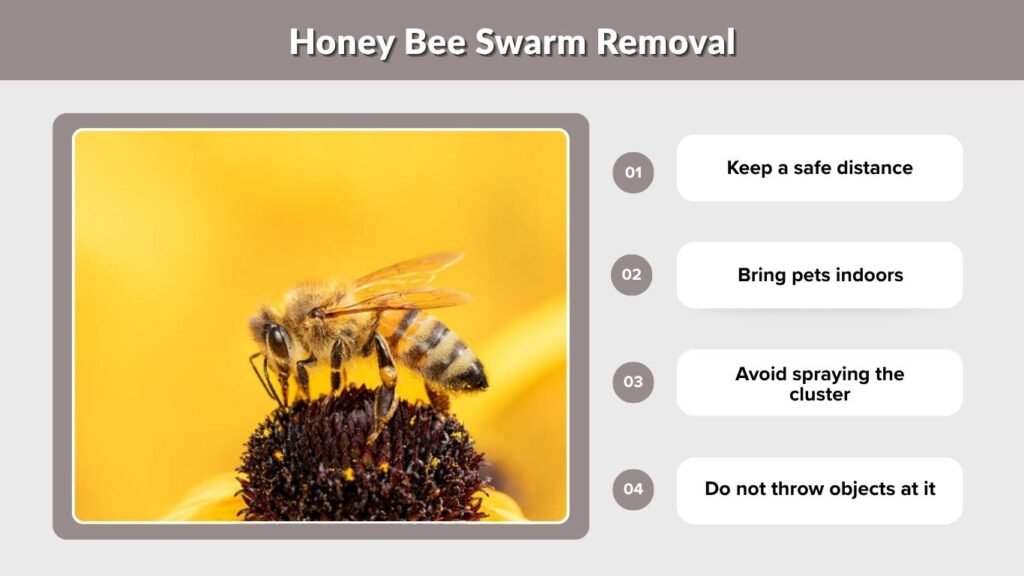
A honey bee swarm can look alarming because thousands of bees may gather in one large cluster. However, swarming is a normal part of honey bee reproduction. The bees are usually resting temporarily while scout bees search for a permanent nesting site. A swarm may stay for only several hours or remain for a few days.
What to Do When You See a Swarm
If a swarm is outdoors and away from people:
- Keep a safe distance
- Bring pets indoors
- Avoid spraying the cluster
- Do not throw objects at it
- Contact a local beekeeper
- Allow the bees time to move naturally if the location is safe
Many beekeepers are interested in collecting accessible swarms because the entire group can often be moved into a managed hive.
When a Swarm Becomes a Hive
Once bees move into a wall cavity, tree hollow, attic, or similar protected space and begin producing wax comb, the situation changes.
The colony can quickly establish brood, pollen stores, and honey.
At this stage, simply capturing the visible bees is not enough. The comb and colony usually need to be removed properly to prevent recurring problems.
Honey Bee Hive Removal From a House
Honey bees sometimes choose structural cavities because they provide dark, dry, protected nesting spaces. Common locations include wall voids, soffits, roofs, chimneys, and gaps around siding. Once a colony becomes established, removing it can be more complicated than collecting a swarm because the hive may extend deep inside the building.
Signs of a Hive Inside Your Home
Look for:
- Large numbers of bees entering one opening
- Regular flight activity throughout the day
- Buzzing sounds inside walls
- Bees repeatedly appearing indoors
- Honey or wax odors
- Dark staining around an entrance
- Visible comb in an attic or wall cavity
A few bees visiting flowers near your home do not necessarily mean you have a hive.
Why the Honeycomb Should Be Removed
Removing the bees while leaving large amounts of comb behind can create future problems.
Abandoned comb may contain honey, wax, pollen, and brood material. Honey can leak when temperatures rise, and old comb may attract ants, cockroaches, moths, rodents, or another bee colony.
Professional structural removal often includes opening the affected area, removing bees and comb, cleaning the cavity, and sealing potential entry points after the work is finished.
Honey Bee Cut-Out Removal
A cut-out is a method commonly used when an established honey bee colony has built comb inside an accessible structure.
The specialist opens enough of the structure to reach the colony, removes sections of comb, and relocates the bees when possible.
Cut-outs are significantly more complicated than basic swarm collection because building materials may need to be removed and repaired afterward.
Humane Honey Bee Removal
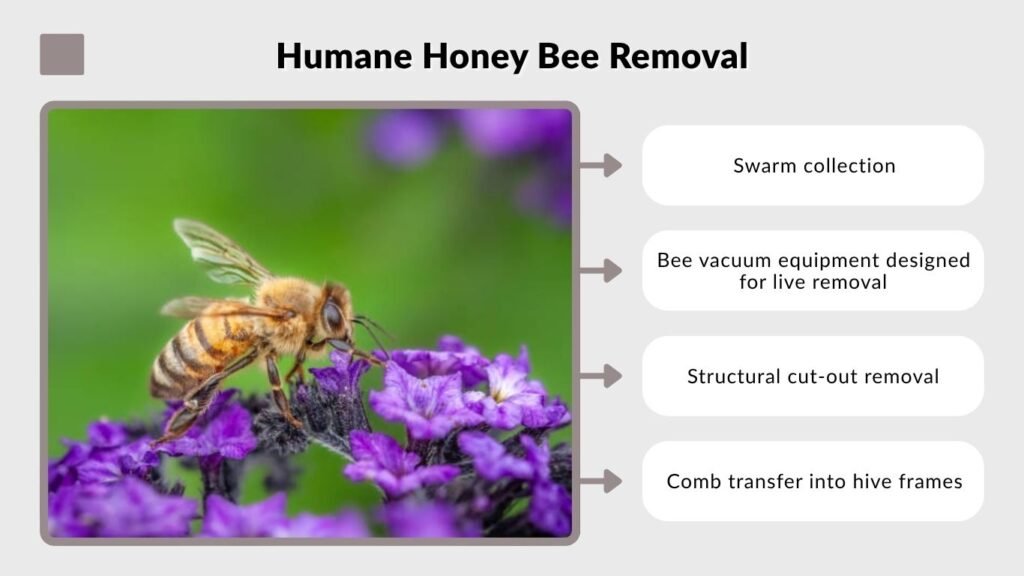
Humane removal focuses on preserving the colony whenever practical. This is especially desirable because honey bees provide important pollination services for crops, gardens, and wild plants. However, successful relocation depends on hive location, accessibility, colony condition, local regulations, and the experience of the person performing the removal.
Common Humane Removal Options
Depending on the situation, a professional may use:
- Swarm collection
- Bee vacuum equipment designed for live removal
- Structural cut-out removal
- Comb transfer into hive frames
- Queen and colony relocation
- Entrance management during specialized removals
Methods vary considerably depending on where the bees are located.
A swarm hanging from a low tree branch may be relatively simple to collect. A mature colony several feet inside a wall can require specialized tools and building access.
Free Honey Bee Removal Near Me
Some local beekeepers collect swarms at no charge, particularly when the swarm is easy to access and can be safely transferred into a hive. Free removal is less common for established colonies inside buildings because those jobs can involve several hours of work, specialized equipment, travel, construction access, and cleanup.
Where to Look for Free Removal
You can try contacting:
- Local beekeeping associations
- Beekeeping clubs
- Experienced hobby beekeepers
- Agricultural extension offices
- Local bee rescue groups
When contacting someone, provide clear information about the location, approximate height, how long the bees have been present, and whether visible honeycomb exists.
Photos taken from a safe distance can also help determine whether you have a swarm or established hive.
Honey Bee Removal Cost
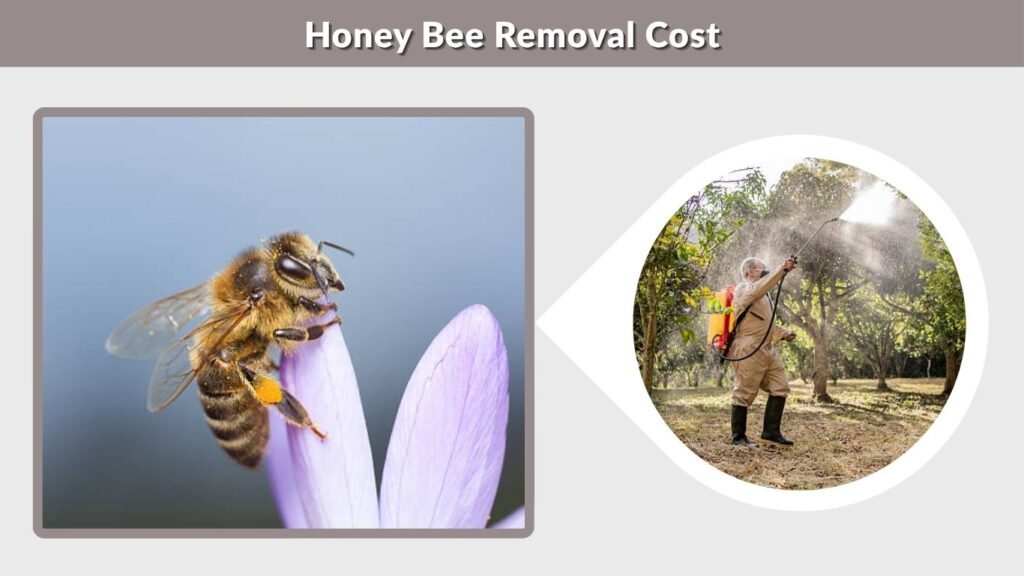
The cost of professional honey bee removal varies widely. A simple exposed swarm may be inexpensive or even collected free by a beekeeper, while structural hive removal can cost much more. Accessibility is often one of the largest factors because colonies located behind brick, inside roofs, or several stories above ground require additional labor and equipment.
Factors That Affect Removal Cost
Pricing can depend on:
- Colony location
- Size of the hive
- Height above ground
- Ease of access
- Amount of honeycomb
- Length of time the colony has been present
- Building materials involved
- Repair work required afterward
- Local labor rates
Ask whether the quoted price includes comb removal, cleanup, sealing, and repairs.
A low-cost service that removes only the bees but leaves the hive material inside a wall may lead to additional expenses later.
Should You Use Honey Bee Removal Spray?
Spraying an established honey bee colony is generally not the preferred first solution, particularly when live relocation is practical.
Using an inappropriate pesticide can expose people, pets, and other organisms and may leave contaminated honey and comb inside the structure.
It can also fail to address the underlying problem. Even if adult bees die or disappear, honeycomb and stored honey may remain behind.
For structural infestations, contact a qualified bee-removal professional or licensed pest professional familiar with honey bees and local regulations.
DIY Honey Bee Removal: Is It Safe?
Trying to remove a large established colony yourself can lead to numerous stings, falls, property damage, and incomplete hive removal.
A defensive colony can contain tens of thousands of bees.
DIY removal is especially inappropriate when the colony is:
- Inside a wall or roof
- High above the ground
- Near children or pets
- Difficult to access
- Extremely defensive
- Suspected to be Africanized
- Located near someone with a sting allergy
A temporary swarm in an isolated outdoor location can often simply be left undisturbed while a beekeeper is contacted.
Africanized Honey Bee Removal
Africanized honey bees can look almost identical to other honey bees but may defend their colonies much more aggressively.
If bees repeatedly attack, pursue people for a significant distance, or respond aggressively when someone merely approaches their nesting area, move to a protected indoor space and avoid returning to the hive.
Do not attempt removal yourself.
Professional assistance is particularly important when unusually defensive bees are involved.
How to Prevent Honey Bees From Returning
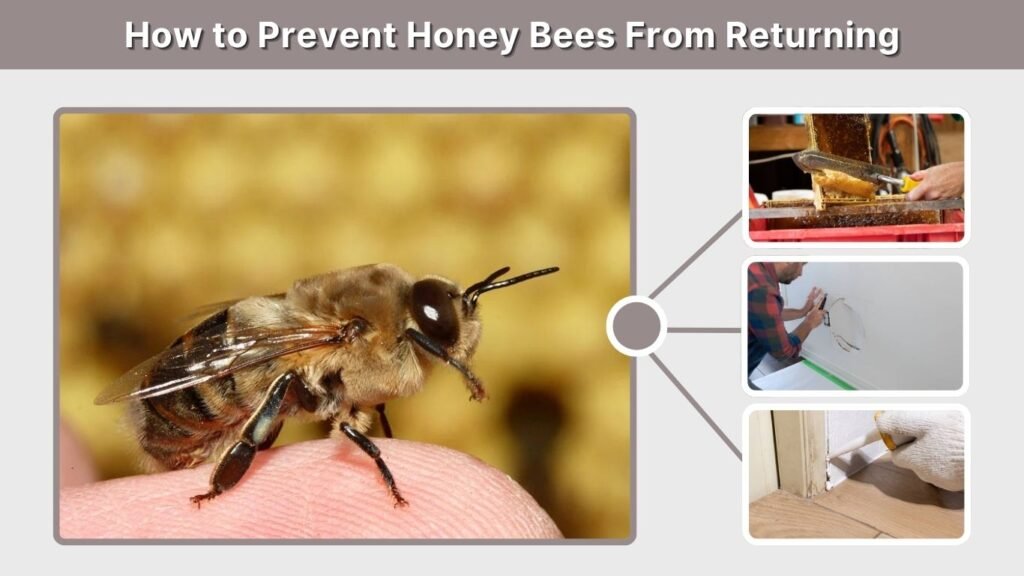
After a colony has been completely removed, preventing another colony from using the same cavity is important. Honey and wax odors can remain attractive to future swarms if the structure is not properly cleaned and sealed.
Prevention Steps
After removal:
- Remove leftover honeycomb
- Clean accessible hive residue
- Repair damaged walls or roofing
- Seal cracks and structural openings
- Install appropriate screening over vents
- Repair gaps around siding
- Monitor the former entrance for new activity
Do not seal an active colony inside a wall. Entry points should generally be permanently closed only after the bees and hive materials have been properly addressed.
FAQs
What is the best way to remove honey bees?
The safest option is usually to contact an experienced beekeeper for an exposed swarm or a professional live-removal specialist for an established hive inside a structure.
Can honey bees be removed for free?
Sometimes. Beekeepers may collect easily accessible swarms for free, but established hive removal from walls or roofs usually involves professional fees.
How much does honey bee removal cost?
Costs vary substantially depending on hive size, accessibility, location, structural work, and whether honeycomb removal and repairs are included.
Should I remove a honey bee hive myself?
Large or established colonies should generally be handled by experienced professionals. DIY removal can lead to multiple stings, incomplete removal, and property damage.
Will honey bees return after hive removal?
They can if comb, honey odors, or an accessible cavity remains. Complete hive cleanup and sealing entry points after removal help reduce the chance of another swarm occupying the same location.