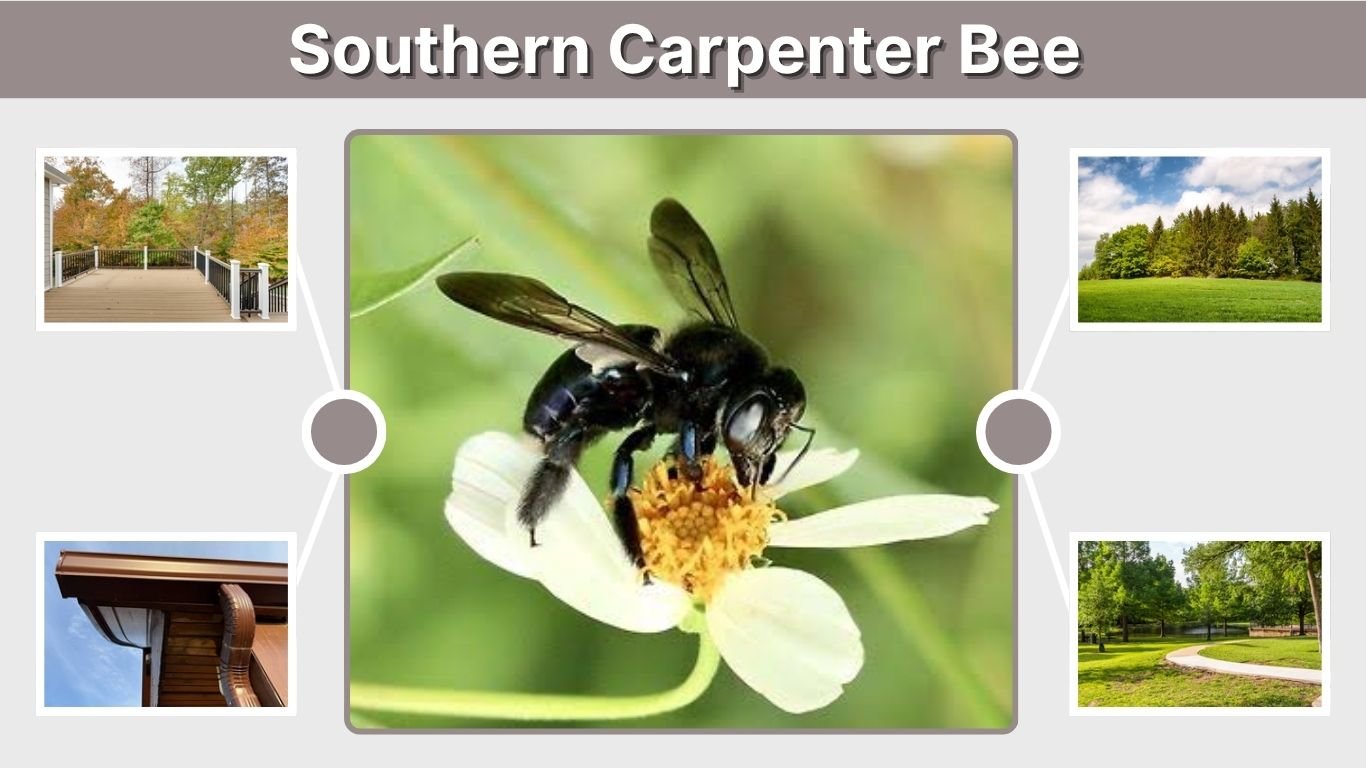
The southern carpenter bee is a large, dark-colored bee commonly associated with warm parts of the southeastern United States. Its scientific name is Xylocopa micans, and like other carpenter bees, females excavate tunnels in wood where they raise their young. Although their size and loud buzzing can make them seem intimidating, southern carpenter bees are generally not aggressive. They are also valuable pollinators of native plants and garden flowers. Understanding their appearance, nesting habits, range, and sting risk makes them much easier to identify and manage around homes.
What Is a Southern Carpenter Bee?
The southern carpenter bee belongs to the genus Xylocopa, which contains hundreds of carpenter bee species worldwide. These bees are called carpenter bees because females create nesting tunnels inside wood rather than constructing wax hives.
Xylocopa micans is one of the carpenter bee species found in the southeastern United States.
Southern Carpenter Bee Identification
Look for these characteristics when identifying a southern carpenter bee:
- Large, robust bee
- Mostly black or very dark body
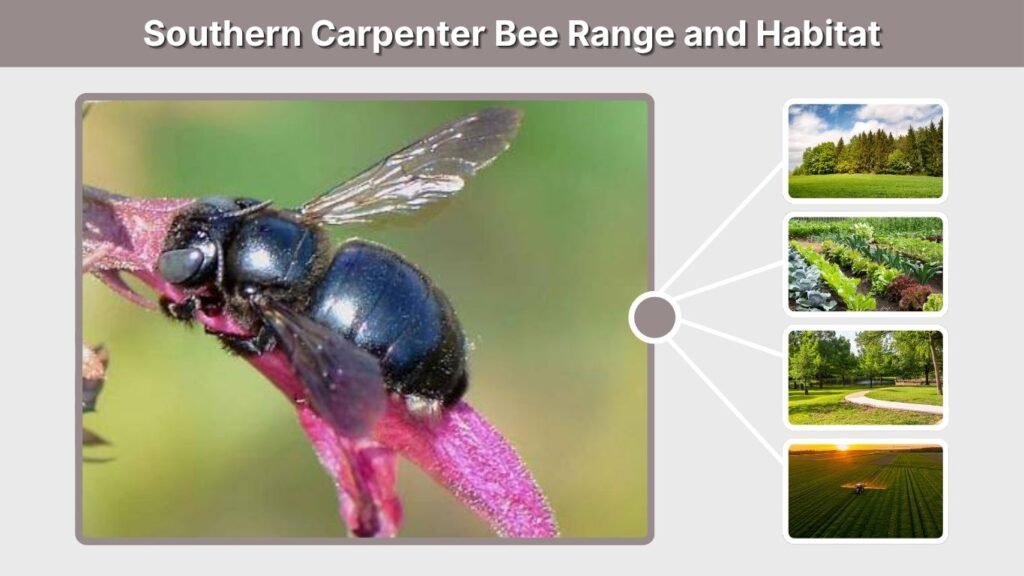
- Smooth, shiny abdomen
- Dark wings that may appear smoky or iridescent
- Hair concentrated mainly on the thorax
- Strong, rapid flight
- Approximately 15–20 mm long
- Females usually have a dark face
- Males may show lighter facial markings
Their shiny abdomen is particularly helpful for separating carpenter bees from many bumblebees, which usually have noticeably hairy abdomens.
Scientific Name of the Southern Carpenter Bee
The scientific name of the southern carpenter bee is Xylocopa micans.
It belongs to:
Family: Apidae
Genus: Xylocopa
Species: Xylocopa micans
The genus name Xylocopa roughly refers to cutting or working with wood, reflecting the nesting behavior that gives carpenter bees their common name.
Southern Carpenter Bee vs Bumblebee
Southern carpenter bees and bumblebees can look similar because both are relatively large.
However, carpenter bees usually have a smooth, shiny abdomen. Bumblebees tend to have dense hair covering most of their abdomen and often display more obvious yellow, orange, or white markings.
Carpenter bees are also generally solitary nesters, while most bumblebees live in social colonies containing a queen and workers.
Southern Carpenter Bee Range and Habitat
The southern carpenter bee prefers warm environments and is primarily associated with the southeastern portion of the United States. It occurs in areas offering abundant flowers and suitable wood for nesting.
They may be encountered around woodland edges as well as developed residential areas.
Where Do Southern Carpenter Bees Live?
Typical habitats include:
- Forest edges
- Gardens
- Farms
- Open woodlands
- Parks
- Residential yards
- Flower-rich fields
- Wooden buildings
- Fences and outdoor structures
Adults need flowering plants for nectar and pollen, while females require suitable wood in which to create their nests.
Southern Carpenter Bee in Florida
Florida provides particularly favorable conditions for carpenter bees because of its warm climate and long flowering season.
Southern carpenter bees may be seen visiting flowering shrubs, trees, garden plants, and native wildflowers. Around homes, females may investigate exposed wooden structures for possible nesting sites.
Their presence around flowers is beneficial because they can transfer significant amounts of pollen between blossoms.
Southern Carpenter Bees in Other Regions
The phrase “southern carpenter bee” can create confusion because people sometimes use it loosely for any carpenter bee living in a southern location.
For example, carpenter bees in Southern California or Southern Arizona are not automatically Xylocopa micans. Different carpenter bee species occur in western North America.
Likewise, carpenter bees seen in Southern Indiana or Southern Ontario may belong to other species, particularly the eastern carpenter bee.
Correct identification should therefore consider both physical characteristics and geographic location.
Southern Carpenter Bee Nesting Behavior
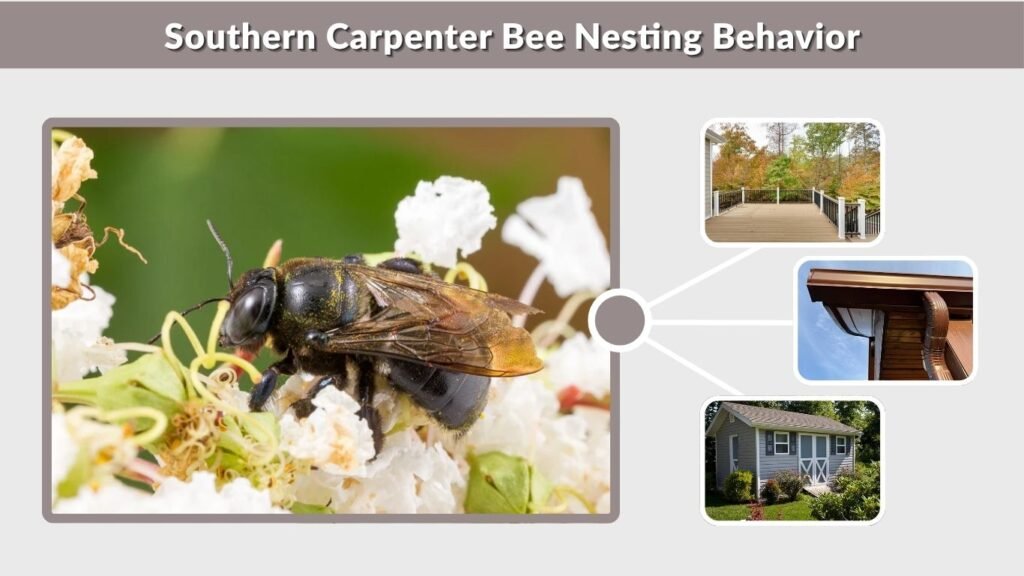
Southern carpenter bees do not eat wood. Instead, females use their powerful mandibles to excavate tunnels where they lay eggs.
The damage resembles drilling rather than feeding.
Where Do They Build Nests?
Females may investigate:
- Wooden decks
- Porch structures
- Fence posts
- Fascia boards
- Roof eaves
- Wooden railings
- Sheds
- Dead branches
- Logs
- Unpainted lumber
Weathered, untreated, or relatively soft wood may be especially attractive.
A nest entrance often looks like a clean, circular hole in the wood.
What Happens Inside the Nest?
After entering the wood, the female creates a longer gallery along the grain.
She collects pollen and nectar from flowers and forms a food provision inside one section of the tunnel. She then lays an egg beside this food.
The female creates partitions between developing offspring, producing several separate brood chambers inside the same tunnel.
Young bees develop inside these protected chambers before eventually emerging as adults.
Do Southern Carpenter Bees Live in Colonies?
They are generally considered solitary bees.
Each reproductive female typically establishes and provisions her own nest rather than living in a highly organized colony such as a honey bee hive.
However, multiple females may use the same wooden structure when nesting conditions are favorable. This can create the appearance of a colony even though individual nests remain largely independent.
Southern Carpenter Bee Sting and Behavior
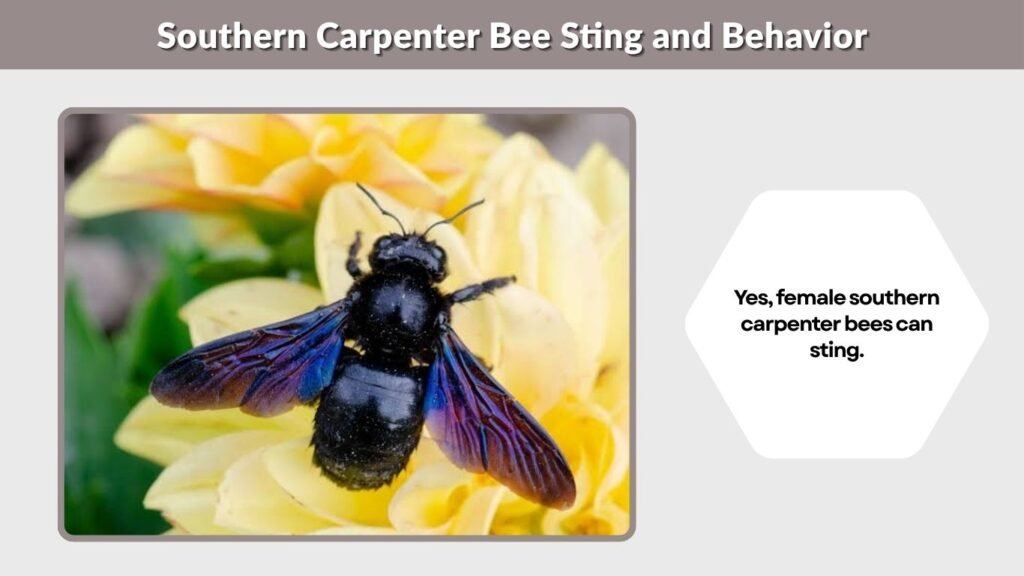
Their large bodies and loud buzzing often cause concern, but carpenter bees are generally much less dangerous than their appearance suggests.
Males may fly directly toward people, while females usually concentrate on feeding and nesting.
Can Southern Carpenter Bees Sting?
Yes, female southern carpenter bees can sting.
However, they are normally reluctant to do so. A female is most likely to sting if she is grabbed, squeezed, trapped against the skin, or otherwise handled roughly.
Male carpenter bees cannot sting because they do not possess functional stingers.
Are Southern Carpenter Bees Aggressive?
They are not generally aggressive toward humans.
Male carpenter bees are especially noticeable because they may hover near nesting areas and approach people or other insects entering their territory. This behavior can appear threatening.
Despite these displays, males cannot sting.
Females are capable of stinging but normally avoid confrontation unless physically threatened.
What Does a Southern Carpenter Bee Sting Feel Like?
A sting may cause:
- Immediate sharp pain
- Redness
- Mild swelling
- Itching
- Tenderness
- Warmth around the sting site
Most uncomplicated reactions remain localized.
Anyone experiencing difficulty breathing, widespread hives, severe dizziness, or swelling involving the tongue or throat following any bee sting should seek emergency medical attention because these symptoms may indicate a serious allergic reaction.
Are Southern Carpenter Bees Helpful or Harmful?
Southern carpenter bees can be both beneficial pollinators and occasional structural pests.
Their ecological importance should be balanced against any wood damage occurring around a building.
Benefits of Southern Carpenter Bees
These bees provide several benefits:
- Pollinate native wildflowers
- Visit garden plants
- Help reproduce flowering trees and shrubs
- Support local ecosystems
- Provide food-web benefits
- Contribute to plant diversity
Their large bodies can carry substantial quantities of pollen between flowers.
Carpenter bees may also perform “buzz pollination,” vibrating certain flowers to release pollen.
Can Southern Carpenter Bees Damage a House?
A single nest usually causes limited structural damage.
Problems become more significant when the same piece of wood is reused for several years or when numerous females establish nests in one area.
Repeated tunneling can weaken wood and create cosmetic damage.
Woodpeckers may also enlarge carpenter bee tunnels while searching for developing larvae, creating additional damage.
How to Keep Southern Carpenter Bees Away From Wood
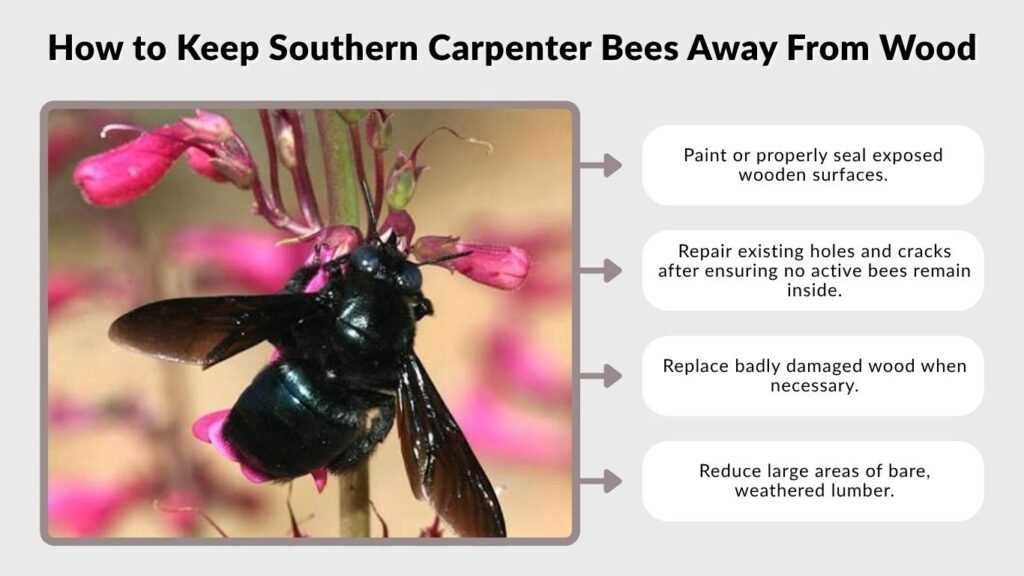
Preventing nesting is usually easier than dealing with extensive established tunnels.
The goal should be protecting vulnerable structures while allowing bees to continue pollinating elsewhere whenever possible.
Carpenter Bee Prevention
Consider these measures:
- Paint or properly seal exposed wooden surfaces.
- Repair existing holes and cracks after ensuring no active bees remain inside.
- Replace badly damaged wood when necessary.
- Reduce large areas of bare, weathered lumber.
- Inspect decks, eaves, fences, and railings each spring.
- Provide alternative bee habitat away from important structures when appropriate.
Finished or well-maintained wood is generally less attractive for nesting than exposed weathered surfaces.
Avoid unnecessarily spraying flowering plants because carpenter bees and many other beneficial pollinators visit them for food.
FAQs
What is the scientific name of the southern carpenter bee?
The southern carpenter bee is commonly identified as Xylocopa micans, a large carpenter bee associated primarily with warmer parts of the southeastern United States.
Do southern carpenter bees sting?
Female southern carpenter bees can sting, but they rarely do unless physically threatened or handled. Males cannot sting.
Are southern carpenter bees found in Florida?
Yes. Southern carpenter bees occur in Florida and other parts of the southeastern United States where warm conditions, flowers, and suitable nesting wood are available.
Are carpenter bees in Southern California southern carpenter bees?
Not necessarily. Southern California has its own carpenter bee species. The term southern carpenter bee usually refers specifically to Xylocopa micans, rather than every carpenter bee living in a southern region.
Do southern carpenter bees damage homes?
They can damage exposed wood by excavating nesting tunnels. One nest normally causes limited damage, but repeated nesting over several years can create more significant problems.