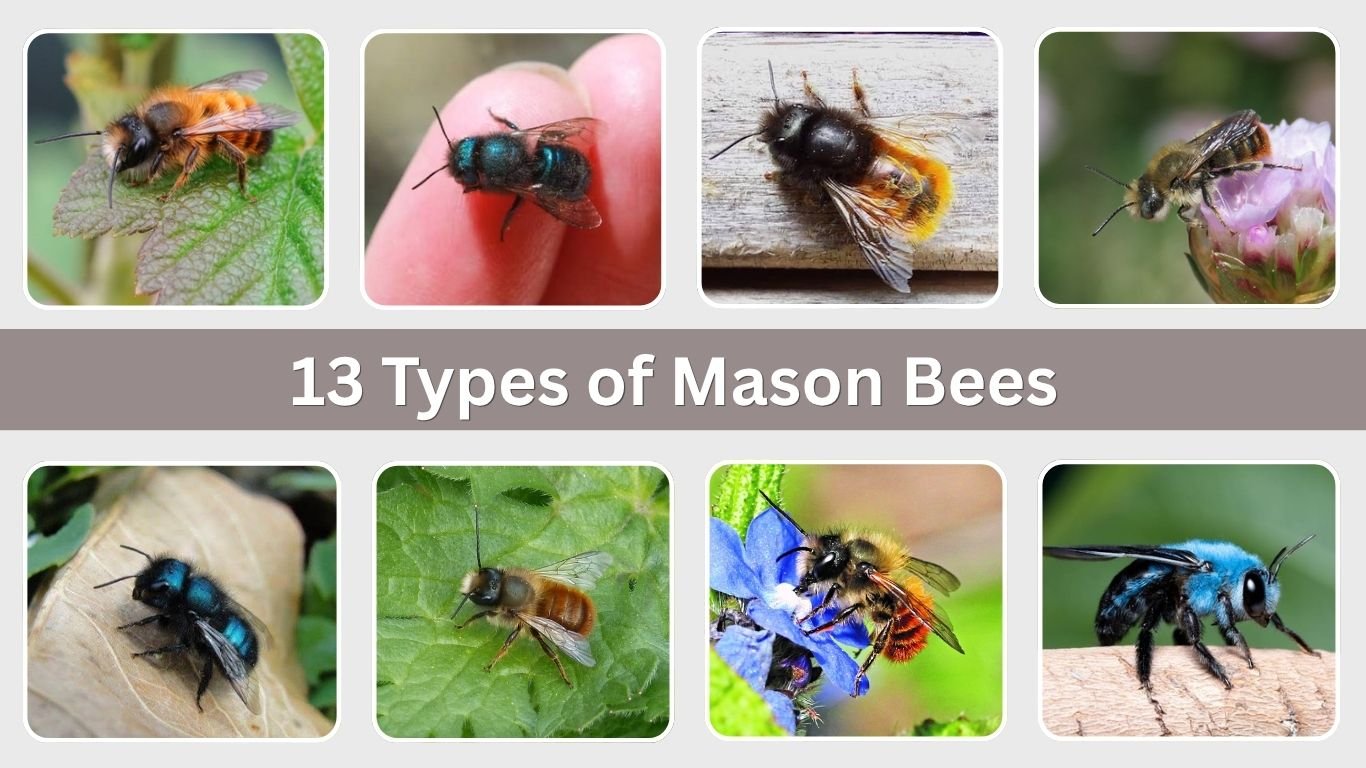
Mason bees are among the most efficient solitary pollinators, recognized for building nest cells with mud or other natural materials. These gentle bees vary in color, size, range, and nesting behavior, with many species displaying striking blue, green, or black bodies. This guide explores 13 common types of mason bees, explaining their size, physical identification, preferred habitat, geographic distribution, diet, nesting habits, and behavior. Learning these differences can help gardeners recognize and support these valuable native pollinators in orchards and home gardens.
1. Blue Orchard Mason Bee
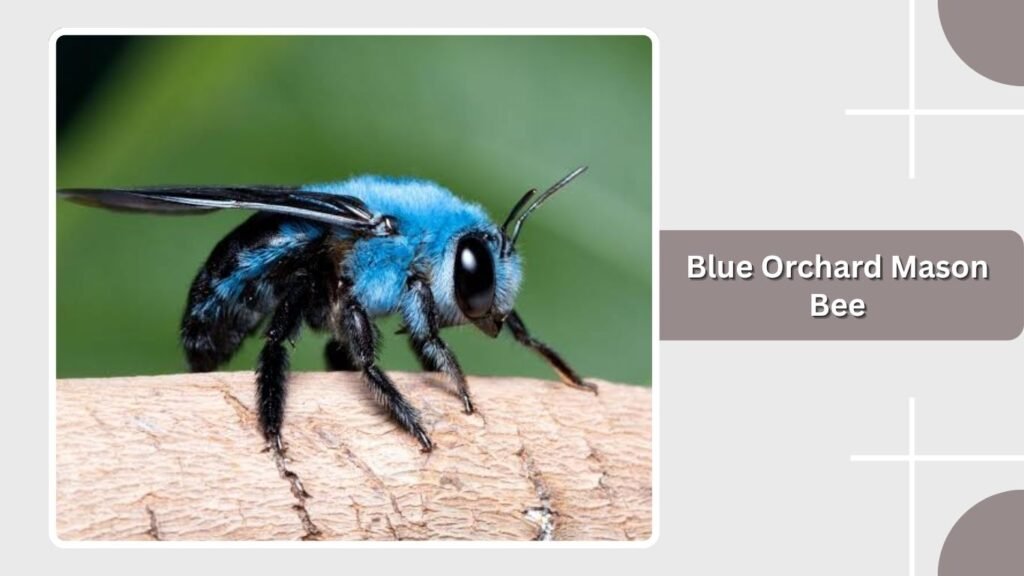
The blue orchard mason bee (Osmia lignaria) is a metallic-blue bee native to North America. It becomes active during early spring and is an exceptionally valuable pollinator of orchard trees. Unlike carpenter bees, it cannot excavate tunnels in solid wood.
Identification
- Females measure approximately 10–11 mm long.
- Males generally measure 9–10 mm.
- The body is metallic blue or blue-black.
- Females are larger and have shorter antennae.
- Males have longer antennae and pale facial hair.
- Females carry dry pollen beneath their abdomens.
- The body is rounder and hairier than a metallic fly.
Habitat and Distribution
Blue orchard mason bees occur across much of the United States and southern Canada. They inhabit woodlands, forest edges, orchards, farms, parks, and residential gardens. They need spring flowers, moist clay-rich soil, and suitable nesting cavities located close together.
Nesting and Diet
Females nest in hollow stems, beetle holes, reeds, and artificial bee tubes. They use mud to divide the tunnel into individual brood cells. Adults drink nectar, while females gather pollen from apples, cherries, pears, plums, blueberries, and native spring flowers.
Behavior and Sting
Blue orchard mason bees are solitary but often nest in groups. Males cannot sting, and females rarely sting unless squeezed. They do not defend their nesting sites aggressively, making them suitable for backyard bee houses.
2. Red Mason Bee
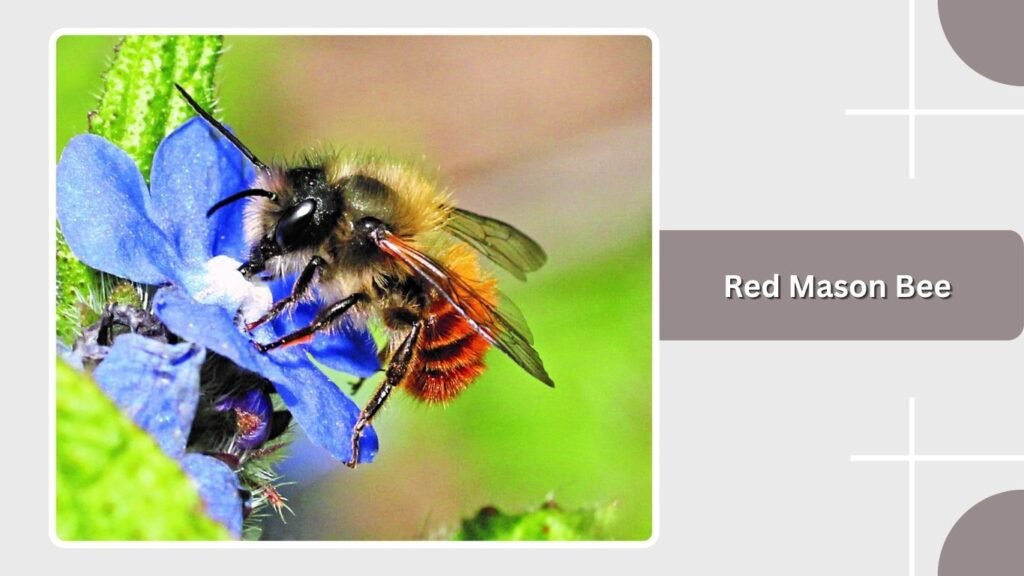
The red mason bee (Osmia bicornis) is a common European species covered with reddish or gingery hair. It readily nests in garden bee houses and plays an important role in pollinating fruit trees, wildflowers, and cultivated plants.
Identification
- Females generally measure 10–12 mm long.
- Males are approximately 6–10 mm long.
- The thorax has greyish-brown hair.
- The abdomen is covered with reddish-orange hair.
- Females have two curved horn-like projections on the face.
- Males have long antennae and white facial hair.
- Females carry pollen beneath the abdomen.
Habitat and Distribution
Red mason bees are widespread across Europe and occur in parts of North Africa and western Asia. They inhabit gardens, parks, orchards, farmland, woodland edges, cities, and villages. Their adaptability allows them to thrive around human-made structures.
Nesting and Diet
Females use existing cavities in walls, hollow plant stems, wood, window frames, and bee houses. Mud mixed with saliva separates the brood cells. They collect pollen and nectar from fruit blossoms, buttercups, dandelions, hawthorn, roses, and numerous garden flowers.
Behavior and Sting
Although many females may use the same nesting structure, each female independently constructs and supplies her own nest. Males cannot sting. Females are extremely gentle and usually sting only when handled roughly or trapped against the skin.
3. Hornfaced Mason Bee
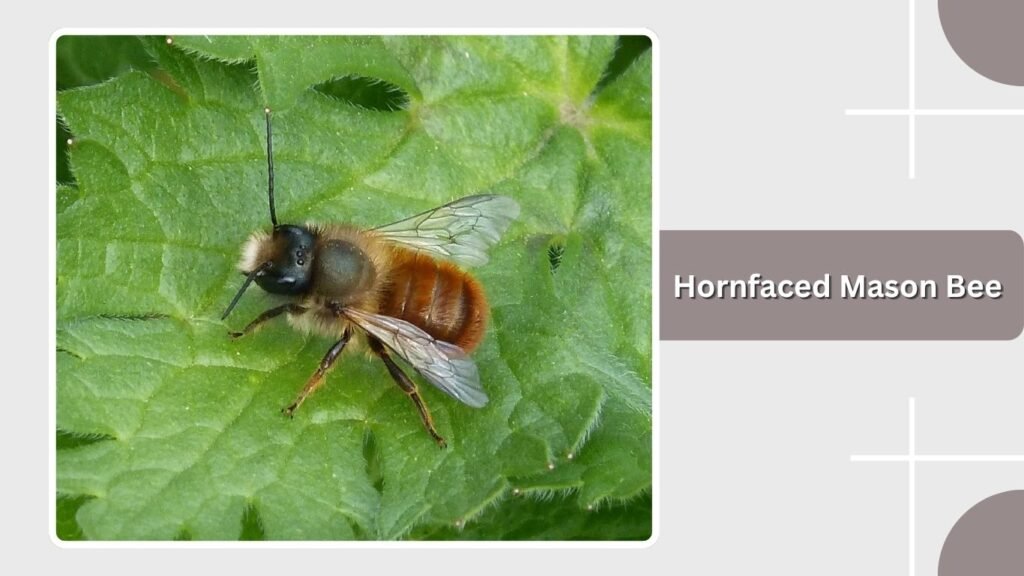
The hornfaced mason bee (Osmia cornifrons) is an East Asian species widely managed for orchard pollination. Its common name comes from the two horn-like projections on the female’s face, which help her shape and pack mud inside nesting cavities.
Identification
- Females measure approximately 8–12 mm long.
- Males generally measure 8–10 mm.
- The body is black with a coppery luster.
- Pale yellow or brownish hair covers the thorax.
- Females have two noticeable facial horns.
- Males lack horns and have longer antennae.
- Darker hairs cover the rear abdominal segments.
Habitat and Distribution
Hornfaced mason bees are native to Japan, China, Korea, and parts of Russia. They were deliberately introduced into the United States for fruit-tree pollination and have become established in several regions. They occupy orchards, farmland, gardens, woodland edges, and urban environments.
Nesting and Diet
Females nest in reeds, hollow stems, beetle holes, and artificial tubes. They construct mud partitions between the developing offspring. These early-season bees visit apples, pears, cherries, peaches, plums, blueberries, and numerous spring wildflowers.
Behavior and Sting
Hornfaced mason bees are solitary and highly docile. Females concentrate on gathering pollen rather than defending their nests. Males cannot sting, while females seldom sting even when approached closely. Nesting populations can grow rapidly when abundant food and cavities are available.
4. European Orchard Mason Bee
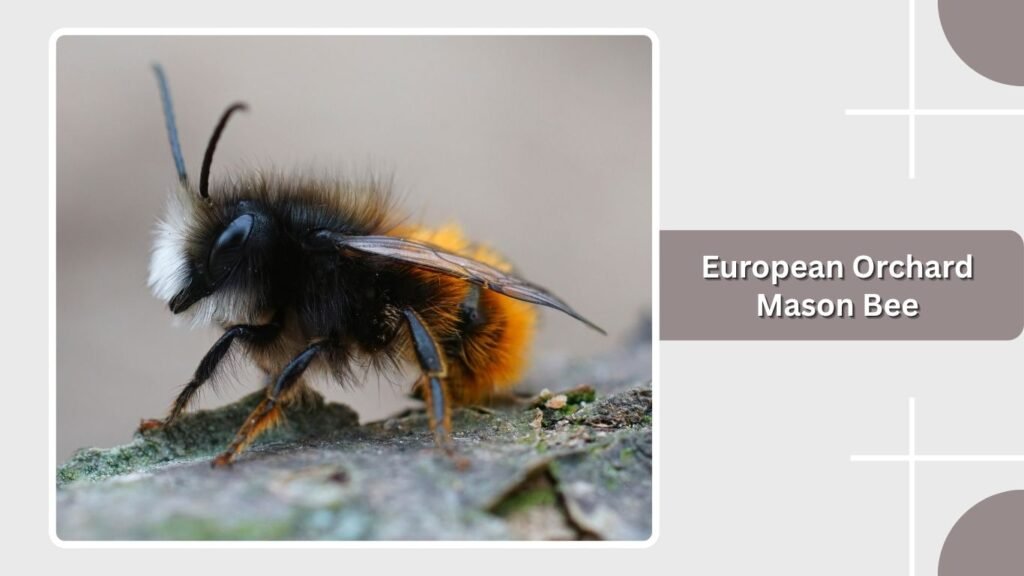
The European orchard mason bee (Osmia cornuta) is a distinctive early-spring species with a dark head and reddish-orange abdomen. It is widely managed as a pollinator of apple, cherry, pear, almond, and other orchard crops.
Identification
- Females measure approximately 12–15 mm long.
- Males are usually around 11–13 mm.
- The head and thorax are primarily black.
- Reddish-orange hair covers the abdomen.
- Females have two horn-like facial projections.
- Males have noticeable pale or white facial hair.
- The body may show a faint metallic blue or bronze sheen.
Habitat and Distribution
European orchard mason bees are native to southern and central Europe and occur in neighboring parts of North Africa and Asia. They inhabit orchards, gardens, parks, woodland edges, farms, and urban areas. They prefer relatively warm locations with plentiful early-blooming flowers.
Nesting and Diet
Females select holes in wood, masonry, banks, reeds, and artificial bee houses. They use mud to create partitions and seal the entrance. Important food sources include apple, cherry, pear, apricot, plum, almond, willow, and other early spring blossoms.
Behavior and Sting
European orchard mason bees do not form defensive colonies. Each female manages her own nesting tunnel, even when many nests occur together. Males cannot sting, while females are unlikely to sting unless physically restrained.
5. Taurus Mason Bee
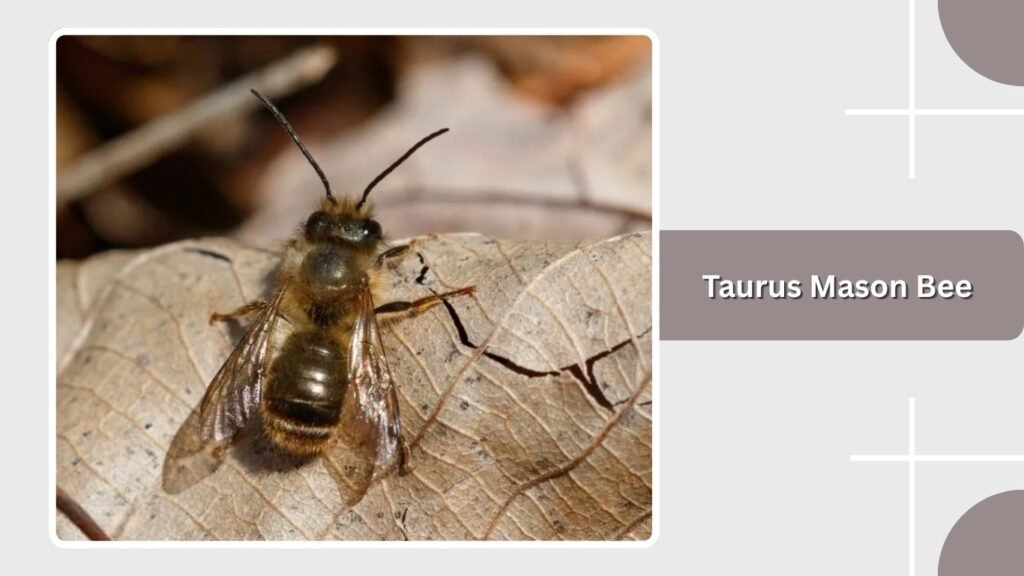
The Taurus mason bee (Osmia taurus) is an East Asian species closely resembling the hornfaced mason bee. It was accidentally introduced into North America and has expanded rapidly across parts of the eastern United States and Canada.
Identification
- Adults are approximately the size of a honeybee.
- The body is black with bronze or copper reflections.
- Long yellowish-brown hairs cover much of the body.
- Females have two horn-like projections on the face.
- Orange-brown pollen-carrying hairs occur beneath the abdomen.
- Males have longer antennae and no facial horns.
- Professional examination may be needed to separate it from the hornfaced mason bee.
Habitat and Distribution
Taurus mason bees are native to China, Japan, and other parts of eastern Asia. Introduced populations occur across much of eastern North America. They commonly occupy gardens, orchards, farms, forest edges, and developed areas with artificial nesting structures.
Nesting and Diet
Females occupy hollow stems, reeds, beetle tunnels, and bee-house tubes. They create individual brood cells with mud partitions. Adults visit fruit-tree blossoms and diverse spring wildflowers for pollen and nectar.
Behavior and Sting
Taurus mason bees are solitary and generally peaceful around people. Males cannot sting, and females sting only when seriously threatened. Their rapid spread may create competition with native mason bees for pollen and nesting cavities.
6. Blue Mason Bee
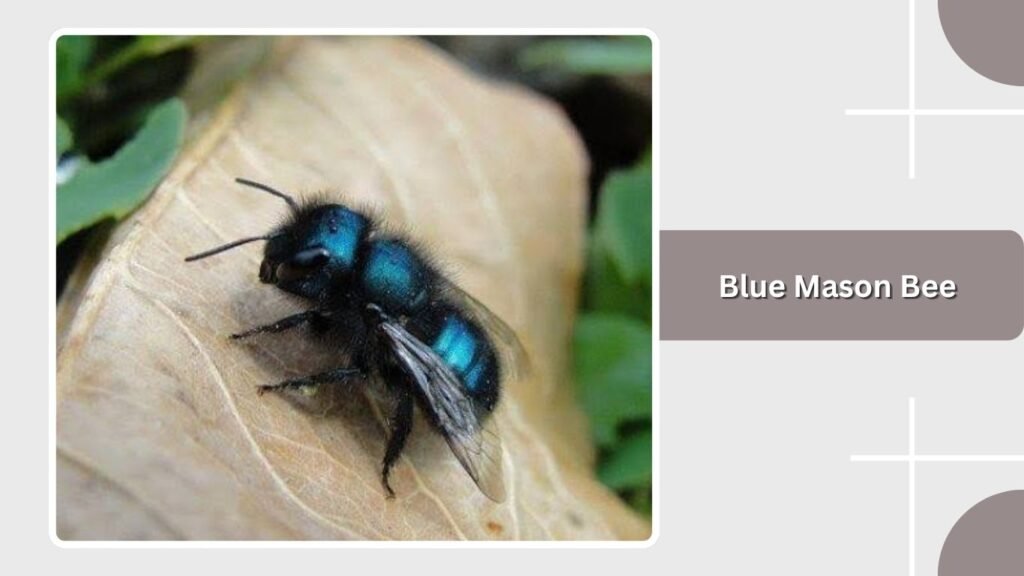
The blue mason bee (Osmia caerulescens) is a small metallic species found across parts of Europe, Asia, and North America. Females appear dark blue or almost black, while males usually have a brighter metallic-green appearance.
Identification
- Females measure approximately 10–11 mm long.
- Males are generally around 9 mm.
- Females have a dark metallic-blue body.
- Males are slimmer and metallic green.
- Pale or brownish hair covers parts of the body.
- Females have black pollen-carrying hairs beneath the abdomen.
- Narrow hair bands appear along the abdominal segments.
Habitat and Distribution
Blue mason bees have a broad distribution across the Northern Hemisphere, although some North American populations may have resulted from human introduction. They inhabit forest edges, grasslands, gardens, parks, orchards, farmland, and urban areas.
Nesting and Diet
Females use existing holes in dead wood, hollow stems, walls, and artificial bee houses. Instead of using mud, they commonly construct cell partitions from chewed plant material. Adults visit clover, bird’s-foot trefoil, mints, knapweed, and numerous garden flowers.
Behavior and Sting
Blue mason bees are solitary but may nest close to others. They do not protect their nesting sites as social bees defend colonies. Males cannot sting, and females rarely sting unless caught or compressed against the skin.
7. Orange-Vented Mason Bee
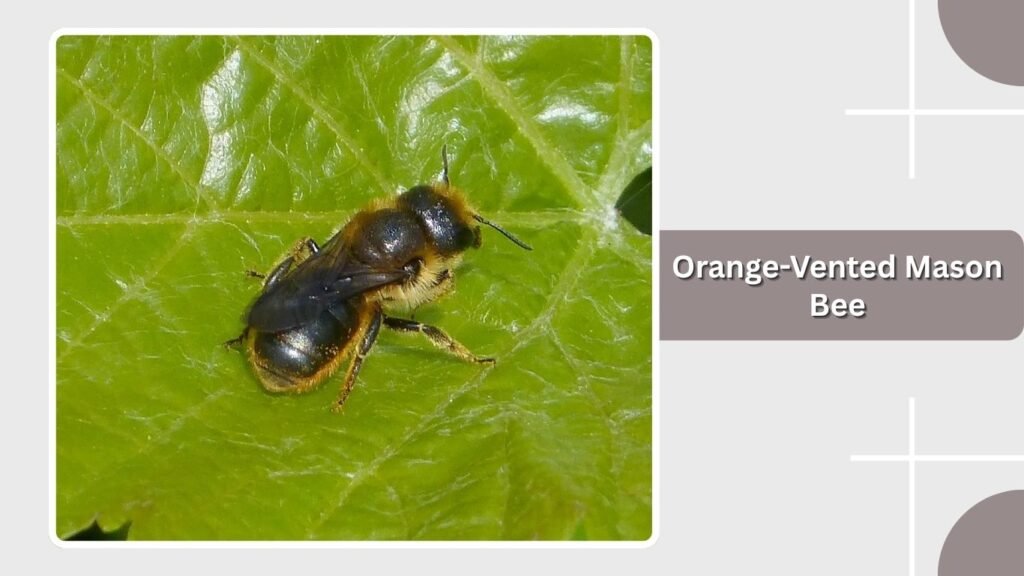
The orange-vented mason bee (Osmia leaiana) is named for the bright orange pollen brush beneath the female’s abdomen. It is particularly associated with flowers in the daisy family, including thistles and knapweeds.
Identification
- Females usually measure approximately 9–10 mm long.
- Males generally measure around 6–8 mm.
- The body is black with a metallic blue or green sheen.
- Pale hair covers parts of the head and thorax.
- Females have a bright orange abdominal pollen brush.
- Males are smaller and lack the orange pollen brush.
- Precise identification may require microscopic examination.
Habitat and Distribution
Orange-vented mason bees occur across much of Europe and parts of Asia and North Africa. They occupy gardens, parks, allotments, meadows, woodland clearings, cliffs, fields, and brownfield sites with plentiful thistles or knapweed.
Nesting and Diet
Females nest in holes within dead wood, masonry, walls, cliffs, fence posts, and bee hotels. They make brood-cell partitions from chewed leaves rather than mud. Females gather pollen primarily from plants in the daisy family.
Behavior and Sting
These bees are solitary and nonaggressive. Several females may use different tubes within the same bee hotel. Males cannot sting, and females are unlikely to sting unless physically restrained or threatened.
8. Gold-Fringed Mason Bee
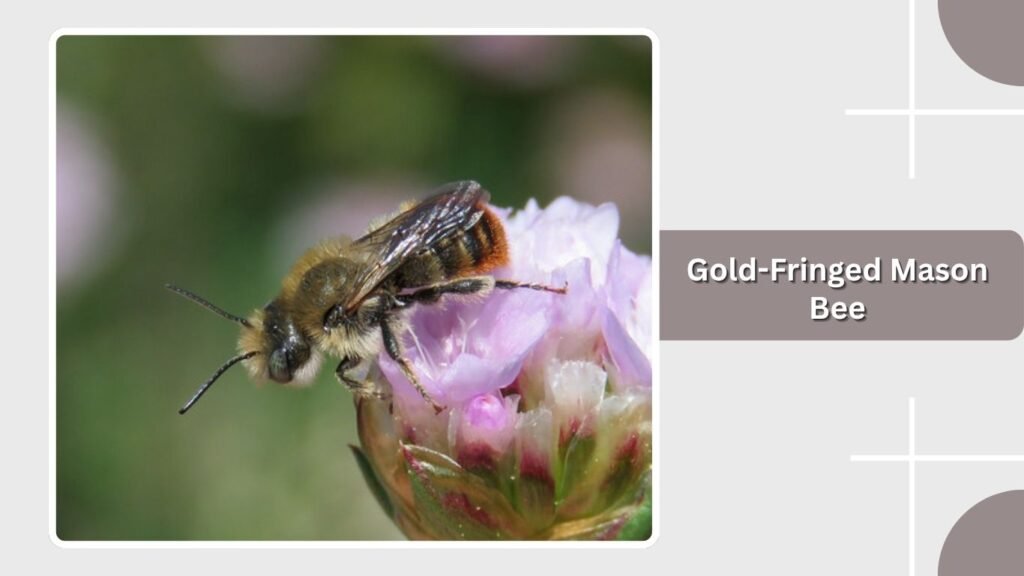
The gold-fringed mason bee (Osmia aurulenta) is a medium-sized species recognized by the golden-orange hairs bordering its abdominal segments. It is strongly associated with coastal and limestone habitats where empty snail shells are available for nesting.
Identification
- Adults generally measure approximately 8–10 mm long.
- Females have broad, rounded heads.
- Brick-red or golden hair covers the thorax.
- The brown abdomen has golden-orange hair fringes.
- Females have a rust-colored pollen brush underneath.
- Males are slightly smaller and duller.
- Older individuals may lose some of their bright coloring.
Habitat and Distribution
Gold-fringed mason bees occur across Europe and extend into parts of western Asia and North Africa. They favor coastal dunes, shingle beaches, soft-rock cliffs, chalk grasslands, limestone areas, quarries, and flower-rich brownfield sites.
Nesting and Diet
Females typically construct nests inside empty snail shells. They separate brood chambers with chewed plant material and may partially conceal completed shells. Adults visit bird’s-foot trefoil, vetches, clover, and other low-growing flowers.
Behavior and Sting
Gold-fringed mason bees live independently and do not build colonies. Males have no stingers. Females can sting but are extremely reluctant to do so. Preserving empty snail shells and avoiding excessive habitat clearing can support local populations.
9. Spined Mason Bee
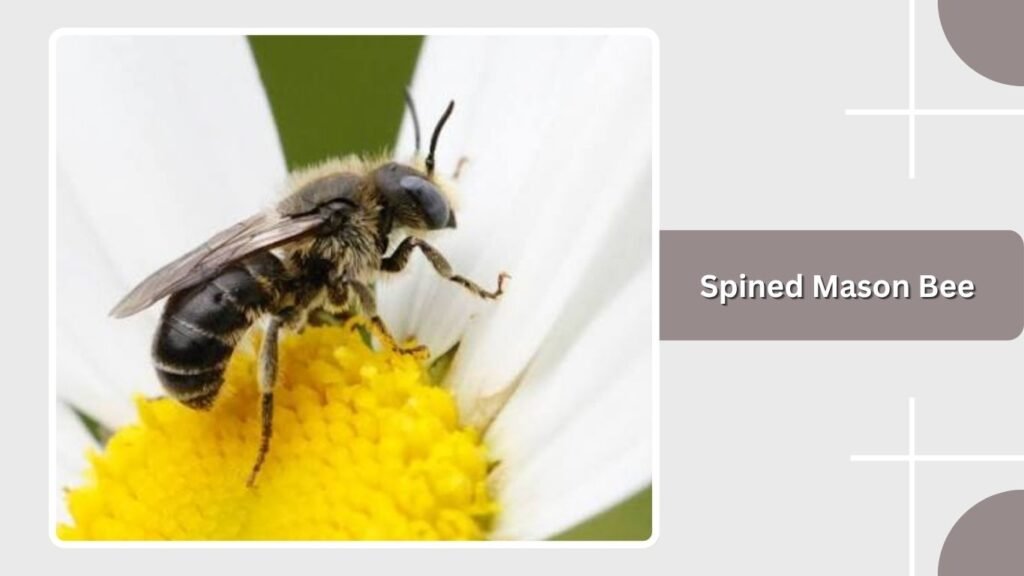
The species previously listed as the sea aster mason bee is more accurately called the spined mason bee (Osmia spinulosa). Its name refers to small spine-like structures on the body. It commonly collects pollen from flowers in the daisy family.
Identification
- Adults generally measure approximately 7–8 mm long.
- The body is compact, dark, and moderately hairy.
- Pale hair bands occur along the abdominal segments.
- Females have small pointed spines on the scutellum.
- The female’s pollen brush is located beneath the abdomen.
- Males have a noticeable spine on the final abdominal segment.
- Close examination is usually needed for confirmation.
Habitat and Distribution
Spined mason bees occur across Europe and extend through Asia Minor and western Central Asia. They occupy calcareous grasslands, dunes, quarries, open woodlands, coastal sites, and other sunny habitats where flowers and empty snail shells are available.
Nesting and Diet
Females nest inside small, empty snail shells and use chewed leaves as construction material. They gather pollen primarily from flowers in the daisy family, including knapweed, hawkweed, chamomile, and globe thistle.
Behavior and Sting
Spined mason bees are solitary and spend little time interacting with humans. Males cannot sting. Females possess stingers but are unlikely to use them unless trapped. Completed nests should be left undisturbed on the ground.
10. Blueberry Mason Bee
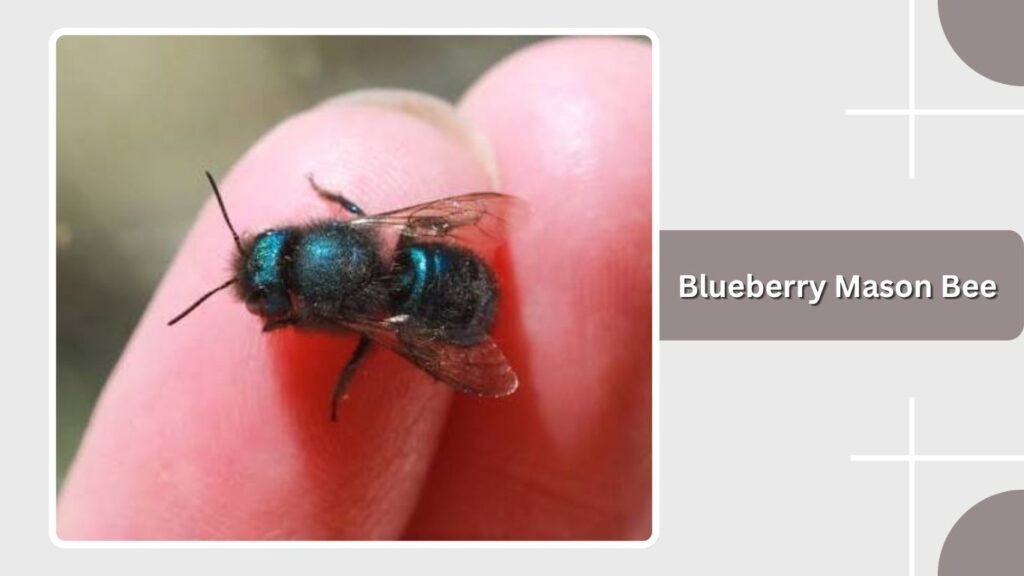
The blueberry mason bee (Osmia ribifloris) is a North American species known for pollinating blueberries and related plants. It emerges early in the year, often becoming active when cool conditions limit the activity of many other pollinators.
Identification
- Adults are approximately 9–12 mm long.
- The body is compact and metallic blue-green.
- Some individuals may appear dark green or nearly black.
- Pale hair bands may cross the abdomen.
- Females carry dry pollen beneath the abdomen.
- Males are usually smaller and have longer antennae.
- It may resemble other metallic mason bees.
Habitat and Distribution
Blueberry mason bees are native to western North America, with a range extending into parts of the southern United States and northern Mexico. They inhabit chaparral, woodland edges, mountains, gardens, farms, and areas containing blueberry relatives such as manzanita.
Nesting and Diet
Females nest in pre-existing holes in dead wood, hollow stems, and artificial tubes. They specialize mainly on plants in the heath family, including blueberries, manzanita, and Oregon grape. Their pollen-carrying behavior makes them effective blueberry pollinators.
Behavior and Sting
Blueberry mason bees are solitary, gentle, and not defensive around nesting structures. Males cannot sting. Females may sting only when squeezed or mishandled, making them suitable candidates for managed agricultural pollination.
11. California Mason Bee
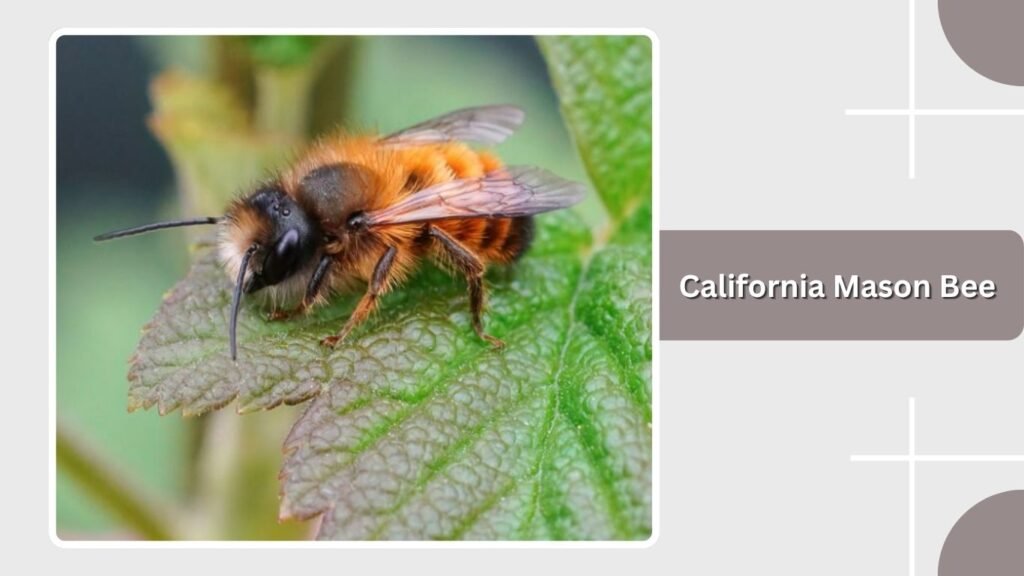
The California mason bee (Osmia californica) is a solitary native bee found mainly in western North America. It is an important pollinator of wildflowers and agricultural crops.
Identification
- Length: approximately 5–14 mm
- Dark blue, greenish-blue, or nearly black body
- Stout body with dense hairs
- Females carry pollen on hairs beneath the abdomen
Habitat and Distribution
This species occurs in California and throughout parts of the Great Basin. It inhabits grasslands, sagebrush country, chaparral, orchards, gardens, and suburban areas. Calscape classifies it as a spring-and-summer cavity-nesting bee.
Nesting and Diet
Females usually nest in existing holes in wood, hollow stems, or artificial bee houses. Each nest contains a row of individual brood cells supplied with pollen and nectar. The bee visits numerous native flowers, particularly sunflowers, asters, balsamroot, and related plants.
Behavior and Sting
California mason bees are solitary and nonaggressive. Males cannot sting, while females sting only when trapped or handled roughly.
12. Montana Mason Bee
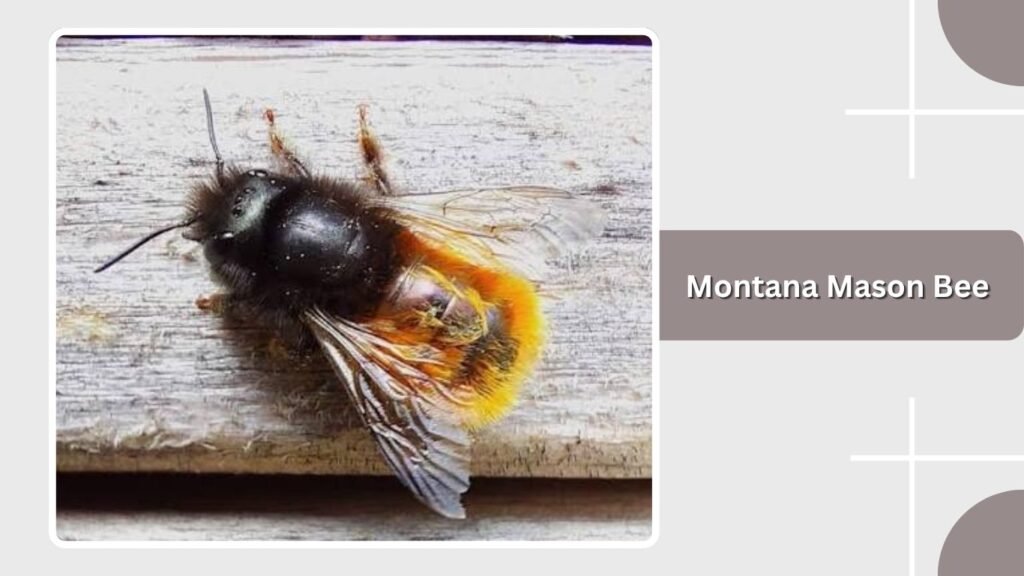
The Montana mason bee (Osmia montana), sometimes loosely called the mountain mason bee, is a native species associated with the mountainous regions of western North America.
Identification
- Length: approximately 10–15 mm
- Stout, predominantly dark-colored body
- Thick hair around the head and thorax
- Females possess pollen-carrying hairs under the abdomen
- Precise identification may require microscopic examination
Habitat and Distribution
This mason bee has been recorded in Montana, Idaho, and other western mountain regions. It inhabits sunny meadows, forest edges, sagebrush areas, and open slopes where flowering plants and natural nesting cavities are available. Its occurrence in Montana is documented by the Montana Natural Heritage Program.
Nesting and Diet
Females establish nests in existing beetle holes, hollow plant stems, and other sheltered cavities. They build separate chambers for their offspring and stock each one with pollen mixed with nectar. Important food plants include asters, sunflowers, mule’s ears, and balsamroot.
Behavior and Sting
The Montana mason bee does not form colonies or produce honey. It is generally calm around people. Only females possess stingers, and they rarely use them unless physically threatened.
13. Large Black-Bellied Mason Bee
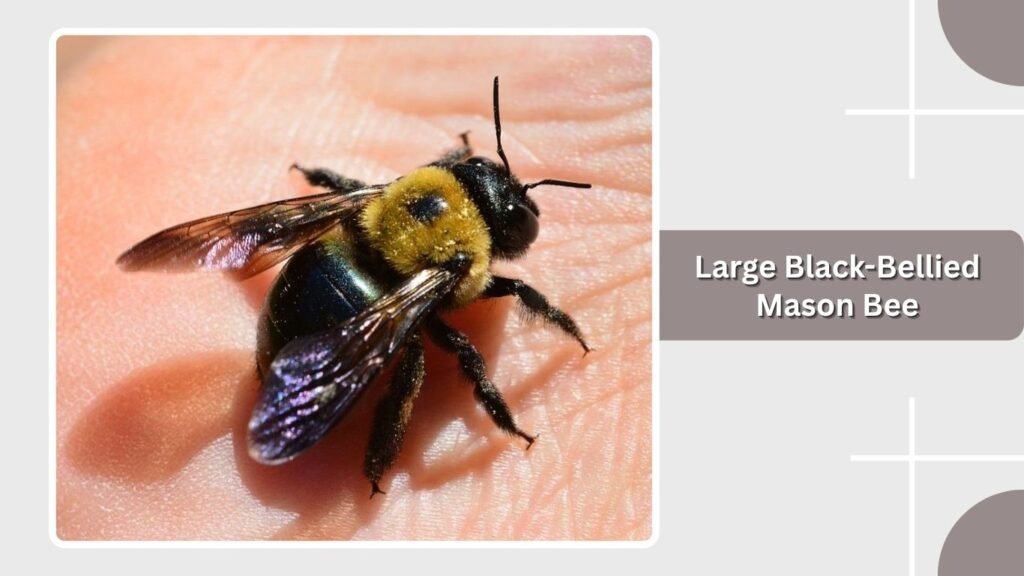
The large black-bellied mason bee (Osmia nigriventris) is also known simply as the black mason bee. It is a distinctive cold-climate species associated primarily with open forests and mountainous landscapes.
Identification
- Length: approximately 10–14 mm
- Entirely black body without a strong metallic sheen
- Pale or whitish hairs on the head and thorax
- Lightly smoky wings
- Broad, robust abdomen
Habitat and Distribution
This species has a boreal and alpine distribution across parts of Europe, Asia, and North America. It favors open coniferous forests, forest edges, clearings, windfalls, and subalpine meadows. It has been recorded at elevations reaching approximately 2,250 metres. Alpine Entomology provides detailed information about its forest habitat and unusual nesting behavior.
Nesting and Diet
Unlike many mason bees that primarily use holes, this species frequently nests beneath loose bark on dead trees, fallen trunks, stumps, and pieces of coarse woody debris. It collects pollen and nectar from plants such as blueberries, rhododendrons, rock roses, and members of the pea family.
Behavior and Sting
The large black-bellied mason bee is solitary and typically avoids confrontation. Males lack stingers, and females rarely sting unless squeezed or directly disturbed.