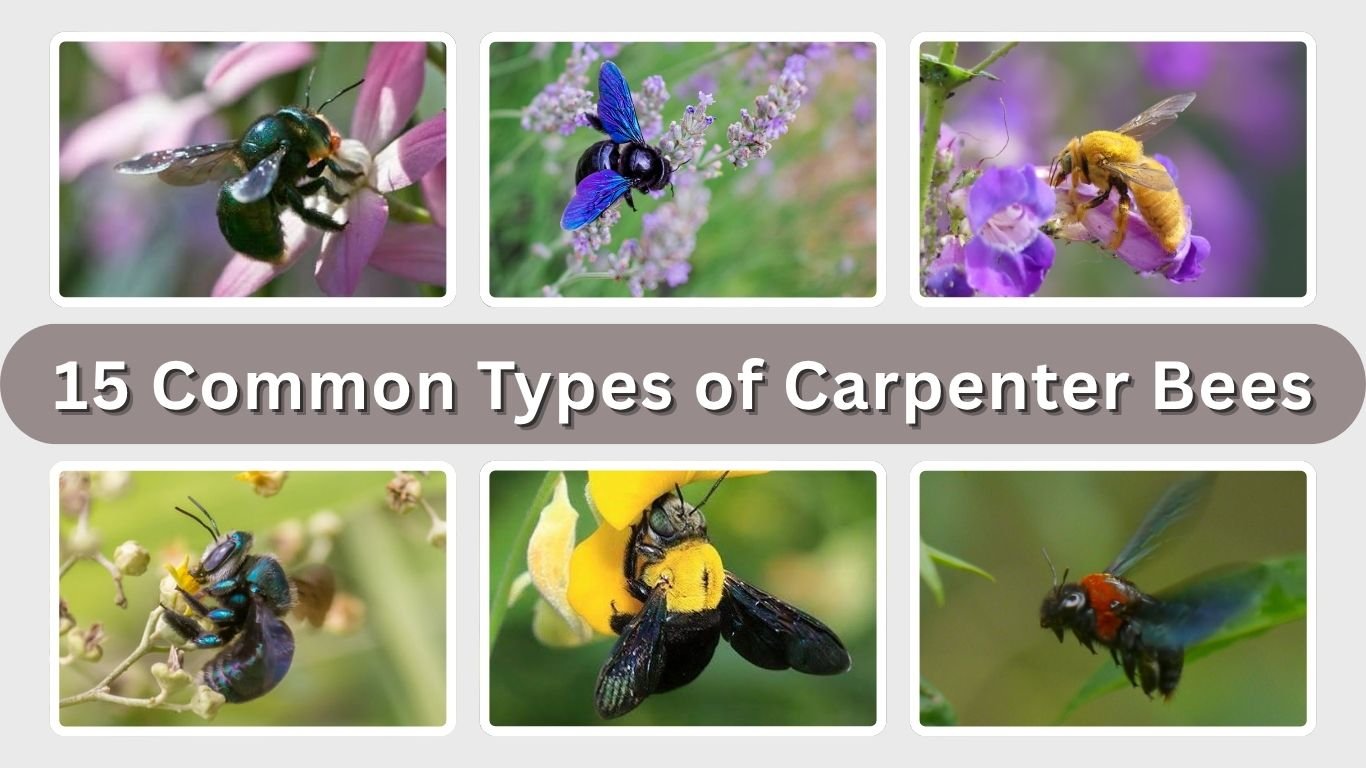
Carpenter bees are large, powerful pollinators recognized for excavating nest tunnels in dead wood, bamboo, and dry plant stems. Depending on the species, their bodies may appear black, blue, green, violet, yellow, or reddish. Most are solitary, although some females share nests and divide responsibilities. This guide covers 15 common types of carpenter bees, including their size, identification features, geographic distribution, preferred habitat, diet, nesting behavior, pollination value, and potential sting risk.
1. Eastern Carpenter Bee
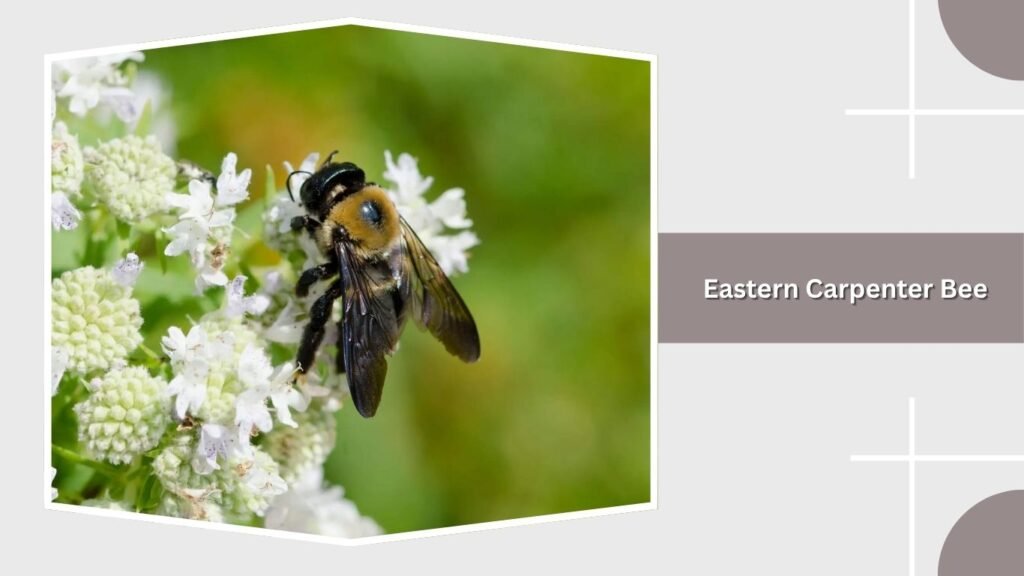
The eastern carpenter bee (Xylocopa virginica) is a large native bee commonly found throughout eastern North America. It resembles a bumblebee but has a smooth, shiny abdomen. This species is an important pollinator, although its wood-nesting behavior can occasionally damage exposed wooden structures.
Identification
- Adults measure approximately 19–23 mm long.
- The thorax is covered with yellow or golden hairs.
- The abdomen is shiny, black, and mostly hairless.
- Females have entirely black faces.
- Males have yellowish-white facial markings.
- The wings may display dark purple or bluish reflections.
- The body is large, broad, and robust.
Habitat and Distribution
Eastern carpenter bees range across much of eastern North America, from southern Canada to Florida and Texas. They inhabit forests, woodland edges, farms, parks, residential areas, and flower gardens. Their preferred habitats provide abundant flowers and suitable pieces of dry wood.
Nesting and Diet
Females excavate circular entrances in untreated or weathered wood. Each tunnel contains separate brood chambers provisioned with pollen and nectar. These bees visit passionflowers, blueberries, tomatoes, clover, sunflowers, and many garden plants. They can perform buzz pollination but may also pierce deep flowers to reach nectar.
Behavior and Sting
Male eastern carpenter bees often hover near people, but they cannot sting. Females possess stingers but rarely use them unless handled or trapped. Repeated nesting in the same structural wood may cause damage over several years.
2. Southern Carpenter Bee
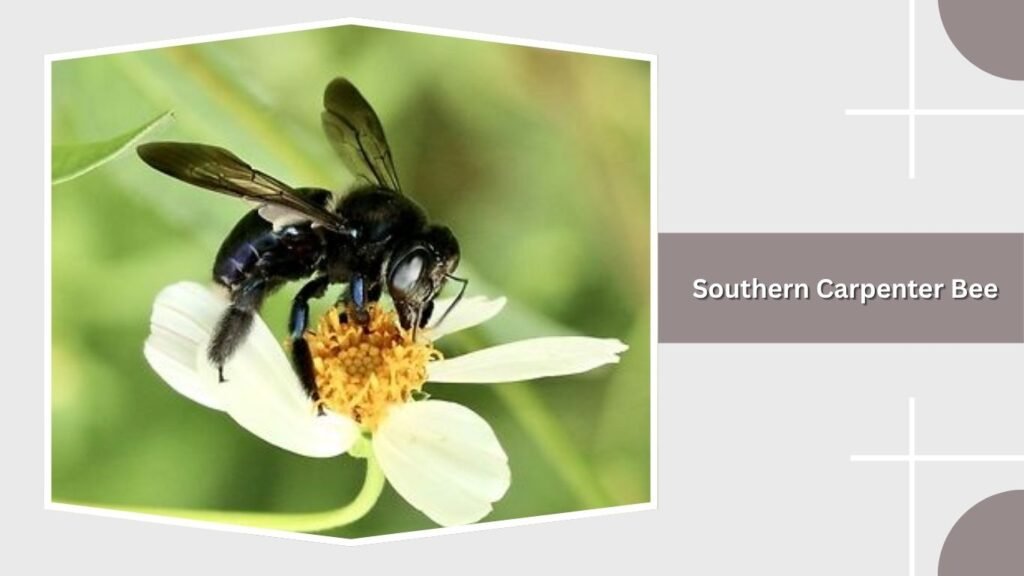
The southern carpenter bee (Xylocopa micans) is a large, metallic species associated with warm regions of the southeastern United States and Central America. Its body may reflect blue, green, or purple colors when viewed under bright light.
Identification
- Adults range from approximately 14–27 mm long.
- Females are primarily metallic black or purple.
- Female thoraxes have sparse, dark hairs.
- Males have denser yellow hair on the thorax.
- The abdomen may display blue-green reflections.
- The wings are dark and sometimes iridescent.
- Its appearance varies between males and females.
Habitat and Distribution
Southern carpenter bees occur along coastal and Gulf regions from southeastern Virginia through Florida and west to Texas. Their distribution continues south through Mexico and Guatemala. They inhabit subtropical forests, gardens, farms, wetlands, and areas containing dry woody plants.
Nesting and Diet
Females excavate tunnels in dead branches, logs, stems, and other dry plant material. Unlike eastern carpenter bees, they are not frequently associated with serious structural damage. They feed on pollen and nectar from many flowering plants and can perform buzz pollination.
Behavior and Sting
Southern carpenter bees are mainly solitary, although several females may nest close together. Males aggressively chase insects and people entering their territories, but they cannot sting. Females can sting but normally do so only when directly threatened or mishandled.
3. Valley Carpenter Bee
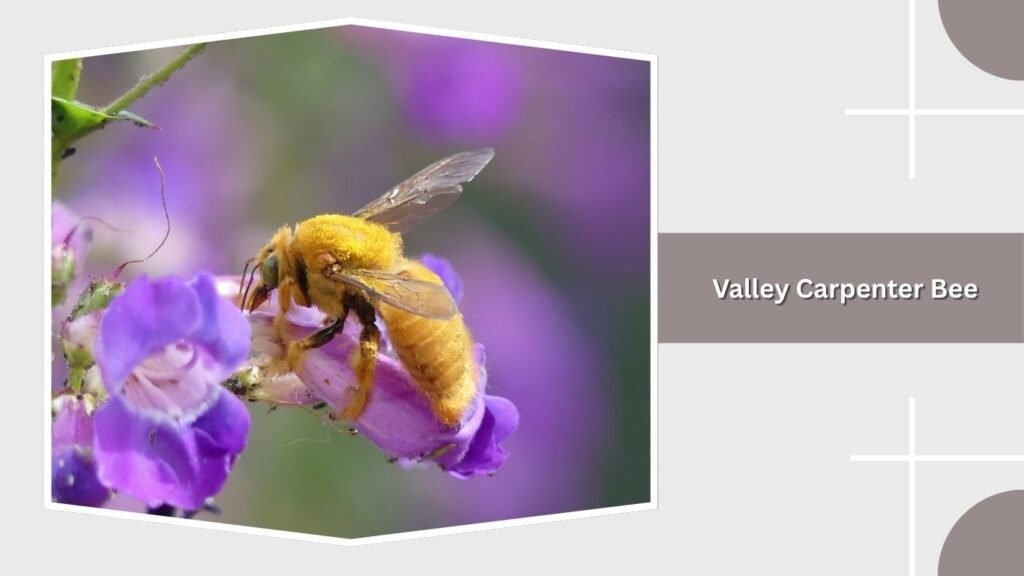
The valley carpenter bee (Xylocopa sonorina) is one of the largest carpenter bees in North America. Males and females look remarkably different: females are glossy black, while males resemble fuzzy golden teddy bears with striking green eyes.
Identification
- Adults can reach approximately 20–25 mm long.
- Females are large, shiny, and almost entirely black.
- Female wings have dark violet or blue reflections.
- Males are covered with golden-blond hair.
- Male eyes are pale green or yellowish green.
- Females have broader heads and powerful jaws.
- The abdomen is less hairy than a bumblebee’s abdomen.
Habitat and Distribution
Valley carpenter bees occur from California and the southwestern United States through parts of Mexico. They are especially familiar in California’s Central Valley and southern regions. Populations introduced to Hawaii are also well established. Typical habitats include deserts, gardens, farms, woodland edges, and urban areas.
Nesting and Diet
Females tunnel into dead trees, dry branches, agave stalks, fence posts, and untreated lumber. They visit passionflowers, desert willow, wisteria, sage, tomatoes, and many ornamental flowers. Their large bodies make them effective pollinators of broad, sturdy blossoms.
Behavior and Sting
Golden males may hover around flowers and nest sites, but they have no stingers. Black females can sting, although they are normally calm. Nesting damage is usually cosmetic unless numerous tunnels are reused for many years.
4. California Carpenter Bee
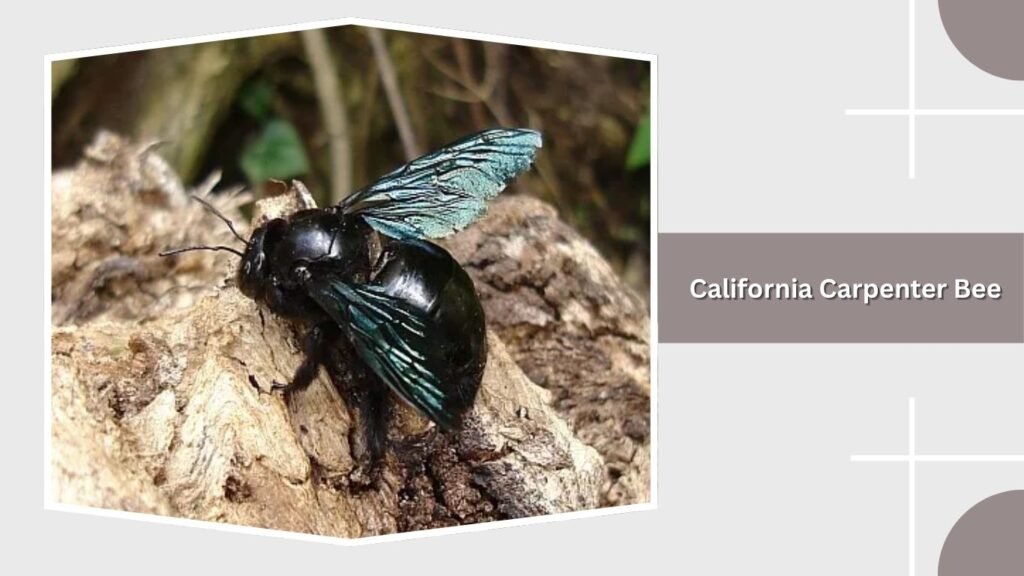
The California carpenter bee (Xylocopa californica), also called the western carpenter bee, is a large metallic species native to western North America. Its blue-green reflections help distinguish it from the completely black female valley carpenter bee.
Identification
- Adults measure approximately 20–25 mm long.
- The body is primarily black.
- Blue or green metallic reflections cover the body.
- Females have dark, smoky-brown wings.
- Males may have pale markings on the thorax.
- The abdomen is smooth, shiny, and sparsely haired.
- It is smaller than many valley carpenter bees.
Habitat and Distribution
California carpenter bees occur from southern Oregon through California, Nevada, Utah, Arizona, and parts of northern Mexico. They are frequently associated with forests, mountain foothills, chaparral, deserts, and neighboring flower-rich meadows. Adults are particularly active during warm weather.
Nesting and Diet
Females excavate nests in dead branches, logs, dry stalks, and weathered wood. Each brood cell receives a mixture of pollen and nectar before an egg is deposited. These bees visit creosote bush, mesquite, ocotillo, sage, and numerous native and cultivated flowers.
Behavior and Sting
California carpenter bees are mainly solitary and rarely attack people. Territorial males may fly close to perceived intruders but cannot sting. Females can deliver a painful sting if squeezed or directly threatened, although stinging incidents are unusual.
5. Arizona Carpenter Bee
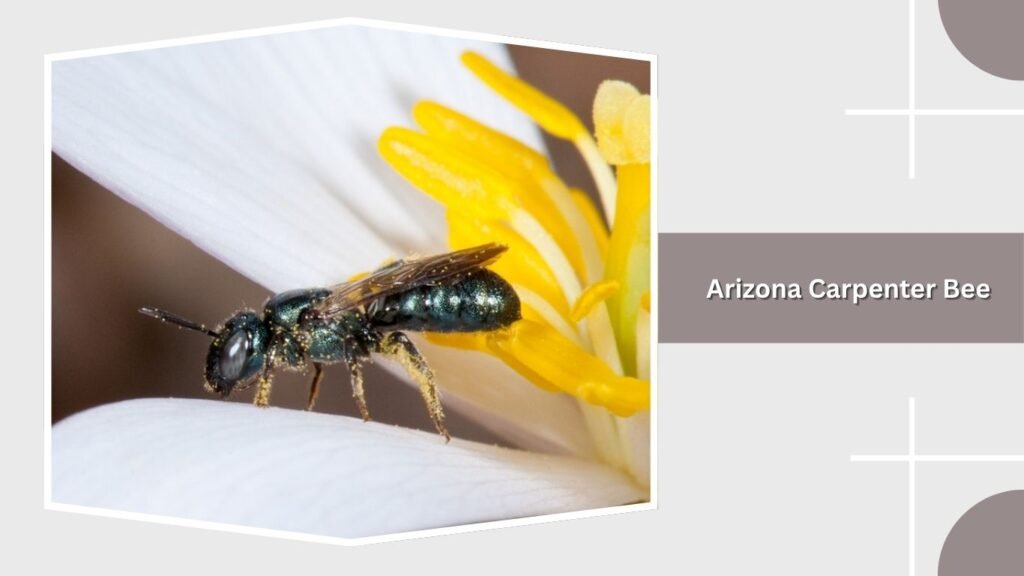
The Arizona carpenter bee (Xylocopa californica arizonensis) is generally classified as a subspecies of the California carpenter bee rather than a completely separate species. It is a large, dark carpenter bee adapted to the warm and dry landscapes of the American Southwest.
Identification
- Adults commonly measure approximately 20–25 mm long.
- Females are black with blue or green metallic reflections.
- The wings are dark and may appear purple in sunlight.
- The abdomen is shiny and has relatively little hair.
- Males may have lighter facial or thoracic markings.
- The head is broad and equipped with strong jaws.
- Its appearance closely resembles other western carpenter bees.
Habitat and Distribution
Arizona carpenter bees primarily inhabit Arizona and neighboring southwestern regions. They are associated with deserts, mountain canyons, grasslands, dry forests, gardens, and areas containing agaves or dead wood. The availability of suitable nesting material strongly influences their local distribution.
Nesting and Diet
Females commonly excavate nest tunnels inside dry agave flower stalks, branches, dead wood, and untreated lumber. Adults feed on nectar, while females collect pollen to provision their offspring. They visit agave, mesquite, desert willow, creosote bush, sunflowers, and many garden flowers.
Behavior and Sting
Arizona carpenter bees are solitary and generally nonaggressive. Males may hover defensively around nesting or mating territories but cannot sting. Females can sting when captured or crushed. Their nesting activity may leave visible holes, but isolated tunnels seldom cause major structural damage.
6. Violet Carpenter Bee
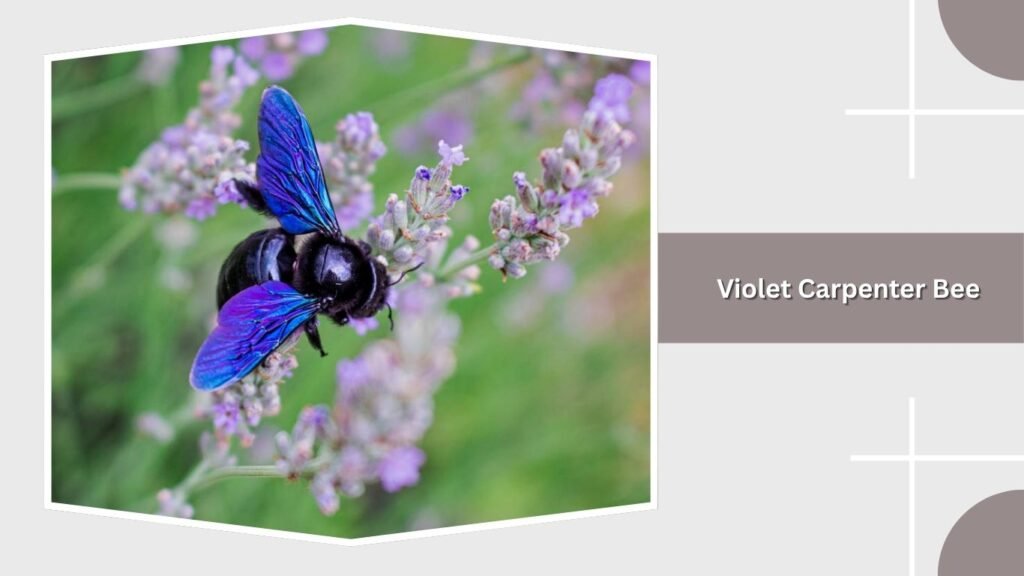
The violet carpenter bee (Xylocopa violacea) is one of Europe’s largest native bees. Its dark body and shimmering violet-blue wings make it easy to recognize. Despite its intimidating size and loud flight, this carpenter bee is generally peaceful and beneficial to gardens.
Identification
- Adults commonly measure approximately 20–25 mm long.
- The body is large, robust, and almost entirely black.
- Wings display brilliant blue or violet reflections.
- The abdomen is shiny and only sparsely covered with hair.
- Females have black antennae.
- Males have reddish or orange sections on their antennae.
- Both sexes produce a deep, noticeable buzzing sound.
Habitat and Distribution
Violet carpenter bees occur across central and southern Europe, northern Africa, and parts of western and central Asia. They prefer warm, sunny environments, including gardens, orchards, forest edges, parks, vineyards, and open woodlands. Their European range has expanded northward into some warmer regions.
Nesting and Diet
Females excavate galleries inside dry branches, dead trees, fence posts, and untreated wooden objects. Each brood chamber contains one egg and a supply of pollen and nectar. Adults visit wisteria, lavender, sweet peas, clover, thistles, rosemary, and many other flowers.
Behavior and Sting
Violet carpenter bees are solitary and not naturally aggressive. Males may patrol flowers or nesting areas, but they cannot sting. Females possess a stinger but normally use it only when caught, squeezed, or seriously threatened.
7. Blue Carpenter Bee
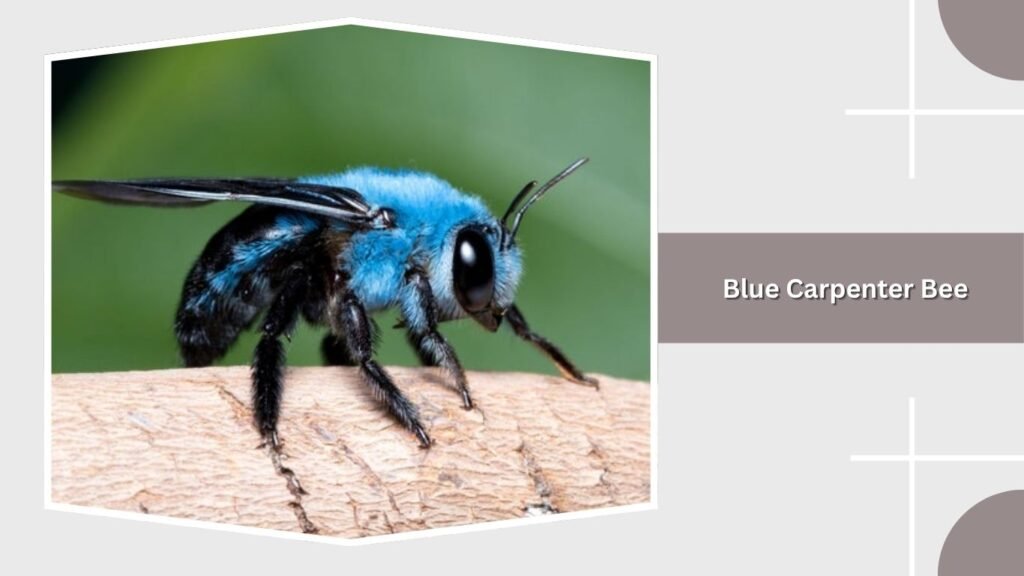
The blue carpenter bee (Xylocopa caerulea) is a striking tropical species covered with bright blue hairs. It is one of the most colorful carpenter bees and can appear turquoise, sky blue, or blue-gray depending on the lighting.
Identification
- Adults average approximately 23 mm long.
- Large individuals may approach 28 mm.
- Females have vivid blue hair across the thorax.
- Blue hairs also appear along the abdomen’s sides.
- The central abdomen is darker and relatively shiny.
- Males may have brownish-green thoracic hair.
- The wings are dark with blue or purple reflections.
Habitat and Distribution
Blue carpenter bees are distributed across India, southern China, and Southeast Asia. They inhabit tropical forests, woodland edges, farms, gardens, and other areas containing flowering plants and dead wood. They are most noticeable when visiting large blossoms in warm, humid environments.
Nesting and Diet
Females use strong jaws to excavate tunnels in dead trees, dry branches, bamboo, and wooden structures. They place a ball of pollen and nectar inside each chamber before laying an egg. Adults feed on nectar and gather pollen from many tropical flowers.
Behavior and Sting
Blue carpenter bees are primarily solitary, although several females may use the same nesting entrance. Males cannot sting, while females rarely sting unless handled. Their large size and loud buzzing can appear threatening, but they normally avoid confrontations with people.
8. Giant Carpenter Bee
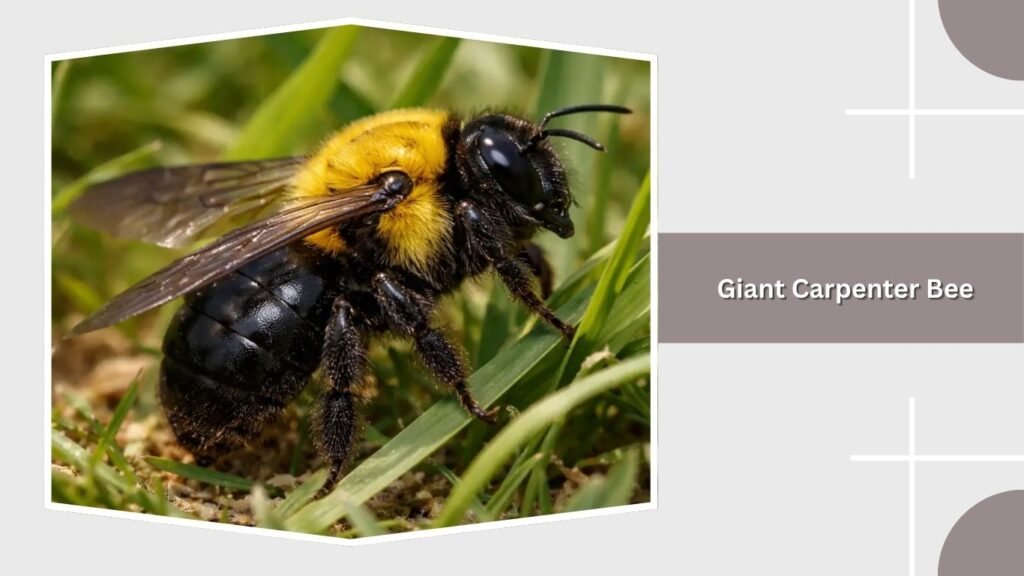
The giant carpenter bee (Xylocopa latipes) is more commonly called the broad-handed carpenter bee. It is among the largest carpenter bees in Southeast Asia. Its name refers to the widened, brush-like front legs of the male.
Identification
- Adults may reach approximately 25–30 mm long.
- The body is extremely large, broad, and robust.
- Females are primarily glossy black.
- Wings reflect metallic blue, green, or purple colors.
- Males possess widened and noticeably hairy front legs.
- The abdomen is dark, smooth, and shiny.
- Flight produces a loud, low-pitched buzzing sound.
Habitat and Distribution
Giant carpenter bees are widely distributed throughout Southeast Asia and parts of South Asia. They inhabit tropical forests, parks, gardens, plantations, and urban areas with suitable dead wood. They may repeatedly return to the same resting or nesting locations.
Nesting and Diet
Females excavate deep tunnels in dead trees, bamboo, wooden rafters, poles, and untreated lumber. Multiple galleries may branch from one entrance. These bees commonly visit passionflowers and other large tropical blossoms. Their powerful flight muscles allow them to perform buzz pollination.
Behavior and Sting
Giant carpenter bees are mainly solitary and usually tolerant of people. Males may patrol territories and chase other flying insects but cannot sting. Females can sting when physically threatened. Repeated nesting in structural timbers may eventually weaken the wood.
9. Indian Carpenter Bee
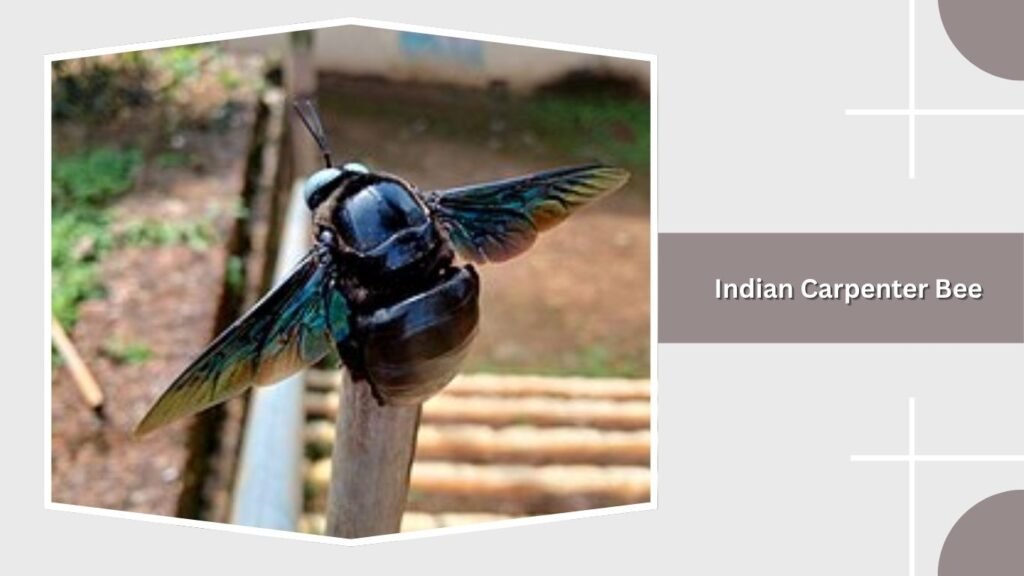
The Indian carpenter bee (Xylocopa fenestrata), also called the windowed carpenter bee, is a large Asian species and an important agricultural pollinator. Its strong jaws allow it to excavate nests in bamboo, hollow stems, and dry wood.
Identification
- Adults are large and robust, generally around 20–25 mm long.
- The body is predominantly glossy black.
- Blue or purple reflections may appear in sunlight.
- The abdomen has relatively little visible hair.
- The wings are dark and iridescent.
- Males may have pale facial markings.
- Accurate identification may require examination of small body features.
Habitat and Distribution
Indian carpenter bees occur widely across South Asia and other parts of Asia, with additional populations reported from a few Indian Ocean islands and African locations. They occupy farmland, gardens, forests, villages, and subtropical grasslands.
Nesting and Diet
Females excavate nests in dry wood, bamboo, castor stems, and other hollow or pithy plant material. They collect pollen and nectar from mustard, marigold, peas, milkweed, cucurbits, and numerous field crops. Their buzz-pollination ability can improve the reproduction of several plants.
Behavior and Sting
Indian carpenter bees are mainly solitary, but females may construct nests close to one another. Males are unable to sting. Females can sting defensively but normally escape rather than attack. Numerous nests inside the same timber or bamboo may cause localized damage.
10. Green Carpenter Bee
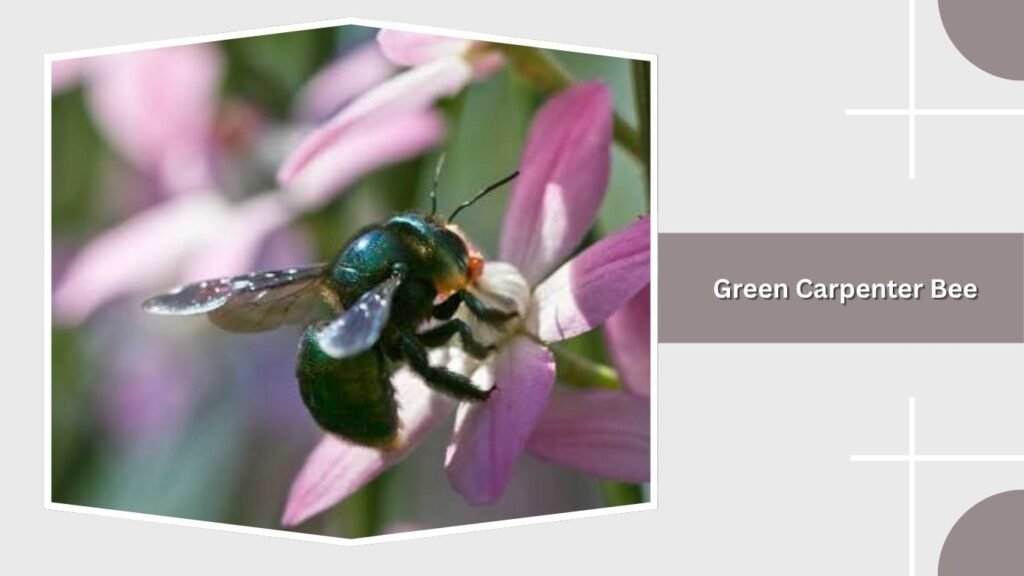
The green carpenter bee (Xylocopa aerata), also known as the golden-green carpenter bee, is a large Australian species with a brilliant metallic body. Habitat clearing and intense fires have reduced its availability of suitable nesting material.
Identification
- Adults grow to approximately 20 mm long.
- The body is shiny metallic green.
- Blue, bronze, or purple reflections may be visible.
- Females have strong jaws and robust bodies.
- Males may have yellow facial markings.
- The wings are smoky and slightly iridescent.
- Its flight produces a loud, low buzzing sound.
Habitat and Distribution
Green carpenter bees were historically distributed across parts of southeastern Australia. Remaining populations occur around conservation areas in New South Wales and on western Kangaroo Island. They require woodlands, heathlands, or open forests containing flowers and suitable dead wood.
Nesting and Diet
Females excavate nests in dead banksia wood and dry grass-tree flower stalks. They divide tunnels into individual brood cells containing pollen, nectar, and one egg. Adults visit native pea flowers, guinea flowers, velvet bushes, and several lily species. They are capable of buzz pollination.
Behavior and Sting
Green carpenter bees are usually solitary, although mothers may sometimes share nests with their daughters. Females possess stingers but are not considered aggressive. Protecting dead nesting wood is essential because the species cannot reproduce where suitable stems and trunks are absent.
11. Peacock Carpenter Bee
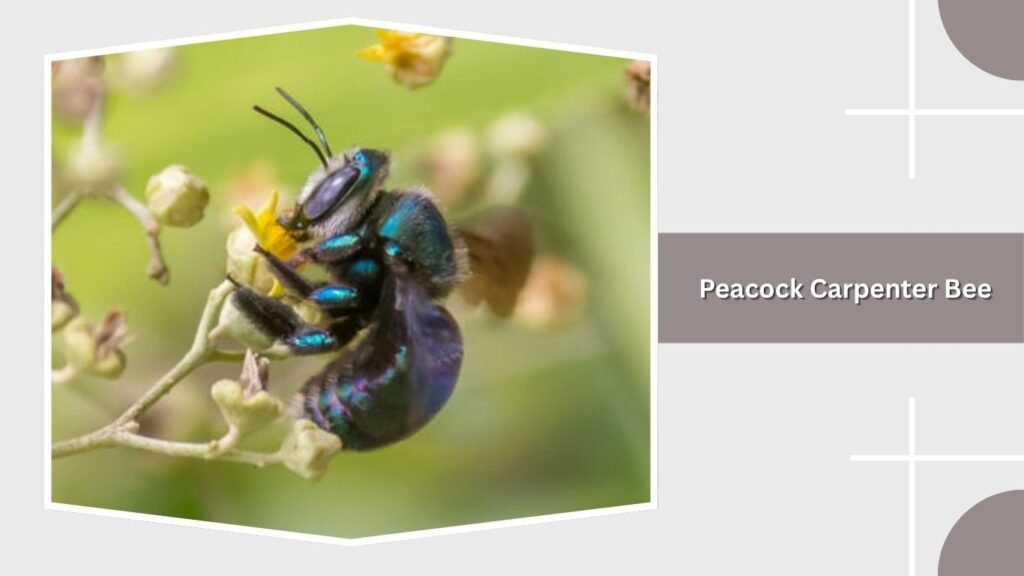
The peacock carpenter bee (Xylocopa bombylans) is an Australian species named for its brilliant blue-green coloration. Its body may appear green, blue, bronze, or purple as the viewing angle changes, resembling the iridescent feathers of a peacock.
Identification
- Adults generally measure approximately 16–18 mm long.
- The body is broad and stocky.
- Metallic green or blue-green coloring covers the body.
- Purple or bronze reflections may appear in sunlight.
- Males have pale or white facial markings.
- The wings are smoky and slightly iridescent.
- Flight produces a loud, low-pitched buzz.
Habitat and Distribution
Peacock carpenter bees occur along eastern Australia, from the Cape York Peninsula in northern Queensland south toward the Sydney region. They inhabit forests, woodlands, heathlands, urban gardens, and parks containing suitable flowers and nesting wood.
Nesting and Diet
Females excavate tunnels in dead banksia branches, grass-tree flower stalks, and other pieces of soft, dry wood. The tunnel is divided into brood cells containing pollen, nectar, and individual eggs. Adults visit native pea flowers, banksias, tea trees, and other Australian plants.
Behavior and Sting
Peacock carpenter bees are mainly solitary, but multiple females may sometimes occupy the same nest. Males cannot sting, while females possess stingers but are not naturally aggressive. They normally fly away when disturbed.
12. Japanese Carpenter Bee
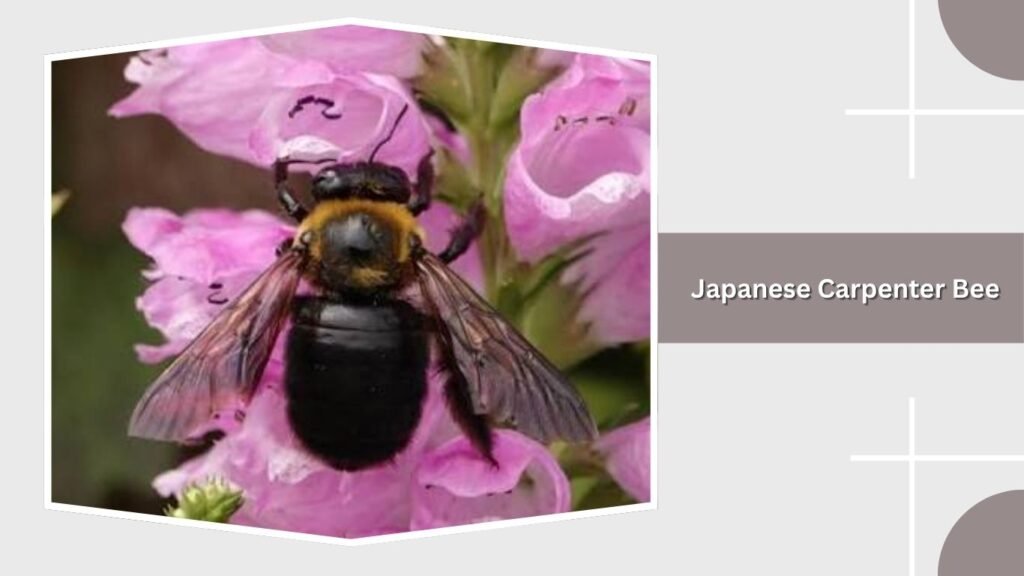
The Japanese carpenter bee (Xylocopa appendiculata) is a large East Asian species, also called the appendiculate carpenter bee. Its black abdomen and yellow-haired thorax give it a bumblebee-like appearance, but its abdomen is smoother and shinier.
Identification
- Adults generally measure approximately 20–30 mm long.
- The body is large, black, and robust.
- Yellow or pale hair covers much of the thorax.
- The abdomen is shiny and mostly black.
- Wings display faint violet reflections.
- Males have pale yellow or white facial markings.
- Females have broader, darker faces.
Habitat and Distribution
Japanese carpenter bees are native to Japan and other parts of eastern Asia, including China and Korea. An introduced population has also become established in northern California. They inhabit forests, gardens, agricultural areas, parks, and residential environments.
Nesting and Diet
Females excavate galleries in dead branches, bamboo, structural wood, and dry wooden poles. They supply each brood cell with pollen and nectar. Adults visit wisteria, salvia, clover, fruit blossoms, and many other flowering plants.
Behavior and Sting
Japanese carpenter bees are generally docile. Territorial males may hover near flowers or nest sites, but they have no stingers. Females can sting if captured or pressed against the skin. Repeated nesting in untreated structural wood can cause localized damage.
13. Grey Carpenter Bee
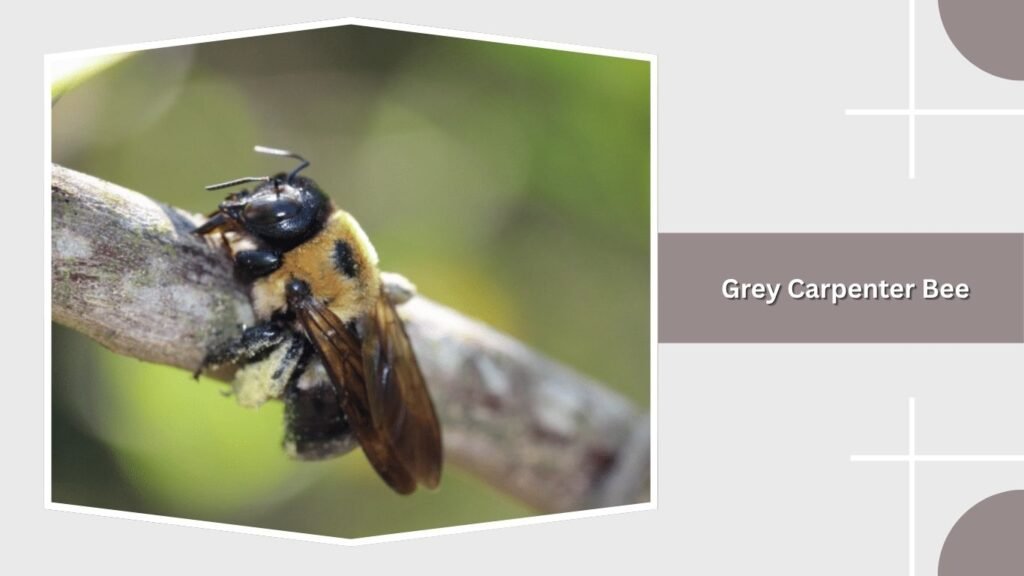
The grey carpenter bee (Xylocopa pubescens), also known as the hairy carpenter bee, is a large species associated with warm regions of Africa, the Mediterranean, the Middle East, and South Asia. Males and females have noticeably different appearances.
Identification
- Adults commonly exceed 20 mm in length.
- Females are large, shiny, and predominantly black.
- Females may have yellow markings on the head.
- Males are generally smaller and narrower.
- Male bodies are covered with yellowish or grey-yellow hair.
- The abdomen is robust and relatively glossy.
- Wings are dark or smoky.
Habitat and Distribution
Grey carpenter bees occur from western and northeastern Africa through the eastern Mediterranean and Middle East into South Asia. They favor warm habitats such as savannas, farmland, gardens, dry forests, villages, and urban areas. They generally forage only when temperatures are sufficiently warm.
Nesting and Diet
Females excavate branched nests in dead tree trunks, canes, eucalyptus, branches, and soft structural wood. This species may form solitary or simple social nests. Adults collect nectar and pollen from passionflowers, cotton, melons, legumes, and numerous wild plants.
Behavior and Sting
One female may reproduce while other females help guard a shared nest. Territorial males chase intruders but cannot sting. Females can sting defensively, although they rarely attack people without being handled or directly threatened.
14. Yellow-Thoraxed Carpenter Bee
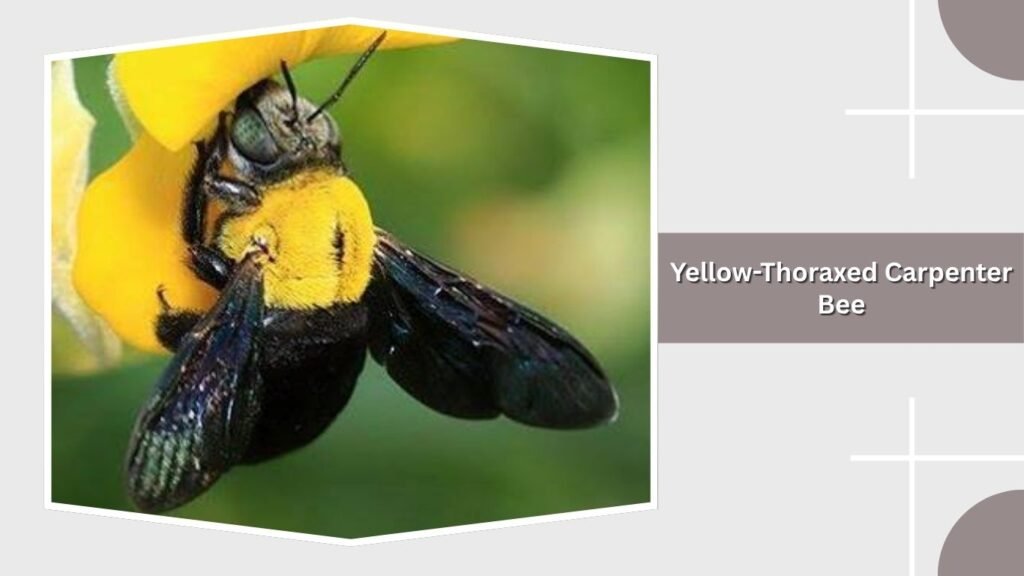
The yellow-thoraxed carpenter bee (Xylocopa aestuans) is a large tropical Asian species also known as the white-cheeked carpenter bee. Females have a distinctive yellow-haired thorax, while males are covered more extensively with yellow hair.
Identification
- Adults usually measure slightly more than 20 mm long.
- Females have predominantly black bodies.
- Deep-yellow hair covers the female’s thorax.
- A small black patch may remain at the thorax’s center.
- Males are covered with fine, dark-yellow hair.
- White hairs occur behind the eyes.
- Wings display dark brown and purple iridescence.
Habitat and Distribution
Yellow-thoraxed carpenter bees are widely distributed across Southeast Asia and are common in countries with tropical climates. They inhabit forests, gardens, farms, parks, plantations, and urban areas containing flowers and suitable nesting material.
Nesting and Diet
Females excavate nests in dry branches, bamboo, dead wood, and weathered timber. Brood chambers are provisioned with pollen and nectar. These bees visit passionflowers, legumes, ornamental flowers, and many tropical fruit and vegetable crops.
Behavior and Sting
Yellow-thoraxed carpenter bees are mainly solitary or subsocial. Males may appear intimidating while patrolling but cannot sting. Females have stingers and can defend themselves when physically threatened. They normally remain focused on flowers and avoid humans.
15. Big Red Carpenter Bee
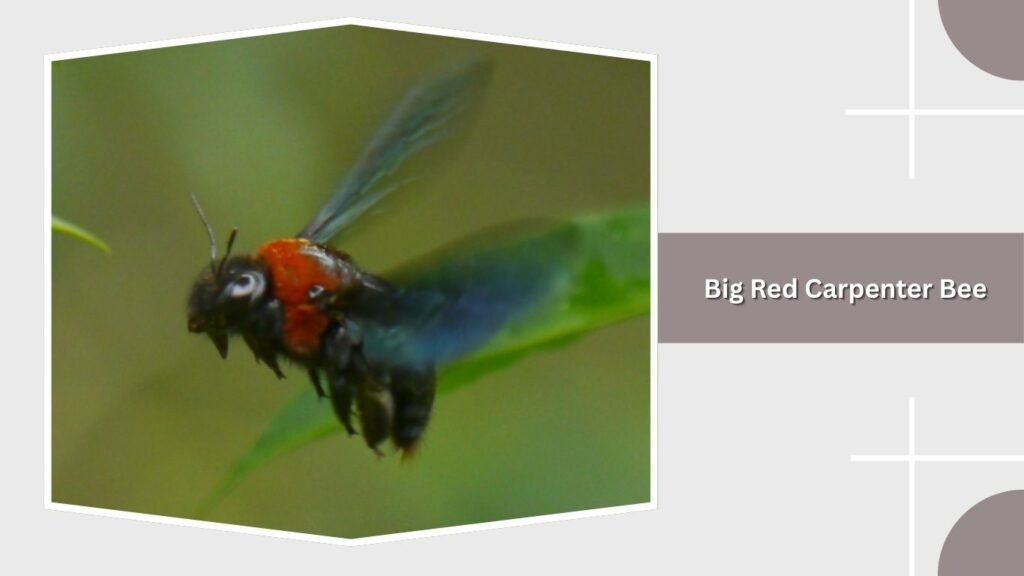
The species previously listed as the golden-tailed carpenter bee is more accurately called the big red carpenter bee or giant carpenter bee. Its scientific name is Xylocopa flavorufa. It is a very large African carpenter bee that visits numerous wildflowers and cultivated plants.
Identification
- Adults are large, commonly exceeding 20 mm in length.
- The body is broad, heavy, and strongly built.
- Reddish, rusty, or golden-brown hair may cover parts of the body.
- The abdomen is darker and relatively shiny.
- Wings are smoky with subtle iridescent reflections.
- Males and females may differ in coloration.
- A loud buzzing sound is produced during flight.
Habitat and Distribution
Big red carpenter bees occur widely across sub-Saharan Africa. Records include South Africa, Namibia, Kenya, Ethiopia, Tanzania, Mozambique, Zambia, Zimbabwe, Nigeria, and several neighboring countries. They occupy dry savannas, moist coastal habitats, gardens, forests, and agricultural landscapes.
Nesting and Diet
Females excavate nests in dead trees, agave stems, jacaranda, pine, acacia, and other dry woody material. They visit mint, cassia, sesbania, fennel, peas, trumpet flowers, and other blossoms for pollen and nectar.
Behavior and Sting
Despite their impressive size, these bees are generally peaceful while foraging. Males cannot sting, while females sting only when captured, crushed, or seriously threatened. Old nest tunnels may be reused and expanded by later generations.