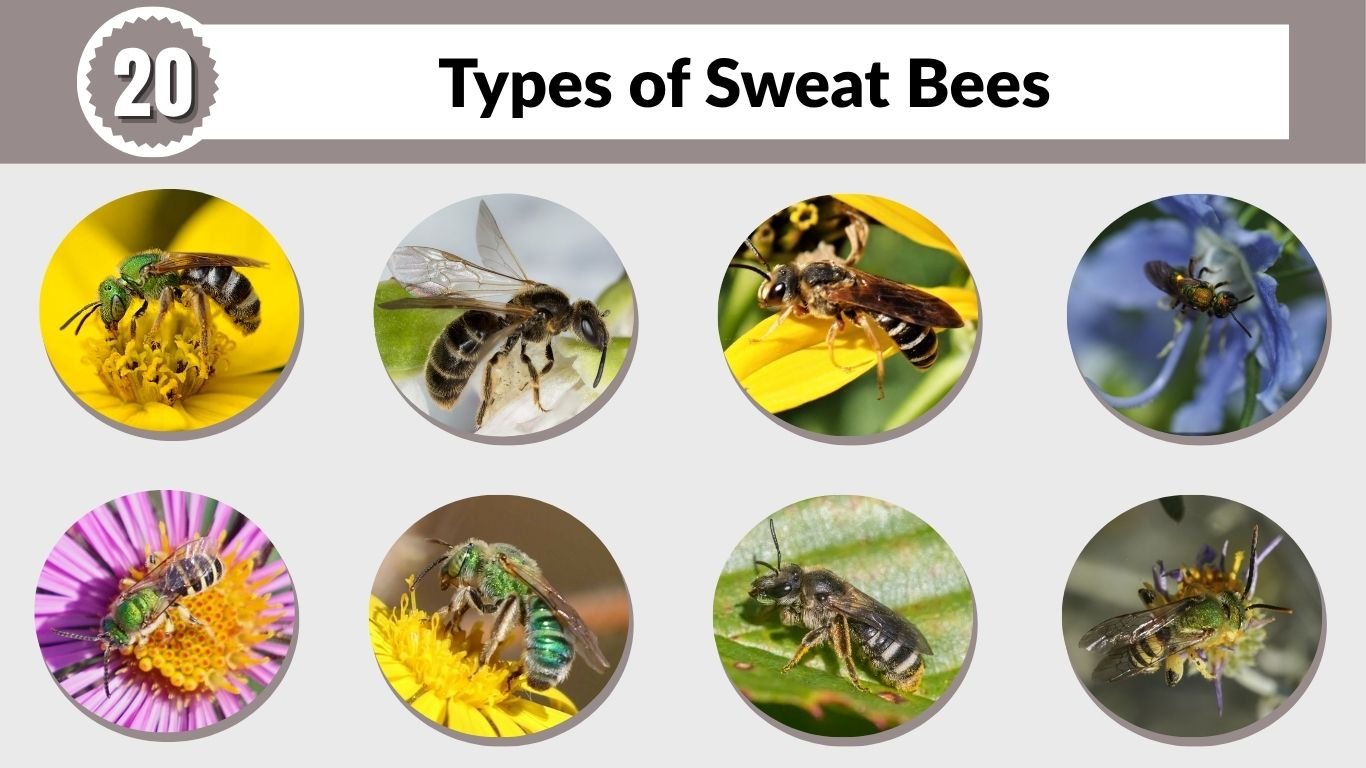
Sweat bees are a diverse group of small pollinators known for their metallic colors and occasional attraction to human perspiration. Depending on the species, they may appear bright green, blue, bronze, or black with pale abdominal bands. Most nest underground, although some use decaying wood, and their lifestyles range from solitary to primitively social. This guide explores 20 types of sweat bees, covering their size, identification, habitat, distribution, diet, nesting behavior, social structure, and potential to sting when disturbed or accidentally trapped against skin.
1. Pure Sweat Bee
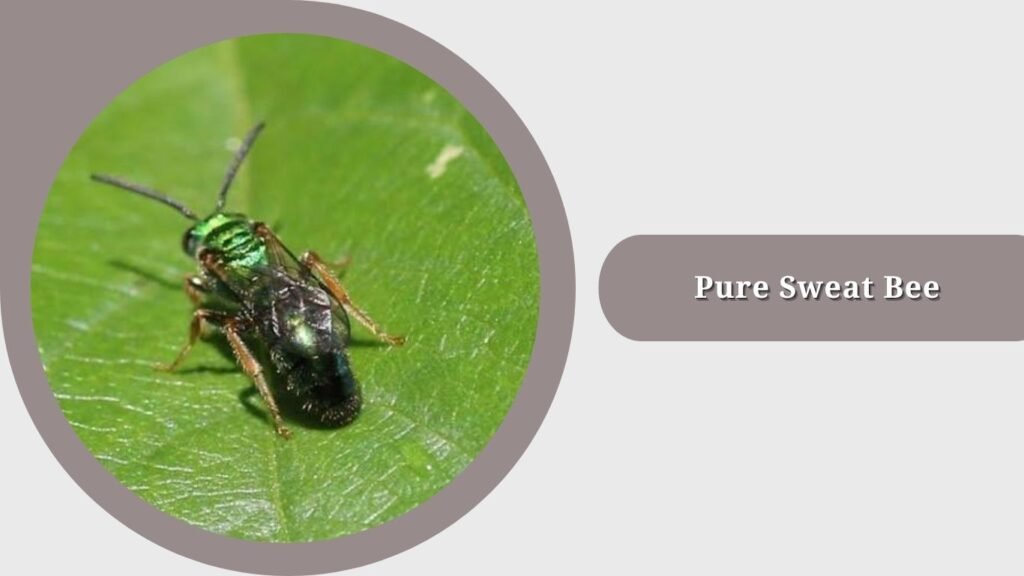
The pure sweat bee (Augochlora pura) is a small, brilliantly colored bee native to eastern North America. Its jewel-like green body makes it one of the most recognizable members of the sweat bee family. It is an important pollinator of woodland plants, wildflowers, and garden flowers.
Identification
- Approximately 5–8 mm long
- Brilliant metallic green body
- Some individuals appear blue-green, coppery, or golden
- Dark translucent wings
- Slender body with fine pale hairs
- Females carry pollen on their hind legs
Habitat and Distribution
Pure sweat bees occur throughout much of eastern North America. They are strongly associated with deciduous forests but also visit woodland edges, parks, gardens, shaded yards, and areas containing rotting logs. Adults are most noticeable from spring through early autumn.
Nesting and Diet
Unlike many sweat bees that dig nests in soil, this species commonly nests inside soft, decaying wood. Females excavate tunnels in rotten logs, fallen branches, and old stumps. Individual brood cells are constructed within these tunnels and supplied with pollen and nectar. Adults visit many flowers, including asters, goldenrods, dogwoods, blackberries, hydrangeas, and woodland wildflowers.
Behavior and Sting
Pure sweat bees are primarily solitary, although several females may use the same piece of decaying wood. They occasionally land on people to drink salty perspiration but are not naturally aggressive. Males cannot sting. Females possess small stingers but normally sting only when squeezed, trapped in clothing, or handled roughly.
2. Golden Sweat Bee
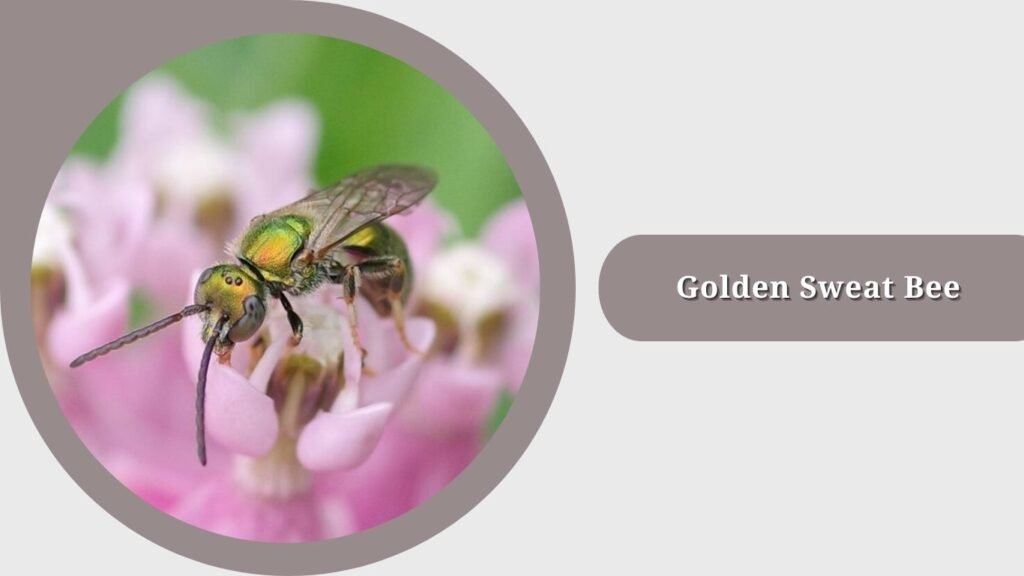
The golden sweat bee (Augochlorella aurata) is a tiny metallic species whose body can shine green, gold, blue, or copper under sunlight. It is a widespread North American pollinator that frequently visits gardens, meadows, and roadsides.
Identification
- Approximately 5–7 mm long
- Metallic green or golden-green body
- Occasional blue or copper reflections
- Transparent wings with dark veins
- Compact body covered with short hairs
- Females collect pollen on their hind legs
Habitat and Distribution
Golden sweat bees are widespread across much of the United States and southern Canada. They inhabit gardens, lawns, parks, farms, meadows, prairies, woodland edges, and roadsides. They prefer sunny locations with exposed soil and a continuous supply of small flowers.
Nesting and Diet
Females excavate underground nests in bare or lightly vegetated soil. A narrow entrance leads to branching tunnels containing several brood cells. Depending on the climate and local population, females may live alone or form small social groups with division of reproductive duties. They gather pollen and nectar from asters, goldenrods, sunflowers, clover, mint, and numerous garden plants.
Behavior and Sting
Golden sweat bees are active during warm weather and may be attracted to human perspiration because it contains moisture and salts. Their presence on the skin does not necessarily indicate aggression. They usually fly away if gently brushed aside. Males cannot sting, while females may deliver a mild sting if pressed against the skin.
3. Metallic Epauletted Sweat Bee
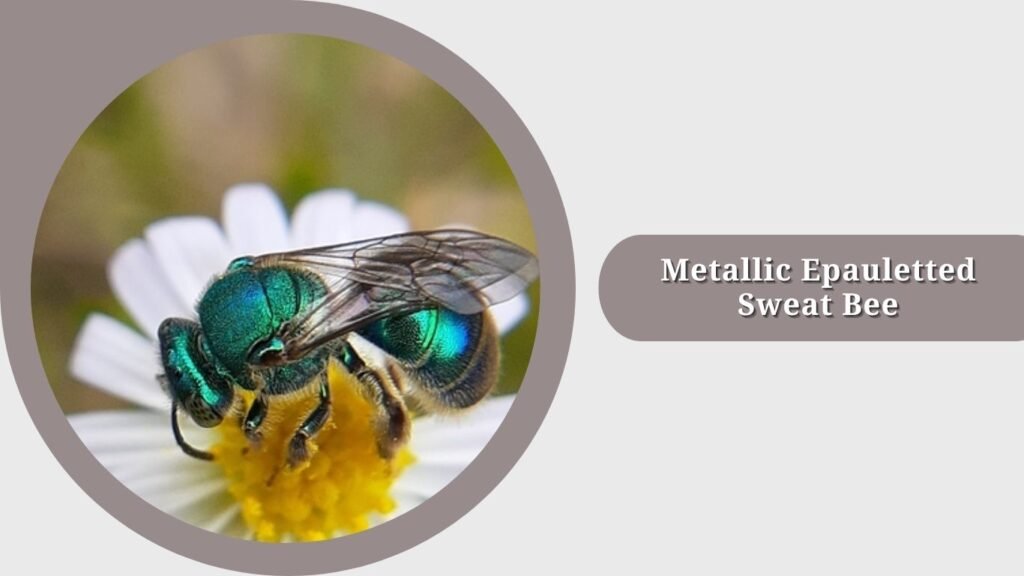
The metallic epauletted sweat bee (Augochloropsis metallica) is a striking green or blue-green pollinator found in North America. The word “epauletted” refers to subtle shoulder-like structures on the thorax that help specialists distinguish it from similar metallic bees.
Identification
- Approximately 7–10 mm long
- Bright metallic green or blue-green body
- Occasional golden or purplish reflections
- Dark, slightly smoky wings
- Relatively long body and legs
- Small shoulder-like projections visible under magnification
Habitat and Distribution
This species is found primarily in eastern, central, and southern portions of the United States. It inhabits gardens, prairies, open woodlands, forest edges, wetlands, roadsides, and disturbed areas. It is most abundant where flowers and patches of exposed soil occur together.
Nesting and Diet
Females generally excavate nests in well-drained soil. Each nest contains tunnels leading to brood cells stocked with pollen and nectar. The female lays a single egg in each prepared chamber. Adults feed on a variety of flowers, including asters, sunflowers, goldenrods, fleabane, milkweed, mint, and other native plants.
Behavior and Sting
Metallic epauletted sweat bees are solitary or loosely communal, depending on local conditions. Several females may sometimes build nests near one another without functioning as a true colony. They may investigate perspiration for salt, but they are not aggressive. Females can sting when trapped or squeezed, although the sting is usually mild. Males cannot sting.
4. Splendid Sweat Bee
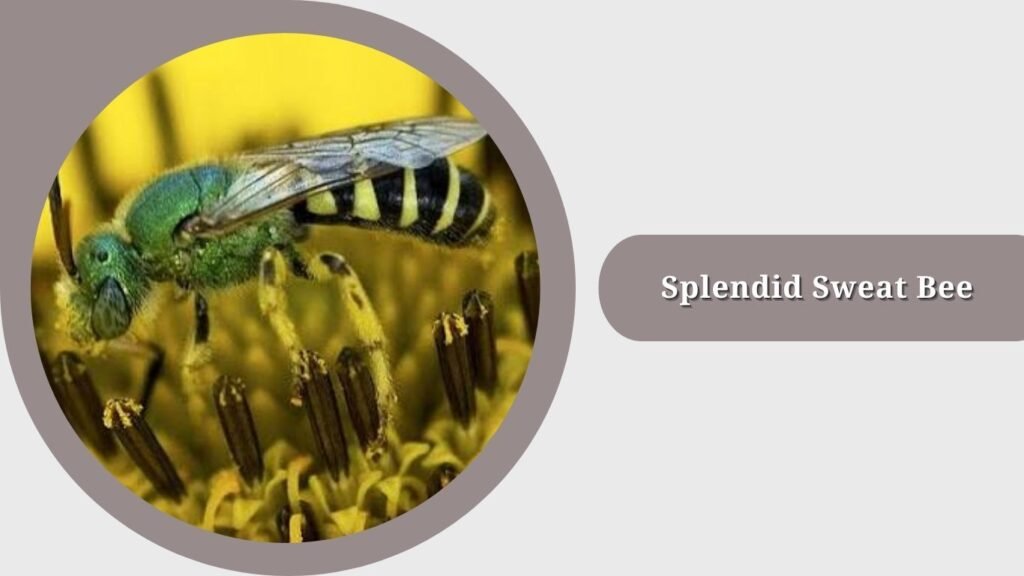
The splendid sweat bee (Agapostemon splendens) is named for its vivid metallic coloration. Females display a largely green or blue-green body, while males combine a metallic thorax with a boldly striped abdomen. It is especially associated with sandy habitats in the southeastern United States.
Identification
- Approximately 9–13 mm long
- Females are predominantly metallic green or blue-green
- Males have a green thorax and striped abdomen
- Dark wings with a brownish tint
- Long legs and an elongated body
- Females carry pollen on hairy hind legs
Habitat and Distribution
Splendid sweat bees occur mainly in the southeastern and south-central United States. They are particularly common along coastal plains but may also inhabit inland sandy areas. Typical environments include dunes, beaches, dry grasslands, gardens, farms, roadsides, and open woodland.
Nesting and Diet
Females dig nests in loose, well-drained soil, often choosing sunny patches with sparse vegetation. The underground tunnels lead to separate brood cells containing pollen and nectar. Several nests may occur close together when suitable sandy soil is limited. Adults visit sunflowers, asters, goldenrods, morning glories, legumes, and many cultivated flowers.
Behavior and Sting
These bees are fast-moving pollinators that spend much of the day traveling between flowers. They occasionally approach people for moisture and salt but do not intentionally attack. A female may sting if stepped on, trapped in clothing, or roughly handled. The sting is generally mild and temporary. Males lack stingers.
5. Bicolored Sweat Bee
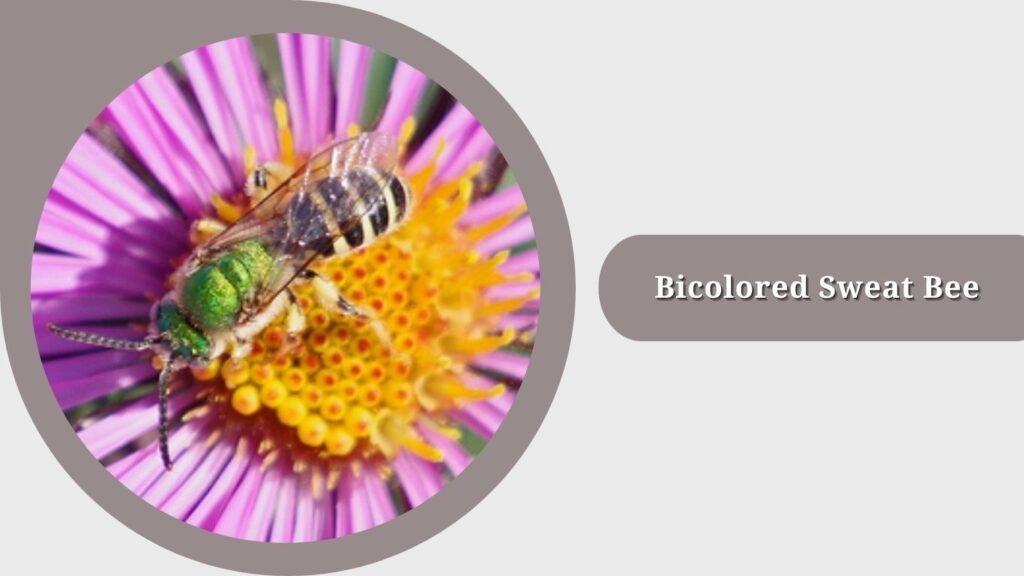
The bicolored sweat bee (Agapostemon virescens) is recognized by the contrast between its metallic green upper body and striped abdomen. It is one of the most familiar striped sweat bees in North America and commonly visits flowers in gardens and open landscapes.
Identification
- Approximately 8–11 mm long
- Metallic green head and thorax
- Female abdomen marked with black and pale bands
- Male abdomen usually displays black and yellow bands
- Long antennae and legs
- Females have pollen-collecting hairs on the hind legs
Habitat and Distribution
Bicolored sweat bees are widely distributed across the United States and southern Canada. They inhabit gardens, parks, meadows, prairies, farms, woodland edges, roadsides, and urban green spaces. They favor sunny areas containing abundant flowers and exposed soil.
Nesting and Diet
Females excavate underground nests in bare or lightly covered soil. Several females may share one main entrance while maintaining and provisioning their own brood chambers, a nesting arrangement known as communal behavior. Each brood cell contains pollen, nectar, and one egg. Adults visit asters, goldenrods, sunflowers, clover, coneflowers, mint, and many fruit and vegetable blossoms.
Behavior and Sting
Bicolored sweat bees are generally peaceful around people. They may land on damp skin to obtain salts from perspiration, particularly during hot weather. Gently blowing on the bee usually encourages it to leave. Males cannot sting, and females sting only when trapped or pressed against the skin.
6. Angelic Sweat Bee
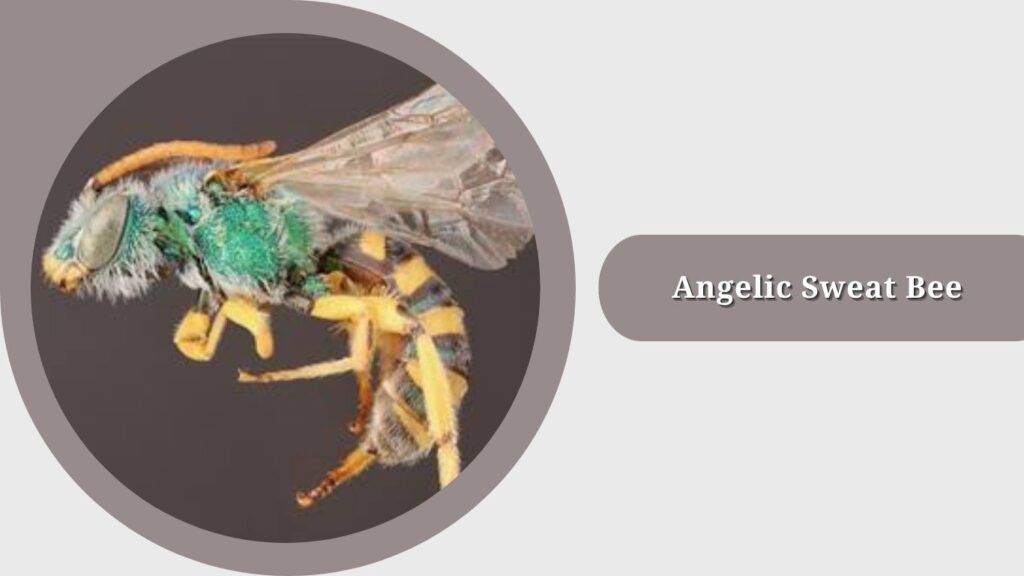
The angelic sweat bee (Agapostemon angelicus) is a colorful ground-nesting bee native to western North America. Females are especially noticeable because of their brilliant metallic bodies, while males display contrasting stripes across the abdomen.
Identification
- Approximately 8–11 mm long
- Females are largely metallic green or blue-green
- Males have a green head and thorax with a striped abdomen
- Clear or lightly tinted wings
- Slender legs covered with fine hairs
- Females carry pollen on their hind legs
Habitat and Distribution
Angelic sweat bees occur primarily across western North America, including parts of Canada, the United States, and northern Mexico. They inhabit grasslands, shrublands, deserts, open forests, mountain valleys, farms, gardens, and roadsides. Sunny areas with exposed soil are particularly suitable.
Nesting and Diet
Females excavate underground nests in dry, well-drained soil. A main tunnel leads to several chambers, with each chamber containing one egg and a supply of pollen mixed with nectar. Adults visit asters, sunflowers, goldenrods, rabbitbrush, clover, and many native western wildflowers.
Behavior and Sting
Angelic sweat bees are generally solitary, but several females may construct nests close together in favorable locations. They may occasionally land on sweaty skin to collect salt and moisture. Males cannot sting, while females sting only when trapped, squeezed, or directly handled. Their sting is usually mild.
7. Honey-Tailed Striped Sweat Bee
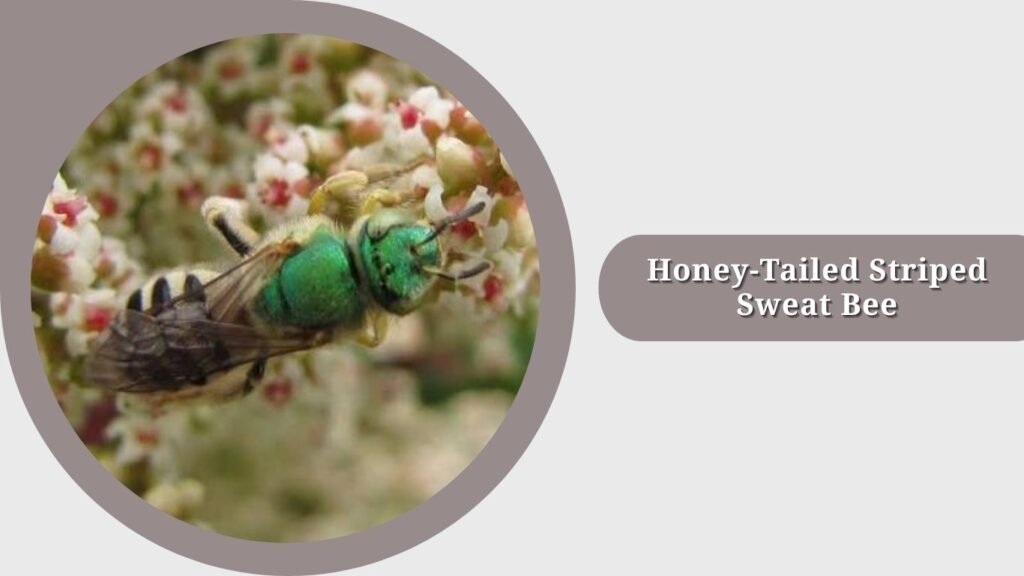
The honey-tailed striped sweat bee (Agapostemon melliventris) is named for the warm yellow, amber, or honey-colored markings on its abdomen. This attractive species is native to western North America and is often seen visiting flowers in dry, sunny landscapes.
Identification
- Approximately 8–12 mm long
- Metallic green head and thorax
- Abdomen marked with pale yellow or honey-colored bands
- Males usually have stronger black-and-yellow striping
- Long legs and slightly smoky wings
- Females possess pollen hairs on the hind legs
Habitat and Distribution
This species occurs from southern Canada through the western and central United States into Mexico. It inhabits prairies, sagebrush country, desert margins, open woodland, farms, gardens, mountain valleys, and roadsides.
Nesting and Diet
Females dig nests in bare or sparsely vegetated soil. The entrance leads to underground tunnels containing multiple brood cells. Each cell is supplied with pollen and nectar before an egg is deposited. Adults visit sunflowers, asters, goldenrods, rabbitbrush, legumes, and numerous desert and prairie wildflowers.
Behavior and Sting
Honey-tailed striped sweat bees are active during warm daylight hours and may nest in loose groups where soil conditions are favorable. They do not aggressively protect their nesting sites. Although females can sting, they normally do so only when pressed against the skin. Males have no functional stinger.
8. Fine Striped Sweat Bee
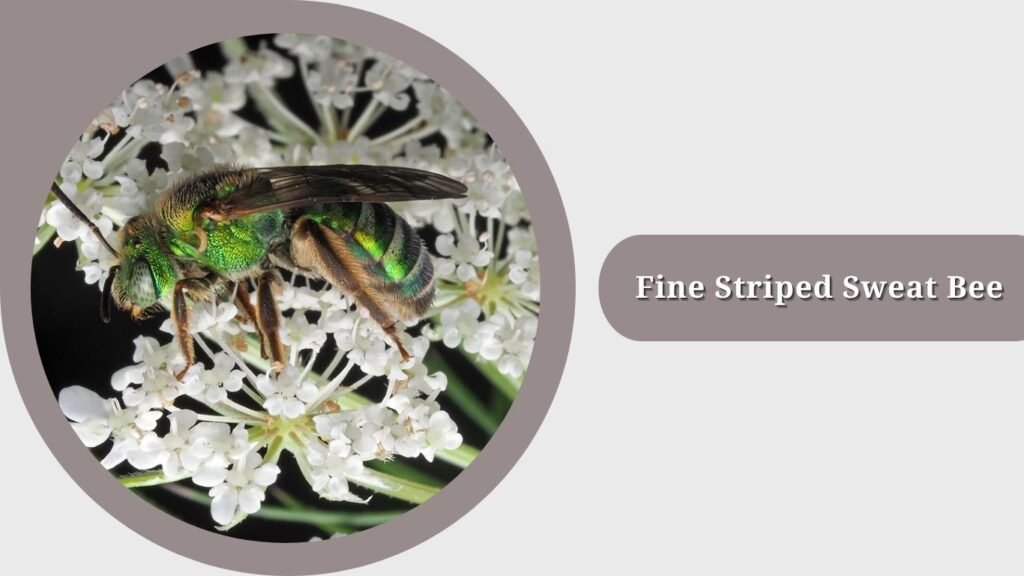
The fine striped sweat bee (Agapostemon subtilior) is distinguished by its narrow abdominal bands and metallic green upper body. It can resemble several related striped sweat bees, so close examination is often required for an accurate species-level identification.
Identification
- Approximately 8–11 mm long
- Metallic green or blue-green head and thorax
- Narrow pale bands across a dark abdomen
- Bands appear finer than those of similar species
- Transparent wings with dark veins
- Female hind legs have dense pollen-collecting hairs
Habitat and Distribution
Fine striped sweat bees occur mainly in western and central North America. They live in dry grasslands, prairies, desert shrublands, open forests, agricultural margins, parks, gardens, and roadsides. They prefer sunny habitats with bare ground for nesting.
Nesting and Diet
Females excavate burrows in well-drained soil. The underground nest contains branching passages and separate brood chambers. Each chamber is stocked with pollen and nectar to support a developing larva. Adults feed from asters, sunflowers, goldenrods, clover, rabbitbrush, and various native herbs.
Behavior and Sting
These bees are independent foragers, though several nests may be concentrated in the same patch of suitable ground. They can be attracted to human perspiration but rarely behave aggressively. Females may produce a mild sting if trapped or squeezed. Males cannot sting and are harmless to people.
9. Wide-Legged Sweat Bee
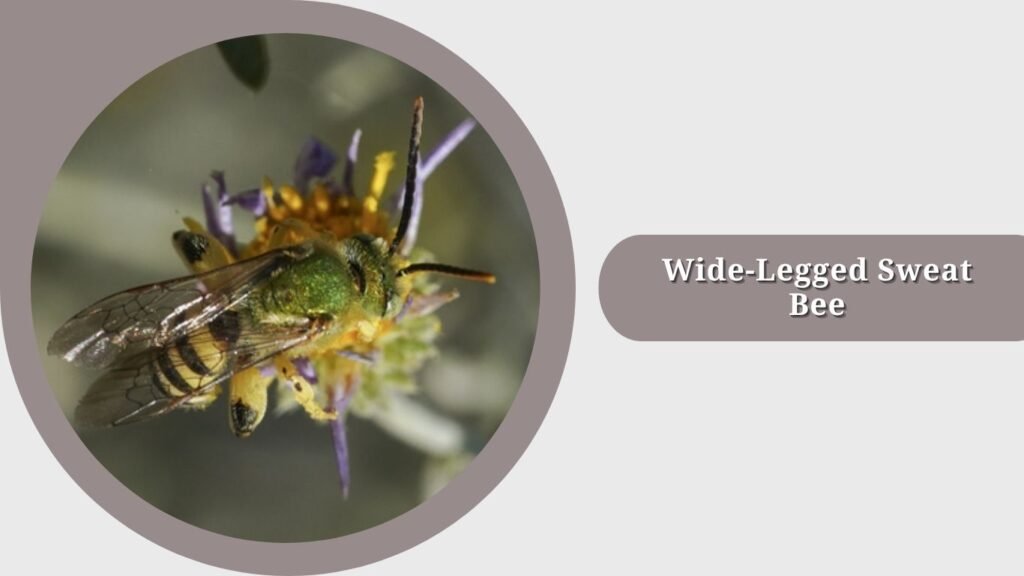
The wide-legged sweat bee (Agapostemon femoratus) is a metallic ground-nesting bee named for the broadened leg segments seen most clearly in males. It is a valuable pollinator of native wildflowers across open western landscapes.
Identification
- Approximately 8–12 mm long
- Metallic green head and thorax
- Dark abdomen with pale or yellowish markings
- Males possess noticeably broadened leg segments
- Long antennae and lightly tinted wings
- Females carry pollen on hairy hind legs
Habitat and Distribution
Wide-legged sweat bees are native to western North America. They inhabit dry grasslands, sagebrush areas, open woodland, mountain valleys, desert edges, roadsides, farms, and gardens. Adults are most visible during late spring and summer.
Nesting and Diet
Females create underground nests in sunny, well-drained soil. Each tunnel contains several brood cells that are individually filled with pollen and nectar. An egg is placed on the food mass before the chamber is closed. Adults visit asters, sunflowers, goldenrods, rabbitbrush, clover, and other seasonal wildflowers.
Behavior and Sting
Wide-legged sweat bees are solitary or loosely communal, with several females sometimes nesting near one another. Males use their distinctive legs during mating activities rather than for collecting pollen. These bees generally avoid conflict with humans. Females sting only in self-defense, while males cannot sting.
10. Oblique Sweat Bee
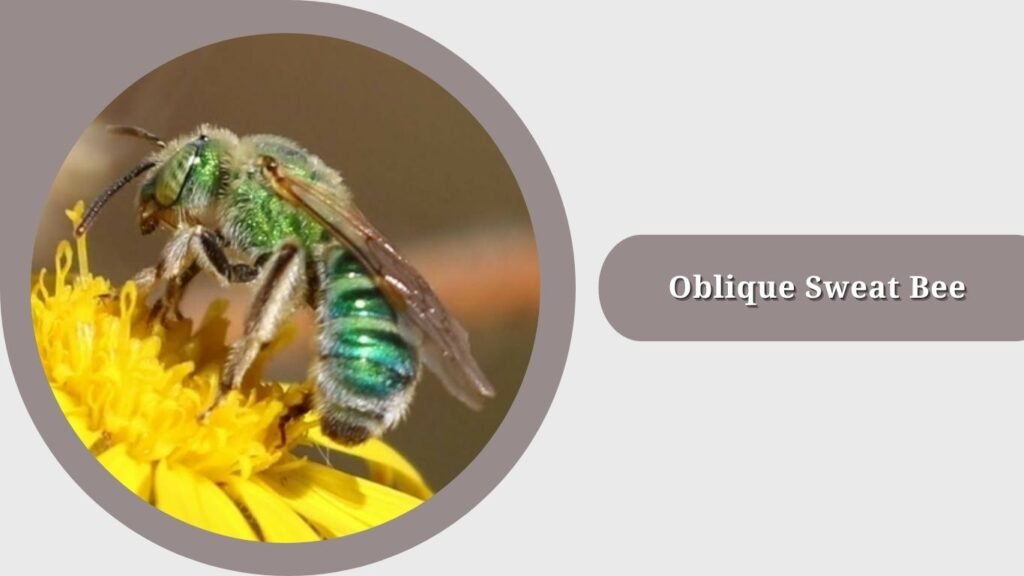
The oblique sweat bee (Agapostemon obliquus) is a colorful North American species recognized by its metallic upper body and contrasting abdominal markings. The subtle features responsible for its common and scientific names are usually easiest to observe under magnification.
Identification
- Approximately 8–11 mm long
- Metallic green or blue-green head and thorax
- Dark abdomen with pale bands
- Males may have stronger yellow-and-black striping
- Narrow body with relatively long legs
- Females possess pollen brushes on their hind legs
Habitat and Distribution
Oblique sweat bees occur in portions of western and central North America. They inhabit prairies, grasslands, shrublands, open forests, agricultural areas, gardens, and roadsides. Warm locations with exposed soil and diverse flowering plants provide ideal conditions.
Nesting and Diet
Females excavate their nests in bare or lightly covered ground. Underground passages lead to individual brood cells containing pollen and nectar. The adults visit a wide range of flowers, including asters, sunflowers, goldenrods, coneflowers, clover, mint, and flowering shrubs.
Behavior and Sting
Oblique sweat bees spend most of their time gathering pollen and nectar or maintaining their nests. They may approach perspiring people for salt but do not intentionally attack. A female may sting if trapped against the skin, although the reaction is generally minor. Males have no stinger.
11. White-Banded Sweat Bee
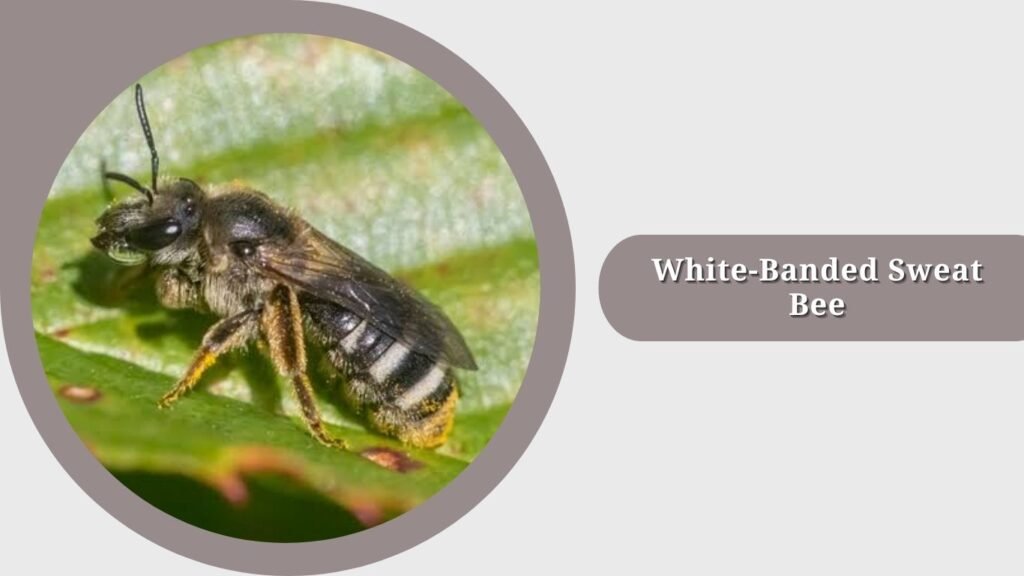
The white-banded sweat bee (Lasioglossum leucozonium) is a small ground-nesting species recognized by the pale bands crossing its dark abdomen. Originally native to Europe and Asia, it has become widely established in North America.
Identification
- Approximately 7–10 mm long
- Black or dark brown body
- Distinct white or cream abdominal bands
- Pale hairs around the face and thorax
- Slight metallic sheen may be visible
- Females carry pollen on their hairy hind legs
Habitat and Distribution
White-banded sweat bees occur across Europe, Asia, and much of North America. They inhabit meadows, grasslands, farmland, woodland edges, parks, roadsides, lawns, and gardens. They prefer sunny areas where patches of exposed or lightly vegetated soil are available.
Nesting and Diet
Females excavate nests in well-drained ground, often along pathways, banks, field edges, or sparsely covered lawns. A vertical tunnel leads to several brood cells containing pollen, nectar, and one egg each. Adults collect food from asters, goldenrods, dandelions, clover, sunflowers, and numerous cultivated plants.
Behavior and Sting
This species is primarily solitary, although females may nest in dense groups when suitable soil is limited. They occasionally investigate human perspiration for moisture and minerals. Males cannot sting, while females may deliver a mild sting if trapped in clothing or pressed against the skin.
12. Polymorphic Sweat Bee
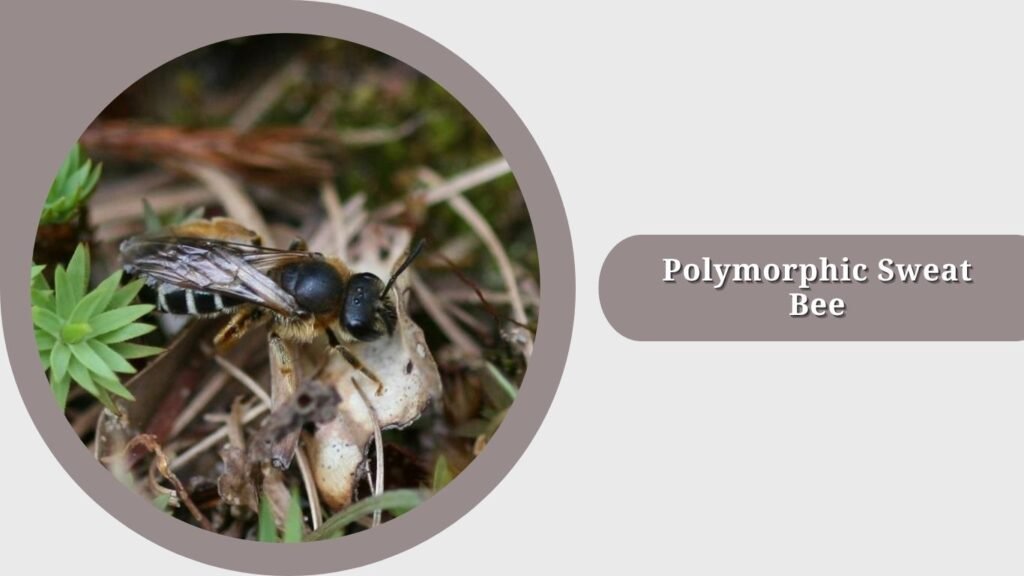
The polymorphic sweat bee (Halictus rubicundus) is a widespread species known for displaying different social behaviors in different climates. It is also called the orange-legged furrow bee because females often have reddish-orange hind legs.
Identification
- Approximately 8–11 mm long
- Dark brown or black body
- Cream-colored bands across the abdomen
- Females often have reddish or orange hind legs
- Thorax covered with pale brown hairs
- Males are slimmer and have longer antennae
Habitat and Distribution
Polymorphic sweat bees occur across North America, Europe, northern Asia, and parts of North Africa. They inhabit gardens, farmland, grasslands, meadows, coastal areas, mountain valleys, woodland edges, and urban parks.
Nesting and Diet
Females dig underground nests in sunny banks, compact soil, paths, and sparsely vegetated ground. In colder climates, each female usually nests alone. In warmer regions, a reproductive queen may produce female workers that help maintain the nest and collect food. Adults visit dandelions, buttercups, asters, goldenrods, clover, fruit blossoms, and many garden flowers.
Behavior and Sting
These bees can be solitary or primitively social, depending largely on climate and the length of the active season. They are generally calm around humans and do not aggressively defend their nests. Males cannot sting. Females may sting when physically threatened, but the resulting pain is normally mild and brief.
13. Ligated Gregarious Sweat Bee
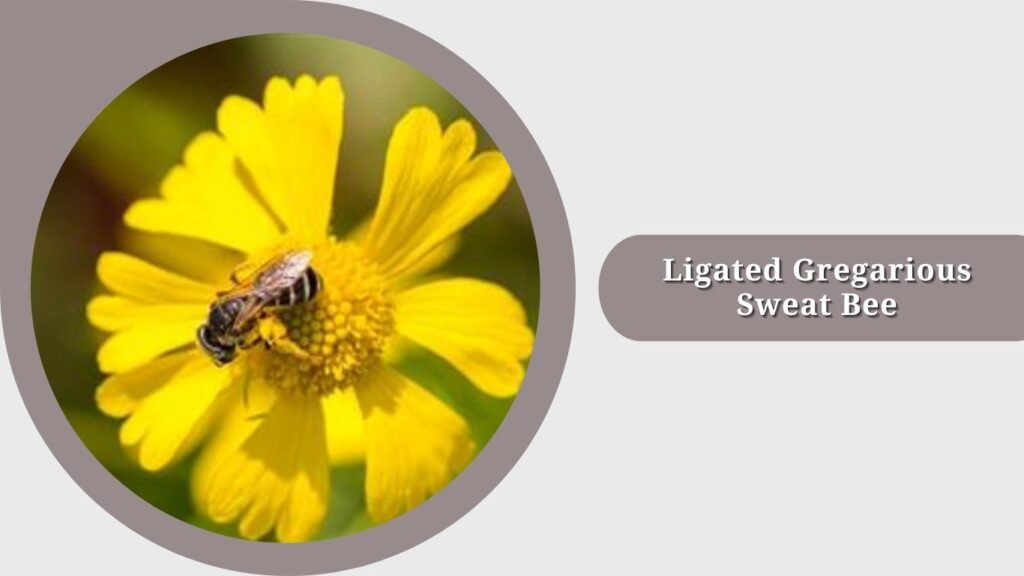
The ligated gregarious sweat bee (Halictus ligatus) is a common North American pollinator that often establishes nesting groups in sunny soil. Its social organization may include a dominant reproductive female and smaller female workers.
Identification
- Approximately 7–10 mm long
- Dark metallic green, bronze, or black body
- Pale bands along the abdomen
- Fine whitish hairs on the thorax and legs
- Elongated body with translucent wings
- Females collect pollen on their hind legs
Habitat and Distribution
This species is widely distributed across the United States, southern Canada, Mexico, and parts of Central America. It occupies gardens, farms, prairies, meadows, roadsides, woodland clearings, parks, and urban areas.
Nesting and Diet
Females excavate nests in bare or lightly vegetated soil. The main entrance connects to branching tunnels and multiple brood chambers. Nests may be solitary, communal, or primitively social depending on local conditions. Adults gather pollen and nectar from asters, sunflowers, goldenrods, clover, mint, fruit blossoms, and vegetable flowers.
Behavior and Sting
Ligated gregarious sweat bees may live in small societies, but their nests contain far fewer individuals than honeybee colonies. They may land on perspiring skin to collect salt and moisture. Females can sting when trapped or when their nest entrance is seriously disturbed, although they are not normally aggressive. Males cannot sting.
14. Parallel-Striped Sweat Bee
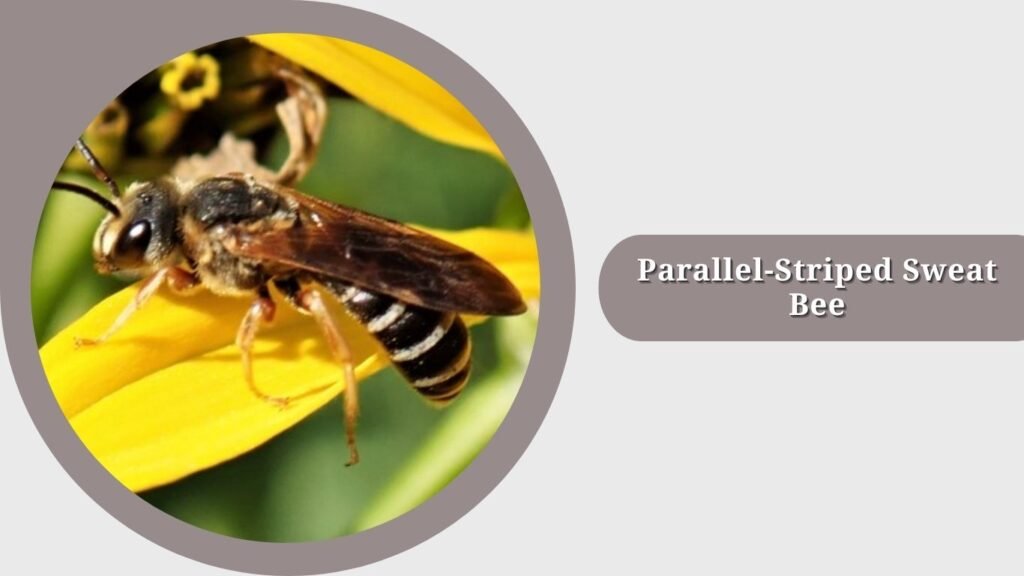
The parallel-striped sweat bee (Halictus parallelus) is named for the pale, nearly parallel bands across its abdomen. It is a ground-nesting North American species that contributes to the pollination of numerous native and cultivated plants.
Identification
- Approximately 8–12 mm long
- Black or dark brown body
- Straight pale bands across the abdomen
- Grayish or yellowish hair on the thorax
- Females have hairy pollen-carrying hind legs
- Males are narrower and have longer antennae
Habitat and Distribution
Parallel-striped sweat bees are found primarily across central and eastern North America. They inhabit prairies, meadows, farms, woodland edges, roadsides, gardens, lawns, and urban green spaces. Sunny ground with limited vegetation provides suitable nesting conditions.
Nesting and Diet
Females construct burrows in soil, creating a main passage connected to individual brood chambers. More than one female may sometimes occupy a nesting area, although each nest has its own organized tunnel system. Adults visit sunflowers, asters, goldenrods, clover, coneflowers, wild roses, and many agricultural blossoms.
Behavior and Sting
These bees are active during warm weather and often forage close to the ground. They may be attracted to sweat but usually leave when gently encouraged. Females have small stingers and may sting if stepped on, caught, or squeezed. Males are incapable of stinging.
15. Confused Sweat Bee
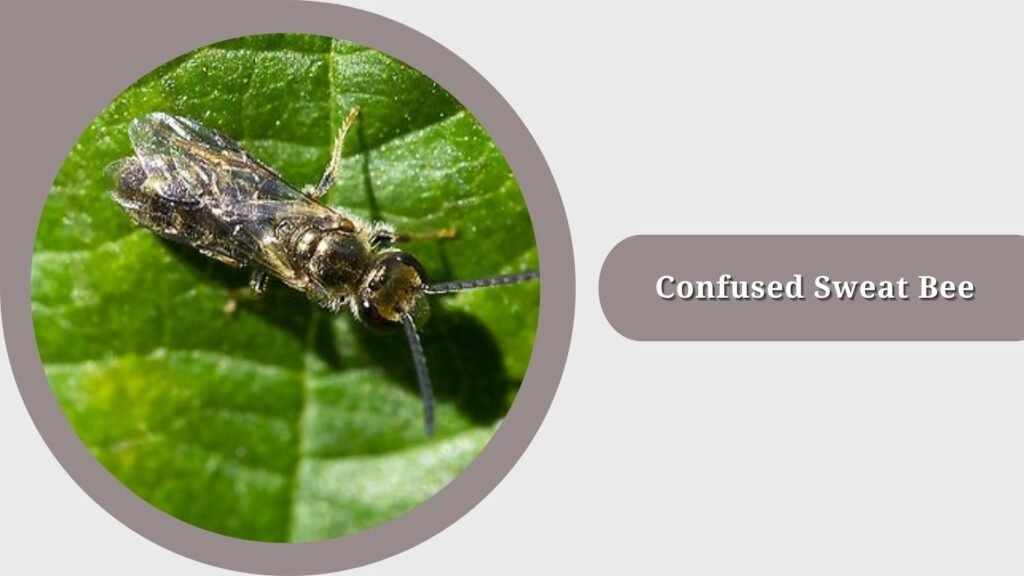
The confused sweat bee (Halictus confusus) receives its name from its close resemblance to several related furrow bees. Small differences in body sculpture, hair patterns, and abdominal markings are often needed to confirm its identity.
Identification
- Approximately 6–10 mm long
- Dark greenish, bronze, or nearly black body
- Pale bands along the abdomen
- Fine light-colored hairs on the thorax
- Female hind legs covered with pollen hairs
- Exact identification may require magnification
Habitat and Distribution
Confused sweat bees have a broad distribution across North America and parts of Eurasia. They occupy grasslands, meadows, forest edges, coastal habitats, agricultural areas, parks, roadsides, and gardens. They are adaptable and can survive in both rural and urban landscapes.
Nesting and Diet
Females dig burrows in bare or sparsely vegetated soil. The underground nest contains branching tunnels and rounded brood cells. Depending on the population and climate, females may nest alone or cooperate in small social groups. Adults visit asters, goldenrods, sunflowers, clover, dandelions, and many other flowering plants.
Behavior and Sting
Confused sweat bees are generally peaceful and spend most of their time foraging or maintaining nests. They occasionally land on people to obtain salts from perspiration but do not deliberately attack. Females may sting if trapped against the skin, while males cannot sting. The sting is usually mild and temporary.
16. Quebec Sweat Bee
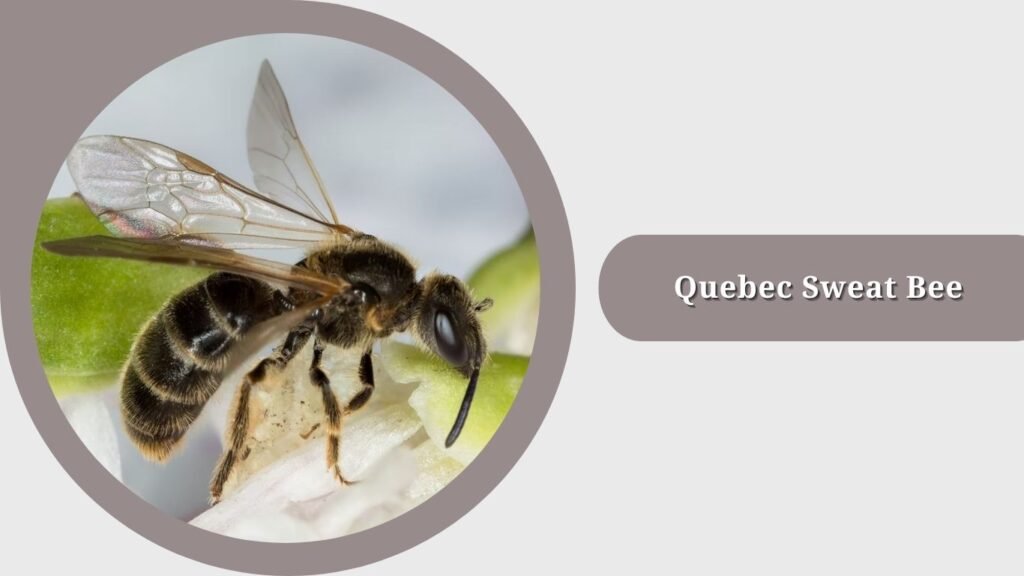
The Quebec sweat bee (Lasioglossum quebecense) is a small native North American species named after the Canadian province where it was originally documented. Its dark coloration and subtle metallic reflections can make it difficult to distinguish from other small sweat bees.
Identification
- Approximately 6–9 mm long
- Black or dark brown body
- Weak greenish or bronze metallic sheen
- Fine pale hairs on the thorax and legs
- Light markings may appear along the abdomen
- Females carry pollen on their hind legs
Habitat and Distribution
Quebec sweat bees occur mainly in northeastern and central North America. They inhabit forest edges, meadows, wetlands, gardens, parks, roadsides, and other places containing small flowering plants. They are active primarily from late spring through summer.
Nesting and Diet
Females construct underground nests in bare or lightly vegetated soil. A narrow entrance leads to brood chambers where pollen and nectar are stored for the developing larvae. Adults visit asters, goldenrods, clover, woodland flowers, and various wetland plants.
Behavior and Sting
This species is solitary or loosely social, depending on environmental conditions. Its small size and inconspicuous appearance mean it is frequently overlooked. It may occasionally land on sweaty skin to collect moisture and salts. Females can produce a mild sting when trapped, but males lack stingers.
17. Alpine Sweat Bee
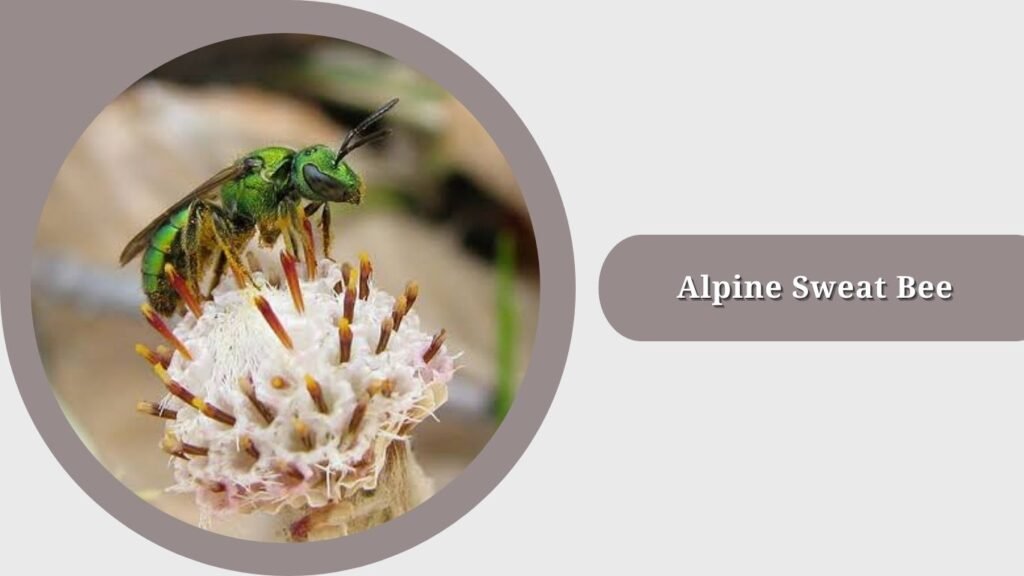
The alpine sweat bee (Lasioglossum tenax) is a small, hardy species adapted to cool mountain environments. It takes advantage of the relatively short flowering season found in alpine and subalpine habitats.
Identification
- Approximately 5–8 mm long
- Dark brown or black body
- Weak metallic green or bronze reflections
- Fine grayish hairs on the thorax
- Compact body suited to cool conditions
- Females have pollen-carrying hairs on the hind legs
Habitat and Distribution
Alpine sweat bees occur in mountainous areas of western North America. They inhabit alpine meadows, subalpine grasslands, open mountain forests, rocky slopes, and high-elevation valleys. Adults usually appear during the warmer weeks of late spring and summer.
Nesting and Diet
Females excavate nests in well-drained soil, often choosing sunny slopes where the ground warms quickly. Each underground brood cell receives pollen and nectar before an egg is laid. Adults feed from alpine asters, cinquefoils, lupines, clover, stonecrops, and other low-growing mountain flowers.
Behavior and Sting
These bees must forage efficiently because mountain flowering seasons are short and weather conditions can change quickly. They are generally solitary and spend most suitable daylight hours gathering food. Females may sting if trapped or squeezed, but they are not aggressive. Males cannot sting.
18. Bellflower Sweat Bee
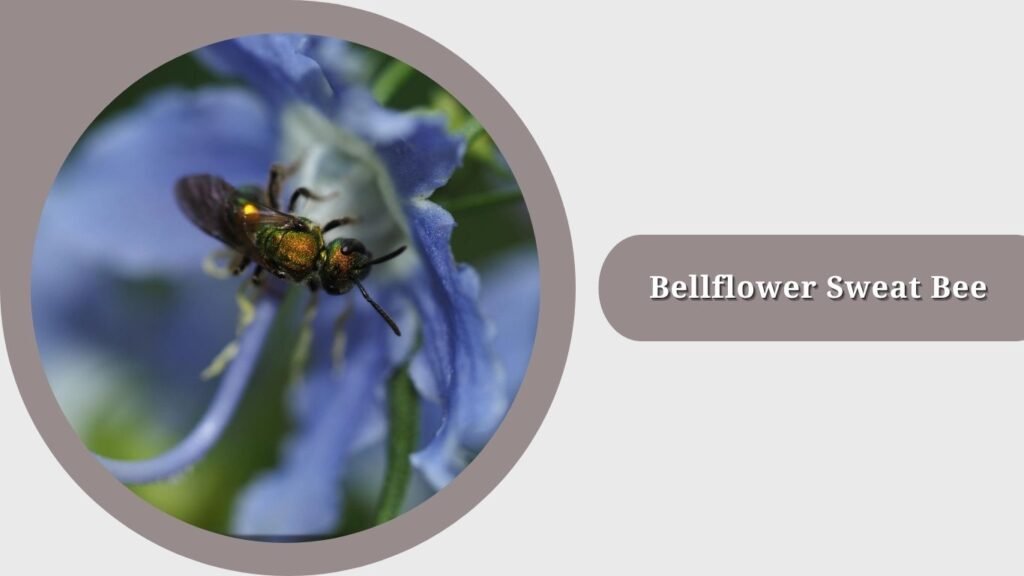
The bellflower sweat bee (Dufourea maura) is a small specialist pollinator closely associated with bellflowers. Although it belongs to the sweat bee family, it is more likely to be observed gathering pollen from flowers than landing on people.
Identification
- Approximately 6–9 mm long
- Dark brown or black body
- Fine gray or pale hairs
- Relatively narrow abdomen
- Transparent wings with dark veins
- Females carry pollen on specialized leg hairs
Habitat and Distribution
Bellflower sweat bees occur in portions of western and northern North America. They inhabit mountain meadows, open forests, grasslands, roadsides, gardens, and rocky slopes where native bellflowers grow. Their distribution is strongly influenced by the availability of suitable host plants.
Nesting and Diet
Females excavate nests in bare, well-drained soil. Individual brood chambers are connected to a main underground tunnel. The species gathers much of its pollen from bellflowers in the family Campanulaceae, although adults may drink nectar from other flowers. Each larva develops on a stored ball of pollen and nectar.
Behavior and Sting
Bellflower sweat bees are solitary and do not establish defensive colonies. Females concentrate their activity around flowering bellflower patches and nearby nesting soil. They are generally uninterested in humans. Females can sting when physically restrained, but stinging incidents are unusual. Males cannot sting.
19. Cinquefoil Sweat Bee
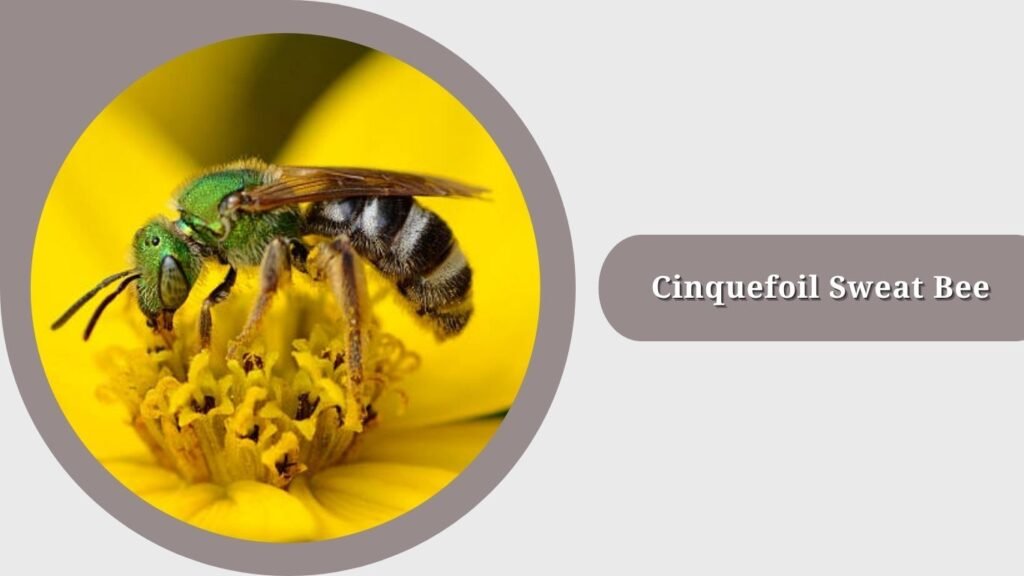
The cinquefoil sweat bee (Dufourea harveyi) is a native North American bee that specializes in collecting pollen from cinquefoil flowers. This close relationship makes the bee an important pollinator in mountain meadows and other habitats containing its preferred plants.
Identification
- Approximately 6–9 mm long
- Predominantly dark brown or black body
- Fine pale hairs on the face and thorax
- Slender abdomen with subtle light markings
- Short tongue suited to open flowers
- Females possess pollen-collecting hairs on their legs
Habitat and Distribution
Cinquefoil sweat bees occur mainly across western North America. They inhabit mountain meadows, open woodland, grasslands, rocky slopes, prairies, and areas near streams. Populations are usually concentrated where native cinquefoils flower abundantly.
Nesting and Diet
Females dig underground nests in sunny, well-drained soil. The tunnel contains separate chambers supplied with pollen and nectar. Cinquefoils in the genus Potentilla provide the primary pollen source, although adults may collect nectar from other small wildflowers.
Behavior and Sting
This species is solitary and has a relatively specialized foraging routine. Females repeatedly travel between cinquefoil patches and their underground nests. They generally avoid people and are less likely to seek human perspiration than some other halictid bees. Females sting only if handled or trapped, and males have no stinger.
20. Western Evening Primrose Sweat Bee
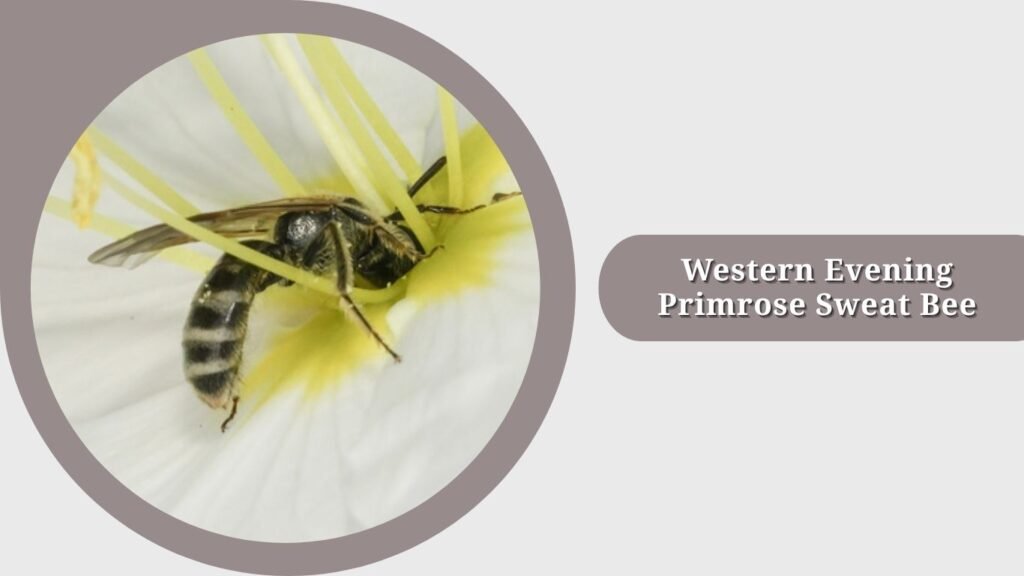
The western evening primrose sweat bee (Lasioglossum lusorium) is a specialized bee that visits evening primrose flowers during twilight or low-light conditions. Its unusual activity period allows it to use flowers that are less accessible to daytime pollinators.
Identification
- Approximately 6–9 mm long
- Dark brown or black body
- Faint greenish or bronze metallic sheen
- Relatively large eyes and light-sensitive ocelli
- Fine pale hairs on the thorax and legs
- Females carry pollen on their hind legs
Habitat and Distribution
This species occurs in western North America, particularly in dry grasslands, deserts, shrublands, open plains, roadsides, and sandy areas. Its presence is closely connected to habitats supporting evening primroses.
Nesting and Diet
Females excavate underground nests in exposed or lightly vegetated soil. Each brood chamber is stocked with pollen and nectar before an egg is deposited. Evening primroses are the bee’s most important food plants. Their pale flowers commonly open in the evening, when these bees begin foraging.
Behavior and Sting
Western evening primrose sweat bees are most active around dusk, dawn, or on cloudy days. Their enhanced light sensitivity helps them locate flowers under dim conditions. They are solitary and generally avoid contact with humans. Females may sting if trapped against the skin, but males are unable to sting.