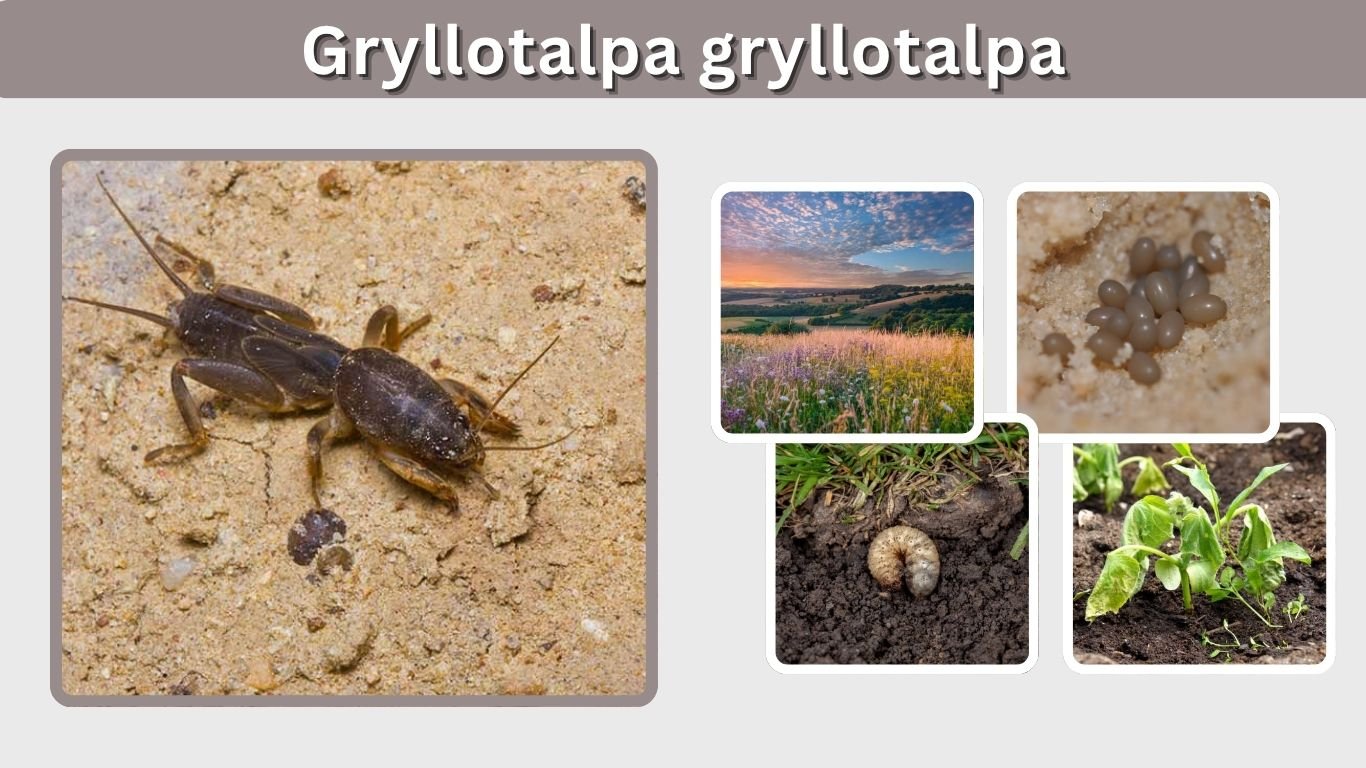
Gryllotalpa gryllotalpa, commonly called the European mole cricket, is a large burrowing cricket with powerful shovel-like front legs and a cylindrical brown body. It spends most of its life underground, creating tunnels while feeding on plant material and soil invertebrates. Adults can reach about 35–50 mm long, making them unusually large among European crickets. Although populations may damage seedlings and roots when abundant, the species is uncommon and legally protected in some parts of its range, including Britain.
What Is Gryllotalpa gryllotalpa?
Gryllotalpa gryllotalpa belongs to the mole cricket family Gryllotalpidae and the order Orthoptera. The accepted scientific name dates to Linnaeus in 1758, although the species has appeared under several historical names. Its common name comes from its unusual resemblance to a mole, particularly the enlarged forelegs adapted for digging through soil.
Identification
A European mole cricket typically has:
- A stout, cylindrical body
- Gray-brown to yellowish-brown coloration
- Adult length of about 35–50 mm
- Broad, shovel-shaped front legs
- Finger-like projections on the forelegs
- Short forewings
- Long hindwings folded along the body
- Fine hairs giving the body a velvety appearance
- Long antennae at the front of the head
The front legs are the easiest feature to recognize. They work almost like small digging tools and allow the insect to move efficiently beneath the soil.
Scientific Classification
The basic classification is:
- Kingdom: Animalia
- Phylum: Arthropoda
- Class: Insecta
- Order: Orthoptera
- Family: Gryllotalpidae
- Genus: Gryllotalpa
- Species: Gryllotalpa gryllotalpa
- Common name: European mole cricket
Orthoptera Species File recognizes Gryllotalpa gryllotalpa as a valid species and documents numerous older combinations and synonyms associated with its taxonomic history.
Habitat and Distribution
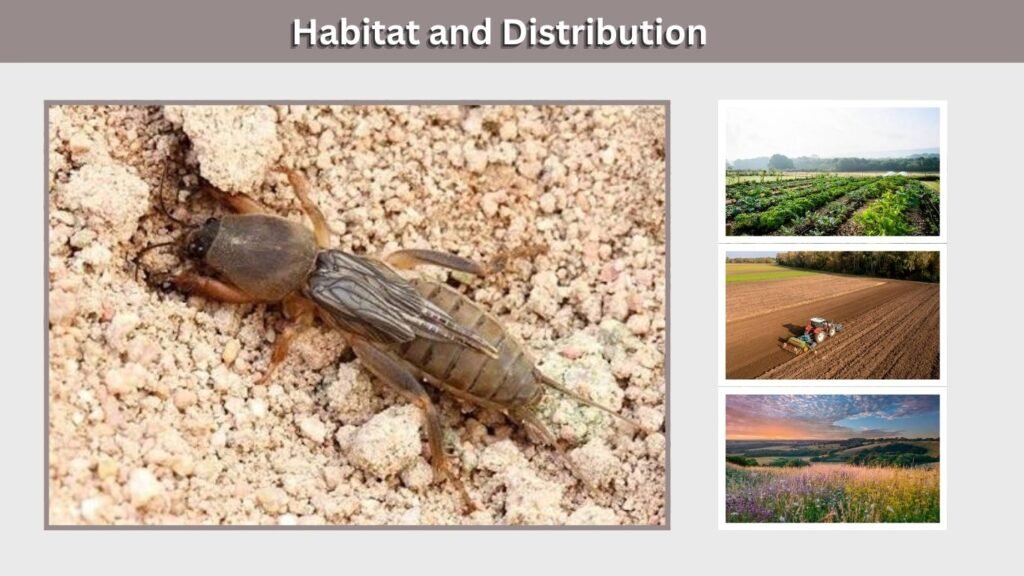
European mole crickets spend most of their lives below ground, so suitable soil is especially important. They favor habitats where digging is relatively easy and enough moisture is available to maintain underground tunnels. Gardens, agricultural ground, meadows, wet grasslands, and similar areas may provide suitable conditions depending on the region.
Where Does Gryllotalpa gryllotalpa Live?
The species occurs mainly across warmer parts of Europe and associated regions. It lives in underground tunnel systems located only a few centimeters beneath the surface during normal activity.
Historically, it was found in damp meadows, sandy ground, agricultural fields, and other open habitats in Britain. Habitat drainage and other environmental changes contributed to a major decline there, and surviving British populations are exceptionally rare.
Why Does It Live Underground?
Burrowing provides protection from many predators and environmental extremes. Its tunnels also place the cricket close to plant roots, earthworms, insect larvae, and other potential food.
The shape of the insect is highly specialized for this lifestyle. Its cylindrical body moves easily through narrow passages, while the enlarged front legs loosen and push soil aside.
What Does Gryllotalpa gryllotalpa Eat?
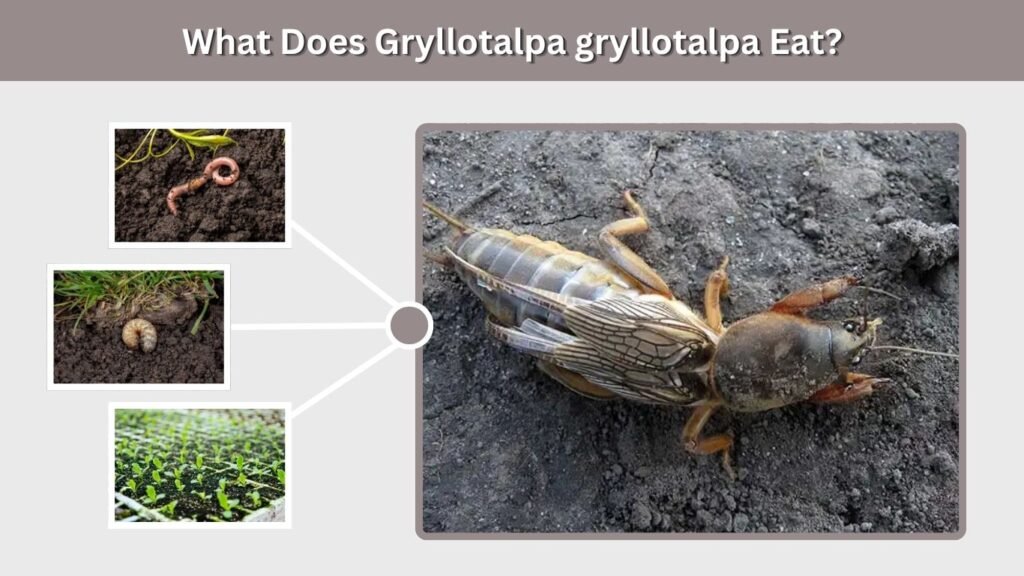
The European mole cricket is an omnivorous feeder rather than a strict plant eater. While tunneling beneath the surface, it encounters both plant roots and small soil animals. This varied diet can make the insect beneficial in some circumstances but damaging to gardens and crops when populations become unusually dense.
Common Foods
Its diet can include:
- Plant roots
- Basal portions of stems
- Tender underground plant tissue
- Earthworms
- Insect larvae
- Other small soil invertebrates
- Seedlings and young plants
- Occasionally developing fruits near ground level
Because it consumes both animal and plant material, not every tunnel means plants will necessarily be heavily damaged. Problems usually become more noticeable when many mole crickets occupy a relatively small area.
How Does It Find Food?
Most feeding takes place underground as the insect moves through its tunnel system. Plant roots encountered along the tunnels can be eaten directly, while small invertebrates provide an additional source of nutrition.
The cricket is especially active during darker periods. Adults may occasionally appear above the ground on warm evenings, but subterranean activity dominates much of their daily life.
Gryllotalpa gryllotalpa Sound and Behavior
Despite spending much of its life hidden beneath soil, the European mole cricket can be surprisingly loud. Adult males produce a distinctive calling sound during the breeding season. Rather than simply calling from an exposed perch like many crickets, males use specially constructed underground spaces that help project their calls.
Why Do Male Mole Crickets Sing?
Male Gryllotalpa gryllotalpa produce sound by stridulation to attract females. Their burrows can function as acoustic chambers, amplifying the call so it travels farther.
Calling is particularly noticeable on mild or warm evenings during the breeding period. Historical English names such as “Eve-churr” were associated with this characteristic sound.
Can European Mole Crickets Fly?
Yes. Although their underground appearance may make them look incapable of flight, adults possess functional hindwings.
On warm summer evenings, adults may emerge and fly. Flight allows individuals to disperse and helps females locate calling males. When the insect is resting, its elongated hindwings are folded and may be relatively inconspicuous.
Gryllotalpa gryllotalpa Life Cycle
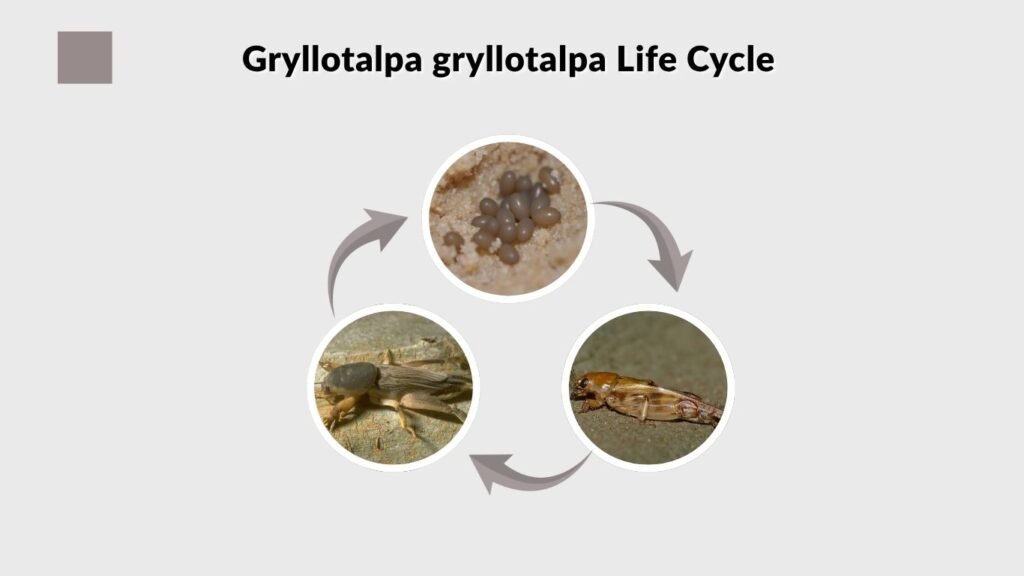
The European mole cricket develops through incomplete metamorphosis, meaning there is no caterpillar or pupal stage. Eggs hatch into nymphs that resemble smaller versions of adults. Development can be relatively slow, particularly in cooler climates, and individuals may spend long periods beneath the soil before reaching maturity.
Eggs and Reproduction
After mating, the female constructs a large underground chamber and lays her eggs inside. Published accounts commonly report approximately 100–300 eggs per female.
The eggs generally hatch within two to three weeks. Unlike many insects that immediately abandon their eggs, female mole crickets can remain with their young during their earliest development.
Development From Nymph to Adult
The main stages are:
- Mating: Adults locate mates, with males attracting females through calling.
- Egg chamber: The female creates an underground nesting chamber.
- Eggs: Roughly 100–300 eggs may be deposited.
- Young nymphs: Eggs hatch after approximately two to three weeks.
- Growing nymphs: Young crickets leave the nest and begin feeding independently.
- Adult: After repeated molts, they reach reproductive maturity.
Development from egg to adult may take around a year in warmer southern European conditions and up to roughly 18 months or longer in cooler environments.
Can Gryllotalpa gryllotalpa Damage Plants?
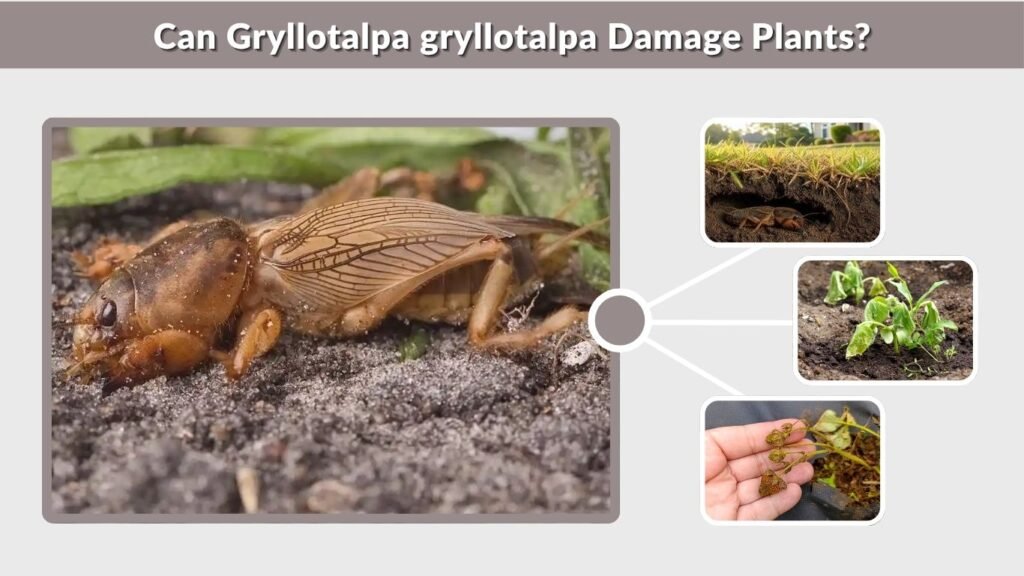
European mole crickets can become agricultural or garden pests when populations are high. Damage occurs both through feeding and through physical disturbance caused by tunneling. However, their pest status varies greatly between regions, and the same species is rare or protected in parts of Europe.
Types of Plant Damage
Possible signs include:
- Roots that have been eaten or severed
- Damaged stem bases
- Wilting seedlings
- Young plants dying unexpectedly
- Disturbed soil around plants
- Underground tunnels
- Damage to strawberry crowns
- Reduced growth in heavily affected plants
Seedlings are particularly vulnerable because even relatively minor damage to their roots or lower stems can kill the entire plant.
Should European Mole Crickets Be Killed?
Not automatically. Their conservation status differs sharply by location. In some agricultural areas, high populations may require management, while elsewhere the species has become extremely uncommon.
In Britain, for example, the mole cricket is legally protected and regarded as exceptionally rare. Identification and local regulations should therefore be checked before attempting control, especially in areas where native populations are threatened.
Are Gryllotalpa gryllotalpa Dangerous to Humans?
Their large bodies and powerful front legs can make European mole crickets look intimidating. However, those forelegs evolved for moving soil rather than attacking people. They lack a stinger and are not considered venomous insects.
Does Gryllotalpa gryllotalpa Bite?
European mole crickets have chewing mouthparts, but they do not normally seek out or attack humans. When disturbed, their first response is generally to escape or dig back into the soil.
Direct handling should still be avoided because any large insect may struggle when restrained, and correct identification is not always certain. Their primary significance to humans involves plant damage rather than bites or stings.
FAQs
1. What is Gryllotalpa gryllotalpa?
Gryllotalpa gryllotalpa is the European mole cricket, a large underground cricket belonging to the family Gryllotalpidae. It has a cylindrical brown body and exceptionally broad front legs specialized for digging through soil.
2. How big does Gryllotalpa gryllotalpa get?
Adults typically reach approximately 35–50 mm, or about 1.4–2 inches, in body length. Their stout bodies and broad digging legs make them appear especially large compared with many ordinary crickets.
3. What does Gryllotalpa gryllotalpa eat?
The European mole cricket is omnivorous. It feeds on plant roots and basal stems as well as soil-dwelling animals such as earthworms and insect larvae. Large populations can damage seedlings and other vulnerable plants.
4. Where does Gryllotalpa gryllotalpa live?
It primarily inhabits underground tunnels in suitable soils across parts of Europe and nearby regions. Habitats can include damp grasslands, meadows, gardens, agricultural fields, and other places containing loose or moist soil.
5. Is Gryllotalpa gryllotalpa rare?
Its abundance varies greatly by region. It can occur as an agricultural pest in some locations, yet it has declined dramatically elsewhere. In Britain, for example, it is extremely rare and legally protected, demonstrating why local status should be checked before controlling it.