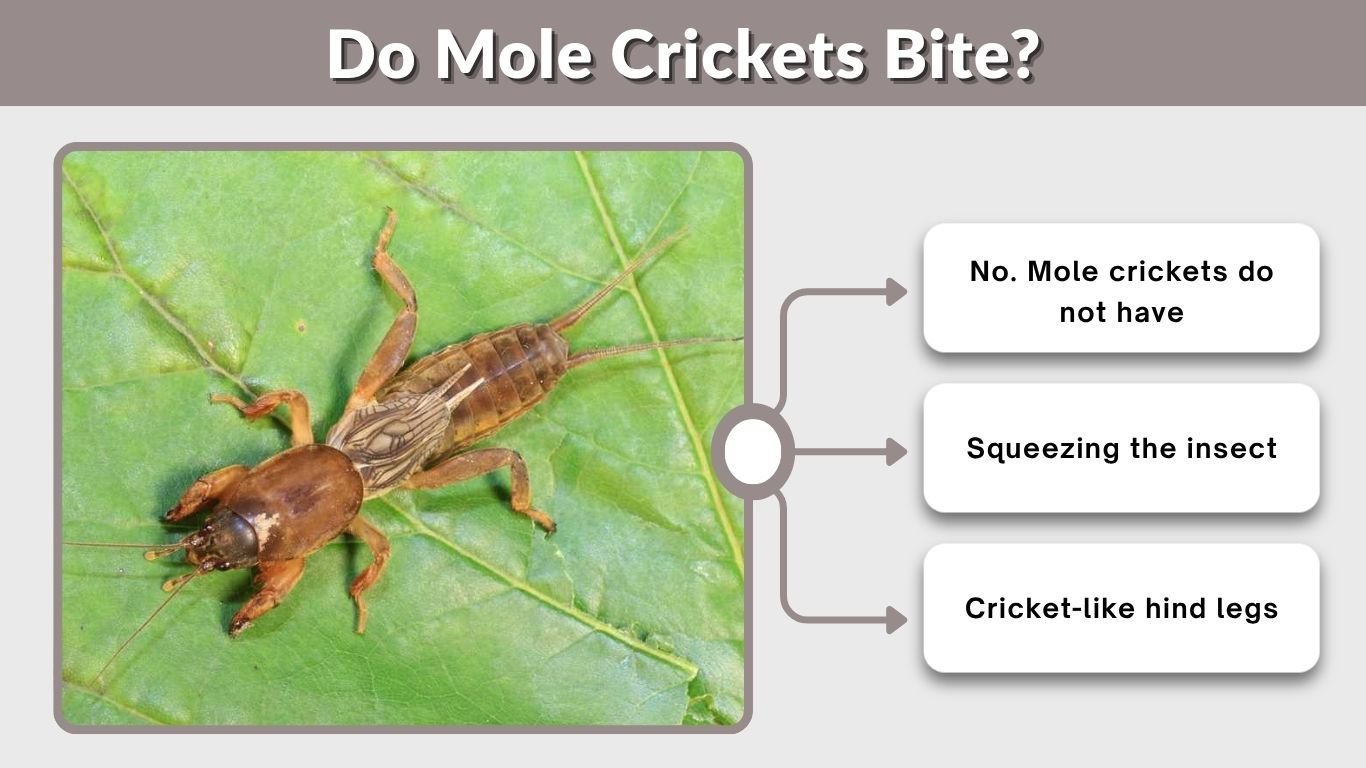
Do mole crickets bite? Generally, no. Mole crickets are considered harmless to humans and are not known for biting or stinging people. These unusual insects spend most of their lives underground, where their powerful front legs help them dig through soil. Their intimidating appearance sometimes makes people assume they are dangerous, but their main threat is to lawns and plants rather than humans. If handled roughly, an insect may struggle or pinch, so avoiding unnecessary handling is still the safest approach.
Do Mole Crickets Bite Humans?
Mole crickets belong to the family Gryllotalpidae and have chewing mouthparts, but they are not considered biting pests of humans. Iowa State University Extension describes mole crickets as harmless indoors and states that they cannot bite or sting. Their strong-looking front legs are digging tools rather than claws designed to attack people.
Can a Mole Cricket Bite You?
Under ordinary circumstances, a mole cricket will not attempt to bite a person. Its natural response when disturbed is usually to escape or rapidly dig into loose soil.
Some nonacademic pest-control sources report that a handled or severely disturbed mole cricket might produce a minor pinch with its mouthparts. However, this is not typical behavior, and mole crickets are not regarded as a human-biting insect.
Are Mole Cricket Bites Dangerous?
Even in the unlikely event of a defensive pinch, mole crickets are not venomous. They are not known for transmitting venom through their mouthparts or causing medically significant bites.
Their reputation as pests comes from their ability to tunnel through soil and damage turfgrass, not from attacking people.
Do Mole Crickets Bite or Sting?
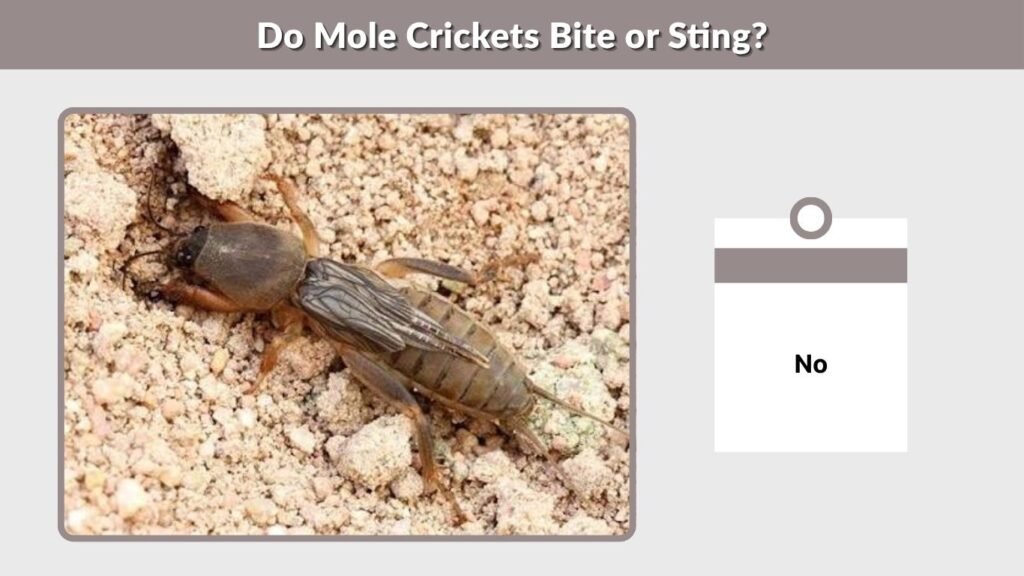
Mole crickets can look threatening because they have a large head, stout body, and broad front legs. However, they have no stinger. Their front legs have evolved primarily for digging underground tunnels rather than capturing or injuring humans. University extension guidance considers them physically harmless to people.
Do Mole Crickets Sting?
No. Mole crickets do not have:
- A bee-like stinger
- A wasp-like stinging apparatus
- Venom-injecting spines
- Venomous fangs
- A defensive tail stinger
Therefore, a mole cricket cannot sting you in the way a bee, wasp, or scorpion can.
Can Their Front Legs Hurt You?
A mole cricket’s front legs are broad and shovel-shaped. They are extremely effective at moving soil but are not designed as weapons against humans.
If you hold one, it may:
- Push against your fingers
- Try to dig between them
- Scratch slightly with its legs
- Move rapidly in an attempt to escape
- Feel surprisingly strong for its size
These actions should not be confused with aggressive biting or stinging.
What Happens If You Handle a Mole Cricket?
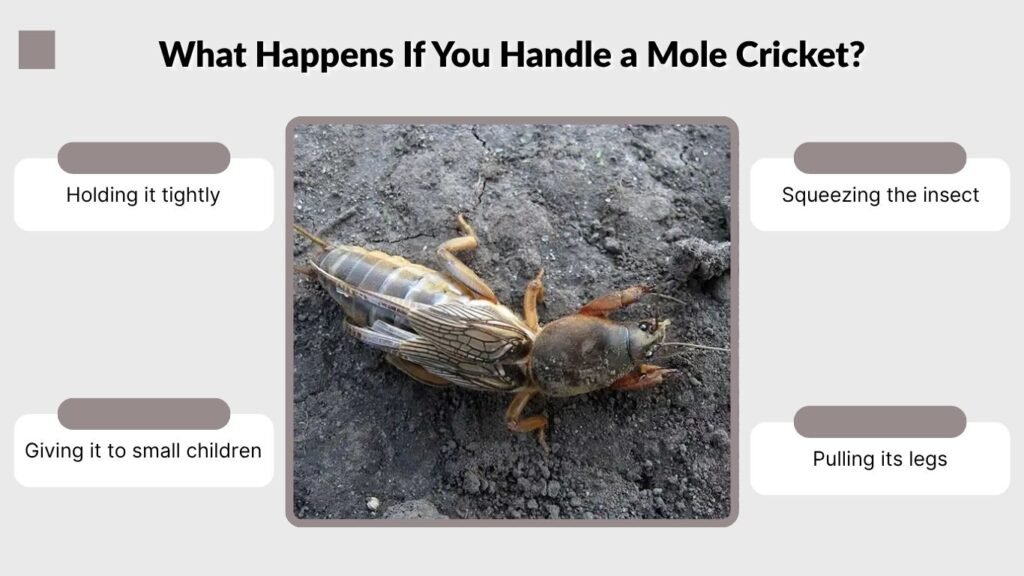
Mole crickets generally prefer escaping rather than defending themselves against people. Their underground lifestyle means they spend relatively little time interacting with humans. When exposed at the surface, they frequently attempt to burrow immediately. There is little reason to pick one up with bare hands, especially when identification of the insect is uncertain.
Is It Safe to Pick Up a Mole Cricket?
Mole crickets are generally harmless, but direct handling is unnecessary. If you need to move one, allow it to walk into a container or use a small object to guide it.
Avoid:
- Squeezing the insect
- Pulling its legs
- Holding it tightly
- Giving it to small children
- Allowing pets to repeatedly paw at it
Gentle relocation also prevents unnecessary injury to the insect.
What If Something Bites You?
If you feel a painful bite after handling an insect you believe is a mole cricket, consider the possibility that the insect was misidentified.
Many ground-dwelling insects can look unusual or vaguely cricket-like. If the skin is broken, wash the area with soap and water. Significant swelling, severe pain, difficulty breathing, or other unusual symptoms require appropriate medical evaluation.
Northern and Southern Mole Cricket Bites
North America contains several mole cricket species, including northern and southern mole crickets. Although their diets, ranges, and behavior differ, neither is normally considered a threat to humans. Their primary biological adaptations are for underground movement, feeding, mating, and reproduction rather than human defense.
Do Northern Mole Crickets Bite?
The northern mole cricket (Neocurtilla hexadactyla) is a native North American species with powerful digging forelegs.
It is:
- Primarily a ground-dwelling insect
- Not venomous
- Not equipped with a stinger
- Not considered dangerous to humans
- More interested in digging than confrontation
It may look intimidating because of its size and unusual legs, but its appearance exaggerates the actual risk.
Do Southern Mole Crickets Bite?
The southern mole cricket (Neoscapteriscus borellii) is common in parts of the southeastern United States and is particularly important as a turf pest.
It primarily:
- Lives underground
- Constructs extensive tunnels
- Feeds on small soil organisms and some plant material
- Uses its front legs for digging
- Avoids direct interaction with humans
Its ability to damage grass should not be confused with danger to people.
Are Mole Crickets Dangerous?
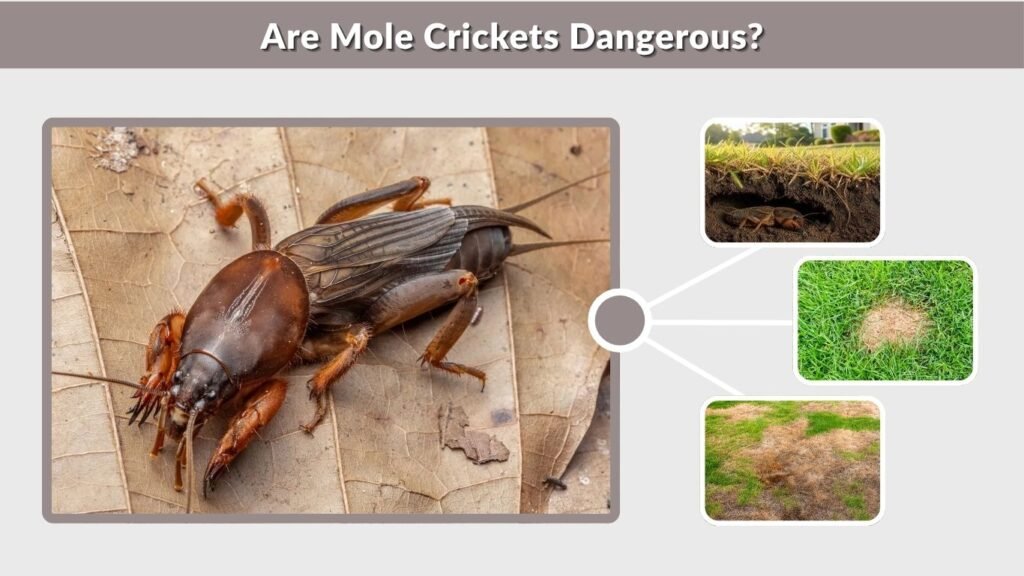
For humans, mole crickets present very little direct physical danger. Their real impact is ecological and agricultural. Some introduced species can become significant turf pests because their underground tunnels disturb soil and grass roots. Feeding can contribute additional damage, particularly when populations become large.
What Damage Do Mole Crickets Cause?
Mole crickets may cause:
- Underground tunnels
- Raised ridges across lawns
- Damaged grass roots
- Thinning turf
- Irregular brown patches
- Loose or spongy soil
- Damage to seedlings
- Increased weed invasion in weakened turf
In the southeastern United States, tawny and southern mole crickets are particularly well known for turfgrass problems.
Are Mole Crickets Dangerous to Pets?
Mole crickets are not generally considered dangerous to dogs or cats. A curious pet may paw at or attempt to eat one, but the insect does not possess a venomous sting.
Prevent pets from repeatedly playing with unidentified insects, however, because another insect species could be mistaken for a mole cricket.
How to Identify a Mole Cricket
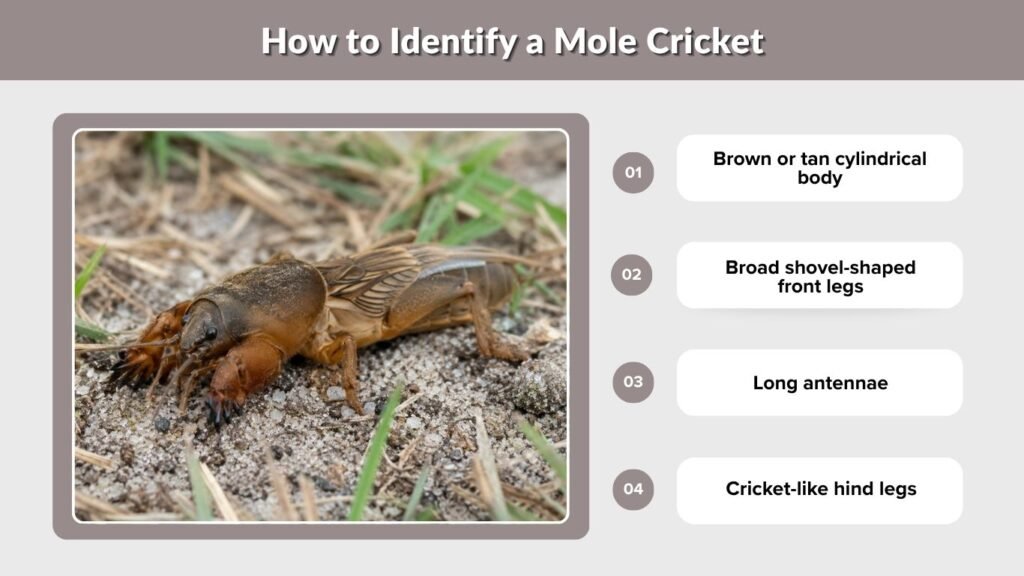
Correct identification can prevent unnecessary concern. Mole crickets have one of the most distinctive body shapes among crickets because their front legs have evolved for digging. Adults spend much of their time beneath the soil but may occasionally fly, especially during dispersal and mating periods.
Mole Cricket Identification Features
Look for:
- Brown or tan cylindrical body
- Broad shovel-shaped front legs
- Long antennae
- Cricket-like hind legs
- Small visible eyes
- Wings on many adult species
- Body often around 1–2 inches long
- Strong preference for burrowing in soil
The enlarged forelegs are usually the easiest feature for distinguishing mole crickets from ordinary field crickets.
FAQs
1. Do mole crickets bite humans?
Mole crickets are not considered human-biting insects. Iowa State University Extension describes them as harmless and states that they cannot bite or sting. They usually try to escape or burrow when disturbed rather than defend themselves against people.
2. Do mole crickets sting?
No. Mole crickets do not have a stinger or venom-injecting structure. Their intimidating shovel-shaped front legs are specially adapted for digging tunnels through soil and are not comparable to the stinging structures of bees or wasps.
3. Are mole crickets poisonous?
No. Mole crickets are not poisonous or venomous. They do not inject venom into humans or pets. Their primary danger is to turfgrass and plants because some species damage roots, shoots, and soil through feeding and extensive tunneling.
4. Do southern mole crickets bite?
Southern mole crickets are not regarded as dangerous biting insects. They spend most of their lives underground and primarily use their powerful front legs for tunneling. Their importance comes mainly from their potential to disturb and damage turf rather than harm humans.
5. Can you safely pick up a mole cricket?
A mole cricket is generally harmless, but handling is unnecessary. If one needs to be moved, guiding it into a container is preferable to squeezing or gripping it. This prevents injury to the insect and eliminates the possibility of scratching or a defensive pinch.