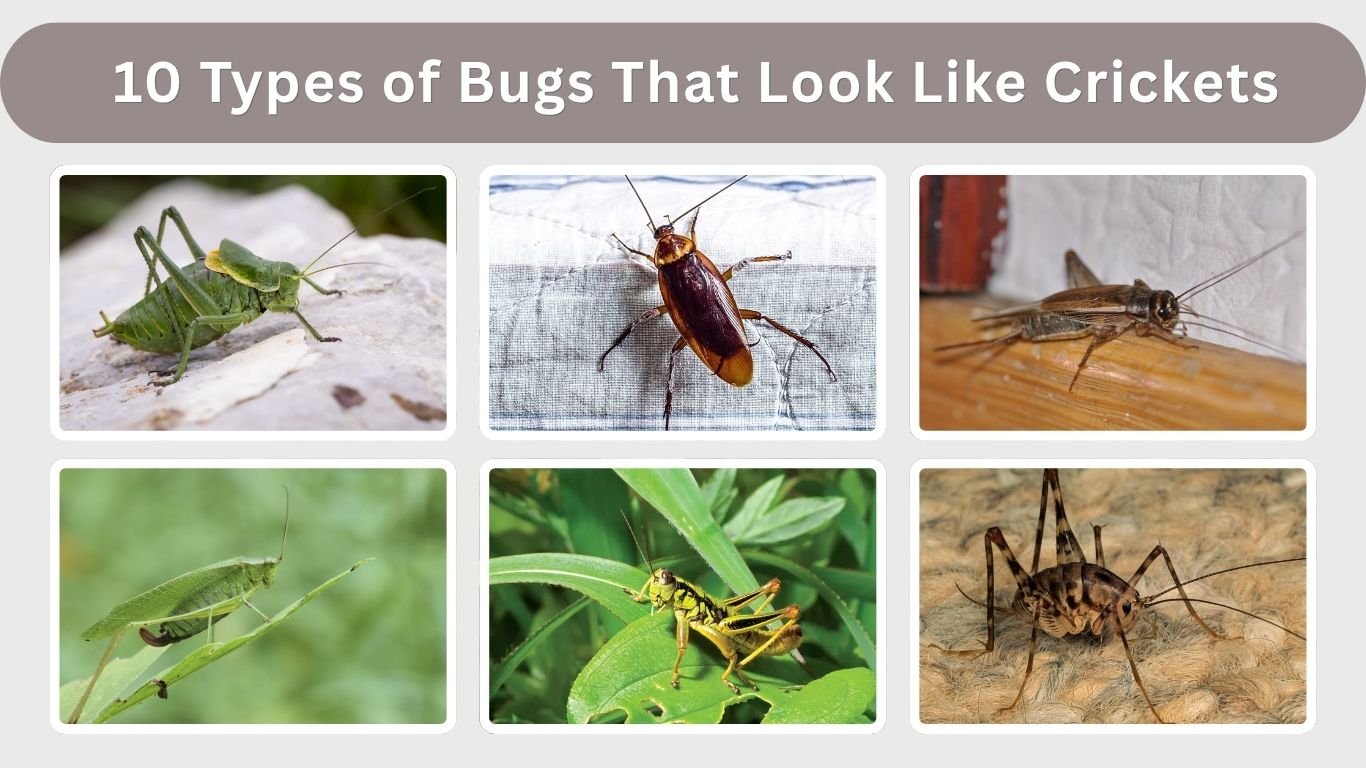
Many bugs that look like crickets can be confusing because they share long antennae, powerful jumping legs, dark or green bodies, and similar movement. Some are true crickets, while others are katydids, grasshoppers, cockroaches, or unusual relatives such as camel and mole crickets. A few may fly, live in basements, or resemble spiders and roaches. This guide covers 10 common cricket-like bugs and explains their identification, appearance, behavior, habitat, and the easiest ways to tell them apart.
1. Camel Cricket
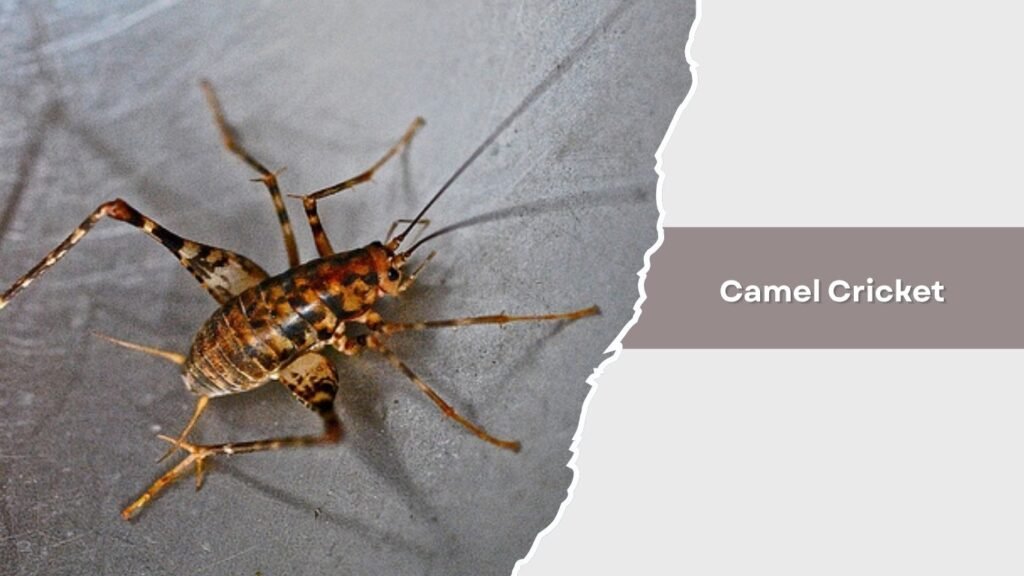
The camel cricket is one of the most common bugs that look like crickets, especially inside basements, crawl spaces, garages, and other dark, damp areas. It is also widely called a spider cricket because its extremely long legs and curved body give it a spider-like appearance. Unlike typical house or field crickets, camel crickets do not chirp and usually lack functional wings.
Identification
You can identify a camel cricket by these features:
- Light brown to dark brown body
- Noticeably hump-backed appearance
- Extremely long hind legs
- Very long, thread-like antennae
- Six legs despite its spider-like appearance
- Wingless or lacking functional wings
- Usually about 1/2 to 1 1/2 inches long
- Powerful jumping ability when disturbed
Its combination of long legs and an arched body explains why people often describe it as a bug that looks like a spider and cricket.
Where Camel Crickets Are Usually Found
Camel crickets prefer cool, humid, and poorly lit environments. Outdoors, they commonly hide beneath logs, rocks, leaf litter, and other damp materials. Indoors, basements and crawl spaces provide similar conditions, making this species one of the most frequently encountered basement bugs that look like crickets.
They may also appear in bathrooms, garages, sheds, laundry rooms, and around leaking pipes. Finding several indoors can indicate that the area has high humidity or easy entry points around the foundation.
Why They Jump Toward People
One of the most startling features of camel crickets is their unpredictable jumping behavior. When threatened, they use their unusually powerful hind legs to leap quickly away from danger.
Because they cannot precisely control where they land, they may accidentally jump toward a person rather than away. This behavior can make the insect seem aggressive, but camel crickets are not actively attacking people.
Their long legs also make each jump appear more dramatic than that of an ordinary cricket.
Are Camel Crickets Dangerous?
Camel crickets are generally harmless to humans. They do not have a venomous sting and are not known for attacking people. Their intimidating appearance is largely caused by their spider-like legs and sudden jumps.
Indoors, however, large numbers can become a nuisance. Camel crickets may feed on fungi, decaying organic matter, cardboard, fabrics, and other materials when food is available. Reducing moisture, sealing foundation gaps, improving ventilation, and removing clutter can make basements and crawl spaces much less attractive to them.
2. Spider Cricket
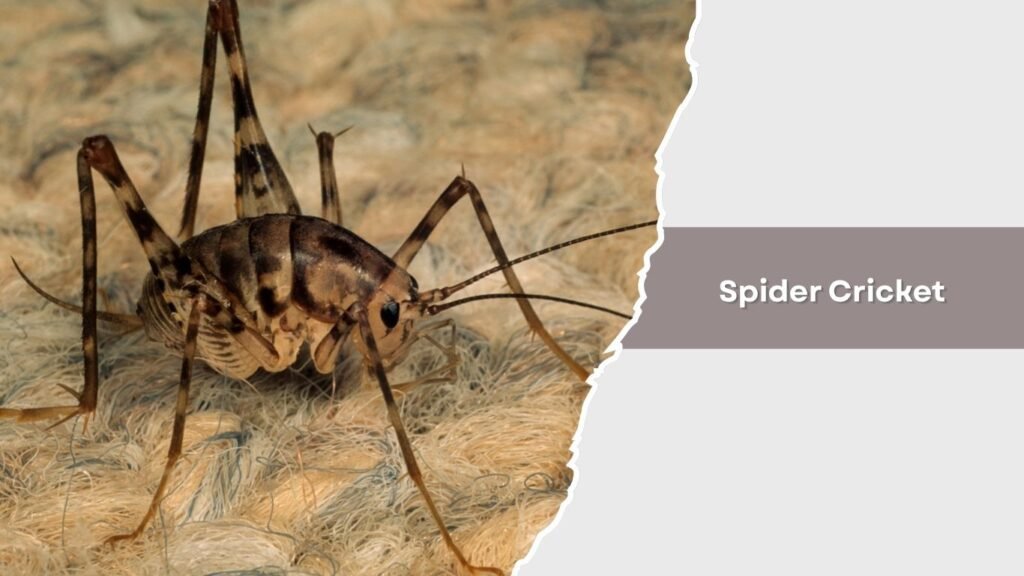
The spider cricket is a strange-looking insect frequently mistaken for a spider because of its extremely long legs and compact body. In most cases, “spider cricket” is another common name for a camel cricket, although people often search for it separately when trying to identify a bug that looks like a spider and cricket. These insects commonly occur in basements, garages, crawl spaces, and other damp locations.
Identification
Spider crickets can usually be recognized by:
- Six very long legs
- Large hind legs adapted for jumping
- Brown or tan body
- Long, thin antennae
- Hump-backed appearance
- Wingless body in common household species
- Spider-like overall shape
- Fast and unpredictable jumping behavior
Although they may appear to have more than six legs because of their antennae, spider crickets are insects, not spiders.
Why Spider Crickets Enter Houses
Spider crickets are strongly attracted to cool, dark, and humid environments. Basements, crawl spaces, utility rooms, garages, and areas beneath sinks can provide exactly the conditions they prefer.
They often enter through foundation cracks, gaps around doors, vents, or openings around utility lines. Once indoors, they may remain hidden during daylight hours and become more active at night.
Their presence can sometimes indicate excessive indoor moisture rather than a food-related infestation.
Do Spider Crickets Make Noise?
Unlike many true crickets, spider crickets generally do not produce the familiar chirping sound associated with house and field crickets.
This is one reason homeowners may find a cricket-like bug that does not make noise confusing. They possess long legs and cricket-like bodies but lack the sound-producing structures used by many true cricket species.
Their sudden jumping behavior is often much more noticeable than any noise they create.
Are Spider Crickets Harmful?
Spider crickets are not considered dangerous to people. They do not have venomous stingers and generally avoid direct contact.
Large indoor populations can still become troublesome. They may feed on fungi, organic debris, cardboard, fabrics, and other available materials. Reducing moisture and sealing entry points are among the most effective ways to make indoor spaces less suitable for them.
3. Jerusalem Cricket
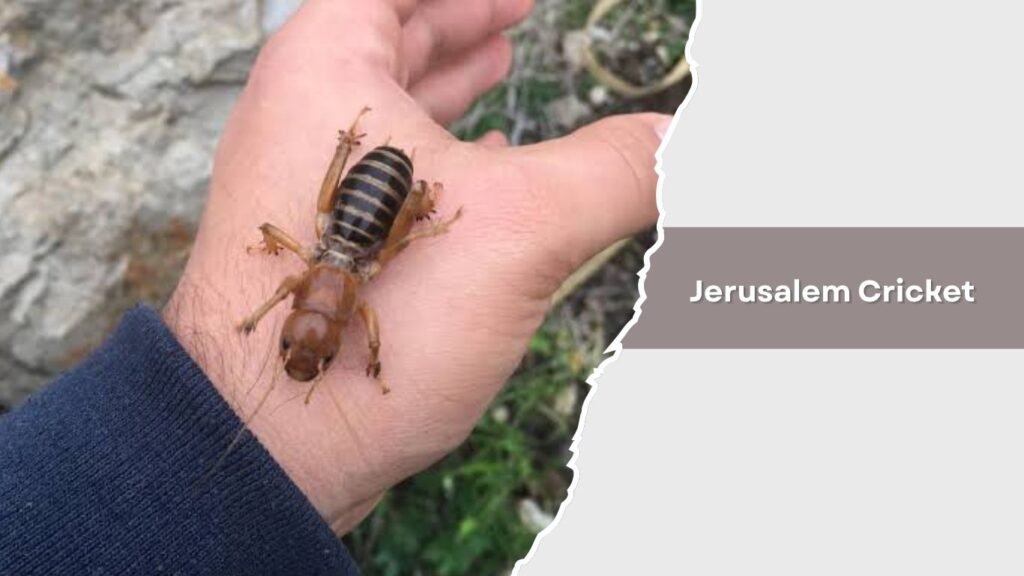
The Jerusalem cricket is a large, heavy-bodied insect often described as a big bug that looks like a cricket. Despite its name, it is neither a true cricket nor associated with Jerusalem. It is also commonly called a potato bug. Its unusually large head, thick legs, and striped abdomen make it one of the most distinctive cricket-like insects found in North America.
Identification
Jerusalem crickets typically have:
- Large rounded head
- Thick yellowish or brown body
- Dark bands across the abdomen
- Strong, spiny legs
- Long antennae
- Wingless appearance
- Thick and heavy body structure
- Powerful jaws
Their size and unusual proportions can make them look intimidating compared with ordinary crickets.
Where Jerusalem Crickets Live
Jerusalem crickets spend much of their lives on or beneath the ground. They are especially associated with western North America and are often found beneath rocks, logs, garden debris, or loose soil.
They may occasionally appear around homes after heavy rain, irrigation, or soil disturbance.
Unlike house crickets, they are not strongly adapted to living permanently indoors. Finding one inside usually means it accidentally wandered in from outside.
Do Jerusalem Crickets Bite?
Jerusalem crickets are not aggressive toward humans, but they have strong jaws and can bite if handled, trapped, or threatened.
The bite may be painful, but these insects are not venomous and do not possess a stinger.
Their intimidating appearance often causes more concern than their actual risk. Leaving the insect alone and allowing it to move away is usually preferable to handling it directly.
Jerusalem Cricket vs Regular Cricket
Jerusalem crickets differ considerably from typical house or field crickets. They have much thicker bodies, larger heads, and shorter-looking hind legs relative to their overall build.
Regular crickets are generally slimmer and have much more obvious jumping adaptations.
Jerusalem crickets also spend more time underground, whereas many true crickets live among vegetation, grass, leaf litter, or around buildings.
4. Mole Cricket
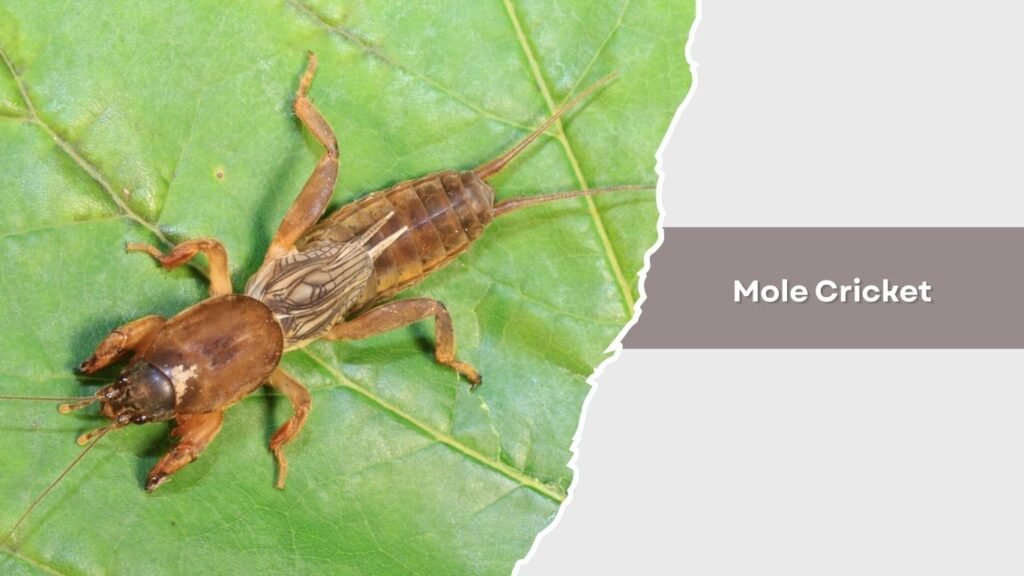
The mole cricket is a highly specialized cricket-like insect adapted for digging through soil. Its enlarged front legs resemble the digging paws of a mole, which gives the insect its common name. A person finding one may describe it as a weird bug that looks like a cricket, especially because its front legs look very different from those of familiar house or field crickets.
Identification
Mole crickets have several distinctive features:
- Brown or tan body
- Large shovel-like front legs
- Long antennae
- Cylindrical body shape
- Strong hind legs
- Wings in adults
- Velvety appearance
- Usually about 1 to 2 inches long
The enlarged front legs are the easiest feature to use when identifying this unusual insect.
Why Mole Crickets Live Underground
Mole crickets are excellent diggers and spend much of their lives beneath the soil surface.
Their broad front legs function like small shovels, allowing them to create tunnels through lawns, fields, gardens, and other areas with suitable soil.
These tunnels provide shelter from predators and help the insects move between feeding and breeding areas.
Some species are especially associated with warm climates and moist soil.
Can Mole Crickets Fly?
Adult mole crickets have wings, and many species are capable of flight.
This means a bug that looks like a cricket but flies may sometimes be a mole cricket, particularly if it also has large digging forelegs.
Adults may fly at night and can be attracted to outdoor lights. Flight also helps them locate new areas with suitable soil conditions.
Do Mole Crickets Damage Lawns?
Some mole cricket species can become significant lawn and turf pests.
Damage may result from both feeding and tunneling. Their underground movement can loosen soil and disturb grass roots, while some species feed directly on roots and other plant material.
Small numbers may go unnoticed, but larger populations can produce patches of thinning, damaged, or dying grass.
5. Katydid
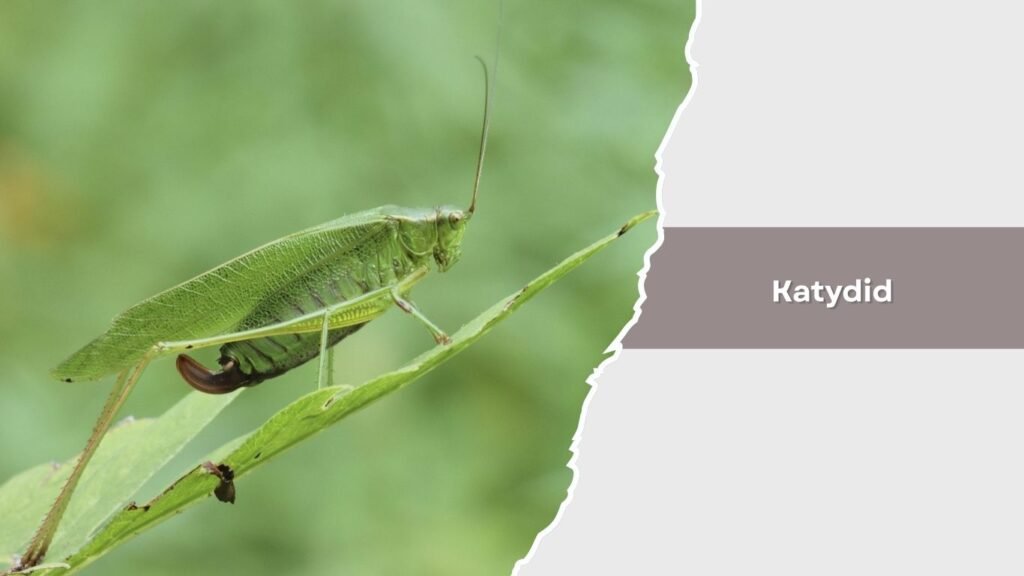
A katydid is one of the most likely insects to be mistaken for a green bug that looks like a cricket. Katydids are close relatives of crickets and grasshoppers and share long hind legs and very long antennae. Most are green and have wings shaped like leaves, providing excellent camouflage among shrubs and trees.
Identification
A katydid can often be identified by:
- Bright green body
- Extremely long antennae
- Leaf-like wings
- Strong hind legs
- Slender or broad flattened body
- Six legs
- Wings capable of flight in many species
- Green coloration that blends with foliage
Some species may be brown rather than green, but the combination of long antennae and leaf-like wings is highly characteristic.
Why Katydids Look Like Crickets
Katydids and crickets belong to the same major group of long-horned orthopteran insects, so they naturally share several features.
Both have powerful hind legs, long antennae, and sound-producing abilities. However, katydids are more commonly green and often have broad wings resembling leaves.
Their body shape is especially useful for distinguishing them from darker, more compact field crickets.
Do Katydids Fly?
Many adult katydids can fly, although their flight ability varies among species.
This makes a katydid a strong possibility when someone finds a green cricket-like bug with wings or a flying insect that resembles a cricket.
Katydids spend much of their time among foliage, where their green bodies make them difficult to detect until they move, jump, or fly.
Do Katydids Sound Like Crickets?
Yes, many katydids produce sounds similar to cricket chirps.
Males typically create these calls by rubbing specialized parts of their wings together. Their songs are often heard at night and may consist of clicks, rattles, buzzes, or repeated rhythmic phrases.
Because of this, a green bug that sounds like a cricket is often a katydid rather than a true cricket.
6. Field Cricket
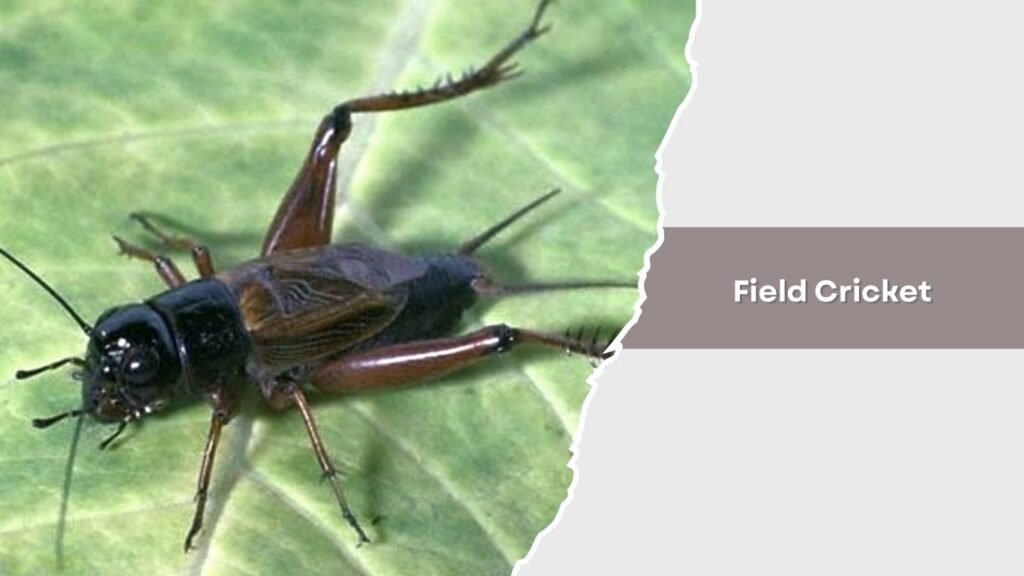
The field cricket is a common black or dark brown insect that is often recognized by its loud chirping and powerful jumping legs. It is one of the most likely matches when someone finds a black bug that looks like a cricket outdoors or near a house. Field crickets usually live in grass, gardens, fields, and cracks around buildings, although they may occasionally wander indoors.
Identification
Field crickets can usually be identified by:
- Black to dark brown body
- Very long antennae
- Large hind legs
- Broad, somewhat rounded body
- Wings lying flat over the back
- Two rear cerci
- Strong jumping ability
- Adult size commonly around 1/2 to 1 inch or more
Their dark coloration makes them a common answer to searches for a small black cricket-like bug or big black bug with cricket-like legs.
Where Field Crickets Live
Field crickets usually live outdoors in grassy areas, gardens, meadows, fields, and around building foundations. During the day, they often hide beneath rocks, logs, vegetation, or debris.
They become more active at night when temperatures are suitable.
Some field crickets enter homes through cracks beneath doors, foundation gaps, or open windows. Indoor sightings may become more frequent during seasonal weather changes when insects search for shelter.
Why Field Crickets Chirp
Male field crickets produce their familiar chirping sound by rubbing specialized parts of their wings together.
The sound is primarily used to attract females and communicate with other males.
Different species produce slightly different calls. Chirping can also become faster or slower depending on environmental temperature.
Because they are most active after dark, their sound is often much more noticeable at night than during daylight hours.
Are Field Crickets Harmful?
Field crickets are generally harmless to people. They do not sting and normally jump away when disturbed.
Outdoors, they play a role in breaking down plant material and serve as food for birds, spiders, reptiles, and other animals.
Large numbers indoors can become annoying because of constant chirping. They may also nibble on fabrics, paper, plants, or stored organic materials when suitable food is available.
7. House Cricket
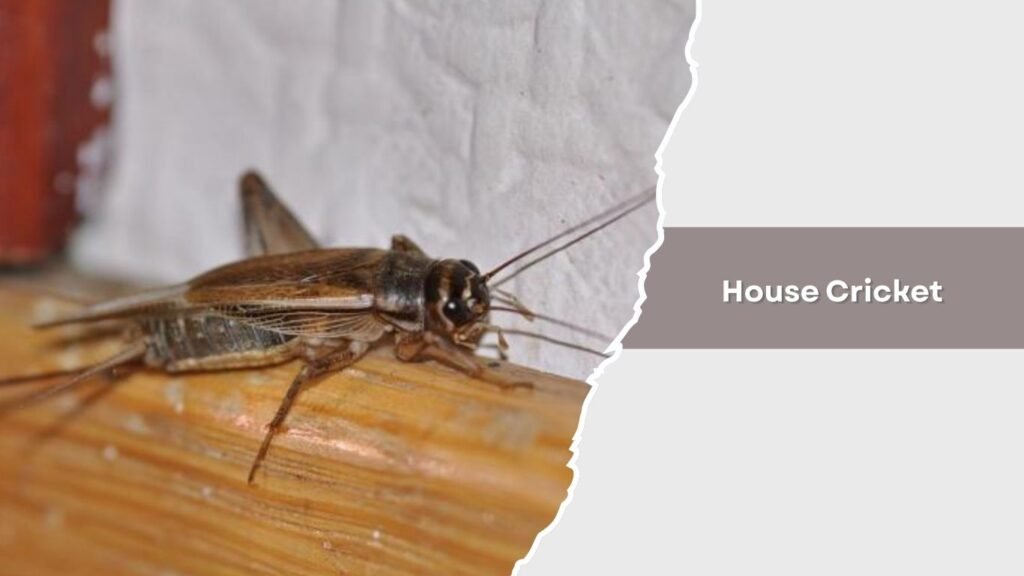
The house cricket is a light brown cricket that frequently lives around buildings and sometimes establishes populations indoors. It can be mistaken for a brown cricket-like bug, especially when seen quickly at night. House crickets are well known for their persistent chirping and preference for warm locations.
Identification
House crickets commonly have:
- Light brown or yellowish-brown body
- Dark bands on the head
- Long thin antennae
- Large jumping hind legs
- Slender body
- Fully developed wings in adults
- Long rear cerci
- Size generally under or around 1 inch
Their lighter color usually distinguishes them from darker field crickets.
Why House Crickets Come Indoors
House crickets are attracted to warm, sheltered environments. They may enter homes through door gaps, damaged screens, cracks, vents, or openings around pipes.
Inside, they can hide behind appliances, furniture, boxes, baseboards, and other dark locations.
Warm areas such as kitchens, utility rooms, garages, and spaces near heating equipment can be especially attractive.
Outdoor lighting near entrances may also draw crickets closer to a building.
Do House Crickets Fly?
Adult house crickets possess wings and are capable of flying, although jumping and running are often their main methods of movement.
This means a bug that looks like a cricket but flies could actually be a house cricket.
Their flight is usually short rather than sustained over long distances. When disturbed, they commonly jump rapidly into nearby cover instead.
Are House Crickets a Problem?
A small number of house crickets is usually more of a nuisance than a serious threat.
Their constant nighttime chirping can disturb sleep, especially when a cricket hides somewhere difficult to reach.
Larger indoor populations may feed on fabrics, paper products, pet food, crumbs, and other organic material. Sealing entry points, reducing indoor clutter, and removing accessible food can help prevent recurring problems.
8. Grasshopper
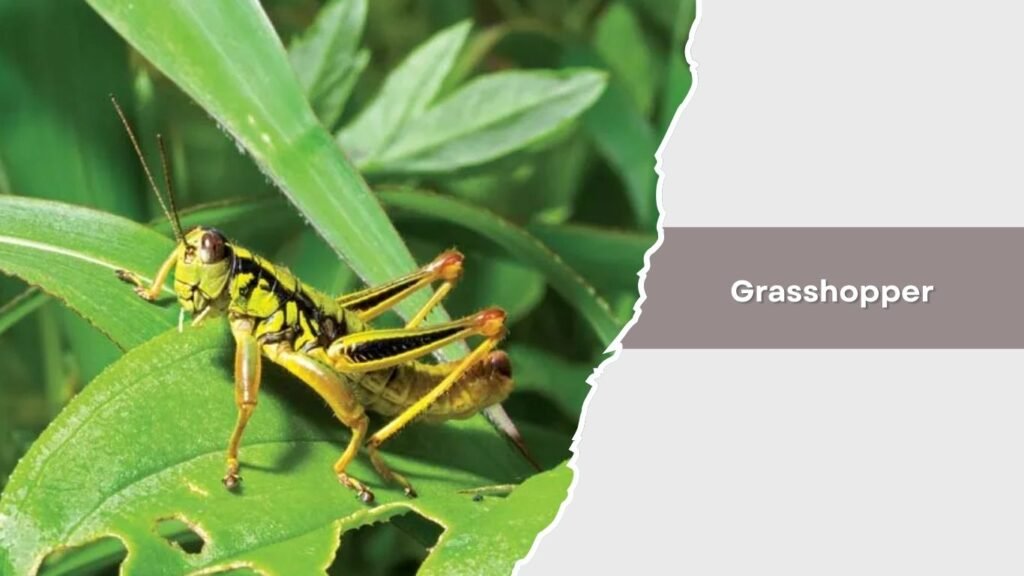
A grasshopper can easily be mistaken for a cricket because both insects possess large hind legs and can jump impressive distances. Someone who finds a bug that looks like a cricket and grasshopper may simply be noticing similarities shared by these closely related insects. Grasshoppers typically have shorter antennae and are more active during daylight than most crickets.
Identification
Common grasshopper characteristics include:
- Large powerful hind legs
- Shorter antennae than crickets
- Green, brown, gray, or yellow coloration
- Long narrow body
- Strong chewing mouthparts
- Wings in most adults
- Large eyes
- Excellent jumping ability
The relatively short antennae are among the easiest ways to distinguish a grasshopper from a true cricket.
Grasshopper vs Cricket
Grasshoppers and crickets belong to the same insect order, Orthoptera, but they have noticeable differences.
Crickets generally have very long antennae that may exceed their body length. Grasshoppers have much shorter antennae.
Most grasshoppers are active during daylight, while many crickets are primarily nocturnal.
Their sounds are also produced differently. Crickets commonly rub their wings together, while many grasshoppers create sounds using their legs and wings.
Can Grasshoppers Fly?
Most adult grasshoppers have wings and many species are strong fliers.
A grasshopper may suddenly jump and then extend its wings to travel much farther than jumping alone would allow.
This behavior can lead someone to describe it as a flying cricket-like bug, especially if the insect has long hind legs and a brown or green body.
Young grasshopper nymphs lack fully developed wings and rely mainly on jumping.
Are Grasshoppers Dangerous?
Grasshoppers are not considered dangerous to humans. They do not sting and usually attempt to escape when approached.
Their main impact is on plants. Grasshoppers consume leaves, grasses, crops, and other vegetation.
Small populations generally cause limited damage, but very large populations can remove substantial amounts of foliage. Their importance as plant feeders varies greatly depending on species and local abundance.
9. Cockroach
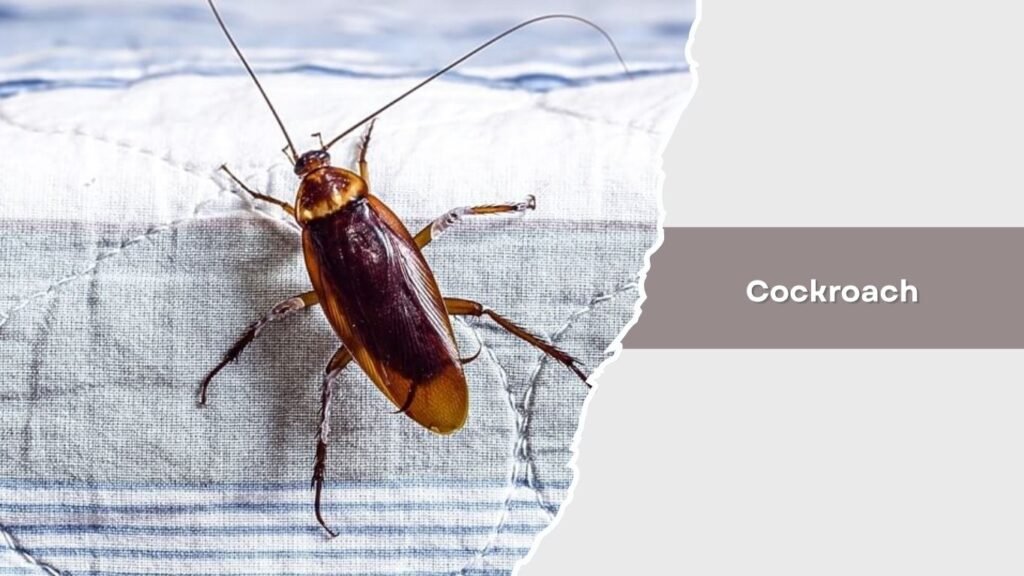
A cockroach can sometimes be confused with a cricket, particularly when it is dark brown, has long antennae, and runs quickly across the floor. Searches for a bug that looks like a roach and cricket often involve insects that share these features. However, cockroaches have flatter bodies and lack the enlarged jumping legs typical of true crickets.
Identification
Cockroaches usually have:
- Flattened oval body
- Brown, reddish-brown, or black coloration
- Extremely long antennae
- Six running legs
- Small head partly covered by the pronotum
- Wings in many adult species
- No enlarged cricket-like hind legs
- Fast running behavior
Their flattened body is one of the most useful features for separating them from crickets.
Cockroach vs Cricket
Crickets have strongly enlarged hind legs built for jumping, whereas cockroach legs are more similar in size and designed for rapid running.
A cricket generally has a more cylindrical or rounded body. A cockroach looks much flatter when viewed from the side.
Both insects can have long antennae and may be active at night, which explains why identification can be confusing when one is seen only briefly.
Why Cockroaches Enter Houses
Cockroaches enter homes because buildings can provide food, water, warmth, and hiding places.
They often hide in cracks, behind appliances, beneath cabinets, around plumbing, and in other narrow spaces.
Unlike a cricket that may accidentally wander indoors, repeated cockroach sightings can indicate an established indoor population.
Keeping food sealed, removing crumbs, repairing leaks, and sealing cracks can make a home less attractive to them.
Are Cockroaches Harmful?
Cockroaches are more concerning indoors than most cricket-like insects because some species can contaminate surfaces and food as they move through unsanitary areas.
Their shed body parts and droppings may also contribute to indoor allergen problems.
For this reason, correct identification matters. A brown insect with long antennae should not automatically be assumed to be a cricket. Looking for a flattened body and absence of enlarged jumping legs can help identify a cockroach.
10. Bush Cricket
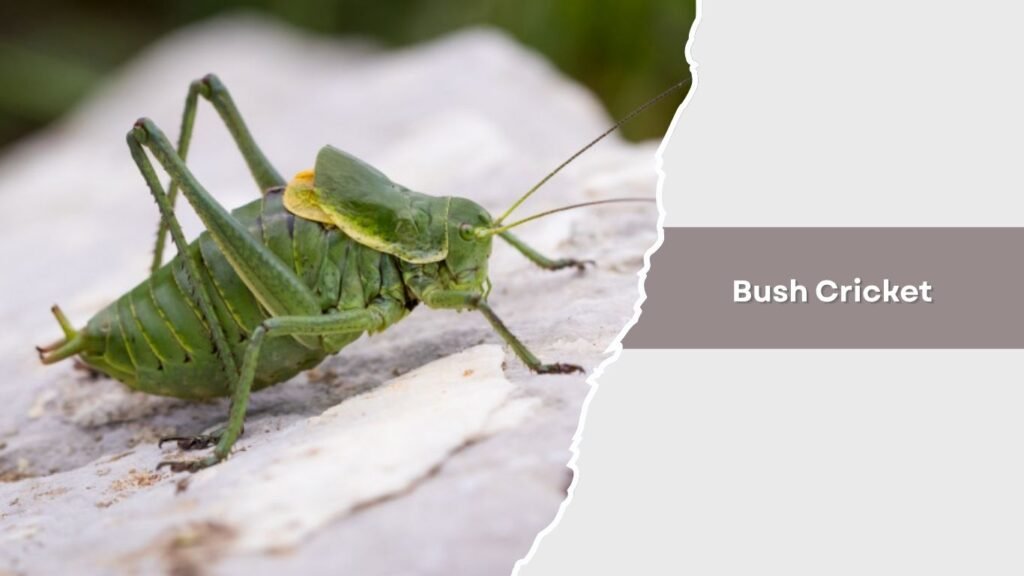
A bush cricket is a long-antennaed insect closely related to katydids and true crickets. In many regions, the term bush cricket is commonly used for members of the family Tettigoniidae. These insects are often green and live among leaves, shrubs, and grasses, making them a common match for a green cricket-like bug with long antennae.
Identification
Bush crickets often have:
- Bright green or brown coloration
- Extremely long antennae
- Long powerful hind legs
- Leaf-like wings
- Slender body
- Large eyes
- Wings in many adult species
- Strong jumping ability
Their antennae may be longer than their entire body, helping distinguish them from grasshoppers.
Where Bush Crickets Live
Bush crickets usually live among vegetation rather than inside buildings.
They are commonly found in shrubs, tall grass, woodland edges, hedges, gardens, and meadows.
Their green coloration and leaf-shaped wings provide excellent camouflage. A bush cricket can remain almost invisible until it moves.
Most are especially active during warm evenings and nighttime periods, when their calls may be heard from vegetation.
Do Bush Crickets Sound Like Crickets?
Yes. Bush crickets are among the bugs that sound like crickets.
Males produce calls to attract females, often by rubbing specialized wing structures together.
Depending on the species, the sound may resemble a chirp, buzz, click, rattle, or repeated ticking noise.
Because bush crickets often remain hidden within plants, their sound may be heard long before the insect itself is found.
Bush Cricket vs True Cricket
Bush crickets and true crickets share long antennae and powerful hind legs, but bush crickets are often greener and more leaf-like.
Many bush crickets spend most of their time above ground in shrubs and vegetation, while true crickets frequently live closer to the ground.
Their wing shapes also differ. Bush cricket wings often resemble leaves, whereas cricket wings generally lie more plainly across the back. Both groups are harmless to humans and primarily try to escape when disturbed.
FAQs
What bug looks like a cricket but is not a cricket?
Several insects can resemble crickets, including camel crickets, spider crickets, Jerusalem crickets, katydids, mole crickets, grasshoppers, and some cockroaches. Long antennae and enlarged hind legs are common shared features, so checking body shape, color, wings, and jumping behavior helps with identification.
What bug looks like a spider and a cricket?
A camel cricket, also called a spider cricket, is the most common answer. It has extremely long legs, long antennae, and a hump-backed body that gives it a spider-like appearance. Despite the resemblance, it is an insect with six legs, not a spider.
What is the black bug that looks like a cricket?
A black cricket-like insect is often a field cricket. Field crickets usually have dark brown to black bodies, long antennae, powerful hind legs, and wings. Small black camel crickets or other related insects can also look similar, so body shape and habitat should be considered.
What flying bug looks like a cricket?
Several cricket-like insects can fly, including house crickets, mole crickets, katydids, and grasshoppers. A bright green flying insect with very long antennae is often a katydid, while a brown insect with large digging front legs may be a mole cricket.
Why are cricket-like bugs in my house?
Cricket-like bugs may enter homes while searching for moisture, warmth, shelter, or food. Camel crickets are especially common in damp basements and crawl spaces, while house and field crickets may enter through doors, screens, foundation cracks, and gaps around pipes or utility lines.