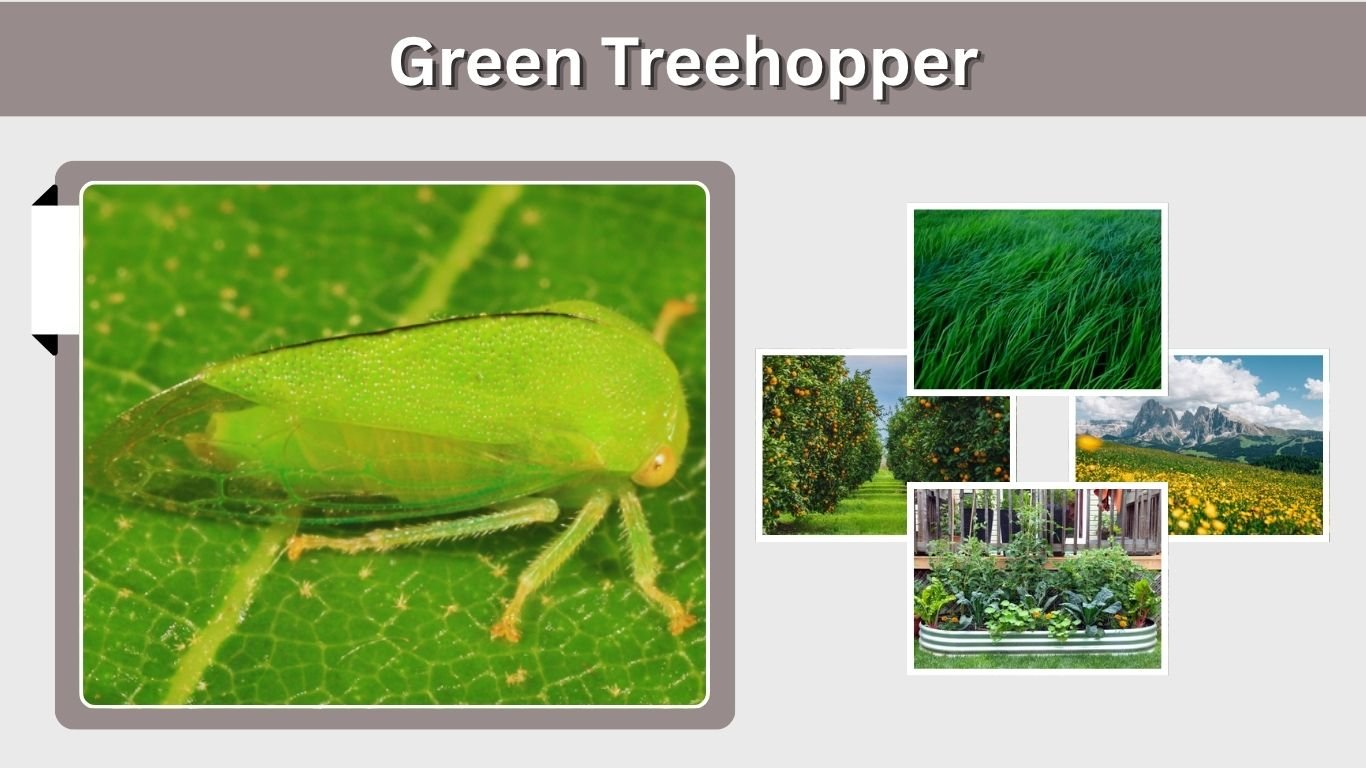
The green treehopper is a small sap-feeding insect recognized by its bright green coloration and unusually shaped body. Treehoppers belong to the family Membracidae and are famous for the enlarged pronotum that often forms humps, horns, or spiky projections over the body. Green species can occur on trees, shrubs, garden plants, and other vegetation, where both adults and nymphs feed on plant sap. Although their strange appearance may make them look threatening, treehoppers are harmless to people and are fascinating examples of insect camouflage.
What Is a Green Treehopper?
The term green treehopper can describe several green-colored members of the treehopper family rather than one single species. These insects are closely related to leafhoppers and cicadas and use specialized piercing mouthparts to obtain fluids from plants.
Their unusual body shapes are among their most distinctive features. Depending on the species, the enlarged pronotum may resemble a thorn, hump, leaf, or other part of a plant.
Green Treehopper Identification
Common characteristics of green treehoppers include:
- Bright green or yellow-green coloration
- Small, compact body
- Enlarged pronotum covering part of the back
- Clear or slightly colored wings
- Six slender legs
- Short to moderately long antennae
- Piercing-sucking mouthparts
- Ability to jump when disturbed
Most treehoppers are relatively small, although exact size and shape vary considerably among species.
Green coloration provides excellent camouflage while the insects rest among leaves and stems.
Why Do Some Green Treehoppers Look Spiky?
A green spiky treehopper may have projections extending from its pronotum.
These structures can resemble plant thorns, buds, or other natural features. Such shapes help treehoppers blend into their surroundings and may make them less noticeable to predators.
The projections are not stingers. They are part of the insect’s external body structure and primarily contribute to its distinctive appearance.
Green Treehopper Nymph
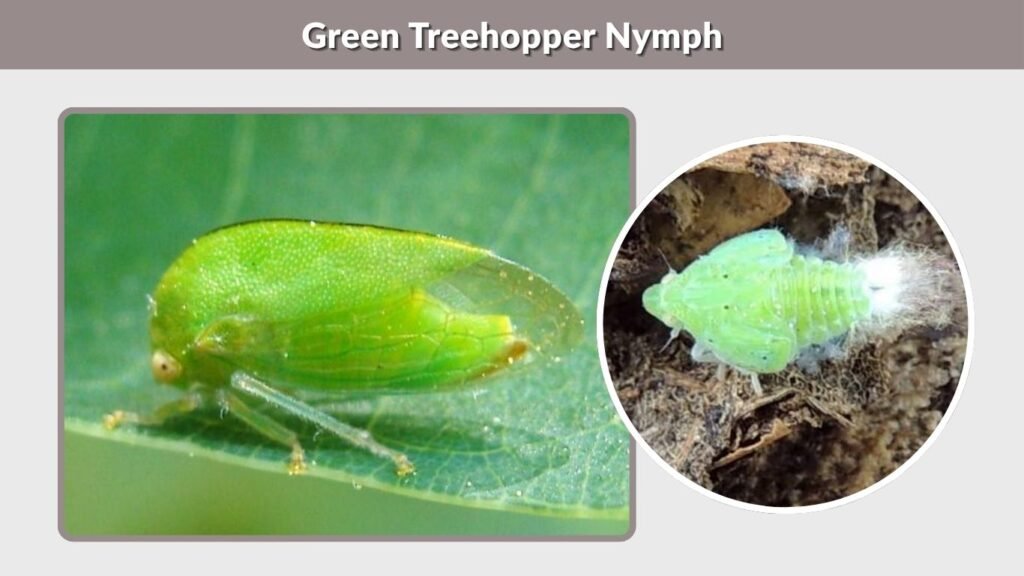
A green treehopper nymph is the immature stage that develops after an egg hatches. Nymphs resemble simplified versions of adults but do not yet possess fully developed wings.
Their appearance can change considerably as they grow.
What Does a Baby Green Treehopper Look Like?
Baby green treehoppers may have:
- Tiny soft bodies
- Green, yellowish, or brown coloration
- Developing body projections
- No functional wings
- Six legs
- Shorter and less developed pronotal structures
Some nymphs may appear spiny or bristly compared with adults.
Coloration can also change through development, so young treehoppers may not immediately resemble the adults found on the same plant.
How Do Green Treehopper Nymphs Grow?
Treehoppers undergo incomplete metamorphosis.
Their life cycle consists of:
- Egg
- Nymph
- Adult
Unlike butterflies and moths, treehoppers do not have caterpillar or pupal stages.
Nymphs pass through several growth stages called instars. At the end of each instar, the insect molts its external skeleton and becomes larger.
With each molt, the developing treehopper gradually acquires more adult-like characteristics.
Green Treehopper Life Cycle
The life cycle begins when females deposit eggs in or on suitable plant tissue. The exact location and reproductive behavior vary among treehopper species.
After hatching, nymphs begin feeding on plant fluids and continue developing until they become winged adults.
Egg Stage
Female treehoppers commonly select plants that can provide food for their offspring.
Some species insert eggs directly into stems or other plant tissues, helping protect them during development.
When conditions are favorable, the eggs hatch and tiny nymphs emerge.
Nymph Stage
Nymphs stay relatively close to their food plants.
They feed using their piercing-sucking mouthparts and gradually grow through several molts.
Groups of nymphs may sometimes gather together on stems or branches, particularly in species where adults provide some degree of protection.
Adult Stage
Adults possess fully developed wings and can move between plants.
Their main activities include feeding, mating, laying eggs, and dispersing to suitable vegetation.
When disturbed, an adult may quickly jump or fly away, which explains the “hopper” part of its common name.
What Do Green Treehoppers Eat?
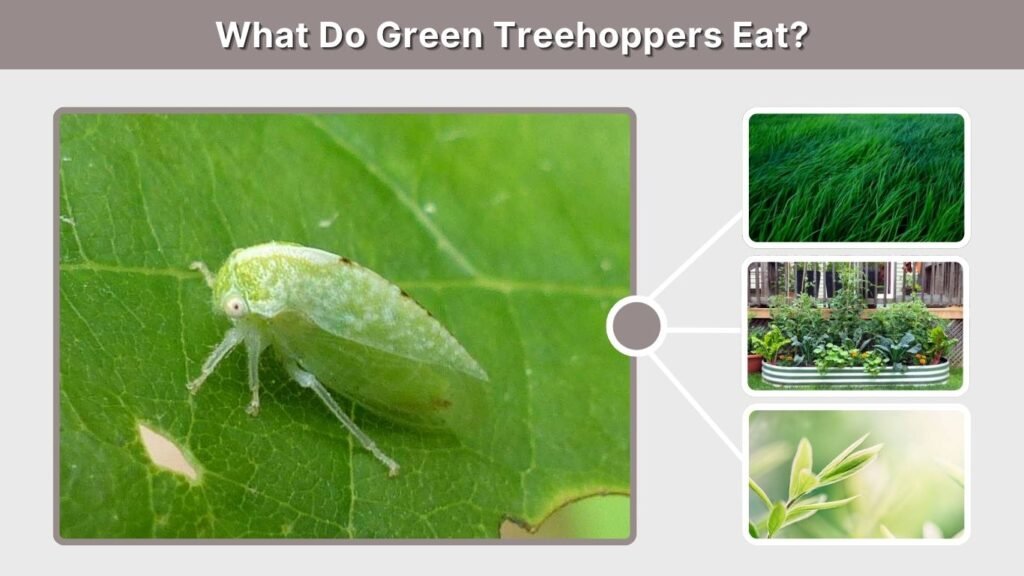
Green treehoppers are plant feeders.
They insert their specialized mouthparts into plant tissue and consume sap, particularly nutrient-rich fluids moving through stems and branches.
Common Food Sources
Depending on species, treehoppers may feed on:
- Tree stems
- Shrubs
- Young branches
- Garden plants
- Grasses
- Herbaceous vegetation
- Agricultural crops
Different species have different host-plant preferences.
Some feed on a limited range of plants, while others can use several types of vegetation.
Do Green Treehoppers Damage Plants?
A few treehoppers feeding on a healthy plant usually cause limited noticeable damage.
However, large populations can place additional stress on plants because both adults and nymphs remove fluids. Egg-laying activity may also create small injuries in stems.
Young plants and heavily infested vegetation are more likely to show noticeable effects than large, healthy trees.
Green Treehoppers and Ants
One particularly interesting part of treehopper behavior is their relationship with ants.
Many sap-feeding insects produce a sugary liquid known as honeydew. Ants are attracted to this energy-rich substance and may frequently appear around groups of treehopper nymphs.
Why Are Ants Around Treehoppers?
Ants may collect honeydew produced by treehoppers.
In return, ants sometimes defend the insects against predators or parasitoids.
This interaction can benefit both groups: treehoppers receive additional protection, while ants obtain a reliable source of sugary food.
Seeing several ants repeatedly visiting small green insects on a stem can therefore provide an additional clue that treehoppers or another type of sap-feeding insect is present.
Green Treehopper vs Buffalo Treehopper
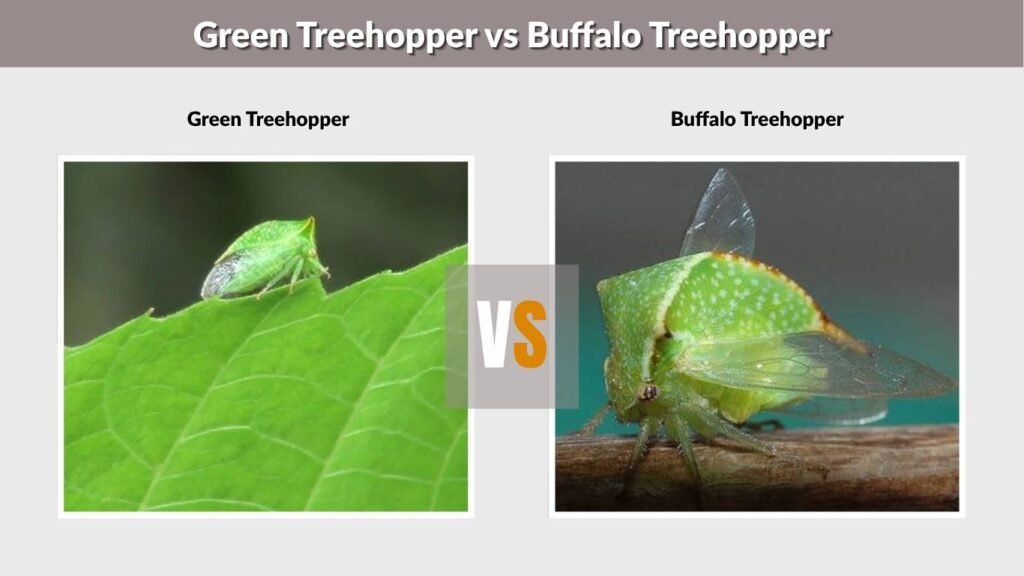
The buffalo treehopper is one of the best-known green treehoppers in North America.
It has a distinctly triangular or wedge-shaped appearance, with an enlarged green pronotum that can resemble the profile of a tiny thorn or buffalo-like shape.
How to Recognize a Buffalo Treehopper
Typical characteristics include:
- Bright green coloration
- Broad triangular profile
- Pronotum extending over the body
- Strong jumping ability
- Clear wings
- Small overall size
However, not every small green treehopper is a buffalo treehopper. Many members of the Membracidae family have green coloration, so body shape and other structural features should be considered before identifying a species.
Where Do Green Treehoppers Live?
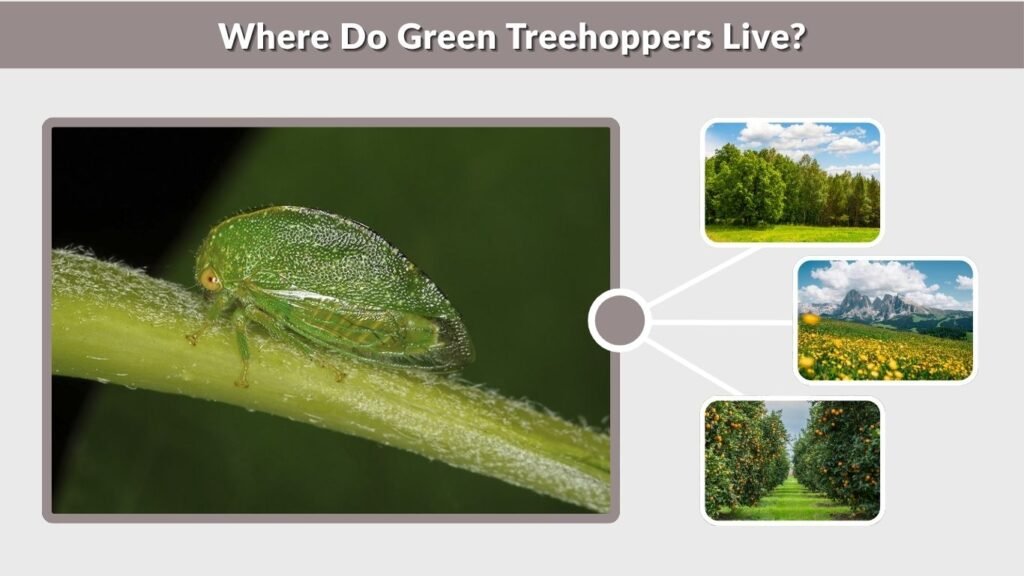
Green treehoppers occur wherever suitable host plants and appropriate treehopper species are present.
They are especially easy to overlook because their body coloration blends into foliage.
They may be found in:
- Forest edges
- Meadows
- Gardens
- Orchards
- Farms
- Parks
- Shrubland
- Backyards
Look carefully along stems, branches, and the undersides of foliage rather than expecting them to remain exposed on the tops of leaves.
Are Green Treehoppers Dangerous?
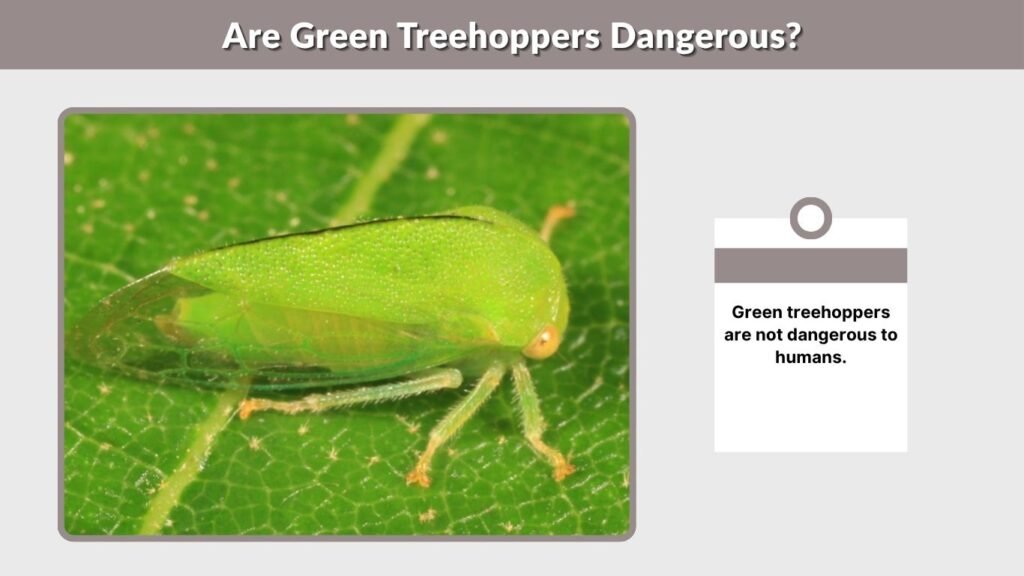
Green treehoppers are not dangerous to humans.
Their unusual humps and spikes may resemble defensive weapons, but these structures cannot sting.
Do Green Treehoppers Bite?
Treehoppers possess mouthparts designed for piercing plants, not attacking people.
They are not considered biting pests and generally attempt to jump or fly away when disturbed.
Their main interactions are with plants, predators, ants, and other insects within their habitat.
Should You Remove Green Treehoppers From Plants?
Finding one or two treehoppers usually does not require immediate control.
A small population on a mature, healthy plant may cause little meaningful damage. Treehoppers also form part of the natural food web and provide prey for spiders, birds, predatory insects, and other animals.
If unusually large numbers appear on valuable garden plants, monitor the vegetation for wilting, damaged stems, or declining growth before deciding whether management is necessary.
FAQs
What is a green treehopper?
A green treehopper is a small sap-feeding insect belonging to the treehopper family Membracidae. Several species can have green coloration. They are characterized by unusual pronotum shapes that may resemble thorns, humps, or other parts of plants.
What does a green treehopper nymph look like?
Green treehopper nymphs are small wingless insects that may be green, yellowish, or brown. Some have noticeable spines or projections. Their appearance changes through several molts until they develop the full wings and body structure of an adult.
Are green treehoppers harmful?
Green treehoppers are harmless to humans because they do not sting and are not aggressive. They feed on plant sap, however, and high populations can potentially stress host plants, particularly young or already weakened vegetation.
Why are ants attracted to green treehoppers?
Many treehoppers produce sugary honeydew while feeding on plant fluids. Ants consume this honeydew and may remain around groups of treehoppers to collect it. In some cases, ants also protect treehoppers from predators in exchange for this food source.
Can green treehoppers fly?
Adult green treehoppers can generally fly and also have powerful legs that allow them to jump quickly when threatened. Nymphs lack fully developed wings and primarily move by crawling or jumping around their host plants until they mature.