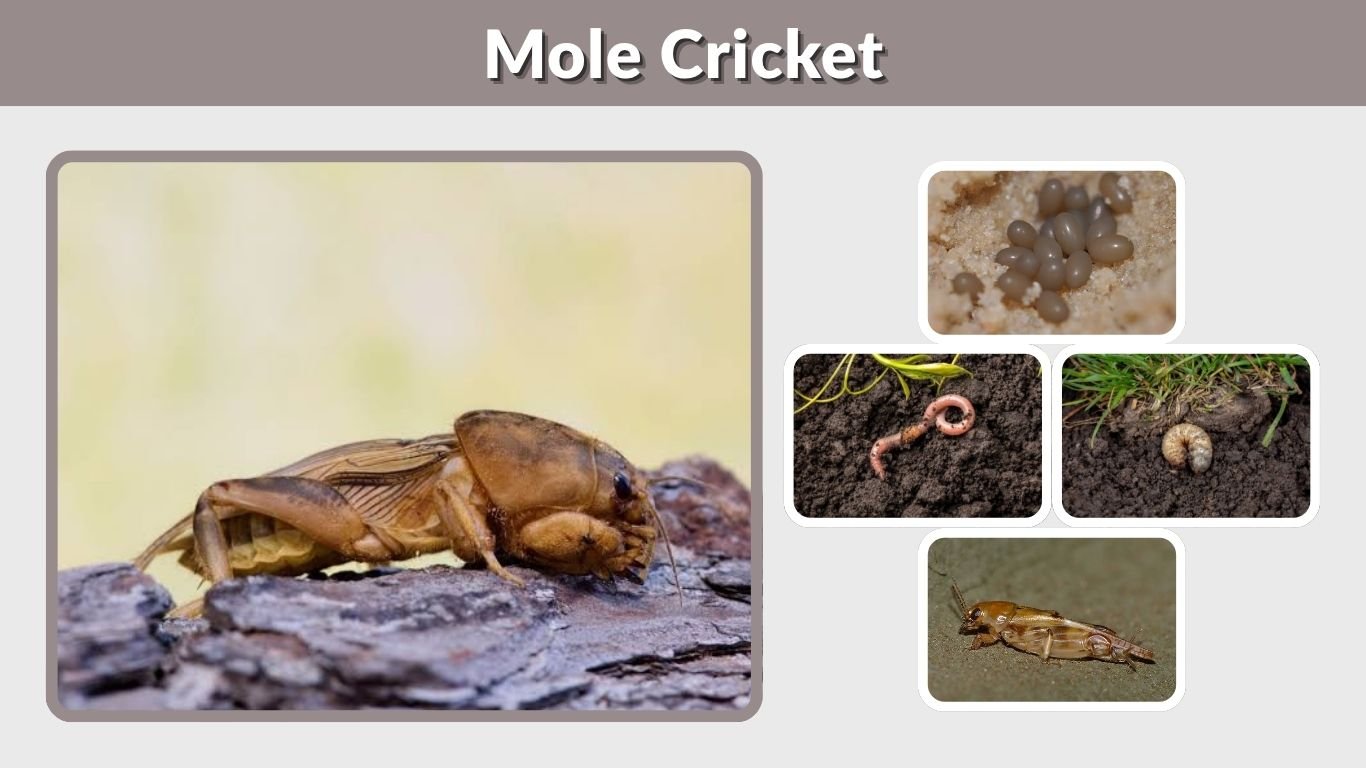
Mole crickets are unusual underground insects known for their powerful digging legs and their ability to tunnel through lawns and soil. Although their mole-like appearance can seem intimidating, they are mainly a concern because certain species damage turfgrass, gardens, and young plants. Recognizing a mole cricket early can make control much easier. This guide explains what mole crickets look like, where they live, what they eat, whether they bite, the signs of an infestation, and practical ways to get rid of them.
What Is Mole Cricket?
A mole cricket is a burrowing insect belonging to the family Gryllotalpidae. Unlike ordinary field crickets, mole crickets spend much of their lives underground. Their broad front legs are specially adapted for digging, allowing them to create extensive tunnels beneath grass and loose soil.
What Does a Mole Cricket Look Like?
Mole crickets have several distinctive features that make them relatively easy to recognize.
- Brown, tan, or sometimes dark-colored body
- Cylindrical and slightly flattened appearance
- Large shovel-shaped front legs
- Small eyes and long antennae
- Strong hind legs, although they are less adapted for jumping than typical crickets
- Adults commonly measuring around 1 to 2 inches long
- Wings present on many adult species
Their enlarged front legs are usually the easiest identification feature. They resemble the digging paws of a mole, which explains their common name.
Where Do Mole Crickets Live?
Mole crickets prefer loose, moist soil where digging is easy. They are frequently found beneath lawns, pastures, gardens, golf courses, agricultural fields, and other grassy areas.
They are especially troublesome in regions with warm climates. Some species are common in Florida, Texas, and other parts of the southern United States, while different mole cricket species occur throughout Europe, Africa, Asia, and Australia.
Moist soil often attracts them because it is easier to tunnel through than extremely dry, compacted ground.
Mole Cricket Holes and Tunnels
Mole cricket activity can produce small holes, raised soil, and tunnels near the surface. Their tunnels may resemble narrow ridges running through turf.
A heavily infested lawn can feel unusually soft or spongy because insects have disturbed the soil underneath. Grass growing directly over active tunnels may eventually become brown or loose.
What Do Mole Crickets Eat?
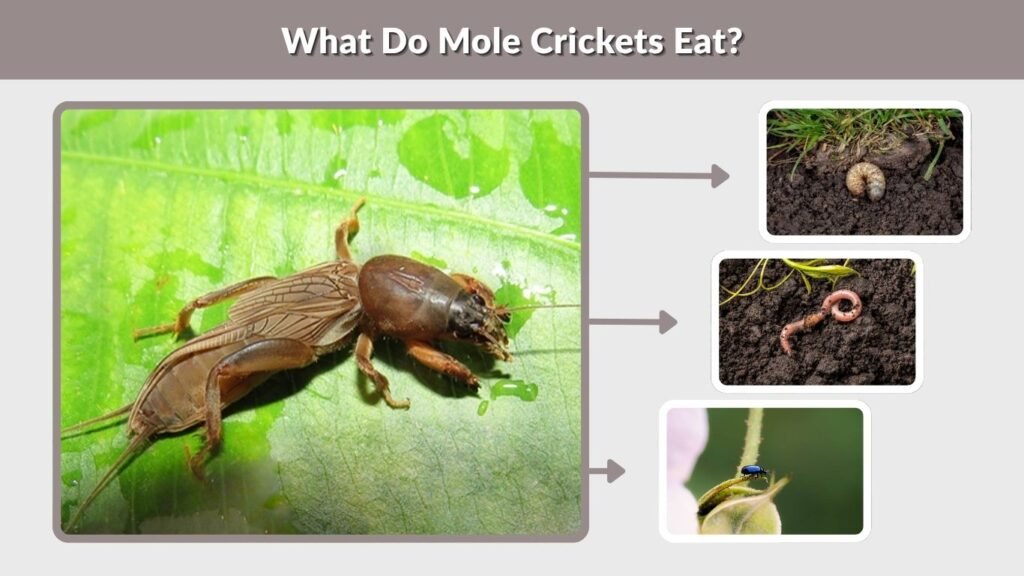
Diet varies depending on the species. Some mole crickets mainly consume plant material, while others eat insects and small soil organisms. Many are considered omnivores.
Plant-Based Foods
Plant-feeding mole crickets may consume grass roots, stems, seedlings, and other underground plant material. Feeding directly on roots can interfere with a plant’s ability to absorb water and nutrients.
Young turfgrass is particularly vulnerable when large populations are present.
Insects and Other Food
Predatory and omnivorous mole crickets may eat insect larvae, worms, small invertebrates, and organic material found in soil.
Because species differ considerably in feeding behavior, simply seeing one mole cricket does not necessarily mean severe plant damage will occur.
Mole Cricket Damage to Lawns
Certain mole cricket species are serious lawn pests. Damage comes from both feeding and tunneling. Even species that do not consume large amounts of grass can disturb roots while moving through the soil.
Signs of Mole Cricket Infestation
Common signs include:
- Irregular patches of brown or dying grass
- Raised tunnels across the lawn
- Small openings in the soil
- Loose or spongy turf
- Grass that pulls away from the soil easily
- Increased bird activity as birds search for insects
- Visible mole crickets after watering or heavy rain
Early damage may resemble drought stress or other lawn problems, so checking the soil is important before applying treatment.
Why Their Tunnels Damage Grass
Mole crickets dig just below the soil surface while searching for food, mates, and shelter. Their tunneling separates grass roots from surrounding soil.
Once roots lose proper contact with moist soil, grass may dry out even when the lawn receives adequate water. Severe infestations can create large areas of thin or dead turf.
How to Check a Lawn for Mole Crickets
A simple soap-water flush can help determine whether mole crickets are present.
Mix a small amount of mild dish soap with water and pour it over a limited section of suspicious turf. Mole crickets hiding near the surface may emerge within several minutes.
This technique is primarily useful for detecting insects rather than eliminating an entire infestation.
Do Mole Crickets Bite?
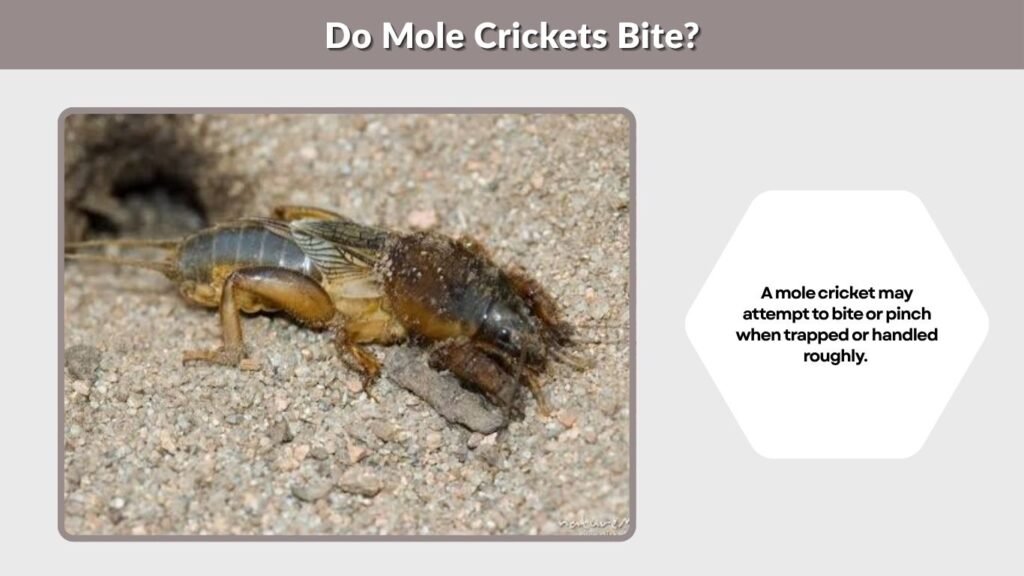
Mole crickets may look threatening because of their powerful front legs, but they are not considered dangerous insects to people.
Can a Mole Cricket Bite Humans?
A mole cricket may attempt to bite or pinch when trapped or handled roughly. However, encounters of this kind are uncommon.
They do not normally seek people out, feed on blood, or attack humans.
Are Mole Crickets Dangerous?
Mole crickets are generally not dangerous to people or household pets. They are not known for medically significant venom.
Their main concern is economic and landscaping damage rather than human health. If one enters a house, it can usually be captured and released outside without requiring pest treatment indoors.
Mole Cricket Life Cycle
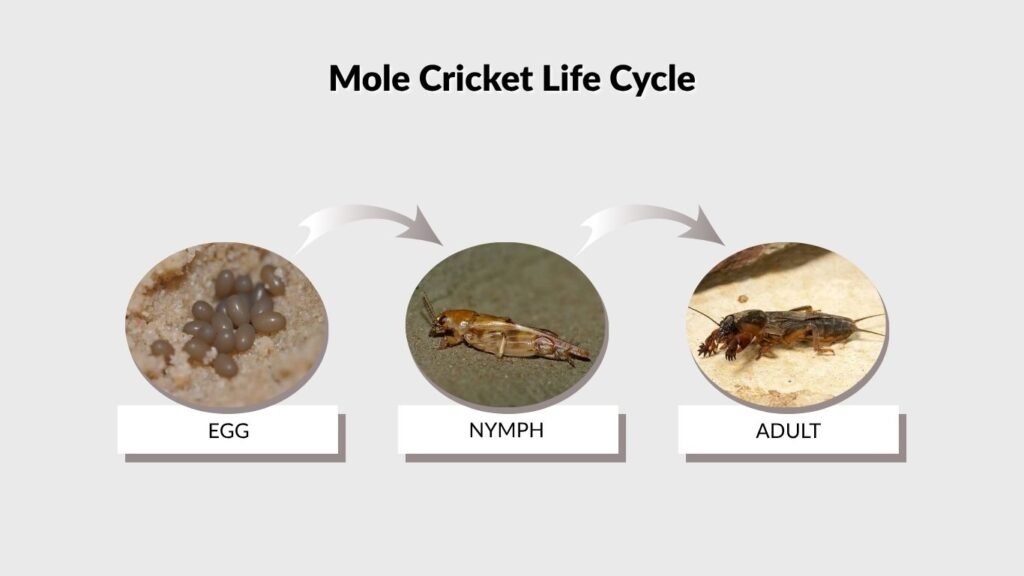
Understanding the mole cricket life cycle is useful because younger insects are often easier to manage than mature adults.
Eggs
Females create chambers underground and deposit eggs in the soil. Moisture and temperature influence how quickly eggs develop.
After hatching, young mole crickets remain in the soil where they begin feeding and tunneling.
Mole Cricket Nymphs
Nymphs resemble smaller versions of adult mole crickets but are not fully developed. They pass through several growth stages before reaching adulthood.
Small nymphs are often considered the ideal stage for lawn treatment because they are generally more vulnerable than large mature insects.
Adult Mole Crickets
Adults continue feeding, digging, and reproducing. Depending on the species and climate, adults may survive unfavorable periods underground before becoming active again when temperatures rise.
Mole Cricket Sound
Like ordinary crickets, male mole crickets can produce distinctive calls. However, they often call from specially constructed burrows.
Why Mole Crickets Make Noise
Male mole crickets primarily call to attract females. The entrance and shape of the underground burrow can help amplify the sound.
Calling is often most noticeable during warm evenings when adults are reproductively active. Different species produce different tones and calling patterns.
How to Get Rid of Mole Crickets
Effective control begins by confirming that mole crickets are actually responsible for the lawn damage. Once an infestation is established, combining lawn management with properly timed treatment usually provides better results.
Reduce Conditions That Favor Mole Crickets
Healthy turf can better withstand moderate insect activity. Avoid excessive watering that keeps the soil continuously saturated.
Proper mowing, fertilization, drainage, and irrigation encourage deeper grass roots and improve the lawn’s ability to recover from minor damage.
How to Get Rid of Mole Crickets Naturally
Natural management can include encouraging predators such as birds and beneficial insects. Biological controls, including certain beneficial nematodes, may also help suppress some mole cricket populations when the correct species and application conditions are used.
Keeping the lawn healthy and avoiding unnecessary overwatering can make the environment less favorable for persistent infestations.
Mole Cricket Treatment and Insecticides
When populations are high, an insecticide labeled specifically for mole crickets and the type of turf being treated may be necessary.
Timing matters. Treatments are generally more effective against young nymphs than against large adults because younger mole crickets are easier to control.
Granular products, liquid lawn treatments, and mole cricket baits are available. Always follow the product label carefully, including application rates, watering instructions, safety precautions, and restrictions concerning pets or children.
Avoid treating an entire lawn simply because one adult mole cricket is seen. Confirm active damage or a significant population first.
Common Types of Mole Crickets
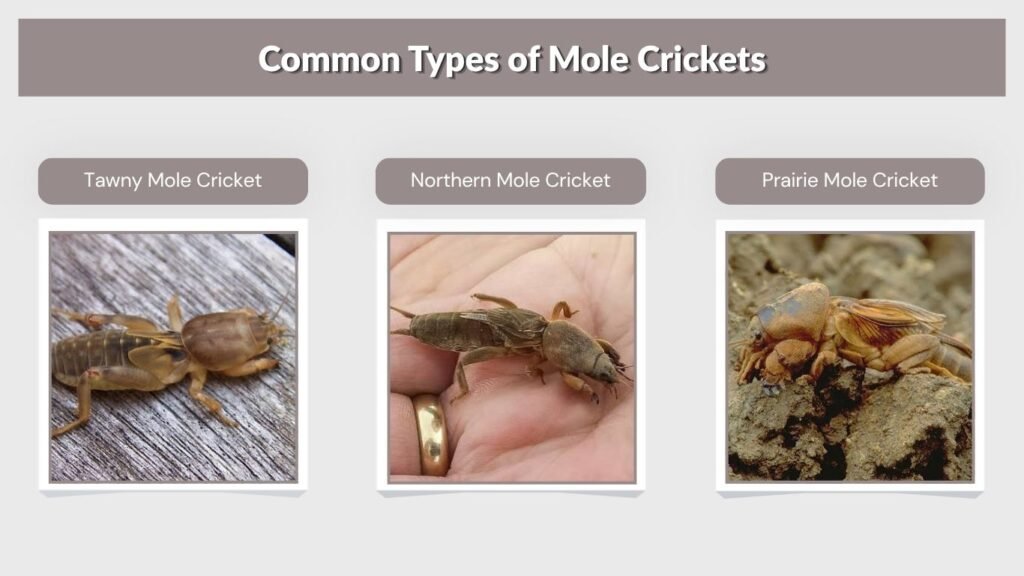
Many species belong to the mole cricket family, and their behavior varies considerably.
Tawny Mole Cricket
The tawny mole cricket is an important turf pest in warm regions. It feeds heavily on grass and can damage lawns, pastures, and managed turf through both feeding and tunneling.
Northern Mole Cricket
The northern mole cricket occurs naturally across parts of North America. It is generally associated with moist soil and grassland environments and is usually less notorious as a turf pest than some introduced species.
Prairie Mole Cricket
The prairie mole cricket is one of the largest mole crickets in North America. It is associated primarily with prairie habitats and is well known for the loud calls produced by males from underground burrows.
FAQs
What is the scientific name of a mole cricket?
Mole crickets belong to the insect family Gryllotalpidae. There are numerous genera and species within this family, so there is no single species-level scientific name that applies to every mole cricket.
How big do mole crickets get?
Size varies by species, but many adult mole crickets grow roughly 1 to 2 inches long. Their thick bodies and oversized digging legs can make them appear larger and more intimidating than ordinary crickets.
Do mole crickets fly?
Many adult mole cricket species have functional wings and can fly, particularly during mating and dispersal periods. Their underground lifestyle means people are more likely to notice their tunnels or calls than to see them flying.
What kills mole crickets?
Several lawn insecticides labeled for mole cricket control can reduce infestations. Biological approaches such as beneficial nematodes may also help in appropriate conditions. Treatment tends to work best when young nymphs are present rather than after insects reach full adult size.
Are mole crickets good or bad?
Mole crickets are natural members of many ecosystems and can contribute to soil activity. However, certain species become significant pests when their feeding and tunneling damage lawns, pastures, golf courses, or young plants.