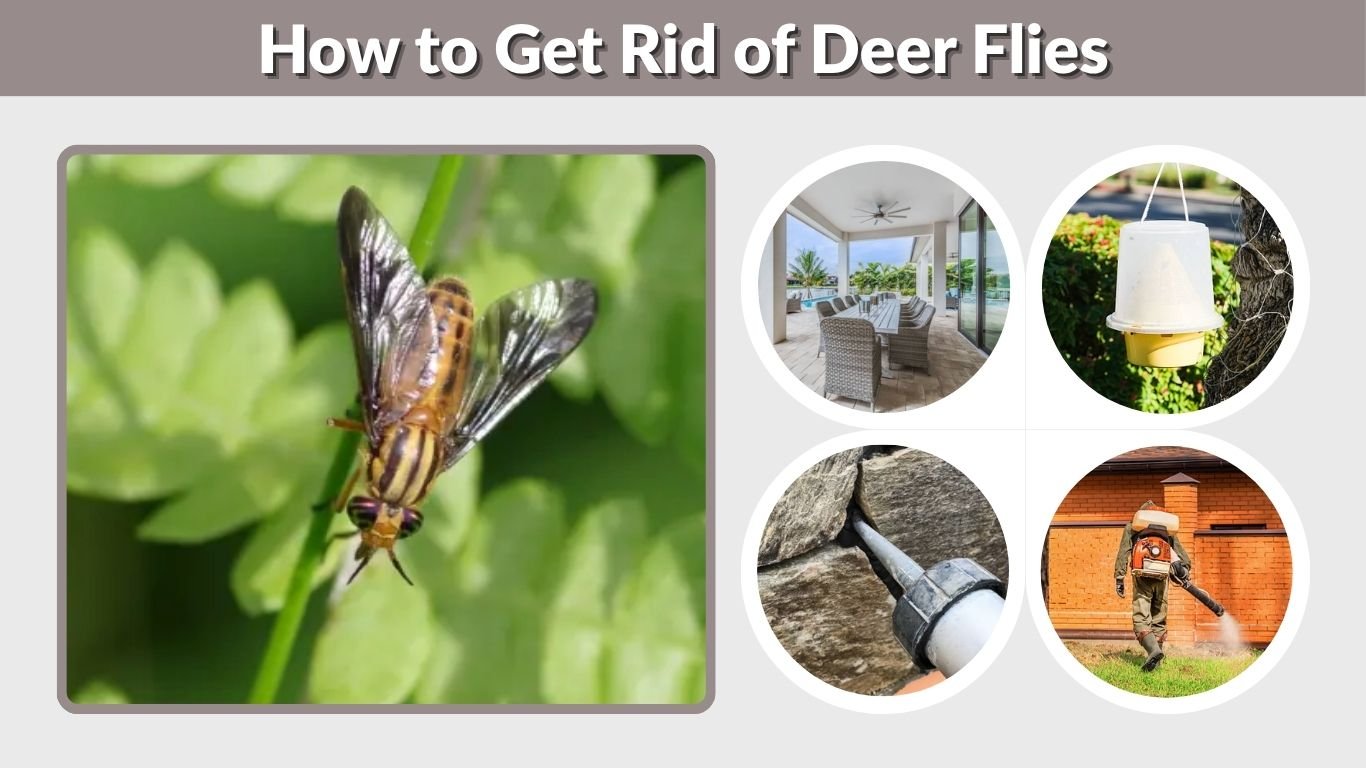
Deer flies can quickly turn a relaxing day outdoors into an uncomfortable experience. These aggressive biting flies are especially common around wooded areas, wetlands, ponds, swimming pools, farms, and properties near water. Female deer flies feed on blood and can repeatedly circle, land, and bite people or animals.
If deer flies are becoming a problem around your yard or home, the best approach is usually a combination of personal protection, traps, habitat management, and targeted outdoor control. Below, you’ll learn how to get rid of deer flies and reduce their activity around your property.
How to Get Rid of Deer Flies
Getting rid of deer flies completely can be difficult because they are strong fliers and may travel into your property from nearby wetlands, woods, streams, or marshy areas. However, you can significantly reduce bites and make your outdoor space less attractive to them.
The most effective methods include deer fly traps, protective clothing, repellents, vegetation management, and reducing wet breeding areas where possible.
Use Deer Fly Traps
Deer fly traps are one of the most practical ways to reduce adult flies around frequently used outdoor spaces.
Deer flies are attracted to moving objects, dark colors, warmth, and visual contrast. Many homemade and commercial traps take advantage of these behaviors.
A common homemade trap uses a dark-colored ball or similar moving object coated with a sticky insect-trapping substance. When deer flies approach and land on the surface, they become trapped.
Place traps near:
- Patios
- Walking paths
- Barns
- Pool areas
- Garden edges
- Wooded property borders
Avoid placing traps directly beside seating areas because attracting flies toward people can temporarily increase activity nearby.
Apply an Effective Insect Repellent
Repellents can help prevent deer flies from landing and biting when you are working, hiking, gardening, fishing, or spending time outside.
Products containing ingredients such as DEET, picaridin, or oil of lemon eucalyptus may help repel biting flies when used according to the product label.
Apply repellent to exposed skin and, when permitted by the manufacturer, clothing.
Because deer flies frequently target the head, neck, shoulders, and upper body, protecting these areas can significantly reduce bites.
Wear Protective Clothing
Physical protection is particularly helpful when deer fly populations are high.
Wear:
- Long-sleeved shirts
- Long pants
- Closed shoes
- Socks
- Lightweight hats
- Light-colored clothing
Deer flies are often attracted to darker moving objects, so light-colored clothing may make you less noticeable.
A hat with a head net can provide additional protection in areas where deer flies are extremely aggressive.
How to Get Rid of Deer Flies Outside
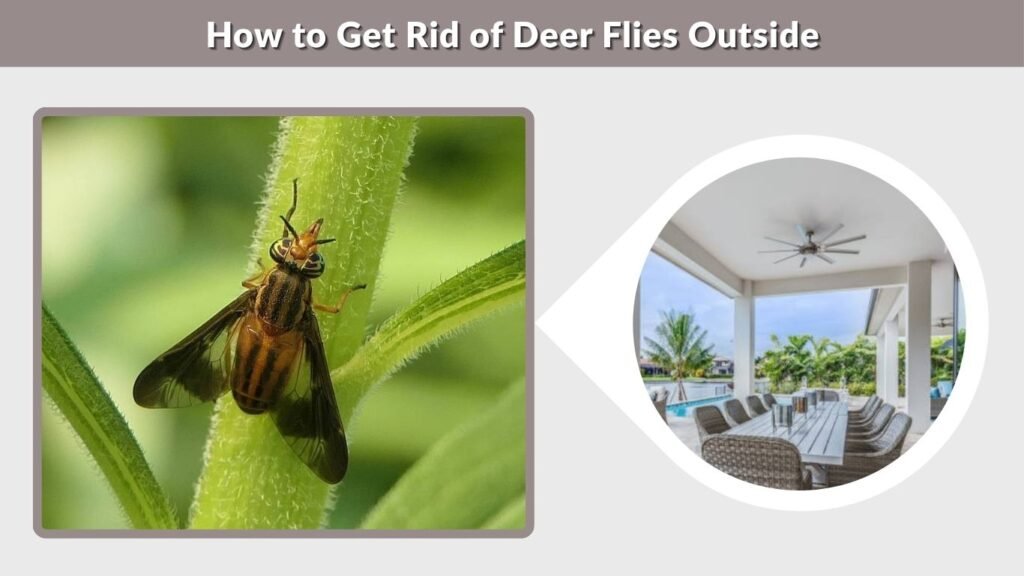
Outdoor deer fly control works best when you focus on the areas where people spend the most time rather than attempting to eliminate every fly across an entire property.
Adult deer flies can travel considerable distances, meaning new flies may continue entering your yard even after some are removed.
Keep Grass and Vegetation Managed
Tall vegetation can create resting areas for many types of biting flies.
Keep grass regularly mowed and remove excessive vegetation around:
- Patios
- Play areas
- Pools
- Outdoor seating areas
- Walking paths
Trimming shrubs and opening dense vegetation can also improve airflow.
Deer flies generally prefer sheltered, humid environments. Sunnier, open areas with good air circulation may be less comfortable for them.
Use Outdoor Fans
Strong airflow can help keep deer flies away from patios and seating areas.
Because flies have difficulty flying steadily in powerful air currents, positioning a large outdoor fan near a table, porch, or deck can provide immediate relief.
Fans work especially well when combined with repellents and traps placed farther away from the seating area.
Reduce Excess Moisture
Deer fly larvae commonly develop in wet or semi-aquatic environments, including marshes, muddy areas, pond edges, and saturated soil.
You probably cannot eliminate every potential breeding location, especially if you live near natural wetlands. However, improving unnecessary drainage problems around your property may help reduce conditions attractive to various biting insects.
Fix areas where water remains unnecessarily pooled and keep gutters and drainage channels functioning properly.
How to Get Rid of Deer Flies in Your Yard
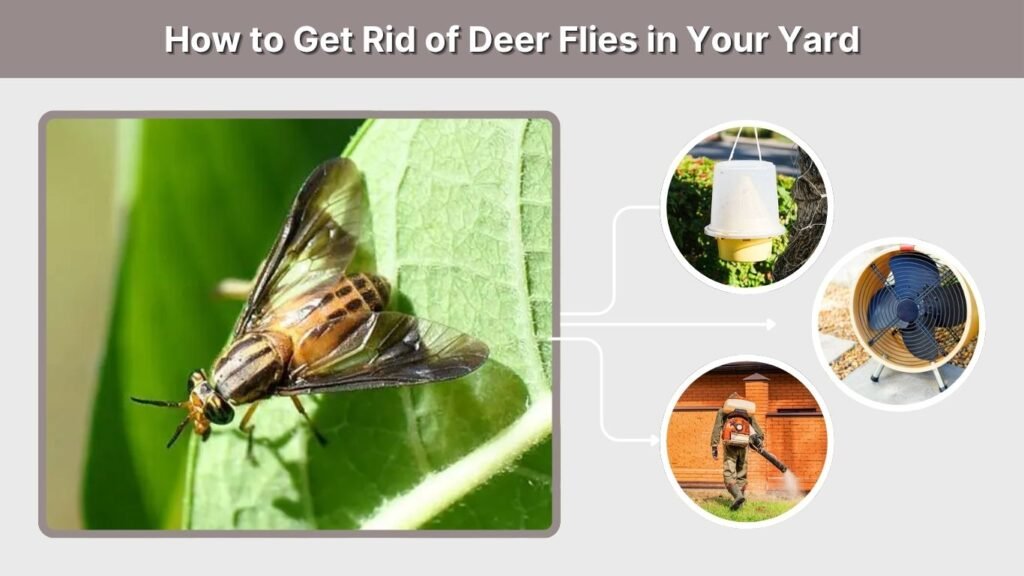
If deer flies are concentrated around your yard, start by identifying where they are most active.
Properties near forests, streams, lakes, marshes, or ponds commonly experience greater deer fly activity.
Place Traps Around the Yard
Several traps positioned around the perimeter of frequently used areas may provide better results than one trap.
Place them along likely fly travel routes, such as:
- Wood lines
- Pond edges
- Fence lines
- Trail entrances
- Barn entrances
Check sticky traps regularly and replace trapping surfaces when they become covered with insects, dust, or debris.
Create a Protected Outdoor Zone
Instead of trying to treat your entire property, focus on creating one comfortable outdoor area.
For example, around your patio you can combine:
- Outdoor fans
- Light-colored furniture
- Fly traps positioned farther away
- Screened enclosures
- Personal repellents
This layered approach is usually more practical than relying on one control method.
Consider Professional Pest Control
If deer flies are unusually severe, a licensed pest-control professional can evaluate your property.
Professional treatments may temporarily reduce adult flies around vegetation and outdoor structures. However, because deer flies can fly in from surrounding areas, insecticide treatment alone rarely provides permanent control.
How to Get Rid of Deer Flies Around a Swimming Pool
Swimming pools can become frustrating areas when deer flies are active because swimmers have large areas of exposed skin.
Deer flies may also be common around pools located close to trees, ponds, wetlands, or heavily landscaped areas.
Keep Vegetation Away From the Pool
Trim dense bushes and vegetation immediately surrounding the pool.
Increasing sunlight and airflow around the pool area can help make the environment less favorable for resting insects.
Position Fans Around Seating Areas
Large fans can help protect lounge chairs, tables, and shaded seating spaces.
Fans will not eliminate deer flies, but the airflow can make it more difficult for them to approach people.
Place Traps Away From Swimmers
Position deer fly traps around the perimeter of the pool rather than next to lounge chairs.
You want traps to intercept flies before they reach people instead of attracting additional insects toward swimmers.
How to Get Rid of Deer Flies Naturally
People who prefer to reduce pesticide use can rely heavily on physical barriers and mechanical control.
Natural approaches are most effective when several methods are combined.
Try Mechanical Traps
Sticky traps require no conventional insecticide and can remove significant numbers of adult deer flies in areas where populations are concentrated.
Because deer flies respond strongly to visual movement, moving dark objects incorporated into traps can be particularly effective.
Use Screening
Screened porches, gazebos, and pool enclosures offer excellent protection.
Check screens regularly for tears or gaps around:
- Windows
- Doors
- Roof connections
- Utility openings
Repair damaged screening quickly.
Use Fans and Protective Clothing
Fans and clothing provide immediate protection without spraying large outdoor areas.
During peak deer fly season, changing the time you perform outdoor activities may also reduce exposure.
How to Get Rid of Deer Flies in the House
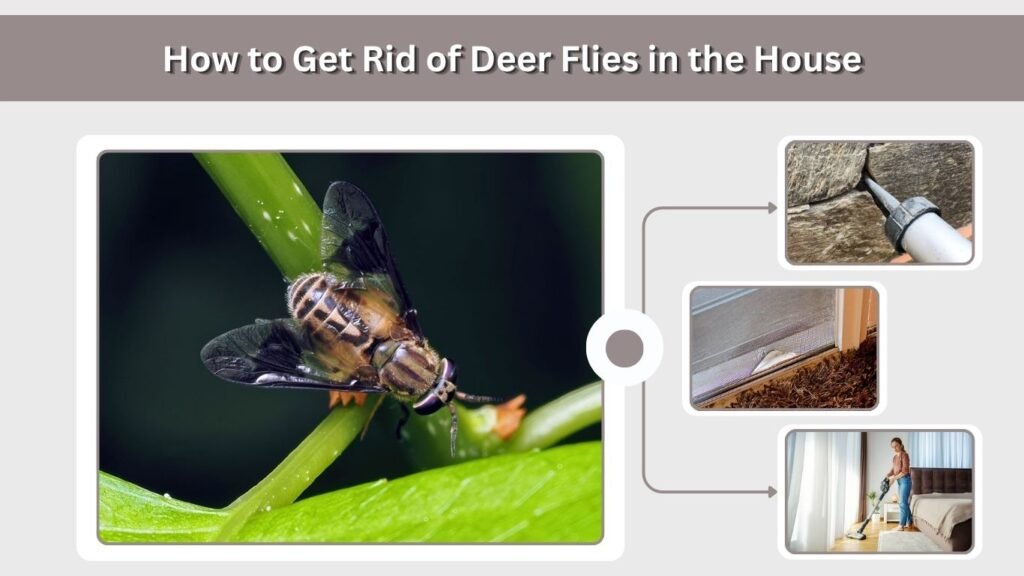
Deer flies normally live outdoors and do not usually establish indoor infestations.
If one enters your home, it probably came through an open door, window, or damaged screen.
Close Entry Points
Inspect doors and windows for gaps.
Repair:
- Torn screens
- Loose window seals
- Door gaps
- Damaged weather stripping
Keeping doors closed during periods of heavy deer fly activity can significantly reduce accidental entry.
Remove Individual Flies
Individual deer flies inside can usually be removed using:
- A fly swatter
- Vacuum cleaner
- Indoor sticky trap
If large numbers repeatedly enter the house, inspect nearby doors, screens, and windows rather than assuming they are breeding indoors.
How to Get Deer Flies to Leave You Alone
Deer flies can be extremely persistent once they begin circling someone.
The best protection combines repellent with physical barriers.
Wear a light-colored hat, long sleeves, and appropriate insect repellent before entering heavily infested areas.
Because deer flies frequently attack the upper body, protecting the head and neck is particularly helpful.
If possible, avoid spending long periods beside wooded wetlands during periods of intense deer fly activity.
What to Do About Deer Fly Bites
A deer fly bite can be painful because the female fly cuts the skin rather than simply piercing it like a mosquito.
After being bitten, wash the area gently with soap and water.
A cold compress may help reduce swelling and discomfort.
Avoid excessive scratching because broken skin may increase the risk of secondary infection.
Seek medical attention if you develop severe swelling, difficulty breathing, widespread hives, worsening redness, signs of infection, fever, or another concerning reaction.
Can You Get Sick From a Deer Fly Bite?
Most deer fly bites cause temporary pain, itching, swelling, and redness.
However, deer flies can occasionally transmit certain infectious organisms depending on geographic location.
One disease associated with some deer fly species in parts of North America is tularemia.
Lyme disease, however, is primarily transmitted by infected ticks rather than deer flies.
Anyone who develops fever, swollen lymph nodes, an unusual skin ulcer, or persistent illness after a suspected deer fly bite should contact a healthcare professional and mention the bite.
How to Get Rid of Deer and Horse Flies
Many methods used for deer flies also help reduce horse flies because both insects are visual hunters and strong daytime fliers.
Use a combination of:
- Large outdoor traps
- Protective clothing
- Insect repellent
- Outdoor fans
- Vegetation management
- Screens around outdoor living spaces
Properties containing horses or livestock may require additional management because animals provide an abundant blood source.
Fly sheets, approved animal repellents, manure management, clean stalls, fans, and strategically positioned traps can help reduce biting-fly pressure.
When Are Deer Flies Most Active?
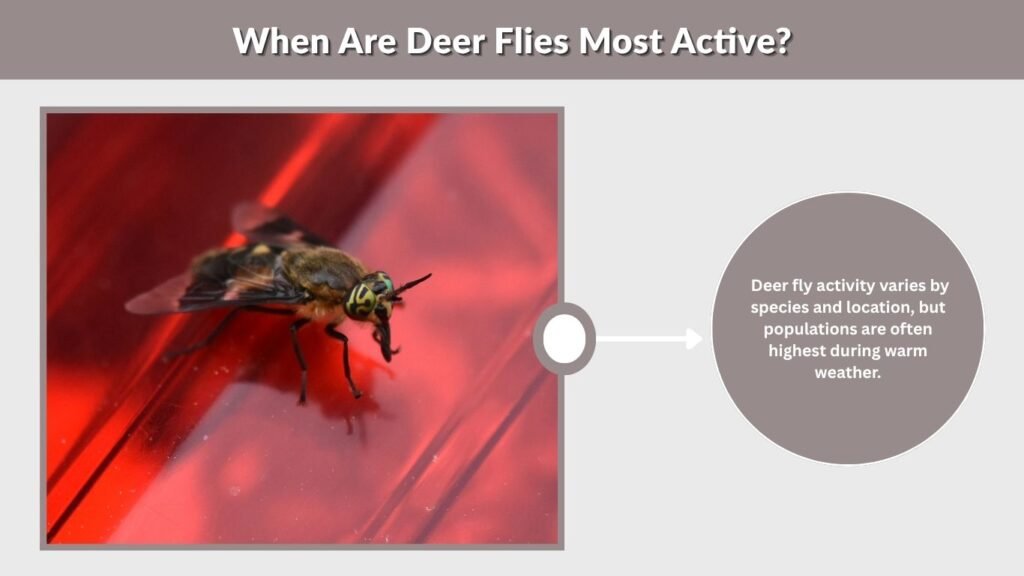
Deer fly activity varies by species and location, but populations are often highest during warm weather.
They are primarily daytime insects and are especially troublesome around wetlands, wooded trails, ponds, farms, and shaded outdoor environments.
Because their populations may peak for only part of the year, aggressive control during the most active season can make outdoor activities much more comfortable.
FAQs
What is the best way to get rid of deer flies?
The best approach is usually combining deer fly traps with personal repellents, protective clothing, outdoor fans, and vegetation management. Because deer flies may travel from nearby natural breeding habitats, relying on a single treatment rarely eliminates them permanently.
What gets rid of deer flies naturally?
Sticky traps, screened outdoor spaces, outdoor fans, long clothing, and habitat management can reduce deer fly problems without widespread pesticide use. Eliminating unnecessary standing or poorly drained water around developed areas may also help reduce favorable insect habitat.
Why are there so many deer flies in my yard?
Large deer fly populations are commonly associated with nearby wetlands, ponds, streams, wooded areas, marshes, or saturated soil. Adult flies can travel into residential yards from surrounding natural habitat, so their actual breeding location may not be directly on your property.
Do deer flies bite humans?
Yes. Female deer flies bite humans and other mammals because they require blood for egg production. Their cutting mouthparts create a painful bite that may cause redness, itching, and swelling. Males do not take blood meals.
How long does deer fly season last?
The exact season depends on climate, location, and species. Deer flies are generally most noticeable during warm months, with some species experiencing relatively short periods of intense activity. Populations usually decline as seasonal temperatures and environmental conditions change.