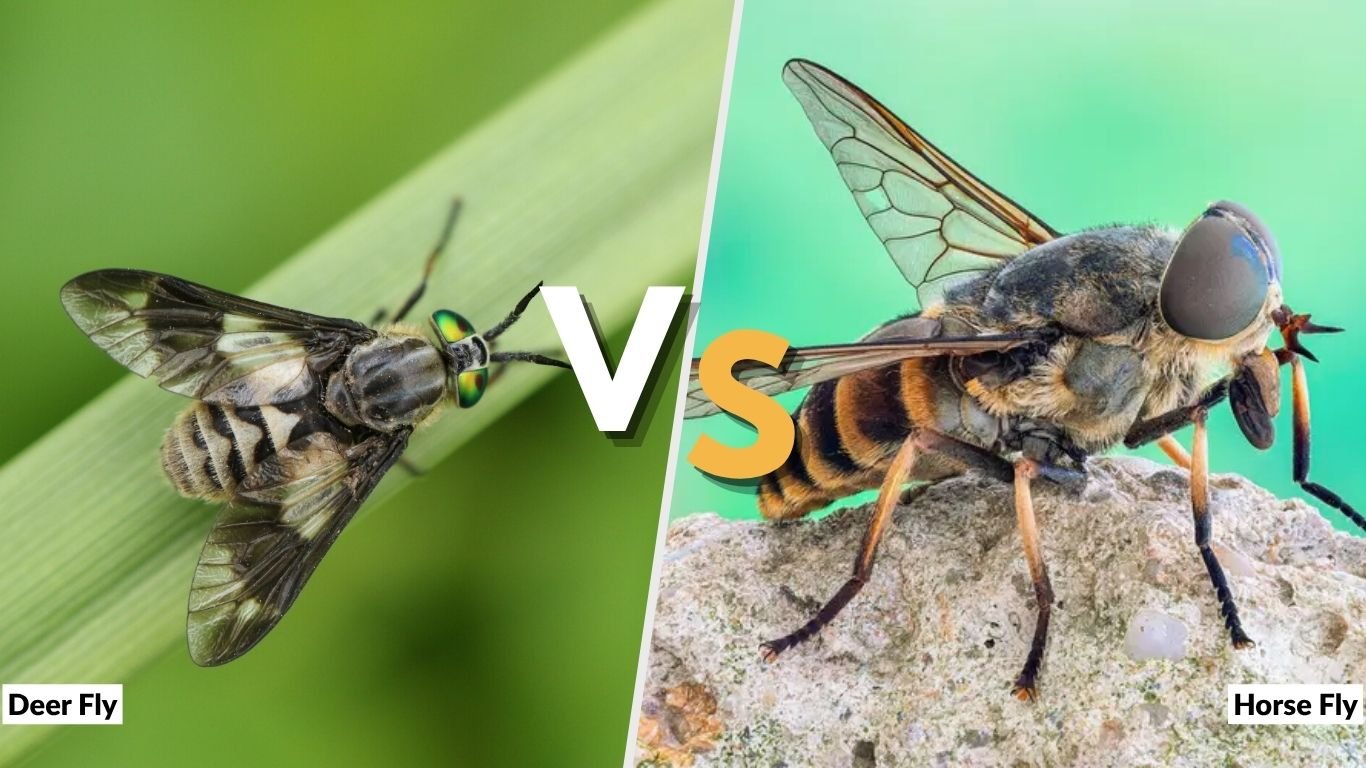
Deer flies and horse flies are closely related biting flies that belong to the family Tabanidae. Both can deliver painful bites, especially during warm weather, but they differ in size, appearance, habitat, and feeding behavior. Deer flies are usually smaller and often have patterned wings, while horse flies are generally larger and more robust. Knowing the difference between a deer fly vs horse fly can help you identify which insect is bothering you and choose better ways to prevent bites.
Deer Fly vs Horse Fly: Quick Comparison
Deer flies and horse flies share many similarities, but several physical features make them easier to tell apart.
| Feature | Deer Fly | Horse Fly |
|---|---|---|
| Typical Size | About 6–12 mm | About 10–30 mm or more |
| Body Shape | Smaller and compact | Larger and heavier |
| Wing Pattern | Often dark bands or patches | Usually clearer or less patterned |
| Eyes | Often brightly colored | Large, often colorful |
| Bite | Sharp and painful | Usually stronger and more painful |
| Main Hosts | Deer, humans, livestock | Horses, cattle, humans |
| Activity | Mainly daytime | Mainly daytime |
| Family | Tabanidae | Tabanidae |
The easiest difference is usually size. Horse flies are generally much larger, while deer flies are smaller and more patterned.
What Is a Deer Fly?
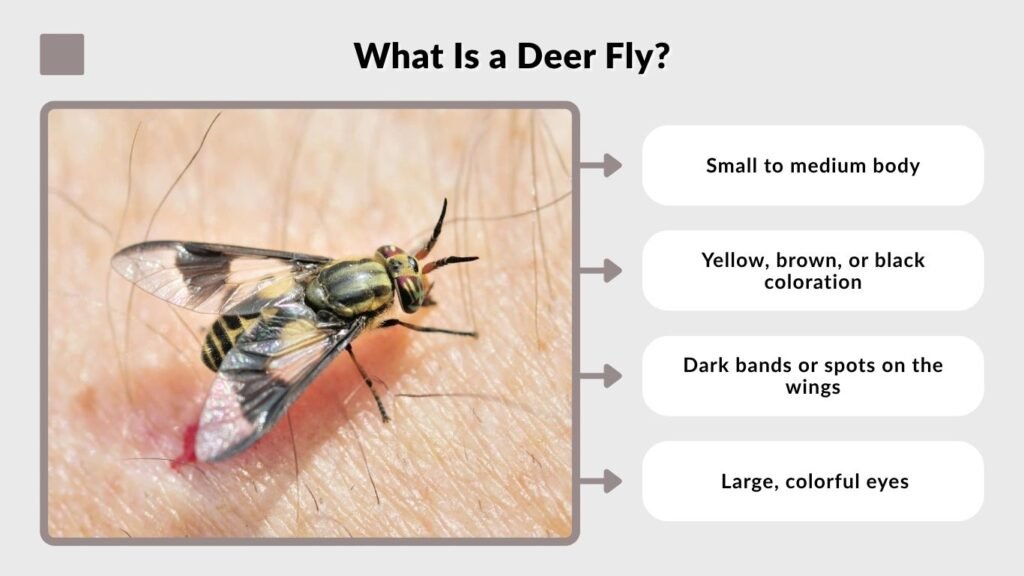
A deer fly is a blood-feeding fly from the genus Chrysops. Deer flies are often found around wetlands, wooded areas, streams, ponds, and marshes.
Female deer flies feed on blood to obtain nutrients needed for egg development. Males do not bite and mainly feed on nectar.
Deer Fly Identification
Common deer fly features include:
- Small to medium body
- Yellow, brown, or black coloration
- Dark bands or spots on the wings
- Large, colorful eyes
- Short antennae
- Fast and agile flight
Deer flies commonly fly around the head and shoulders of people before landing.
What Is a Horse Fly?
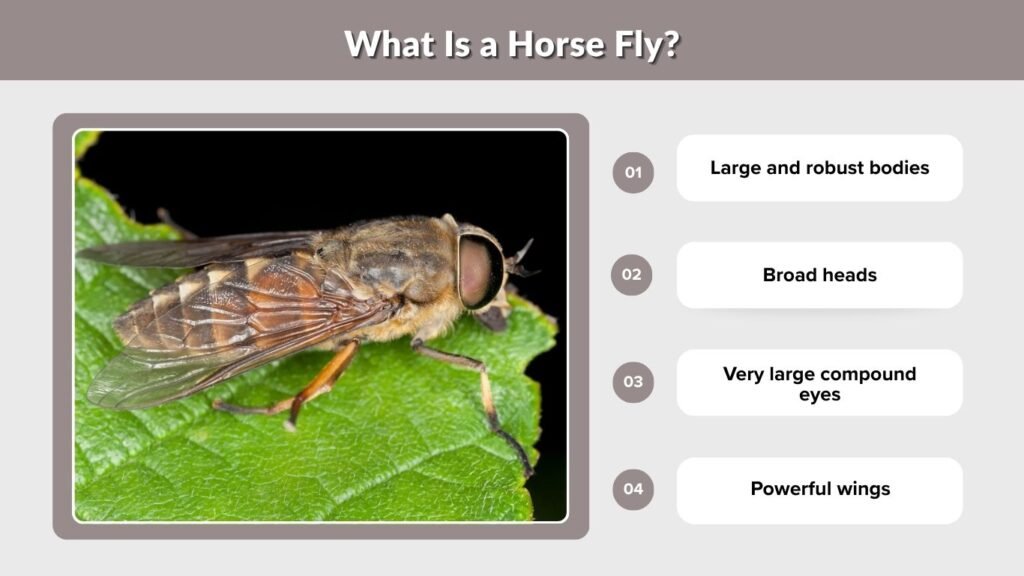
Horse flies are larger members of the Tabanidae family, commonly belonging to the genus Tabanus and related genera. They are named for their tendency to bite horses, cattle, and other large mammals.
Female horse flies require blood meals, while males generally feed on nectar and plant sugars.
Horse Fly Identification
Horse flies typically have:
- Large and robust bodies
- Broad heads
- Very large compound eyes
- Powerful wings
- Brown, gray, or dark coloration
- Strong, fast flight
Some horse flies can exceed an inch in length, making them much more noticeable than deer flies.
Deer Fly vs Horse Fly Size
Size is one of the best ways to distinguish a deer fly from a horse fly.
Deer flies are usually around 6–12 mm long. They often appear similar in size to large house flies, although their patterned wings and colorful eyes make them distinctive.
Horse flies are generally larger, ranging from about 10 mm to more than 30 mm depending on species.
Some large horse flies can look intimidating because of their thick bodies and powerful wings.
In simple terms, if the insect is relatively small with noticeably patterned wings, it is more likely to be a deer fly. A much larger and heavier fly is more likely to be a horse fly.
Deer Fly vs Horse Fly Appearance
Although they are related, their appearance differs considerably.
Deer Fly Appearance
Deer flies often have yellowish or brownish bodies with distinct dark patches or bands across the wings.
Their eyes can display green, gold, red, or patterned coloration.
The wings are one of the most useful identification features.
Horse Fly Appearance
Horse flies usually have broader, stronger bodies and large heads dominated by compound eyes.
Many species have relatively clear wings, although some may have darker markings.
Their overall appearance is heavier and more muscular than a deer fly.
Are Deer Flies and Horse Flies the Same?
No. Deer flies and horse flies are not exactly the same insect.
They belong to the same family, Tabanidae, and share similar feeding habits, but they generally belong to different genera and have noticeable differences in appearance and size.
Deer flies are commonly associated with the genus Chrysops, while many familiar horse flies belong to Tabanus.
Both are sometimes casually grouped together because their females bite mammals and their bites feel similar.
Deer Fly Bite vs Horse Fly Bite
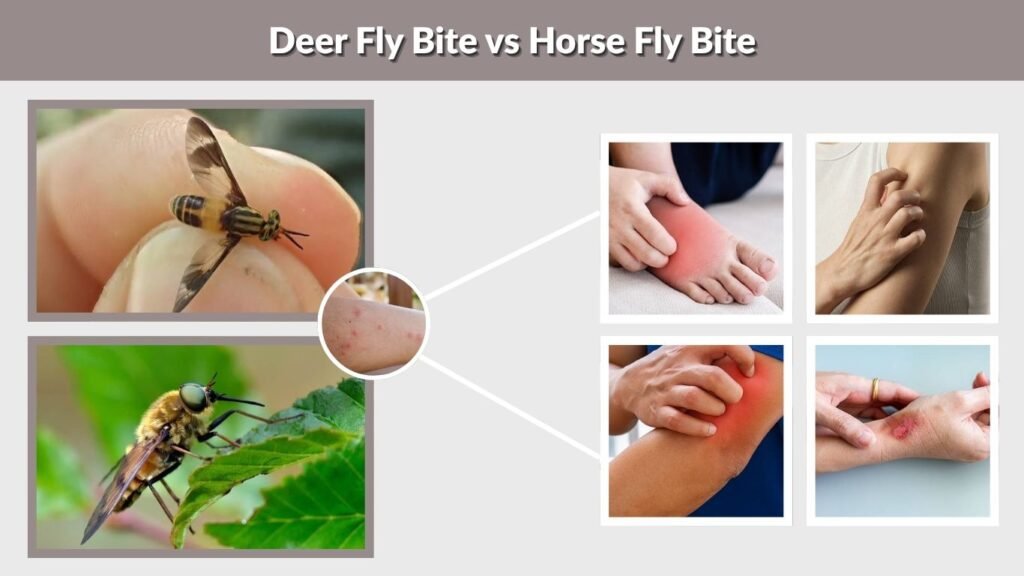
Both deer flies and horse flies can deliver painful bites.
Unlike mosquitoes, these flies do not gently pierce the skin with a narrow feeding tube. Instead, females use cutting mouthparts to create a small wound and drink the blood that pools at the surface.
Deer Fly Bite
A deer fly bite commonly causes:
- Sudden sharp pain
- Redness
- Itching
- Swelling
- Small amounts of bleeding
- A raised welt
Deer flies may repeatedly circle around the head and upper body before biting.
Horse Fly Bite
Horse fly bites can cause:
- Immediate intense pain
- Larger swelling
- Redness
- Burning
- Bleeding
- A noticeable sore or welt
Because horse flies are generally larger, their bites can sometimes feel more severe.
However, individual reactions vary, so bite appearance alone cannot always identify the insect.
Which Bite Hurts More?
Horse fly bites are often considered more painful because horse flies are larger and have larger mouthparts.
However, deer fly bites can also be extremely painful.
Both flies cut the skin rather than simply piercing it. The resulting tissue damage and reaction to the fly’s saliva can cause immediate discomfort.
People sensitive to insect bites may experience substantial swelling from either type.
Do Deer Flies and Horse Flies Bite Humans?
Yes.
Female deer flies and horse flies readily bite humans when given the opportunity.
They are attracted by several signals, including:
- Movement
- Carbon dioxide
- Body heat
- Dark colors
- Large moving objects
This explains why runners, hikers, cyclists, farmers, and people working around livestock can attract large numbers of these flies.
Males do not bite.
Where Do Deer Flies and Horse Flies Live?
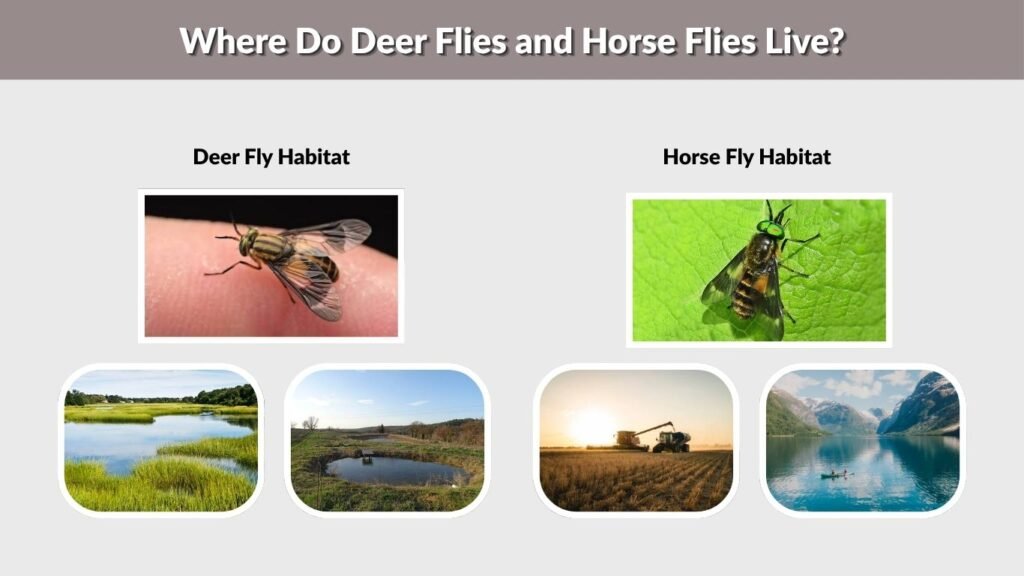
Both types usually breed near moist environments.
Deer Fly Habitat
Deer flies are commonly found around:
- Marshes
- Swamps
- Wooded wetlands
- Streams
- Pond edges
- Damp forests
Their larvae often develop in wet soil or shallow aquatic environments.
Horse Fly Habitat
Horse flies are common around:
- Pastures
- Farms
- Lakes
- Rivers
- Wetlands
- Livestock areas
- Forest edges
Their presence is particularly noticeable where large mammals are available.
When Are Deer Flies and Horse Flies Most Active?
Both are primarily daytime insects.
Activity generally increases during warm weather, particularly from late spring through summer.
Bright, warm days can produce especially heavy activity in suitable habitats.
Deer flies often remain persistent around a person’s head, while horse flies may patrol open areas where livestock and other large animals are present.
How to Repel Deer Flies and Horse Flies
Completely avoiding these insects outdoors can be difficult, but several strategies can reduce bites.
Wear Protective Clothing
Long sleeves, long pants, socks, and hats reduce the amount of exposed skin available for biting.
Loose, tightly woven clothing generally provides better protection than thin, tight fabric.
Wear Light-Colored Clothing
Deer flies and horse flies can be attracted to dark moving objects.
Wearing lighter colors may make you less noticeable to them.
Use Insect Repellent
Appropriate insect repellents can provide some protection, although biting flies may sometimes be less responsive to repellents than mosquitoes.
Always use repellents according to label instructions.
Avoid Peak Areas
Wetlands, wooded streams, marshes, livestock fields, and lake edges can have heavy populations during summer.
Reducing time in these locations during periods of intense activity can help.
How to Get Rid of Deer Flies and Horse Flies
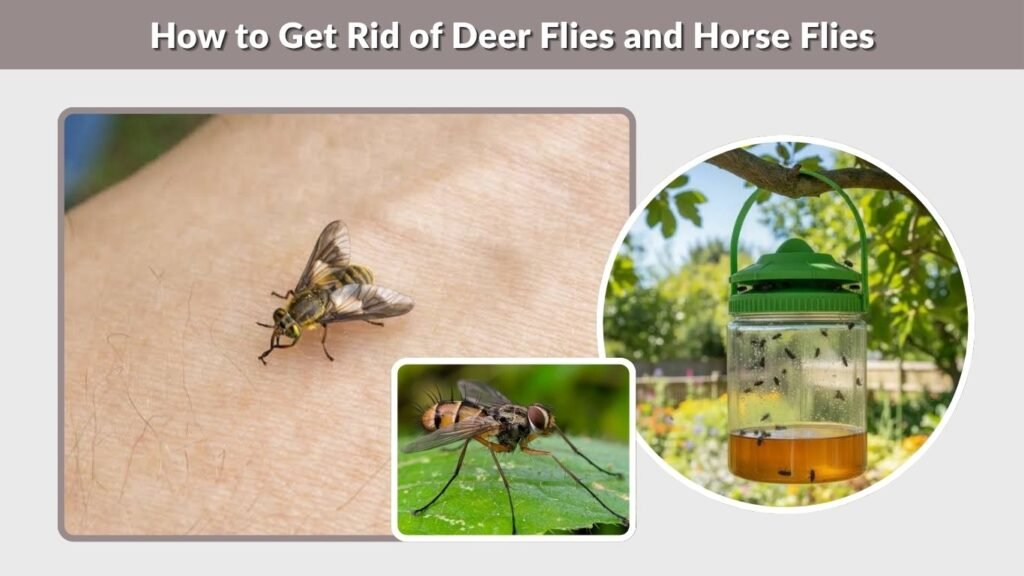
These insects can be difficult to eliminate because adults may travel significant distances.
The best approach usually combines several control methods.
Reduce Breeding Opportunities
Standing water and muddy organic areas can support various biting fly species.
However, large natural wetlands are impossible and undesirable to eliminate, so complete population control is often unrealistic.
Use Fly Traps
Certain traps use dark moving shapes, heat, or visual attraction to capture biting flies.
Traps may help around:
- Barns
- Horse areas
- Farms
- Yards
- Outdoor work areas
They are generally more effective as part of a broader management strategy rather than as a complete solution.
Protect Livestock
Fly sheets, masks, screened shelters, fans, and approved animal-safe repellents can help reduce bites on horses and other livestock.
How to Keep Deer Flies Off Horses
Horses can attract large numbers of both deer flies and horse flies.
Useful measures include:
- Fly masks
- Fly sheets
- Leg protection
- Screened shelters
- Fans inside barns
- Appropriate equine fly repellents
Providing horses access to sheltered areas during heavy fly activity can also help reduce exposure.
Deer Fly vs Horse Fly vs Black Fly
Deer flies and horse flies belong to Tabanidae, while black flies belong to a different family.
| Feature | Deer Fly | Horse Fly | Black Fly |
| Size | Small-medium | Medium-large | Very small |
| Body | Compact | Large, robust | Small, humpbacked |
| Wing Pattern | Often patterned | Usually less patterned | Usually clear |
| Bite | Painful | Very painful | Small but irritating |
| Typical Habitat | Wetlands, forests | Farms, wetlands | Flowing water areas |
Black flies are much smaller and may attack in large numbers, while horse flies tend to be individually larger and easier to notice.
Do Dragonflies Eat Deer Flies and Horse Flies?
Dragonflies are aerial predators that consume many kinds of flying insects.
They may occasionally capture smaller deer flies or similar insects, but they should not be considered a dependable form of horse fly or deer fly control.
Birds, spiders, predatory insects, and other animals can also feed on adult flies or their immature stages.
Which Is Bigger: Horse Fly or Deer Fly?
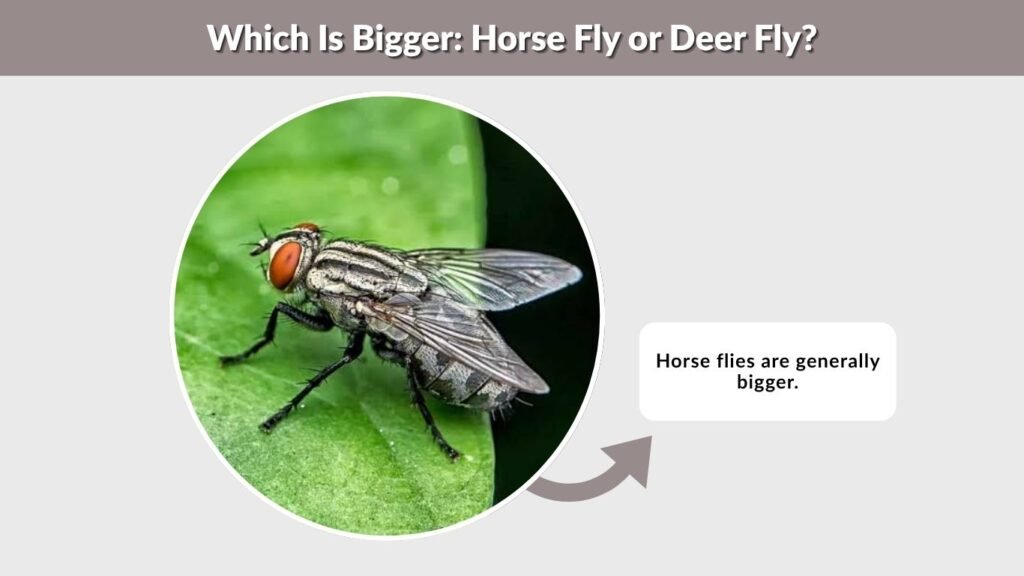
Horse flies are generally bigger.
A deer fly commonly measures around 6–12 mm, while many horse flies measure 10–30 mm or more.
The largest horse flies can be several times heavier than smaller deer fly species.
Size is therefore one of the fastest ways to distinguish them when the insect can be observed closely.
Are Horse Flies and Deer Flies Dangerous?
For most people, both are primarily painful nuisances.
Their bites can result in redness, itching, swelling, and small wounds.
Potential complications include:
- Strong allergic reactions
- Secondary bacterial infection
- Severe localized swelling
- Disease transmission in certain circumstances
Anyone experiencing difficulty breathing, facial swelling, widespread hives, faintness, or other signs of a serious allergic reaction should seek emergency medical care.
FAQs
What is the main difference between a deer fly and a horse fly?
The biggest difference is size and appearance. Deer flies are generally smaller and frequently have dark patterns across their wings. Horse flies are usually larger, heavier-bodied, and may have relatively clear wings.
Are deer flies and horse flies the same thing?
No. They belong to the same family, Tabanidae, but they are different groups of flies. Deer flies are commonly in the genus Chrysops, while many horse flies belong to Tabanus and related genera.
Which is worse, a deer fly bite or horse fly bite?
Both can hurt considerably, but horse fly bites are often perceived as more painful because horse flies are larger. Individual reactions vary, and a deer fly bite can still produce significant pain, itching, and swelling.
What repels horse flies and deer flies?
Protective clothing, light-colored clothing, appropriate insect repellents, screens, fans, and avoiding areas with heavy fly activity can reduce bites. Horses may also benefit from fly masks, sheets, and approved equine repellents.
How can you tell a deer fly from a horse fly?
Look at size and wings. Deer flies are generally smaller and often have obvious dark wing patterns. Horse flies are usually much larger and more robust, with broad heads and powerful bodies.