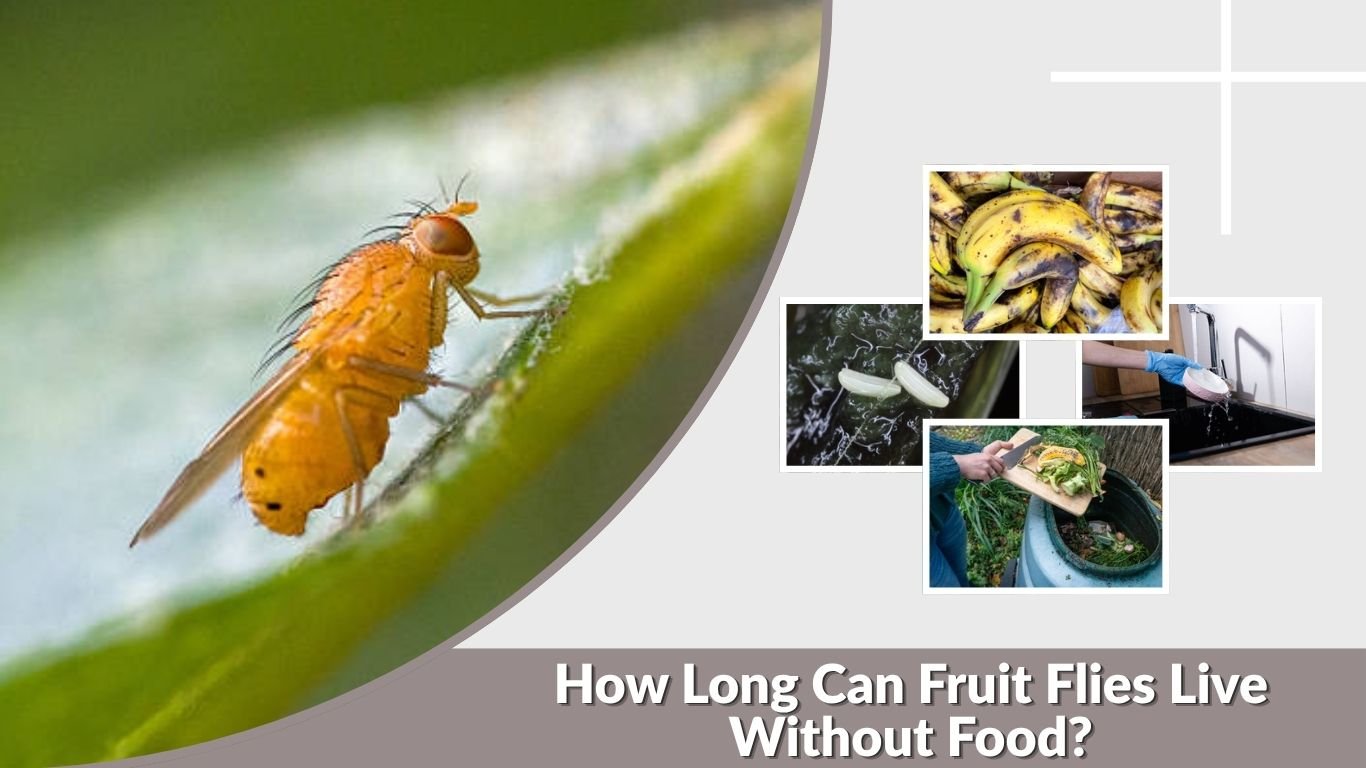
Adult fruit flies generally survive about two to three days without food when water or moisture remains available. Survival can be much shorter in a hot, dry environment because dehydration may kill them before starvation does. Exact timing varies with age, temperature, humidity, sex, health, and the fly’s stored body fat. Laboratory populations bred for starvation resistance can survive much longer, so there is no universal cutoff for every fruit fly.
Fruit Fly Survival Without Food
Common household fruit flies are usually vinegar flies belonging to the genus Drosophila. They obtain carbohydrates, water, and microorganisms from fermenting fruit, sugary liquids, and moist organic residue.
Experiments using ordinary Drosophila melanogaster populations found that adults supplied with water but no nutrients typically survived around two to three days. Special laboratory populations selected for starvation resistance survived up to 18 days, demonstrating how strongly genetics and stored fat influence the result.
| Conditions | Likely survival |
| No food but access to moisture | Commonly around 2–3 days |
| No food or water in dry conditions | Considerably shorter |
| Cool, humid environment | May survive longer |
| Warm, dry environment | Usually dies faster |
| Hidden sugary or fermented residue | May continue feeding unnoticed |
| Starvation-resistant laboratory strain | Potentially much longer |
Removing visible fruit alone therefore does not always make an infestation disappear immediately.
Why Water and Humidity Matter
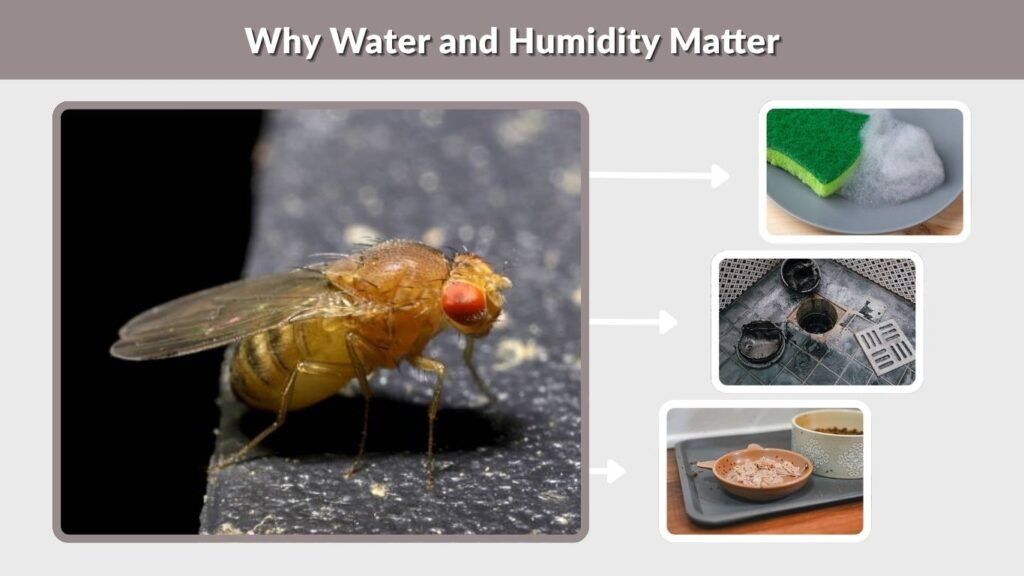
Fruit flies are tiny and lose body water relatively quickly. When food is removed but water remains available, stored carbohydrates and fats can temporarily support the fly. Without moisture, dehydration becomes an additional and often more immediate threat.
Research comparing humid and dry starvation conditions found that flies survived much longer when water was available. Temperature also influenced the outcome, meaning that a fly inside a cool, humid drain may outlive one trapped inside a hot, dry car.
Fruit flies can obtain moisture from sources that people may not consider food, including:
- Damp sponges and dishcloths
- Condensation around appliances
- Sink and floor drains
- Wet recycling containers
- Residue inside bottles and cans
- Moist garbage
- Pet bowls
- Small beverage spills
Even a thin layer of fermented residue may contain enough sugar, yeast, and moisture to keep adults alive.
Why Are Fruit Flies Present When There Is No Food?
Fruit flies appearing in a clean room do not necessarily mean they are surviving without eating. A tiny, overlooked breeding source may be present, or the insects may be entering from another part of the building.
Hidden Breeding Sources
Female fruit flies seek moist, fermenting organic material in which their larvae can feed. Common hidden sources include:
- Residue underneath refrigerators or trash cans
- Fermented liquid in recycling bins
- Old potatoes or onions inside cabinets
- Empty wine, juice, or soda containers
- Dirty garbage disposals
- Wet pet food
- Food trapped underneath appliances
- Mop buckets and cleaning cloths
- Compost containers
- Syrup or beverage residue around bottle caps
Colorado State University recommends removing overripe produce and fermenting materials such as stale beer and soft drinks because these can support vinegar-fly breeding.
They May Be a Different Fly
Tiny flies around a room are not always fruit flies. Fungus gnats often emerge from damp potting soil, while drain flies develop in organic film inside plumbing. Identifying the source is more effective than repeatedly spraying visible adults.
Fruit flies are usually tan or yellow-brown with red or dark eyes. Fungus gnats are darker, slender, and mosquito-like. Drain flies have fuzzy, moth-shaped wings.
Do Fruit Flies Lay Eggs on Food?
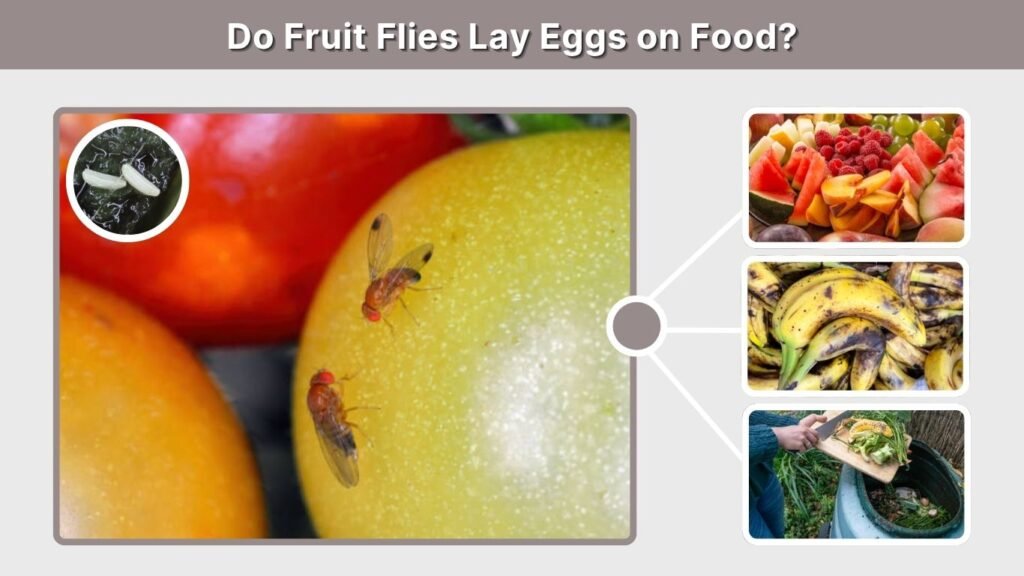
Yes. Household fruit flies normally deposit eggs on or near overripe fruit and other moist, fermenting materials. Fly eggs and larvae may also occur in garbage, beverage residue, and decaying vegetables.
The eggs are extremely small and may be difficult to see without magnification. After hatching, the pale larvae feed within the wet material. Flies can complete development rapidly; under favorable indoor conditions, adults may emerge within roughly seven to fourteen days.
Typical egg-laying materials include:
- Bruised or cut fruit
- Overripe bananas
- Rotting vegetables
- Fermenting juice
- Wine or beer residue
- Moist garbage
- Compost
- Sour food residue
Most familiar household vinegar flies prefer damaged, overripe, or fermenting produce. Spotted-wing drosophila differs because the female can cut into ripening, relatively intact soft fruit and lay eggs inside it.
What Do Fruit Flies Do to Food?
Adult fruit flies walk and feed on food surfaces. They may also regurgitate digestive liquid, leave waste, or deposit eggs when conditions are suitable.
Research has demonstrated that small fruit flies can transfer bacteria from contaminated waste or food to clean surfaces and ready-to-eat foods. Tested organisms included E. coli, Salmonella, and Listeria. However, demonstrating bacterial transfer does not prove that every brief landing will cause someone to become ill.
Damaged fruit deserves particular caution because openings in the skin allow microorganisms to enter. FDA-reviewed research found that contaminated flies could transfer E. coli O157:H7 to wounds on apples.
Can You Eat Food After a Fruit Fly Lands on It?
A single fruit fly briefly landing on firm, intact food does not automatically make that food dangerous. Nevertheless, the risk is not zero because the fly may previously have contacted garbage, drains, or spoiled material.
Use the food’s condition and level of exposure to guide your decision:
Usually lower concern: An intact apple or similar produce briefly contacted by one fly. Wash it thoroughly under clean running water before eating.
Greater concern: Soft, cut, moist, or ready-to-eat food that remained uncovered while numerous flies were present.
Discard it: Food containing visible eggs, larvae, decay, fermentation, or many flies. Also discard food when you cannot determine how long it was exposed.
People who are pregnant, elderly, very young, or immunocompromised should be especially cautious about potentially contaminated ready-to-eat foods. Washing fresh produce under running water helps remove dirt and some surface bacteria, although it cannot guarantee complete removal of every microorganism.
How Long Until Fruit Flies Disappear After Removing Food?
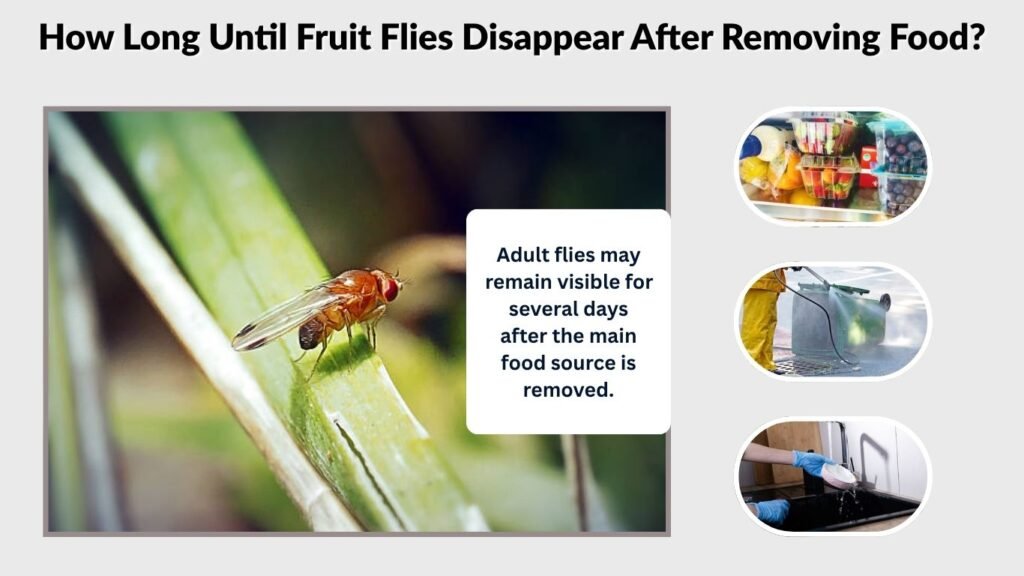
Adult flies may remain visible for several days after the main food source is removed. Eggs, larvae, or pupae already developing nearby can also produce another wave of adults.
Consequently, seeing new flies does not necessarily mean the original adults survived for weeks without food. It may mean that immature flies completed development after the visible food was discarded.
To interrupt the life cycle:
- Refrigerate ripe produce.
- Discard spoiled fruit and vegetables.
- Wash recycling containers.
- Empty and clean trash cans.
- Remove residue from drains and garbage disposals.
- Clean under appliances and cabinets.
- Wash pet bowls after feeding.
- Dry sponges, cloths, and mop heads.
- Use traps only after eliminating breeding sources.
Traps can reduce adult numbers, but they will not solve the infestation while larvae continue developing in hidden organic material.
Fruit Flies in a Car With No Food
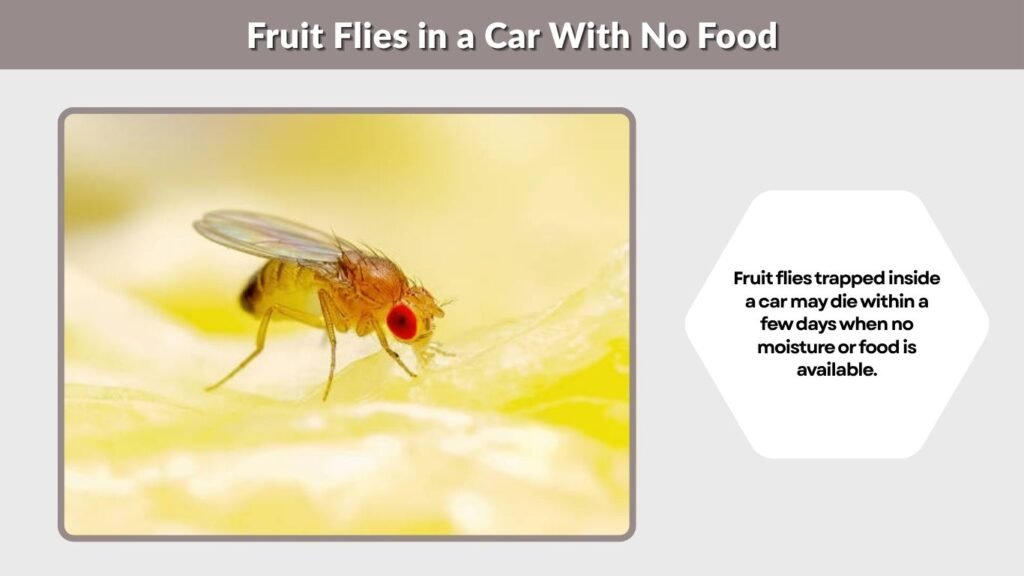
Fruit flies trapped inside a car may die within a few days when no moisture or food is available. Hot, dry conditions can shorten survival considerably.
Continued activity suggests a hidden source such as:
- A spilled drink
- Fruit beneath a seat
- An old food wrapper
- Residue inside a cup holder
- A discarded bottle or can
- Damp floor mats
- Garbage in a door compartment
Remove all waste, vacuum beneath the seats, clean sticky surfaces, and allow damp materials to dry completely.
FAQs
Can fruit flies live for a week without food?
Ordinary fruit flies are unlikely to survive an entire week under complete starvation. Common laboratory populations with access to water generally survive around two to three days, although genetics, temperature, humidity, and previous nutrition can extend or shorten that period.
Do fruit flies die when all fruit is removed?
They eventually die or leave when every food and breeding source is eliminated. However, fruit is not their only resource. Beverage residue, garbage, drains, recycling containers, vegetables, pet food, and damp organic material can continue supporting them.
Can fruit flies survive on water alone?
Water can delay dehydration but does not provide enough nutrition for normal long-term survival. Typical adults may persist for a few days on moisture alone by consuming stored energy reserves before starvation becomes fatal.
Do fruit flies lay eggs in fresh food?
Common household vinegar flies favor damaged, overripe, or fermenting foods. They may deposit eggs on moist exposed food when conditions are suitable. Spotted-wing drosophila is different and can lay eggs inside ripening soft-skinned fruit.
Should food with fruit-fly larvae be thrown away?
Yes. Discard food containing larvae, visible eggs, fermentation, extensive decay, or heavy fly activity. Place it in a sealed bag and remove it from the home so the larvae cannot finish developing inside the trash.