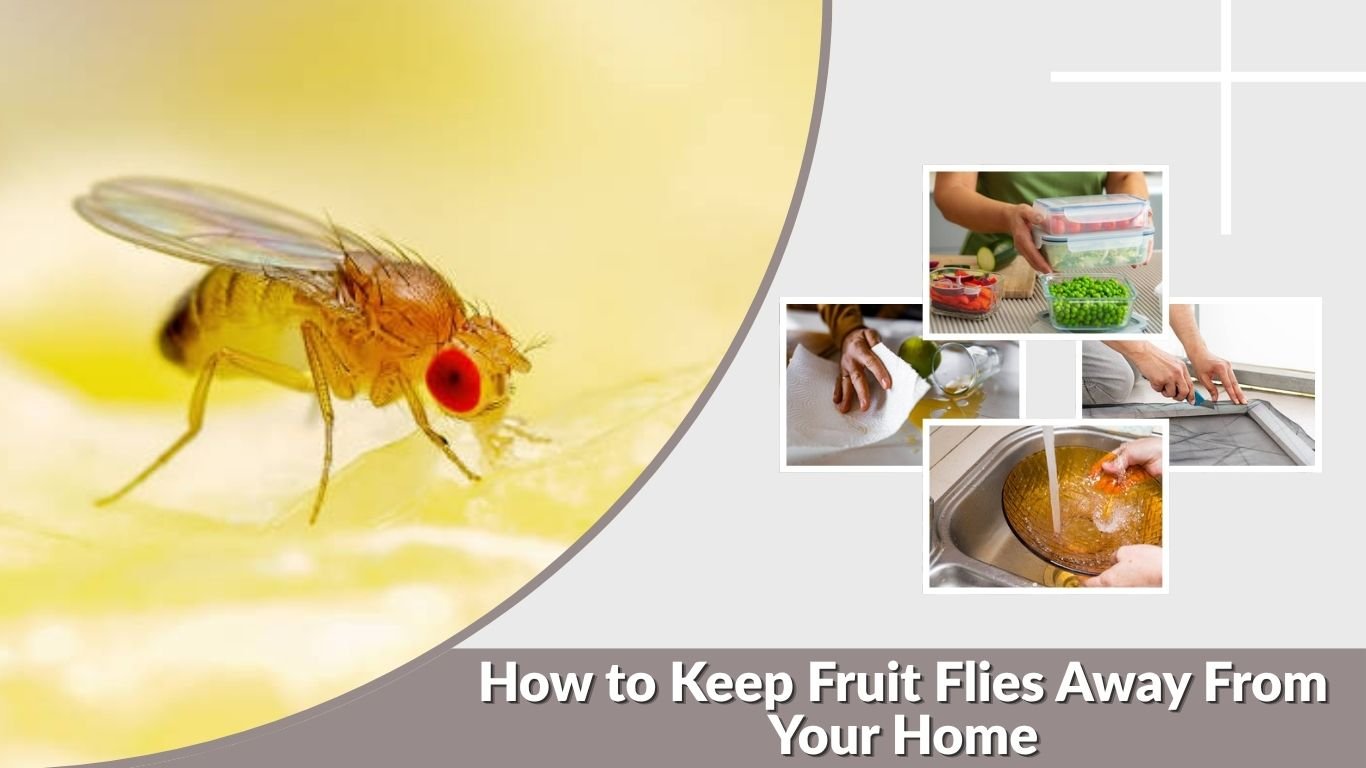
Fruit flies are attracted to ripe produce, fermenting liquids, sugary spills, garbage, and other moist organic materials. A few adults can quickly become a larger infestation when they find a suitable place to feed and lay eggs. Traps may reduce the flies you see, but prevention depends on removing their food and breeding sources. To keep fruit flies away, store produce properly, clean hidden spills, wash recycling containers, maintain drains, and protect fermenting foods such as sourdough starter. The following methods can help keep fruit flies out of your kitchen and prevent them from returning.
What Keeps Fruit Flies Away?
Fruit flies are best controlled by removing the conditions that attract them. Strong scents may repel a few adults temporarily, but sanitation and proper food storage provide more dependable protection.
The most effective preventive steps include:
- Refrigerating ripe fruit
- Discarding damaged produce
- Cleaning sugary and alcoholic spills
- Emptying garbage regularly
- Rinsing bottles and cans
- Scrubbing organic buildup from drains
- Keeping counters and floors dry
- Covering fermenting foods
- Cleaning beneath kitchen appliances
- Using traps to catch remaining adults
How to Keep Fruit Flies Away From Bananas
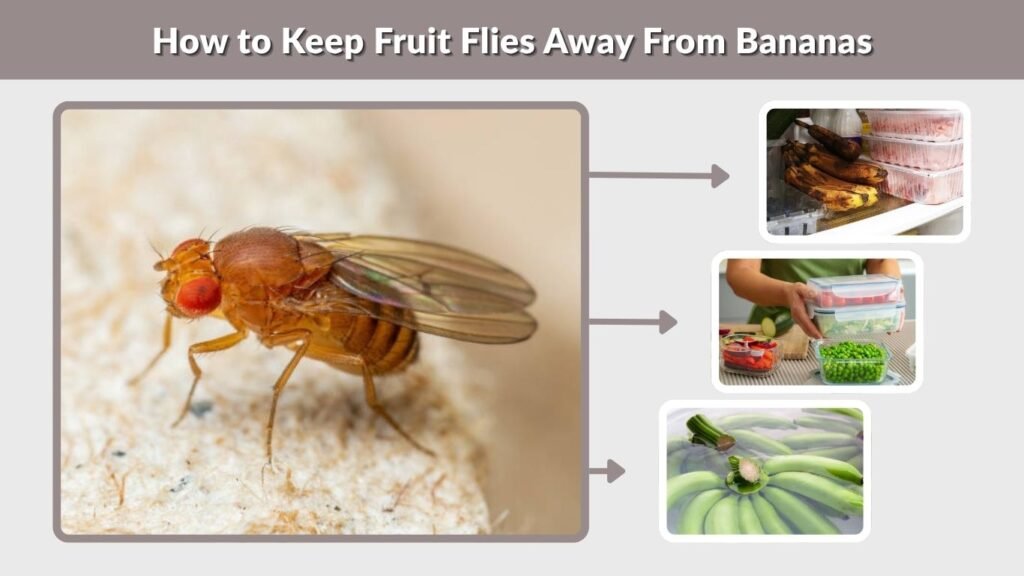
Bananas are one of the most common fruit fly attractants. As they ripen, their natural sugars begin breaking down and producing fermentation odors. These smells become especially strong when the bananas are bruised, split, or overripe.
Refrigerate Ripe Bananas
Once bananas reach the desired ripeness, place them in the refrigerator. Their skins may darken, but the fruit inside usually remains usable for several more days.
Cool temperatures slow ripening and reduce the odors that attract fruit flies. Avoid storing visibly damaged or leaking bananas.
Use a Covered Container
Store bananas inside a covered fruit container that allows some ventilation while limiting insect access. Completely airtight storage may trap moisture and speed spoilage, so choose a container designed for produce.
Inspect the container regularly and clean any juice or residue that collects inside.
Wash the Banana Stems
Fruit flies may arrive with produce from a market or grocery store. Rinse the bananas gently and dry them before placing them in a fruit bowl.
Washing cannot guarantee that every egg or insect is removed, but it can reduce residue and contaminants carried on the surface.
Separate Overripe Bananas
One overripe banana can attract fruit flies to the entire fruit bowl. Use soft bananas immediately for smoothies, baking, or freezing.
Discard any banana that is leaking, moldy, or producing a strong fermented smell.
How to Protect a Fruit Bowl
A fruit bowl can remain attractive and convenient without becoming a feeding station for fruit flies. The key is to limit ripening produce and keep the surrounding area clean.
Choose Fruit Carefully
Place only firm, undamaged fruit in the bowl. Refrigerate soft fruits, cut produce, berries, peaches, and other items that spoil quickly.
Check the bowl daily for bruises, cracks, mold, or leaking juice.
Clean the Bowl Regularly
Remove the fruit and wash the bowl with warm, soapy water. Sugary residue can remain at the bottom even when the bowl looks clean.
Dry the bowl before replacing the fruit, since moisture can encourage microbial growth and spoilage.
Avoid Overfilling
Overfilled bowls make it difficult to notice damaged fruit at the bottom. Keep a smaller amount of produce on display and store the rest in the refrigerator.
A shallow arrangement also improves airflow and makes inspection easier.
How to Keep Fruit Flies Away From Plants
Fruit flies do not usually breed in healthy potting soil. Small flies around houseplants are more likely to be fungus gnats, which have dark, slender bodies and long legs.
However, fruit flies may visit plants containing fallen fruit, decaying flowers, or other fermenting plant material.
Remove Dead Plant Matter
Collect fallen leaves, flowers, fruit, and damaged stems from the soil surface. Do not allow decomposing material to accumulate inside the pot or drainage tray.
Clean plant stands and nearby floors when water or organic residue spills.
Avoid Overwatering
Excessively wet soil attracts fungus gnats and encourages fungal growth. Allow the upper layer of soil to dry between waterings when the plant can tolerate it.
Empty standing water from saucers and decorative containers.
Identify the Insect Correctly
Fruit flies are generally tan or brown with compact bodies. Fungus gnats are darker, thinner, and resemble tiny mosquitoes.
Use vinegar traps for fruit flies and yellow sticky cards for fungus gnats. Treating the wrong insect can allow the infestation to continue.
How to Keep Fruit Flies Out of the Trash Can
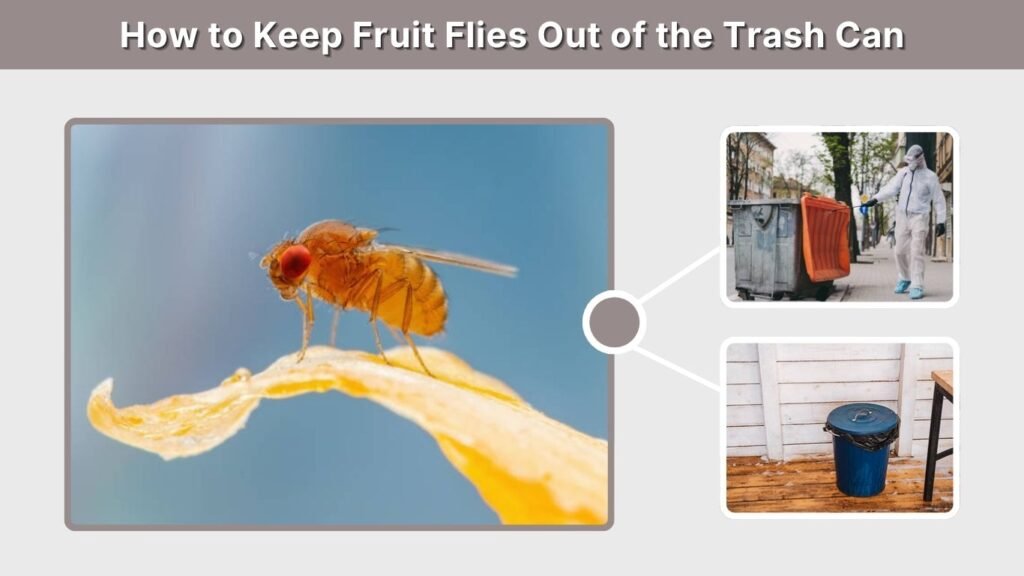
Trash cans provide food, moisture, and protection for fruit flies. Fruit scraps, beverage residue, and dirty packaging can support both adults and larvae.
Use a Tight-Fitting Lid
Choose a trash can with a lid that closes securely. A sealed lid limits access, but it will not prevent flies from breeding in residue already inside the container.
Avoid overfilling the bag, which can prevent the lid from closing properly.
Empty Trash Frequently
Do not leave fruit peels, food scraps, or sugary containers in the kitchen trash for long periods. During warm weather, empty the bin daily when possible.
Take compostable food waste outdoors or store it temporarily in a sealed container.
Wash the Container
Leaks can collect beneath the trash bag and produce strong fermentation odors. Wash the inside, lid, rim, and surrounding floor with warm, soapy water.
Allow the container to dry completely before adding a fresh liner.
Protect Recycling and Compost
Fruit flies can survive on tiny amounts of soda, juice, wine, and beer left in containers. Rinse cans, bottles, cartons, and jars before placing them in recycling.
Use a covered compost container and empty it frequently. Wash the container whenever residue collects around the lid or bottom.
Outdoor compost should be covered with dry leaves or other appropriate material to reduce exposed food scraps.
How to Keep Fruit Flies Away From Sourdough Starter
Sourdough starter produces fermented odors that are highly attractive to fruit flies. It must remain able to release gas while being protected from insects.
Cover the Container Properly
Use a loose-fitting lid, breathable cover with a tight weave, or another barrier that prevents flies from reaching the starter. Avoid coverings with large openings.
Do not seal an actively fermenting starter in a container that cannot safely release pressure.
Keep the Outside Clean
Starter residue around the rim, lid, or countertop can attract fruit flies. Wipe the container after feeding and clean spills immediately.
Place the starter on a clean tray so escaped liquid can be removed easily.
Refrigerate When Appropriate
A starter that is not used daily can often be stored in the refrigerator according to the feeding routine being followed. Cooler storage slows fermentation and reduces attractive odors.
Inspect the starter before use and discard it when there are signs of contamination inconsistent with normal fermentation.
Maintain Kitchen Drains
Fruit flies may feed and reproduce in organic residue inside kitchen drains and garbage disposals. Simply pouring water down the drain may not remove the buildup attached to the pipe walls.
Use a stiff drain brush to scrub accessible areas. An enzyme-based drain cleaner may help break down organic residue when used according to the product label.
Clean beneath the garbage disposal splash guard, where food particles can collect. Turn off the power before reaching near disposal components.
Use a Fruit Fly Trap
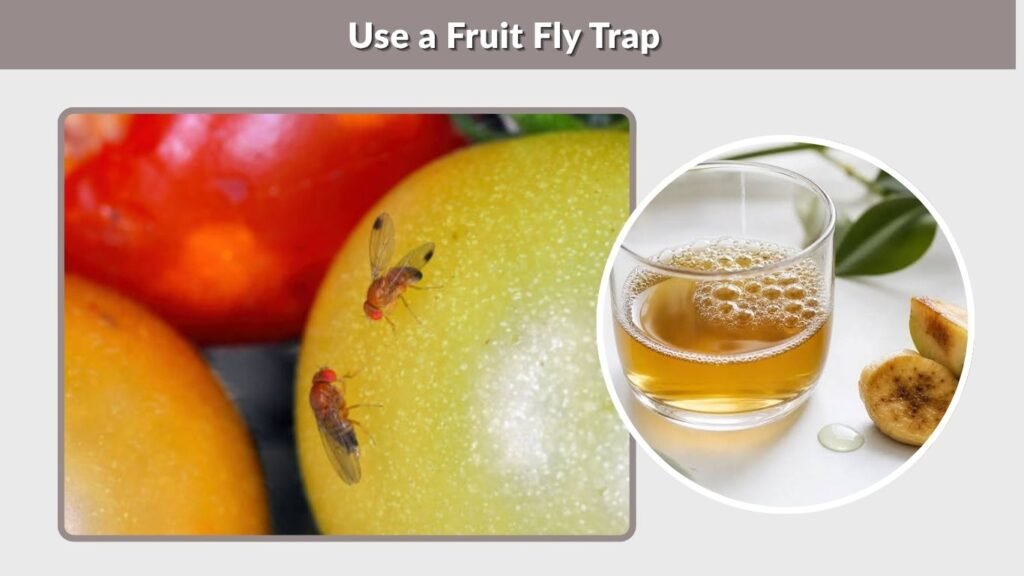
Traps can catch adult fruit flies that remain after cleaning. They are useful for monitoring activity but should not replace sanitation.
Pour apple cider vinegar into a small container and add one or two drops of dish soap. Place the trap near the suspected source.
The fermented smell attracts adults, while the soap reduces surface tension and causes flies to sink. Replace the mixture every few days.
Do Natural Scents Keep Fruit Flies Away?
Mint, basil, lavender, cinnamon, lemon, peppermint oil, candles, incense, and other strong scents are sometimes promoted as fruit fly repellents. They may discourage a few adults from landing in a particular area, but their effects are usually limited and temporary.
Essential oils do not remove eggs, larvae, spoiled food, or drain residue. They should not be considered substitutes for cleaning and food storage.
Avoid applying essential oils directly to food, produce, pets, or plant leaves unless the product is specifically labeled for that use.
Does Vinegar Keep Fruit Flies Away?
Vinegar usually attracts fruit flies rather than repelling them. Apple cider vinegar is commonly used as trap bait because its smell resembles fermenting fruit.
White vinegar can be useful for cleaning some surfaces, but it should not be left uncovered when the goal is to discourage flies.
Never mix vinegar with bleach, since the combination can release dangerous fumes.
Do Wine Corks Keep Fruit Flies Away?
There is little reason to expect dry wine corks to provide reliable fruit fly control. Corks may absorb moisture or odors, but they do not remove the food and breeding materials that sustain an infestation.
A bowl containing corks can still attract fruit flies when ripe or damaged fruit is present.
Why Do Fruit Flies Keep Coming Back?
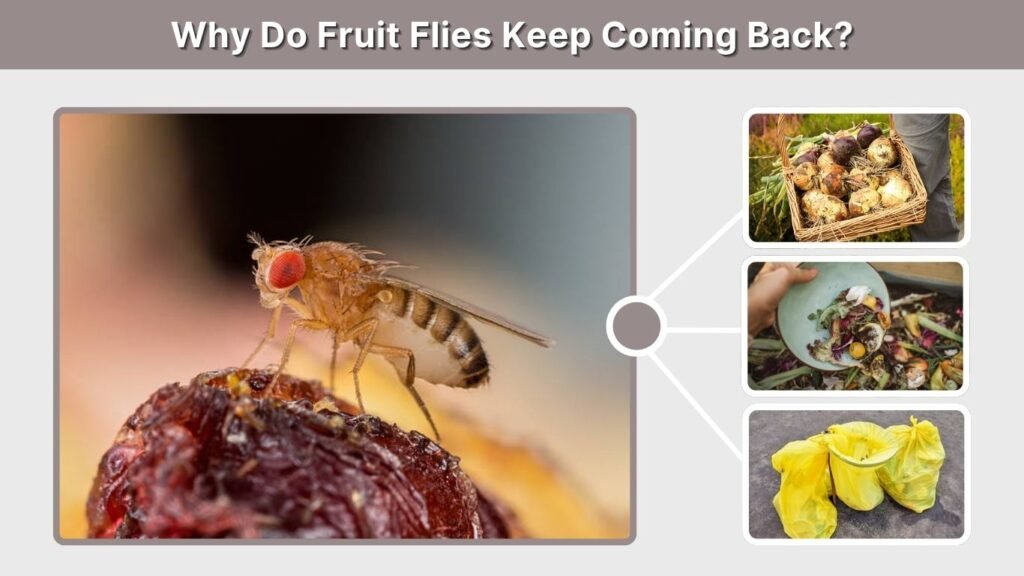
Fruit flies usually return because a hidden breeding source remains. Adult traps may appear successful, but new flies can continue emerging from eggs, larvae, and pupae.
Inspect these commonly overlooked areas:
- Rotten onions or potatoes in cupboards
- Produce beneath appliances
- Beverage residue in recycling
- Organic buildup inside drains
- Refrigerator drip pans
- Dirty mop heads and sponges
- Compost containers
- Garbage disposal splash guards
- Leaking trash bags
- Open wine, beer, or juice bottles
Continue cleaning and trapping for at least one to two weeks after removing the source.
Why Do Fruit Flies Fly Around Your Face?
Fruit flies do not feed on people or drink blood. They may fly around your face because they detect food, sweet beverages, scented products, or moisture.
A fly may also follow exhaled carbon dioxide or simply move toward a nearby light source. Clean food residue from your hands and face, cover drinks, and remove the nearby breeding source.
How to Keep Fruit Flies Out of Your House
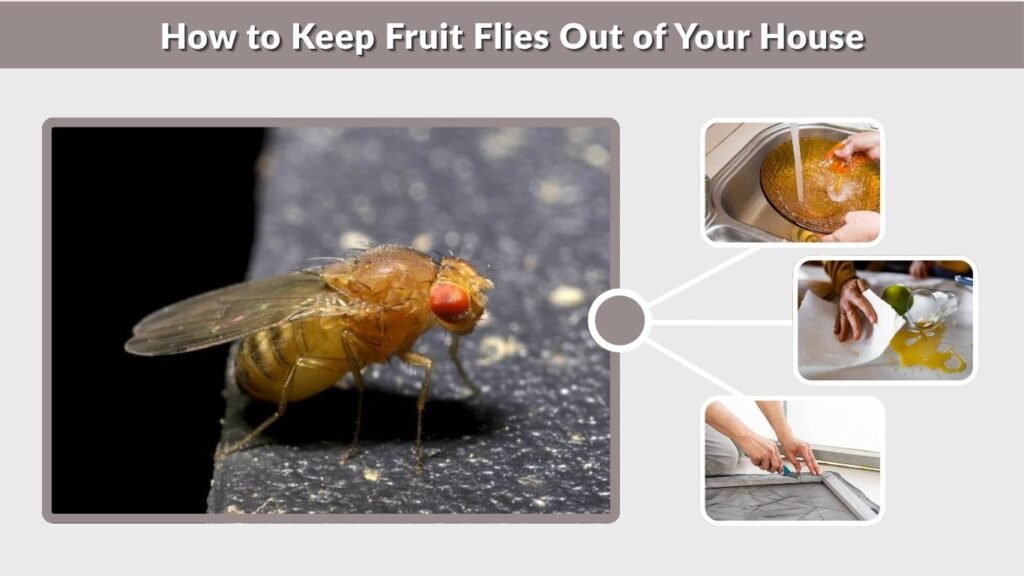
Preventing entry is helpful, but most indoor infestations continue because suitable food is already available.
- Repair damaged window and door screens.
- Keep exterior doors closed when possible.
- Inspect produce before bringing it inside.
- Wash and dry fruit storage containers.
- Refrigerate ripe produce.
- Cover drinks and fermenting foods.
- Clean spills immediately.
- Maintain drains and garbage disposals.
- Empty trash, recycling, and compost frequently.
- Use traps when the first adults appear.
FAQs
What is the best way to keep fruit flies away?
Remove all fermenting food, refrigerate ripe produce, rinse recycling, empty garbage, and clean drains. Traps can catch remaining adults, but sanitation provides the most dependable long-term prevention.
How can I keep fruit flies off bananas?
Refrigerate bananas after they ripen, remove damaged fruit, wash the fruit bowl, and keep only a small amount of produce at room temperature. Covered produce containers can also limit access.
What smell keeps fruit flies away?
Strong smells such as mint or lavender may temporarily discourage some flies, but they do not reliably stop an infestation. Removing fermenting food and moisture is far more effective.
Why do fruit flies keep appearing after I clean?
A hidden source may remain in a drain, garbage disposal, recycling bin, cupboard, compost container, or beneath an appliance. Existing pupae may also continue producing adults for several days.
Can fruit flies live in the refrigerator?
Fruit flies may enter a refrigerator with produce or through an open door, but cold temperatures slow their activity and development. Remove spoiled food, clean spills, and inspect the drain and drip pan.